forces etiketine sahip kayıtlar gösteriliyor. Tüm kayıtları göster

20 Nisan 2017 Perşembe

Crackdown on migrants forces NHS doctors to "act as border guards"

A medical charity has launched a campaign against government guidance which “makes border guards of doctors” by allowing the Home Office to access details of undocumented migrants who seek NHS treatment.


Doctors of the World runs clinics for undocumented migrants, victims of trafficking and asylum seekers. It has assisted numerous patients, some pregnant and some with cancer, who are afraid of accessing NHS healthcare due to concerns that a visit to the doctor could lead to deportation.


The organisation has joined forces with the human rights charity Liberty and the National Aids Trust to launch a petition aimed at reversing a data-sharing policy between the NHS and the Home Office implemented this year. They want the government to “stop using NHS patients’ personal information to carry out immigration enforcement”.


Lu Hiam, a GP and Doctors of the World adviser, said: “Confidentiality is the cornerstone of the doctor-patient relationship. Deterring sick people from getting healthcare has serious consequences. Putting this data-sharing agreement in place without consulting doctors is nonsensical, given what a huge impact it has on our professional role.”


The government and NHS Digital, the body that stores patient information, published the agreement in January. The pact makes it clear that NHS Digital is legally required to hand over non-clinical patient details – including addresses and dates of birth – to the Home Office.


Use of NHS data has allowed immigration officials to locate, arrest and deport visa overstayers and undocumented migrants.


Doctors of the World has produced a “safe surgeries” toolkit that outlines practical methods doctors can use to keep patients’ addresses off NHS records, helping them circumvent the Home Office memorandum of understanding on data sharing.


The kit suggests ways to register patients using the address of the local GP practice and informs medical staff that they do not need to ask for a passport or proof of identity when registering patients. The pack also includes posters telling patients that they are not legally required to provide such information.
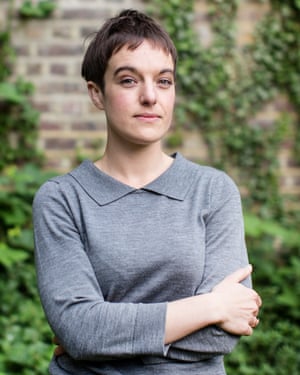


Martha Spurrier, the director of Liberty


Martha Spurrier, the director of Liberty, says: ‘Fostering fear of the doctor in this way is a whole new dangerous and irresponsible low. Photograph: David Levene for the Guardian

Prompted by similar unease, the National Union of Teachers this week passed a motion condemning the Department for Education’s requirement, introduced last September, that parents must supply details of pupils’ nationality and country of birth to schools. The DfE may subsequently pass on this information to the Home Office. The request also forms part of a drive by Theresa May to create a “hostile environment” for illegal immigrants.


Miriam Beeks, a GP at Lower Clapton Group Practice in east London, has put up posters telling patients they can register as “no fixed abode”.


“Doctors, in general, hate the idea that they are being used as immigration officers. Doctors should feel confident about standing against this. We are backed up by both NHS and GMC confidentiality rules – our interactions with our patients are confidential,” she said.


Figures released this year show the number of Home Office requests to NHS Digital has tripled since 2014. Department of Health data reveals the Home Office made 8,127 requests for patient details in the first 11 months of 2016, which led to 5,854 people being traced by immigration enforcement.


Martha Spurrier, director of Liberty, said: “This government has made border guards of teachers, landlords, bank clerks and now even doctors – all as part of a misguided and counterproductive obsession with creating a ‘hostile environment’ for undocumented migrants.


“Fostering fear of the doctor in this way is a whole new dangerous and irresponsible low. It will put the health of the most vulnerable in society at risk, including children and victims of trafficking and torture.”
Deborah Gold, chief executive, of the National Aids Trust, said the decision must be reversed. “Without any consultation, NHS Digital have agreed to share important personal information with the Home Office. They have betrayed their responsibility to safeguard the confidentiality of NHS patients. They have also harmed public health as people are deterred from healthcare,” she said.


A government spokesperson said no clinical information would be shared. “We share non-clinical information between health agencies and the Home Office to locate individuals suspected of committing immigration offences. Access to this information is strictly controlled, with strong legal safeguards.


“Immigration officials only contact the NHS when other reasonable attempts to locate people have been unsuccessful. Anyone in genuine need can always receive treatment from the NHS – urgent or necessary care is never withheld.”


In its clinics providing basic healthcare to undocumented migrants, Doctors of the World has encountered numerous patients who have avoided seeking medical help because of their irregular immigration status.


The charity said it recently helped a woman who visited their east London clinic in labour. She had avoided seeking antenatal care because she feared being reported to the Home Office and was concerned about the cost of treatment.


Doctors of the World also highlighted the case of a young Ugandan woman who was almost six months pregnant and had not sought antenatal care because she was too scared to visit the doctor. She has lived in the UK for five years, her partner is a UK citizen and they are in full-time work, but she does not have a visa.


“I feel trapped. I’m in a situation where I need to go to the hospital but I can’t, because I feel my information might not be confidential,” the woman said. “I can’t imagine being separated from my partner. Maybe they would make me go back without my baby too. I would be separated from one or even both of them.”


Doctors of the World has also been contacted by a woman from the Philippines who has lived here for several years without a visa. She found a lump on her breast last September and was concerned because of a family history of breast cancer.


The woman, who worked as a cleaner, received an appointment for a biopsy but did not attend amid concerns that the hospital would share her details with the Home Office.


She said: “I felt like I was carrying the weight of the whole world. I was worried that if I went to the hospital and the immigration authorities know about it they might get me and deport me. But if I didn’t go to hospital, then what about the lump?”


She said she forced herself to go to a second appointment and the lump was eventually removed. She said: “In the end, I thought I must go. The lump was getting bigger, it was over 4cm by then. I was so scared at the hospital – my pulse was going so fast!”


The woman remains concerned about the risks of seeking medical help. “For years I had just tried to protect myself from getting sick – like by always wearing warm clothes – because I thought it wasn’t safe to go to the doctor,” she said.


Crackdown on migrants forces NHS doctors to "act as border guards"

7 Eylül 2016 Çarşamba

Leading ocean advocacy groups join forces to tackle microfiber pollution

Two leading clean ocean advocacy groups have joined forces to stop tiny synthetic clothing fibers from polluting the world’s waterways and poisoning the food chain.


Plastic Soup Foundation (PSF), a Dutch nonprofit, and New York-based Parley for the Oceans announced Tuesday a partnership to tackle the issue of microfiber pollution and to create a global alliance of companies, governments, NGOs and scientists. Microfibers – tiny, often synthetic threads shed from laundry, industrial clothing manufacturing and fishing nets – have been found in alarming numbers in recent studies of microplastic pollution.


“Microfibers pose a massive and complex threat,” said Cyrill Gutsch, founder of Parley for the Oceans, in a statement. “It’s all about funding, supporting and boosting new technologies… [and] the best way to achieve this is together.”


The partnership comes after PSF launched its Ocean Clean Wash campaign earlier this year to educate washing machine manufacturers, fashion brands, environmental organizations and the public about the problem. PSF says already 100 nonprofits and other organizations have signed on to support the campaign, including Greenpeace UK and Austria, Plastic Pollution Coalition and Fauna & Flora International.


A June study found that synthetic fleece jackets release, on average, 1.7 grams of microfibers each wash. These small fibers aren’t easily filtered out at local wastewater treatment plants. The study, funded by outdoor clothing company Patagonia, found that up to 40% of these small fibers land up in oceans, rivers and lakes, threatening wildlife and ultimately our food chain.


Synthetic fibers such as acrylic, polyester and nylon pose the most danger because they don’t disintegrate and disappear over time. Instead, they break down into smaller, increasingly toxic pieces, allowing them to be consumed by fish and other animals. These tiny fibers have the potential to build up and lead to a potentially poisonous accumulation of chemicals in larger species. A study from the University of Exeter found that crabs contaminated with microfibers ate less food and that the polypropylene plastic broke into smaller pieces when ingested, leading to a greater spread in the body – and consequently a greater threat to human health.


Clothing companies have been slow to lend their support to the issue, although that’s starting to change. Patagonia says it continues to fund research and provide grants to explore ways to reduce the release of microfibers into waterways. Dutch clothing brand G-Star Raw announced earlier this year it was supporting PSF to raise awareness among fashion and textile companies about the damage their clothing can pose to the environment and to public health. According to PSF, nearly 40 fashion brands have agreed to collaborate as part of the partnership with Parley. The brands involved will be announced during a Call to Action event early next year.


PSF and Parley will work with other organizations to launch a competition next year to encourage scientists, inventors and clothing makers to come up with ways to stop the release of microfibers in the wash. The winners will be announced in 2018, and will receive a cash prize to implement their ideas.


According to PSF and Parley, possible solutions to the issue include a mechanical filter in washing machines to catch tiny fibers, synthetic yarns and fabrics that don’t release fibers in the wash and environmentally safe coatings that prevent microfibers from releasing when rinsed.


Leading ocean advocacy groups join forces to tackle microfiber pollution

29 Mayıs 2014 Perşembe

Who"s Who Of Health Care Join Forces For Wise Engineering

In the new app-driven overall health economy, ease of use of IT for providers and individuals is a must. Equally crucial is a sound technical strategy and organization program for application creators looking for achievement, sustainability, and a huge market for their innovations. Underneath the leadership of Boston Children’s Hospital’s Drs. Kenneth Mandl, Isaac Kohane, Joshua Mandel and an advisory committee that consists of former U.S. Chief Engineering Officer Aneesh Chopra, Harvard Company College professor and notable author Clayton Christensen, and Eli Lilly’s director of Clinical Open Innovation Thomas Krohn,  to boost entry to and high quality of care. Wise apps are agnostic to the underlying electronic health record (EHR) or other IT platform. Like iPhone or Android apps, Sensible apps are substitutable and can be readily additional or deleted from EHRs.


Swapping Technological innovation In True Time


The Intelligent team has focused on enabling the home of substitutability in health IT through an application programming interface (API). This basically allows innovators and developers who compose an app to run it anyplace, and lets end users of health IT customize their systems with these substitutable apps.


He makes an analogy to the unique iPhones that utilized cellular towers to triangulate a user’s GPS, but shifted with the present day satellite GPS. When they did so, iPhone apps kept on functioning. The app developers did not require to know how the underlying technique measured geo-coordinates. Similarly, Intelligent apps don’t want to know which electronic wellness record or pharmacy info method is in use at any offered hospital. Instead, Smart app developers, like those developers for iPhone apps, simply use the unique library to make upgrades and adjust out necessary components.


Smart_logo_finalSensible Overview Video


This is exactly what developers like Justin Cranford in Raleigh, North Carolina say are excellent for performance. “In the iPhone, the library is written by Apple, and that inner code changes, but the commands I get in touch with to build apps just pull these modifications in without having me ever knowing. Believe about how Tinder pulls in Facebook photographs and triangulates your spot by means of the phone.” Or, as Ken Mandl quipped, “I don’t envision that each time the creators of Angry Birds wished to include a bird they had to fly to Cupertino for a meeting with the Apple technical crew.”


This approach, recognized as abstraction, enables technologies to be swapped out and improved inside the walls of hospitals, clinics and other care facilities. A all-natural extension of which may possibly be the ability to share these substitutions and updates with individuals, enabling them access not only to their information, but local community and population trends inside the hospital and out – which is most important to advisors like Thomas Krohn from Eli Lilly. In accordance to him, “I’m at the table since the pace of transformation is too slow.  This is the real chance,” he believes, “to enable innovation at the stage of care.”


Clayton Christensen adds, “Modularized hardware and software are what make this distinctive. That component will establish the winners and losers.” When comparing it to his writing in The Innovator’s Prescription, he contends, 


Overall health Reformations Make Smart Attainable


In addition to the innovative tips and established versions that Wise is created on, important alterations to the well being system and technology in the United States have created advances such as this possible. 3 distinct incidences have had a notably large effect on Sensible.


First, the opening of overall health information has allowed payers, suppliers and patients entry to new information. In accordance to Aneesh Chopra, Though the Centers for Medicare and Medicaid Services (CMS) has not opened all of their data to the public, giving away payment information has opened numerous new doors for utilizing payment information to much better inform everybody in the well being ecosystem.


Second, the digitization of well being care has permitted for patient data to not only be collected, but to be utilised. By releasing patient data, our former CTO Mr. Chopra, who has a background in wellness, technological innovation and policy believes that a patient revolution is on the horizon. He contends that the greatest way to empower individuals is to give them their own data to consider past the four walls of the hospital or institution, and that means they can also use Sensible in true time.


Third, payment reform in America is shifting us from a charge-for-service to an outcomes and worth-based mostly overall health program. Despite the fact that there are considerable flaws to the method, the psychological shift for providers implies that patient-centered care, outcomes and general “value” will have new significance. .


Intelligent Advisors And Partners


The advisors that have come together to make Sensible a reality actually are a who’s who of the health business. In addition to the former White Property CTO, universities and professors of note and the greatest provider well being programs, there has also been buy in from important technology firms, pharma, traders and consultants.


The record of advisors involves, but is not limited to:


-       The Advisory Board Firm


Who"s Who Of Health Care Join Forces For Wise Engineering

30 Ocak 2014 Perşembe

Mother forces Tesco to pull variety of outfits featuring glasses-sporting "geeks"

“Luckily he’s also youthful to realize he seems different to other youngsters with his glasses, but this Tesco selection is really disturbing.


“I realize that nerds and geeks are fashionable now, but individuals phrases nevertheless have negative connotations to many. Those t-shirts had been stereotyping, saying all people with glasses are nerds. It truly is profiling, and it truly is incorrect.”


Logan has had corrective surgery on his eyes three occasions and the thick cataracts indicate he has quite minor peripheral vision.


In a letter to the supermarket, Miss Whitaker wrote: “Tesco can you please inform me why it is acceptable to promote children’s clothes that have photos of animals sporting glasses with the word NERD / GEEK on them?


“It’s ‘fashion’ statements like this that give kids the unfavorable associations to glasses.


“Teaching young children that you are a ‘geek’ if you dress in glasses, and are of a reduced self-well worth than the ‘rest of the gang,’ despite the fact that it may possibly only appear like a t-shirt to some men and women it truly is issues like this that motivate bullying, harm self-picture and leave a lasting notion in a younger impressionable thoughts.


“Why is it Ok to have a damaging connotation related to someone’s impairment? Why should my son increase up with men and women creating exciting of him because it’s ‘fashionable’?”


Following the apology from Tesco, Miss Whitaker, who is engaged to Logan’s father Dave Kelly, a carpenter, mentioned: “I am extremely pleased Tesco has taken my message significantly. Hopefully it will have an impact on the selections created by other merchants.”


Mother forces Tesco to pull variety of outfits featuring glasses-sporting "geeks"