It is a warm spring day, and I am sitting in a private clinic in Surrey with a drip in my arm. I am having an infusion of intralipids, a white emulsion of soybean oil and egg: mayonnaise, basically. On top of that, I am taking a daily dose of steroids. I have signed a form declaring that I am aware intralipids are not licensed for use in pregnancy, and that there is a lack of scientific evidence for their use in my condition; and I know that the steroids have potential side-effects ranging from psychosis to liver failure. Yet here I am, watching the mayonnaise make its way into my bloodstream, hoping this unproven treatment will protect the tiny twins I am carrying.
After years of infertility and a miscarriage, I have decided to put my faith in reproductive immunology, a field of medicine that is either fantastically promising or utterly bogus, depending on whom you ask. Its critics see the treatments as bad medicine, and a cash cow for private fertility clinics. Its advocates, including women who finally have a healthy baby after four or five losses, think it could revolutionise the way we think about pregnancy. As for me, I feel I have nothing to lose. At the NHS hospital where I miscarried at the beginning of this year, I was told there was nothing I could do but go away and try again.
***
Up to one in four pregnancies end in miscarriage, and one in 20 women experience two losses. A far smaller percentage of women, about one in 100, suffer from recurrent miscarriage: three, four or even 10 failed pregnancies. It was the late American physician Dr Alan Beer who popularised the idea that a woman’s own immune system might be responsible for this, as well as for related problems such as infertility and failed IVF cycles. In his 2006 book Is Your Body Baby-Friendly?, he argued that natural killer cells, or NK cells, which usually destroy cancer cells and viruses, could get out of control and target the pregnancy. “Effectively, women become serial killers of their own babies,” he wrote.
Doctors flocked to the US to study with Beer, and brought his methods back to the UK. Beer’s followers prescribed steroids to suppress the immune system, injected women with new antibodies derived from donor blood and drip-fed them intralipids, which are thought by some to bind with the killer cells and stop them releasing toxins. Many private fertility clinics in Britain now offer immune therapy. Immune blood tests alone can cost more than £2,000; my intralipids were £300 a pop. At one fertility clinic I visited, more than half the patients were on steroids, intralipids or both.
Critics believe this is quackery. They see the whole idea of your body killing your baby as a myth that is not supported by scientific evidence. Doctors retort that such evidence is unnecessary, because their methods work in practice.
Trapped in the middle are women and their partners who do not care about medical turf wars
“The scientific field is at war with itself,” says Professor Siobhan Quenby, a leading obstetrician at Britain’s new Tommy’s National Centre For Miscarriage Research, the largest such centre in Europe for preventing early losses. “You have the scientists who say it’s got nothing to do with the NK cells, and the doctors who say, ‘I don’t really care that the scientists haven’t found a mechanism – my patients who keep miscarrying have high NK cells, I’ll just get rid of it and hope for the best.’ And the two sides actually hate each other. They have to be separated at conferences.”
Trapped in the middle are women and their partners who do not care about medical turf wars. They only want to know why they keep losing their babies, and what they can do to protect the next one.
“I feel like I don’t enjoy life any more,” says Cathy, who has suffered more than four miscarriages, some of them on immune therapy. We are talking on the phone, and her voice is cracking. The treatments have devoured her savings and left her exhausted. “Before I started, I tried to inform myself about the treatment, but there is so much information out there, so many opinions, it’s overwhelming. I heard that a lot of women had successes, so I thought, there’s no harm in trying. But once you’re on that path, it’s difficult to get off.”
My own journey started almost three years ago, when my husband and I decided to have a child. At the time I was 34. A year passed, with no luck at all. I was open to the idea of adopting, but wanted to experience pregnancy and hold a newborn, even just once. We were diagnosed with unexplained infertility: everything was fine, only we weren’t conceiving. Another year passed.
On the day I picked up my medication for my first cycle of fertility treatment, the nurse insisted I take a pregnancy test. I laughed and told her that, at this point, a positive result was pretty unlikely. At home, I did the test just to get it out of the way. Two blue lines appeared. I was pregnant.
I will never forget the rush of pure happiness. It was December and my husband and I lit the candles for Hanukah, a Jewish holiday that celebrates an ancient miracle. We honoured our own little miracle with a platter of fried potato latkes. A week or so later I experienced a very light bleed and went for a scan for reassurance. All was well, I was told. The bleeding stopped. I returned to the hospital at eight weeks, for what I thought was a routine follow-up scan. The sonographer turned to me with a concerned expression: there was no heartbeat. I had had what is known as a “silent miscarriage”: the body continues to think it is pregnant, but the embryo is dead.
I asked a nurse if the NHS offered any tests to find out why the pregnancy had failed. “Yes,” she said, her voice full of compassion. “But only after your third miscarriage.”
It was then that I looked into private options, and found out about reproductive immunology. I already knew I had Hashimoto’s thyroiditis, a condition that meant my own immune system was attacking my thyroid. Was it too much of a stretch to think it had also attacked my embryo? I went to see Dr Hassan Shehata at the Miscarriage Clinic in Epsom, Surrey. His tests showed that I had high levels of killer cells. During my first month on steroids, I naturally conceived twins.
If what you’re doing is working, there are more babies. If it’s not working, there are no babies
Quenby has spent the past 20 years trying to find out what causes miscarriage and how we can prevent it. Thank you cards from grateful new parents line the walls of her research centre at the University Hospital in Coventry, which opened earlier this year and is funded by Tommy’s, a pregnancy charity. Quenby is a warm and enthusiastic woman, passionate about science and determined to help her patients, but the controversy over killer cells frustrates her, partly because it has affected her own research.
In 2011, she published a small pilot study of 160 women with a history of miscarriages, some of whom were given steroids. For women with high levels of killer cells, steroids boosted the chances of having a baby by 20%. Quenby’s theory is more complex than Beer’s. She does not believe in his original claim of murderous cells wreaking havoc in the womb, for the simple reason that those cells are found in our bloodstream. In early pregnancy, when most miscarriages occur, there is no blood circulating in the early placenta to supply the baby.
Instead, Quenby’s most recent study showed that prematurely aged stem cells in the lining of the uterus might cause miscarriage. Steroids, Quenby thinks, may improve the lining. It’s a theory she would love to test in a large trial, but, given the level of scepticism in the scientific community, she can’t see such a trial ever being approved. “I can’t get funding for it, so we’ll never know.”
This is the strange landscape of the fertility industry: doctors are prescribing steroids to pregnant women across the country, but their opponents are too doubtful even to back a study into their effects. Meanwhile, patients are making extreme medical decisions guided only by private clinics, and online fertility forums.
“You go on these forums and see all these women who had five miscarriages and now have a baby,” says Asha, a British Asian woman in her late 30s who recently experienced her third loss. “So you think, this sounds brilliant, why isn’t the NHS doing this?”
Sitting in a cafe near her office in London, Asha talks about her pregnancies. She started taking steroids after her second loss. The drugs gave her acne and heart palpitations. At work, she could hardly concentrate because her heart was racing so fast. She fell pregnant but miscarried a third time. “It sounds silly that you pay all this money, you have these tests, and you just throw your faith at what they tell you, without actually really examining it – which is contrary to what I normally do in other parts of my life. I was just like, OK, if that’s what you say.”

Asha tells me she is now “in a sceptical place” regarding immune therapy. She feels she has nowhere to turn for advice. Her husband is supportive, but ultimately leaves it to her to do the research. They live with relatives who are unaware of her experience: there is, she thinks, still some stigma attached to miscarriage. After her dead embryo was surgically removed, she covered up the bruises from the cannulas, went home, told her family she had the flu and crawled into bed.
So is she giving the steroids another go? “I probably will, because once is not enough to see if it works. It’s a bit maddening – it feels like I’m damned if I do and damned if I don’t.”
At the Zita West Clinic near Harley Street in London, I meet Dr George Ndukwe, one of the pioneers of Beer’s methods in the UK. Like Quenby’s clinic, the walls are covered with photos of smiling babies. More than half the patients at Zita West are on immune therapy. Ndukwe still remembers the first time he went to visit Beer at his clinic in Chicago, more than 10 years ago. “I saw women who had had 14 miscarriages, 12 failed IVF cycles,” he says, shaking his head. “They were all getting pregnant. I was scanning them, I wasn’t imagining anything. So that was what opened my eyes. That’s when I thought, this is working.”
Ndukwe concedes that the underlying science is still somewhat foggy: he can’t even be sure how intralipids work: the egg-oil drip was originally used to nourish patients after surgery – but his theory is that the fats bind to the killer cells and prevent them from secreting toxic materials. He showed me data from a small study he did in 2009 on a group of patients who had suffered an average of six failed IVF cycles. Forty-six of them were given steroids; 50 were also given intralipids. The live birth rate for the first group was only 8.7%, but for the intralipids group it was 46%.
Ultimately, Ndukwe says, the proof is in the outcome. “It does not matter what people say. If what you’re doing is working, there are more babies. If it’s not working, there are no babies. There’s no half-baby, no quarter-baby, only a full baby,” he concludes, smiling broadly. By his estimate, 2,000 babies have been born under his immune treatments.
The idea that intralipids might prevent miscarriage is so ridiculous that it makes Quenby double up with laughter
This is exactly the kind of attitude that infuriates many mainstream fertility experts. They find it unfathomable that doctors would prescribe unproven drugs with such confidence. I call Professor Robert Winston, one of Britain’s leading fertility experts. He says there is no scientific evidence for immune treatments. When I tell him that some doctors argue this does not matter, because it works in practice, his reply is succinct and clear: “Doctors who say that are not practising medicine,” he says. “They are practising witchcraft.”
Even the most fervent proponents of immune therapy emphasise that it is not a miracle cure. Recurrent miscarriage can have many causes: steroids won’t help a woman who has a weak cervix, or whose eggs have deteriorated because of age. Some are concerned that the treatment has become too popular, and is prescribed when there may not be an immune issue at all.
Yet there are significant risks. Apart from the acne, the insomnia, the weight gain and the mood swings, steroids can give you plenty of extra energy while you are on them – and leave you in a slump when you withdraw. Women trying to conceive on the programme have to go on and off their medication every month until they see a positive pregnancy test, to limit the long-term side-effects. Some liken the experience to constantly driving in and out of the fast lane on a motorway. Long-term use can harm the body’s ability to produce its own natural anti-inflammatory steroids. A leaflet I was given by my clinic mentions that in animal studies, steroids were found to raise the risk of babies being born with cleft palate. The leaflet adds that this has never happened to any of the clinic’s patients.
Intralipids are generally considered safe, but one doctor I speak to says there can be a risk of infection if they are administered carelessly, because eggs and fat are good carriers for bacteria. These risks do not seem to diminish the popularity of immune therapy, though.
Quenby suggests this could be partly because many sufferers blame themselves for their losses, and latch on to the idea that their own body is the perpetrator. “It doesn’t matter how many times you tell women it wasn’t their fault, they just look at you going, yes, it was. It’s so innately ingrained, they insist. And then you tell them they’ve got killer cells: well, that’s proven it, hasn’t it? So then, if you say, ‘You can have this intralipid and get rid of them’, it’s just what people want to hear, because you confirm their guilt.”
There may be something to this. After my miscarriage, I obsessively raked over the previous weeks, wondering what I had done wrong. The cup of caffeinated coffee? The flight? The pint of beer I had before I knew I was pregnant? When I eventually sat in the clinic with the intralipid drip in my arm, I had the opposite feeling: that I was doing everything possible to make this pregnancy a success.
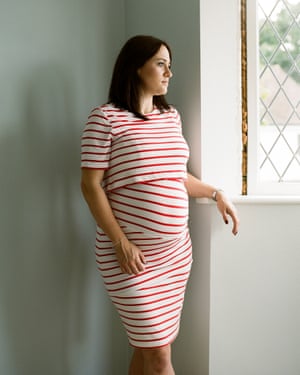
To Quenby, the idea that intralipids might prevent miscarriage is so ridiculous that it makes her double up with laughter. It is, after all, nothing but a mixture of fat and eggs. “People pay the earth – I say, if you want that, just go and have a cream cake,” she hoots.
I ask how she explains the high success rates at clinics that offer immune therapy (my miscarriage clinic has a success rate of 80%, for example). Well, Quenby says, that could be due to other factors. In fact, the success rate at her own hospital for treating women with two miscarriages is also 80%. And half of those who are treated as part of the hospital’s trials are on a placebo.
“I wouldn’t be willing to go through a pregnancy without it now,” says Lara, a 32-year-old beauty therapist, of immune therapy. We meet in a cafe in a shopping centre in Surrey. She is sipping an iced latte. When she stands up, her dress shows off her lovely bump. Lara is one of the steroid success stories. She suffered four miscarriages before her current pregnancy, which was sustained by steroids and intralipids in the critical first trimester. The drugs’ only side-effects were, she says, “insatiable hunger and a moonface”.
Lara says she understands why the NHS cannot offer experimental therapies. On the other hand, it pains her to think that women are suffering because they cannot afford private fees. She and her husband scraped together £5,000 for the tests, appointments, drugs and scans. “Steroids are a cheap drug,” she says. “For the same cost, people go through four, five rounds of failed IVF.”
At the end of the day, I don’t think any of them know. They just pile on the medication and hope for the best
Even within the NHS, a small rebellion seems to be stirring. One nurse quietly tells me that she owes her two children to private immune therapy; she never mentions this to her sceptical bosses. But sometimes, when she sees patients in great distress, she slips them a piece of paper with some relevant links. Unsurprisingly, the private doctors think this rebellion will eventually spread and the sceptics will eat their words. I hear more about this when I visit Dr Yau Thum at the Lister Fertility Clinic in west London. In the waiting area, I find the atmosphere I am so used to by now: a cluster of women looking apprehensive, silently leafing through newspapers or checking their phones as we all avoid each others’ eyes.
Thum uses immune therapy to treat IVF patients, and says it has helped many apparently hopeless cases. He argues that in Japan, Spain and the US, the field is much more accepted. “They have a lot of reproductive immunology research there. People have approached the topic with an open mind, rather than having this fixed idea about NK cells, these negative feelings.”
A couple of weeks after my intralipid infusion, I miscarry my twins. At the follow-up scan at an NHS hospital, the sonographer suddenly swivels round her monitor to show me my empty womb. Where a week before I saw two black blobs, there is now a fuzzy, grey void. The shock of the image rips away every shred of self-control. I stumble out of the room in tears, overwhelmed by feelings of emptiness and loss.
Despite the grief, I am not ready to give up. Did I not fall pregnant surprisingly quickly? Is it not worth another try? The reality is that scientists and patients have fundamentally different views on what makes a treatment worthwhile. Scientists think in terms of broad statistics, and the balance between potential harm and benefit. Patients think: if there is even the tiniest chance that this will save my baby, I’ll gladly put up with a racing heart.
On a hot day in August, I meet 38-year-old Brie and her daughter Rosa at their Buckinghamshire home. Rosa is whizzing in and out of the garden in her nappy, chatting and giggling, fetching apples and a giant plastic dinosaur from outside.

Brie and her partner began trying for a baby when she was 30. She suffered three miscarriages. Steroids failed to help. Eventually, they paid £12,000 for a private round of IVF, again accompanied by immune therapy. The result was Rosa. Does this mean Rosa owes her life to immune therapy? It’s possible, Brie thinks – or it could simply be that Rosa was the strongest embryo of them all.
“I wanted to throw everything at it,” Brie says. “At the end of the day, I don’t think any of them know. They just pile on the medication and hope for the best.”
***
It is summer, and I decide to start another round of steroids. Again, I fall pregnant straight away, and have another infusion of sterile mayonnaise. Other than that, I think about the pregnancy as little as possible. My husband and I go on a cycling tour along the Loire. I have not cycled in years, but wake up feeling fresh and strong, with not a hint of a muscle ache (no wonder steroids are so popular with cheating athletes). When I get home, I write this article before the first scan, so that the outcome won’t influence my reporting. I stop before the end, not knowing if it will be happy or sad.
Neither of us sleeps the night before the scan. I tell myself that what will be, will be. In the morning, I look at adoption sites and remind myself that there are many ways to build a family. During the scan, I ask the doctor not to show me the screen, almost certain it will be bad news again. Instead, he smiles and says the baby is looking great. Just the right size. Now, four months into the pregnancy, things seem to be going well – though like many who have had miscarriages, I am still fearful before every check-up.
I am aware that this proves nothing about the steroids. I am aware that things could still go wrong. But sitting in the doctor’s room, none of that matters. What matters is hearing the baby’s heartbeat. Such a loud, strong heartbeat for such a tiny little thing.
Can mayonnaise cure my infertility?

