Indigenous etiketine sahip kayıtlar gösteriliyor. Tüm kayıtları göster

7 Mart 2017 Salı

Funding to two Indigenous sexual health programs cut without consultation

The federal government decided to stop funding two long-running Indigenous sexual health programs without consultation or analysis, and despite a growing sexual health crisis in the Top End, Senate estimates has heard.


Both organisations have accused the government of shortsightedness, and said without their services or any feasible replacement Indigenous LGBTQI people will be less likely to seek medical care.


The Northern Territory Aids and Hepatitis Council’s Aboriginal Sexual Health program, and the Queensland Aids Council’s 2 Spirits program have run for more than 20 years addressing the disproportionately high rate of sexually transmitted infections among Aboriginal and Torres Strait Islander populations.


Both organisations were told last year they should seek alternative funding to continue operating beyond June 2017.


In Senate estimates last week, Department of Health officials said they had done a “desktop review” of programs, which found “really limited evidence that these programs, which we’ve been funding for decades now, have really had any impact”, according to Bobbi Campbell, the first assistant secretary at the department.


Asked if the department had asked the NT and Queensland programs to partner with the department for an evaluation, Campbell said no. “We need to look at this from national perspective.”


The Queensland Aids Council’s executive director, Michael Scott, said his organisation had more than two decades of experience and community rapport, and their annual funding of $ 451,000 was a “drop in the ocean” for the work they did.


“We employ four Indigenous staff and they work from a whole-of-community approach, which means even though we’re funded to work with Indigenous gay men and sistagirls, we do remote outreach to Indigenous remote populations, to the entire community,” he said.


“It is a really important service because we also do training for other organisations, such as Aboriginal medical services, on how to appropriately work with Indigenous gay men and sistagirls.”


During the estimates hearing department officials also pointed to the rising rates of STIs and HIV in Indigenous populations, particularly the remote communities where the two organisations work. While the rate of new cases of HIV among non-Indigenous men and women stabilised in the four years to 2015, the rate among Indigenous men doubled.


Aboriginal and Torres Strait Islander men were twice as likely to have HIV than non-Indigenous men, according to the University of New South Wales Kirby institute for infection and immunity in society, which also reported rates of chlamydia, gonorrhoea and syphilis were, respectively, three, 10, and six times greater than among the non-Indigenous population in 2015. Remote and very remote areas saw even more substantial differences.


Last year the number of syphilis cases in the NT increased to 229 from just 14 in 2012. The high rate is set to continue in 2017, with more cases reported in January than for the whole of 2012.


Scott said his employees had been told people in the community would probably not seek care elsewhere once 2 Spirits closed.


“They forgo health care because they’re not comfortable walking through the door,” he said. “They’ll be living with STIs because they aren’t getting tested. That’s not just a health issue for them but for their communities as well.”


Daniel Alderman, a care and support coordinator for the Northern Territory Aids and Hepatitis Council, said his organisation had heard similar reports.


“This directly affects the most marginalised population we work with, Indigenous clients, [who] as you know suffer significant trauma,” he told Guardian Australia.


“Then we have seen more marginalised communities – sistagirls, brotherboys … they’re shunned from their communities that they live in and suffer significant stigma and discrimination.


“It’s cutting funding to Indigenous employment and one of the common things we hear from our Indigenous clients is they don’t want to access general or Aboriginal medical services because they fear they’ll be discriminated against.”


The Labor MP Warren Snowdon said the government didn’t just fail to perform an evaluation but “ignored the fact that these organisations had been operating for 21 years and providing an important service”.


“It beggars belief they can be canning these programs without any transition to other programs and leaving exposed these people who are involved [to] sexually transmitted infections and Aids,” he told Guardian Australia.


He said the cost of prevention far outweighed the cost of treating someone with HIV, and accused the government of “wiping its hands” of the responsibility.


“You’re prepared to pay for the treatment of HIV … but you’re not prepared to pay upfront for the prevention programs,” he said. “It doesn’t make sense.”


The office of Indigenous health minister, Ken Wyatt, was contacted for comment.


Funding to two Indigenous sexual health programs cut without consultation

23 Eylül 2016 Cuma

Indigenous health: a third of disease suffered is preventable, says study

More than a third of the burden of disease experienced by Indigenous Australians could be prevented, with tobacco and alcohol use, high body mass, physical inactivity, high blood pressure and diet contributing to their illnesses, data released by the Australian Institute and Health and Welfare shows.


The institute examined the number of years of healthy life lost through living with an illness or injury, described as the non-fatal burden, and the number of years of life lost through dying prematurely from an illness or injury, described as the fatal burden.


Using 2011 data from the Northern Territory, Western Australia, New South Wales and Queensland, it found that chronic diseases such as diabetes and heart disease caused 64% of the total disease burden among Indigenous Australians.


Mental and substance use disorders were responsible for 19% of this burden followed by injuries including self-harm (15%), cardiovascular diseases (12%), cancer (9%) and respiratory diseases (8%).


Assoc Prof Aunty Kerrie Doyle from RMIT University’s school of health and biomedical sciences said it was “disturbing” that the third most common cause of deathfor Indigenous people were injuries, such as through suicide, violence including domestic violence, and alcohol poisoning.


“We must address this, it’s just so sad,” she said. “We need to address mental health and social determinants of health, certainly through looking at things like social inclusion, community inclusion.


“We need to think about how we can foster resilience in our Indigenous youth, and we need more mental health clinicians and, specifically, Indigenous mental health clinicians who are trained to the same standards as everyone else.”


While the gap in disease burden between Indigenous and non-Indigenous Australians remained significant, Friday’s report found that between 2003 and 2011 the total burden of disease in the Indigenous population fell by 5%, with an 11% reduction in the fatal burden.


Infant death rates have fallen, which Doyle said was thanks to a reduction in maternal smoking rates, better access to healthcare and effective maternal education programs.


But there was a 4% increase in the non-fatal burden over the same period, suggesting a shift from dying prematurely to living longer with disease.


Prof Ian Anderson, the foundation chair in Indigenous health at the University of Melbourne, said the report was “critical” because it highlighted where governments needed to invest. “Until 2008 there hadn’t been a significant investment in Australia in anti-smoking programs for Indigenous Australians at a national level,” he said.


“Based on an earlier analysis of burden of diseases it was obvious smoking was a major factor in diseases, and as a result the investment was made.”


The Heart Foundation’s spokesman for Aboriginal and Torres Strait Islander heart health, Simon Dixon, said the report highlighted that many barriers existed in regard to service access and delivery of best-practice care. More than one in four Aboriginal and Torres Strait Islander people had problems accessing health services, he said.


“For historical, geographical and cultural reasons, healthcare services remain under-utilised by Aboriginal and Torres Strait Islander peoples,” Dixon said. “As a result, poorer health and lower quality of life become the ‘norm’ until a critical event like a heart attack happens, which, unfortunately, is too late for many.


“It has been estimated that if Aboriginal and Torres Strait Islander peoples achieved the same level of cardiovascular health as non-Indigenous Australians, this mortality gap could be closed by 6.5 years.”


The NT and WA had higher rates of Indigenous burden of disease than NSW and Queensland, the report also found.


Indigenous health: a third of disease suffered is preventable, says study

7 Eylül 2016 Çarşamba

"Shocking" number of Indigenous teenagers rate happiness at zero

The Indigenous leader Tom Calma says he is “shocked” by a Mission Australia survey that found 10% of young Indigenous men and 5% of young Indigenous women rated their usual mental state as “very sad”, compared with just 1% of non-Indigenous people of the same age.


The national Aboriginal and Torres Strait Islander youth report 2016, released on Thursday, asked 1,162 Aboriginal or Torres Strait Islander teenagers aged 15 to 19 to rate their general happiness out of 10, where zero was “very sad” and five was “not happy”.


One in 10 young Indigenous men and one in 20 young Indigenous women rated their happiness as “zero”, compared with one in 100 non-Indigenous respondents.


Calma, a former Aboriginal and Torres Strait Islander justice commissioner who is now chancellor of the University of Canberra, said he was “not easily shocked” but that Mission Australia’s report “rang a loud alarm”, particularly when coupled with high rates of Indigenous suicide.


The suicide rate among Indigenous people aged 15 to 24 is four times higher than for non-Indigenous people of the same age. In children under 14, the rate is nine times higher for Indigenous people than non-Indigenous people.


Calma said the report showed the need for a “fundamental shift” in policies and services aimed at Indigenous youth. “We must re-set the relationship so that Aboriginal and Torres Strait Islander people are genuinely and meaningfully engaged in policymaking,” he said in a foreword to the report.


“It is my hope, as these young people grow to become leaders in their culture, communities and nation that government policies and programs will be made with them and not for them.”


The survey was conducted in 2015 and had 18,727 respondents, of which 6.2% were Indigenous. About 3.5% of the Indigenous respondents said they spoke an Indigenous language at home.


Indigenous respondents were more likely to have an unstable home life, with 30% saying they had spent time away from home in the past three years because they felt they could not go back, compared with 15% of non-Indigenous respondents, and 36% saying they had left home more than 10 times in that period, compared with 25% of non-Indigenous respondents.


Indigenous respondents also showed higher levels of concern about gambling, drugs, discrimination, suicide and personal safety.


Catherine Yeomans, the chief executive of Mission Australia, said the results showed the need for an urgent rethink of how programs and services are delivered to Aboriginal and Torres Strait Islander people. “Australia has a moral, social and economic duty to support all young people to reach their potential,” she said.


“And sadly, this report shows we are failing miserably, with too many Aboriginal and Torres Strait Islander young people falling through the cracks. This is not a sustainable way for us to proceed as a nation and to me it suggests a divided society.”


But the survey also showed high levels of participation in education, with 84.3% of Indigenous respondents saying they were engaged in full-time education and 35.1% saying they planned to attend university. That was higher for young Indigenous women, with 44.8% saying they planned to go to university.


Half of all Indigenous respondents said they were confident of achieving their goals.


Yeomans said services should be calibrated to help young Indigenous people achieve. “Their ambitions are often thwarted by the lack of age and culturally appropriate mental health services, alcohol and drug services and homelessness services,” she said.


“These gaps in the service system are leaving Aboriginal and Torres Strait Islander young people unsupported during the important time of transition to adulthood and should be urgently remedied.”


"Shocking" number of Indigenous teenagers rate happiness at zero

25 Temmuz 2016 Pazartesi

Indigenous suicide is a humanitarian crisis. We need a royal commission | Dameyon Bonson

The right of self-determination of all people is a fundamental principle in international law, yet within the prevention of suicide for Indigenous Australians, that has been obstructed. Until now.


Recently it was announced that Black Rainbow will become the first peak Indigenous LGBTI body. You want to know why this is important? Let me tell you.


5.2% of Indigenous Australian lives are lost to suicide but as yet, there is no Indigenous organisation driving policy to combat this devastating problem. I estimate that there are between 10,000 to 15,000 same sex attracted Indigenous Australians. Same sex attracted people in Australia are up to 14 times more likely to die by suicide. So as Indigenous same sex attracted Australians, we rank at the highest of the highs in terms of suicide rates.


Related: Indigenous suicide rates in Kimberley seven times higher than other Australians


Our indigeniety is not the cause of these suicides. From my lived and from my professional experience, I can tell you the drivers of suicide for Indigenous people are many, and they are multi-factorial, multi-faceted and multi-layered. Therefore, our suicides cannot be viewed or treated just within the scope of a pathogenic paradigm, or in other words, we cannot medicalise the suicide and thus the person too. As this approach continues, and if we let it continue, Indigenous people will continue to be seen as the bearer of the problem and not the holder of the solution. We need to be more about franchise than empowerment – or at very least invest in both.


As an Indigenous Australian gay male I know that when it comes to the suicide of gender and sexuality diverse people (LGBQTI), our solutions are not pathologised. Efforts instead are made to combat what we call the drivers of suicide ideation and elevated risk of psychological distress. These drivers are bigotry and hatred. It is not our diverse genders and sexualities that cause us distress – it’s the homophobia, transphobia and the social exclusion.


The same goes for us, as Indigenous Australians. It is not our indigeniety that causes us distress. It is the drivers of racism, whiteness and social exclusion. Over many years, I have witnessed the whiteness in suicide prevention and its imagined white supremacist ideology that excludes Indigenous Australians. This year I experienced heterosexism. Heartbreakingly, this was from within my own mob. Heterosexism works on the assumption all people are straight (heterosexual) – because the majority of people are straight, the needs of us whom are diverse in sexuality and gender can unintentionally be viewed as secondary.


But I want to give you an example of whiteness in this space. Suicide Prevention Australia (SPA) and its subsidiary, the National Coalition of Suicide Prevention (NCSP) both proclaim to be national representatives, ie for all Australians. But did you know that there is not one Indigenous Australian as part of the executive or leadership of either of them?


There are 30 organisational members of the NCSP, and not one is an Indigenous peak body or representative. That both SPA and the NCSP are cognisant of this exclusion but have done nothing about it is a classic example of systemic racism.


Recently I was told that “SPA doesn’t have representatives of ‘other’ high risk groups either”. Indigenous Australians are first peoples of this country – we are not we are not an “other”. Conflating our plight against colonialism with the plights of all marginalised/high risk groups cloaks the specific needs of Indigenous people and the humanitarian crisis of Indigenous suicide. As stated earlier, 5.2% of Indigenous Australian lives are lost to suicide. We are not another high risk group. We are the highest risk group in the country; 12th highest in the world.


With our new status, Black Rainbow will be able to provide expert advice at the intersection of racism and homophobia and how they affect our lives. We’ll advocate for a more inclusive suicide prevention space. But most importantly, we will seek out solutions to the high rates of Indigenous suicides, using a method not of pathogenesis. This current pathogenic approach is not doing our mob any favours: hetero, homo or trans.


Black Rainbow will take formation in the coming months and soon we will be inviting peak Indigenous organisations to form our own coalition for the prevention of Indigenous suicide.


Related: Health service calls for royal commission into Indigenous suicide rates


If my years on the frontline preventing suicide and tic-tacking 35,000km plus across the remote north west, have taught me anything, it is that self-determination is an essential factor in the fight against suicide.


I hope that together the peak bodies of Aboriginal and Torres Strait Islander health can unify and collaborate to address the core drivers of these suicides. Of course, non-Indigenous peak bodies are more than welcome to join, but their function and role will be as advisory members. We may or may not match the cost of having to join the NCSP, because as Indigenous people we know that capitalism is not the friend of the impoverished.


I am laying down the new rules of engagement in Indigenous suicide prevention and they begin with: “Nevermore, will something proclaim to be for us, without us. That stops today”.


Bring on the Royal Commission into Aboriginal and Torres Strait Islander suicides.


Dameyon Bonson is a human rights award winner and founder of Black Rainbow.


Indigenous suicide is a humanitarian crisis. We need a royal commission | Dameyon Bonson

26 Haziran 2014 Perşembe

Indigenous wellness and schooling dangers impartiality by move to PMs office

The outgoing chair of the Council of Australian Governments reform council has warned of the loss of an independent voice on Indigenous health and training when the prime minister’s workplace requires on the process of reporting outcomes from the Closing the Gap campaign.


The council’s final report, a supplement that focuses on well being outcomes for Indigenous individuals, was launched on Thursday, with the council chairman, John Brumby, warning the proposed $ seven co-payment to see a GP could lead to worsening overall health in the Indigenous community.


The council is currently being wound up on 30 June as portion of the government’s price range measures and the prime minister’s office will presume accountability for reporting on Closing the Gap outcomes. Brumby mentioned the council’s reviews had kept the government accountable and assisted emphasis efforts in Indigenous education and overall health, but also showed there was still a long way to go.


“I have a fantastic deal of respect for the Division of the Prime Minister and Cabinet and I’m confident there are individuals with the skills to do that in PM&ampC. However, what the COAG reform council did that was particularly particular was hold governments to account on the promises they have produced, but did so independently of any 1 government,” he mentioned.


“We report independently on the progress of all nine of Australia’s governments – the commonwealth, the states and the territories – in closing the gap. That independence ensured that our reporting was impartial and aim. Who will do this in the long term?”


The report identified lung cancer prices amongst Indigenous folks had been still twice as substantial as amid the non-Indigenous population Indigenous men and women had been waiting longer for elective surgery and to get into nursing residences and were drinking considerably much more alcohol in single sessions.


A ten-year gap remains in existence expectancy but youngster mortality and immunisation costs have improved greatly.


Brumby warned the government towards spending budget measures which could harm the possibilities of reaching Closing the Gap targets and lead to specific struggling between Indigenous individuals.


“As you know, the expense of healthcare is quite topical at the second. Australians are becoming asked to contemplate what they would pay for accessibility to a major care physician,” he mentioned on Thursday in Melbourne.


In accordance to the council, 12% of Indigenous people previously delayed or determined against a check out to a GP because of value and 34.6% delayed or did not gather prescribed medicine due to expense.


“When people begin to avoid going to their primary or neighborhood care supplier due to the fact of price or other reasons, they frequently finish up in hospital,” Brumby mentioned.


“And what we identified was that costs of potentially preventable hospitalisations for Indigenous folks were previously 3 to 4 occasions greater than charges for other Australians. These benefits provide context for governments when they are considering policies close to entry to principal care.”


He added: “Governments ought to be cautious that they do not place up barriers to healthcare access for Indigenous folks as it may undo the very good work that has been accomplished in this room in excess of 5 years and finish up creating a distinct burden on the hospital program.”


According to the council’s report, in 2011–13 the Indigenous grownup smoking price was 41.1% even though the non-Indigenous charge was sixteen% and rates for the two groups had fallen given that 2008.


Of Indigenous 5-year-olds, 89.eight% are entirely immunised, compared with 90.eight% of all children. In 2012, Indigenous one particular-year-olds had been behind other a single-12 months-olds in currently being entirely immunised but they caught up from when they had been about two years previous.


Indigenous people waited an common of forty days for elective surgical treatment in 2012–13, while other Australians waited an regular of 36 days.


The report says 14.2% of Indigenous folks waited nine months or a lot more for a nursing property location in 2012-13 whilst 11.seven% of non-Indigenous folks waited far more than nine months. This was an improvement on 2011-twelve, when 18% of Indigenous individuals waited nine months or much more.


Even though there was no considerable variation in the risk of long-term harm from alcohol, the report identified Indigenous people tended to drink a lot more in a session.


Of individuals who had drunk alcohol in the previous year, 44% of Indigenous guys reported drinking 11 or a lot more common drinks in one session, in contrast with 33.five% of non-Indigenous guys. Of Indigenous girls, thirty.eight% reported they had drunk 7 or much more regular drinks in a session, compared with 21.% of non-Indigenous ladies.


“What we identified was that Indigenous people had been three times as very likely to die of an avoidable cause. This indicates that 3-quarters of deaths of Indigenous folks aged under 75 have been avoidable both by means of early prevention or remedy,” Brumby said.


“By way of comparison, two-thirds of all Australians died from avoidable triggers. It is a tragedy to think of all of those taken just before their time purely because they did not acquire care early adequate or did not make the lifestyle alterations to stop ailment.”


Indigenous wellness and schooling dangers impartiality by move to PMs office

20 Mart 2014 Perşembe

Indigenous girls face higher breast cancer risk

Indigenous women are far less likely to survive breast cancer than other Australians, in accordance to a review that exhibits numerous are diagnosed also late for successful surgery.


Aboriginal women tend to be younger than non-Indigenous Australians when diagnosed, but even then they are most likely to have the illness at a a lot more superior stage.


Their chance of death from the ailment is practically a third larger than other Australians, according to a 7-12 months overview of the 27,850 NSW sufferers carried out by Cancer Council NSW.


Although breast cancer awareness has improved, far more function is necessary to get rid of barriers to screening and early diagnosis, researcher Rajah Supramaniam says.


His review, published in the journal BMC Cancer, shows a relatively small proportion of Aboriginal females acquire surgical treatment for their breast cancer.


“That’s driving this distinction in survival costs.”


Apart from late detection, earlier investigation exhibits Aboriginal ladies delay treatment method for practical and psychological causes.


These consist of transport or accommodation concerns as well as concern of currently being taken care of in an unfamiliar spot away from loved ones and friends.


Even though screening vans check out remote towns, Supramaniam says some women struggle to go for a mammogram due to the fact of family and work commitments.


“Awareness of what breast screening is and how it improves survival is a large portion of the remedy.”


People anxious about screening should speak to their GP or phone the Cancer Council helpline, he says.


“Cancer Council personnel have had cultural-respect training and are sensitive to troubles that may concern Aboriginal women.”


• The Cancer Council helpline is 13 11 twenty.


Indigenous girls face higher breast cancer risk

13 Şubat 2014 Perşembe

Coalition announces inquiry into Indigenous alcohol harm

The Abbott government has set up a parliamentary inquiry into the dangerous use of alcohol in Indigenous communities.


Indigenous affairs minister Nigel Scullion mentioned governments at all amounts have to unite to tackle the epidemic of alcohol abuse “or risk condemning these communities to a lifestyle of alcohol-fuelled poverty”.


“This inquiry will emphasis on very best practice to shape plans and practices that will reduce the scourge of alcohol in Indigenous communities,” he mentioned in a statement.


The decrease house’s standing committee on Indigenous affairs will look into what aspects contribute to hazardous consuming across Indigenous communities and ways to minimise alcohol-connected harm.


The committee’s chair, Liberal MP Sharman Stone, explained the inquiry was not singling out Aboriginal and Torres Strait Islander people as the only group that has issues with alcohol.


But she stated there is concern those in the community who do drink, do so at riskier levels that have greater well being-connected impacts.


The Northern Territory’s shadow minister for Indigenous affairs criticised the inquiry when it was very first proposed in January. Ken Vowles termed the inquiry “insulting” and “disgusting”.


Submissions to the inquiry are due by 17 April.


In a separate advancement, on Thursday it was announced bars in Darwin had agreed to restrict the variety of drinks patrons can purchase in a bid to lessen alcohol-associated violence in the city.


Underneath the Australian Hotels Association initiative, member bars agreed to restrict drinks to four per consumer during happy hours and soon after midnight, and to ban shots soon after 1am.


Shots with an alcohol material of far more than 51% will be banned altogether.


“It’s important we’re witnessed as part of the remedy and not just element of the issue,” explained Mick Burns, senior vice president of the AHA NT.


For the past year chief minister Adam Giles has refused to employ a Newcastle-sort answer to alcohol-associated violence in the NT, and advised an AHA awards dinner last year that the NT’s drinking culture was a “core social value”.


He denied his government was also shut to the liquor sector.


“Darwin is not Newcastle, it is not Kings Cross, it is not Wollongong, “ he informed reporters on Thursday.


“We don’t want to be a government of a nanny state that puts in area rules without having working in cooperation with regional individuals.”


The new regulations apply only to the Darwin city centre, and there are no strategies to roll it out across the rest of the Territory.


Lord mayor Katrina Fong Lim mentioned Darwin’s night-time economic system was well worth $ 444m a year and “it’s quite important that men and women participate” in it.


The NT government has pointed to statistics exhibiting that per capita, alcohol consumption in 2012-13 was 4% less than the preceding year, and that wholesale provide dropped two%.


Coalition announces inquiry into Indigenous alcohol harm

11 Şubat 2014 Salı

Closing the gap: details and figures on Indigenous advancement

The Australian prime minister, Tony Abbott, has made his very first deal with on the “closing the gap” initiative to parliament. The most positive final result from his report was that the child mortality target is on track to be met.


Coag set specific targets for Closing the Gap in 2008, which included halving the gap in mortality rates between Indigenous and non-Indigenous youngsters under the age of 5 inside of a decade.


Guardian Australia has covered a number of aspects of the closing the gap initiative, as properly as other disparities in between Indigenous and non-Indigenous Australians not covered by the initiative, such as incarceration rates. Here’s a round-up of all the coverage and comment:


Indigenous access to early childhood education and Year twelve completion is on the up, but Indigenous students are struggling in the years in amongst.


The Northern Territory is the only Australian state or territory on track to close the lifestyle expectancy gap in between Indigenous and non-Indigenous Australians inside of a generation – but it will still have the highest child mortality rate in the country.


Indigenous Australians are nevertheless more likely to die sooner than non-Indigenous Australians, in spite of government initiatives to shut the gap. The latest mortality price figures show the charge of deaths per a hundred,000 Indigenous Australians is far more than twice that of non-Indigenous folks.


A misplaced generation of disadvantaged younger men and women not engaged in function or examine have been warned they could face a “life sentence of poverty and exclusion” in light of a government report that finds vast discrepancies in educational achievement based on wealth.


Indigenous Australians are suffering disproportionately from lengthy hospital waiting occasions as the quantity of cataract surgeries and knee replacements surge. The yearly hospital statistics report demonstrates small improvement in overall waiting times for elective surgery at the national degree.


Setting aside element of a welfare advantage for staples such as food has existed in the NT given that 2007 and the plan has affected some positively, some negatively.


The high court identified that social disadvantage should be taken into account in sentencing but sadly presented no solutions regarding the disproportionate imprisonment of Aboriginal individuals.


Practically 90% of Aboriginal young children underneath two years old endure anaemia at least once due to the fact they are not receiving ample nutrition in remote communities in the Northern Territory and Western Australia, a examine by the Fred Hollows Basis has found.


Tony Abbott has attempted to justify his employment participation policy that pays long-term unemployed on Newstart and Youth Allowance bonuses of up to $ 15,500.


Health expenditure on potentially preventable hospital treatment method of Indigenous Australians is far more than double the expenditure on non-Indigenous Australians, a new report demonstrates – but the trigger is unclear.


The gap in between Indigenous and non-Indigenous incomes has widened but rising entry to schooling could help decrease it, according to a new report.


Western Australia has refused to give in-principle support to re-signing the closing the gap Indigenous health agreement, instead announcing it will fund initiatives itself in excess of the next yr.


Aboriginal prisoners make up a quarter of the prison population yet account for only three% of the basic population.


Closing the gap: details and figures on Indigenous advancement

3 Şubat 2014 Pazartesi

Indigenous diet plans can aid fight modern illnesses, say health experts

Unprecedented ranges of persistent non-communicable ailments are prompting calls to revert to the diets of our ancestors to regain lost nutrients.


It is believed that such a shift would assist to improve society’s relationship with the Earth and restore human and environmental health.


“The rise of the industrial model of agriculture has contributed greatly to folks becoming disconnected from the foods on their plates,” says Sarah Somian, a France-primarily based nutritionist.


Many traditional and non-processed meals consumed by rural communities, this kind of as millet and caribou, are nutrient-dense and offer healthier fatty acids, micronutrients and cleansing properties broadly lacking in diet plans common in large- and middle-cash flow countries, say experts.


Indigenous diet plans worldwide – from forest food items this kind of as roots and tubers in areas of eastern India to coldwater fish, caribou and seals in northern Canada – are varied, suited to neighborhood environments, and can counter malnutrition and disease.


“For several tribal and indigenous peoples, their meals methods are complex, self-adequate and supply a very broad-based mostly, nutritionally various diet plan,” says Jo Woodman, a senior researcher and campaigner at Survival International, a Uk-based mostly indigenous advocacy organisation.


But the disruption of traditional lifestyles due to environmental degradation, and the introduction of processed food items, refined fats and oils, and basic carbohydrates, contributes to worsening overall health in indigenous populations, and a decline in the manufacturing of nutrient-wealthy foodstuffs that could advantage all communities.


“Traditional foods programs need to be documented so that policymakers know what is at stake by ruining an ecosystem, not only for the indigenous peoples living there, but for everyone,” Harriet Kuhnlein, founding director of the Centre of Indigenous Peoples’ Nutrition and Atmosphere at McGill University, Canada.


Since the early 1960s, financial growth, urbanisation and a international population boost to more than seven billion have multiplied the consumption of animal-sourced food items – which includes meat, eggs and dairy items – which comprised 13% of the vitality in the world’s diet plan in 2013, according to the Global Livestock Analysis Institute (ILRI) in Nairobi, Kenya. Farm-raised livestock consumes up to a third of the world’s grains, the institute notes.


Agricultural expansion, some of it to cultivate far more grains, accounts for 80% of the world’s deforestation, says the UN Environmental Programme.


With the international population expected to rise to some 9 billion by 2050, 50% a lot more foods need to be made to feed these men and women, based on whether or not there is a healthier ecosystem. “When environments are destroyed or contaminated, this influences the food they can give,” Kuhnlein says.


Indigenous foods methods – gathering and preparing foods to maximise the nutrients an surroundings can provide – selection from nomadic hunter-gatherers this kind of as the Aché in eastern Paraguay, the Massai pastoralists in northern Kenya, and herding and fishing groups including the Inuit in northern Canada, to the Saami of Scandinavia and the millet-farming Kondh agriculturalists in eastern India.


But the trait these groups share is a keen information of how to eat nutritiously with no damaging the ecosystem. “Indigenous peoples’ food programs have treasures of knowledge from prolonged-evolved cultures and patterns of living in neighborhood ecosystems,” says an FAO-supported research on indigenous meals methods, nutrition, and wellness co-authored by Kuhnlein in 2009.


In recent years, grains this kind of as quinoa, fonio and millet – long harvested by indigenous and rural communities in establishing nations but more and more ignored by a younger, richer generation that prefers imported food items – have rather grown in recognition in created nations.


Study, marketing and advertising and donor-funded financing have aided increase awareness of the capability of these substantial-protein grains to lessen cholesterol, offer micronutrients and lower the danger of diabetes. “Simply because of the a lot of wellness advantages of these forgotten, or till [lately] unknown meals, valuing the wisdom of indigenous cultures [and] earlier generations is crucial for lowering condition and irritation,” Somian says.


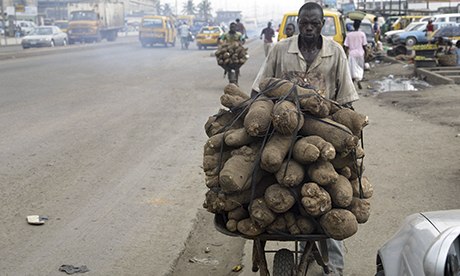
MDG : A street vendor hawks tubers of yam in Lagos, Nigeria A street vendor hawks a bundle of yams in Lagos, Nigeria. The tubers, which can be boiled or baked, are rich in vitamin C


The Kondh neighborhood in Odisha state typically grows up to 16 types of millet, according to Debjeet Sarangi, head of Residing Farms, a neighborhood NGO that has worked with marginalised indigenous farmers because 2005.


But millet-expanding among the approximately one hundred,000 Kondh, who are spread more than about 15,000 villages, has dropped by almost 63% from an estimated 500,000 hectares in 1975 to much more than 200,000 hectares in 2008. This is because land is getting converted to paddy in exchange for government-subsidised rice programmes offering refined white rice, even although it carries wellness dangers.


“When there is so considerably malnutrition present in the area, why do you substitute land which has been expanding nutritious foods [with rice paddies]?” says Sarangi, whose NGO reported in 2011 that 75% of below-fives in Kondh weighed also little for their age, and fifty five% were also short for their height group, a signal of chronic malnutrition.


One more so-called superfood declining in acceptance is spirulina, a variety of cyanobacteria that grows in ponds and is a staple in many traditional food programs, this kind of as amongst the Kanembu in Chad.


Spirulina has the likely to boost immunity, decrease irritation, decrease allergic reactions, and provide a healthful source of protein, according to the Langone Medical Centre of New York University in the US.


“There is a deep irony in the reality that numerous dieticians are advocating [traditional and indigenous food items and diet programs] and yet [the] contemporary [western] diet program is what is becoming pushed on tribal peoples close to the world, with devastating results,” Woodman says.


“We have lost our major relationship with our globe all around us,” says Dr Martin Reinhardt, assistant professor of Native American studies at Northern Michigan University.


Native American elders historically planned 7 generations ahead when making foods methods, educating each generation that it was their duty to ensure the survival of the seventh, says Reinhardt, an Anishinaabe Ojibway citizen of the Sault Ste. Marie Chippewa Native American men and women in Michigan state. They did this by hunting and gathering only what they necessary, conserving sources this kind of as wood and water, and safeguarding foods biodiversity.


But when Native Americans have been forced to assimilate, historical accessibility to this dietary knowledge was lost, Reinhardt points out. In accordance to the special diabetes programme for Indians, run by the US federal government’s Indian health service , the 566 registered indigenous peoples in the US have a diabetes charge 9 occasions greater than the national regular.


Similarly, rates of the illness among Very first Nations and Inuit groups in Canada are up to 5 instances greater than the countrywide common, according to the government’s federal overall health division.


In Laos, northern highland minorities such as the Yawa, Htin and Khmu typically consume forest-based diet plans, which includes wild pigs, birds, bamboo shoots, banana flowers and yams wealthy in vitamin C. But in recent decades the Laos government has moved 1000′s of individuals from the highlands to towns for economic reasons, documented in a 2012 report by the Worldwide Fund for Agricultural Development.


“Communities [have less access] to natural sources than ahead of,” says Jim Chamberlain, an anthropologist and former World Bank advisor primarily based in the capital, Vientiane. He says their standard diet relies on forests and the move has led to a decline in nutritional standing. Malnutrition costs in Laotian underneath-fives are amongst the highest in south-east Asia.


Even though reinstating standard foods techniques is key for everyone’s wellness, as properly as for the atmosphere, the lack of a market to help superfoods poses serious difficulties, advocates say.


In northern Canada, many of the fishes rich in omega-3 fatty acids – a staple in the traditional diets of Arctic tribes – spawn and dwell in waters more and more tainted with mercury, according to the government.


Deforestation throughout the world, frequently to make way for big-scale agricultural production, curtails the nutrients that can be gathered from forests.


Significantly environmental destruction is a consequence of modern day society’s detachment from its meals methods, says Reinhardt, who co-ordinated a UNM undertaking named decolonise your diet regime, which ran from 2010-12 and aimed to teach folks the website link in between meals, culture, wellness and the environment.


“People can, and want to, reconnect with nature in such an intimate way as to rely on it for survival,” he says. “I hope we have not however passed the thresholds [of what the earth can tolerate].”


Indigenous diet plans can aid fight modern illnesses, say health experts