Politicians etiketine sahip kayıtlar gösteriliyor. Tüm kayıtları göster

6 Nisan 2017 Perşembe

What does Labour"s school meals policy mean for families, teachers and politicians?

Jeremy Corbyn’s announcement of a £1bn plan to introduce a VAT tax on private schools to pay for free school meals for all primary children has divided opinion.


The Labour policy was greeted warmly by many health, welfare and education experts, while others pointed to potential pitfalls in its logic. Politically, it seems the Labour leader may be on to a winner, but how has the plan been greeted by families, teachers and politicians?


Families


The extension of free meals to all primary school pupils would certainly boost attempts to tackle poverty, lifting thousands of children above the breadline, providing financial respite for hard-pressed parents and removing the social stigma endured by many pupils who qualify already.


An estimated 1.2 million children in England living below the poverty line missed out on free school meals in 2013, according to research by the Children’s Society. Half of these were simply not entitled to support under eligibility rules that restricted entitlement to pupils whose parents were unemployed or earning less than £16,200.


The impact of this eligibility “cliff edge” can be dramatic: while 70% of children on free school meals ate a school canteen lunch regularly, take-up slumps to 20% among the children of poorer parents who are in work, suggesting many parents struggle to meet the £450 annual cost per child.


The coalition’s introduction in 2014 of universal free school meals to all children in the first three years of primary school meant an estimated 200,000 children in poor working families qualified for a free lunch. Extending eligibility to all would help even more of the offspring of the “just about managing”.


Interestingly, about 700,000 families who were eligible for free school meals did not claim them, the Children’s Society estimated. This was possibly because of the stigma attached, especially in schools where children who took up the benefit were segregated in separate lunch queues or required to pay with special tokens.


Universalising free school meals will always raise objections among those who believe it is a poor use of public money. Supporters say richer pupils are not expected to pay for books so why are they for school food? Patrick Butler


Children’s health


Anti-obesity campaigners and experts are clear: free school meals are a weapon in the war against ill health. Whether they are from affluent or hard-up families, many children eat packed lunches that are full of saturated fat and sugar, comprising crisps and cake, chocolate bars and cola.


School lunches, however, have to meet government nutritional standards, including one portion of fruit and one of vegetables every day, a dessert containing 50% fruit at least twice a week and a variety of fruit and vegetables – three different types of each in a week.


Other healthy foods must also be on the menu, such as oily fish at least once every three weeks, wholegrain varieties of starchy food once a week and water, low-fat milk and limited amounts of fruit juice to drink.


There are problems, though, that the new policy would have to address. Children already entitled to free school meals do not always get them. There are forms to fill in, which parents may find difficult if English is not their first language, and there are cultural barriers to signing up. Teachers may be charged with following up those who are eligible, but may be short of time. Sarah Boseley


Teachers


The announcement will be met with mixed reactions from the private and state school sector.


Private schools justify their exemption from VAT and other tax breaks by offering scholarships and bursaries to children from disadvantaged backgrounds, and by partnering with state schools to share facilities and teachers. They claim the imposition of a tax would force some independent schools to close, putting pupils back into the already stretched state system.


According to experts, one in five households with privately educated children earn less than £50,000 a year, suggesting some may struggle to meet a 20% price hike. But only 7% of the UK’s schoolchildren are educated privately – one in five of that number is not very high.


Private school fees have also been increasing at a faster rate than inflation, reaching an average cost of £16,119 a year. For boarding schools it’s over £30,000.Some argue middle class parents are already being priced out.


Others, including former Ofsted chief Sir Michael Wilshaw, support the VAT but say the money raised could be better spent because the most disadvantaged children already receive free school meals. Labour and the teachers’ union say at a time when more families are affected by cuts to benefits, and in-work poverty is soaring, the cost of school lunches can be prohibitive.


Were Labour to roll out a universal policy, they would also have to create a benchmark to measure the performance of the most disadvantaged pupils, as free school meals status is used to identify students that require assistance. Nadia Khomami


Politics


Universal free school meals, paid by higher taxes on free schools, has major political advantages as a policy for Labour. First, it’s catchy and easy to understand, crucial for any policy to have cut-through with voters.


Second, it’s hard for Tories to explicitly oppose without looking heartless or out-of-touch, especially when former Tory education secretary Michael Gove has said he supports adding VAT to school fees.


Speaking in Nottinghamshire at the launch of the Conservative local election manifesto, Theresa May was pressed on whether it was a good idea – and she didn’t knock it. Instead, she dodged the question and claimed Labour “would bankrupt Britain … Schools would find themselves in a parlous condition if Labour were in government because of the way they would be running the economy.”


If the prime minister is reticent to directly criticise a policy that quite literally takes from richer parents to pay for the less well-off, that could mean Corbyn is on to a winner.


The main criticism of the policy is that it will help middle-class kids rather than the poorest, who already receive free school meals. That may be true, but that is unlikely to have significant political cost. No party ever lost votes by being too kind to middle-class parents.


When Nick Clegg introduced free school meals for five- and six-year-olds in the coalition government, the government faced criticism for failing to anticipate the extra costs to schools because of the increased demand.


Corbyn will be hoping to head this off with the VAT announcement, but Ed Miliband – who could easily have come up with something similar himself – was relentlessly attacked for policies like the mansion tax, which commentators said were the politics of envy. Whether Corbyn can avoid a similar criticism will become clearer over the next 24 hours. Jessica Elgot


What does Labour"s school meals policy mean for families, teachers and politicians?

27 Mart 2017 Pazartesi

Demonstrations matter – they create the kind of power politicians despise

The tide is turning and you can feel it on the streets of the world’s capital cities. On Sunday, hundreds of peaceful protesters were arrested in Moscow and St Petersburg, after thousands massed in unsanctioned demonstrations against corruption.


There were similar scenes in Minsk, where punitive taxes on the unemployed have driven people to the streets. In February, half a million Romanians forced their government to abandon a law pardoning corrupt officials, by taking to the streets.


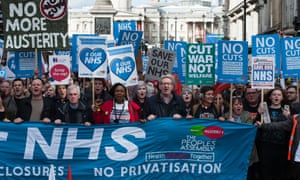
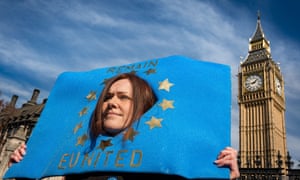
In Britain, in the month of March, three major protests have taken place: a demo to save the NHS that drew up to 250,000 people; a 30,000-strong march against racism; and, on Saturday, a protest in favour of staying in the EU, again numbering more than 100,000 people.


National demonstration in London to protest agains the state of the NHS.


National demonstration in London to protest agains the state of the NHS. Photograph: W Szymanowicz/Barcroft Images

And when Donald Trump’s repeal of Obamacare failed in Congress, although the blow was struck by rebel Republican lawmakers, the force behind it surely came from the thousands of people who swarmed into town hall meetings to berate their representatives in the runup to the vote.


The point is not that “mass action works” – it rarely does, on its own. The point is that it’s not futile. Putting your body on to the street, or into a mass meeting, or getting it thrown into a police van – as happened to hundreds of Russians and Belarusians this weekend – creates power of the kind professional politicians despise.


If you want to understand how irked the political class feels when people exercise their right to protest, study the Twitter feed of MP Owen Smith. The one-time Labour leadership contender didn’t join the Save the NHS demo – but he did find time, at the very moment a quarter of a million people were on the streets – to belittle them. He tweeted to a follower: “Is that how we save it then? With a march? I always thought it was better to win elections and then fund it properly.”


Brief though it is, Smith’s tweet encapsulates an entire political philosophy. The people who ignored Smith’s advice and marched for the NHS understood what the closeted technocrats do not. Mass action creates its own dynamics; they can be massive and far-reaching – despite the scant and bland coverage all demos get on TV and in the press.


In the first place, assembling in a large crowd shows you that you are not alone. And it informs you in great detail about the kind of people you are not alone with. On the NHS demo, it was obvious that huge numbers of NHS workers had turned out, alongside user groups often led by elderly people. Why is that interesting? Because in the modern, privatised and corporatised NHS, the staff are afforded few collective outlets for expression. Coming together – not just as “nurses from Doncaster” but nurses, doctors and patients from Doncaster – breaks down the invisible walls institutional life creates.


On Saturday’s Unite for Europe march, it was – by all accounts – the liberal salariat that predominated. A lot of sarcasm has been aimed that way by the Labour left and the media right but, again, such mass gestures are about finding each other, testing out arguments, and creating and transforming messages.


Unite for Europe march, London.


Unite for Europe march, London. Photograph: Valerio Berdini/Rex/Shutterstock

If you add to all this the experience of resistance to Trump in the US, the global picture becomes interesting. On 21 January the US experienced possibly the biggest mass mobilisation in its history – with an estimated 4.2 million people protesting against Trump’s inauguration in towns and cities across America.


What social media adds to such mobilisations is not just visibility but the intensification of the shared experience. Each block of 1,000 protesters on any demo in the developed world is really a thousand nodes on a network containing tens of thousands of other nodes. It is a moving and incessant information-distributing machine.


And that is why the first move of any government that wants to curtail democracy is to curtail the right to demonstrate. Putin outlawed the majority of planned demos last weekend, but they went ahead regardless. Slammed into the police vans were not just brave but faceless Russians, but people with Facebook and Twitter followers all over the planet.


That’s why demonstrations matter and why, in the name of resisting the growing kleptocracy, racism and authoritarianism of political elites, we should keep on demonstrating.


But demonstrations are never enough. Just as 30,000 people on the streets usually merits only a colourful picture and a caption in the newspaper, what they did afterwards is barely recorded at all. This is why revolts and revolutions always surprise elites, and a media conditioned to see the world through the elite’s viewfinder.


“When the people decide to live …” wrote Tunisian poet Abu al-Qasim al-Shabi, “chains will be broken”. Those words were widely shared in 2011 during the Arab spring.


Revolts happen because elites push things so far that large numbers of ordinary people conclude there is no other option but to resist.


You can do some things at the ballot box: the defeat of Geert Wilders in the Netherlands, the humbling of Paul Nuttall in Stoke-on-Trent and – hopefully – the defeat of Marine Le Pen in France on 7 May. But some challenges require you to don a pink hat, or – as the Russians did – hang a designer sports shoe around your neck, paint an amusing sign, march, take pictures and tweet them to your friends.


When the people decide to live, demonstrations are what they do: and there’s a lot of people demonstrating it as spring gets under way.


Demonstrations matter – they create the kind of power politicians despise

6 Ekim 2016 Perşembe

Spare us the sight of men discussing abortion – especially politicians | Emer O"Toole

Do you know what’s a relief about Hillary Clinton running for president? There’ll be no rage-inducing section in the debates when two men discuss what reproductive rights they’ll attempt to grant or deny women should they be elected.


Oh wait. I forgot about the vice-presidential debate. Darn.


My first reaction to Mike Pence and Tim Kaine’s head-to-head was to try to remember how or why anyone watched presidential debates when they were just two white guys interrupting each other. And my second, when Pence introduced the topic of abortion, was a feeling of creeping dread. These two men were about to climb into the wombs of all American women and plant their flags – an operation every bit as uncomfortable as it sounds.


Elaine Quijano, the moderator, asked both outspokenly religious candidates if they could discuss a time when they struggled to balance their faith and a public policy position. Kaine described his personal struggle in implementing the death penalty. And Pence, in an immaculate segue, talked about how he struggled to balance his faith with a Clinton policy position. On abortion.


I knew what was coming. Because I am from Ireland: a country where male abortion oration has been exalted to an art form. To give examples from just the past week (otherwise the selection would be overwhelming), on Sunday Senator Ronan Mullen wrote a column for the Irish Independent vilifying women who travel to England to terminate pregnancies with fatal abnormalities. For Mullen, these women have denied a sick baby “the dignity of being allowed to reach a natural end. The same day, Archbishop Eamon Martin warned Irish politicians “not to leave their faith outside of the door” when forming abortion policy (which, trust me, they were never planning to do anyway).


I am from a country where, earlier this year, the group Family & Life held a pro-life event in which all three speakers were men. Men who, when questioned, saw nothing strange about the gendered composition of their learned gathering. I’m from a country where national radio shows routinely exclude Irish women from debates about their reproductive rights. I knew what was coming.


Kaine would play the coveted part of the liberal man distancing himself from the immorality of abortion (he would never have one himself), yet magnanimously conceding that he does not have the political right to extend his superior moral code to women. Pence would play the righteous conservative, possessed of the political courage to back up moral convictions that, really, both men share.


Tim Kaine and Mike Pence clash on abortion at vice-presidential debate

On cue, Pence began to speak in a concerned moral tone about the horrors of late- term abortions, even though 98.7% of abortions happen before 21 weeks and, after the murder of Dr George Tiller, there are only four third-trimester abortion providers left in the entire US.


Kaine exposed the wicked ruse of this focus on late term abortion: his opponent – gasp – actually wants to ban all abortions. “Why don’t you trust women?” our liberal ally proclaimed, simultaneously purporting to personally accept Catholic teaching on the issue, ie – that life begins at conception and abortion is evil. But it’s OK, ladies, because that’s just what he thinks in his private head! He would never actually act on it. Just think it. When he looks at you.


An all male discussion of abortion is ne’er complete without some holy verses sweet. It was time for the pair to exchange quotes from the Bible. “Before I formed you in the womb I knew you,” Pence intoned in the actual voice of God, leaving me to wonder if he was talking to sperm because, technically, the almighty does appear to be referencing the period before womb inhabitation.


Pence defended Donald Trump’s publicly expressed opinion that women who have abortions should be punished by saying that Trump isn’t “polished”. But never fear, Kaine was ready with, “a great quote from Matthew.” St Matthew that is. “From the fullness of the heart, the mouth speaks.” Bam! Take that conservative male abortion orator, you just got hallowed-out by the liberal guy.


The next day, a New York Times editorial commended the abortion section of the debate as “a strong moment for both candidates”, which “offered a rare glimpse of politicians intelligently exploring a fraught question”. It noted that the abortion issue has been largely absent from this campaign.


It has been largely absent only if you ignore Clinton’s consistent attention to Trump’s anti-choice rhetoric; how she proudly touts the endorsement of Planned Parenthood (the first endorsement of a primary candidate in the organization’s 100 year history); that she is running on a ticket supporting repeal of the Hyde Amendment, which blocks federal funding for abortion. The abortion issue has been absent only if you ignore the fact that Clinton is about as provocatively pro-choice as any presidential candidate has dared to be.


But Clinton’s feminist politics are beside the point somehow. What’s really exceptional is when two men bare their souls on what abortion means to them. With those pesky women out of the way, they can intelligently explore this fraught question.


Spare us the sight of men discussing abortion – especially politicians | Emer O"Toole

26 Ağustos 2016 Cuma

Politicians have failed the NHS. We need people power to save it | David Babbs

“I have a teenage daughter with heart and kidney failure,” says Jo from Wolverhampton. “Regardless of the great care she receives, her condition can and does suddenly become critical. Her mother lives in constant fear of changes to the NHS and her support system. We must keep a tight hold on our very precious NHS.”


The story of Jo’s family is moving. But it’s not that surprising – most of us have some experience of the NHS as a true life-saver. And sadly, many of us will also recognise the anxiety Jo describes about the future of the NHS.


Elizabeth, from north-west London, has a rare autoimmune disease that requires regular visits to hospital, including overnight stays. She echoes Jo’s fears. “It is imperative that numbers of beds are not cut,” she says, “my last wait for a bed, following complications with an outpatient procedure, was approximately seven hours.” Valerie from Dorset gave 33 years of her career to the NHS as a registered nurse. “Now I am possibly facing cardiac surgery,” she says, “and I need the NHS to support me.”


Many of us have gradually started to feel less confident than our parents and grandparents were that we will be able to rely on the NHS into our old age – let alone that our children or grandchildren will have a service they can trust.


Not all the pressures on today’s NHS are the fault of politicians. We’re living longer. There are more of us. Demand has risen in hospitals and in health centres. But at the same time, government funding for the health service has been dangerously squeezed. Social care is continually neglected, putting even more pressure on hospitals. And successive ministers have refused to listen to doctors, nurses or patients when pushing through politically motivated NHS reorganisations.


Conventional politics has failed us when it comes to the NHS. The voice of ordinary people – the likes of Jo, Elizabeth and Valerie – has never been more needed. And that’s why they and hundreds of thousands of us are taking matters into our own hands. Think back to David Cameron’s costly and damaging NHS reorganisation. Without a people-powered campaign to prevent the worst elements of Cameron’s legislation, the Health and Social Care Act would have had far more harmful consequences.


A new investigation commissioned by the campaign organisation 38 Degrees, where I work as executive director, is published today. Carried out by a team of health policy experts at Incisive Health, it exposes new plans being drawn up for the NHS across England, called “sustainability and transformation plans” (STPs). The investigation has been funded by hundreds of thousands of people making individual donations via the 38 Degrees website. People like Jo, Elizabeth and Valerie have shared their personal stories, signed the campaign petition and donated to fund the research. Independent of party politics, we’ve chipped in to protect the health service we value so much by putting these plans under the spotlight.


The research finds huge funding gaps for local services, which, the experts say, could lead to A&E closures, cuts to beds and mergers of hospitals. Put together, the projected funding shortfalls across England would see a £23bn deficit in health and social care spending by 2021.


Where Jo lives, in the Black Country, there are plans for major changes at Midland Metropolitan hospital, including the closure of A&E. The plans also include the proposal to shut one of two district general hospitals. By 2021, the health and social care system in the Black Country is projected to be £476.6m short of the funds it needs to balance its books while maintaining the same level of care. Where Elizabeth lives, the draft plan indicates “reducing demand for acute services by approximately 500 beds”. That’s health manager-speak for cutting 500 hospital beds.


Our crowdfunded investigation shows that this worrying plan for the Black Country is typical of many others across England.


These kinds of cuts aren’t the fault of local NHS leaders. They’re being planned all across the country, the result of a growing black hole in the funding provided to the NHS by the government. Whether or not Theresa May allows these cuts to go ahead will be a key test of her commitment to protecting the NHS.


The NHS belongs to all of us. So before these plans go any further, local people should have a say on any changes to their services. That’s why almost 250,000 people have already signed the 38 Degrees campaign petition to the health secretary, Jeremy Hunt, calling for full public disclosure of the STPs for each and every one of the 44 areas across England.


No one is suggesting that all changes to NHS services are bad. There may be a good case for some of the changes that are being proposed. But because the plans are not out in the open – we have had to hire specialist researchers to give us even a partial picture – there’s every reason to fear that many of these will be about cost cutting at the expense of patient care and patient safety.


One thing is certain: we know that when we leave the politics of the NHS to the politicians, it doesn’t end well. Now, more than ever, people-powered campaigning is critical to the future of the NHS.


Politicians have failed the NHS. We need people power to save it | David Babbs

24 Ocak 2015 Cumartesi

Voters don"t trust politicians to program for ageing population, survey shows

The ageing population is cited by the Abbott government as the driver of many policy changes, such as well being cuts and tax reform.


But focus groups carried out across the nation by the Ipsos Thoughts and Mood survey have a clear message for legislators. Voters understand that demographic adjust calls for policy alter, but politicians must proceed with severe caution.


The survey “Our Ageing Population” identified Australians are quite concerned about the problem and deeply concerned that governments haven’t got policy right.


“They are concerned about the broad-reaching implications for the nation’s housing, employment and healthcare sectors … Perceptions that the federal government is not introducing policies which will deal with these perceived problems only serves to heighten nervousness about Australia’s potential in the face of this critical demographic shift,” the survey concludes.


Most not too long ago treasurer Joe Hockey raised the likelihood of humans living to 150 as he foreshadowed a “deep conversation with the Australian people” about ageing following the government releases the newest intergenerational report. And the ageing population is also cited as a reason the government wants to lower spending on healthcare.


“The idea that health has to be cut to support the ageing population frightens folks since they feel the method is under immense strain previously and they can not see how much more can be taken away, and in regional Australia they feel specially under-serviced,” explained Dorothy Dudley, director of the Thoughts and Mood report.


And whilst some respondents have been prepared to accept the Abbott government’s $ 7 Medicare copayment (the policy that was on the table at the time of the surveys) they have been suspicious that it would lead to even greater payments and a “US-style system” where healthcare grew to become unaffordable.


The report includes quotes from emphasis group participants on the subject.


  • “I do not personally have a dilemma with the $ seven co-payment, I’m pleased for my taxes to go towards healthcare even if I’m not sick, it’s undoubtedly far better than a whole lot of other things.”


  • “We have 1 of the ideal techniques in the planet. If there’s no income, then put up the levy for the vast majority but do not slug pensioners with a co-payment. It is not just the pay a visit to to the medical professional. It’s pathology, then their medication. It truly adds up. The vast bulk of people really do not abuse it, but individuals get sick all the time. If you discourage individuals from going to the physician they’ll get chronically sick and it will cost a lot more.


  • “They won’t just end at $ 7 it’ll just hold going up, it will get to become like the US where you could be bleeding out of your head and they refuse to see you. But that’s the place we’re headed. We’re not caring as much.”


Respondents were equally anxious about the strategy to increase the pension eligibility age to 70 – a policy that applies to these born after 1965 – and normally concerned at the prospect that the pension would grow to be much less generous but that they would be unable to continue to perform.


“The Coalition government’s strategies to boost the age pension eligibility age to 70 by 2035 created significantly discussion,” the report stated. “The fact that the age pension is so strongly linked with the idea of retirement was evidenced by several participants complicated the ‘pension eligibility age’ with a ‘retirement age’, despite the fact that an official retirement age does not exist in Australia.”


It recorded comments from respondents like this:


  • “We’re up in arms about the retirement age.”

  • “The objective posts are continually moving.”

  • “Raising the retirement age is just weird. It would suck if you got to a point the place you cannot keep going and it’s like ‘you have to work yet another five years’.”


  • “The retirement age thing, that have to rely on your occupation.”

  • “Tony [Abbott] wants to come out right here [to regional NSW] and see what it feels like to pick a tonne of apples each and every day. What your joints truly feel like at the finish of the day. See if thinks he could do it till he’s 70.”

  • “The 70 age limit is problematic. Not everyone can do that, not if they have a genuinely bodily work. It’s got to be versatile. If you’re a tiler or a bricklayer, your physique can’t just preserve undertaking that. You are fortunate if you final to 65.”


The government has ruled out sudden changes to superannuation this term, but will include superannuation tax breaks in its “root and branch” review of the taxation method,


But according to the report there is “also a deal of anxiety about gaining accessibility to superannuation with a perception that the superannuation goalposts had been continually changing”.


It discovered that “across the board, fingers were pointing at the government who several participants felt had not actually completely addressed the difficulties they foresaw”.


  • “Government wants to be innovative, not so tunnel-visioned. They’ve got to feel. What if that was my mum, my dad? What would they need?”


  • “What measures are our leaders putting in right now to assist us to make confident it doesn’t come about? I’m not feeling really comfy with anything actually, are you?”


  • “There utilized to be a distinction between Labor and Liberal and now they’re the identical. I’m also cynical about every thing in our society. It is all driven by the bottom line. Acts of goodwill, not for cash, are quite rare.”


Voters don"t trust politicians to program for ageing population, survey shows

28 Haziran 2014 Cumartesi

Hi-vis vests search industrious and existence-saving. No wonder politicians adore them | Andrew Martin

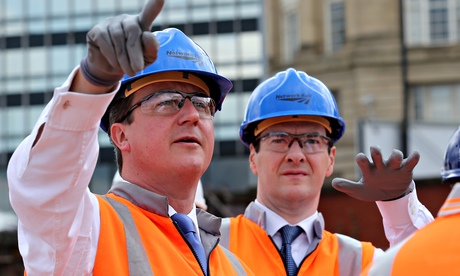
Chancellor George Osborne And Prime Minster David Cameron Visit Manchester

Now you see them … David Cameron and George Osborne go large-vis in Manchester this week. Photograph: Christopher Furlong/Getty Photos


In July 1964, the Railway Magazine reported that 15 platelayers operating on the Pollokshields to Eglinton Street line in the Scottish Region of British Railways had been issued with “a new variety of illuminous safety jacket which shines in half-light conditions”. In the absence of a photograph, the magazine strained to clarify this bizarre phenomenon to its readers. The jackets, “made from a fluorescent orange plastic material”, were “comparable in appearance to previous-fashioned ships’ lifejackets”. The writer speculated that these “human fire-fly jackets may possibly be adopted throughout British Railways”.


This is regarded as the first reference in British – and perhaps planet – journalism to high-visibility vests. Practically exactly 50 many years on, they have been adopted not only throughout our railways, but also the entirety of British society. A brief automobile drive across north London this week was met with the following substantial-vis action: two BT engineers fiddling with wires at a junction box wore them, as did a man pushing a black steel trolley along the pavement (his bearing a slogan: “Positive we can”). I stopped at a targeted traffic light up coming to a locked bike with a substantial-vis vest wrapped loosely about the crossbar. The owner was strolling away. It would have been fascinating to meet him, considering that he must be a combination of the prudent (betokened by his ownership of the vest) and the reckless (it was simply nickable from exactly where he’d left it). I was then passed by a guy sporting higher-vis who was driving a van marked “the indoor garden specialists”.


The question of what indoor gardening includes was a lot more pressing in my mind than why this kind of a practitioner may put on a substantial-visibility vest. Soon after all, when I parked my car and entered a shop selling work outfits in purchase to request the proprietor who bought higher-vis vests these days, he stated. “Anybody undertaking perform.” When I asked if revenue of them went up 12 months on year, he explained: “Yeah,” in the bored tone of someone questioning when he would ultimately be asked an interesting query. So I attempted the following: “What sort of men and women put on large-vis vests now but wouldn’t have worn them a few years ago?” “Absolutely everyone,” he stated. I pressed him for an example. “Window cleaners,” he said. “Why would a window cleaner want a large-vis vest?” I wondered. “Properly,” said the shopkeeper, “he’s walking down the street with his bucket and his ladder and he bumps into a person.” “But that,” I countered, “would be an argument for the man or woman he bumped into wearing higher-vis, not the window cleaner himself.” The shopkeeper did not consider a lot of that stage, and I wondered regardless of whether he believed that absolutely everyone who presently does not wear a substantial-vis vest as a matter of course ought to do so in buy to be observed by all the individuals who do put on them.


If so, he could not be bothered to express the view, his complacency perhaps attributable to the fact that he is riding that by no means-ending upward product sales curve. Everybody concerned in high-vis says the very same thing about the product sales, which tends to make me wonder why I’m not in the company myself. The rise can be traced back to the Well being and Security at Work Act 1974, which requires employers to guard against likely risks, and there is no cheaper way of guarding against hazards than to problem high-vis vests, which retail for three or 4 quid and are no doubt considerably less expensive wholesale.


The only gripe of the higher-vis traders is that substandard clothing comes on to the market place, without the CE mark denoting compliance with the European Neighborhood directive for Personalized Protective Products. Officially made vests conform to Class two of the European regular. Class one is substantial-vis trousers. These and a vest worn with each other turn into Class three, the highest attainable higher-vis ensemble: a high-vis suit, in truth. Both trousers and suits combine fluorescence with what is described as “retro reflective tape”. That is not “retro” as in vintage – a conscious reversion to some earlier, far more eye-catching type of high-vis – but as in bouncing light back from, say, auto headlights.


A good deal can be – and is – said towards large-vis clothing. It truly is not trendy. The Mitchell and Kenyon archive films showed us that Edwardian guys digging holes in the road wore dark suits with ties or neckerchiefs, which gave them a sort of dusky elegance. If a high-vis vest and shorts was a great appear for a postman, then why is not Postman Pat – who definitely sets the industry regular – so attired?


The substantial-vis vest is usually worn in location of the quasi-military uniforms of the past. I mean that it really is worn not so a lot to make the wearer conspicuous as to betoken authority. When I asked a single safety clothing insider to identify the class of man or woman who may give large-vis a poor identify, he muttered darkly, “stewards”. Rod Liddle has described large-vis as “the symbol of spurious authority”, and I feel the libertarian objection is that large-vis suggests both officialdom and victimhood. The wearer is bossing you about although also embodying the worry that you may possibly, through your sheer stupidity, run him down.


A couple of Darwinian steps from the bumptious steward is the sleek cabinet minister. The orange higher-vis vest worn by George Osborne at Manchester Victoria railway station this week (and not for the very first time) suggested that he personally would be building this high-speed railway for the north he was going on about. But the key was the blue Network Rail hardhat he also wore. Blue hat means visitor. White hat indicates “cleared for track accessibility”.


The high-vis wearer can also seem wimpish. My nearby publish office sells large-vis vests advertised by a image of a fluorescent household standing in a garden. Any individual scared to go into their personal garden without having wearing high-vis deserves to be struck down by one particular of those hazards high-vis can’t avert: a nice swift bolt of lightning, say.


But the case is diverse with the British employee. Most who disdain high-vis have by no means even worn the visitor hat at a development internet site, and I can’t recall carrying out so myself. But I discover it moving to see that motorway warning indicator “Workmen on the road”, specially when it’s late at night, and I am glad I’m not on the road myself. The sight of the Class 3 high-vis fits assuages my guilt, and I say to the libertarians: these guys are not protected as a collective mass, but as a series of individuals. To give them these fits is the least we as a society can do. It truly is as if they’re wearing spacesuits, which is fitting provided the remoteness of manual perform from most of our lives.


British health and safety in the workplace is the envy of the globe. The Well being and Security Executive press is nicely-armed with graphs displaying how far we have come. In his history of Britain’s railways, Fire and Steam, Christian Wolmar writes that, “in the five many years up to the finish of 1878, the railways killed an average of 682 of their staff each and every year”. In The Nation Railway, David St John Thomas wrote: “On scarcely a mile of track in Britain has a ganger not been run down by an sudden train.” Railway infrastructure jobs are nonetheless comparatively hazardous, but the deaths are in the lower single figures every year. It really is extremely hard to say how a lot this improvement owes to increased visibility. But when, travelling west from Paddington, I see the armies of orange-clad guys constructing Crossrail, I believe of the debt we owe to whoever made human fireflies of individuals 15 platelayers half a century ago.


Andrew Martin’s novel, Night Train to Jamalpur, is published in paperback by Faber &amp Faber on three July. Acquire it for £6.39 at guardianbookshop.co.united kingdom.


Hi-vis vests search industrious and existence-saving. No wonder politicians adore them | Andrew Martin

27 Haziran 2014 Cuma

Politicians who make porn stars wear condoms disregard the real HIV fight | Nichi Hodgson

If porn performers had a wellness and safety mantra, “your wellness is your wealth” would most likely be it. Which is why it truly is well worth taking seriously the many “porn stars” who oppose a California bill allegedly designed to better safeguard their health and security by mandating condom use and the reporting of sexually-transmitted infections tests in the porn market.


The legislation – which the state assembly passed in May possibly and cleared one particular of two needed state Senate committees right here on Wednesday – needs that performers use condoms in the course of filmed anal and/or vaginal sex scenes that employers shell out for HIV testing and that workers report their check benefits to the state’s occupational security board. The stated objective of the bill is to lessen the transmission of sexually transmitted infections and HIV because, its authors claim, “the sector has by no means supplied a single affordable suggestion to universally shield its employees and now opposes the quite STD testing protocol that they developed and inconsistently use”.


Aside from the civil liberties issues raised by reporting highly inflammatory individual wellness details to a government company, there are two key questions raised by the legislation. The initial is whether the private porn market genuinely wants to comply with a new law due to the fact legislators want to “shield” them, given the low rate of business HIV infection in contrast to the population at massive. The 2nd is why the California State Senate is so concerned about porn business prices of HIV infection when, as porn performer Jiz Lee testified on Wednesday, “this work isn’t helping communities who are actually at chance”.


Really merely, the porn-condom mandate is a red herring in the real battle towards HIV/Aids. And on pride weekend in San Francisco, you may even contact it a sham.


In accordance to the San Francisco Aids Basis, one.7m Americans have been infected with HIV given that 1981, and California ranks 2nd only to New York in the sheer cumulative number of instances. Approximately seven,000 Californians will turn out to be infected with HIV this year, the vast majority of whom won’t work in the grownup industry. Even Senator Holly Mitchell, who voted for the bill in committee on Wednesday, did so only following producing the stage that the legislation does not seem to be to address “the demographic in fact at risk” for HIV transmission – African-Americans, and African-American ladies in certain. (Notably, Aids Lifecycle reviews that survival prices soon after HIV diagnosis is is lowest amongst African-Americans.)


The tabloids love to titillate with tales of an infection-riddled Pornland, but the handful of HIV circumstances that have prompted filming moratoriums in the previous decade have been just that – a handful. Any infection that influences performers, regardless of whether it originates off-set or on, has to be taken seriously. But to place the market danger into point of view, as of 2010, there had been 57 documented transmissions and 143 achievable transmissions of HIV amongst healthcare workers in the prior 3 decades, a count described by the Centers for Condition Control and Prevention as “extremely uncommon”. The porn sector, meanwhile, has not had a confirmed situation of on-set herteosexual transmission since 2004 and LA County confirmed a total of 22 performers who had been confirmed good in between 2004 and 2009.


Supporters of California’s condom bill frequently argue that requiring condoms in porn is akin to requiring challenging hats be worn by development staff. But, as Lorelei Lee put it on Wednesday, “hard hats never harm their wearers”, but condoms do: they can lead to “floor burn up” (or excessive irritation of performers’ mucus membranes), and therefore enhance the risk of any STI transmission between performers. Beyond which, condoms (even when undamaged and utilized effectively) never offer absolute protection against a assortment of STIs, including herpes, syphillis, genital warts and pubic lice.


But even if all the arguments in favor of the bill had been demonstrably correct, all the money and other resources invested to argue for and pass this legislation – let alone defend any resulting law in court – would nearly undoubtedly be far better invested providing added HIV education and testing (like addiction care), on a lot more analysis for a vaccine and/or a cure, for therapy programs for individuals contaminated, and on palliative care for those with Aids.


Get, for instance, the district of Assemblyman Isadore Hall, the bill’s sponsor: he represents Compton, a Southern Californian district with an alarmingly substantial fee of HIV infection – where the Aids Healthcare Foundation, which supports Hall’s legislation, does not even have a clinic. (The foundation itself prioritizes funding for treatment method more than any remedy-centered investigation, and its chief, Michael Weinstein, personally denounced the pre-exposure prophylactic drug Trovadour as a “celebration drug”.) Hall’s personal constituents are far more very likely to advantage from funds spent on other, verified techniques of stopping HIV transmission and caring for people who contracted the virus than they ever will be from forcing California-based porn performers to wear condoms on set.


Registered nurse and veteran porn performer Nina Hartley informed the state assembly in April that the bill is “a remedy in search of a problem”. It truly is a headline-producing distraction from and a pat solution to a actual crisis – ongoing HIV and other STI transmission – that many Californians encounter, (a crisis that only Senator Mark Leno recognized as a compelling cause for opposing the bill). It is also has the possible to actually enhance the prevalence of STIs amid the population it purports to aid, in addition to decreasing their privacy and inflating the stigmatization they already grapple with on a daily basis. But, provided the existing hostility of many in government to these in the porn market, charging ahead with a moral crusade is apparently preferable to listening to performers give proof about their personal jobs.


Politicians who make porn stars wear condoms disregard the real HIV fight | Nichi Hodgson

23 Haziran 2014 Pazartesi

Politicians manipulate NHS for votes, finds BMA survey

The Ipsos MORI new survey identified two thirds of the public are in favour of medical professionals obtaining a greater say in how the NHS is run.


Practically half believed that politicians should have reduced or no involvement in how the NHS is run and one particular in 3 agree that Parliament must set overall targets for the NHS.


The day to day running of the NHS is now governed by NHS England, which is supposed to be separate from Parliament and the Department of Wellness but doctors say that even this is being manipulated for political obtain.


Dr Mark Porter, chairman of BMA Council, mentioned: “The NHS remains 1 of the most politicised public solutions in the Uk. Whether it is the targets forced on physicians, GP appointments that are much more about box-ticking than clinical care, or brief term, headline grabbing policy initiatives – all of these are becoming completed for political expediency and to win votes. As a consequence, patient care is taking a back seat to scoring factors more than the dispatch box.


“With each and every government comes a new reform of the health service, sometimes more than one and each time the experience, expertise and passion of these operating in the NHS is ignored and chipped away. As a latest report by the Kings Fund highlighted, successive Governments have talked of liberating or shifting the stability in the NHS, and nevertheless there is an ‘irresistible tendency for ministers to want to be seen top the NHS.’


“The Government promised to eliminate micromanagement from the NHS and however the opposite has took place. There are even claims that NHS England, set up to be independent of Whitehall, is being manipulated for political purposes.


“Now, a yr out from the up coming election, we’re previously seeing politicians lining up politically motivated, not clinically driven alterations to GP services. Demands to provide appointments within 48-hrs, or to increase access to seven days a week may possibly search good on a leaflet but they really don’t deal with the difficulties that have left GPs struggling to deliver the care, time and appointments their patients need.


“Doctors want to see politics taken out of the NHS once and for all. It is clear that the public really feel the exact same way. Yes, politicians ought to be accountable for the working of the NHS, but when it comes to selections on patient care it is time to let doctors to do what they do very best – lead the delivery of high good quality patient care.”


Wellness Minister Dr Dan Poulter said: “Our reforms minimize pointless red tape and gave medical professionals and nurses, who know their sufferers greatest, the energy and freedom to make selections in the greatest interests of their neighborhood neighborhood.”


Politicians manipulate NHS for votes, finds BMA survey

11 Haziran 2014 Çarşamba

Australian youngsters obtaining fatter as politicians and food sector blamed

New statistics on weight problems in Australian children reveal the burgeoning difficulty is not becoming taken seriously by politicians or the meals sector, a major public wellness professional says.


Statistics released on Thursday by the Australian Institute of Well being and Welfare show much more than a quarter of young children have been overweight or obese in 2012, growing from 23% in 2007-08.


The excess weight of kids aged in between 5 and seven is rising swiftly, the statistics present, with just above 21% of kids in this age group overweight or obese in 2007-08. 4 years later, that had grown to more than 24%.


Professor of public wellness and Public Wellness Advocacy Institute director Mike Daube said Australia was doing worse in tackling weight problems than it was in addressing tobacco in the 1980s.


“At least with tobacco there was recognition of a need to have for committed, evidence-based method to tobacco handle and the begin of successful action,” Daube mentioned.


“We haven’t even acquired to that starting level with obesity.”


In spite of residing in an affluent nation, Australians have been also sedentary, ate too a lot processed and pre-prepared meals, and have been currently being bombarded with junk food advertising, he said.


“The unhappy reality is that this is just one more day, one more report telling us we’re body fat and getting fatter,” Daube explained.


“I am profoundly pessimistic about the future of action on weight problems. I really don’t feel we have even commenced to consider the dilemma seriously and doubt that we will actually see any true action for decades to come.”


He has prolonged called on the government to crack down on the meals business and ban the advertising and marketing of junk foods in direction of youngsters, specifically at sporting events and throughout children’s television displays.


The Preventative Wellness Taskforce has previously reported that if current trends proceed, due to the fact of obesity alone the life expectancy of youngsters will fall by almost two many years by the time they are 20.


In spite of the negative news on childhood weight problems rates, the information released Thursday also exhibits infant deaths dropped amongst 2006 and 2012, from 4.seven to 3.three per 1000 reside births.


Australian Institute of Health and Welfare spokeswoman Dr Fadwa Al-Yaman stated this was largely due to a decline in sudden infant death syndrome, a reduction in injuries to youngsters under the age of one particular, and improved treatments, specifically in managing young children in neonatal and intensive care.


“But 1 spot I would like to see improvement on is immunisation charges,” Al-Yaman stated.


“While an immunisation rate of 90% is great, given the huge volume of scientific evidence we have for immunising, that rate ought to be at a hundred%.”


The information also demonstrates youngster literacy and numeracy skills are strengthening, with 94% of youngsters attending preschool in 2013. The proportion of kids who had been developmentally vulnerable at college entry also fell.


Australian youngsters obtaining fatter as politicians and food sector blamed

21 Mayıs 2014 Çarşamba

Politicians alienating GPs with "relentless" attacks, senior medical professional claims

gp takes patients blood pressure

Dr Chaand Nagpaul, chair of the British Medical Association’s GPs committee, is accusing MPs of alienating loved ones medical doctors in their political attacks. Photograph: RayArt Graphics/Alamy


Politicians are alienating GPs with “relentless attacks” and use of “political gimmickry” to tackle the unsustainable pressures dealing with family medical doctors, a key leader of the profession warns on Thursday.


In a critique of the coalition and Labour opposition, Dr Chaand Nagpaul will accuse them of belittling GPs by bemoaning the difficulty patients have acquiring appointments and the lack of extended opening occasions.


Politicians’ failure to grasp the extent of the increasing workloads in basic practice is contributing to the prospective “destruction” of the support, in accordance to Nagpaul, the chair of the British Health-related Association’s GPs committee.


Speaking to the BMA’s annual GPs conference in Harrogate, Nagpaul will blame politicians’ “attacks which are hefty on spite and light on evidence” for contributing to a fall in the number of young physicians who are choosing to turn out to be GPs.


“These doctors are not shunning the discipline of common practice, but the intolerable strain that GPs are topic to, with each other with relentless attacks that devalue what we do, and which has butchered the joy and ability of GPs to properly care for our individuals,” he will say.


He will castigate the coalition for providing hospital A&ampE units an extra £500m to aid them cope with final and following winter, but only discovering £50m for the prime minister’s “challenge fund” to enable much more surgeries to open from 8am to 8pm each and every day – a essential guarantee David Cameron manufactured final 12 months at the Conservatives’ yearly conference.


“So even though £500m was given to ease the pressures in A&ampE, it really is a kick in the teeth for common practice to receive £50m not to ease any crisis or stress, but actually to supply even far more over 7 days a week,” Nagpaul will tell GPs.


Whilst Nagpaul does not say how significantly basic practice needs to preserve speed with the expanding demand for appointments, the Royal University of GPs believes it needs to get at least one more £2bn of the NHS budget by 2017. GP services’ share of NHS funding has been shrinking in recent many years at the very same time as hospitals have been getting much more, and now stands at significantly less than 9%, even though 90% of patient contacts are with GPs.


Waits of at least a week to see a GP are increasingly frequent, and a poll of GPs this week found that some have been expecting patients to encounter delays of up to two weeks by this time following 12 months.


Nagpaul, a GP in north-west London, will also brand as unrealistic Ed Miliband’s large-profile pledge final week that under Labour patients would be assured a GP appointment inside 48 hrs.


“And the opposition also seems blind to recent pressures, and failing to find out from the previous, in resurrecting a discredited 48-hour access target, which will force GPs into providing perverse appointment programs that distort clinical priorities. Sufferers deserve better than this political gimmickry,” he will say in a sideswipe at the two leaders’ rival initiatives on GP care.


The Department of Wellness and Labour rejected Nagpaul’s claims. A DH spokesman explained: “We worth the function GPs do, and know they’re below stress, which is why we’re cutting GP targets by far more than a third to free of charge up far more time with patients, escalating trainees so that GP numbers carry on to develop more rapidly than the population and have committed to train ten,000 more primary and neighborhood wellness and care workers by 2020.”


A Labour spokesman explained only Labour was severe about investing in GP surgeries. “We have pledged £100m to aid individuals get appointments much more swiftly. As well numerous are waiting a week below this government,” he explained.


The BMA gathering will hold a possibly divisive debate on Thursday about the possibility of introducing charges for individuals to see a GP. The movement states that “it is no longer viable for standard practice to give all sufferers with all NHS providers totally free at the stage of delivery”, as the NHS has done given that its inception, and calls on the doctors’ union to “take into account alternative funding mechanisms for general practice [and] check out national charging for general practice solutions with the Uk governments”.


Meanwhile, new study out on Thursday demonstrates that only 15% of sufferers who turn up at A&ampE could have been witnessed and handled by a GP. That is far much less than the forty% figure frequently cited, such as by NHS England and some A&ampE doctors, as the proportion of pointless or avoidable attendances at A&ampE.


Nonetheless, that nonetheless equates to about 2.1 million people seeking A&ampE care when they could have gone elsewhere, in accordance to the School of Emergency Medicine, which represents A&ampE medical doctors and commissioned the examine.


Politicians alienating GPs with "relentless" attacks, senior medical professional claims

25 Nisan 2014 Cuma

Nation diary: Llangynidr: Here lies the rough ground the place politicians should tread

Country Diary : A small waterfall on the river Usk at Llangynidr bridge

A small waterfall on the river Usk at Llangynidr bridge. Photograph: P Tomlins/Alamy


Handful of valleys in Wales are much more verdant than that of the Usk, its river heron-sentried, swift and graceful in between banks lapidary with primrose, stitchwort and bluebell. Fallen trunks wedged high over the water bear witness to winter floods. Two sandpipers pulse and dip in time to the whistling diminuendo of their calls. A robin shrills its alarm. From the hump-backed and cut-watered medieval bridge the riverside way winds a long, engrossing mile east to the confluence pool of the Nant Cleisfer, up which impetuous moorland stream my journey lies. At the final settlement of Blaen y Cwm, abandoned to sheep and entropy now, wood sorrel’s flowering beneath mossed walls. I select a leaf, nip and chew at its apple astringency.


Ring ouzels scud ahead and larks falter skyward on ladders of song as I climb to a ford exactly where the path from Tredegar arrives from the south. The substantial plateau among Usk and Taf has prolonged fascinated me. It’s arduous terrain, deep heather pitted with hollows that mark the place underground chambers have collapsed. Some of the most tough problems in British caving lie deep beneath its surface in techniques the identified lengths of which are extended each 12 months by committed and hardy-humorous devotees of a sport in comparison to which mountaineering seems secure and effete. Also hard now for an old man like me, I consider, with a wry smile of gratitude and a host of recollections of exquisite crystal beauties that lie darkly in the rock far under my feet.


This barrier landscape of moon-like austerity amongst the wealthy nation of the Southern March and publish-industrial desolation of the mining valleys holds other resonances. Half a mile south-west of the ford at the head of the Nant Cleisfer is the Chartists’ Cave, exactly where pikes of the insurrectionists have been stored just before their 1839 attack on Newport. Far more just lately inside of the radical tradition, Aneurin Bevan and his buddies often walked up here from his Tredegar house, discussing as they went the political venture that should be his enduring legacy – the NHS, the dismantling of which we are now despairing witnesses. The three excellent stones, neglected and vandalised, that comprise his monument lie just beyond the moor at the back of Waun-y-Pound industrial estate. I would like to see our politicians walk this rough ground to it, quietly, in mindful pilgrimage.


Nation diary: Llangynidr: Here lies the rough ground the place politicians should tread

3 Nisan 2014 Perşembe

Politicians need to stop pandering to anti-fluoridation campaigners

Final week, Public Overall health England urged a lot more councils to contemplate including fluoride to their water supplies. The situation for this is clear: fluoridation improves dental wellness, decreases hospital admissions due to dental issues and thus saves far much more funds than it expenses.


Some have argued that fluoridation is a chance to overall health, but the report by public Health England looked at prices of hip fractures, kidney stones, cancers, Down’s syndrome births and all-result in mortality and concluded that there is “no evidence of harm to wellness in fluoridated areas”.


Nevertheless, as with so numerous public well being interventions, the sound and fury of opposing ideology usually trumps rational evaluation. If the backlash against fluoridation in the Republic of Ireland is anything at all to go by, Public Health England can count on vigorous opposition.


Fluoride has been extra to water in Ireland considering that the 1960s and has substantially enhanced the nation’s dental well being, even in the era of fluoridated toothpaste. Despite this, a small but extremely vocal opposition repeatedly pops up to declare fluoridation is damaging to wellness. These claims have been debunked time and time yet again.


The recent incarnation of the opposition relies heavily on a report by self-proclaimed “fluoridation scientist” Declan Waugh, who blames fluoride for a range of illnesses. The report has been roundly dismissed by the Irish Skilled Board on Fluoridation and Overall health, its chairman Dr Seamus O’Hickey concluding that “… in spite of its presentation, its material is decidedly unscientific … the allegations of ill wellness results are based on a misreading of laboratory experiments and human wellness studies, and also on an unfounded personal theory of the author’s.”


Despite this, clever use of social media and powerful lobbying has gained fluoridation naysayers significant political traction, prompting the Irish government to promise however an additional full overview of the practice.


This variety of irrational thinking is equally apparent in the anti-vaccination movement, for illustration between people who proceed to think that the MMR vaccine leads to autism. A 2011 editorial in the New England Journal of Medicine noted wearily that “… the spectrum of anti-vaccinationists ranges from people who are basically ignorant about science … to a radical fringe element who use deliberate mistruths, intimidation, falsified data, and threats of violence in efforts to avert the use of vaccines and to silence critics.”


Study into the mindsets of anti-vaccination campaigners suggests that they have a tendency to exhibit traits this kind of as conspiratorial considering, reasoning flaws, a reliance on anecdote above data and minimal cognitive complexity in considering patterns. Equivalent traits are noticed in the anti–fluoride motion, with comparable mistrust of well being interventions. It could not be a coincidence that the present drive against fluoride in Ireland emanates from West Cork, a region of the nation with an very lower vaccine uptake that has been the epicentre of latest measles outbreaks.


That such beliefs persist in the face of sturdy proof could be a quirk of human psychology. Campaigners could see themselves as enlightened crusaders, so when their assertions are questioned or contradicted by the information, this is viewed not as a valuable correction of error but rather an attack on their identity and narrative. Conspiratorial thinking is endemic in such groups with critics being regarded as agents of some ominous interest group – big pharma is a widespread bogeyman – that desires to conceal the truth. This gets a defence mechanism to defend beliefs that are incompatible with the evidence.


If all else fails, attacking the messenger could be easier than accepting that your complete raison d’être is misguided.


Motivated rejection of evidence is often a symptom of cognitive dissonance, a psychological phenomenon that occurs when individuals are challenged by details inconsistent with their beliefs. They might reject unwelcome info, seek out confirmation from these who currently share their beleaguered viewpoint, and try to persuade other folks of the veracity of their world see. This may describe why some folks proselytise even far more vigorously right after their beliefs have been debunked.


That people can be irrational is hardly a revelation, but possibly the ugliest facet of the Irish debate is how elected representatives have given this kind of outlandish fringe assertions a sense of legitimacy. One Irish politician has claimed that fluoridation leads to cancer and Down’s syndrome others have demanded an end to the practice, parroting claims that would have taken all of three minutes on Wikipedia to expose as utter nonsense.


The Irish government’s response is appeasement, and a waste of time and public money. Not only is there previously an Irish body that routinely testimonials the safety of fluoridation, this is a Sisyphean process because anti-fluoride groups have previously reached their conclusion, and will trust no professional body unless it agrees with their assertions. Nearly undoubtedly fluoride will get but yet another clean bill of well being, campaigners will reject the findings and the same tedious cycle will repeat again, in significantly the very same way dad and mom who oppose vaccination are impervious to the scientific literature undermining their place.


It is irresponsible for politicians to demonstrate this kind of contempt for science that they are prepared to take the lead from pseudoscientists and conspiracy theorists rather than experts. Leadership ought to be about generating the greatest selections based on the data available, even on emotive troubles such as fluoridation and vaccination.


As the Irish debate lumbers on, and nearby authorities in the Uk take into account fluoridation, we ought to demand that our elected representatives base well being policy on evidence. There will undoubtedly be opposition as there has been in the previous but what is crucial is that decisions are based mostly on scientific analysis, not misinformation and worry. The cost of this kind of folly is clear to anyone who remembers the human suffering in the wake of the misinformed panic more than the MMR vaccine just a decade in the past.


Brigadier Common Jack Ripper expounds his concept about fluoridation and valuable bodily fluids to Group Captain Lionel Mandrake in the movie Dr Strangelove

Politicians need to stop pandering to anti-fluoridation campaigners