Poorer etiketine sahip kayıtlar gösteriliyor. Tüm kayıtları göster

17 Mart 2017 Cuma

Girls from poorer families in England struggle to afford sanitary protection

Girls from low-income families across England are struggling to afford sanitary protection, with many teachers buying tampons for their students or seeking help with supplies from charities and voluntary groups, the Guardian has been told.


Charities, campaigners and teachers say that the problem is happening in cities and rural areas across the country, describing girls missing school, using donations, or wearing makeshift protection during their period.


The issue came to light after it was reported that a charity in Leeds, Freedom4Girls, was contacted by a local school who were worried about truancy among teenage girls when they had their period. The charity, which provides products to women in Kenya, agreed to do the same for local girls.


Since then more teachers have come forward to discuss the issue openly, with many contacting charities for help or telling how their schools already support girls in the same situation. Hayley Smith, founder of Flow Aid, a campaign working to provide free sanitary products to the homeless, said that she had a request from a London primary teacher, who worked in multiple schools in the capital, on Monday asking to her to provide sanitary products to young girls who could not afford them.


Smith said: “Teenagers and young girls are being forced to wrap or stuff toilet paper down their knickers, to prevent them from bleeding all over themselves while at schools. The cost of sanitary products are just too much for some girls and their families, and it’s leading to missing school and it’s putting their health at risk.”


“It’s absolutely despicable in the 21st century that girls are being forced to comprise their education simply because an absolute necessity is unavailable and not affordable.”


Smith is now looking at distribution channels to ensure students get supplies. “I work with Ealing Soup Kitchen and St Mungo’s and I am asking them if they have any links in primary schools we can distribute to,” she said. The campaigner added that she is also looking at creating drop off or donation points where people can give products to local schools.


Donations have already been given in Beverley, a market town in east Yorkshire. Councillor Chris Linthwaite, from Molescroft parish council, said the Friends of Longcroft School, a voluntary group, had to step in and provide sanitary donations after an investigation highlighted it as a problem. “Basic school equipment, items of uniform including 80 pairs of shoes were needed too.” The school confirmed the donations.


Rosy Candlin ofEvery Month, a campaign to create packs of menstrual products for people experiencing homelessness or poverty in Manchester, said she had been into a school in Rochdale to talk about this issue, with students raising funds for students who could not afford products.


She agreed there was still a lot of stigma: “For a family to say ‘we cannot afford food’ that’s so much easier to ask for. But because of the shame put on mensuration it’s much harder. Even in food banks we have to tell me to make it explicit that they carry our packs as people less likely to ask for them.”


Candlin says that often people use socks instead or they will simply skip school, as was the case in Leeds.” There’s a lot of girls who use lots of tissue to create makeshift protection, or they will have just a few pads and leave them in for longer, so it becomes unhygienic and unhealthy so there are no real good options.”


The Guardian also heard from dozens of teachers who said that they regularly provide pads and tampons for their students. One teacher in Manchester, who asked to remain anonymous, said: “This year I have a student who has benefited from free sanitary products. The student mentors and I put together two bags of essential toiletries including pads. She does pick up extra supplies every so often. So has another girl in the class. They would benefit from being able to tap into a guaranteed national provision – it’s less embarrassing when you feel you are not the only one.”


Another teacher from Newcastle said: “There is a core group of girls who regularly need to use staff-bought sanitary products. I buy the same brands I use myself, I just make sure I buy extra when they’re on offer.”


One teaching assistant from Surrey said last week someone in her department helped out a pupil who had only been given one sanitary towel for the day by her mother. “The girl came to a member of our department as she did not know what to do. It is not unusual for this to happen and we have a supply of sanitary towels and spare knickers for that purpose.”


Bothana Tashani of Freedom4Girls said that since the story about what was happening in Leeds went public they have heard from teachers, students and organisations all around the UK. “We were not surprised when we were first contacted by a school in Leeds about it. It’s upsetting because no one has talked about it before as there is a lot of shame and embarrassment around not being able to afford sanitary products.”


Tina Leslie of Freedom4Girls has now launched a crowdfunding page to raise money for research into the scale of the issue in the UK, calling for a comprehensive, nationwide study on the issue.


The news comes as a bill is about to go through the Scottish parliament to make it a requirement for schools to provide pads and tampons. A petition has since been started in the UK forTheresa May and the UK government to do the same.


Conservative MP Jason McCartney has since said he will raise the issue in parliament. He has said that he wants to get a group of MPs together to start a campaign for free sanitary products for young girls in need.


Girls from poorer families in England struggle to afford sanitary protection

10 Ocak 2017 Salı

Poorer countries fail to act on smoking due to big tobacco threats, says WHO

Many low- and middle-income countries are too scared by the threats and misinformation of big tobacco to raise the price of cigarettes, even though it would hugely benefit both health and the economy, according to a major new report.


The most effective measure to help people stop smoking is to impose high taxes on cigarettes, says the report by the World Health Organisation and the US National Cancer Institute. But even though smoking costs the world economy $ 3trn (£2.5trn) a year, poorer countries are afraid to tackle it in the most effective ways, it says.


“They are scared because of the issues raised by the tobacco industry,” said Jeremiah Paul of the WHO’s tobacco control economics unit. The industry warns of an increase in smuggling and illicit trade in tobacco, for instance, which the WHO and the US National Cancer Institute, the co-producers of the report, say does not happen.


“They are afraid of being taken to court if they increase tobacco taxes,” said Paul. “They [the industry] will scare you that tobacco taxes are anti-poor, that government revenue will go down.” But there is no evidence to support any of these claims, he said.


Six million people die every year as a result of smoking tobacco and although smoking rates are slowly going down, the numbers are increasing as the population of the world grows. There are also fears of a big expansion in Africa and the Middle East as big tobacco targets poorer countries now that hardline control measures such as bans on smoking in public places have taken effect in wealthier ones.


There are 1.1 billion smokers globally over the age of 15 and already 80% are in low- and middle-income countries. Many are already poor – an estimated 226 million smokers live in poverty. Those are the people who would benefit most from stopping, because they are least likely to get good healthcare and most likely to suffer from the disabling and economic effects of tobacco, such as losing their job.


The monograph says that global tobacco excise taxes generated nearly $ 269bn (£221bn) in government revenues in 2013-2014 – yet less than $ 1bn was invested in tobacco control.


High tobacco taxes raise money for governments while deterring smokers. The monograph says annual excise revenues from cigarettes globally could increase by 47%, or $ 140bn, if all countries raised excise taxes by about 80 cents per pack. This tax increase would raise cigarette retail prices on average by 42%, leading to a 9% decline in smoking rates and up to 66 million fewer adult smokers.


Controlling tobacco does not harm economies, the report says. The number of jobs dependent on tobacco has been falling in most countries, and when smokers quit they spend their money on other sectors of the economy instead. Tobacco farmers, who mostly do not earn a good living, can be helped to diversify into other crops.


“Tobacco use remains one of the world’s leading causes of preventable death, and increasingly, the health and economic burden is borne by the poorest countries and people,” said the WHO’s global ambassador for noncommunicable diseases, Michael R Bloomberg, whose philanthropic foundation has invested nearly $ 1bn into tobacco control. “By accelerating the adoption of the many cost-effective tobacco control policies available today, we can save millions of lives,” he said.


José Luis Castro, chief executive of the global health organisation Vital Strategies, warned that the death toll from tobacco will rise if tougher controls are not brought in. “While governments are committed to reduce tobacco deaths, the lack of effective tobacco control laws in many countries means that tobacco will kill one-third more smokers and non-smokers by 2030: 8 million deaths every year,” he said.


“This is avoidable. We urge governments to implement strong tobacco control policies, particularly high tobacco taxes that have the greatest, fastest impact on consumption, while also potentially funding better access to healthcare.”


Poorer countries fail to act on smoking due to big tobacco threats, says WHO

22 Kasım 2016 Salı

‘Stark choice’ as schools struggle to foot bill for poorer students

Kevin Prunty is executive head teacher at Cranford community college, a high-achieving school in Hounslow, west London. His pupils are ambitious and successful, but many come from disadvantaged backgrounds.


Like other schools serving deprived areas, Cranford find itself increasingly playing a sophisticated welfare role in its community. It is also footing the bill for uniforms, PE kits, shoes, lunches and educational trips from a diminishing budget, to subsidise parents who cannot afford to meet the costs.


But with school budgets under pressure and further cuts expected there are fears they will not be able to continue to fill the gap.


“Schools know already that there are sizeable further cuts to funding on the way – and whilst we are currently able to fund these additional needs – it will soon become more difficult and perhaps impossible to justify doing so,” says Prunty.


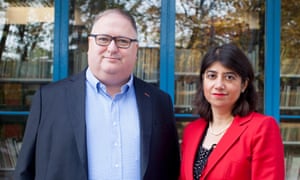
Kevin Prunty and Seema Malhotra


Kevin Prunty, head of Cranford community college in west London, with Seema Malhotra MP. Photograph: Alicia Canter for the Guardian

He says it’s not possible to measure the additional cost in the sense of how many uniforms, how many trips, how many meals. Instead he describes the kind of scenarios his staff deal with on a daily basis to illustrate the level of need.


A year 7 boy needs additional support but his symptoms don’t meet the threshold to qualify for child and adolescent mental health services (Camhs).


An educational welfare officer helps a family where the father is suffering from a mental illness and keeps telling his children they are terminally ill. Another colleague intervenes to help a child with impaired hearing.


Someone else takes a pupil out to buy a suit for a job interview for a traineeship. It’s not just the money – they coach them for the interview and make sure the suit fits properly. “There’s nobody to say whether the arms are too long, so some of our staff take the responsibility,” says Prunty.


And things are getting worse. Since pupils returned to school in September, staff have noticed an increase in the number of children who are not eligible for free school meals who come in without any money for lunch. Inevitably the school provides – it all costs and meanwhile budgets are shrinking.


The Institute for Fiscal Studies has estimated that increasing costs and growing pupil numbers will result in an 8% cut in funding per student by 2020 and an inquiry has been begun by the public accounts committee to examine the financial sustainability of schools.


The sector would like to hear there is more money for schools in the autumn statement later this week – the reality is that schools like Prunty’s are likely to lose out in the long-awaited redrafting of the national funding formula (NFF) in which money from well-funded urban schools working with disadvantaged families is expected to move to less well-funded schools in less needy areas.


He has already had to address a £1m shortfall in the budget caused by a cut in grant funding from the government and rises in pension costs, national insurance costs and below-inflationary salary rises. He has managed to balance the budget but twelve jobs had to be cut – four teachers and the rest support staff.


At another school in the area, a principal who asks not to be named says he increasingly feels like a debt collector, having to chase up parents who owe the school money. As families at his school struggle to make ends meet, many are building up large debts. Some owe hundreds of pounds for school lunches and he estimates that parental debt is costing the school £10,000 a year.


Last year the school handed out 45 uniform grants worth £100 each to parents in need. Then there are equipment grants for things like scientific calculators. He feels for the parents, many of whom are in low paid jobs and are surprised to find they are not entitled to free school meals for their children. “There’s a lot that’s adding to pressure on parents. It’s uncomfortable to be talking to them about the money they owe the school. But that money is money we are not spending on teachers,” he says. “Schools are not in the debt management business. It’s not sustainable to be running this level of debt.”


The issue has been raised by Seema Malhotra, Labour MP for Feltham and Heston, who has become increasingly concerned about the hidden burden on schools’ budgets. “Schools are being faced with a stark choice,” she said. “Let children from poorer backgrounds miss out on educational opportunities and experiences, or pick up the costs and take on financial debt. Budgets are already under pressure and with further cuts to school funding, helping families in need is set to get harder.”


At Springwest Academy in nearby Feltham, which also serves a community with high levels of disadvantage, there are similar concerns. Pastoral mentors deal with calls day in and day out from families with worries about housing and finances; school uniforms and shoes are being paid for more frequently out of the school’s hardship fund and almost four out of ten pupils (38.3%) are referred for counselling or other mental-health support.


Victoria Eadie is chief executive of the Tudor Park Education Trust which includes Springwest. “It does worry me what’s going to happen. I don’t know a school in Hounslow that is not having to go though some form of restructuring and quite severe cuts.” Until now her school, like others, has been able to step in to support the neediest. With further cuts, she says, “schools will not be able fill the gap”.


‘Stark choice’ as schools struggle to foot bill for poorer students

16 Kasım 2016 Çarşamba

Billion people have high blood pressure, mostly in poorer countries

The number of people with high blood pressure has almost doubled in 40 years to more than 1.1 billion worldwide, scientists have said, with the burden of the condition shifting from the rich to the poor.


In the largest study of its kind analysing blood pressure in every nation between 1975 and 2015, the scientists say it has dropped sharply in wealthy countries – possibly due to healthier diets and lifestyles – but risen in poorer ones.


The increases are especially significant in Africa and south Asia, the researchers say, and could be partly due to poor nutrition in childhood.


High blood pressure, also known as hypertension, puts extra strain on the blood vessels and major organs such as the heart, brain and kidneys. It is the world’s top cause of cardiovascular disease, which leads to strokes and heart attacks, and is estimated to cause 7.5 million deaths a year worldwide.


Led by World Health Organisation researchers working with hundreds of scientists internationally, this study covered blood pressure measurements from nearly 20 million people and was published in the Lancet medical journal.


In Europe, Britain had the lowest proportion of people with high blood pressure in 2015. South Korea, the United States and Canada had the lowest hypertension rates in the world.


More than half the world’s adults with high blood pressure in 2015 lived in Asia, the study estimates. Some 226 million people in China have high blood pressure, it says, as do 200 million in India.


“High blood pressure is no longer related to affluence – as it was in 1975 – but is now a major health issue linked with poverty,” said Majid Ezzati, a professor at Imperial College London’s school of public health.


He said that while he could not be sure why the data showed high blood pressure as more of a problem in poorer countries, it may be partly due to overall better health and more consumption of fruit and vegetables in wealthy societies.


In rich countries the condition was also caught more frequently and earlier, and managed more effectively with medicines, Ezzati said.


Blood pressure is defined by two numbers: systolic pressure, which represents the force with which the heart pumps blood into the blood vessels, and diastolic pressure, a measure of the resistance to the blood flow in the body’s blood vessels.


Both numbers are measured in millimetres of mercury (mmHg). High blood pressure is defined as 140/90 mmHg or higher.


The condition is caused by a number of factors including having a diet high in salt and low in fruit and vegetables, and not taking enough exercise.


Billion people have high blood pressure, mostly in poorer countries

11 Ekim 2016 Salı

Obesity set to soar for boys, but not girls, from poorer homes

Childhood obesity is set to increase so sharply among boys from poorer homes in England that three in five of them will be dangerously overweight by 2020, research shows.


But the number of well-off boys who are overweight or obese is expected to fall to one in six in that time, underlining that obesity’s already stark class divide will widen even further.


Doctors and health campaigners urged ministers to take tough action to reduce the number of children and young people who are becoming very heavy, including restricting advertisements on television for junk food before the 9pm watershed and taxing unhealthy foodstuffs.


At the moment, 16% of boys in England aged between five and 11 from the most deprived backgrounds are overweight and another 34% are obese, with only 51% a normal weight. But on current trends those figures will rise to 17% (overweight) and 43% (obese) by 2020, leaving only a minority – two out of five (40%) – who have a healthy body mass index.


In contrast, the proportion of boys that age from the wealthiest backgrounds who are overweight is likely to fall from 12% in 2016 to 10% in 2020 and those who are obese by a third from 9% to 6%, with the percentage who are a normal weight rising from 79% to 83%


“These shocking figures are yet another wake-up call to the devastating impact that obesity is having on our children, with certain sections of society being harder hit than others, just as we have seen with smoking,” said Sarah Toule, head of health information at the World Cancer Research Fund.


“Widening of inequalities appals me – it’s a waste of human resources. When a child is born into poverty they miss out. They miss out on school trips, nutritional meals and warm, dry clothes and homes. They are also more likely to suffer poorer health as a result and become overweight or obese or develop mental health issues,” said Prof Russell Viner, officer for health promotion at the Royal College of Paediatrics and Child Health.


“The figures further highlight the impact – specifically on boys – poverty has on a child’s health and wellbeing. Inequality tells us we can do something about it. We need a country for everyone, not just an environment for the rich.”


But levels of obesity are set to remain about the same among girls irrespective of their background – at about one in five of those aged five to 11, according to the research by the UK Health Forum for the Obesity Health Alliance, a coalition of medical groups and health charities.


Projections based on trends seen in the Health Survey for England undertaken between 2008 and 2012 show that obesity and overweight in girls from the least deprived families are set to fall slightly from 23% now to 22% in 2020, while among poorer girls from 24% to 21%


Robin Ireland, chief executive of the Health Equalities Group, said while it was hard to explain the gender gap, “there could be a number of reasons – including girls usually being more conscious about their physical appearance, and boys being more brand loyal and therefore susceptible to the billions of pounds spent on marketing to children through brand characters and sports stars.


“From a young age, children are developing a taste for high sugar, salt and fatty foods that is difficult to break once established and, as a nation, we all have a responsibility to help shape children’s diets.”


Public Health England, which advises the government, said it was “deeply worrying” that children faced such wildly different chances of becoming obese simply because they lived in deprived areas. Its drive to reduce sugar and calories in foodstuffs by 20% by 2020 as part of the government’s childhood obesity strategy would help, said Dr Alison Tedstone, its chief nutritionist.


Obesity set to soar for boys, but not girls, from poorer homes

14 Nisan 2014 Pazartesi

As well Much Tv Linked To Poorer Rest In Children

For all the parents who’ve ever banged their heads against the wall wondering why their kid won’t sleep, a new study offers at least some partial clues. The research, out today in the journal Pediatrics, finds that the more TV kids watch, the less they tend to sleep. The connection is fairly intuitive – even adults can get wired staring at screens for too long. But the study adds to a growing body of evidence suggesting that too much screen time in childhood is at least linked to, if not the cause of, poorer health, both physical and mental.


The researchers, from Massachusetts General Hospital for Children (MGHfC) and Harvard School of Public Health (HSPH) followed 1,800 kids from infancy to the time they were almost 8 years old. The team asked their parents how much TV the kids watched when they were six months old, and then every year after. They also asked how much time the little ones spent in a room with a TV, and whether there was a TV in their bedrooms as they got older. How much sleep the kids got at night was the variable the researchers were interested in.


Although the effect wasn’t huge, the more TV the kids watched, the less they slept. For every extra hour of TV the children took in, they tended to sleep about 7 minutes less per night on average. And this effect was stronger for boys than for girls. Having a TV in the bedroom – which almost a quarter of kids had by the time they were 7 years old – also had an effect on sleep duration, at least for minority children, who got about half an hour less night’s sleep than kids without a TV in their rooms.


There are a couple of possibilities as to why the TV-poor sleep connection exists. The first is that TV can be stimulating enough that it could “phase shift” (delay by a sleep cycle) the onset of sleep. Watching violent TV might also lead to interrupted sleep, since it might create worry or anxiety that could prevent a kid from getting back to sleep if awakened in the middle of the night.


This is certainly not the first study to call out the detrimental effects of screen time. The American Academy of Pediatrics now recommends limiting screen time to 1-2 hours per day. (For more on this, see here.)


Because of the connections between poor sleep and mental health issues, the results are definitely worth thinking about. Sleep deprivation in kids is linked to worse performance in school, depression, injury, and obesity, according to the authors. Even if TV time doesn’t explain all of kids’ sleep problems, toning it down a little bit might make a difference in their sleep quality, and perhaps in their well-being.


Follow me @alicewalton or find me on Facebook.


As well Much Tv Linked To Poorer Rest In Children