Whenever Theresa May finds herself in a corner over the NHS she repeats the mantra: you require a strong economy to have an NHS in the first place (Marr grills May, 1 May). That is a classic example of a necessary but not a sufficient condition. It obviously helps to have a strong economy but a nation has to get other decisions right.
The US has a strong economy but a seriously deficient public health service due to large reliance on insurance companies for facility and corporations providing health cover for employees.
Cuba has a weak economy but an excellent health service due to the right decision on prioritising public health.
In the UK the NHS is in difficulties due to the Tory government prioritising tax breaks for corporations and the better off instead of using the finance to meet the needs of an ageing population with increasing quantities and complexities of treatments required. PFI and privatisation have also not helped. Nigel de Gruchy Orpington, Kent
• The political shock-horror of the shortage of nurses misses the point of why so many NHS staff are not British or/and are leaving. At the weekend I had a cardiac physiologist to stay – ie, not a doctor or a nurse but an essential member of the team dealing with heart attacks on emergency call-out at night, and for checking heart problems during the day. The night on-call emergency rotas are made to follow a full day’s work, so no sleep for up to 24 hours is common. It is worse when you are sent home at about 4am and drop into an exhausted sleep only to be woken again to go to work an hour or two later (or not daring to sleep in case the phone rings). My guest says jobs are harder to fill in hospitals where you can be on call for a night in between two normal days – ie, up to 36 hours’ continuous working for patients who are in immediate danger of death.
These staff do not have the powerful BMA doctors’ union acting for them, and such practices have become normalised and in agreement with unions. Politicians claim to be making the best use of taxpayers’ money. Not in my name please! Sleep deprivation is the reason my guest and many others are looking to leave the job they otherwise found satisfying after years of training and building up their expertise. Name and address supplied
• I wish to point out the connection between the two articles on cancer drugs and end-of-life care in Friday’s paper. In the cash-constrained NHS, expenditure in any area means that money cannot be spent elsewhere. So when £1.27bn goes on very expensive new cancer drugs (Report, 28 April), not curative and with zero or marginal outcome benefit, it cannot be spent on specialist palliative care or “hospice at home” services. The consequence is that those same patients, within weeks, cannot be supported in their wish to die at home (Report, 28 April). Many more people would have been helped by the latter investment. Dr Charles Turton Burgess Hill, West Sussex
• Join the debate – email guardian.letters@theguardian.com
• Read more Guardian letters – click here to visit gu.com/letters
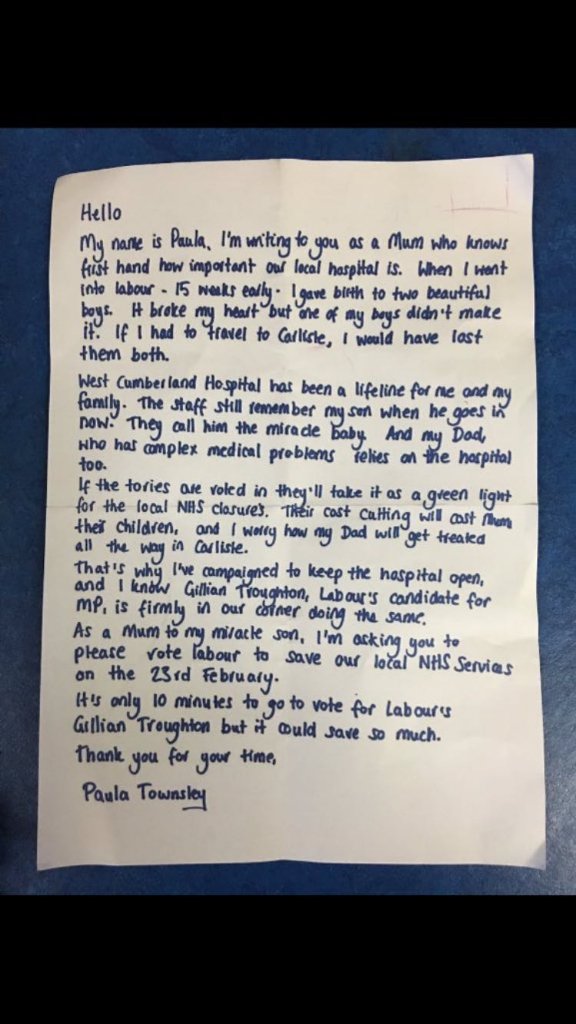
A graphic Labour pamphlet warns voters in Copeland that a Tory victory in the by-election will “cost mums their children” in an open letter aimed at highlighting the risks of NHS cuts in the constituency.
The handwritten letter in support of Labour candidate Gillian Troughton, a St John ambulance driver and former hospital doctor, is from local mother Paula Townsley. The leaflet is the second posted through letterboxes by Labour activists to contain dire warnings about the closures of maternity services at West Cumberland hospital.
Townsley’s letter describes how she gave birth to twins who were 15 weeks premature at West Cumberland hospital, but one of her sons did not survive. Expectant mothers will need to travel more than 40 miles to give birth in Carlisle if the maternity services in the area are closed.
Kevin Schofield (@PolhomeEditor)
Labour really upping the ante in Copeland – a Tory win “will cost mums their children”. pic.twitter.com/VeOtGqSXCd
February 16, 2017
“If I had to travel to Carlisle, I would have lost them both,” she wrote. “West Cumberland hospital has been a lifeline for me and my family.
“The staff still remember my son when he goes in now. They call him the miracle baby. If the Tories are voted in they’ll take it as a green light for the local NHS closures. Their cost-cutting will cost mums their children.
“As a mum to a miracle son, I’m asking you to please vote Labour in our local NHS services on 23 February. It’s only 10 minutes to go to vote for Labour’s Gillian Troughton, but it could save so much.”
The previous Labour byelection leaflet also included a quote from unnamed midwives, warning “mothers will die, babies will die, babies will be brain-damaged”.
Chris Whiteside, who has previously stood for the Conservatives in the seat, said: “I don’t know whether this will help Labour win the Copeland byelection but their tactics on the hospital deserve to lose.”
Labour’s campaign was given a boost on Thursday after negative headlines in the local paper about Theresa May’s visit to the constituency, where she repeatedly refused to answer questions on whether she would back the maternity cuts or over whether the government would underwrite the Moorside nuclear plant, after the Japanese company Toshiba pulled out of the project.
Canvassing is believed to show that Labour has a vote retention in some parts of the constituency as low as 70%.
Few Labour voters are switching directly to the Tories, one Copeland campaign source said, but many have told the party they are opting to stay at home. The party is said to be relying on legwork from the GMB union on the day of the byelection to persuade Sellafield workers to turn out and vote Labour.
Corbyn has confirmed he does not intend to campaign in the constituency again before polling day on 23 February.
The Tory campaign has been hinged on support for nuclear power and the Sellafield plant, a major employer in the area, highlighting Labour leader Jeremy Corbyn’s opposition to nuclear power. Tory leaflets distributed in the constituency feature a quote from Corbyn saying: “I say no nuclear power, decommission the stations we’ve got.”
People have just as much of a duty to look after their elderly parents as they do to care for their own children, a health minister has said.
David Mowat made the comments alongside an admission that the government had no “final answer” on how it was going to cope with the rising costs of social care.
Speaking to the House of Commons’ select committee on communities and local government, the minister said that tackling the care crisis involved “interwoven issues” including the question of how society deals with the care of ageing parents.
“One of the things that has struck me is no one ever questions that we look after our children – that is obvious. No one says that is a caring responsibility, it is what we do,” he said.
“I think some of that logic and some of the way we think about that in terms the volume of numbers that we are seeing coming down the track will have to impinge on the way that we think about caring for our parents. Because it is a responsibility in terms of our life cycle which is similar.”
The comments come as the Local Government Association, which represents more than 370 councils in England and Wales, claimed that the social care system was on the brink of collapse. The group is warning the chancellor, Philip Hammond, before the spring budget that failure to act urgently to plug the funding gap could leave councils open to legal challenges as they fail to fulfil their duties under the Care Act.
“The intentions and the spirit of the Care Act that aims to help people to live well and independently are in grave danger of falling apart and failing unless new funding is announced by government for adult social care,” said Cllr Izzi Seccombe, who chairs the LGA’s community wellbeing board.
She said social care was not just about getting people washed and dressed but aspiring to help people live the fullest of lives and with dignity.
Speaking to MPs on the committee, Mowat admitted that demand was rising and social care would inevitably require the UK to spend a higher proportion of its overall income on supporting elderly and disabled people.
“What we do know when we look at the GDP that we spend on care, we spend more than some countries like Germany that we would consider to be comparative and more than Canada,” he said.
But he admitted the total spend would inevitably rise, partly because of an ageing population and because of rapidly rising life expectancy among people with learning disabilities whose care was very expensive.
Mowat said there were “discussions with the Treasury all of the time” about how to cope with the demand.
“Over a period of time, the amount of money our society will spend on care will increase. You then get into what the options are and that is a wider question. There have been a lot of reviews. We are unusual in Europe in that we don’t have a social insurance system or long-term savings scheme,” he said.
The minister said personally he felt that such schemes could only help in the very long term and suggested there was a more pressing need to tackle the issue, including through societal changes.
Part of the answer was ensuring that people felt the responsibility to care for elderly mothers and fathers, said Mowat. He talked about the high levels of “informal caring” that already take place, saying six million people were taking on some form of care responsibility, including 200,000 children, alongside 1.6 million full-time carers.
“Part of the solution is properly bringing those informal carers into some kind of system,” he said, highlighting plans for a carers’ strategy that could help people get back into the workplace. “If people doing more than 10 hours of care a week, it is hard to get back into work.”
The Conservative chair of the health select committee has defended the NHS England chief executive, Simon Stevens, in his dispute with Theresa May over health service funding.
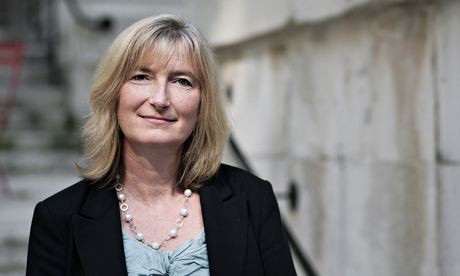
Dr Sarah Wollaston said she agreed with Stevens’ contradiction of May’s claim last Sunday that the NHS had been given more funding than it required up to 2020.
Stevens repeatedly dismissed May’s comments to Sky News when he appeared before the public accounts committee on Wednesday, showing the extent of the divisions between himself and the prime minister.
Asked on Sky News’ Sophy Ridge on Sunday programme if the NHS had been allocated more cash than it needed, Wollaston replied: “I don’t think that is strictly true.”
She said the government’s £10bn figure included transfers from other healthcare budgets. “So, you can see how the government has reached that figure. But the committee felt that a fairer figure, if we’re using the usual measure, was £4.5bn, which is a very different number,” she said.
Health had to be considered with social care “and what Simon Stevens was very clear when he spoke to the committee about, was if you have cuts to social care, that has an enormous impact on the NHS. So that is why he doesn’t agree,” she said.
“And I would agree with him that the NHS hasn’t been given everything it asked for, because it doesn’t actually consider social care, and it doesn’t consider the cuts to public health budgets, the kind of prevention work that we know is essential if we’re going to reduce demand on the NHS.”
Responding to claims that Stevens was not doing enough to alleviate the NHS crisis, Wollaston said “Personally, I think that is unreasonable. I think as a public servant and somebody who heads the NHS, the government needs to give him their unequivocal support in the very hard job he is undertaking to try to get this whole system to work.”
Wollaston, a former GP, also criticised the scapegoating of family doctors and the threat to withdraw funding unless they agreed to work longer hours.
She said it was entirely wrong to blame one section of the workforce, when administrative work, home visits and chasing test results had to be done when surgeries were closed.
GPs were “extraordinarily stretched and working under relentless pressure as bed numbers [in hospitals] are being cut,” she said.
“We now have the lowest number of beds per head in Europe. What we are finding is more and more complex conditions are coming back to primary care, so the work of the GP is changing and the pressures on them are relentless.
“The workforce simply isn’t there in many parts of the country, So I think to then be suggesting that all of this problem is due to GPs not seeing people is really stretching it,” Wollaston said.
“It’s just not the case and wrong to scapegoat them, in my view.”
A former Conservative health secretary has said it was unfair for Downing Street to hint that the NHS England boss, Simon Stevens, was to blame for the winter crisis gripping the health service.
Stephen Dorrell, now chair of the NHS Confederation, issued the rebuke after Stevens told MPs on Wednesday that Theresa May was “stretching it” by saying the health service had got more money than it had requested.
Sources close to May had suggested to the Times that Downing Street thought Stevens was “not enthusiastic” and was annoyed by his political interventions, particularly on social care funding. The prime minister’s spokeswoman later denied relations were frosty, saying May had full confidence in Stevens.
Dorrell said he believed that any allegations of political interference, and the insistence that the NHS had received the funding it had requested, were not fair to Stevens.
He told BBC Radio 4’s Today programme: “I do think it is unfair on him, because he’s made it clear from the beginning … He set out, he is the author of, the five-year forward view; he is the author of the government’s policy of the health service as part of a broad range of public services.
Theresa May and Jeremy Corbyn clash over NHS at first PMQs of 2017
“He’s been the strong advocate of the need to integrate, to change the way we deliver health and care in our communities in order to deliver more joined-up services with proper emphasis on care as well as on the essential elements of acute medicine.”
Dorrell said the government “should be addressing the evidence about what is happening on the ground rather than engaging in a rather high-profile discussion about, frankly, what sound to the public like telephone numbers of public expenditure”.
Speaking to the Commons public accounts committee on Wednesday, Stevens said “there are clearly very substantial pressures, and I don’t think it helps anybody to try and pretend that there aren’t”. He pointed that out the extra £10bn the government had referred to was being granted over six years, meaning the health service had less than it had asked for in its five-year-plan.
Stevens even appeared to take aim at May’s experience as home secretary, saying that dealing with challenges posed by an ageing population was “quite different to the criminal justice system”.
The row came as it was reported that at least 23 NHS trusts in England had declared a black alert in the past week, while freezing temperatures are expected to exacerbate the strain on the UK’s overstretched hospitals and heath services.
On Wednesday, May said claims by the Red Cross that the health service was suffering a humanitarian crisis were “irresponsible and overblown” in a series of clashes with the Labour leader, Jeremy Corbyn, over the issue. “Our NHS, Mr Speaker, is in crisis, but the prime minister is in denial,” Corbyn said.
The shadow health secretary, Jon Ashworth, published a letter he sent to May about Stevens’ performance, asking if she agreed with his assessment of funding levels and the effects of cuts to social care.
“Failure to take Simon Stevens’ warnings seriously would risk deepening a crisis that has already pushed the NHS to breaking point,” he wrote.
The full extent of the crisis facing social care is revealed by an Observer investigation which demonstrates the government’s flagship policy to keep elderly people out of hospital is failing in most parts of the country.
The findings – amid claims from senior NHS figures that “we are going backwards in many places” – come as ministers face calls to provide an urgent injection of extra cash to local councils to avoid services buckling under increasing financial pressure.
The Tory chair of the Commons select committee on health, Sarah Wollaston, said ministers should act immediately to prevent more suffering for elderly people, their families and other patients.
She also demanded all-party talks on the future of the NHS and social care. “We are at a tipping point,” she said. “We are seeing indications of the great stresses in the system and these need addressing now.”
The Observer’s investigation reveals that the landmark government scheme designed to relieve the strain on overcrowded hospitals – the Better Care Fund – is failing to deliver its aims of keeping older people healthy at home and so cutting “bedblocking”, despite £4bn a year being poured into it.
Theresa May and the health secretary, Jeremy Hunt, have repeatedly claimed that the fund, and a separate policy of allowing councils to raise more money for social care by increasing council tax, are jointly addressing the spiralling problems in social care.
Responses to freedom of information requests submitted to 151 local councils reveal that in England 58% of targets for improving care in people’s homes and local communities were missed.
In another blow to ministers, new figures from the King’s Fund thinktank show English councils will raise just a fraction of the sums required to plug gaps in their budgets by increasing council tax bills.
Better care at home is universally accepted as the way to keep people out of hospital and free pressure on beds. With so many elderly people and others having no alternative but hospital, services suffer a chain reaction of lengthening waiting lists and cancelled operations for other patients.
May and Corbyn clash over NHS and social care funding at PMQs
Data from 98 of the 151 local authorities in England with statutory responsibility for social care show that they met only 218 (42%) of 515 targets to improve social care in their area and missed the other 297 (58%).
Under the Better Care Fund councils receive money, mainly from the NHS budget, in return for introducing schemes to reduce demand for hospital care. This is done, for example, by providing better care for people in their own home or in care homes. But the FoI responses reveal that councils met barely a quarter of their targets in 2015-16 for reducing non-elective (emergency) admissions to hospital.
One senior NHS boss, speaking on condition of anonymity, said the disclosures raised the possibility that the fund was turning out to be “a waste of money”.
Chris Hopson, chief executive of NHS Providers, which represents hospitals, said efforts to improve out-of-hospital care were “going backwards in many places”. He added: “These findings show that the Better Care Fund – a key government scheme to increase out-of-hospital care – is not delivering as intended.
The findings are echoed in the fact that more than 50% of NHS trusts told us in a survey conducted last week that reductions in care facilities beyond hospitals have made it more difficult for the NHS to meet the demand it faces.
“Just at the point when the NHS desperately needs more out of hospital care, we seem to be going backwards in many places. That can’t be right,” Hopson said.
Stephen Dalton, chief executive of the NHS Confederation, said: “These figures are very worrying as we head into what could be a very tough winter for the NHS. We only need a significant dip in the weather, which has been mild so far, and people would become more vulnerable and we would see a big spike in demand. We have a perfect storm going on at the moment of unprecedented demand for care, the fact that we have reached a tipping point in terms of the demographics, and cuts to local councils that are among the biggest in their history.”
Oxfordshire council performed worse than in 2014-15 against all six targets, while Bracknell Forest, Wolverhampton and North Yorkshire each did worse against five of the targets.
The new data from the King’s Fund shows councils across England will raise £382m a year as a result of their ability to increase council tax to pay for social care in 2016-17, a fraction of the funding gap they face this year.
The social care “precept” allows councils to charge up to an extra 2% on council tax bills from this year in order to fund social care services. But King’s Fund analysis shows it will raise less than 3% of what councils will spend on social care, which does not even cover the extra £612m cost they face as a result of the “national living wage”.
The King’s Fund figures also show the social care precept will widen inequalities in access to care services, contributing further to fears of a developing two-tier system.
The 10 most affluent areas will raise more than two and a half times (£41m) the amount of the 10 areas with the greatest level of pensioner need (£17m). Tower Hamlets, the council with the highest level of pensioner need as measured by pensioner income deprivation, will raise just £7 per head of its adult population, compared with the £13 per head that will be raised by Wokingham, with the lowest level of pensioner need in England.
This week ministers are rumoured to be preparing to increase further the amount that councils can raise to pay for social care. But the Tory chairman of the Local Government Association’s community wellbeing board, Izzi Seccombe, said this would not be an adequate response, as she warned that the country was facing the “worst ever funding crisis” in social care.
“Extra council tax-raising powers will not bring in enough money to alleviate the pressure on social care and councils will not receive the vast majority of new funding in the Better Care Fund at the end of the decade,” she said. “Even with this extra money, we have estimated the funding gap amounts to at least £2.6bn. This includes £1.3bn needed right now to stabilise the provider market and a further £1.3bn by 2019-20.”
A Department of Health spokesperson said: “We are giving local areas access to up to £3.5bn extra for social care by 2020. While many areas are already providing high quality services within existing budgets, the Better Care Fund, which brings together health and social care provision locally for the first time ever, will get additional funding in the next few months to raise standards further. This government is committed to ensuring those in old age throughout the country can get affordable and dignified care.
Philip Hammond, the chancellor, is coming under mounting pressure from Tory MPs to bring forward help for the NHS and social care services, amid dire warnings that council budget cuts are causing unsustainable problems.
A string of Conservatives have begun to express dismay that Hammond did not address the issue in his autumn statement. Their voices add to the senior doctors, council leaders from all parties, two Tory former health secretaries and the Labour frontbench, who are warning that increasingly hospitals are unable to discharge elderly patients as struggling social care services are not able to make appropriate arrangements.
Among those raising concerns about a crisis are Dr Andrew Murrison, a Tory former minister, who said on Monday that Hammond’s decision to miss out mention of healthcare in autumn the statement was “strange”.
“Ministers should be in no doubt of the impending financial crisis or of the demands likely to come from people like me to deal with the shortfall in cash going into our NHS. If this requires tax rises, so be it,” he said in a statement, suggesting it should be accompanied by an end to the triple-lock on pensions to ease the burden on working people.
Kit Malthouse, a Tory MP for North West Hampshire, warned that pressure was building on Hammond to ease the difficulties facing councils and the NHS.
“MPs across the House are raising this as an issue,” he told the BBC’s Westminster Hour. “The frustration for me, having worked in local government, was that health and social care, putting the two together and getting them to coordinate, has been the holy grail for such a long time and yet still, in large parts of the country, they haven’t got their act together.”
Another to raise concerns is Sir Hugo Swire, a Conservative former minister and East Devon MP, who wrote to Hammond before the autumn statement asking for more resources for social care.
“As it stands at the moment, with council budgets for social care falling behind demand by £5bn nationally, I am concerned that the loss of hospital beds will not be compensated by the social care system, resulting in an overall and unacceptable loss of healthcare provision,” he said in his letter to the chancellor.
“In my opinion, the only answer to this complex issue is an increase in the social care budget which would not only be good for patients but, ultimately, reduce the pressure on the NHS budget.”
The Treasury points to an extra £3.5bn of social care funding for councils by 2020 and ability to charge a 2% precept. A HM Treasury spokesperson said: “The government has committed to increase NHS funding by £10bn above inflation by 2020/21, going beyond what the NHS requested. In addition, we have given local councils £3.5bn extra funding by 2020 for social care. Many councils are already providing high-quality social care services within existing budgets.”
However, critics say this barely covers the extra salary cost of the higher minimum wage and Tory MPs are privately warning that the government could face unrest similar to the tax credit rebellion if more cash is not brought forward to deal with immediate shortcomings in provision.
Chancellor wrong on social care funding, says former health secretary
It is understood other Tory MPs who represent areas with high proportions of older voters have registered their alarm with the chancellor, especially as councils with few working-age residents are unlikely to be helped by the devolution of business rates.
In the House of Commons on Monday, Peter Bone, a Conservative rightwinger and MP for Wellingborough, called for cross-party talks to solve the problems with social care provision.
“Social care should not be a party political matter, and there are concerns on both sides of the House,” he said. “Would it not be a good idea if the government worked with the opposition to see whether we could agree on a way forward so that social care progresses satisfactorily?”
Martin Vickers, Tory MP for Cleethorpes, said he did not agree with those criticising Hammond but would like to see the problems urgently addressed.
“The Departments of Health and Local Government and all those involved do recognise the problems. I’ve spoken to ministers. Yes I’m concerned and yes I’m making the point to ministers at every opportunity. But am I part of a revolt? Not at this stage.
“The government’s official position is they have given the councils a 2% precept on council tax and to some extent that is cumulative but council leaders will repeatedly tell you that is not bridging the gap. So clearly there have got to be further negotiations.
“The joined-up working that we hear so much about is part of the package but that takes time to come together and the pressures are there now. So it may well be at some time there has to be an emergency top-up.”
Dr Dan Poulter, a Tory MP who has previously called for a new tax to help the NHS and social care, said the issue was causing a mounting unease on the Conservative benches, as they begin to get complaints from their local councils and constituents.
“Over the past six months there has been a growing feeling among Conservative colleagues that the health and care system is running into severe difficulties and that more money and a big intervention from government is becoming increasingly pressing and necessary,” he said.
“As the reality of an ageing population being cared for by a social care system that has seen a reduction in funding over the past five or six years begins to bite there is going to be an urgent need for the government to take action and not just look at providing a one- or two-year bung of extra money but providing a long-term funding solution for maintaining a health and care system that is free at the point of need.”
Previous warnings about the problems facing NHS and social care funding have been sounded by Sarah Wollaston, the Conservative chair of the health committee. She said there was now an urgent need for immediate cross-party talks on NHS funding and the difficulties for people in accessing social care.
“I’m very very concerned not only about what I’m seeing on the ground in my own constituency but what I’m hearing in my capacity as health committee chair,” she said. “If there are more MPs finally prepared to say this absolutely has to be dealt with I am very pleased.
“Personally I think we need a cross-party agreement just like we did with pensions. This is going to be a problem for whoever is in government. It is time to just get away from this as a political squabble.”
Jane Ellison, the public well being minister, says the government has misplaced day-to-day manage of the NHS. Photograph: Lucy Younger/Rex Characteristics
A Tory wellness minister was at the centre of controversy following she was secretly recorded saying that the government could no longer exert significantly day-to-day control over the increasingly stretched NHS.
The public wellness minister, Jane Ellison, advised a private meeting of the Tory Reform Group that offering political path to the NHS was like getting on a higher wire with no a security net – which she described as “thrilling”.
Link to this audio
The remarks have been seized on by Labour as proof that coalition reforms of the NHS driven by means of by Andrew Lansley, prior to he was sacked as overall health secretary in 2012, have designed far far more confusion and significantly less clear lines of command, rather than better efficiency. Labour accused Ellison and other ministers of making an attempt to wash their hands of accountability for the coalition’s reforms, as NHS expenses soar, waiting lists rise and a lot more and more individuals are unable to see a GP swiftly. On the tape, leaked to the Observer, the minister seems to location responsibility for the government’s declining influence on the NHS on the reforms themselves, saying that power has been provided away with out the public realising. Ellison, a well being minister given that last October, said that Lansley’s successor Jeremy Hunt had done a “brilliant occupation”, “turning the narrative round” from a single centered on reform of NHS structures to 1 focusing on individuals and patient care.
At the meeting, on eight June, she also said that people have been unaware who was accountable for the NHS today. “I don’t know how significantly any of you realise that with the Lansley act we rather much gave away manage of the NHS, which implies that the point that most folks talk about in terms of overall health [the NHS] … we have some crucial strategic mechanisms but we will not genuinely have day-to-day control.
“From a political point of view, it is a bit like being on a higher wire without a net at instances, it can be really interesting.”
For Labour, shadow overall health minister Jamie Reed stated Ellison might find the newly constituted NHS interesting but sufferers “in complete-to-bursting A&E departments will not”.
He additional: “Andrew Lansley’s NHS shakeup was a £3bn fiasco that no person wished and no person voted for. All it succeeded in performing was in rising bureaucracy and driving fees up. Now ministers are merely washing their hands of duty for our NHS.” Because Lansley was sacked by David Cameron, Hunt has been battling to neutralise the NHS as an problem, right after two years in which controversy above the reforms united most of the healthcare occupation against the government and dogged the coalition.
Anger at the reforms was compounded because Lansley’s ideas were not spelled out in detail in the 2010 Conservative manifesto and they were driven via regardless of Cameron’s guarantees that he would not allow even more “leading down” reorganisation.
The Lansley act paved the way for groups of GPs, who have been given budgets to acquire care for their communities, to be formed into clinical commissioning groups. These groups can acquire in care from the personal sector. Several responsibilities of the Department of Wellness had been moved to a new, politically independent NHS Commissioning Board, now called NHS England.
In the foreword to the 2010 act, Cameron and Nick Clegg wrote that they have been generating the NHS “a lot more accountable to patients” and freeing personnel from “excessive bureaucracy and best-down control”.
GPs and other individuals have complained that, in area of the outdated method, new layers of bureaucracy have sprouted up and it is often unclear who is responsible for what.
Labour claims that, rather than bettering the NHS, the reforms have created it worse, with increasing costs – which includes estimates that the NHS will face a £20bn-£30bn annual funding gap by 2020 , lengthening waiting lists and escalating delays for individuals wanting appointments with their GP.
A Department of Health spokesman said: “Giving operational handle for the day-to-day operating of services to medical professionals was the appropriate determination – but we have usually been clear that ministers are responsible for the NHS, and we are proud of its overall performance in difficult conditions.”
Tory MP Sarah Wollaston has spoken out against components of the reorganisation of the NHS. Photograph: Martin Godwin for the Guardian
Two fiercely independent female Tory MPs who have been strongly vital of David Cameron above factors of NHS policy will do battle this week to chair the potent Commons overall health choose committee in a close contest that is currently being watched nervously by ministers.
Outspoken former GP Sarah Wollaston and MP for Bristol North West, Charlotte Leslie, have both rallied strong cross-party assistance, pledging to champion patients’ interests, rather than be in the pocket of government or the healthcare profession.
The election of a fearless Tory MP prepared take on ministers where necessary and hold the NHS to account, is an uncomfortable prospect for Cameron in the runup to a common election in which Labour desires to make the well being support a central problem.
On the eve of hustings in the Commons on Monday, Leslie stepped up efforts to win backing from Labour and Lib Dem as effectively as Tory colleagues, by tearing into Cameron and the health secretary, Jeremy Hunt, for refusing to fire former NHS chief executive Sir David Nicholson, and for allowing him to retire early with a “excess fat pension” following the Mid-Staffs care scandal.
“I believe Cameron and Hunt had been definitely wrong not firing Nicholson or forcing him out,” she advised the Observer. “And I am horrified that he was permitted to retire early with such a large pension (£110,000 a year).”
Among 400 and 1,200 individuals died needlessly at Stafford hospital from 2005 and 2009 as a outcome of appalling care. Leslie also criticised a culture of cover-up in the NHS. “We have had sufficient words. If we want modify, we need to start off implementing some correct disincentives for managers to lie, with total force of the legal method.”
Three other Conservative MPs – former cabinet minister Caroline Spelman, former GP Phillip Lee and David Tredinnick, a keen supporter of alternative medicine, have joined the race to realize success former health secretary Stephen Dorrell, who recently announced he was stepping down as chairman.
Right after the 2010 basic election, the system for selecting select committee chairmen and women was taken out of the gift of get together whips and handed to backbench MPs, who jealously guard their new power, seeing the elections as a chance to express their authority above party hierachies.
Beneath a sharing deal agreed for this parliament, the health committee job is reserved for a Conservative but anybody regarded as a mere government loyalist is unlikely to progress in the race.
Wollaston, the MP for Totnes, is regarded by most MPs as the narrow favourite, possessing brought her expertise of the NHS into parliament and shown herself ready to speak out towards aspects of government NHS reforms she thinks had been unwell-conceived.
She has also criticised the way backbench MPs, especially women, have been locked out of decision making – even when they have personal knowledge of policy places, such as hers in the NHS – and has known as for an end to “posh, male and white” cliques about the leader.
Wollaston has described elements of the authentic NHS reorganisation pushed by former health secretary Andrew Lansley as “fully unrealistic” and “doomed to fail” in terms that infuriated Downing St.
Some senior Tories are attempting to paint Wollaston as “Labour’s candidate” – a move her supporters declare is a clear try to harm her campaign, and misrepresents her backing across the events.
Dr Lee is calling for the committee to be utilised as a cross-party forum in which to produce a consensus on how to accomplish reform of the NHS. He says the political cycle does not permit politicians to strategy for the lengthy term.
“They lived with each other with minimum support. Had they split up the care costs for both of them would have been important.
“The amount of divorces for the in excess of 60s has enhanced by 30 per cent in the last decade and the amount of more than 75s living alone has improved by in excess of a fifth because 1996.
“This says to me that regional authorities and the Division of Wellness must recognise the extremely big interest they have in strengthening marriages and couple relationships in buy to end adult social care expenses from rising even a lot more quickly than they are anticipated to.”
According to the Workplace for Nationwide Statistics, the variety of individuals over 60 getting divorced has risen by three quarters in just twenty many years.
This has been attributed to people living longer and far more relaxed attitudes to divorce between the “child boomer” generation.
The figures recommend that in some cases it could be the result of a “silver fox” phenomenon with males increasingly residing longer whilst nonetheless retaining a wandering eye.
Separate ONS figures suggest that the number of people aged in between 45 and 64 who live alone has risen by more than 50 per cent since the mid-1990s to 2.5 million.
Mr Selous stated: “The stage at which men and women retire is usually hugely stressful. The whole business of family members daily life is behind them and couples locate out they do not know how to talk to each and every other or have entertaining collectively.
“Older folks are the most significant consumers of the NHS, and GPs are ideally placed to give assistance themselves or signpost appropriate assistance to couples in or close to retirement who are on the verge of splitting.”
Chris Sherwood, head of policy at Relate, said that staying in a connection provided a lot more stimulation than living alone.
He said: “Being in a couple relationships assists you to stay linked, to contribute and to be active. When men and women reside alone they decline more rapidly than they would otherwise due to the fact they are not connected and contributing. If you have two men and women you have a more independent unit.”
Dr Sarah Wollaston MP tweeted: ‘So HES [hospital episode statistics] information uploaded to ‘google’s immense army of servers’, who consented to that?’ Photograph: Martin Godwin for the Guardian
A prominent Tory MP on the potent well being choose committee has questioned how the whole NHS hospital patient database for England was handed in excess of to management consultants who uploaded it to Google servers based mostly outside the Uk.
Sarah Wollaston, who is also a loved ones medical professional and Conservative backbencher, tweeted: “So HES [hospital episode statistics] information uploaded to ‘google’s immense army of servers’, who consented to that?”
The patient data had been obtained by PA Consulting, which claimed to have secured the “complete commence-to-finish HES dataset across all three areas of assortment – inpatient, outpatient and A&E”.
The information set was so large it took up 27 DVDs and took a couple of weeks to upload. The management consultants explained: “Within two weeks of commencing to use the Google equipment we have been able to produce interactive maps right from HES queries in seconds.”
The revelations alarmed campaigners and privacy professionals, who queried how Google maps could have been utilized unless some area data had been supplied in the patient data files.
The concern of which organisations have acquired medical information has been at the centre of political debate in the past number of weeks, following reports that actuaries, pharmaceutical companies, government departments and private overall health companies had either attempted or obtained patient information.
Patient groups have questioned what safeguards are in area to defend privacy and have called for full disclosure of which organisations have acquired healthcare information considering that 2010.
Stephen Dorrell, Tory chairman of the wellness decide on committee, has already stated he will write to the overall health secretary, Jeremy Hunt, to request that such info is launched.
Final month, NHS England announced it would delay by 6 months the rollout of its flagship care.data scheme linking GP records and hospital data, amid criticism of how it has run the public info campaign about the undertaking.
The extracted information will have a person’s NHS amount, date of birth, postcode, ethnicity and gender. After reside, organisations this kind of as university study departments – but also insurers and drug organizations – will be capable to apply to the new Wellness and Social Care Data Centre (HSCIC) to acquire access to the care.information database.
Even so, campaigners said it would be a folly to continue with the task, which envisages firms paying to extract patient details that would be scrubbed of some personalized identifiers but not enough to make the information entirely anonymous – a procedure recognized as “pseudonymisation”.
Phil Booth of medConfidential, which campaigns on healthcare privacy, said every day another instance of “complete population degree information becoming sold emerges which had been previously denied”.
He extra: “There is no way for the public to inform that this data has left the HSCIC. The government and NHS England should now come entirely clean. Anything at all much less than complete disclosure would be a comprehensive betrayal of believe in.”
Helen Grant, holder of ‘a portfolio so disparate it may well as nicely be Miscellaneous Stuff None of The Guys Needed to Do’. Photograph: Jan Kruger/Getty Photographs
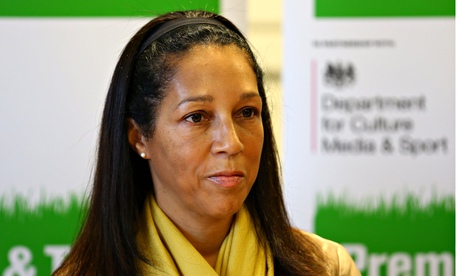
Helen Grant, the minister for sports, equalities and tourism – a portfolio so disparate it may as well be Miscellaneous Things None of The Men Wanted to Do – has uncovered the centrepiece of government policy to tackle the gender gap in sports activities uptake. It essentially boils down to encouraging ladies to engage in sports that involve cuter outfits.
The complete interview in which Grant described her views reads like some thing scripted for an edition of Brass Eye. She suggests “[t]here are some superb sports which you can do and execute to a very high degree and I feel people participating look absolutely radiant and very feminine this kind of as ballet, gymnastics, cheerleading and even roller-skating.” For adult females, she suggests “a Zumba class or a game of rounders following they’ve dropped the kids off”. She described her response when, just lately, she was a spectator at a roller-blading occasion: “Individuals women arrived and they looked definitely lovely. They have been sporting their socks pulled up, gorgeous socks with sequins and their hair was accomplished.”
The government has identified a gender gap in sports activities uptake – the recognition of the difficulty is a important phase. It needs to encourage more women to get up sport – this is an admirable objective. It has recognized that stereotypes about femininity may possibly play an essential element in this gender gap – an excellent and crucial observation. To then determine that part of the resolution entails classifying some sports as “butch” and other people as “girlie”, to endorse this kind of stereotypes, seems to me to display a cackhandedness which no volume of sequinned socks can make palatable. How does it inspire ladies to consider up sport, by incorporating to the strain of sportswomen to search “feminine” – what ever that entails – and incorporating to the scrutiny of their look, consistently alluded to by male sport commentators? Remember John Inverdale’s idiotic comments about Marion Bartoli’s physical appearance, as she won Wimbledon.
It is only superficially surprising to hear this kind of policies expressed by a female minister in David Cameron’s government. Cameron does not just have a “ladies difficulty” he has many. Support for his celebration from females is declining and has been for some time. The party is losing female MPs left, correct and centre – some resigning mid-phrase, some declaring they will not stand yet again, whilst other individuals are controversially deselected, as rumour has it, for being “a silly girl”.
The prime minister himself has appeared, on occasion, unable to quit himself from making remarks with a sexist hue, like telling Angela Eagle, a parliamentarian of expertise and clout, to “calm down dear”.
Cameron is under stress to appoint female MPs to ministerial positions, but the pool from which he can pick is small and ever-diminishing. He is taunted by Miliband for his all-male frontbench. Former female Tory MPs like Anne Widdecombe are queueing up to criticise “silly modern day” ones. The strategic Cabinet coalition committee contains not a single woman.
Secretary of state Philip Hammond would seem unable to distinguish amongst female shadow ministers, repeatedly mistaking Liz Kendall for Rachel Reeves on the BBC’s Query Time on Thursday evening. In his defence, he has been in back-to-back Cobra meetings and has most likely not witnessed a girl in two weeks.
In this hostile setting, with whom might junior ministers like Helen Grant discuss tips, to discover their flaws? If 1 can only poll rich, straight, white, middle-aged men on regardless of whether they would like to see a lot more girls cheerleading in tight lycra outfits, the answer ought to hardly come as a shock.
All this contributes to the government’s female deficit, but the dilemma, I feel, runs deeper than that. Conservative ideology explicitly seeks to preserve conventional values and roles and this involves gender ones. With Thatcher’s legacy fading, the Tory celebration might in no way yet again be a all-natural political house for ladies.
Another one bites the dust. Lisa Jardine, it turns out, was successfully sacked as head of the Human Fertilisation and Embryology Authority, an additional female gone in the bonfire of insufficiently Tory quangos and regulators. At very first she went quietly, enabling men and women to feel she had stepped down: “It seemed self-concerning to complain.” But soon after Sally Morgan refused to shuffle off silently from Ofsted, Jardine has gone public too, telling me how she’s seething with indignation at how cavalierly she – and a lot more importantly her organisation – has been handled.
This sweeping away of non-Tories started with a letter from the Cabinet Workplace final autumn to all heads of government departments, telling them all chairmen and ladies ought to be removed after 3 years. This showed exceptional disregard for great governance, and was contrary to the findings of public commissions and personal sector great practice. A chair will take time to settle in, to first understand an organisation and then to grasp its levers and set it on program. An powerful chair is not, as the government suggests, “a mere figurehead”, but a guarantor of good management.
The array of seasoned and extremely regarded men and women recently ejected is really astonishing, but in an establishment so quick of senior women, it really is shocking to see a whole cadre of women who broke by way of, all poleaxed by decree: Dame Liz Forgan from the Arts Council, Dame Suzi Leather from the Charity Commission, Lady Andrews from English Heritage, all replaced with Tory males – and now Lisa Jardine and also Diana Warwick of the Human Tissue Authority. All had glowing appraisals. A male Tory donor is rumoured to be in line for the HFEA job: we might see a panicky rethink.
There may possibly be an further element of revenge in Jardine’s situation. The HFEA’s demise was announced by the health secretary: with no consultation it was to be tucked into the Care Good quality Commission. But just then the CQC fell apart, unfit to get on but another mammoth task. Jardine didn’t grandstand in public, but worked tactfully behind the scenes to impress on ministers the vital significance of this hugely technical regulator, inspector of fertility clinics, protector of vulnerable would-be dad and mom from exploitation and guardian against unauthorised tampering with embryos or genetic materials. She won – but inside days of hearing the HFEA would be saved, she was summoned to the health division and advised in spite of their current imploring of her to stay until the election, her task was to be advertised and a reapplication from her “would not be welcome”. She is universally nicely regarded as possessing carried out an outstanding work and had turned down other delivers to stay on. The final insult was a fulsome letter from Jeremy Hunt praising her fantastic perform.
Roles like these are supposed to be stored at arm’s length from government. Until final 12 months, for illustration, an independent NHS Appointments Commission picked and trained folks as chairs and non-execs to NHS boards, guaranteeing that the approach was not topic to undue political interference. But the commission was abolished – and another experienced senior lady, Anne Watts, sacked in the procedure.
Both sides of the fantastic political divide have been frantically totting up no matter whether Labour or Tories appointed far more of their very own type to quangos. But the larger question is which posts ought to be political, and which should be genuinely independent? Any government wants people in spot to carry out its policies. David Cameron came to energy promising fewer specific advisers – but has appointed however much more, discovering they are certainly a required part of governing. The Institute for Public Policy Research thinktank has advised everlasting secretaries need to be appointed by ministers, putting an end to “Yes Minister” thwarting of ministerial intent: there’s some assistance for that on the two sides, if the option were independently vetted for encounter and suitability.
What issues is that a clear line is drawn amongst political posts and those that must be left to civil servants. It may well not matter significantly if we follow the US in openly appointing previous pals as grace and favour ambassadors, given that modern communication has produced their function significantly less important. What does matter is transparency and that cash doesn’t buy positions, another very good reason to clean up party funding once and for all. How could Michael Gove have even considered replacing Sally Morgan with an investment banker Tory donor?
This government has crossed new red lines. No regulator with quasi-judicial functions ought to be a political appointment. Nevertheless the new chair of Check, Baroness Hanham, is a latest Tory minister, now in charge of policing NHS compliance with competition law so the private sector competes for NHS contracts. The new chair of the CQC is David Prior, a former Tory MP, who parrots Jeremy Hunt’s assaults on the NHS, even though inspecting it.
Another red line has just been crossed: the Division for Perform and Pensions has appointed Richard Caseby, former managing editor of the Sun and the Sunday Times, as director of communications. DWP press releases had previously turn into a disgrace, issuing questionable figures and malicious anecdotes about advantage fraud, which have been then sent only to Iain Duncan Smith’s friendly press. Everlasting secretaries should stand guard towards use of government communications for political propaganda, but the DWP’s most senior civil servant, Robert Devereux, has never ever dared say “No minister”. What opportunity of independent honesty when the head of the complete government info support, Alex Aiken, is a former Tory press officer?
Placing political placemen and stooges into bodies that need to act as independent regulators and inspectors is a corruption of government. New lines do need to have to be drawn to define where the civil support blends into politics. But undermining Ofsted, CQC, Keep track of and the Charity Commission as independent arbiters ratchets up the politicisation of every little thing. Labour spin was notorious with “eye-catching announcements” and “burying negative news”, but they were cautious, and stored in verify by a largely hostile press. This government gets away with issues Labour by no means dared. Morgan and Jardine refusing to go quietly need to make them consider again.
• Feedback on this post will be turned on later this morning
Speaking to BBC One’s Query Time, Mr Clarke, who has worked in the tobacco market, mentioned: “I was smoking on the way right here in my vehicle. It’s possibly extremely wise to advise individuals will not do it when you have got kids in the automobile.
“We do preserve generating new visitors offences. I never consider our traffic police are going to be concentrating massive efforts on racing up and down the motorway peering into vehicles, trying to see whether or not there is a child in.
“We do generate too a lot of visitors offences, I really do believe it’s gesture politics. We’ll most likely locate two or three people fined a 12 months. It tends to make the lobbyists feel better.”
Eric Pickles told BBC Radio 4′s Any Concerns: “It is 35 years given that I was last in automobile that any individual smoked a cigarette. To me it’s anathema for any person to smoke a cigarette in a vehicle with a youngster. It’s 11 occasions a lot more likely to influence the little one than in a house.
“The government has been running a quite powerful advertising campaign about the effect of smoke on kids in the automobile.
“If we end the automobile, and a man or woman is smoking, what transpires following? Do we fine them? Are their young children place on the at chance register? Do we need to have to involve social companies? Is this one thing considerably diverse from smoking at residence? Should we be dealing with that?
“We need to make issues criminal if we come to feel that they are enforceable. If there are other techniques to get rid of this dreadful, anti-social and damaging issue we must do so. For as soon as my vote is open to persuasion. My initial intention is to vote towards it.”
David Cameron has stated he will “pay attention very carefully” to the debate just before determining on no matter whether to vote in favour of the ban. Patrick McLoughlin, the transport secretary, is anticipated to adhere to Mr Hunt’s lead on the problem.
A pal of mine fell acutely unwell lately and was provided urgent NHS treatment method for his problem. He even now wants lengthy-term treatment method, but it is taking its time to flip up. If he’d suffered a heart assault or found a lump, this wait for treatment method would be considered an outrage. But with this sickness – a psychiatric one particular – it’s quite standard. There is a lengthy-standing imbalance in the overall health service whereby psychological illnesses are not treated with the exact same priority or velocity as physical ones, even however the former can be just as deadly as the latter.
Thoughts, the psychological health charity, estimates that 1 in ten individuals waits longer than a year to receive psychological treatment, whilst people with other illnesses, such as cancer, are typically treated inside of a amount of days. This implies mentally ill individuals can deteriorate additional, ending up needing costly crisis care.
James Morris, the MP creating this specific report, hopes it will show voters that compassionate Conservatism is alive and well. The minister who covers this region, Norman Lamb, is a Liberal Democrat, and Labour tends to do a far better task creating loud noises about mental health. So the Conservatives require to perform hard not to cede ground.
“There’s a critical financial rationale all around this in terms of the price to the NHS, as effectively as it currently being about advertising a more compassionate form of Conservatism,” Morris says. He is also top an all-get together parliamentary inquiry into the parity of esteem. He is the chairman of this group, having taken over final year from fellow Tory Charles Walker, who famously advised the Commons that his very own struggle with Obsessive Compulsive Disorder made him a “practising fruitcake”.
Other Conservatives, besides Morris and Walker, are turning out to be increasingly vocal about psychological health, no matter whether as a end result of their very own struggles or from getting some prior experience on the subject. And they want to see their get together make the same level of noise as their opponents. The last Tory manifesto contained one little bullet stage on treatment method Morris and his 2020 colleagues are ambitiously hoping for 3 in the 2015 document.
The MPs will publish a report next month suggesting 6 locations that the Conservatives could choose their 3 manifesto pledges from. These are: early intervention employment and how to help people with psychological problems back into perform psychological wellness in later lifestyle the way the criminal justice system interacts with sufferers accessibility to psychological therapies and crisis care.
The 2020 group contains a number of members of the No ten policy board as effectively as ministers. Even though this modernising manifesto operate is completely separate from the official manifesto, the representatives of the Downing Street brains trust operating on the ultimate document are hardly going to disregard a excellent idea handed to them on a plate.
Or at least, they shouldn’t. When mental illness accounts for practically 14 per cent of NHS investing, and influences a single in four individuals, it is hardly a niche situation to be squirrelled away in just a single bullet point.