Trigger etiketine sahip kayıtlar gösteriliyor. Tüm kayıtları göster

18 Aralık 2016 Pazar

Why pictures trigger buried memories much faster than words

As you’ll have noticed, in our issue devoted to this year’s most memorable news images, there is an immediacy to a photograph that we can’t help but respond to. A picture can trigger a buried memory and recall a precise moment in time much more rapidly than words. But why exactly?


Neuroscientists have known for many years that humans have an extraordinary ability to encode pictures. In one study, first carried out around 50 years ago and repeated since, people are shown 10,000 photographs and, a few days later, another 1,000 – half from the original batch and half new. Within seconds, respondents point accurately to the ones they’ve seen before. Which is why, at this time of year when you look through a photo review, a picture glanced at six months ago will still chime and feel familiar, even though you couldn’t call it to mind a minute ago.


This is possible because our brains are so efficient at storing the ‘essence’ of a picture, capturing not just the subject but specific visual qualities. You can’t bring this to mind actively, it’s what we call a ‘passive effect’. If you were asked to recall a news image from March, you may struggle, but if you saw a stack of photos from that time, you’d instantly know the ones you’d seen before.


Before we get too full of ourselves, it’s worth knowing that at least one other animal shares a similar ability – the pigeon. In studies they show high levels of recall when presented with different images – helpful for finding food. For us it may be linked to social relations or just navigation.


However trivial the picture, it’s the recognition and the rush of familiarity that is fun – an added benefit that’s lost on pigeons but satisfying for us.


Dr Daniel Glaser is director of Science Gallery at King’s College London


Why pictures trigger buried memories much faster than words

28 Ekim 2016 Cuma

Can a 30-second chat with a GP really trigger weight loss?

There’s a big debate in the world of obesity treatment. Does it help to inform someone they’re obese, or does it cause unnecessary distress?


Those who believe the former will be buoyed by a new study, published in the Lancet medical journal on Tuesday, which attracted excited news coverage. With usual restraint, the Sun shouted, ‘HONESTY IS BEST POLICY: GPs must TELL patients they’re fat’, while the Guardian announced, ‘GPs should not worry about offending obese patients’. Both took their lead from the Lancet’s own press release, which stated ‘the findings should provide reassurance to doctors who rarely talk to patients about their weight for fear of causing offense’.


But does the study support this conclusion? And can, as the BBC declared, a 30-second chat reallytrigger weight loss? The answer as ever requires delving beyond the headlines.


The study, led by a team from the University of Oxford, was a randomised controlled trial of GP-led referral to commercial weight loss programmes. Patients with an obese body mass index were recruited while waiting to see their GP, and given an envelope to take into their appointment. The GP opened the envelope, and depending on whether the patient had been randomly assigned to the intervention or control group, reacted accordingly. In both situations, the GP spent around 30-seconds recommending that the patient lose weight. Those allocated for intervention were referred to a commercial weight loss programme and helped to book their first appointment, while controls were left to their own devices.


That difference – whether the patient was actively helped to book onto a commercial weight loss programme or was left to their own devices – is what the study primarily tested. Not the effectiveness of the 30-second chat, and certainly not whether it’s helpful telling patients they’re obese.


The trial’s reported success is because those who received the intervention lost an extra 1.4kg (3.1lb) after 12-months compared to those who received the control. But since all the participants received a 30-second chat, it’s impossible to say whether this was itself useful, as there was nothing to compare it to. Although the control group were 1kg (2.2lb) lighter at the end of the study than they were at the beginning, this might not be that surprising, because of a statistical quirk called regression-to-the-mean, first described by statistician Francis Galton, who found that tall parents had children who were, on average, shorter than their parents. This law of measurement occurs because any extreme value (one far away from average) is more likely to be a high water point than a true extreme. Think how often you’ve discovered an amazing new dish at a restaurant, only to find it disappointing the second time around. Along with the placebo-effect, this is one of the key reasons why a control group is so important.


So, to the question of whether a 30-second chat can trigger weight loss, the answer is maybe, maybe not. We know onlythat a 30-second chat followed by immediate referral to a commercial weight loss programme can lead to modest weight loss over a period of 12-months. It’s a substantial leap from there to concluding that GPs can talk freely to their patients about their weight without fear of causing offense.


The study did ask participants whether they found the chat ‘appropriate’ and ‘helpful’, and almost all participants agreed. But this does not prove that all such conversations are appropriate and helpful. First because the results can’t be interpreted beyond the brief and highly scripted discussions in the study. Second because questionnaires are highly susceptible to bias, depending on factors such as wording and how, where, and by whom questions are asked. To avoid this, the gold-standard approach to testing the pros and cons of a new intervention are in-depth (qualitative) interviews. Research of this type was planned in the study protocol, but was not included in the final publication. Qualitative research is considerably more difficult to publish in leading medical journals. The Lancet will hopefully welcome these results when they are available, and afford them with same publicity as they have the numerical findings.


Another difference between the protocol and the publication includes what’s been explicitly highlighted as a potential ‘competing interest’. In the protocol the authors state under ‘competing interests’ that, ‘Slimming World and Rosemary Conley… agreed to fund free treatment courses for NHS patients participating in the trial’. In the article, they state under ‘acknowledgments’ that, ‘the weight loss programmes… provided by Slimming World and Rosemary Conley Health…were donated to the NHS’. Semantic differences aside, the study has provided excellent marketing in the media and in the wording of the ‘typical’ GP conversation, which asked, “Did you know the best way to lose weight is to go to [Slimming World or Rosemary Conley]…?”. Rival weight-loss companies may dispute this, especially those that advocate more drastic methods such as meal-replacements. But the bigger issue, and perhaps the key limitation with spending just 30-seconds on something as complex as obesity, is what was not said.


As most who’ve tried to change their weight will affirm, the biggest challenge isn’t so much the initial weight-loss, but keeping it off. In fact the single best predictor of future weight gain is to currently be on a diet. How then should a GP respond when the same patient returns after a couple of years having regained their weight, or gained even more? And what impact might this have on the patient’s self-esteem, and their trust in their doctor? Until such questions are answered, I think GPs are right to pause and think carefully about how and when to raise something as sensitive as obesity.


Dr Peter Tennant is a University Academic Fellow in Healthcare Research and Statistical Epidemiologist at the University of Leeds. His research primarily studies the effects of obesity and diabetes in pregnancy. You can follow him on Twitter @pwgtennant.


Can a 30-second chat with a GP really trigger weight loss?

3 Kasım 2015 Salı

four Typical Harmful toxins That Can Trigger Brain Cancer

There are extremely few things scarier than a cancer diagnosis, but a disturbing trend has additional one more degree of dread to the whole battle towards cancer. You see, if battling cancer is not sufficient, attempt adding in the problems of battling brain cancer. Then take into account that a good deal of youngsters are being diagnosed.


That’s a scary trend that wants to stop.


There are a myriad of variables to think about that can cause brain cancer, and the multi-faceted method that requirements to be deemed may seem specially challenging at initial. However, if you strongly think about removing the adverse results of the 4 variables that can cause brain cancer below, you can begin to shift the odds a lot more in your favour so you and your loved ones can come out on the other side alive and smiling.


Fluoride


Because fluoride is in practically 70% of all Americans public drinking water (according to the CDC and 2012 Water Fluoridation Statistics), and has been linked to brain degradation, this is a widespread risk to all brain associated problems including cancer.


Consuming sodium fluoride has been shown to definitively lead to neurodegenerative harm in the brain, spinal cord, and sciatic nerve according to the findings of the Journal of Health care and Allied Sciences. Performed by K. Pratap Reddy of Omani University in India, the study confirms that fluoride chemical substances “cross the blood-brain barrier and alter the framework and perform of neural tissue.”


The blood-brain barrier is a organic way to defend the brain and central nervous program from dangerous harmful toxins, but fluoride chemical compounds have uniquely harmful traits that allow them to bypass this barrier and lodge into brain tissue. This outcomes in neurodegeneration throughout the brain, which can lead to other hazardous conditions this kind of as cancer.


Clean up your water by consulting this useful guide to consuming water, and consider foods and herbs that can eliminate fluoride, this kind of as a this high top quality turmeric.


Hefty Metals


Heavy metals, like fluoride, have also been shown to be able to also cross the blood brain barrier and wreak havoc with the suitable working of the brain. Since hefty metals appear to have an affinity for fatty tissue, the brain turns into a best place for them to become lodged.


The most susceptible to traumatic brain harm due to mercury (a pervasive hefty metal) are newborn babies who have not properly produced their blood-brain barrier, and are subjected to intense vaccination schedules that often inject traces of mercury into their establishing bodies. Take this into account with potential genetic susceptibility due to heavy metal toxicity in the mother, and you have the prenatal and postnatal publicity to mercury that can lead to critical neurological damage, which includes cancer.


Add in exposure from metal fillings, seafood, and pollution, and heavy metals turn out to be difficult to stay away from.


Detoxing from hefty metals is typically an arduous task, but you can start to do it a lot more safely utilizing these approaches.


Artificial Sweeteners


Artificial sweeteners such as Splenda, Equal, Sweet ‘N Lower, sucralose, and most recently, AminoSweet are identified in 6,000 merchandise and consumed by much more than 250 million folks (Americans consuming about half). Artificial sweeteners can be located in every thing from diet program drinks to yogurt.


When aspartame, the poster little one for artificial sweeteners, gets broken down in your digestive tract, it generates a metabolic by-product referred to as DKP. According to Dr. Blaylock, a renown and retired neurosurgeon, it produces a compound very related to N-nitrosourea, a potent brain tumor-triggering chemical.


Taking into account this powerful insight, it is essential to detox from these zero calorie sweeteners and stay away from any items that include the artificial sweeteners named over.


EMFs


EMFs, also identified as electromagnetic fields, are invisible lines of force that emanate from any electrical or wireless device. Reduced-frequency EMFs are emitted by electrical energy and appliances, whilst high-frequency EMFs are produced by wireless units.


These man-manufactured EMFs interfere with our own organic EMF by cutting us off from the earth’s electromagnetic field, and by permitting guy-created EMFs into our bodies. Given that we resonate naturally with the earth’s electromagnetic area, which nurtures and generates stability in the entire body, any interference or elimination from this frequency can lead to dangerous wellness results.


A Swedish review on the use of wireless phones, has uncovered a link amongst EMF publicity and the danger of malignant and non-malignant tumors. These phones emit an non-ionizing radiation that can be absorbed by tissues and cells that come into close contact with the phone, this kind of as the head and the neck.


This examine exposed that individuals who utilised cell phones for a lot more than a yr were at 70% higher danger of brain cancer than these who utilized them for a year or significantly less. Those who employed them for far more than 25 years have been discovered to have a 300% better danger of brain cancer than individuals who employed them for a yr or less.


But individuals who do not use cell phones are also at danger, as EMFs are also made by power lines, home wiring, appliances, computers, microwaves, WiFi, and a lot more. EMF’s are essentially omnipresent, and the only reputable way to neutralize their effects are to turn into grounded on a normal basis.


Discover more about grounding and how to do it yr round, right here.


This is surely not an exhaustive list of brain cancer leading to harmful toxins, but a prevalent and systemic list that demands particular consideration. In addition to keeping away from and detoxing from these toxins, a diet regime rich in effortlessly assimilated greens (like seaweeds, algae, grasses, kale, and cilantro) and healthy fats is paramount to support eliminate harmful toxins from the brain and nourish it appropriately.


Sources for this report contain:


http://www.naturalnews.com/034399_fluoride_brain_harm_water_provide.html
http://blogs.naturalnews.com/top-four-cancer-threats/
http://www.healingcancernaturally.com/fluoride-cancer-osteoporosis.html
http://www.healingthebody.ca/turmeric-shown-to-shield-brain-against-fluoride-poisoning/
http://www.healingthebody.ca/four-most-unsafe-harmful toxins-to-the-brain/
http://www.naturalnews.com/035432_vaccines_mercury_court_situation.html
http://www.naturalnews.com/011804_aspartame_NutraSweet.html
http://www.naturalnews.com/042323_brain_cancer_chance_cell_phones_mobile_gadgets.html


About the writer:


Derek Henry took a deadly health challenge that traditional medication couldn’t fix and self-directed a a single-in-a-million well being journey that identified him happier and healthier than he had been in his entire lifestyle. As a end result of this rewarding journey, he produced Healing the Physique and grew to become a nicely revered holistic wellness coach who now spends his time creating, coaching, and educating 1000′s of folks every month who want to take pleasure in related outcomes.


His Wellness Transformation E-Guide and THRIVE On the internet Wellness System are two essential resources for any person who wishes to have the intelligence and answers to become genuinely properly.


four Typical Harmful toxins That Can Trigger Brain Cancer

5 Haziran 2014 Perşembe

Can a trigger-satisfied immune program trigger cancer right after viral infection? | Cath Ennis

The immune technique is a fickle point, the two hero and villain.


The capability of our ancestors to survive plague and pestilence was 1 of the forces that shaped the evolution of the human species into its present form. But a lot of of us now uncover ourselves in environments exactly where several of the most significant infectious threats have been neutralized by a combination of vaccination programmes, enhanced hygiene, and (temporarily) efficient remedies. With their typical duties lower back so dramatically, our evolutionary superstar immune techniques at times lash out at innocuous perceived threats. This can lead to allergy symptoms, several sclerosis, and other auto-immune ailments in the approach – sins of commission, if you will.


But at least our immune programs are still rather excellent at safeguarding us from infections and most cancers, correct?


Effectively, considerably of the time, yes. The importance of the immune program in safeguarding us from cancer is evident from the enhanced charges of the disease in folks with lowered immunity due to HIV/AIDS or following organ transplants. And nevertheless the immune system’s sins of omission indicate that far too many cancer cells slip via the net – and we even now get colds and the dreaded norovirus, as well.


This week, however, new investigation from University College London (UCL) suggests for the very first time that the immune program also commits sins of commission when it comes to cancer.


The study, published in the journal Cell Reports yesterday, issues a class of genes called the APOBEC household. These genes code for proteins that attack invading viruses by mutating their DNA, a tactic that can quit or at least slow the replication and spread of the virus. The mutations brought on by APOBEC proteins happen in a characteristic pattern – a pattern that also displays up in some kinds of cancer, including sorts that are frequently caused by infection with human papilloma viruses (HPV). Could the mutations in these cancers be brought on by misfiring anti-viral defenses?


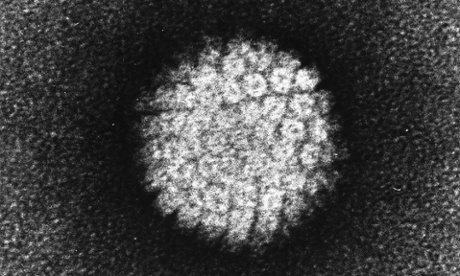
Papilloma Virus (HPV) EM
Human papilloma virus. Supply: Laboratory of Tumor Virus Biology. Photograph: /Wikimedia

Dr Stephen Henderson and his team at UCL have now demonstrated that there is indeed an association in between the presence of HPV in some cancer cells, elevated activity of the APOBEC proteins in those cells, and the presence of the characteristic APOBEC-mediated mutation pattern. These findings help the notion that HPV infection triggers an anti-viral assault that not only hits the intended target &ampndash the viral genes &ampndash but also the cell’s own DNA. The UCL crew also identified that mutations caused by APOBEC have a powerful tendency to hit genes this kind of as PIK3CA that assist to regulate the growth and division of the cell, and whose mutation is linked with the growth of cancer.


“It is not clear why HPV infection causes the APOBEC genes to misbehave and mutate PIK3CA”, says Dr Henderson. “It could be that the physique responds to HPV infection with enhanced ABOBEC activity, just generating ‘friendly fire’ much more most likely. Alternatively, there might well be one thing about the virus that causes the APOBEC response to wrongly target the body’s own genes for mutation.”


The great news is that these new findings open up new avenues for researchers operating on varied aspects of the cancer dilemma: there are acknowledged inherited variations in a member of the APOBEC family that have been linked with an elevated danger of creating breast cancer other viral infections may also be associated with cancer, perhaps through the same mechanism and medicines that target mutated versions of the PIK3CA protein are previously being produced.


Meanwhile, if you really don’t want to give your trigger-pleased immune program a shot at the human papilloma virus, efficient vaccines are now obtainable.


Cath Ennis is a Vancouver-based project manager and grant author in the area of cancer genomics and epigenomics. Follow her on Twitter: @enniscath.


Can a trigger-satisfied immune program trigger cancer right after viral infection? | Cath Ennis

26 Mayıs 2014 Pazartesi

"Trigger" that tells cancers to invade body recognized


But a new examine, from the Albert Einstein School of Medicine of Yeshiva University, in New York, has identified the signalling pathway that allows this to happen. The scientists argue that stopping the inner workings of invasive tumour cells could assist avert cancer deaths.


To migrate from a major tumour, a cancer cell should 1st break through surrounding connective tissue known as the extracellular matrix (ECM). It does this by forming invadopodia – foot-like protrusions – which release enzymes that degrade the ECM.


Making use of a fluorescent protein biosensor, the researchers had been in a position to search at extremely invasive breast cancer cells and reveal specifically in which and when the protein is activated within the cancer cell.


Dr Hodgson explained: “So substantial amounts of Rac1 induce the disappearance of ECM-degrading invadopodia, although low ranges permit them to stay – which is the comprehensive opposite of what Rac1 was thought to be carrying out in invadopodia.”


The study, published in the on the web edition of Nature Cell Biology, discovered that when the Rac1 gene was silenced, ECM degradation improved.


"Trigger" that tells cancers to invade body recognized

5 Mart 2014 Çarşamba

We"ve gone as well far with "trigger warnings" | Jill Filipovic

Set off Warning: this piece discusses trigger warnings. It may also search askance at school college students who are now asking that trigger warnings be utilized to their program supplies.


If you have invested time on feminist blogs recently or in the social-justice-oriented corner of Tumblr, you have very likely come across the Trigger Warning (TW): a note to readers that the materials following the warning might trigger a post-traumatic stress response. In the early days of feminist blogging, set off warnings have been normally about sexual assault, and posted with the comprehending that lots of ladies are sexual assault survivors, plenty of ladies study feminist blogs, and graphic descriptions of rape may lead to panic attacks or other reactions that will really damage someone’s day. Easy sufficient to give readers a little heads up – a set off warning – so that they can make a decision to stay away from that material if they know that discussion of rape triggers debilitating reactions.


Trigger warnings in online spaces, however, have expanded extensively and become far more intricate, thorough, particular and obscure. Set off warnings, and their cousin the “material note”, are now integrated for a entire slew of possibly offensive or upsetting content material, like but not restricted to: misogyny, the death penalty, calories in a foods item, terrorism, drunk driving, how significantly a individual weighs, racism, gun violence, Stand Your Ground laws, drones, homophobia, PTSD, slavery, victim-blaming, abuse, swearing, kid abuse, self-damage, suicide, speak of drug use, descriptions of medical procedures, corpses, skulls, skeletons, needles, discussion of “isms,” neuroatypical shaming, slurs (like “stupid” or “dumb”), kidnapping, dental trauma, discussions of intercourse (even consensual), death or dying, spiders, insects, snakes, vomit, pregnancy, childbirth, blood, scarification, Nazi paraphernalia, slimy issues, holes and “something that may possibly inspire intrusive ideas in individuals with OCD”.


It is correct that everything on the over list may well set off a PTSD response in someone. The difficulties with PTSD, however, is that its triggers are usually unpredictable and individually distinct – a specific smell, a certain song, currently being touched in that 1 way. It really is not possible to account for all of them, simply because triggers are by their nature not notably rational or universally foreseeable. Some are a lot more typical than other people, even though, which is why it would seem realistic sufficient for explicitly feminist spaces to consist of set off warnings for things like assault and consuming problems.


School, though, is distinct. It is not a feminist site. It is not a social justice Tumblr.


School is not exactly the real globe either, but it really is a area for kinda-sorta adults to wade neck-deep into artwork, literature, philosophy, and the sciences, to check out new ideas, to expand their knowledge of the cultural canon, to interrogate electrical power and to find out how to make an argument and to read through a text. It is, hopefully, a area in which the student is challenged and often frustrated and occasionally deeply upset, a area exactly where the student’s planet expands and pushes them to reach the outer edges – not a location that contracts to meet the pupil specifically in which they are.


Which does not indicate that individual students must not be offered psychological well being accommodations. It really is properly realistic for a survivor of violence to ask a professor for a heads up if the reading through listing contains a piece with graphic descriptions of rape or violence, for illustration. But generalized set off warnings are not so considerably about helping folks with PTSD as they are about a certain variety of performative feminism: they are a reduced-stakes way to use the appropriate language to recognize yourself as conscious of social justice problems. Even greater is demanding a set off warning – that identifies you as even far more mindful, even far more feminist, even far more solicitous than the individual who failed to adequately supply this kind of a warning.


There is genuine harm in making use of basic set off warnings in the classroom. Oberlin University recommends that its faculty “eliminate triggering materials when it does not contribute right to the program studying targets”. When material is basically also crucial to consider out totally, the school suggests set off warnings. For example, Oberlin says, Chinua Achebe’s Items Fall Apart is a great and essential book, but:


… it may trigger readers who have experienced racism, colonialism, religious persecution, violence, suicide, and much more.


Students need to be duly warned by the professor writing, for illustration, “Trigger warning: This guide contains a scene of suicide.”


On its encounter, that sounds fine (except for college students who dislike literary spoilers). But a trigger warning for what Oberlin recognized as the book’s typical triggers – racism, colonialism, religious persecution, violence, suicide (and a lot more!) – sets the tone for reading and knowing the book. It skews students’ perceptions. It highlights specific concerns as always far more upsetting than other folks, and directs students to emphasis on distinct themes that have been singled out by the professor as traumatic.


At Rutgers, a pupil urged professors to use set off warnings as a type of Solomonic baby-splitting between two apparently equally bad alternatives: banning specified texts or introducing operates that might result in psychological distress. Operates he talked about as particularly triggering contain F Scott Fitzgerald’s The Wonderful Gatsby, Junot Diaz’s This Is How You Lose Her and Virginia Woolf’s Mrs. Dalloway. The warnings would be passage-by-passage, and efficiently reach “a compromise amongst safeguarding students and defending their civil liberties”.


But the room between comfort and freedom is not truly exactly where universities must seek to situate school college students. Students must be pushed to defend their concepts and to see the planet from a variety of perspectives. Trigger warnings do not just warn college students of probably triggering material they effectively shut down distinct lines of discussion with “that is triggering”. College students should – and do – have the proper to stroll out of any classroom. But students should also accept the challenge of exploring their personal beliefs and responding to issues. Trigger warnings of program don’t always shut down that type of interrogation, but if feminist blogs are any example, they speedily turn out to be a way to short-circuit unpleasant, unpopular or offensive arguments.


That must concern these of us who adore literature, but it must especially difficulties the feminist and anti-racist bookworms among us. Trigger warnings are largely perceived as defending young girls and, to a lesser extent, other marginalized groups – men and women of shade, LGBT folks, folks with mental illnesses. That the warnings hinge on topics that are far more probably to influence the lives of marginalized groups contributes to the standard perception of members of these groups as weak, vulnerable and “other”.


The types of struggling typically imaged and experienced in the white western male realm – war, intra-male violence – are normal. Traumas that effect ladies, men and women of shade, LGBT people, the mentally unwell and other groups whose collective lives far outnumber individuals most usually canonized in the American or European classroom are set apart as different, as particularly traumatizing. Set off warnings imply that our experiences are so unusual the pages detailing our lives can only be turned even though sporting child gloves.


There is a hierarchy of trauma there, as nicely as a dangerous assumption of inherent distinction. There’s a reinforcement of the toxic messages youthful women have gotten our entire lives: that we’re inherently vulnerable.


And there is some thing lost when college students are warned ahead of they read Achebe or Diaz or Woolf, and when they go through those writers first by means of the lens of trauma and concern.


Then, simply, there is the reality that the universe does not treat its members as if they come hand-delivered in a box plainly marked “fragile”. The planet can be a desperately unsightly place, specially for women. That feminist blogs consider to carve out a tiny part of the world that is a teeny bit safer for their readers is a credit to many of people spaces. Colleges, even though, are not intellectual or emotional secure zones. Nor must they be.


Trauma survivors need to have equipment to handle their triggers and cope with each and every day existence. Universities absolutely ought to prioritize their demands – by making sure that mental wellness care is adequately funded, extensively offered and destigmatized.


But they do college students no favors by pretending that each and every piece of possibly upsetting, triggering or even emotionally devastating content material comes with a warning sign.


We"ve gone as well far with "trigger warnings" | Jill Filipovic

29 Ocak 2014 Çarşamba

BPA Publicity Is "Too Reduced to Trigger Harm," In accordance To Regulators. But You"d In no way Know That From The Media Coverage.

Suppose a new authoritative evaluation revised the estimate of your lifetime odds of being struck by a meteorite — from, say, a single in a hundred billion to a single in 10 billion.  Should that tenfold boost in the probability make you any more concerned?  No– since both values are someplace between negligible and infinitesimal.


A similar and much more pertinent query of that kind was posed by an announcement earlier this month by the European Foods Security Authority of a new “tolerable daily intake” (TDI) of a typical industrial chemical called bisphenol-A (BPA).  (BPA has been utilised for the past half century to make shatterproof polycarbonate plastics and is an ingredient in the epoxy safety liners of foods and beverage cans that shield shoppers from meals poisoning.)


At the exact same time that regulators reduced the TDI for BPA, they emphasized that human exposure comes nowhere close to the new, stricter restrict – a essential point missed by a lot of journalists and commentators.


TDI is an assessment of a person’s highest everyday consumption of a substance that can happen each and every day for a lifetime with out appreciable risks.  It is based on studies of relevant animal species and is intentionally set extremely conservatively.  In 2010, EFSA assessed BPA and set a TDI of 50 micrograms per kilogram of body weight per day.  In the current announcement, EFSA up to date that evaluation, proposing a lowered TDI of five micrograms per kilogram of body bodyweight per day.


Chemical structure of bisphenol A.

Chemical construction of bisphenol A. (Photo credit score: Wikipedia)


The updated, diminished TDI, which was proposed to reflect data from new studies that have become available given that 2010, represents a very conservative technique.


Taken at face worth, this TDI reduction might appear to be an indictment of BPA and to reflect a risk to human well being and, predictably, a lot of activists groups have touted the proposed modify as this kind of.  But EFSA’s most significant finding is buried deep in information reviews, if it is present at all: Even measured towards the proposed diminished TDI, “EFSA finds there is no overall health concern, as the highest estimates for mixed oral and non-oral publicity to BPA are three-five occasions lower than the proposed TDI, dependent on age group.”


Bolstering that conclusion is a related evaluation last 12 months by the U.S. Meals and Drug Administration, which concluded that “BPA is safe at the really reduced amounts that take place in some foods”–an evaluation “based on evaluation by FDA scientists of hundreds of scientific studies such as the most recent findings from new scientific studies initiated by the company.”


EFSA employed new data and details gleaned from more than 450 scientific research to propose the lower TDI, which is in essence a distinction without a difference: Even assuming the highest exposure estimates for any age group, from fetuses to the elderly, BPA consumption is well below the extremely conservative, up to date TDI.


Placing it another way, despite the fact that BPA’s TDI has been lowered, the sensible impact stays the exact same: No matter whether 50 or five micrograms per kilogram, the TDI is set at a degree to which people are not probably to be exposed.  Thus, reflecting a centuries-previous tenet of toxicology that “the dose tends to make the poison,” BPA is not harmful to human wellness simply because the dose is far as well lower.


One particular crucial takeaway from this revelation is the need to have to consider media reviews on chemical regulation with a big grain of sodium chloride.  The media like “if it bleeds, it leads” stories, specially if they involve particular activist-designated bogeymen, such as chemicals, nuclear electrical power and genetic engineering.  Often, the emphasis is on interest-grabbing headlines about shoddy research or created-up phenomena, this kind of as “BPA Exposure Linked to Prostate Cancer” or “Fukushima Radioactive Materials Washed Up on California Seashores.”  In this instance, even so, we have an exact, science-based mostly report that received uncritical, flawed media coverage.  One headline, for illustration, read, “EFSA Confirms the Hazards of BPA for Well being.”


EFSA’s tenfold decreasing of the TDI is analogous to  a tiny boost in thesa odds of being struck by a meteorite: There is no cause for heightened concern.  The actual story is that yet another mindful evaluation by a prominent regulatory agency has identified that BPA poses negligible danger to human well being.


BPA Publicity Is "Too Reduced to Trigger Harm," In accordance To Regulators. But You"d In no way Know That From The Media Coverage.