advances etiketine sahip kayıtlar gösteriliyor. Tüm kayıtları göster

20 Aralık 2016 Salı

UK cancer death rates to fall by 15% by 2035 due to advances in research

Death rates from cancer in the UK will fall by 15% by 2035 thanks to advances in research, diagnosis and treatment, with more Britons living longer after their diagnosis, the charity Cancer Research UK predicts.


Breakthroughs will prevent more than 403,000 deaths from the disease by 2035 that would have happened otherwise, according to an analysis from the charity.


However, although the risk of death from cancer is likely to fall, the number of people dying from it will continue to rise, because the ageing and growing population will result in more people being diagnosed, the charity said. Those factors, and the rise in cancers linked to bad diet and alcohol, mean that a typical Briton’s chances of getting cancer have recently risen from one in three to one in two.


Overall 331 people per 100,000 of population died from any form of cancer in July 2014. But improvements in doctors’ ability to detect, diagnose and treat cancer will see that fall to 280 people per 100,000 of population by 2035, CRUK estimates.


“Thanks to research fewer people will die from cancer in the future. We’re resolute that, by 2035, three in four people will survive their cancer for at least 10 years”, said Sir Harpal Kumar, CRUK’s chief executive. “This will mean making more progress in breast, bowel and blood cancers, but also accelerating our effort in those cancers which are currently hard to treat.”


Even though more people will die from cancer, the diminishing risk of death shows that cancer research and treatment are still yielding benefits and heading in the right direction, the charity said. For example, CRUK believes mortality rates from bowel cancer will fall by 23% over the next 20 years – from 32 to 25 deaths per 100,000 population – thanks to advances in surgery and chemotherapy and also better screening for the disease.


Death rates from breast cancer, the most common form of the disease among women, are projected to drop by 26% to 31 per 100,000 women by 2035. Likewise, mortality rates from lung cancer will be 21% lower by then – at 58 deaths per 100,000 people – according to CRUK’s analysis.


But deaths from pancreatic cancer are estimated to fall by only 3%, to 17 deaths per 100,000; and from brain and related tumours by just 2%, to ten deaths per 100,000 people, CRUK said.


However, the risk of death will increase for some cancers. For example, the mortality rate for liver cancer is expected to rise by 58% by 2035.


Simon Stevens, the chief executive of NHS England, which has made improving cancer outcomes one of its key priorities, said: “These figures underline how the NHS is successfully translating new research and targeted investment into dramatic gains in cancer care. Thanks to improvements over just the past year, an extra 2,400 families will be able to share this Christmas with a loved one who would not have survived cancer a year ago.”


CRUK’s statistical information team arrived at their conclusions by applying the difference in the actual cancer mortality rates in 2014 and the projected age-standardised death rates for all cancers combined in the UK between 2015 and 2035 to the Office for National Statistics’ projections for the UK population over the study period.


Kumar said that while survival rates for some forms of cancer had improved in recent decades, thanks to the development of new drugs and surgical techniques, the variation in death rates for different forms of cancer was still too wide. For example, mortality rates for brain cancer are likely to remain unchanged over the next 20 years, with just one in five patients surviving for five years. Similarly, just three in 100 people diagnosed with pancreatic cancer live for five years or more after diagnosis.


UK cancer death rates to fall by 15% by 2035 due to advances in research

11 Şubat 2014 Salı

Spain"s tough new abortion law advances right after secret vote

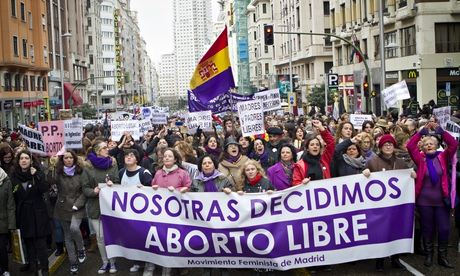
abortion demo spain

Spain’s proposed new abortion law has generated key protests in Spain and across the planet. Photograph: Antonio Navia/Demotix/Corbis


Spanish MPs narrowly voted on Tuesday to proceed moving forward with legislation to significantly limit entry to abortion in the country.


In a secret ballot, initiated by the Socialist Parliamentary Group, MPs voted 183 to 151 towards abandoning the proposed modifications to the abortion law.


Tabled in late December by the governing People’s party, the legislation seeks to enact some of the toughest abortion legislation in Europe. Widely attacked by women’s groups as a stage backwards, the alterations will make abortion unlawful except in the case of rape or when there is a threat to the physical and mental overall health of the mom. Any lady wanting an abortion would need two doctors to verify these circumstances had been becoming met.


The secret vote was an try to thwart the bill ahead of it is place to a general vote. The idea, explained Carmen Montón of the Spanish Socialist Employees celebration, came from considerations above the legislation that she and other opposition members heard in parliamentary corridors.


“We want PP’s [People"s party] parliamentarians – particularly the girls – to have the freedom to express how they really feel about the problem,” she mentioned prior to the vote. “We’re attempting to consider away the excuse that they would be penalized by the barons of the get together.”


The secret vote was meant to inspire MPs to vote with their constituents rather than get together allegiances in thoughts, she said. “The majority of Spaniards do not want this reform.”


The Spanish prime minister, Mariano Rajoy, has constantly defended the modifications, arguing they fulfilled an electoral promise. The Catholic Church, which has historical ties to the People’s party and remains an influential force in Spain, had championed the adjustments.


Amid Spanish citizens, even though, the thought is deeply unpopular. Polls present in between 70% and 80% are opposed to rolling back the country’s abortion laws.


Organised action against the proposed legislation has been taking location almost every single other day across Spain. Petitions have been signed and and letters delivered to parliamentarians. A platform, Wombastic, has been developed specifically to share professional-selection drawings.


Demonstrations, backed by throughout the world demonstrates of solidarity , culminated in a display of force earlier this month as tens of 1000′s demonstrated in Madrid, waving indications that demanded “MP and rosaries, out of my ovaries”.


This week saw hundreds of females stroll into regional government offices demanding that their bodies be entered in business registries, generally reserved for automobiles and airplanes. Activists explained to puzzled bureaucrats that they needed official certification that their bodies belong to them.


The government is adamant it will push ahead with the reform. “You have my word that no screams or insults could provoke me to abandon my dedication to comply with the [party] platform to regulate the rights of girls and the unborn,” Justice Minister Alberto Ruiz-Gallardón explained at the People’s celebration convention earlier this month. “We are not talking about moral issues or electoral benefits, but alternatively the defense of basic rights.”


But his comments masked inner dissent inside the celebration on the situation. Infighting broke out right after many regional leaders spoke towards the modifications, while dozens of municipalities – which includes these governed by Men and women get together leaders – have also stated they will reject the modifications.


Isabel Serrano, spokeswoman for Decidir Nos Hace Libres, which opposes the proposed legislation, attributes the result of Tuesday’s vote to MPs voting along party lines. She explained the end result at least showed that the People’s get together is alone in pushing it forward. “The end result was damaging, naturally, but the process was optimistic,” she explained.


Since the majority of Spaniards are against the alterations, she saidPeople’s party MPs have to now “evaluate regardless of whether they want to continue forcefully governing their bulk or whether or not they want to listen to the folks”.


Right up until that happens the platform would continue to battle towards the proposed adjustments, she additional. “Our aim is to get the People’s celebration to act in favour of girls. Our objective is to get them to withdraw this legislation.”


Spain"s tough new abortion law advances right after secret vote