Sarah never planned to take antidepressants for 14 years. Three years after she began taking them, when she was 21, she went to her GP and asked to stop: 20mg of Seroxat a day had helped her live with anxiety and panic attacks, but she began to feel uncomfortable about being on medication all the time. Her doctor advised her to taper down her medication carefully.
At once, “I was a mess,” she says. “I thought I was losing my mind. My appetite completely went. I lost the best part of two stone. I was anxious constantly. My mouth was dry. It was difficult to sit and be calm.” She became withdrawn, refusing to see friends, and remembers asking her mother to get her a couple of boxes of paracetamol, thinking, “I’m going to have to take all these tablets, because I can’t live like this.”
Sarah’s doctor encouraged her to go back up to 20mg. “Within a week, I was much better. I feel anger when I look back. That wasn’t me relapsing, that was withdrawal. But I was so unwell, I didn’t stop to think, ‘I’ve never had this before.’ I truly thought it was me. Now the only reason I am on the drug is because I am dependent upon it. And that is not good enough.”
Prescriptions of SSRIs (selective serotonin reuptake inhibitors), the most common type of antidepressant, have doubled in the past decade. There are now more than 70m prescriptions dispensed in the UK in a year, the “greatest rise” of any drug in the last year, according to NHS research. But while the side-effects of starting and then withdrawing from these drugs are reasonably well known (the patient information leaflet accompanying the SSRI Seroxat is six pages long), there is very little research into the long-term effects of using antidepressants.
Last year, an all-party parliamentary group began hearing evidence as to whether there is a link between a measurable rise in mental health disability claims – 103% between 1995 and 2014 – and that in antidepressant prescriptions. (Claims for other conditions fell by 35% in the same period.) “We need to have a serious rethink about current levels of prescribing, because it may well be that the drugs are in fact contributing to the disability burden,” Dr Joanna Moncrieff, a consultant psychiatrist and senior lecturer at University College London, told the committee.
Reports both anecdotal and clinical have included side-effects such as constant pain, an altered sense of smell, taste or hearing, visual problems, burning hands and feet; food or drug intolerances and akathisia (the medical term for a deep inner restlessness). When a patient begins tapering down their dosage, these effects are generally ascribed to the drug leaving their system; if it is long after withdrawal is supposed to be over, however, patients are often disbelieved (according to the drug companies, withdrawal should take just two weeks for most people, though they acknowledge that for some it can be months).
Professor David Healy, director of the department of psychological medicine at Cardiff University and author of 22 books on psychopharmacology, believes that antidepressants are overprescribed. “If you go into your average doctor – if you’ve been off the drug for half a year or more – and you complain [of a range of symptoms] and say, ‘I think it’s caused by this pill I was on’, he or she would say, ‘It’s been out of your body for months. You’re neurotic, you’re depressed. All we need to do is put you on another pill.’”
GPs, Healy says, are “relying on your word, and if it’s a choice between believing what you say and relying on what drug companies say to them, they [tend to] believe the drug companies”. Healy, who has been a consultant for, and expert witness against, most of the major pharmaceutical companies, has long argued that long-term side-effects are routinely ignored or misunderstood.
But many experts believe these drugs do more good than harm. “Most of the people I see who have moderate to severe depression benefit from them,” says Daniel Smith, a professor of psychiatry and researcher into bipolar disorder at the University of Glasgow. For some, medication can be no less than “transformative. It can get them through a really critical period of their life.”
However, when it comes to long-term impact, especially after a person stops taking SSRIs,Smith says it can be hard to work out which symptoms relate to the drug use and which to the underlying conditions. “There’s obviously an issue of cause and effect. How can we be certain the SSRI caused it? Depression affects libido and sexual interest. How much [of the reported effects] is depression and/or anxiety symptoms coming back?”
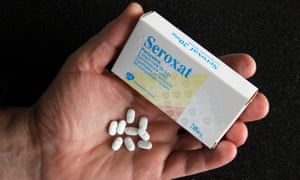
SSRIs have beenaround for more than 40 years, but grew in popularity in the late 1980s and 90s after pharmaceutical companyEli Lilly launched fluoxetine, otherwise known as Prozac. Time magazine put the drug on its cover twice, asking, “Is Freud finished?” and describing SSRIs as “mental health’s greatest success story”. In 2001, a landmark report on a clinical trial into paroxetine (sold as Seroxat in North America and Paxil in the UK), called Study 329, concluded that it demonstrated “remarkable efficacy and safety”. Study 329 led directly to a massive increase in prescriptions: by 2003, worldwide sales of Seroxat (manufactured by GlaxoSmithKline) were worth £2.7bn.
But concerns were raised about the study –the US food and drug administration (FDA) officer who reviewed the data disagreed with the findings, calling it a failed trial – and in 2015 the British Medical Journal published a re-evaluation. Seven authors went through as many of the thousands of individual case reports as they could, and found not only that “the efficacy of paroxetine… was not statistically or clinically different from placebo”, but that “there were clinically significant increases in harms, including suicidal ideation and behaviour”. The original study reported 265 adverse reactions; the BMJ found 481. The re-evaluation also found that psychiatric responses were grouped together with “dizziness” and “headaches”, rather than given their own category. In 2003, the UK banned the use of Seroxat by anyone under 18; and in 2004 the FDA required a “black box warning” on all antidepressants, its strictest level of patient warning.
“Patient safety is our number one priority,” a GlaxoSmithKline (GSK) spokesperson tells me. “We believe we acted responsibly in researching paroxetine, monitoring its safety once it was approved and updating its labelling as new information became available.”
It’s more reliably predictable that they’re going to get rid of sexual function than get rid of depression
Many SSRI users report blunted emotions, even long after they have ceased taking pills, and an impact on sexual function. “They should be called anti-sex drugs rather than antidepressant drugs,” says Jon Jureidini, a child psychiatrist of 30 years’ standing, a professor of psychiatry and paediatrics at the University of Adelaide and co-author of the BMJ study, “It’s more reliably predictable that they’re going to get rid of sexual function than it is that they’re going to get rid of depression.” Again, some people find this persists long after they cease taking the drug. One person I spoke to, Kevin, had taken Prozac for six months when he was 18; now 38, he hasn’t had an erection since.
Last September, Healy and colleagues published a further examination of the data gathered for Study 329. This data followed the trial participants for six months after they started taking paroxetine (the “continuation phase”) and while they were tapered off it. GSK, which in 2004 published a clinical study report, had argued that “the long-term safety profile of paroxetine in adolescents appears similar to that reported following short-term dosing”. Healy and co, however, concluded that the “continuation phase did not offer support for longer-term efficacy”. More alarmingly, they found that the taper phase, when patients were being taken off the drugs, was the riskiest of all, showing a “higher proportion of severe adverse events per week of exposure”. This, they said, opens up the risk of a “prescribing cascade”, whereby drug side-effects are thought to be symptoms, so are treated with further drugs, causing further side-effects and further prescriptions – thus increasing the risk of long-term prescription drug-dependency.
In October, the British Medical Association published its response to a two-year fact-finding exercise into long-term use of psychoactive drugs. It noted that while benzodiazepines, z-drugs, opioid and antidepressants are “a key therapeutic tool”, that their use can “often lead to a patient becoming dependent or suffering withdrawal symptoms… the evidence and insight presented to us by many charity and support groups… shows us that the ‘lived experience’ of patients using these medications is too often associated with devastating health and social harms”; it was therefore, the report concluded, a “significant public health issue”.
The BMA made three key recommendations: first, and most urgently, that the UK government establish a 24-hour helpline for prescribed drug dependence; second, that it establish well-resourced specialist support units; and third, that there should be clear guidance on prescription, tapering and withdrawal management (they found the current approach to antidepressants, in particular, to be inconsistent: too many patients were suffering “significant harm”). There are also increasingly urgent calls for studies into long-term effects that are not funded by drug companies, because, Moncrieff says: “We don’t have very much data. This research is really important, but hasn’t been done. It’s a massive blind spot. It’s extraordinary – or maybe, given the pressures and interests at work, not extraordinary at all – that it hasn’t been filled.”
In March this year, members of the BMA, along with MPs and researchers from Roehampton University, went to parliament to lobby Public Health England, armed with research estimating that there are 770,000 long-term users of antidepressants in England alone, at a cost of £44m to the NHS per year (a figure that does not account for the cost of GP appointments, or the impact of side-effects, withdrawal effects and disability payments).
“I think you have to adopt a very conservative approach,” says psychiatrist Jon Jureidini. “These are brain-altering drugs, and our overall experience with brain-altering drugs of all kinds is that they tend to have a detrimental effect on some proportion of people who take them long term. All we know about the benefits is from short-term symptom-reduction studies. The careful prescriber needs to say, ‘Well, in balancing the likely benefits and harms, I need to be very cautious about how much benefit I’m expecting, and I need to be very generous about the possibility that the harms might be more than they appear to be.’”
Quite a few long-term users, such as those I spoke to below (and who wished to be anonymous), would agree.
‘Tapering off is the hardest thing I’ve ever done’: Sarah, 32; has taken Seroxat for 14 years
I was prescribed Seroxat when I was 18, the year I started university. I grew up with a disabled sister, so things at home were very stressful, and I had a history of anxiety and panic attacks. I had counselling, but the problems persisted, so I went back to the GP. I don’t remember everything that was said, but there was no conversation about side-effects.
Within the first two weeks of starting Seroxat, I remember I was sitting in the front room watching TV when out of nowhere I had this intense feeling of heat, like an electric shock. It started in my hands, went all the way up my arms and through to my head.
The GP said it was probably just my body getting used to the drug. And after a few weeks the weird sensations did ease off. I had a fabulous time at university. I still had panic attacks, and there were certain situations I would avoid – as I still do – so it wasn’t a wonder drug, but there were no major problems.
But in 2006 I tried to come off it. There were a couple of Panorama documentaries about the side-effects and I was starting to become concerned. The GP said, “That’s fine, but do it gradually, over three weeks.”
I thought I was losing my mind. I was going to work, but it was difficult to get through the day. My mouth was so dry
I immediately became incredibly unwell. I thought I was losing my mind. I was going to work, but it was difficult to get through the day. My mouth was so dry, I was constantly drinking water. I had bizarre thoughts – not hallucinations – that were frightening or distressing. I had a strong sense of detachment from reality.
Eventually, the doctor said, “Look, you coming off is obviously not working: we need to get you back to 20mg.” Within a week I was much better.
A few years later, when I realised my mental health was getting worse, even though I was on the medication, I started to do some research, reading case studies about withdrawal. I find it so offensive when a GP says, “This is who you are.” I didn’t have these symptoms 10 years ago. I didn’t have this sense of detachment. I saw various psychiatrists. They just kept saying, “The drug is safe, you need to be on it.” A couple of others told me the reason I was having these problems was because I wasn’t taking enough. Another said, “If you were diabetic, you’d take insulin and you wouldn’t have an issue. Why are you so bothered about taking this drug?”
I’ve been on it since I was 18, so I don’t know who I am without it, as an adult. Who knows? I might have all kinds of problems, but I need to know I’ve tried. Tapering off is the hardest thing I’ve ever done. It’s taken me three years just to get from 20mg to 5mg. I’m no longer with my partner – we were together for six years. I believe Seroxat has played a part: it affected my moods, it made my anxiety worse and, by necessity, I’ve had to be selfish, really. I don’t want to say all my problems are to do with Seroxat, because they’re not. But I do believe that it has caused me harm.
‘I don’t have much of an interest in interacting romantically or physically with the opposite sex’: Jake, 24; took SSRIs for eight years
I had been dealing with symptoms of OCD and anxiety for a lot of my childhood. It’s in my family, affecting two siblings and one parent. I was prescribed Zoloft when I was 12; I took a variety of SSRIs, Zoloft to Prozac to Lexapro, and then two others, for eight years.
Did they help? You know, I can’t really tell you, because I got through school. I got high marks, I had a lot of friends. So, in that sense, they must have helped. That’s the thing: for people with major depression, it’s easy to say, this has a measurable effect. But I kept taking them just because that’s what I’ve always done.
I went to university right out of school. I did very poorly. I had a bit of a breakdown, isolating myself, not sleeping. I was still on medication. I came home and enrolled at a community college. That was my worst period – I was very depressed. And I started to think, “I’ve been on these medications a long time. I’m not doing well – why not get off them?” I don’t recommend this at all to anyone, but I stopped going to a psychiatrist and took myself off.

For months I had trouble sleeping. I was jittery. I had brain zaps. My anxiety was pretty ramped up. I would feel numbness in my extremities – generally my arms. My psychiatrist told me these were just normal withdrawal symptoms, and they’d be gone in four to six weeks: “Anything you feel beyond that is your anxiety and depression returning.” Basically, if you still feel anything beyond this window that the medical community has established, it’s all in your head.
Eventually I went back to school full-time, and I remember doing OK, feeling somewhat better.
I’ve now been drug-free for four years. What’s lasted are the sexual side-effects. They were definitely worse in withdrawal than they had been on the drug, even though I didn’t really realise or understand it at the time, primarily because I started to take SSRIs at 12. While my brother took the same medicine over the same period and had a normal sexual life, I had a lack of sexual interest. I had erections, and I have regularly masturbated my entire life. But I don’t have much of an interest in interacting romantically or physically with the opposite sex.
I didn’t even start thinking about sex until a couple of years ago. It’s almost like I woke up one day and thought, “OK!” I started getting these windows – days or weeks – when normal sexual feelings would appear. But they’re new to me and I don’t know what to do about them. And because I don’t know what to do, I get anxious, and the anxiety kills any feeling – and then I’m anxious because I’ve lost all my feeling.
Online, I’ve come across a big asexual community. Some also took antidepressants; I think there are a lot of people like me out there. I’d like to think that if I keep going to counselling and sleeping and eating properly, I can rectify these things.
In the end, it’s about pros and cons. If you’re lying in bed and can’t get up, is it better to function? If it was up to me, I’d say that, barring extreme circumstances, nobody under 18 should be prescribed these things. Your brain develops around them. Drug companies should be thinking of the long-term effect on people who can’t even consent.
‘If I missed a dose, I’d get shocks down the side of my body’: Chris, 43; has been taking Seroxat for 26 years
I was originally prescribed Seroxat for mild anxiety about my GCSEs. It was 1991, about the time GlaxoSmithKline released Seroxat. I was one of the first people to be given it.
I was prescribed 20mg, the basic dose, to start with. It helped me: I got through school, I went to uni, I went to work. But I had side-effects from the off: profuse sweating, low libido. I’m quite a placid person, but I became aggressive. I never suffered, in the beginning, with the suicidal thoughts that people talk about now, but what I did notice was that if I missed a dose – especially after eight years of taking it – I’d get shocks down the side of my body. I’d be nauseous, my limbs would become weak. I’d be in a constant state of confusion and was very impatient. I couldn’t communicate well with people. I said this to the doctor, and he said, “We’ll up the dose to 40mg.” That was 1998.
I tried to go back to 20mg, but my words became slurry, so the doctor put me back up to 60mg
The 10 years after that weren’t too bad. I managed to work, as a sales rep, for 18-20 years. But by 2012, by which time I was up to 60mg, I had tried on numerous occasions to withdraw. I tried to go back to 20mg, but my words became slurry, so the doctor put me back up to 60mg.
By the time I was 38, even that wasn’t enough. I tried to take my life. The doctor wouldn’t prescribe a higher dose. I couldn’t do my job, I couldn’t concentrate, I couldn’t drive. A psychiatrist once said to me that coming off Seroxat is harder than quitting heroin. That really hit home.
I have now been unable to work for four years. I’m still seeing a psychiatrist. I’ve also been diagnosed with fibromyalgia: constant tiredness, aches in the neck, and in the lower back and lower limbs. I’m 43 and still live with my mum and dad.
I also have no libido. Since the age of 30, I have had no feelings in that regard whatsoever. I have had relationships, but they’ve all failed. I haven’t been in a relationship for 10 years, which is a long time to go without sex, but I just don’t get the urge.
I don’t really have emotions, to tell you the truth. The drug takes your emotions away. I’m sort of existing, not living.
And when the drugs do work…
‘I wanted to be able to feel good when good things were happening, bad when bad things were happening’
BySimon Hattenstone
I suppose I was a depression snob. A purist. Why should I take antidepressants? Yes, there was something rubbish about crying all the time, not functioning, being unable to answer simple questions because of the fug in my head. But, hey, at least I was true to myself.
My depression went back to my late teens. I didn’t like to think of myself as depressive, because depressives were losers. And I didn’t think I fitted the bill: I was pretty funny and able, and I could get girlfriends. I guess most depressives don’t think they fit the bill.
It might have been genetic. My dad had paralysing depression, and so did his father. As a young boy, I’d spent three years off school with encephalitis – an inflammation of the brain that is often fatal. Survivors are often left with depression.
I remember as a teenager being on holiday in Greece with friends. The weather was gorgeous, and I thought, “Why can’t it piss down, because then at least I’d have a reason to feel this way?”
That is what I always craved – objectivity. To be able to feel good when good things were happening, to feel bad when bad things were happening. I hated the fact that my feelings rarely correlated to what was going on in my outer world.
In my 20s, I got by. I held down a good job, fell in love, had kids, made friends, had a pretty good life. But things came to a head when my best friend killed herself. I’d find myself weaving in between traffic wondering what the impact would be like. I took a period off work and gratefully accepted my Prozac prescription.
Things had changed since I first rejected them. Prozac looked cool (lovely green-and-white pills) and rock bands wrote great songs about it (even if REM’s Shiny Happy People was supposed to be dystopic). After telling people I was off work with depression, I ended up feeling like a priest at confessional. It turned out that virtually everybody I knew was a depressive and pilling their way out of it; now it was “our secret”.
I would try to come off the pills and felt rubbish again – not more rubbish than before, but the same. So I returned
Initially, Prozac made me feel sick. And then magically, after a couple of weeks, I felt lighter, as if something had been lifted. I could hear questions properly, answer logically, enjoy a sunny day.
My partner said I was transformed. Occasionally, I would try to come off the pills and felt rubbish again – not more rubbish than I had before, but the same. So I returned, and after a while, I thought, “What’s the point of even thinking about coming off the pills if they make life work for me?”
There are times now when I wonder if I weep and fret and withdraw too much, and whether I’m becoming immune to the Prozac. But on balance I think not, because life is still so much better than it was.
If Prozac was no longer working for me, would I stop taking it? Probably. Would I stop taking antidepressants full stop? I doubt it. I’d simply look for another super pill.
• Are you a long-term user of antidepressants? Tell us about your experiences
- If you are affected by the issues raised in this piece, contact the Samaritans here.
‘I don’t know who I am without it’: the truth about long-term antidepressant use
