closures etiketine sahip kayıtlar gösteriliyor. Tüm kayıtları göster

2 Mayıs 2017 Salı

Labour to propose immediate halt to hospital closures

Labour has promised to immediately stop the proposed closures of A&Es and other health services across England and instead carry out a full-scale review of controversial government plans.


The shadow health secretary, Jonathan Ashworth, revealed that a flagship commitment in his party’s manifesto, to be published later this month, will be a moratorium on so-called sustainability and transformation plans (STPs).


“We have listened to the hundreds of patients and campaigners up and down the country that have been pleading with the government to hear their concerns about their local services,” he said.


“Threats of hospitals being closed, A&E services moved miles up the road, and children’s wards being shut, have caused widespread concern and confusion. What is more, these decisions have been decided behind closed doors, with no genuine involvement of local people. It’s a disgrace.”


He said Labour would ask a new body – called NHS Excellence – to lead a review that would place local people at the heart of decisions.


STPs were meant to be necessary local blueprints designed to keep the NHS afloat in the face of massive pressure and a £22bn financial black hole. But they have caused huge controversy with critics claiming they amount to plans for hospital closures, cutbacks and radical changes to the way that health is delivered.


The health secretary, Jeremy Hunt, hit back by calling Labour’s policy proposal a “nonsensical Jeremy Corbyn idea”. He claimed that Ashworth had supported the policy as recently as December and that Labour had backed the plans in its last manifesto.


“These local plans are developed by local doctors and communities, backed by the top doctors and nurses of the NHS, and will improve patient care. This is all underpinned by an extra £10bn for the NHS, which we can only afford thanks to our strong economy,” he said, claiming Corbyn would put that at risk.


The Liberal Democrat health spokesman, Norman Lamb, said the original purpose behind the STP process of bringing fragmented parts of the service together was a good one. “But it is based on the fantasy that there is enough money to deliver this vision, when the plans are now hundreds of millions of pounds short,” he said.


Lamb argued that only the Lib Dems would take the “tough action” needed to increase investment by making the case for increasing tax to support the NHS.


Labour to propose immediate halt to hospital closures

6 Nisan 2017 Perşembe

Record number of GP closures force 265,000 to find new doctors

A record number of GP practices closed last year, forcing thousands of patients to find a new surgery, in spite of government attempts to stop local doctors shutting their doors.


NHS England data showed nearly a hundred practices closed in 2016, a 114% increase in GP closures compared with figures from 2014. Of the 92 practices that shut, 58 did so completely, while 34 merged with other local surgeries in order to pool resources.


The drop in GP numbers meant 265,000 patients – an increase of 150% from 2014 – had to change their practice last year, often travelling further for care. Brighton was particularly badly affected with 9,000 patients displaced when four practices closed. There have been a total of seven closures in the city over the past two years.


The new data, obtained by the GP website Pulse, has renewed fears that family doctors are not coping with increased demand and need an urgent cash injection to survive. Senior doctors also expressed concern that government funding was not being targeted correctly.


patients displaced
gp practices close

It comes despite the NHS announcing its GP forward view plan last year, promising to invest an annual £2.4bn into services by 2020. The government also announced £500m investment as a rescue package, which included £16m to support vulnerable practices.


Dr Chaand Nagpaul, chairman of the British Medical Association’s GP committee, told Pulse: “We know the money, targeted in the right way, for the most severely affected practices, can make a difference.


“The tragedy is clinical commissioning groups have not delivered their part in making the resources available. Many practices that should have received support have had none to date. That’s been a failing of local delivery.”


Prof Helen Stokes-Lampard, chair of the Royal College of GPs, said: “Too many practices are being forced to close because GPs and their teams can no longer cope with ever-growing patient demand without the necessary funding and workforce to deal with it. This has serious consequences for patient safety and the wellbeing of hard-working family doctors and their practice teams.”


The findings are likely to put more pressure on the government to address a growing NHS crisis, with hospitals and family doctors under increasing pressure.


Jonathan Ashworth MP, the shadow health secretary, said: “These are startling revelations and really bring home the extent to which Theresa May’s NHS funding squeeze is impacting on people every day in communities across the country.”


He added: “Given the crisis in hospitals we’ve seen we need to be taking the pressure off hospitals. That means doing much more to protect GP services. With Labour, general practice will be at the heart of making the English NHS more focused on care closer to home.”


Norman Lamb, the Liberal Democrat health spokesman, said: “There is a pressing need for a national, cross-party discussion about how we can afford a modern, efficient, and effective health and care system. I once again urge the prime minister to begin such a process. We must face up to the scale of this challenge, and to the possibility that we might have to pay a little more in tax to ensure that everyone gets the high-quality healthcare they should expect.”


An NHS England spokesperson said: “All NHS patients wanting to register with a GP practice are guaranteed to be able to do so and we have increased investment in general practice by £1bn in two years in order to improve services and boost GP numbers.


“These figures as presented don’t reflect the full picture as they include patients whose records automatically transfer after a merger and therefore don’t have to change practice. As part of our plans to improve general practice services and boost the workforce, many practices are choosing to merge in order to offer patients a much greater range of services.”


Record number of GP closures force 265,000 to find new doctors

3 Mart 2017 Cuma

NHS England chief brings in new rules on ward bed closures

Simon Stevens, the chief executive of NHS England, has acted to make it much more difficult for hospitals to slash their supply of beds, after the dramatic loss of the facilities in recent years was widely blamed for exacerbating the winter crisis.


Stevens is introducing tough rules for hospitals concerning bed closures from April to ensure that patient care does not suffer.


His move comes after heavy criticism of the NHS for allowing the number of hospital beds in England to fall by 20% over the past 10 years at a time of growing demand. About 15,000 beds disappeared between 2010-11 and 2016-17, official NHS figures show.


Stevens stressed that his edict would not mean a complete moratorium on hospitals shrinking their tally of beds, but there was a need for tough criteria given the increasingly large number of beds being used by patients who could not be discharged yet were medically fit to leave.


In A Friday speech at the Nuffield Trust’s health policy summit, Stevens will say: “More older patients inevitably means more emergency admissions, and the pressures on A&E are being compounded by the sharp rise in patients stuck in beds awaiting home care and care home places, so there can no longer be an automatic assumption that it’s OK to slash many thousands of extra hospital beds, unless and until there really are better alternatives in place for patients.”


NHS trusts in England planning to cease provision of a particular service already have to pass four tests before doing so, including showing that GPs back their move and that the public has had a say.


Stevens’ intervention, in effect, creates a new fifth test that will have to be passed by NHS managers planning bed closures. They will get the go-ahead only if they can prove that NHS care in the local area outside the hospital can ensure patients will receive good care; permission could also be given if it can be shown that a new medical treatment for patients with a particular condition means beds can be safely deleted. Hospitals which are inefficient in their use of hospital beds will get the green light if they improve their performance to show that losing beds will not affect patients.


It is unclear what the impact of the new rules will have on the sustainability and transformation plans (STPs) developed recently by NHS chiefs in 44 areas of England. Many of the plans envisage a further loss of hospital beds by 2020-21 in efforts to help the NHS save £22bn. Also, the conditions will only apply to “significant bed closures”, which may not stop hospitals reducing their numbers gradually, a few at a time.


Prof Jane Dacre, president of the Royal College of Physicians, said Stevens’ plan was a step in the right direction. “However, the RCP would urge STPs to reduce the potential impact on patient care and have extra capacity in place before any bed closures occur,” she said.


Jonathan Ashworth, the shadow health secretary, said: “The number of hospital beds across the country is actually now forecast to drop again under the government’s STP proposals, with no convincing evidence that the necessary community care will be put in place to replace them. It’s not obvious therefore how health ministers will meet these new tests on bed closures Mr Stevens is setting.”


NHS England chief brings in new rules on ward bed closures

2 Mart 2017 Perşembe

Have you been affected by NHS hospital closures and cuts to services?

There’s no more controversial decision the NHS makes than removing services from hospitals, or even closing them. To investigate the causes and consequences of that kind of change, on Friday the Guardian is spending the day at the Royal Brompton hospital, where NHS England has said that, subject to public consultation, it will stop paying for congenital heart disease services.


The hospital and its supporters say that it makes no sense to close the service, which it describes as among the best in the country. But advocates of the change say that concentrating services in fewer locations makes for better care, and that the Royal Brompton doesn’t meet agreed standards.


The Royal Brompton isn’t the only hospital affected. Newcastle, Manchester and Glenfield hospital in Leicester are facing the same proposals. More generally, NHS England’s sustainability and transformation plans (STPs) are likely to mean the closure of 19 hospitals, including five major acute hospitals. Some experts say that this is an essential part of moving the fulcrum of the NHS from hospitals to a new set of community services integrated with social care – a move they say is vital for the health of patients and the NHS alike. But others say it’s just cover for swingeing cuts.


As part of our coverage on Friday, we want to hear from our readers. Is your hospital being affected? What are your concerns? Can you understand the rationale behind the plans? Do you think you or your child could have received better care, or do you worry about the loss of local services? If you work at a hospital, are you worried about the plans, or do you believe they will raise the standard of care?


Share your stories and concerns.


Have you been affected by NHS hospital closures and cuts to services?

2 Şubat 2017 Perşembe

Share your experiences of care home closures

Care for the elderly is reaching a “tipping point”, the government’s watchdog warned this winter, as rising costs and council budgets squeezed by years of austerity struggle to meet the increasing needs of an ageing population.


Care homes are facing a perfect storm of financial challenges, as councils cut the rates they are paying to house residents and those who can afford to pay for their own care face spiralling bills, according to the Care Quality Commission, which oversees the sector.


The crisis has already forced some care homes to close their doors: the number of care homes in England has fallen, according to CQC figures, even as the demand continues to climb.


Share your experiences


We want to hear from readers who have been affected by the closure of care homes. Has your care home closed, or is it under threat? Do you have a parent or other relative in a care home threatened with closure? Or do you work for a care home company that’s currently under threat, or a council trying to deal with the challenges?


Please share your experiences in the form below, anonymously if you prefer. We will ensure that the information you provide us is kept secure.


Share your experiences of care home closures

11 Ocak 2017 Çarşamba

Care home closures set to rise as funding crisis bites

Care home operators, trade unions and charities have been telling Theresa May for months that the care home industry is in crisis and needs help.


Last week, May got her sternest warning yet – the chairs of three influential Commons committees urged the prime minister to deal with the “immense challenge” of paying for health and social care in the future.


“We are calling for a new political consensus to take this forward,” Conservative MP Sarah Wollaston of the health committee, Labour’s Meg Hillier of the public accounts committee and Clive Betts, another Labour MP, of the communities and local government committee wrote.


Since the collapse in 2011 of Southern Cross, then Britain’s biggest care home operator, no other major nationwide company has failed. However, smaller firms are failing across the country.


The Guardian revealed late last year that 100 more care home businesses have collapsed since 2010 than previously thought. A staggering 380 have been declared insolvent since 2010, according to the Insolvency Service. The number of failures each year has risen sharply since 2010, when 32 businesses failed. In 2015, 74 were declared insolvent, while another 34 failed in the first six months of 2016, the most recent figures available. The squeeze is being particularly felt by so-called “mom and pop” operators, who may run one or two care homes but account for about 55% of the industry.


Care homes are struggling because of a fall in the amount that councils pay towards fees for residents at the same time as costs are rising, driven by the government’s “national living wage”, which meant that workers aged 25 or over must be paid at least £7.20 an hour from April 2016. This led to an increase in payroll costs of about 5% for most businesses last year. This rise would have been problematic anyway, but local authorities are also reducing how much they pay towards social care after seeing their budgets cut by up to 50% as a result of government austerity measures.


“Some local authorities are paying less than £2 an hour towards the cost of caring for a resident,” says one senior executive at a leading care home operator.


Large companies are also ailing. Four Seasons, the biggest care home operator in the country with more than 400 properties, is the most at risk. It recorded a pre-tax loss of £28m in the three months to the end of September 2016, the most recent financial accounts available.


Guy Hands


Guy Hands, founder of Terra Firma, which now owns the care home operator Four Seasons. Photograph: Bloomberg/Getty Images

The company, which is owned by Guy Hands’ private equity firm Terra Firma, is also sitting on more than £500m of debt, a legacy left by the previous owners. This debt means it pays about £30m in interest to its lenders every three months.


Four Seasons insists it can easily manage its debt burden, but Robbie Barr, the chairman of Four Seasons, warns the industry is “struggling at tipping point”. As well as care home operators collapsing, other companies could simply pull out of the industry. Bupa, one of the largest operators behind Four Seasons, was reported to be looking to sell 200 homes, although it has said it remains committed to the industry.


Stung by accusations that the autumn statement ignored social care, last month, Sajid Javid, the communities and local government secretary, announced that councils could increase council tax by an extra 3% to fund social care. He also said there would be a £240m “adult social care support grant” to help councils with care of older residents.


But Barr is cautious. He says: “It is essential that councils use the powers they have been given to raise the social care precept and pass it on to frontline elderly social care services to help offset the additional costs of the national living wage increase and avoid further pressures on a sector that is struggling at tipping point.”


Secret figures collected by Four Seasons show that although more than 90% of councils increased council tax last year – thanks to a similar 2% precept announced by David Cameron’s government – less than half of these passed it on to care homes through an increase in their fees.


Even if councils pass on the new precept, Javid’s package of measures, worth £900m, will not even cover further increases in wage costs this year. The national living wage is scheduled to rise by 4.2% in April to £7.50, which is larger than the proposed 3% increase in council tax.


The Local Government Association estimates there will be a £2.6bn funding gap in providing adult social care in England by 2020. A report by the Health Foundation, the King’s Fund and the Nuffield Trust calculates the gap would be £1.9bn in 2017 alone.


Izzi Seccombe, chair of the community wellbeing board for the LGA, says: “The care provider market cannot carry on as it is and there is a real danger of more widespread market failure.”


This squeeze is not just leading to the closure of care homes but compromises to the quality of care and an increase in costs for private residents. In a report last October the Care Quality Commission, the industry watchdog, warned that adult social care is “approaching a tipping point”. This conclusion was based on its inspections, tipoffs and external data. Its damaging findings included that half of the 1,850 social care services rated as needing improvement had not changed when reinspected and that 153 were downgraded to inadequate. Furthermore, it said the total number of nursing homes has dropped for the first time in five years and 81% of local authorities have reduced their real-terms spending on social care.


Another consequence of the crisis is that residents paying privately are suffering increases in their fees or top-up payments to make up for the shortfall in state funding. Well over half of care home residents are still either entirely or partly paid for by the state, with council funding available when a person’s savings and assets are worth less than £23,500. However, Age UK found that the number of residents paying their own costs has risen by 28.5% in the last decade and that the gap between private payers and council-funded residents is stark. While self-funders pay between £603 and £827 a week on average depending on the area, councils pay between £421 and £624 a week.


This is one of the reasons why the Competition and Markets Authority announced an investigation into the care home industry last month, a move that could have serious ramifications for the government and the major operators. The CMA said it will probe the “effectiveness of competition between care homes in driving quality and value for money for residents and taxpayers” and also “consider how local authorities and other public bodies purchase and assign care home places”. The government regulator has the legal power to force companies to make changes, as well as make recommendations to the prime minister.


Given the structural issues in the industry, the investigation has been welcomed by the biggest care home groups. Joan Elliott, managing director of UK care services at Bupa, says: “A strong, functioning care home sector is vital if the UK is to meet the growing needs of our ageing population. The new CMA market study is a real opportunity to address the barriers and blockages in the system, in particular how some local authorities set up their contracts, price quality care and pass through government funding.”


With 430,000 people in care homes and more than 11 million people aged 65 or over in the UK, the problems need to be addressed urgently. The country cannot afford to lose another 70-odd care home businesses in 2017, but that looks likely unless the government steps in.


Care home closures set to rise as funding crisis bites

12 Ekim 2016 Çarşamba

English care home closures are leaving vulnerable people at risk, says watchdog

The quality and safety of social care services received by elderly and disabled people in England are in danger, as care homes close and providers pull out because they can no longer make enough money, the care watchdog has warned.


In a bleak assessment of the future of vital services that support millions of people, the Care Quality Commission (CQC) voiced alarm that the care sector as a whole is “at risk”.


Providers are in trouble because their costs have increased by up to 30% in the past year while their profit margins have fallen by more than 40%, it warned. It pinpoints the national living wage (NLW) and the inability of cash-strapped local councils to pay higher fees for these services as the main causes of a growing problem.


The number of care homes overall in England has fallen from 18,068 in September 2010 to 16,614 in July this year, at a time of growing need linked to the ageing population, according to figures released by the CQC.


The total number of beds available in care homes also fell between 2010 and 2016 from 255,289 to 235,799 this summer – a fall of 19,490. While the number of nursing homes increased slightly, from 4,387 to 4,623 in that time, more than one in 10 residential homes – for elderly, often frail, people – have closed. The total of those available has fallen from 13,681 to 11,991 – a drop of 1,690.


The many people who rely on care homes and receiving help in their own homes with washing, dressing and eating could be affected if more and more of the private companies that dominate the market go out of business, the CQC fears.


Andrea Sutcliffe, the CQC’s chief inspector of adult social care, was responding to the leak to the BBC of a recent internal briefing document that spells out how rises in providers’ costs and the squeeze on local councils’ budgets are leaving care services in an unsustainable position.


“We know that the adult social care sector faces many financial pressures which, worryingly, could undermine the quality and safety of care that people receive and rely upon every day,” said Sutcliffe.


She confirmed that information from care providers detailed in the CQC document “does highlight a concern that the long-term sustainability of high-quality care within this sector could be at risk. Given the impact this would have on people’s lives, it is important that we continue to monitor these trends closely.”


The document emerged less than 48 hours before the CQC, which is the NHS and social care watchdog for England, is due to present its annual report on performance and emerging issues, called State of Care, to parliament on Thursday. It is expected to highlight how worsening problems in social care are having a serious impact on the NHS, for example, by leading to patients who are fit to go being trapped in hospital because no package of social care support is available to allow that.


The regulator is worried that more and more home closures could leave needy, vulnerable older and disabled people with nowhere to go.


Its analysis document says that with care homes the “market position is undoubtedly hardening – increasing the pace of home closures”.


The CQC’s anxieties echo those voiced with increasing urgency in recent years by old people’s charities such as Age UK, the Local Government Association, health thinktanks and MPs that deep cuts to town hall budgets since 2011 have led to a major deterioration in social care at the same time as demand for it was increasing.


The CQC document, called “adult social care market insight” and based on data received from 39 major providers, states that: “This is a local authority-funded service user problem. Notwithstanding recent fee increases, the historic level of underfunding remains and in some cases has probably increased as a result of [the] national living wage.”


On the fees that councils pay providers either to care for individuals in a home or to help meet their basic needs while they are still living in their own home, it says: “Fees – At what point will the ongoing focus on fees adversely impact the quality of service being purchased?”


The CQC also warns that businesses have been left out of pocket by having to pay staff more because of the national living wage. It adds: “NLW – Provider sentiment suggests fee increases have generally not covered the cost of NLW. This position is unsustainable.”


It is also worried that the same pressures could push providers of domiciliary care to the wall. “Provider exit and large-scale contract handbacks demonstrate the fragility of this market. At what point can the replacement providers only make the returns work by compromising on the quality of care?” the briefing paper asks.


Barbara Keeley, Labour’s shadow minister for social care, said: “These figures are an alarming reminder of the desperate state of care services in this country. Despite all the spin from ministers, the Tories have left social care on the brink of collapse, with thousands of people’s care at risk as a result. It’s not enough to turn a blind eye to this crisis. We need ministers to step up and guarantee that they will properly fund care services. Anything less will be a betrayal to the most vulnerable in our society.”


Norman Lamb MP, a Liberal Democrat former health minister in the coalition government, urged ministers to prop up social care before the system collapses. “This briefing confirms that the care system is teetering on the brink of collapse. The government has known this for some considerable time yet still they refuse to act. The whole system is now living on borrowed time as more and more providers contemplate leaving publicly funded care and face going out of business because the sums don’t add up,” he told the Guardian.


“The real scandal is that we are rapidly moving to a position where you will be able to get great care if you can afford to pay privately – but if you can’t you will be left with nothing or substandard care. That situation is intolerable and a stain on our country. It would be grossly negligent and morally wrong for the government not to act now. There is an urgent need for additional emergency funding.”


English care home closures are leaving vulnerable people at risk, says watchdog

26 Ağustos 2016 Cuma

Alarm at NHS plans for closures and cuts to tackle growing deficit

Opposition politicians and NHS campaigners have expressed alarm after it emerged that health service bosses throughout England are drawing up plans for hospital closures, cutbacks and other radical changes to meet spiralling demand and close gaps in their finances.


An investigation by the Guardian and the campaign group 38 Degrees has revealed that the NHS at local level could be facing a financial shortfall of about £20bn by 2020-21 if no action is taken.


In an attempt to head off the crisis, NHS England has divided the country into 44 “footprint” areas, with each asked to submit a cost-cutting “sustainability and transformation plan” (STP).


The Guardian has seen the detailed plans for north-west London, while 38 Degrees, a crowdfunded campaign group, commissioned the consultancy Incisive Health to collate and analyse proposals from across the rest of England. Also collected are figures showing the projected financial deficits in 2020/21 that will have to be plugged by cost-saving reorganisations.


Projected deficits

The shadow health secretary, Diane Abbott, called the report “a damning indictment of this government’s underfunding and mismanagement of the NHS”.


She said: “It reinforces all the concerns highlighted by the recent NHS Providers report and the King’s Fund survey of trusts’ NHS finance directors. Emergency closures of vital units across the country testify to a real crisis.”


There are proposals in the Leicester, Leicestershire and Rutland region to reduce the number of acute hospitals from three to two. In the Black Country region of the West Midlands there is a proposed reduction of the number of acute units from five to four and closure of one of two district general hospitals.


More general plans include reducing the number of face-to-face meetings between doctors and patients in north-west London through the use of more “virtual consultations”, and a proposal to give patients coaching to help them manage their own conditions.


The Liberal Democrat health spokesman, Norman Lamb, said STPs made some sense in principle. He added: “However, it would be scandalous if the government simply hoped to use these plans as an excuse to cut services and starve the NHS of the funding it desperately needs.


“While it is important that the NHS becomes more efficient and sustainable for future generations, redesign of care models will only get us so far – and no experts believe the Conservative doctrine that an extra £8bn funding by 2020 will be anywhere near enough.”


However, Stephen Dalton, chief executive of the NHS Confederation, denied that the changes meant the NHS would “indiscriminately close services”.


He told BBC Radio 4’s Today programme that there had long been a reluctance by political leaders to address the NHS’s cumbersome organisation, and that local discussions were better than having a single plan for the whole country.


But Chris Hopson, chief executive of NHS Providers, which represents frontline NHS leaders, said a “glut” of hospital services could shut down.


He said: “Our members tell us that they are struggling to keep services open because of workforce shortages and they therefore face really difficult decisions about do you close down something either permanently or temporarily because you cannot staff it safely?”


NHS bosses were asking managers to identify “marginal acute services where you are trying to prop up what is really an unsustainable rota”, he said, adding: “So we would expect to see a bit of a glut of those kinds of decisions going forward because our guys have been specifically asked to identify them.”


Some of the proposals are likely to be given the go-ahead as soon as October, though consultation would then have to take place locally.


Last year’s Conservative manifesto pledged an extra £8bn a year for the NHS by the end of this parliament, as demanded by the NHS chief executive, Simon Stevens, in his 2014 “five-year forward view”. But Stevens made clear that was the minimum money needed, and radical reforms to the way healthcare was delivered would also be necessary to ensure the NHS stayed within its budgets.


A spokeswoman for NHS England said the health service needed to make major efficiencies. She said:“We need an NHS ready for the future, with no one falling between the cracks. To do this, local service leaders in every part of England are working together for the first time on shared plans to transform health and care in the communities they serve, and to agree how to spend increasing investment as the NHS expands over the next few years.


“It is hardly a secret that the NHS is looking to make major efficiencies and the best way of doing so is for local doctors, hospitals and councils to work together to decide the way forward in consultation with local communities.”


North-west London’s draft plan highlights risks to the implementation of the programme, including a failure to shift enough acute care out of hospitals, a possible collapse of the private care home market, and a failure to get people to take responsibility for their own health.


Two local authorities in north-west London, Hammersmith & Fulham and Ealing councils, have refused to sign up to the draft plans because of concerns about hospital closures. Officials claim that pressure was exerted on them to sign off an executive summary of the draft plans quickly without seeing the full document. NHS officials have denied this.


A spokeswoman for NHS North West London insisted the policies were based on evidence, saying: “There is a whole body of clinical evidence, research and best practice that clinicians are using to deliver better clinical care for patients.”


Alarm at NHS plans for closures and cuts to tackle growing deficit

11 Mart 2014 Salı

Concessions on hospital closures stave off Commons rebellion

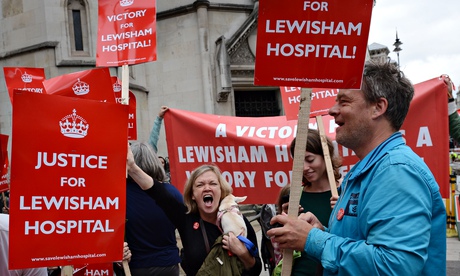
Protesters celebrate after the high court ruled government plans over Lewisham hospital were illegal

Protesters celebrate after the higher court ruled that a decision to consist of Lewisham hospital in ideas to dissolve South London Healthcare Believe in was illegal. Photograph: Stefan Rousseau/PA


Ministers have defused a potential Commons rebellion in excess of future hospital closures by announcing concessions that make it significantly less very likely that a effective hospital will be impacted by a choice to shut a failing one particular close by.


Only six Conservatives and one Liberal Democrat MP voted towards the government in excess of clause 119 of the care bill on Tuesday. However, in the debate a number of coalition MPs voiced disquiet at the power it is made up of to enable a trust special administrator (TSA) employed to type out a failing hospital trust to force via alterations at one more local hospital if they deem it required. That took place when Lewisham hospital in south-east London was integrated in original plans to dissolve debt-ridden South London Healthcare Believe in. The higher court declared the program unlawful.


Dr Dan Poulter, the health minister, mentioned GP-led clinical commissioning groups (CCGs) that sent individuals to successful hospitals would have the power to block that hospital getting employed to help fix a issue elsewhere if they disagreed.


The former Lib Dem overall health minister, Paul Burstow, sought to withdraw an amendment he had proposed, which would have neutered clause 119, after becoming reassured by ministers that TSA procedures would only be used in extreme circumstances of a hospital failing. He will chair a committee of MPs and peers to oversee the drafting of new advice above the part of CCGs in this kind of situations.


Labour pushed Burstow’s amendment to a vote anyway, even though the government won the division by 47 votes.


Clause 119 had proved divisive, with MPs such as the Tory Nick de Bois (Enfield North) declaring that he could not support it, and Labour’s Heidi Alexander (Lewisham East) saying “the TSA regime will be utilised as a steamroller to force by means of the closure and downgrade of hospital solutions with restricted public consultation making use of a procedure which is set up in a way that produces public scepticism and mistrust from the word go”.


Concessions on hospital closures stave off Commons rebellion

10 Mart 2014 Pazartesi

Move to block hospital closures law backed by 20 coalition MPs

Move to block hospital closures law backed by 20 coalition MPs

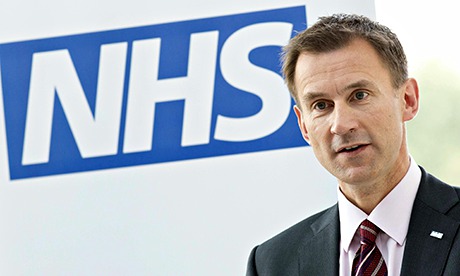
Jeremy Hunt, the wellness secretary, put forward clause 119. Photograph: Neil Hall/PA


About 20 MPs from the coalition parties prepare to rebel on Tuesday towards government ideas that could depart properly-run hospitals in danger of becoming closed if neighbouring ones get into trouble.


Paul Burstow, the former Liberal Democrat well being minister who is spearheading opposition to the move, mentioned that at least twenty MPs from his get together and the Conservatives had indicated that they would not back the programs in a Commons vote either by voting towards or abstaining.


He is searching for to amend clause 119 of the care bill, dubbed the “hospital closure clause”, which as it stands would give a “believe in particular administrator” appointed to kind out a failing hospital trust the energy to buy alterations in the makeup of an additional local hospital’s services as component of an total solution, including downgrading it or even shutting it.


Jeremy Hunt, the overall health secretary, place forward clause 119 right after the high court ruled that it was illegal for the unique trust administrator hired to kind out the heavily loss-generating South London Healthcare trust to purchase the rundown of services at nearby Lewisham hospital as a way of reorganising healthcare in south London.


Burstow wants to give neighborhood medical professionals who commission solutions from a distinct hospital not straight concerned in the other’s difficulties the right to veto any this kind of ideas for an administrator to interfere in its running.


“Support for my amendment has been increasing. It feels to me that there is a growing disquiet on the Conservative side of the coalition about these strategies, plus there are Liberal Democrat MPs who share the concern”, Burstow mentioned.


Lib Dem MPs like Andrew George, Julian Huppert and Michael Thornton have pledged to assistance Burstow’s amendment, as has Green celebration MP Caroline Lucas. Labour MPs will also back it.


Burstow has also spoken to a quantity of Tories who have concerns, which includes Jeremy Lefroy, the Tory MP for Stafford. The town’s hospital is due to drop important services, this kind of as its A&ampE and maternity units, when Mid Staffordshire NHS Basis believe in, which runs it, is broken up due to a blend of the scandal of poor care there in 2005-09, economic troubles and recurrent staffing difficulties.


“While it is vital that there is a clear and productive method to provide services and stability to a nearby location when a single hospital fails, that should not suggest ignoring the experience, experience and preferences of nearby people and clinicians in hospitals that are carrying out nicely. My new clause aims to place some democracy and fairness back into the program to ensure that it operates for the good of everyone”, Burstow added. Labour on Tuesday warns that men and women in 32 communities across England could end up with no true say in the long term of their neighborhood hospital if clause 119 is passed.


It has named 32 hospital trusts about which the NHS Believe in Advancement Authority (TDA) or Keep track of, the NHS regulators, have raised issues about their finances or viability. They consist of twenty trusts which the TDA expects to end 2013-14 in the red and twelve basis trusts exactly where Keep track of has ordered enforcement action due to the fact it fears they may not be in a position to maintain delivering all their solutions.


Burstow is hoping that the Division of Wellness may possibly offer concessions on clause 119 that would assauge his fears. But if it does not, he will push his clause to a vote after the debate on Clause 119, which is expected on Tuesday afternoon.


Move to block hospital closures law backed by 20 coalition MPs

4 Mart 2014 Salı

NHS hospital closures need to be shaped by health wants, not by the market | Anne Perkins

There is already evidence that hospital closures happen not for the public good.

Strategic choices must a matter, not for politicians, but for a panel operating to defined criteria and in collaboration with the public. Photograph: Neil Hall/PA


There are many desirable reasons to reorganise the way hospitals and healthcare are managed. Reorganisation can supply much better outcomes, as the merging of care for stroke victims in London has shown. It can cut costs at the identical time by closing outdated hospital internet sites, or decreasing the assortment of providers they supply, or the quantity of folks employed. It can lead to much more and smarter investment, as effectively as better value for income. Producing the situation for rationalisation in general terms is effortless. But arguing it by way of on the ground is a nightmare. The only point that can make it even worse is for the well being secretary to consider the power away from the folks who are impacted by it and make closures all about money and the marketplace.


Jeremy Hunt’s Clause 119 of the care bill, which the Commons will contemplate for the first time on Monday, is an emergency response to the court ruling, last October, that Hunt had acted illegally in cutting A&ampE and maternity providers at Lewisham hospital in south-east London. The trust special administrator did not have the electrical power to order the closure of some of the hospital’s providers in buy to shore up the South London healthcare believe in of which it was not part. The providers had been reprieved, but probably not for long. The new clause indicates trust special administrators appointed by the well being secretary to consider more than any NHS believe in failing financially will in potential have the power to drive through whatever nearby modifications are required. The regime of failure will dictate the shape of hospital services.


Monetary crisis driven by the want to make £20bn of efficiency cost savings in NHS trusts is expected to drive tens of hospital closures in the close to long term, which includes very good, hugely valued neighborhood units that never fit into the income-making model. As the Nuffield Believe in remarked in its commentary, this efficiently provides the secretary of state “the capability to undertake large-scale reconfiguration”.


This is no way to reform the NHS. There is presently proof that hospital closures take place not for the public good, nonetheless defined, but simply the place they can be produced to occur. That is, where there is least political challenge. Each politician has discovered the lesson of the Kidderminster effect, when a regional hospital advisor swept to victory in Wyre Forest in the 2001 basic election, in defence of the A&ampE department at his hospital. So if hospitals are to near or services are to be withdrawn, it is most likely to take place the place men and women are least capable to organise properly in defence. How much much more probably are unfair closures when the ultimate say is in impact in the hands of the health secretary?


It will not only put politics at the heart of the process. It will volume to reconfiguration by crisis, cuts shaped by the market rather than by the community’s well being wants. A couple of years back, the Kings Fund suggested the reverse technique. It stated far from ministers taking management of the approach, they must be removed from it altogether. It found that nearby politicians were too usually a barrier to, rather than a facilitator of, honest dialog ue with the public. Strategic decisions must be a matter for a panel, operating to plainly defined criteria and in collaboration with the public. Which is how, twenty years ago, the Canadian province of Ontario decreased 44 hospitals to 14. Their expertise – the method was driven by steep spending budget cuts – may not be a ideal model for Britain, but at least the choices were manufactured on a rational basis that permitted good quality, specifications and accessibility to be set towards cost-cutting and efficiency.


Hospitals are the emotional repository of back links between person and community, neighborhood and the state. But they are also the physical representation of the purpose of the NHS, the embodiment of the notion that we are all in it together. The service undoubtedly wants reconfiguring, and modify in the NHS takes also prolonged. But if ever this government desired a way of demonstrating that they think the whole 1948 vision of a Nationwide Overall health Services is broken, forcing by way of cuts on the basis of a market place model is how to do it.


NHS hospital closures need to be shaped by health wants, not by the market | Anne Perkins