held etiketine sahip kayıtlar gösteriliyor. Tüm kayıtları göster

13 Mart 2017 Pazartesi

Thousands of vulnerable people held unlawfully in care homes – report

Tens of thousands of vulnerable people with dementia and learning disabilities are being detained unlawfully in hospitals and care homes across Britain, the Law Commission has said.


Replacing the “administrative and bureaucratic nightmare” system of deprivation of liberty safeguards (DoLS) would speed up checks and allow care workers to concentrate on those most at risk, the legal study recommends.


The report, laid before parliament on Monday, is an attempt to relieve pressure on the overburdened care system, which has been put under strain by the UK’s growing elderly population and a recent human rights court victory.


Individuals who lack sufficient mental capacity are subject to movement controls, usually for their own safety, which prevent them wandering off and getting into danger.


In 2014, a supreme court judgment dramatically expanded the definition of those who should be subject to DoLS checks beyond hospitals to care homes and other types of accommodation.


As a result, while there were 13,700 applications for deprivation of liberty in England in 2013-14 by 2015-16 that figure had risen to 195,840. The massive increase meant overburdened local authorities were unable to carry out checks within the period required or even at all.


The Law Commission, an independent body, was approached by the Department of Health to find a legal alternative. Its report cautions: “Local authorities are, in most cases, currently not issuing standard authorisations within anything like that timeframe, leaving people unlawfully deprived of their liberty and care homes exposed to civil liability.” A similar problem was found to exist in hospitals.


The DoLS system, if it worked, should enable patients and families to challenge any deprivation of freedom they believe is unjustified or excessively restrictive.


The commission proposes replacing DoLS with a liberty protection safeguards scheme. A draft bill implementing the legal changes is included in the report. It would allow previous assessments made in care plans to be relied on rather than requiring six sets of fresh assessments for each patient.


The report argues this would give “greater prominence” to individuals’ human rights at the initial stage at which care arrangements are being devised and reduce the number of costly applications to the court of Protection, which handles cases involving those deemed not to have mental capacity.


The liberty protection Safeguards scheme would cost about £236m a year, saving about £10m on current costs. The commission estimates, however, that if the DoLS system was working properly and every referral completed within time it would cost up to £2.2bn annually.


The commission found that in some cases vulnerable people were being deprived of liberty in their family home, although local authorities rarely have the capacity to carry out checks. In one case, door keys had been put into a safe and alarms rigged by the family to alert them if an elderly parent wandered out of the house.


Nicholas Paines QC, a law commissioner involved in drawing up the report, said: “It’s not right that people with dementia and learning disabilities are being denied their freedoms unlawfully. There are unnecessary costs and backlogs at every turn, and all too often family members are left without the support they need.


“The deprivation of liberty safeguards were designed at a time when considerably fewer people were considered deprived of their liberty. Now they are failing those they were set up to protect. The current system needs to be scrapped and replaced right away.


“We know there are enormous pressures on health and adult social care at the moment and our reforms will not only mean that everyone is given the protections they need, but could also deliver a saving to the taxpayer. That’s cash that can then be directly reinvested to support those most in need.”


A Department of Health spokesperson said: “This government is committed to protecting the rights of vulnerable people, that’s why we commissioned this review. We also gave local authorities £25m to help them manage pressures following the 2014 supreme court judgment.


“We thank the Law Commission for its detailed work and will be responding to these constructive recommendations in due course.”


Thousands of vulnerable people held unlawfully in care homes – report

9 Ekim 2016 Pazar

NHS is most widely held concern of UK adults, survey finds

The NHS has narrowly replaced immigration and Brexit as a key issue facing Britain in the minds of most voters, according to a new survey of public opinion by pollsters Ipsos Mori.


Two out of five (40% of) people mentioned the health service, hospitals or healthcare as a concern to them – more than cited any other issue. That was just ahead of the numbers who identified immigration or immigrants (39%) as either the most important or an important issue.


The European Union or Europe was mentioned the third highest number of times (35%), according to the poll of 980 adults chosen to be representative of the whole population.


Europe was also identified by the largest number of respondents (23%) as the single most important issue of all facing Britain today, ahead of immigration/immigrants (20%). Using that measure of concern the NHS was only the third most often-cited issue (10%).


The firm’s latest “issues index” monthly tracker poll of what people think is important shows that 4 percentage points more people identified either immigration or the EU last month as a concern when their views were sought compared to those who had done so in August. However, an even larger monthly rise in the number of voters who mentioned the NHS – 9 percentage points – made it the most-mentioned issue. It is the first time that it has been the most widely-held concern since June 2015, when 44% cited it.


“The NHS in particular saw a rise in concern this month, as fieldwork for this survey took place as media attention was focused on the planned and then cancelled junior doctors’ strikes”, said Gideon Skinner, Ipsos Mori’s head of political research.


“But even so, this tallies with other research which suggests [that] while satisfaction with NHS services is holding up, concern about the future of Britain’s favourite public service is growing, with record levels expecting it to get worse over the next few years, while worries over waiting times and funding are perennial underlying factors,” he added.


Voters were not asked why they had specified certain issues when fieldwork for the latest survey was undertaken on 2 and 22 September. But the threatened series of five-day strikes by junior doctor in England over the new contract that has just been imposed on them, missed waiting time targets for treatment and a general unease about the health service’s future amid the rising financial and demand pressures it is under, may explain why the NHS emerged as the commonest concern.


“Although some of the increased concern about the NHS is likely to be driven by the dispute between junior doctors and the government, it shows that concerns about the huge financial and operational pressures facing the NHS are filtering through to the public,” said Professor Chris Ham, chief executive of the King’s Fund health thinktank.


“The public are right to be concerned, as the NHS is under huge financial pressure and waiting times are getting longer.”


Anxiety over increasing rationing of NHS care may also be a factor. September saw media coverage of various NHS bodies in England denying patients access to IVF treatment for infertility, cataract removal operations and breast cancer drugs costing just 34p a day. A major report by doctors also warned that the NHS was “underfunded, underdoctored, overstretched.”


Ham, a Downing Street adviser on the NHS in the early days of the coalition government, urged politicians to be more upfront about the state of the NHS and stop pretending that the extra £10bn ministers have pledged to give the service in England during this parliament will be enough.


“Politicians of all parties need to be honest with the public about the NHS, as it is not credible to suggest it can continue to meet demand for services and maintain standards of care at the same time as staying within the current budget,” Ham added.


The economy dropped five points between August and September; one in four people (25%) said it was an important issue. But education rose five points to 19%. Unemployment and poverty and inequality were each cited by 16%, while and housing fell seven points to 15%, despite widespread concern about the growing unaffordability of property.


Just 13% mentioned crime, law and order or antisocial behaviour, while the numbers citing defence, foreign affairs or terrorism fell from 19% in August to just 11% in September.


“Mrs May is facing a very different public mood to her predecessor when he began his premiership. When David Cameron took over in May 2010 the economy dominated all other topics, but since then it has dropped down the agenda and the importance of issues such as the NHS, immigration and housing has grown,” Skinner added.


“The NHS is of course a traditional strength for Labour, but although this rise in concern may give them an opportunity it doesn’t mean an automatic boost for them. First of all, Conservative supporters are just as likely to say the NHS is important to them as Labour supporters, and secondly when forced to choose the single most pressing issue, the public say Brexit and immigration are more on their minds.”


A recent poll by Britain Thinks found that while 30% of voters trusted Labour leader Jeremy Corbyn to protect the NHS, even more – 38% – said that Theresa May would do so.


NHS is most widely held concern of UK adults, survey finds

6 Mayıs 2014 Salı

Female genital mutilation parties becoming held in United kingdom, MPs told

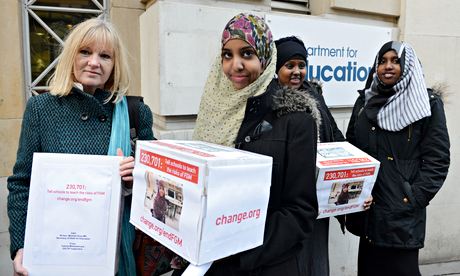
Fahma Mohamed and fellow anti-FGM campaigners deliver a petition to parliament

Fahma Mohamed (C) and fellow anti-FGM campaigners deliver a petition to parliament. Photograph: Christian Sinibaldi for the Guardian


The cutting of girls at female genital mutilation “parties” is even now going on in Britain and not just taking place abroad, healthcare professionals have informed MPs.


The Commons residence affairs decide on committee has heard that “cutters” – typically older women – are flown into Britain for the events, at which as a lot of as a dozen girls might be operated on.


Janet Fyle, of the Royal University of Midwives, explained that by the time the authorities could be alerted, the cutter would have left. “By the time the girls are cut, the female ‘cutter’ is on her flight back to the country she came from. We can’t go after the cutter. We never know who she or he is. The parents have to be held responsible,” she said.


Professor Janice Rymer, of the Royal University of Obstetricians and Gynaecologists, shared Fyle’s belief that FGM was happening in Britain. Asked about its scale, she mentioned: “We have no thought. We have no data but I am certain it is taking place in this nation.”


The MPs also heard proof that 75 to 80 girls were undergoing FGM reversal operations in Britain each and every year.


The line of questioning by the MPs in the last evidence session of their inquiry into FGM suggested that their report is likely to recommend that healthcare pros be positioned below a new statutory duty to report situations to the police.


The health authorities have been asked for their response to a tv and poster campaign to raise awareness of FGM, and to a requirement that any ladies who faced a risk of mutilation need to have it recorded in their paediatric “red guide”, which is issued to every little one in Britain.


The MPs heard from French legal authorities that statutory reporting to the police was essential in France and that these accountable for mutilating women had been jailed for up to eight years.


The 1st man or woman to be charged underneath Britain’s FGM laws appeared at the Old Bailey final week. Dr Dhanuson Dharmasena, 31, is accused of carrying out the procedure on a female following she gave birth at Whittington hospital in Archway, north London, on 24 November 2012.


Scotland Yard has launched a campaign to avoid women getting flown abroad to be mutilated, senior officers advised the select committee. They blamed the lack of prosecutions more than the previous twenty many years on healthcare experts for failing to report instances to the police.


Nevertheless, Professor Nigel Mathers, of the Royal University of General Practitioners, stated on Tuesday that police had been not placing the blame in the right place.


He stated it was not needed to area a statutory duty on doctors to report situations of FGM simply because they have been presently below a statutory obligation to report cases of child abuse, and FGM was a form of this: “The problems is in identifying people involved,” he mentioned.


His issues was supported by Rymer, who said that she agreed with statutory reporting in principle, but that most cases encountered by gynaecologists and obstetricians concerned pregnant females in their 20s who had been lower sixteen or so years before.


But she was advised by the committee chair, Keith Vaz, that he had no sympathy with that place and it was for the director of public prosecutions, not healthcare specialists, to determine no matter whether a prosecution should proceed in this kind of situations.


Female genital mutilation parties becoming held in United kingdom, MPs told

4 Nisan 2014 Cuma

Shrien Dewani to be held in psychiatric hospital in South Africa before trial

Shrien Dewani

Shrien Dewani is accused of arranging the murder of his wife Anni on their honeymoon in South Africa. Photograph: Ben Stansall/AFP/Getty Images


A British guy accused of organising his wife’s murder while on honeymoon will be detained in a high-safety psychiatric hospital with some of South Africa’s most notorious killers and rapists when he is extradited up coming week.


Shrien Dewani, a businessman from Bristol, faces months beneath surveillance at Valkenberg psychiatric hospital in Cape Town as he awaits trial above the death of his Swedish wife, Anni, in November 2010. He fought a court battle against extradition on the basis that he was struggling submit-traumatic anxiety disorder and depression.


South Africa’s Times newspaper reported on Friday that “protection has been beefed up and a new safety organization appointed” at Valkenberg just before Dewani’s arrival.


“When the Times visited the hospital yesterday five guards have been monitoring and searching vehicles coming into the premises, in contrast with 3 guards last week,” it continued. “A employee said staff had been advised of Dewani’s arrival this week.”


The hospital has a grim popularity. A 2006 article in South Africa’s respected Mail &amp Guardian newspaper noted: “Although hospital staff and provincial government officials are at pains to point out that it is a hospital, it resembles a prison, with its bleak buildings, visitor physique searches, the sounds of clanging steel gates and burly security guards.


“Staff are also quick to point out that the stark rooms accommodating some of South Africa’s most violent criminals – mainly murderers and rapists – are a enormous improvement on the previously overcrowded and filthy wards.”


Dewani, 33, is expected to arrive in Cape Town on Tuesday morning. Two senior officials from an elite police unit acknowledged as the Hawks and a South African medical professional and nurse will accompany him aboard British Airways flight BA0059 at Heathrow airport at 9.30pm on Monday, in accordance to the Occasions.


The Instances quoted a police source saying that information of Dewani’s flight had been blocked on the country’s border movement control program except to those with substantial safety clearances.


He will land at 9.55am on Tuesday in Cape Town exactly where, South Africa’s justice department stated, he will “immediately be escorted to Western Cape substantial court in which he is anticipated to make his initial look in a South African court of law”.


Dewani denies any involvement in the killing of 28-yr-outdated Anni, who was shot as couple’s taxi was apparently carjacked in Gugulethu township in Cape Town. He claims the couple were kidnapped at gunpoint and he was released unharmed.


A South African guy, Xolile Mngeni, was convicted of the murder and jailed for existence. Zola Tongo, a taxi driver, was jailed for 18 years following he admitted his portion in the killing although an additional accomplice, Mziwamadoda Qwabe, pleaded guilty to murder and acquired a 25-year prison sentence.


The pair testified that Dewani had organized the murder, but worries have been raised over the conduct of the police investigation, like allegations of torture.


Shrien Dewani to be held in psychiatric hospital in South Africa before trial