helping etiketine sahip kayıtlar gösteriliyor. Tüm kayıtları göster

19 Ocak 2017 Perşembe

Hitting the right note: the orchestra helping stroke survivors recover – video

Strokestra, a pioneering collaboration between the Royal Philharmonic Orchestra and Hull integrated community stroke service uses group music-making to drive recovery in stroke survivors. Patients try out instruments, listen to and play alongside world-class musicians. With funding from Hull Public Health, the pilot programme involved 50 patients and carers and ran from May to October 2015. This is their story


Hitting the right note: the orchestra helping stroke survivors recover – video

16 Kasım 2016 Çarşamba

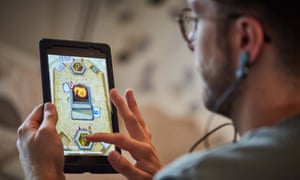
Sea Hero Quest: the mobile phone game helping fight dementia

A mobile phone game that tests spatial navigation skills and has been played by 2.4 million people, has become the largest dementia study in history and raised hopes of a breakthrough in diagnosing the disease.


Sea Hero Quest, a collaboration between Alzheimer’s Research UK, Deutsche Telekom, game designers Glitchers and scientists, has generated the equivalent of 9,400 years of lab-based research since its launch in May.


Experts hope to use the data to create the world’s first global benchmark for spatial navigation, one of the first abilities affected by dementia, and to develop the game into an early diagnostic test for the disease, which is the leading cause of death in England and Wales.


Dr Hugo Spiers, of University College London, who presented the preliminary findings at the Neuroscience 2016 conference in San Diego, said: “This is the only study of its kind, on this scale, to date. Its accuracy greatly exceeds that of all previous research in this area. The findings the game is yielding have enormous potential to support vital developments in dementia research. The ability to diagnose dementia at early stages, well before patients exhibit any signs of general memory loss, would be a milestone.


“This study is thus now giving us the opportunity to make a real difference to the lives of millions of people living with dementia and those at risk of developing the disease in the future.”


Sea Hero Quest requires players to navigate a boat through waters in differently themed areas over 75 levels, collecting items along the way. It was designed to appeal to all gamers, rather than just people wanting to contribute to a good cause, and its popularity has seen the number of players soar past the original target of 100,000 by the end of the year.


Players provide their age and sex, allowing the scientists to chart their performance against other users.


Spiers said they could now create the equivalent of a height chart whereby if someone was particularly short – or in this case if their spatial navigation ability was particularly low – for their age and sex it would raise a red flag.


By testing a person’s spatial navigation abilities, the game could allow for diagnosis and treatment of patients far earlier.


Spiers said Sea Hero Quest, which will now be adapted for use in a clinical setting, could also be used to track decline and in drug trials to test the impact of the medication.


Alzheimer’s Research UK’s chief executive, Hilary Evans, praised the role of Deutsche Telekom, which has spent more than €1m (£860,000)on the project, including marketing.


“The early data that has very quickly been generated by Sea Hero Quest should inspire other corporations to consider what assets they might bring to research into dementia or any of our most seemingly intractable medical conditions,” she said.


The experts found differences in spatial navigation strategies employed by men and women, and also that spatial navigation abilities began to decline from early adulthood. For example, players aged 19 (the youngest in the study) had a 74% chance of accurately hitting a target during the game, compared with 46% among 75-year-olds (the oldest in the study). This decline over time contradicted previous studies – typically based on less than 100 people – which suggested cognitive abilities do not decline until later in life.


They also found that players in Nordic countries showed notable spatial navigation capabilities.


The scientists will carry out further analysis of the data over the next two years. In the meantime, the game continues to be available for free download and the data generated will contribute to the ongoing research.


Sea Hero Quest: the mobile phone game helping fight dementia

31 Ekim 2016 Pazartesi

And breathe: the computer games helping kids relax

On the unassuming second-floor office of a tech startup in Clerkenwell, London, Simon Fox is teaching me how to breathe. “You’re not trying to shove your stomach out with muscular force,” advises the design director of BfB Labs. “Instead, what you’re trying to do is feel your lungs expanding into your body. You don’t want to breathe hard, but you do want to be breathing into the bottom of your lungs.”


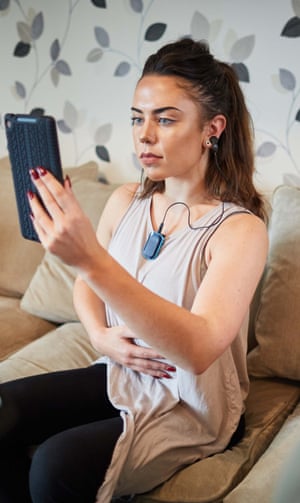
Clipped to my earlobe is a tiny heart-rate monitor, linked to a Bluetooth device that is attached to my T-shirt. I’m here to try out what Fox and his colleagues have dubbed emotionally responsive gaming (ERG): computer games designed to increase players’ resilience to mental health problems by using biofeedback to monitor and reward their ability to remain calm under pressure.


Between rounds in Champions of the Shengha, the company’s first offering, gamers must spend about a minute practising the kind of diaphragmatic breathing that is widely recommended as a relaxation technique; the more successfully they control their breathing, the more gems they win to spend on weapons and spells to defeat their opponents. In fact, it’s not the breathing itself that is tracked, but the player’s heart-rate variability (HRV), which increases in response to diaphragmatic breathing and lower levels of stress. A higher variation shows a body with a healthy ability to relax and respond to events.


That sounds pretty easy, I think, especially as I’m not really bothered how I fare in the fantasy-themed battling game (“Like Top Trumps but with way more interesting stuff going on,” is Fox’s explanation to a non-gamer). On my first attempt, I get four gems out of a possible 10; not bad for a first try, says Fox, who cites his own experiences of chronic anxiety as a driving force in his work. I’m determined to do better next time.


The more successfully players control their breathing, the more gems they win to spend on weapons and spells to defeat their opponents.


The more successfully players control their breathing, the more gems they win to spend on weapons and spells to defeat their opponents. Photograph: Mark Waugh Manchester Press Phot

Champions of the Shengha began life more than two years ago, when Shift, a charity that works on behaviour change and social problems, was looking for a way to boost young people’s wellbeing in response to growing evidence of mental health issues among school-age children. It hit upon a computer game as a way of making the prospect of being trained in “emotional regulation” an attractive one, and was awarded £200,000 funding by Google’s Impact Challenge scheme.


Shift later incubated BfB Labs, which took on the development of the game. Keeping it genuinely enjoyable and credible as a game in its own right has always been key; ERG is being marketed to gamers not so much on the basis of its health benefits, but as an exciting new challenge.


“Half of all cases of mental health disorder start by the age of 14, and three-quarters by 24,” says Naomi Stoll, the project’s lead researcher. “Meditation, mindfulness and yoga are not the kinds of things that teenage kids, especially teenagers from disadvantaged backgrounds, are going to think are relevant to them and practise. Even 20 minutes of breathing every day is just not fun in any way.”


In a randomised control trial at the Billericay school in Essex earlier this year, more than four-fifths of the 90 pupils who played the game could reliably double their HRV through focused breathing. Three-quarters reported getting better at staying calm within the game, and a quarter said they had started using the techniques in everyday life.


Three-quarters of players reported getting better at staying calm within the game, and a quarter said they had started using the techniques in everyday life.


Three-quarters of players reported getting better at staying calm within the game, and a quarter said they had started using the techniques in everyday life. Photograph: Mark Waugh Manchester Press Phot

The school had already seen a good take-up of mindfulness sessions, says deputy head Charlotte Berry, but it has mainly been girls, whereas Champions of the Shengha, which is played on a phone or tablet, has been embraced by both boys and girls.


“They very quickly started talking about how they were using the breathing in other aspects of their lives,” she says – including before important football matches, on occasions when they feared they would lose their tempers, and to deal with stress. Twelve-year-old Ryan Gibson used diaphragmatic breathing before his end-of-year exams and says it has also been handy at home: “I’ve got a younger sister who always annoys me. I use it to stop myself from reacting and saying something that would get me in trouble.”


Although there are a handful of other developers producing computer games that feed players’ emotions back into play, it’s a tool in its infancy. But gaming seems to have a wider role in promoting good mental health, says Dr Paul Cairns, a reader in human computer interaction at the University of York. “We feel better when we have a feeling of competence and autonomy,” he says. And games, unlike real life, present well-defined problems that are designed for people to succeed at: “They offer us the rewards we need.” Crucially, they also provide an escape from isolation, especially when you can play against people around the world online.


BfB Labs is planning future games to appeal to different audiences: Fox describes one as a “noir-y detective thing” where you have to keep your cool through a series of interrogations. Champions of the Shengha has just gone on sale on the crowdfunding site Indiegogo, where a beta version, including the biofeedback sensor, costs about £27, and there are also options to donate the kit to schools.


Back in Clerkenwell, Fox instructs me to place my hands on my chest and stomach to see which bits are moving as I breathe. I may not be engaged with the game itself, but it appears my naturally competitive nature is doing a fine job of ramping up the pressure: I overbreathe noisily. Only on my seventh try do I finally manage a five.


The next week, with multiple deadlines looming, I find myself absent-mindedly moving my hand to my stomach and adjusting my breathing. Something, it seems, has stuck.


And breathe: the computer games helping kids relax

29 Temmuz 2016 Cuma

7 Best Herbs for Boosting Metabolism and Helping You Lose Weight

Natural ways make your weight loss program a little bit easier and there are herbal plants that have positive effects to stimulate your metabolism and aid in weight loss. Along with a healthy diet plan and regular exercise, these weight loss herbs boost weight loss effectively:


1-Ginseng


As one of the most widely used herbs, ginseng is not only popular for its memory-boosting effects, it also helps weight loss. As a stimulant, ginseng boosts your metabolism and provides energy for you, both of which are beneficial for weight loss.


2-Sage


Tea made with sage leaves aids in weight loss because of its stimulant and diuretic properties. Regular consumption of sage leaf tea can help you flush the harmful waste out of your body and boost your metabolic rate, all of which are resulting in weight loss.


3-Oregano


Oregano oil has been widely used to treat many ailments, including preventing obesity. It keeps your digestive system function well and helps flush out the excess toxins from the body, this will reduce the risk of obesity and good for your overall health.


4-Spearmint


Spearmint tea helps weight loss in several ways:


  • It works as an appetite suppressant

  • Helps with digestive process

  • Promotes absorption of nutrients

What’s more, spearmint has stress-relieving properties, which is also important for maintaining a healthy weight.


5-Dandelion Root


Dandelion acts as a cleanser, it helps you lose weight because it works effectively to flush toxins and waste from the body and also has anti-inflammatory properties.


6-Yerba Mate


This herb is rich in various vitamins, minerals, amino acids and antioxidants, which will boost your metabolism and provide you energy. Many natural stimulants were found in it which work as diuretics to remove the excess water weight out of the body.


7-Peppermint


Peppermint has been proven to help your waistline as it supports digestion effectively. Have a cup of peppermint tea helps calm down the gastrointestinal tract and also boost a healthy bowel movements, means it will promote the toxins removing process in your body.


Besides, the special scent of peppermint has ability to help you suppresses appetite. This is also supporting your weight loss goals.


Sources:
1)3fatchicks.com
2)spearminttea.net
3)theheartysoul.com


7 Best Herbs for Boosting Metabolism and Helping You Lose Weight

4 Mayıs 2014 Pazar

Death doulas: helping people face up to dying

Rebecca Green is a death doula

Rebecca Green operates with households and aids them to accept the thought of death. Photograph: Murdo Macleod for the Guardian


The woman sitting opposite me in an Edinburgh cafe is referred to as Rebecca Green. She is in her early 40s, with a soft Birmingham accent and a gentle, smiling encounter. She is a nurse. But she also does one thing else – one thing that has prompted both fascination and animosity in people she has told about it. She is a death doula.


Birth doulas assistance girls and their households by means of the approach of a child currently being born. And death doulas support folks in the course of that other large occasion – the one particular we don’t like to speak about. The idea is hardly new, but in the western planet, death has become a health-related matter, says Hermione Elliott, director of the charity Residing Properly Dying Well. The organisation is pioneering the use of death doulas in the Uk. “In other cultures about the globe, and for thousands of many years, folks have stayed in their homes to die, looked right after by their household and neighborhood local community. We want to see a return to this.”


So how did Green become a death doula? “Men and women sense that I am open,” she says. “When I was 19, a crotchety outdated aunt who was dying asked for me. I could tell she knew she was dying. And she knew that I knew. She just desired to see it in someone else’s eyes – the truth of it. Then she relaxed. She was in a nursing house and no one particular would be open about it. She didn’t like the lying and the pretending – it irritated her.”


“Then, in my 20s, not extended following I qualified as a nurse, I was lodging with a girl. She grew to become ill, and asked me to go to the physician with her. I feel we each knew that some thing was occurring. I was with her when she was given her diagnosis, and lived with her till she passed away. Her two sons, the two buddies of mine, had youthful babies and complete-time jobs, so they could not grow to be dwell-in carers. There was no query that I would not do what I did. Which is how I grew to become a death doula.”


Green went on to function in hospices, but identified it wasn’t for her. “They do a wonderful work, never get me wrong. I just found it all a bit holy: I would drive residence listening to thrash metal as an antidote. Some people want that, to be patted and stroked as they pass away. But other individuals want to stroll into it, to die alive – not die dying, carrying out as they are told.


“I’ve in no way advertised,” Green says. “It’s all just word of mouth. I don’t usually consider payment, both. Men and women want distinct items from me: it could be anything at all from becoming a companion at a bedside, to supplying practical support for the family members. Or aiding conversations with the person’s doctor, which will then aid with making decisions about therapy. Or navigating their way by means of the construction of the NHS. I have even met up with a guy who simply had a dread of death. We talked for a couple of hrs, and that was it, I never saw him once more.”


Even though some death doulas have a spiritual strategy, Green doesn’t. “Some individuals will detest me for this, but so be it. If a individual has not located ‘spirituality’ to be helpful to them just before they became ill, why introduce it when a individual is facing death? I truly feel it’s a way of avoiding the residing man or woman in front of you – and steering clear of yourself. Delivering a ‘solution’ to this ‘problem’ of death, with a story. It’s massive company, this spirituality. It preys on the vulnerable and it’s a crutch which is going to break when you lean on it. You have your existence, your residing moments, and by yourself – appropriate up to the really finish. You are ample – you never want to be spiritual.”


Curiosity in – and demand for – death doulas is on the rise. “It is because most of us would choose to die at property, cared for gently,” says Barbara Chalmers of Ultimate Fling, the UK’s initial “one-end shop for end-of-life preparing”. “The NHS is not the place for that,” Chalmers says. “We’ve lost our local community doula capabilities: the ladies in the past who looked following birthing and dying. So a lot more and far more people – largely girls – are education once more in these capabilities and offering end-of-existence companionship as a service. It would be interesting to work out the cost of this for the NHS, alternatively of them paying to preserve dying men and women in a ward and continuing the notion that death is a healthcare failure rather than the normal conclusion to life.”


I wonder how an individual who operates so closely with death feels about her very own mortality. “Death doesn’t scare me due to the fact I do not know what it is,” Green says. “I suppose I am saying that the unknown does not scare me. I uncover the notion that a single day I won’t be here any a lot more strange and unattainable to envision.


“But it’s also a reality that I haven’t often been here – I only got right here in 1969. Exactly where was I in 1968, or 1945? I have no concept. It can make me smile to believe of this.” So does that imply that she isn’t going to be concerned about death? “No, I do not fear about death. I fear about items like paying out my bills. I want I did not, but I do.”


So what does she say to people who are frightened of death? “I never offer any views or guidance. I never attempt to demonstrate that death isn’t scary. I can’t – I do not know what death is. And I will not soothe or placate folks when they are afraid, but rather stroll immediately into the state of fear with them, as a companion, and without going into a state of dread myself. This can be done as a conversation, as a stroll outdoors collectively, and usually – in fact in most circumstances – what we talk about is not death, but something else.”


Death doulas: helping people face up to dying