medicalised etiketine sahip kayıtlar gösteriliyor. Tüm kayıtları göster

11 Nisan 2014 Cuma

Art therapies have turn out to be a mainstream spouse to medicalised healing | Ruth Wishart

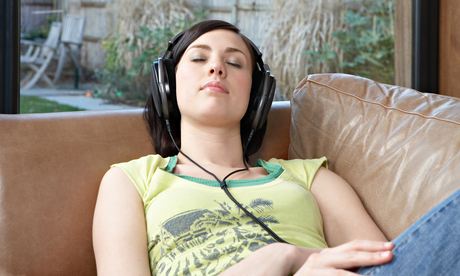
woman listening to music on headphones

‘Autistic young children who have an acute sensitivity to sounds apparently reply well to musical loops in which pleasing tracks offer the two a sense of calm and a predictability.’ Photograph: Getty Photographs/Picture Supply


There is a fire extinguisher featured in Bridget Riley’s latest artwork, unveiled earlier this week. Many in fact, provided they are an obligatory element of the furniture in hospital corridors. And the 56 metres of this arresting mural, with characteristic horizontal lines in daring colours, adorn the 10th floor of St Mary’s Hospital in London.


The charity that commissioned it, Imperial School Healthcare, reasons that the influence is therapeutic on personnel as properly as the more transient audience of sufferers. It says high-good quality bold murals will provide distraction in surroundings frequently serially stressful – the ninth floor homes intensive care.


The Riley mural delivers everlasting adornment, but some one,600 artworks owned by the charity now circulate amongst five hospitals in west and north-west London, cautiously curated to reflect their surroundings one paediatric wing demonstrates animated films created by younger individuals encouraged by an artist with a six-month residency.


It is evidence, if any were still necessary, that art therapies have turn out to be a mainstream spouse to medicalised healing rather than a niche practice. There is no lack of empirical proof that the producing and viewing of artwork has developed crucial final results in situations as varied as depression and disability.


Music therapies, also now the topic of a raft of academic assessments, have created some dramatic outcomes. The broadcaster Sally Magnusson has set up a charity in memory of her late mother, Mamie – a vivacious journalist and wife of the late Magnus Magnusson – whose dementia brought memory loss but also, heartbreakingly in a lady for whom phrases and their precise utilization were a passion, an inability to string with each other rational sentences.


But, as her daughters identified, what she could even now do was sing. Sing the well-loved songs of childhood, family members outings and celebrations. Playlist for Life aids equivalent sufferers by loading personalised musical recollections on to an iPod to be played to them by families or carers. It is a pity, notes Sally drily, that between Mamie’s complete recall was each and every track from The Sound of Music, now lodged all also retrievably in her personal memory.


The celebrated neurologist Oliver Sacks wrote extensively about this phenomenon in his 2007 guide Musicophilia: Tales of Music and the Brain. His contention is that where musical recollections are lodged in the brain is near to other locations that dementia or stroke victims are no longer capable to access.


They get rid of, he says, “their autobiography”, their identity, their story but an evocative piece of music, the soundtrack to their earlier existence, can retrieve not just the sounds themselves, but the occasions connected to them. And in so doing it can give the two lethargic and agitated patients hrs of peace and pleasure.


The United kingdom-broad Music in Hospitals motion, which has professional musicians bringing enjoyment to care residences and hospices as well, is clear that its performers must have extremely designed social antennae to match their musical accomplishment. They need to understand and react to varying temperaments and tastes.


Music as a balm for troubled souls has emotional potency. Severely autistic kids who have an acute sensitivity to sounds – which might mean daily noises like vacuum cleaners or phones result in distress – apparently react effectively to musical loops exactly where pleasing tracks provide each a sense of calm and a predictability which several on the autistic spectrum discover comforting.


There is also the healing of wounds of a non-medical origin. When Liverpool’s 2014 Biennial opens on five July, the inaugural concert will feature a Hillsborough Memorial symphony composed by Michael Nyman. No eleven Symphony is primarily based on music he was composing as the tragedy unfolded. It will, undoubtedly, result in a fresh shedding of tears by the households of the 96 victims. But then tears are therapeutic also.


What all this tells us, not least at the moment when breasts are currently being routinely beaten above drug budgets, is that what have been sometimes pejoratively dismissed as “different therapies” now have a proven track record in specified areas of medicine, specifically the place brain impairment is concerned.


Art therapies and interventions are not resource neutral – not significantly is – but there are apparent bonuses. Offering psychological respite to a disturbed youngster or a dementia-stricken grownup by way of pleasure rather than pharmaceuticals has to be desirable wherever attainable.


Inducing calm or a sense of achievement in sufferers as an alternative of distress or aggravation is a much more than welcome outcome for carers and households, no less the daily victims of stress.


Art therapies have turn out to be a mainstream spouse to medicalised healing | Ruth Wishart

12 Ocak 2014 Pazar

Death in hospital want not be a medicalised trauma | Julie Myerson

My mother-in-law died three years ago in St Thomas’ hospital in London. She was 86 and no longer well, but seeing her die was overpowering and the reduction stays raw. Nevertheless the manner of her going – managed with extraordinary kindness, intelligence and sensitivity by the personnel of that NHS hospital – was as great as I can picture a 21st-century death to be.


Death is not easy to talk about. Viscerally, emotionally intimate, it summons our most overpowering emotions. It’s inevitable, possibly, that the “bad” experiences are offered far more airtime than the “good’. But in this climate of extreme debate about how significantly medical intervention must or should not be brought to bear on the approach, do not these of us who have witnessed the – harried, spending budget-chasing but nevertheless consistently patient-focused – NHS at its best have an practically civic duty to say so?


Helen was brought up in prim and unforgiving Adelaide. In 1949, she escaped, marrying a Jewish barrister from Cardiff and settling in England. She had two kids – one particular of them my husband – and 6 grandchildren. She was a graceful, memorable female – tall, slender, cultured, chic, shy, generous and engagingly teaseable.


Widowed also youthful, she was a lovingly energetic and concerned grandmother. In her late 70s she even now swam, did Pilates and frequently extended-hauled it alone back to Australia. For a extended time, hers seemed to be the kind of previous age we all dream of – one where you merely expand steadily older, while remaining definitely and pithily oneself.


It’s tough to pinpoint exactly how and when this transformed. The persistent soreness soon after she moved a planter on the patio? The backache, the lumbar spine operation, the falls. A hip substitute and a gradual ceasing to discover the power to exercise. And then the nagging lack of concentration: radio was irritating, television pointless. We discovered that a series of tiny strokes had been slowly leading to vascular dementia. And after we knew that, her daily life – and in some methods her self – just seemed to unravel. And she was, of course, more and more immobile. A depressingly everyday story of outdated age, then.


When, one Sunday in April, she collapsed and was ambulanced – hardly for the 1st time – to St Thomas’, we had been told she’d suffered a major stroke. I remember that she was aware and appeared cozy, though she was oddly somnolent, passive. Even now, we imagined she’d be home by the end of the week at most.


But on the Monday, a registrar took my sister-in-law and me – the by now usual rhythm of a household rota – into a silent, sunlit room at the finish of the corridor. He informed us, with immense care and tact, that Helen would not recover from this stroke. I don’t forget the tiny second of shock, the attempting to grasp it.


I think it was my sister-in-law who asked the only achievable question: how long? Five to eight days, he explained. Really? That exact? Yes, he’d witnessed it ahead of. I believe he sat with us for a few much more moments in situation we had additional queries. We have been presented tea. And, although Helen had schooled us to fight any and all attempts at resuscitation or intervention, on that day there was no mention of it. Kindness and acceptance – and in the end health care discretion – were the only aspects in play.


Helen was moved into that identical 11th-floor room at the finish of the corridor: a vivid, sunny room all to herself, away from the frenzy of the ward. It occurred to be the week that Icelandic volcano dust grounded all aircraft and, though she by no means knew it, the blue skies close to her were miraculously, soaringly, eerily empty and still. And for individuals next few equally eerie days, we, the family, were – amazingly – permitted to come and go at any time, exactly as we pleased.


We took it in turns, often a single of us, often two or 3 or more, sitting and holding her hand, talking to her, attempting to make positive she felt loved and cared for. At times, especially when the huge teenage kids (three of whom had come into the planet a couple of floors above where we now sat) arrived, it grew to become rowdy. Sandwiches were eaten, there was laughter, teasing, backchat. Other instances we sat in companionable silence. At times, we cried.


By Thursday afternoon anything, somehow, was diverse. And by the time we watched the sun set above the Waterloo rooftops, people of us who happened to be there – her two young children, two of her grandchildren and I – sensed we ought to not depart.


The next part need to keep as private as feasible. But I hope it truly is all proper to say that, managed with such gentleness and sensitivity by the personnel, Helen’s death felt oddly like the labour of birth: exhausting and devastating, yes, but natural also and, in some unusual way, productive. A lot more crucially, and reassuringly, the nurses understood this far greater than we did.


As the minute drew near and, inevitably distressed on Helen’s behalf, we requested soreness relief, these nurses explained, with true gentleness and compassion, that it would be far greater for her if they did not intervene. And they were proper. Her ultimate moments were peaceful. And to be permitted to be there with her as they ticked on past – it’s not anything I can place into phrases.


I have imagined frequently about no matter whether or not to publish about this, specially when I study nevertheless one more newspaper account of how the medicalisation of death, the obsession with intervention and saving at all costs, is robbing us all of our proper to die in peace. But I’ve usually hesitated. Partly simply because death, any death, is this kind of an intensely intimate knowledge and seeking to describe it might be, for plenty of reasons, a phase also far. And partly, of course, due to the fact this distinct death belongs at least as a lot to the other individuals who were current as it does to me. All you have here is a purely subjective description from somebody who loved her children’s grandmother very considerably.


And however. It would seem to me that what we all skilled on the 11th floor of St Thomas’ Hospital on that April evening was one thing that ought to be known about, appreciated, celebrated even. We definitely can not be the only family who’ve had such an encounter? So I hope that Helen – whose adore and friendship I really feel moved to have acknowledged – would forgive me. Because how can we possibly debate these issues with any honesty if we do not seek to share our most constructive experiences of intensely private moments?


Death in hospital want not be a medicalised trauma | Julie Myerson