project etiketine sahip kayıtlar gösteriliyor. Tüm kayıtları göster

3 Nisan 2017 Pazartesi

Prison choir project scoops UK healthcare award for "choral cure"

There was dancing to the Jailhouse Rock when a community choir formed in a prison in Northern Ireland was named overall winner of annual awards for therapists and health scientists.


Organisers, supporters and past members of the Voice of Release choir burst into an impromptu chorus of Elvis Presley’s hit in celebration of their success at the 2017 Advancing Healthcare Awards, held at Chelsea Harbour in London.


The awards, for which the Guardian was media partner, aim to highlight the achievements around the UK of allied health professionals and others who work with them outside the medical and nursing professions.


The Voice of Release was founded in 2014 by occupational therapists at Hydebank Wood women’s prison in south Belfast as a way of trying to engage prisoners who were vulnerable or at risk of suicide or self-harm.


Women who stepped forward to take part led development of the venture, winning a Dragons’ Den-style pitch for initial funding. The choir has since gone on to make a CD, put on paid performances – with some members being allowed out of prison to do so – and involve prisoners from a men’s jail without incident. A follow-on project has been set up for choir members to continue singing after release.


Regular monitoring of those taking part has shown a decrease in stress levels, improvement of mood and a greater sense of hope thanks to the “choral cure”.


The scheme, run jointly with The Right Key, a Lisburn-based community interest company, won the mental health category of the awards before scooping the overall prize. This new category, sponsored by the Guardian, attracted a record number of entries for the awards, which were in their 11th year.


The NetPark Wellbeing Project, an arts therapy scheme developed by the Metal Arts Organisation and Southend council, using digital technology in the setting of a public park, was highly commended in the same category.


Full list of winners


Overall winner and Guardian award for innovation in mental health services – Lynsey Grierson and Sheila Smyth, South Eastern health and social care trust and The Right Key; highly commended Emma Mills, Metal Arts Organisation


Faculty of Public Health and Public Health England award for contribution to public health – Gillian Rawlinson and Helen Slee, Salford Royal hospitals NHS foundation trust; highly commended Ruth Crabtree and Tom Heywood, Yorkshire ambulance service NHS trust


Health Education England and National Institute for Health Research award research champions – Lisa Roberts, University of Southampton and Southampton hospitals NHS foundation trust


Chamberlain Dunn award for entrepreneurship – Jo Godsall and Daniel Thomas, Chroma Arts Therapies


Macmillan award for leadership and innovation in cancer rehabilitation – Laura Caley and Jervoise Andreyev, Royal Marsden NHS foundation trust


Scottish government award for improving quality: measuring and demonstrating impact – Fraser Ferguson, NHS 24


Academy for Healthcare Science award for innovation – Mark Bowtell and Lorna Tasker, Abertawe Bro Morgannwg university (ABMU) health board


Welsh government award for prudently advancing practice – Anita Smith, East Sussex healthcare NHS trust


NHS Employers award for outstanding achievement by an apprentice, support worker or technician working alongside an AHP or healthcare scientist – Jennifer Hopton, Newcastle upon Tyne hospitals NHS foundation trust


Northern Ireland award for maximising resources for success – Fiona Talbot and Janey Milligan, South Eastern health and social care trust


Scottish government award for driving improvement, delivering results – Fiona McMillan and Catrina MacGregor, NHS Ayrshire and Arran


Health Service Laboratories’ award for rising stars – Dimitra Verra, Central London community healthcare NHS trust; Rachel Ball, University hospitals Coventry and Warwickshire; Mark Edwards, ABMU health board; Fiona Brannan, Warwickshire Music; Erin Wilson, Warrington and Halton hospitals NHS trust; Ruth Louise Poole, Cedar, Cardiff and Vale university health board


Join the Healthcare Professionals Network to read more pieces like this. And follow us on Twitter (@GdnHealthcare) to keep up with the latest healthcare news and views.


Prison choir project scoops UK healthcare award for "choral cure"

14 Mart 2017 Salı

M&S launches mental health drop-ins as part of Ruby Wax project


Marks & Spencer is to host mental health drop-ins in its store cafes as part of an initiative designed to soothe stressed shoppers.


The Frazzled Cafe project is fronted by the comedian and mental health campaigner Ruby Wax. The fortnightly sessions, which will be hosted by trained volunteers in restaurants that have closed for the day, will initially be held in 11 stores with more locations to be added in the coming months. The branches taking part include three in London as well as outlets in Nottingham, Leeds and Newcastle.


The retailer said the sessions were “not therapy” but aimed to provide a space “where people can talk openly with others who understand how they are feeling”.


“We live in a time where to have a life crammed to the hilt is considered a success story,” said Wax. “But with all this pressure, so many of us have nowhere to go to meet and talk about it. Frazzled Cafe is about people coming together to share their stories, calmly sitting together, stating their case and feeling validated as a result.”


The project was trialled in some M&S offices and two stores last year with the decision to commit to the project confirmed on Tuesday at an event hosted by Wax at the London Book Fair. The Frazzled Cafe project, which is in the process of becoming a registered charity, stemmed from the public response to Wax’s book A Mindfulness Guide for the Frazzled and the accompanying theatre show.


“It’s special to get a company like M&S on board,” Wax added. “I’m grateful for the set-up support they’ve given us and access to their cafe network is a huge boost.”


The economic cost of mental health problems in the UK is estimated at roughly £105bn a year with about 4m prescriptions for antidepressants written annually. Official figures last year showed the number of antidepressants given to patients in England has doubled in a decade.


“This is a simple, pressure-free way of tackling what can be a taboo subject – feeling stressed,” said M&S retail director Sacha Berendji of the partnership, which is part of the company’s Plan A eco and ethical initiative. “We hope that by providing free and calm venues after the cafe has closed, we can help any members of the community who simply need to talk about things and what’s happening in their lives.”


M&S launches mental health drop-ins as part of Ruby Wax project

1 Şubat 2017 Çarşamba

Let’s talk about cancer: the Manchester project that aims to save lives

Security guard Gilbert Morris will stop at nothing to talk to other black men like himself about cancer screening. He once defused a late-night fight in a Manchester club by asking five scuffling men whether they had had their prostate tested.


“It was like I had a magic wand that lowered their aggression,” laughs Morris. “They stopped in their tracks and put their fists down. Two of them said their fathers had prostate cancer and another’s uncle had it. We ended up sitting round the table talking about their fears of having their privates looked at.”


The success of this 51-year-old six footer in communicating the risk of cancer is being harnessed by health chiefs in Greater Manchester as part of the launch of a social movement to sign up 20,000 people as cancer champions.


The idea, led by Greater Manchester Cancer Vanguard Innovation, (part of Greater Manchester Cancer – the cancer programme of Greater Manchester’s devolved health and social care partnership), is to use people power to create a cultural shift in one of the UK’s cancer hot spots, and make it normal to talk about screening, healthier lifestyle options and catching symptoms early.


Working with the voluntary sector, the aim is to sign up 5,000 cancer champions by autumn 2017, and to reach 20,000 by 2019. Mobilising this cancer army is one of a series of measures to cut premature cancer deaths in the area by 1,300 by 2021.


Gilbert Morris


Gilbert Morris developed prostate cancer in his 40s and couldn’t find anyone to talk to about it. Photograph: Karen Wright

The cancer death rate in Greater Manchester is 10% higher than the national average, according to Cancer Research UK figures. Manchester comes bottom out of 150 local authorities for premature deaths (under 75 years). Cancer experts reckon that around 40% of cancer deaths could have been prevented by screening or lifestyle changes, the potential for saving lives in Greater Manchester is great, since 6,700 people died of the disease in 2013.


Cancer champions programme director, Jenny Scott, explains: “By creating champions we will create support for active lifestyle changes. We need to engender people’s interest and then it will spread like a wave. I hope that people will soon be chatting about what they can do – whether it be at the bus stop or a football match.”


This radical approach is the result of a realisation that health systems are not having an impact in many sectors of society.


Morris’s story underlines this. He developed prostate cancer in his 40s and could not find anyone to talk to about it. He volunteered with the Manchester-based Black Health Agency to highlight the heightened risk of the disease in the African-Caribbean community. As his experience shows, the mention of prostate cancer can stop people in their tracks.


Morris says: “Doctor does not always know best, because some men never go to the doctor. I will speak to men anywhere – at a street corner or a bus stop. I am not embarrassed about talking about it, because if I can save one life I have done my job.”


He joins 1,000 plus existing volunteers willing to become cancer champions. More will be recruited through formal links between local authorities, Action Together and Voluntary Sector North West. Interested individuals will be put in touch with voluntary organisations across the 10 local authority areas, and receive advice and training. Workshops and publicity campaigns are planned. A web platform is also being built where people can become a champion and share their experience.


The rewards of volunteering are rich according to cancer champion Zoe Ashworth, a 29-year-old single parent from Stockport. She spends around three hours a fortnight at a nearby GP surgery in a deprived area calling people who have not returned their bowel cancer screening kits.


“Volunteering gives me real personal satisfaction,” says Ashworth. “Of all the people I have called, every single one has agreed to receive a screening kit. My friends will not listen to anybody else, but they can’t get away from me!”


Findings from the cancer champions project, will be combined with other data and public health information, to create a national dashboard to help prevent avoidable deaths across the rest of the UK. It will also be shared with cancer alliances being set up all round the country.


Leading Greater Manchester’s social movement projects, Ben Gilchrist, sees the cancer champion work in the context of a step change in society, in which many people no longer take their health messages from a health system.


He is clear that volunteering is not a replacement for NHS and public services, or a cost-cutting measure but the “right thing to do” to empower communities.


Join the Healthcare Professionals Network to read more about issues like this. And follow us on Twitter (@GdnHealthcare) to keep up with the latest healthcare news and views.


Let’s talk about cancer: the Manchester project that aims to save lives

16 Kasım 2016 Çarşamba

Construction project rebuilds lives after brain injury and mental illness

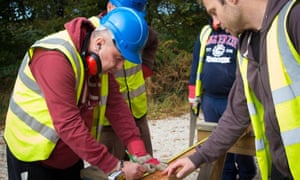
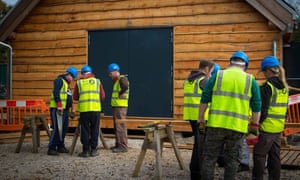
At first glance it’s just another construction site. On one side of the yard, a group of men in hard hats stand around a large electric saw, watching the foreman demonstrate how it works. Further along, another group are wielding hand saws. The sound of banging and clashing comes from inside a half-finished wooden structure.


But this isn’t your average building site and these are no regular builders. They’re patients on day release from three low secure mental health facilities within the Abertawe Bro Morgannwg University (ABMU) health board in Wales.


The group is here at Down To Earth, a not-for-profit education organisation based near Swansea, as part of the Building Community project, funded by the Big Lottery’s people and places grant, which aims to engage hard to reach and vulnerable adults and young people through participation in practical, educational and community-based activity.


Paul, who didn’t want to tell the Guardian his surname, is one of today’s workers. It’s his fifth time on site, and so far he’s enjoyed learning skills such as sawing, measuring and team work, all of which are designed to boost confidence and mental wellbeing.


“It makes me feel better,” he says. “I feel like I’ve done something worthwhile.”


His occupational therapist technician, Freya Jones, from the Taith Newydd mental health unit at Glanrhyd hospital, says it’s having a huge benefit on the group. “I’ve really seen an improvement in confidence in the guys since they’ve been here.”


construction project


‘Wellbeing can be delivered through an educational and community regeneration approach …’ Composite: Down to Earth

This anecdotal evidence is supported by clinical research funded by ABMU and Swansea University, which is measuring the effectiveness of this kind of work on both psychological and physiological wellbeing, as well as the healthcare impact of the project’s approach.


“Wellbeing and healthcare isn’t just doing some gardening or singing in a community choir,” says Down To Earth founder Mark McKenna.


“We want to show that wellbeing can be delivered through an educational and community regeneration approach, so you don’t separate out healthcare from education or healthcare and education from community regeneration. It’s an integrated, cross-sector approach.”


Another study is being undertaken with a group of brain injury patients from Morriston hospital in Swansea. In their case, the emphasis is on neuro-rehabilitation, with four factors under consideration: depression and anxiety levels, quality of life and wellbeing. In all four areas, the results have been significant and positive.


Alan Gee is a prime example of the project’s success. Just over three years ago, the 56-year-old father of four fell from a height while cleaning the stables at his home in Pembrokeshire. He landed headfirst on the concrete floor, fracturing his skull in 12 places.


Less than a fortnight later he was discharged from hospital, but the recovery process was only just beginning. Battling memory loss, slow mental processing, fatigue and mood swings, Gee spent a year doing little more than lying on the sofa, heavily medicated with painkillers.


Then, in 2014, he was referred to Down To Earth and joined the first group of brain injury patients to work on the construction of the training centre. The experience is one he believes transformed his life.


building project


Everyone in the project hopes it will be the start of a new way of providing practical community-based healthcare solutions. Photograph: Down to Earth

“It’s like coming in and having an arm put round you and someone saying it’s alright,” he says. “People understood. A lot of people with serious brain injury become defined by it. People stick them in a box. Projects like this get you out of that box. You become the new you – you don’t have to be ‘the brain injury person’.”


His neuropsychologist, Dr Zoe Fisher, has nothing but praise for the work Down To Earth is doing.


“It’s really bridging the gap between the health service and the community,” she says. “Usually, we’re confined to a hospital; if you don’t have access to real life situations, you can’t help people through them.


“You can’t do neuropsychology to someone, you do it with them. There’s no them and us in this project, everybody just gets involved. It helps us achieve the same objectives in a more holistic way than in the hospital.”


Everyone involved in the project hopes it will be the start of a new way of providing practical community-based healthcare solutions – including Gee’s wife, Michelle.


“It wasn’t just somewhere Alan came to spend some time,” she says. “The way he was when he came home each time, to me that growth was rapid. We could start to see him finding himself again.


“This shouldn’t be seen as alternative; it’s the future. It has to be. Medication is fantastic and it has a time and a place, but it doesn’t create the future.”


Join the Healthcare Professionals Network to read more pieces like this. And follow us on Twitter (@GdnHealthcare) to keep up with the latest healthcare news and views.


Construction project rebuilds lives after brain injury and mental illness

1 Mayıs 2014 Perşembe

How a tiny African recycling project tackles a mountainous rubbish dilemma

Waste and sources in the United kingdom has now evolved into a mature business – employing 1000′s, turning in excess of billions of pounds, encompassing several disciplines and recognised as a vital element of a potential circular economy. But what was it like forty or so many years ago when recycling and reuse was something promoted by a few lone voices against a bulk that noticed nothing incorrect with landfilling most of our waste, in which littering was much more acceptable?


I have lately returned from a journey to the west African states of the Gambia where I spent some time with Isatou Ceesay, founder of a revolutionary neighborhood recycling undertaking, the Njau Recycling and Cash flow Generation Group (NRIGG). And, as in the Uk in the 1970s and 1980s, it is neighborhood-based groups top the way. Few components of the nation receive a municipal waste assortment service, let alone a recycling services, so it is up to communities to treatment this.


Considering that 1997 Ceesay has been doing work with communities across the small west African state to address not only the environmental influence of unregulated waste disposal but also to offer cash flow to what now amounts to above one hundred females. NRIGG is primarily based in four separate communities across the nation – the members collect the materials themselves and transport it by hand to their centre, which is typically just somebody’s compound. Ceesay has hit that elusive sweet spot, offering jobs and livelihoods but also enhancing the surroundings.


Her mom thinks she’s mad. Why must she want to commit her life dealing with other people’s rubbish? But she sees what these around her couldn’t – that the population was surrounded by ever growing mountains of waste, with a pressing require for much better management of the domestic waste which is both dumped in unregulated landfill or, worse, burnt compounds.


Waste heaped up near a bus-stop in West Africa
Waste heaped up close to a bus-end in west Africa. Photograph: Ahmed Jallanzo/EPA

The affect of unregulated waste is manifold and properly understood – from the disease connected with the blocking of drains by the ubiquitous plastic bags provided out freely with even the smallest obtain, to the result on air high quality of uncontrolled burning of waste (again, largely plastic), as effectively as the impacts of landfill gasoline from uncontrolled landfills. And this is prior to you even consider into account the visual impacts of uncontrolled littering is considered – important to a country like the Gambia where tourism accounts for around a fifth of GDP.


Ceesay’s concern is primarily for people that deal with their very own waste, and she aims to assist them to do it far better. Her crucial aim is to cease the burning very first and foremost, top with a message of waste prevention, especially focusing on plastic, followed by promotion of reuse and implementation of recycling schemes.


The uncontrolled burning of plastic must be regarded as one particular of the wonderful environmental well being hazards of our time. It is connected with a variety of really harmful pollutants, from carbon monoxide, which affects mental perform, to dioxins and furans that result in cancer and affect immune and reproductive technique and are persistent in the surroundings. It is also connected with contaminants and other volatile organic compounds that result in cancer and respiratory sickness, to asthma. In brief, it’s a public well being nightmare.


Meanwhile a lot of of the municipal companies taken for granted in the Uk (including simple waste disposal) simply do not exist in the Gambia. Outdoors of a handful of urban locations, it is entirely down to communities to deal and control with their very own waste. This is a frequent story across the creating planet, with about three billion individuals residing with out any formal waste management system. The influence on wellness, environment and high quality of existence stays unmeasured.


But what does a single do in a nation the place there is very minor waste disposal infrastructure, allow alone recycling infrastructure? Nicely, you develop your very own. And in their four communities, NRIGG have produced total lifestyle cycles for a selection of typical supplies. They have devised their personal separation program, with organics, paper, plastic, metals and glass and produced, in which it can, its very own end markets.


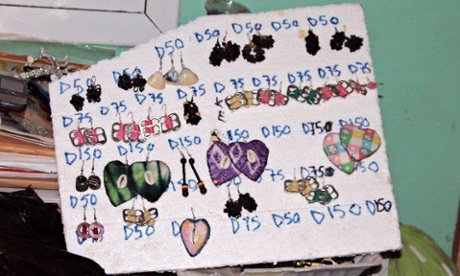
Property composting training is given to people communities where schemes are set up, answering a demand for low cost, substantial good quality organic fertiliser. There are some existing markets for metals and these are separated and offered to traders. Not only for metals, Ceesay has had to come up with ways of turning the resources from waste into wealth. Plastics are separated and stored to be up-cycled into every thing from robust, lengthy life bags, mats, purses. Rubber is turned into necklaces. Previous cassette and video tapes are even woven into purses. This is combined with other non-waste actions, which includes honey manufacturing, production of waxes, lotions and batiks. Even however these are non-waste connected, they help the girls who can then proceed to provide and control the recycling schemes.


Earrings made from recycled waste.
Earrings manufactured from recycled waste. Photograph: Mike Webster

These are also combined with a range of other schemes that support the women strategy their incomes during the yr, save for the 3-month “hungry gap” at the finish of the yr, when family farms aren’t producing, and develop their organization capabilities. This is vital, simply because as several neighborhood recycling schemes at house as effectively as abroad have proven, sustaining these schemes is possibly the hardest component.


But issues remain. If the scheme could increase to this kind of a point the place containers of materials could be bulked and passed on to the international market place, new and more material streams could be developed. Somewhat strangely it seemed to me, the main dilemma waste stream faced by NRIGG was how to deal with glass. In the Uk, glass has usually been considered possibly the best of all supplies to collect, but with no regional end markets and a lack of scale to entry international markets, it is a problem in the Gambia. This perhaps points to the need for little- to medium-scale technologies that can reprocess such resources. Could this be a gap in the marketplace?


The other challenge is that of a comprehension gap by individuals who could otherwise support. The Gambian authorities look disinterested in delivering companies outdoors a handful of tourist regions, with a focus on clearing materials and dumping it in poorly regulated landfill, unaware of the massive financial and employment positive aspects associated with greater recycling (probably comparable to the present Uk administration?). In a country in which the 2013 per capita GDP was $ 512 (£303), the economics of labour intensive sorting and reprocessing are certainly a lot more favourable?


And this is a scheme whose time has come. The require for far better waste management is pressing, as urban populations expand, incomes enhance and waste arisings develop, modify, grow to be harder to deal with and current a higher wellness risk. There are also jobs in it.


But the pioneering factor is the two the opportunity but also the challenge – as soon as Ceesay has convinced her mother, she nonetheless has to persuade an indifferent government and public. But it is an fascinating time – this is the commence of anything that can only increase.


Mike Webster is operations manager at London Local community Assets Network, and has worked in the resource and recycling sector for two decades.


Interested in obtaining out a lot more about how you can reside greater? Get a look at this month’s Live Better Challenge here.


The Reside Far better Challenge is funded by Unilever its target is sustainable residing. All material is editorially independent except for pieces labelled advertisement characteristic. Uncover out a lot more right here.


How a tiny African recycling project tackles a mountainous rubbish dilemma

25 Şubat 2014 Salı

Remote manage – why the government has hit pause on the Care.information project | Esther Addley

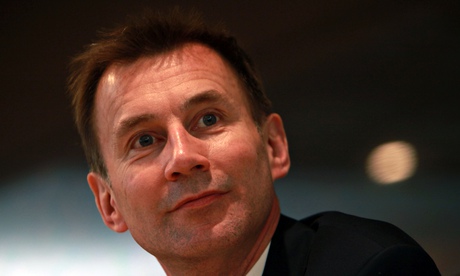
Jeremy Hunt

Jeremy Hunt: he advised the Commons that it was appropriate for the organisers of the new Care-data scheme to delay its introduction. Photograph: Richard Gardner/Rex


Sharing overall health data is immensely essential, Jeremy Hunt reminded MPs. It was by learning lots of people’s healthcare information that medical doctors learned thalidomide was hazardous, that MMR was proved to have no hyperlink to autism, that we found smoking triggered cancer. And that was why the government had rummaged down the back of the sofa, identified the remote manage, and pressed pause on its prepare to gather the nation’s GP data.


It had been “completely proper” for the organisers of the new Care.information scheme to pause its rollout, the well being secretary informed the Commons. This would let them to put the kettle on, nip to the loo and win round the public to the prospect of their intimate medical info getting uploaded to a central database to be shared with outside bodies managed by men and women who seemed not completely clear what they were up to.


They like to get tiny comfort breaks at the Division of Health. You will recall that, in 2011, following extreme opposition from overall health experts, this government’s health bill was also paused to let a “listening workout” that led to the re-drafting of the bill. (Individuals who listened especially closely might even have heard the subsequent tap on the shoulder of Hunt’s predecessor Andrew Lansley, and Cameron’s whispered “You happen to be fired”.)


Labour leapt at the initial mention of “the pause”. “When we had a pause prior to, the result was a very great Overall health and Social Care Act!” countered Hunt. Shadow well being secretary Andy Burnham set his face to “scoff”. When Hunt was appointed, he had declared it his mission to have a information revolution but “the only revolution he has designed,” stated Burnham, “is a developing public revolt” towards the Care.data scheme.


This plainly could not stand. The opposition weren’t the only ones who could fling somewhat lame, pre-rehearsed insults across the dispatch box. “The shadow secretary of state searches for NHS crises with about as much achievement as George Bush looking for weapons of mass destruction!” stated Hunt, rather proud of that 1. Burnham flapped a copy of the “useless glossy leaflet” that suggested folks on their correct to opt out, the 1 the government explained had been obtained by each home but demonstrably had not.


Hunt flapped back: it was a bit wealthy for Labour to complain about the approach for opting out when the previous government hadn’t provided an opt-out selection at all. Happily, a number of hours later the opposing sides discovered typical ground, when MPs on the cross-party overall health choose committee united to deliver a spirited kicking to the Department of Well being, NHS England and the Wellness and Social Care Details Centre, the bodies overseeing the Care.information rollout. Why had the process been commenced with no any code of practice in place, asked Conservative Charlotte Leslie. “It appears like you have got a half-constructed machine.” Labour’s Rosie Cooper explained she had opted out of the scheme “Why? Simply because I never believe in you and I will not contemplate myself a commodity to be bartered close to by you.” By no means thoughts pressing pause, sounds like somebody needs a screwdriver and basic operating guidelines.


Remote manage – why the government has hit pause on the Care.information project | Esther Addley