purpose' etiketine sahip kayıtlar gösteriliyor. Tüm kayıtları göster

16 Ocak 2017 Pazartesi

Life’s Purpose

I often contemplate the purpose of life.


Why am I here? What’s the point? Is life worth living? I have the ability to take my own life, why don’t I?


You see. If I were to jot down some things about myself and my life at this stage, I really could be looked at as a failure thus far.


I sure feel like one at times when I consider where I am at.


In fact, here’s a short list of where I’m at at 42 (I just turned 42 on January 14th):


  • I live in the basement apartment of the home of my mom and stepdad, for free. Why free? Because my income is sporadic, and the money I do get is spent digging out of the hole I created for myself. So I suspect they feel bad for me and therefore haven’t asked me for any rent money yet. I have been here for 5 weeks so far (this time) with no clear vision of my next residence.

  • I have 4 children from 3 different moms (as well as a stepson).

  • Only 2 of my children I see regularly, and I don’t treat them as well as they deserve to be treated.

  • I am in debt about $ 50,000 with $ ’s tacked onto that each and every month.

  • I married for the first time when I was 40, and I haven’t respected the marriage the way I dreamed I would. My wife and I are back to “dating, ” and she is reluctant to even consider that level of relationship with me. I don’t blame her, but I’m certainly appreciative!

  • I have no real friends. People had called me their friend in the past when they needed money, or a place to stay, or needed help getting a website online. Those I did help vanished afterwards. Others that seemingly never wanted anything from me did need a shoulder to cry on and I can only take so much of that, to be honest. Others I expected more from than they could give. I guess I’m not entirely sure how to be someone’s friend, and I haven’t honed in on the definition of the word I suppose.

  • My relationship with my siblings is non-existent, and when it did exist, it was primarily a smile-and-nod relationship.

  • I don’t speak to my father anymore at all (my choice).

  • I have an inflammation issue that is very challenging.

  • Emotionally, I feel like an infant a lot of the time.

So, financially… socially… and health-wise, things suck for me it would appear!


That list certainly isn’t looked upon with envy I would imagine.


It has been my best thinking that has got me to where I am at


I have had a “woe is me” list like above all my life. It used to have items like: “I am balding way too early!” It’s funny how things stop mattering after awhile.


One thing I figured out though is… it could always be worse, and I am in control.


I can choose each day how I look at things. And I can choose how I react to things.


While I haven’t yet determined my real purpose, I do know why I choose to stay on this Earth.


To be honest, up until a decade ago, it was fear of the unknown that has prevented me from successfully taking my own life.


My responsibility to my children drives my life’s purpose


Now, it’s my responsibility to my children that keeps me getting up in the morning. I feel that leaving them would be much worse (for them) than sticking around.


And with that, I want them to genuinely *want* me around.


You see… for much of my life I had a relationship with my parents primarily out of necessity. I felt hurt by them, and their negativity was never helpful.


I am determined to have a relationship with my children that is loving and full of joy.


I want them to look to me for advice and guidance.


I want them to see me as someone that is a joy to be around.


I want them to feel a sense of security when they are with me.


So, in turn, that encourages me to find my health again. That encourages me to find my financial security again… to find my independence.


Which in turn, I suspect, will open up healthy social situations for me.


Which in turn will open my heart to more love, and perhaps bring some resemblance of a family back in my life with my wife and newest arrival Oliver (currently just over 6 months old!).


Maybe it’ll be an uphill battle for me.


I’m worth it, because my kids are worth it.


Wish me the best!


Life’s Purpose

17 Temmuz 2014 Perşembe

At life"s end: dying painlessly and peacefully is the purpose of most

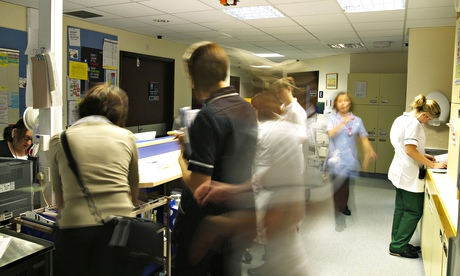
NHS hospital ward reception

An NHS ward reception. Medical doctors in the United kingdom will not pace death, says a health-related director at Marie Curie Cancer Care. Photograph: Pulse Image Library/PA


A great death, like an straightforward expertise of childbirth, is not one thing that takes place to everybody, and it is not possible to predict who will slip away painlessly and at peace and who will locate the approach far harder.


“It is a lottery,” says Ann Munro, a clinical ethicist who works with the dying and people who care for them in a large NHS hospital. “You never really know what it is going to be like.”


The top concern of the dying is that they do not want to be in pain – then that they do not want to be a burden and thirdly, that they do not want to be alone. The 1st and last of those are often difficult to accomplish.


Morphine is no longer the only drug. Palliative care doctors now have a selection of medications and will use combinations to accomplish the greatest feasible handle.


An argument utilized by many against permitting assisted dying – the topic of a lengthy-awaited debate in the Lords on Friday – is that discomfort management can be achieved. But scientific studies show it is full in only 60-70% of instances. There are neurological pains and bone pains when people are dying that are tough to relieve.


“Once out of the regular [drug] regime we don’t know which combination to use subsequent for this patient,” says Bill Noble, medical director of the Marie Curie Cancer Care and a palliative care physician for more than 30 many years. “If you have not acquired full soreness manage it isn’t necessarily because the physician doesn’t know what he is carrying out. There are individuals who by no means have their ache relieved.”


Dying can also involve a loss of control and dignity, which some find quite tough. There are issues that occur as the body packs up that the medical doctors can do minor to alleviate. Munro talks of the bowel perforation skilled by some ovarian and bowel cancer sufferers, which can lead to vomiting faeces.


A single of her early individuals, a frail and elderly lady, was passing faeces through her vagina. “She mentioned to me, ‘I don’t want to be right here any a lot more. I want this to quit. What can you do about it?’ She identified it humiliating and grim and she was going to die.”


But surgery is not an option, and all that hospital staff can do is try out to aid individuals to cope with a poor predicament.


In other components of Europe, as in the Uk, medical professionals will not velocity death they will occasionally put patients who are suffering to rest and not wake them up again. “There are cultural differences inside of Europe,” says Noble. “The cultural norm in the north is to die awake and in the south to die asleep.”


He adds: “Some people will literally say I don’t care what you do – I do not want any ache. Others will say I don’t care about the ache, I just want to be awake and in control. Medical professionals right here will not put a dying particular person to rest. We feel that is poor practice.”


The hospice movement provides exemplary palliative end-of-daily life care to these fortunate ample to be ready to entry it. These days hospice teams assist folks die in their personal houses as well. But handful of folks with out a cancer diagnosis get palliative care: only 20% in Scotland, according to investigation by Edinburgh University and Marie Curie Cancer Care last September.


Most individuals end up in a bed in an overstretched hospital exactly where doctors committed to saving lives often struggle with helping these whose lives are ending.


Surveys display bereaved family members are a lot less pleased with the care their loved one receives whilst dying in hospital than at house or in a hospice. Part of that, says Munro, is simply because they do not get the care they need as well. Hospices appear right after the bereft as properly as the dying.


“It is genuinely, really, hard to do it in a hospital. That is often why the people who are left report these things in a extremely traumatised way,” she says.


Close friends and family members will remember vividly the undesirable instances, when the patient was in discomfort, even if it lasted a short whilst and was then relieved.


Most men and women say they would like to die at property, and most folks do not get the possibility. Munro says there can be also rosy a image of what death at property does indicate.


“I have been at residence deaths and managed them, and they have been absolutely stunning and pretty, but it is a bit like residence births. You can make as a lot of birth plans as you like, but issues don’t always function out like that.”


Mayur Lakhani, a GP and chair of the Nationwide Council for Palliative Care, says people require to make their wishes recognized in advance.


The Sue Ryder charity, which provides hospice care in 13 centres and the neighborhood, also actively teaches doctors how to raise the difficult subject with their patients.


“Seventy-five per cent of deaths can be anticipated at about twelve months,” Lakhani says. “The clues are when somebody is investing most of their time in bed, when they have a good deal of hospital admissions, when the therapy is not operating.


In his part of Leicestershire palliative care in the neighborhood is nicely established. “They get a hospital bed and a special mattress to stop bedsores into the house and a commode and an oxygen cylinder and drugs like morphine. The NHS is brilliant in the way it responds when it goes nicely, but it has to be recognized in advance,” he says.


Some drift into unconsciousness in the last days, barely eating and consuming, sleeping a lot more and much more right up until they no longer wake up. Lakhani says they also can have surprising moments of lucidity, when they are awake and alert. “I have definitely noticed them. Next of kin will describe them as effectively.”


Noble says residence deaths even make sense financially. A examine in an English town where individuals acquired care at home discovered it cost £3,000 a head – significantly less than hospital care, not far more.


At life"s end: dying painlessly and peacefully is the purpose of most

At life"s finish: dying painlessly and peacefully is the purpose of most

NHS hospital ward reception

An NHS ward reception. Medical professionals in the Uk will not speed death, says a health-related director at Marie Curie Cancer Care. Photograph: Pulse Picture Library/PA


A very good death, like an straightforward experience of childbirth, is not anything that occurs to everyone, and it is not possible to predict who will slip away painlessly and at peace and who will discover the approach far harder.


“It is a lottery,” says Ann Munro, a clinical ethicist who performs with the dying and people who care for them in a big NHS hospital. “You in no way truly know what it is going to be like.”


The best concern of the dying is that they do not want to be in soreness – then that they do not want to be a burden and thirdly, that they do not want to be alone. The first and last of those are occasionally challenging to achieve.


Morphine is no longer the only drug. Palliative care doctors now have a assortment of prescription drugs and will use combinations to accomplish the very best feasible manage.


An argument employed by numerous towards permitting assisted dying – the topic of a prolonged-awaited debate in the Lords on Friday – is that soreness management can be achieved. But studies show it is complete in only 60-70% of circumstances. There are neurological pains and bone pains when people are dying that are tough to relieve.


“Once out of the regular [drug] regime we will not know which mixture to use next for this patient,” says Bill Noble, medical director of the Marie Curie Cancer Care and a palliative care medical professional for far more than 30 many years. “If you have not acquired complete ache handle it isn’t always due to the fact the physician isn’t going to know what he is undertaking. There are individuals who in no way have their soreness relieved.”


Dying can also involve a loss of manage and dignity, which some discover extremely challenging. There are factors that take place as the body packs up that the physicians can do tiny to alleviate. Munro talks of the bowel perforation seasoned by some ovarian and bowel cancer individuals, which can lead to vomiting faeces.


A single of her early individuals, a frail and elderly lady, was passing faeces by way of her vagina. “She mentioned to me, ‘I don’t want to be here any more. I want this to quit. What can you do about it?’ She found it humiliating and grim and she was going to die.”


But surgical treatment is not an alternative, and all that hospital workers can do is try out to assist individuals to cope with a bad situation.


In other elements of Europe, as in the Uk, medical doctors will not pace death they will at times put patients who are suffering to rest and not wake them up again. “There are cultural distinctions inside of Europe,” says Noble. “The cultural norm in the north is to die awake and in the south to die asleep.”


He adds: “Some folks will actually say I do not care what you do – I don’t want any pain. Others will say I will not care about the pain, I just want to be awake and in control. Physicians right here will not place a dying man or woman to sleep. We think that is bad practice.”


The hospice movement gives exemplary palliative finish-of-lifestyle care to these lucky ample to be in a position to access it. These days hospice teams aid folks die in their own residences too. But couple of individuals with out a cancer diagnosis get palliative care: only 20% in Scotland, in accordance to investigation by Edinburgh University and Marie Curie Cancer Care last September.


Most folks finish up in a bed in an overstretched hospital the place physicians committed to conserving lives often struggle with helping those whose lives are ending.


Surveys demonstrate bereaved family members are a good deal less satisfied with the care their loved a single receives although dying in hospital than at residence or in a hospice. Element of that, says Munro, is since they do not get the care they want as well. Hospices appear after the bereft as well as the dying.


“It is genuinely, genuinely, challenging to do it in a hospital. Which is typically why the men and women who are left report these items in a really traumatised way,” she says.


Close friends and relatives will keep in mind vividly the bad times, when the patient was in soreness, even if it lasted a brief even though and was then relieved.


Most men and women say they would like to die at house, and most individuals do not get the likelihood. Munro says there can be too rosy a image of what death at property does imply.


“I have been at property deaths and managed them, and they have been totally beautiful and pretty, but it is a bit like house births. You can make as several birth programs as you like, but things do not always operate out like that.”


Mayur Lakhani, a GP and chair of the Nationwide Council for Palliative Care, says folks need to make their wishes recognized in advance.


The Sue Ryder charity, which gives hospice care in 13 centres and the community, also actively teaches physicians how to raise the tough topic with their individuals.


“Seventy-5 per cent of deaths can be anticipated at about twelve months,” Lakhani says. “The clues are when somebody is spending most of their time in bed, when they have a good deal of hospital admissions, when the therapy is not functioning.


In his element of Leicestershire palliative care in the local community is nicely established. “They get a hospital bed and a specific mattress to prevent bedsores into the property and a commode and an oxygen cylinder and medication like morphine. The NHS is brilliant in the way it responds when it goes nicely, but it has to be acknowledged in advance,” he says.


Some drift into unconsciousness in the final days, barely eating and consuming, sleeping a lot more and more till they no longer wake up. Lakhani says they also can have surprising moments of lucidity, when they are awake and alert. “I have surely observed them. Next of kin will describe them as nicely.”


Noble says house deaths even make sense financially. A review in an English town in which individuals acquired care at property found it expense £3,000 a head – much less than hospital care, not much more.


At life"s finish: dying painlessly and peacefully is the purpose of most

At life"s finish: dying painlessly and peacefully is the purpose of most

NHS hospital ward reception

An NHS ward reception. Medical doctors in the United kingdom will not velocity death, says a medical director at Marie Curie Cancer Care. Photograph: Pulse Picture Library/PA


A very good death, like an effortless knowledge of childbirth, is not something that happens to everybody, and it is unattainable to predict who will slip away painlessly and at peace and who will find the approach far harder.


“It’s a lottery,” says Ann Munro, a clinical ethicist who operates with the dying and individuals who care for them in a huge NHS hospital. “You never genuinely know what it is going to be like.”


The prime concern of the dying is that they do not want to be in pain – then that they do not want to be a burden and thirdly, that they do not want to be alone. The 1st and last of people are occasionally difficult to obtain.


Morphine is no longer the only drug. Palliative care medical doctors now have a range of medications and will use combinations to attain the ideal feasible handle.


An argument utilized by many against permitting assisted dying – the topic of a lengthy-awaited debate in the Lords on Friday – is that ache handle can be accomplished. But studies demonstrate it is full in only 60-70% of cases. There are neurological pains and bone pains when men and women are dying that are hard to relieve.


“As soon as out of the common [drug] regime we never know which combination to use following for this patient,” says Bill Noble, medical director of the Marie Curie Cancer Care and a palliative care doctor for a lot more than thirty many years. “If you have not got comprehensive soreness manage it isn’t always simply because the medical doctor does not know what he is doing. There are individuals who by no means have their discomfort relieved.”


Dying can also involve a loss of management and dignity, which some find very tough. There are factors that happen as the physique packs up that the medical professionals can do small to alleviate. Munro talks of the bowel perforation knowledgeable by some ovarian and bowel cancer individuals, which can lead to vomiting faeces.


One of her early patients, a frail and elderly lady, was passing faeces through her vagina. “She explained to me, ‘I will not want to be right here any more. I want this to cease. What can you do about it?’ She discovered it humiliating and grim and she was going to die.”


But surgical procedure is not an alternative, and all that hospital workers can do is try out to support individuals to cope with a undesirable scenario.


In other elements of Europe, as in the United kingdom, doctors will not speed death they will occasionally place individuals who are suffering to sleep and not wake them up once again. “There are cultural differences inside of Europe,” says Noble. “The cultural norm in the north is to die awake and in the south to die asleep.”


He adds: “Some people will actually say I don’t care what you do – I don’t want any soreness. Other individuals will say I never care about the pain, I just want to be awake and in control. Medical doctors right here will not place a dying particular person to sleep. We believe that is poor practice.”


The hospice motion offers exemplary palliative finish-of-lifestyle care to these fortunate adequate to be capable to entry it. These days hospice teams aid individuals die in their very own homes as well. But handful of folks with no a cancer diagnosis get palliative care: only 20% in Scotland, in accordance to study by Edinburgh University and Marie Curie Cancer Care final September.


Most individuals end up in a bed in an overstretched hospital in which doctors committed to saving lives often struggle with assisting individuals whose lives are ending.


Surveys display bereaved family members are a lot much less pleased with the care their loved a single receives whilst dying in hospital than at property or in a hospice. Part of that, says Munro, is due to the fact they do not get the care they want too. Hospices search soon after the bereft as nicely as the dying.


“It is genuinely, truly, tough to do it in a hospital. That is often why the individuals who are left report these issues in a extremely traumatised way,” she says.


Friends and family members will keep in mind vividly the undesirable times, when the patient was in pain, even if it lasted a quick even though and was then relieved.


Most individuals say they would like to die at house, and most men and women do not get the opportunity. Munro says there can be too rosy a picture of what death at home does mean.


“I have been at property deaths and managed them, and they have been completely stunning and lovely, but it is a bit like residence births. You can make as several birth plans as you like, but factors will not often work out like that.”


Mayur Lakhani, a GP and chair of the Nationwide Council for Palliative Care, says men and women need to make their wishes acknowledged in advance.


The Sue Ryder charity, which offers hospice care in 13 centres and the community, also actively teaches doctors how to raise the difficult topic with their patients.


“Seventy-5 per cent of deaths can be anticipated at about twelve months,” Lakhani says. “The clues are when someone is investing most of their time in bed, when they have a good deal of hospital admissions, when the therapy is not working.


In his portion of Leicestershire palliative care in the community is nicely established. “They get a hospital bed and a particular mattress to avert bedsores into the home and a commode and an oxygen cylinder and medicines like morphine. The NHS is brilliant in the way it responds when it goes nicely, but it has to be acknowledged in advance,” he says.


Some drift into unconsciousness in the final days, barely consuming and drinking, sleeping much more and much more until they no longer wake up. Lakhani says they also can have surprising moments of lucidity, when they are awake and alert. “I have undoubtedly observed them. Up coming of kin will describe them as properly.”


Noble says residence deaths even make sense financially. A examine in an English town exactly where sufferers obtained care at property located it expense £3,000 a head – significantly less than hospital care, not more.


At life"s finish: dying painlessly and peacefully is the purpose of most

31 Mart 2014 Pazartesi

Disease professionals warns United kingdom defences "not match for purpose"

The Department of Health has approved proposals from the Health Research Authority to streamline clinical trials, but experts have argued that more work is needed within the NHS to fast-track trials in an emergency.


They say that an emerging infection like bird flu, Sars or pandemic flu can spread across Britain and burn itself out within eight weeks.


But doctors hoping to test drugs or other treatments for patients can face delays of more than a year before they can recruit a single case to a trial.


It means doctors have little hope of learning which treatments are effective during an outbreak because patients will have recovered or died before the trial can start.


Calling for an overhaul, Farrar said the emergency trials needed to start within 24 hours of an epidemic emerging.


“Getting this information early on is critical to inform what we do and how we treat patients. Without it we are completely in the dark,” he said.


Pandemic flu is regarded as the most serious emergency risk that Britain faces, but other infections, including drug-resistant diseases, are also a serious threat.


Clinical trials need approval from the NHS and other bodies before doctors can recruit patients, but the process faces delays at almost every stage.


Researchers must apply for grants, submit study protocols and patient consent forms, gain ethical approval, find hospitals with the right facilities, equipment, supplies, staff and patients and then sign legal agreements with them all.


The long-winded process is designed to be thorough to protect patients and hospitals from litigation. Trials can go seriously wrong, as happened in 2006 when six young men nearly died in a drug trial at Northwick Park hospital in north London.


The 2002 Sars pandemic killed 774 people and infected more than 8,000 but had the virus not been contained it could have killed far more, experts said.


The reason the death toll was not higher was that patients were most infectious when they were most sick, so isolating the ill stopped the virus spreading.


“There is no doubt we were very lucky with Sars,” said Farrar. “But nobody knows where it has gone and we don’t have a vaccine. If it were to come back tomorrow and I got infected, the doctor treating me wouldn’t have a clue which drug, if any, to give me.”


A 2011 report from the Academy of Medical Sciences (AMS) raised major concerns about delays to clinical trials. It quoted Cancer Research UK data that found the typical time taken to launch a trial and treat the first patient was 621 days.


Sir Michael Rawlins, president of the Royal Society of Medicine, who chaired the report, said progress was disappointing. “It’s going in the right direction, but it’s painfully slow,” he told the newspaper.


The Health Research Authority was set up in response to the AMS report to streamline approval times. It means a simple trial could be approved within 25 days but the authority is aiming to approve emergency trials within 24 hours.


Farrar said he wanted more trials pre-approved so that doctors can start emergency tests in patients the moment an outbreak is identified.


“We need generic protocols which have been pre-approved by ethics committees and institutions at a national level,” he told the newspaper.


“All the information, from what samples to take to the forms we’d record patient data on, would be openly available. Then, in an emergency, a group that has worked on the top three or four interventions can start enrolling patients within 24 hours.


“There are groups trying to address this, but it’s nowhere near there yet.”


Disease professionals warns United kingdom defences "not match for purpose"