referrals etiketine sahip kayıtlar gösteriliyor. Tüm kayıtları göster

5 Ocak 2017 Perşembe

NHS groups "paying millions to private firms that block GP referrals"

NHS organisations are paying millions of pounds to private firms that stop patients being referred to hospital by their GPs, an investigation has found.


Controversial referral management centres are used by some clinical commissioning groups (CCGs) to scrutinise patient referrals to hospitals by family doctors.


Supporters say they can reduce inappropriate referrals, saving the NHS money, but critics argue that adding an extra layer of scrutiny risks delaying diagnosis. There is also doubt over the effectiveness of such schemes.


In an investigation, the British Medical Journal (BMJ) sent freedom of information requests to all 211 CCGs in England. Of the 184 that responded, 72 (39%) said they commissioned some form of referral management scheme.


Almost a third (32%) of the schemes are provided by private companies, while a further 29% are provided in-house and 11% by local NHS trusts. Some 69% of the CCGs with schemes gave details of operating costs. These CCGs combined have spent at least £57m on schemes since April 2013.


Most CCGs were unable to provide evidence showing the scheme saved money. Only 14% could show that the scheme had saved more cash than it had cost to operate, while 12% showed that their schemes had not saved money overall.


Meanwhile, 74% of CCGs (53 groups) failed to supply figures to show whether any money had been saved, the BMJ reported.


Some CCGs did not collect data on savings, some said their referral scheme was designed not to save money but to improve the quality of referrals, and others declined to disclose details of savings on the grounds of commercial confidentiality.


Overall, there were 93 referral management schemes in operation across 72 CCGs, with some CCGs having more than one.


Dr Richard Vautrey, deputy chairman of the British Medical Association’s GPs committee, told the BMJ: “[CCGs] are leaping at these schemes without any clear evidence of benefit. They are just hopeful that it might reduce their costs.


“It is a very short-term approach to healthcare management. We need to see much more evaluation … and not just keep making the same mistakes year after year. As public bodies, there should be an expectation on every CCG to account for what it is doing.”


Vautrey said some schemes were helpful because they gave GPs rapid access to advice from local specialists.


Graham Jackson, co-chair of NHS Clinical Commissioners, the membership organisation representing CCGs, said referral management was only one way of managing demand for services.


“In many cases they provide a useful and effective role which is more than a redirection service,” he said. “CCGs will balance the cost of commissioning with the benefit they provide to GPs and patients in terms of peer review, education, caseload management and choice.”


In October, Roberta Blackman-Woods, Labour MP for City of Durham, criticised a local scheme to screen referrals for conditions including cardiology, gynaecology and gastroenterology.


The North Durham CCG has awarded a contract to the private firm About Health to manage referrals.


NHS groups "paying millions to private firms that block GP referrals"

9 Ağustos 2016 Salı

How GPs in London are reducing hospital referrals

Charlotte Levitt, a GP based in south London, faced a dilemma. One of her patients was taking a drug that had just come onto the market and his kidney function had started deteriorating. Should she refer the patient to a consultant, or take him off the drug?


Whereas many GPs might automatically make a referral, Levitt, referral management lead at Wandsworth clinical commissioning group (CCG), was able to resolve the question quickly. She logged on to Kinesis, web-based software from Cloud21 that enables GPs to confer with local hospital consultants. In this case, the consultant advised further blood tests: if they were abnormal, the patient should be referred. If not, the drug was likely to be the problem.


Last year, there were 13.6m GP referrals in England, a 5% rise on the previous year, representing an increasing cost burden on CCGs. A 2009 report from the NHS Institute for Innovation and Improvement found that up to 65% of patients referred to outpatient specialty clinics were discharged with “no significant pathology detected”, meaning many were unnecessary.


Related: I’m your GP – and your prescriber, counsellor, detective and friend


Four years ago, Wandsworth CCG implemented Kinesis across its 43 GP practices as part of a wider plan to manage referrals more effectively. If a GP isn’t sure whether to refer a patient, or simply wants to ask a consultant for advice, they log on to the Kinesis website and choose the consultant or specialism they are interested in. The GP submits their question, attaching any relevant documents, ECGs, photographs or videos, which the consultant receives via the NHS’s secure N3 network (though the software can also run on Microsoft’s Azure cloud platform).


The first local hospital to come on board was St George’s, but since then Chelsea and Westminster, Guy’s and St Thomas’s and Kingston have also joined. Consultants are not obliged to take part, but at St George’s, most specialties are represented on the system. As part of hospitals’ agreement with the CCG, the consultant is required to reply within 24 hours. If a consultant is off sick or on holiday, it won’t be possible to message them.


In 2015/16, Wandsworth GPs sent 3,993 requests via Kinesis. Of those, 48% did not lead to a referral, saving the CCG £276,730, if we assume that without the ability to confer with the consultant, the GP would have referred the patient.


So what are the advantages for consultants? Simon Hudson, founder director of Cloud21, says the most immediate benefit is that, because routine cases can now be dealt with over Kinesis, they have “slightly more interesting and more complex patients turning up at outpatient appointments”. Longer term, he says, the hospitals save money and see patients more quickly.


Some consultants worry that they will be overwhelmed with requests, but Sarah Thurlbeck, a paediatric consultant at St George’s and an early adopter of Kinesis, says she receives, on average, one request a day and it takes about 10 minutes to respond. “It’s usually borderline cases,” she says. “If the child has something obviously wrong, they’re going to be sent up, but if it’s just some niggling thing, I might advise the child is watched, or I might advise some simple tests.”


Related: GPs are leading the way on NHS transformation


Thurlbeck, who does some GP teaching, has also found that it gives her a sense of what local GPs are concerned about and where they would like more training. She also likes the fact that Kinesis keeps an audit trail of questions and answers. “What you see is what was said. When you have a telephone conversation, what you say and what is heard may be two different things.”


Levitt agrees that Kinesis has been good for building relationships between hospital consultants and GPs, as well as for improving her own practice. “I might ask a weird and wonderful question,” she says. “It’s amazing how often you see that again in the future, and I don’t ask the question again because I now know the answer.”


Two years ago, Sutton CCG in south-west London implemented Kinesis, enabling GPs to confer with consultants at St Helier hospital and St George’s. Dino Pardhanani, clinical lead for Sutton CCG, uses Kinesis about twice a week and says that GPs are also using it to request MRI and CT scans from radiologists, who can authorise the request without the patient having to see a consultant. The ability to receive a quick response to a query benefits the patients too, he says. “You can reassure the patient that they’re getting input from an expert, but it’s much more streamlined.”


Hudson believes that as Kinesis is more widely adopted, its potential will grow. It could be extended to allow access to international experts, for example, while the stored anonymised conversations could be analysed to identify trends such as an emerging epidemic. Already, he says, Wandsworth CCG has noted a surprisingly high incidence of gout being discussed on Kinesis, resulting in the introduction of a dedicated gout pathway. “That’s had a direct patient impact because they get access to the care they want more rapidly,” he says.


Join the Healthcare Professionals Network to read more pieces like this. And follow us on Twitter (@GdnHealthcare) to keep up with the latest healthcare news and views.


How GPs in London are reducing hospital referrals

8 Temmuz 2014 Salı

Jeremy Hunt"s plan to shame GPs with minimal cancer referrals is not the solution | Zara Aziz

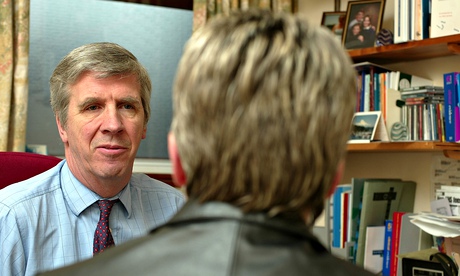
A GP in consultation with a patient.

A GP in consultation with a patient. Referral rates for cancer diagnosis will fluctuate in accordance to a variety of factors. Photograph: David Sillitoe for the Guardian


The well being secretary, Jeremy Hunt, desires to name and shame GP practices with lower cancer referral costs. The NHS Selections website will mark reduced-referral GP practices as “red”, or “green” if they refer far more. This is in response to significant variations in cancer diagnoses across England, which is becoming attributed to GPs not referring individuals early sufficient. According to figures from the Royal College of Basic Practitioners , three-quarters of individuals with cancer are referred right after one particular or two GP consultations. There is definitely room for improvement.


Several higher-danger symptoms are less difficult to refer, such as a persistent cough, a adjust in bowel routines or excess weight loss. It is the non-certain symptoms this kind of as tiredness that are typically the most demanding. Pancreatic cancer is a notoriously challenging diagnosis and can present with just malaise, reduction of appetite, new onset diabetes or back ache, all of which we see on a day-to-day basis in basic practice. Pancreatic cancer is the ninth most typical cancer in the Uk but the fifth most typical cause of cancer death.


GPs have clear tips on “two-week wait” referrals for all cancers, whereby any person who presents with specific high chance indicators or signs, known as “red flag”, ought to be referred straight away and seen in hospital within two weeks. The criteria for referral is really specific and does not consider into account a GP’s intuition or non-particular symptoms. In our practice we audit our two-week wait referrals, to guarantee first of all that the patient has been witnessed by a specialist and hasn’t been misplaced in the method and secondly, to see if a cancer diagnosis was produced. The vast bulk of our referrals are, reassuringly, not diagnosed with cancer.


Demographics also perform a large element when it comes to looking at cancer diagnosis and mortality costs. I educated as a GP in an affluent semi-rural practice and often noticed the anxious nicely. The appointments were longer, much less pressured and a lot of sufferers attended for an “MOT”. It was then that I saw my 1st malignant melanoma when a “well” patient came to have all their moles looked at. It was a quite early presentation and they made a full recovery with no spread or recurrence of the disease.


I now function in a massive urban practice with varied health beliefs. There is more deprivation and healthcare complexity and a lot of sufferers, specifically guys, will present right after weeks or months of worrying signs and symptoms. For some of our sufferers, their proximity to hospitals or cultural beliefs indicate that they will bypass GPs altogether and attend A&ampE departments for initial presentation of signs and symptoms.


Most GPs do not see plenty of new cancer diagnoses each year, however most of us will make one or two cancer referrals a day. Nationally, only 10% of two-week referrals turn out to be cancer, which is comparable to individuals referred from our practice. But we do see lots of coughs, colds, malaise, aches and pains. The danger with this “kneejerk” name and shame policy would be that we would see a sharp rise in anyone with a cough or cold getting referred. As a end result, this will rapidly saturate the capacity of cancer clinics and delay investigations. The last point that we would want is the two-week wait to improve to a four-week wait or even longer.


Statistics for every practice are presently offered on the internet for GPs and the public to appear at. GP practices are conscious if they are substantial or reduced referrers it would seem that the new proposals would include absolutely nothing but be tantamount to “naming and shaming” medical professionals. Any analysis of cancer referral prices need to seem at the patient demographics of a practice, its cancer prevalence and other parameters such as no matter whether it is an outlier in other respects. There will indeed be some GP practices that are a result in for concern, but this is normally currently apparent to commissioning groups and NHS England, and it would make much more sense to performance manage these locally rather than adopt a damaging culture of blame and dread.


Jeremy Hunt"s plan to shame GPs with minimal cancer referrals is not the solution | Zara Aziz

6 Temmuz 2014 Pazar

Naming and shaming GPs for as well handful of cancer referrals will deliver NHS to its knees, warn physicians

Jeremy Hunt, the Overall health Secretary, mentioned difficult action was required to improve standards at practices with bad cancer referral rates.


He stated: “Cancer diagnosis ranges around the nation vary significantly and we have to do considerably more to improve both the degree of diagnosis and to deliver those GP practices with poor referral prices up to the requirements of the very best.”


Nonetheless Dr Baker stated the ‘name and shame’ program would decrease “the threshold for referral and result in other parts of the NHS getting swamped”.


In a letter to The Every day Telegraph mentioned: “This will eventually lead to delays in individuals acquiring treatment and worse outcomes.”


Dr Baker said that common total time GP will see about eight new cases of cancer in their common eight,000 patient consultations per yr.


3 quarters of the individuals who are identified to have cancer are referred soon after only a single or two GP consultations, she mentioned.


She additional: “To propose that GPs are causing delays and variation in diagnosis by not efficiently using the correct blood exams is not only simplistic but also does a great disservice to our occupation and is an insult to hardworking and challenging pressed GPs around the country.


“At a time when GPs are under massive and increasing pressures with patient demand far outstripping capacity, we believe that a collaborative and supportive method is far more most likely to increase the care we can give to our individuals.”


A 2nd letter, signed by above 650 GPs, explained: “If a doctor is negligent, like triggering a delay in diagnosis, there are due processes that decide regardless of whether any incorrect has been completed by way of the Basic Medical Council or courts.


“Naming and shaming GPs who miss cancer diagnoses is a bullying tactic which lacks proof of effectiveness and fails to acknowledge the risks outlined above.


“GPs will pre-empt this by referring so a lot of individuals for tests that individuals who do have cancer will get rid of out and the NHS will be bankrupted. This assault on British standard practice is not primarily based on truth.”


The letter comes after the Royal University of Pathologists backed the ‘name and shame’ plans in a letter to The Day-to-day Telegraph last week.


A Department of Overall health spokesman explained: “Every 12 months 1000′s of cancer situations are diagnosed at A&ampE, and as a nation our cancer outcomes lag properly behind the best in Europe, so we need to do far more to spot the ailment earlier.


“As component of our emphasis on better transparency in the NHS, we help in principle the idea of benchmarking GP practices against every single other on cancer diagnosis as a way of driving up requirements.”


Naming and shaming GPs for as well handful of cancer referrals will deliver NHS to its knees, warn physicians

30 Haziran 2014 Pazartesi

Jeremy Hunt need to stop GP-bashing, or hospital referrals will skyrocket

I have much more than thirty years’ encounter of currently being a GP and it saddens me to hear the continual denigrating of standard practice by media and politicians. Jeremy Hunt, the well being secretary, would like to expose GPs who value lives by not sending sufferers for possibly existence-conserving scans rapidly enough.


Missed and late diagnoses of cancer are tragic. But how does Hunt define an “unacceptable” delay in diagnosis? No a single misses cancer on objective, and we have all done it when we have only ten minutes for a consultation. In several circumstances, the diagnosis is unclear at very first. If some doctors consistently diagnose earlier than other individuals then there is a situation to be produced, but in my experience, that is not usually so.


I can consider of events when I have been really lucky and have detected a cancer ridiculously early, but it has constantly been pure luck. The well being secretary has previously exposed his underlying prejudices with the phrases he employs and the issues he is focusing on. GPs will, once once more, see a bunch of academics seeking for errors and poor overall performance, nevertheless one more element that will demotivate GPs. I wonder if Hunt has a story lined up for each day from now until the common election following year.


Rather than political gimmicks, Hunt, what we need to have is far more GPs, a lot more practice staff, such as nurses, and a programme of investment in GP practice buildings to deliver them up to scratch. Principal care receives only eight% of the total NHS price range however it carries out 90% of patient consultations.


There is no doubt that we have variation in requirements of main care which wants addressing. Nonetheless, by and large, the primary care model in the United kingdom is undoubtedly one of the ideal.


Let’s get a tour of common practice in Europe and past, where GPs devote longer with sufferers, this kind of as the twenty-minute consultations that are typical in Holland. Or in which complete chunks of clinical care aren’t even done by GPs, this kind of as in Spain, the place all smears are accomplished by gynaecologists, Hungary and the Czech Republic, in which all youngsters are noticed by pediatricians, and certainly in most of Europe, exactly where patients see specialists freely, with out any reference to their GP.


Or Sweden in which out-of-hours companies commence at 5pm, and in which, among midnight and morning, there is no main care, and individuals alternatively attend A&ampE or get in touch with an ambulance. And in the entire of Europe, no nation operates targets or can make systematic data entry, nor measurement of practice performance of chronic conditions.


And fail to remember revalidation even continuing health care schooling is voluntary in Spain, Portugal, Luxembourg and France. Let us go more afield to Canada, where there are no registered lists. Only thirty% of practices are computerised, and, once more, no measurement of practice-distinct immunisation or cytology is undertaken.


So let’s return to British shores, in which every single patient wanting to see a specialist have to see their GP 1st, and exactly where we, who are not experts, control 90% of patient care, as well as the continuing transfer of function from hospitals.


The place we comprehensively offer the total spectrum of clinical care without having exception, from infant checks to the elderly, managing persistent illnesses this kind of as diabetes, coronary heart disease, heart failure, epilepsy, even renal ailment, which would be completely alien to the reality of GPs in other nations.


Where this info is systematically recorded with registers and exemplary standards of care, through the high quality and outcome framework, that has no international parallel.


Exactly where we have superlative believe in and fulfillment ratings that tower more than our hospital colleagues, and in which patients see us as advocates, helping them by means of thick and thin, from anxiety at operate to coping with grief, and in which sufferers even resort to phoning us from A&ampE or a hospital bed, pleading with us to sort out their plight.


And when the program fails anywhere, from an ambulance not turning up, to a hospital appointment cancelled, or a disability benefit which is been refused, it truly is us to whom they turn to pick up the pieces. And it really is the GPs’ door the place the buck stops. And we’re paid just £70 per patient to do all this, a fixed sum for an limitless number of consultations or visits per yr, the place in spite of this we prescribe more expense efficiently.


Furthermore, we do this with fewer GPs per head than most of Europe. I challenge any government to discover a model anywhere in the planet that can match the variety, remit and responsibly that we get on and offer as British GPs. Now we are taking additional hospital companies, this kind of as small operations and diagnostic companies in the main care setting.


And considering our pay right after the new GP contract, 1 could argue that one gets what a single pays for, but no, the taxpayer is getting far more from us for their cash even now. Our program of basic practice delivers an amazingly expense-effective services with a good quality of care that is second to none.


The NHS bashing, which is now an nearly day-to-day characteristic from politicians needs stopping. Hunt, instead of naming and shaming GPs, please invest in coaching, education and funding in principal care. If you carry on with your mission of denigrating GPs by naming and shaming, the consequence will be that hospital referrals will skyrocket.


Fearmongering will fuel inappropriate referrals and plays beautifully into the hands of private companies who make much of their profit by way of unnecessary investigations and over treatment, which I suspect is already costing the NHS billions. I consider some comfort from studying that the Academy Of Medical Royal Colleges is taking this concern really seriously and will be reporting on it in the direction of the end of the year. Initiatives to undermine the NHS in common and basic practice in particular would be a catastrophe.


Are you a member of our on the internet neighborhood? Join the Healthcare Pros Network to acquire typical emails and exclusive gives.


Jeremy Hunt need to stop GP-bashing, or hospital referrals will skyrocket