rush etiketine sahip kayıtlar gösteriliyor. Tüm kayıtları göster

14 Kasım 2016 Pazartesi

"Birth control is a political act": the pre-Trump contraception rush starts now

On Wednesday morning, gynecologist Deborah Ottenheimer went to work determined not to talk about the election. “I never do that,” she says. “You just never know where people are at.” But as her doors opened, she quickly realised she wouldn’t have a choice. “Every single patient that walked in burst into tears,” she says. “Women and girls were sobbing. Just sobbing. Everybody was wrecked.”


Ottenheimer’s New York City clinic treated nearly 40 patients the day after Donald Trump was elected, and the only thing more unusual than their tears was that so many of them had the same question: “Should I get an IUD?”



Feminists, queer and transgender activists gather to protest against Donald Trump.


Feminists, queer and transgender activists gather to protest against Donald Trump. Photograph: Pacific Press/LightRocket via Getty Images

This tiny T-shaped plastic-and-copper coil, designed to stop an egg and sperm from surviving in the womb, has become an unlikely weapon on the frontline of women’s rights. “These are not people who were thinking about it already – or were unhappy with their current method,” Ottenheimer says. “These people were afraid.”


In fear of what a Trump presidency might mean for reproductive rights, thousands of women have taken to social media to urge each other to seek out access to IUDs, a form of birth control that can last anywhere from three to 12 years. Trump has promised to defund Planned Parenthood, the reproductive health organisation that provides contraception to many women around the US, and dismantle the Affordable Care Act, which guarantees access to contraception. Depending on the brand, an IUD inserted before Trump’s inauguration guarantees that a woman is protected from unwanted pregnancy for the duration of his presidency and beyond. “It’s a ‘fuck you’ to this president to get birth control that will outlast him,” said Margot Judge, a 25-year-old from New York who is considering getting an IUD this week.


Since the election, Ottenheimer says she has continued to be overwhelmed with requests about the device, and she is not alone. Planned Parenthood has reported a spike in inquiries while Google reported a “massive peak” in searches for “IUD” this week. And while this step towards self-protection is a measure of reassurance, plenty of women remain deeply uncertain about what the future holds.


Planned Parenthood supporters rally for reproductive healthcare.


Planned Parenthood supporters rally for reproductive healthcare. Photograph: Nick Ut/AP

“For me, my motivation is fear,” says Jennifer, 35, from Maryland. “For the past eight years, we’ve seen expanded healthcare and more acknowledgement of reproductive rights – but I remember how tense things were under George Bush. So, for me, there’s a sense that I need to protect myself because I don’t think lawmakers will.”


Jennifer has thought about getting an IUD before, but feels urged to get one now. She says that the panic she has noticed among women after the election has left her feeling unsettled about making a decision. “I don’t like the feeling of being painted into a corner. I feel like I am being rushed, like I’m having to make a decision right now that I would like to be more thoughtful about.”


Even without the threat of a pussy-grabbing president, IUDs make a lot of women anxious. They are the third most popular form of contraception in the US – and the most effective form of reversible contraception available – but it requires a medical procedure, and tales of perforated uteruses, heavy bleeding and painful cramps have long sent women running to the pill instead.



A mass rally on the fourth day after the election.


A mass rally on the fourth day after the election. Photograph: Pacific Press/LightRocket via Getty Images

However, gynaecologists insist complications are rare. Ottenheimer says that, while there are other forms of long-term birth control such as the implant (inserted in the arm, lasting up to 3 years), IUDs are a “really good option” for most women. Clare Lyons, a registered nurse who urged women to get an IUD on the night of the election, says that IUDs are “incredibly safe” and that women should get informed about whether it might be a good option for them. “Ultimately, my message is to make an appointment with a provider; figure out what is best for you.”


Ayelet Bitton, a 25-year-old software engineer from San Francisco, has read a few horror stories about IUDs, which have always held her back from getting one. But now she is re-evaluating. “I used to say I didn’t want to deal with getting it inserted, or the fear that it might be dislodged. But now I want to reconsider all of that,” she says. “Because the stress of something going wrong with my IUD is a lot less than the stress I’ll have if this other stuff happens.”


Hannah Weinberger is also reconsidering the downsides. The 26-year-old from Amaeus, Pennsylvania, is an avid cyclist. She was once put off having the procedure to avoid physical side-effects that could stop her from cycling. But now that has changed. “My strong feelings about being able to take control of my body mean that temporary discomfort doesn’t [matter] very much to me any more.”


Most women cite two reasons for wanting to get an IUD: wanting to take advantage of their current right to free contraception, and uncertainty about rising costs of contraception in the future. But there’s another reason, too.


A #GOPHandsOffMe protest outside Trump Tower.


A #GOPHandsOffMe protest outside Trump Tower. Photograph: Pacific Press/LightRocket via Getty Images

“Contraception is a feminist issue,” Weinberger says. “Getting an IUD means I have a tool in my body that the government can’t touch. Making my own choice about what my body can and cannot do in the face of an administration that wants to change that is a political act.”


And let’s be clear, this administration does very much want to change that. Although Trump has flip-flopped on abortion and has seemingly softened his perspective on Obamacare, Mike Pence, his beady-eyed running mate, has been vehemently opposed to reproductive rights throughout his political career. He signed a whopping eight anti-abortion bills into law in fewer than four years as governor of Indiana, including one that mandated women hold funerals for their aborted foetuses and allowed hospitals to deny abortions to women even if they would die without care.


So, while an IUD is a form of armour that women can use to shield themselves against Pence and Trump’s crusade to control their bodies, there’s still reason for women to be anxious about their future in Trumpland.


“Even if I decide to get an IUD today,” Jennifer says, “how do I know that in a few years I’ll be able to see someone to get it taken out?”


"Birth control is a political act": the pre-Trump contraception rush starts now

20 Ekim 2016 Perşembe

This undue rush could be fatal for NHS plans | Letters

Moves to create 44 sustainability and transformation plans to deliver NHS services across England could mean better coordination of health and care for patients. But the pace at which they are being pushed through risks undoing much of the good the plans could bring.


As unions and professional bodies representing the majority of the NHS’s million-strong workforce in England, we know only too well the pressures of trying to provide decent care with dwindling resources. While staff would much rather the government came up with the cash to give the health service and social care the investment they need, the plans could be a sensible step to make the best use of existing, yet limited, resources.


The plans could lead to closer working between the health and social care sectors, and between the various parts of the NHS in particular areas. That makes sound sense and is in the best interests of both patients and staff.


But the breakneck speed at which organisations are being asked to submit their plans and consult with local groups – to meet this week’s arbitrary deadline – makes no sense at all, and could well be storing up problems for later. Some already suspect the plans might be cover for further cuts, closures and mergers. This must not be the case. Both the public and health staff need reassurance now.


Jeremy Hunt, the health secretary, and Simon Stevens, the chief executive of NHS, must slow down the pace, extend the submission deadline, and ensure there is full consultation on future plans. Crucially, they must do more to convince staff and the public that change is happening for the right reasons – to make healthcare better and not simply to disguise cuts and save money.
Julia Scott British Association of Occupational Therapists
Annette Mansell-Green British Dietetic Association
Lesley Anne Baxter British Orthoptic Society Trade Union
Andrew Taylor Federation of Clinical Scientists
Jon Restell Managers in Partnership
Jon Skewes Royal College of Midwives
Janet Davies Royal College of Nursing
Brian Harris The Society of Chiropodists and Podiatrists
Richard Pembridge Society of Radiographers
Christina McAnea Unison


• Join the debate – email guardian.letters@theguardian.com


This undue rush could be fatal for NHS plans | Letters

26 Haziran 2014 Perşembe

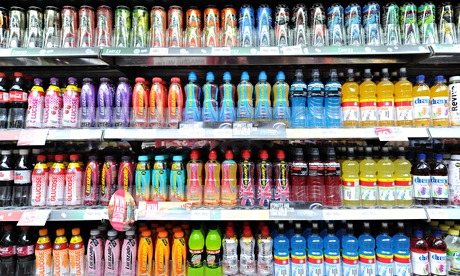
Finish this sugar rush it is the only way to tackle the weight problems crisis | Simon Capewell

‘Added sugars are hidden all over the place: often there are four teaspoons of sugar in a tin of soup, 5 in a common Tv dinner, 6 in a yoghurt, 9 in a can of cola.’ Photograph: Matthew Horwood/Alamy/Alamy


A third of British young children and two-thirds of British grownups are obese or obese. Diabetes levels have doubled in the past two decades. Nevertheless, contrary to common belief this is not mostly due to our more and more sedentary lifestyles. It primarily outcomes from excess calories in our food and sugary drinks.


Extra sugars are hidden all over the place in modern food: usually there are 4 teaspoons of sugar in a tin of soup, 5 in a typical Television dinner, six in a yoghurt, 9 in a can of cola. At greatest, these extra sugars are empty calories with zero dietary worth at worst, they are toxic.


Typical sugar comprises glucose and fructose. Several scientists are convinced that the current substantial quantities of fructose consumption are harmful. Fructose molecules are processed in the liver into unwanted fat. This triggers the release of insulin (producing a pre-diabetes state) and raises blood pressure. Sort two diabetes could suggest a existence of increasing complications and an earlier death from a heart attack, stroke, cancer or dementia. Each week, this scientific proof is strengthened.


My daughter’s friend Susan (not her genuine title) is a delightful 11-yr-outdated, but a little chubby. Her college not too long ago scheduled an further hour of games for her class each day. Susan might burn up off an additional 100 kcal at every session, a weekly complete of 500 kcal. But on the way property on Fridays, Susan stops off for her reward: a cheeseburger. Yes, you’ve guessed it, 500 kcal in five minutes. Plus low-cost sugary cola, a further 110 kcal. When residence, Susan sits down to view television and absorbs the hefty advertising of junk food, sweets and sugary drinks. If her mum is functioning late, Susan heats up a Tv dinner (400kcal), washing it down with a can of sugary pop (140kcal). And so her fat increases. Like millions of other children in Britain right now.


Meanwhile, multibillion-pound industries get wealthy via manufacturing, advertising and retailing junk meals and sugary drinks. Over all, they worry any regulation that may possibly threaten long term income. So they focus on other (ineffective) options, such as Andrew Lansley’s “responsibility deal” amongst 2010 and 2014, and market “nudging” as a stylish approach to alter behaviour. Public overall health scientists had seen voluntary agreement video games played previously. In 2010, they predicted it would not work.


The four years of the accountability deal largely concerned industry and government sitting about tables dreaming up higher-profile pledges to “cut a billion calories” or minimally lessen sugar content in isolated items. The deal gave businesses a good deal of publicity. The taxpayer has hence funded market PR, but weight problems has elevated. And just two weeks ago came more revelations that many effectively-identified organizations had reneged on their pledges.


Additionally, the deal was employed by government and sector as an excuse to reject far more successful approaches. Without a doubt, the tactics utilised by Massive Tobacco, Large Booze and now Big Food lobbyists look comparable: denial, delays, detours and dramatic distractions.


Government attempts to lessen calories and sugar have failed (although industry apologists attempt to disagree). So what is needed now? Massive Tobacco had 5 glorious decades of unregulated profit just before being managed by addressing the “3As”: affordability (taxes and value rises), acceptability (marketing and advertising bans and warning labels), and availability (licensing and smoke-cost-free legislation). These are probably transferable to junk food or sugary drinks.


Campaigners have urged the health secretary, Jeremy Hunt, to impose a sugary drinks duty, a advertising and marketing ban, mandatory site visitors light labelling, and progressive sugar and saturated fat reductions in junk meals. They also want him to lessen portion sizes, finish market sports activities sponsorship and set up an independent food policy institute.


Hunt, a gifted and ambitious politician, is caught among the rock-like Scylla of market lobbyists and the Charybdis whirlpool of public view, which now supports sugar regulation. My funds is on the whirlpool.


Finish this sugar rush it is the only way to tackle the weight problems crisis | Simon Capewell

16 Mayıs 2014 Cuma

Sun cream warning: Dad and mom rush to protect youngsters from skin cancer but not themselves

Warm weekend weather could produce scenes like this along Britain’s coastlines Photograph: CHRISTOPHER PLEDGER


The survey of two,049 grownups, commissioned by Boots, discovered that parents are inclined to threat their own security when it comes to sitting in the sun though they go to great lengths to make positive their youngsters are protected.


More than a third of dad and mom usually make their young children dress in a hat in the sun, nevertheless only 10 per cent put one on themselves. A fifth of dad and mom maintain their young children out of the sun among twelve and 3pm – when the sun is most effective – but only ten per cent stick to this advice themselves.


The Skin Cancer Foundation advises that grownups who use sunscreen daily can significantly lessen their danger of developing melanoma, the deadliest form of skin cancer. It advises adults to “seek out the shade” in the course of the hrs of 10am and 4pm, avoid burning and cover up as much as possible.


Clare O’Connor, Boots United kingdom suncare skilled, explained: “Contrary to what most men and women believe, it is not just children’s skin that requirements specific attention when it comes to sun safety – adults’ skin demands protecting in the identical way – no matter whether that is by means of employing sun cream regularly, sporting a hat or basically keeping away from being out in the sun when it is at its strongest.


“We hope this research will prompt everybody – outdated and young – to consider in a different way about their UV safety this summertime.”


On Friday, a main research showed Large Street sun block creams from Piz Buin, Malibu and Hawaiian Tropic all failed skin safety tests.


Sun cream warning: Dad and mom rush to protect youngsters from skin cancer but not themselves

5 Mart 2014 Çarşamba

Sugar rush


We are continually being barraged with messages about what meals to consume and keep away from – and, as Tom Chivers notes in these pages, a single pronouncement sometimes contradicts one more. But professional opinion is coalescing towards sugar. The Globe Well being Organisation has declared that it must account for less than five per cent of what people consume in the course of their day, and the Chief Health-related Officer for England has warned that the Government could be forced to bring in a tax on the sweet things to tackle what it regards as a growing overall health crisis.


Their case is a powerful one particular. In England, one in 4 adults is now obese and the figures are predicted to climb to 60 per cent of men, 50 per cent of ladies and 25 per cent of young children by 2050. It is calculated that this sizeable difficulty could be reversed inside of five many years if just thirty per cent of sugar have been reduce from the regular diet plan.


What then is the best way to attain this preferred result? It is true that the principle of taxing poor substances has currently been established with alcohol and tobacco, but a levy on consumption usually hits the poorest hardest. It would be better to attempt to motivate suppliers to end overloading foods with unnecessary ranges of sweetness, along with delivering higher honesty and visibility when it comes to labelling ingredients.


But buyers do require to modify their lifestyles, also. Because the Second Globe War we have followed a trend of consuming much more issues we know are bad for us although working out considerably significantly less, and there is a need for higher education about the consequences. Government should encourage folks to take accountability for their lives, not nanny them with higher taxes.


Sugar rush