seeing etiketine sahip kayıtlar gösteriliyor. Tüm kayıtları göster

19 Nisan 2017 Çarşamba

"I don"t think anything can prepare you for seeing a patient die"

‘It’s the best feeling in the world knowing that you were able to care for someone during their last days’


I saw my first patient death a few months ago, during my first placement on a medical ward. It was a woman with dementia. I was there when the doctor made the decision to remove her oxygen mask. We drew the curtains and I rubbed her leg, just to let her know that someone was with her. I was glad to be there as she took her final breaths.


I still think about her. She was unmarried and had no family. She died alone, but we were there, so I guess she wasn’t completely alone.


We joke about certain things on the ward – obviously nothing inappropriate, but humour needs to come into it. The woman had a pair of glasses, and while I was packing her stuff away to bring down to the morgue, a nurse asked me: “Do you think she’ll be needing them?”. We needed a little laugh.


I don’t think anything can prepare you for seeing a patient die. But as a student nurse, it’s the best feeling in the world knowing that you were able to care for someone during their last days and moments, holding their hand.


I went home, where my flatmates are student nurses with their own experiences of death. We sat down and talked it through, which made me feel better. I’d recommend that to new students: make sure you can talk about losing a patient. There’s lots of support out there. First-year nursing student


‘I feel like being upset, but there’s no time.’


‘I feel like being upset, but there’s no time.’ Photograph: Alamy

‘It changes your personality’


Working on the stroke ward was the hardest. Deaths came as more of a shock there because the patient would often have been around for weeks. One morning I admitted a man with his wife. I chatted to them all day – they were lovely. But then he became unresponsive. I did all the tests and noticed that he wasn’t reacting to my voice or pain. His wife was standing right next to me. It was my first emergency situation and I had to comfort the family at the same time. I was trying not to cry in front of them – they were so friendly. It isn’t always the way with relatives when they’re stressed.


Death is more common on other wards. I remember a woman who needed blood transfusions and had to go to intensive care. But she refused. The staff said: “This is serious, you might die if you don’t.” At that point she got quite mouthy.


She eventually said yes to intensive care, but she didn’t get there on time. It wasn’t a dignified death. There was blood pouring out of her in the middle of a transfusion, in front of other patients. She might have been able to recover – but you have to respect the patient’s right to make their own decisions. It was a gnawing feeling, knowing that it could have been different.


The course changes your personality a bit. You cope with stress better after dealing with upsetting situations. It’s like a second skin you develop; I feel like being upset but there’s no time. My philosophy is better nowadays – I’m doing my best to keep people healthy and if the death was unpreventable, I just have to accept it and move on. If I don’t, you can’t be there for the family or the other patients. Third-year nursing student
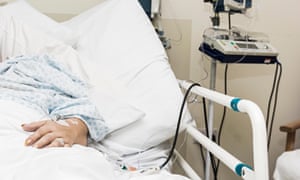


patient in hospital bed


‘Staff often take the opportunity to teach you even though they’re under a lot of pressure.’ Photograph: Alamy

‘It’s important not to shy away from death. You can learn a lot’


It was my fourth day of being on a ward. The patient was an elderly man who’d been in a traffic accident. It was frightening, only being 18 and experiencing that so soon. I was there with the doctor the moment he passed away.


I was worried to begin with. Sometimes, as a student nurse nobody realises you haven’t seen this stuff before. There were doctors and nurses all around me in a busy, enclosed space. Fortunately, the patient wouldn’t have had any idea of what was going on around him.


When I saw that first dead body, I thought, “I don’t know what I’m doing”. I didn’t know how I was supposed to tell the family, or how to clean a body or who to call. It did knock my confidence. But you get used to it – it doesn’t sound like a nice way to put it, but you do.


I stayed with the doctor while he certified the death. I had to listen to the patient’s breath for five minutes to see if there were any sounds. I was lucky to have a good mentor who made sure I was all right afterwards and explained how to tell the family. The nurses seem grateful to have a second pair of hands. People often take the opportunity to teach you even though they’re under a lot of pressure.


I try not to take any of it home with me. I used to live with other students who weren’t studying nursing. I’d come home and they’d listen to my stories, but no one could really relate. They’d just been at lectures or sleeping in all day. Now I live with nurses, which is a lot easier because they get it.


I’ve found it’s important not to shy away from death. You learn a lot if you get involved as much as possible, right from the beginning of your course. Third-year nursing student


Keep up with the latest on Guardian Students: follow us on Twitter at @GdnStudents – and become a member to receive exclusive benefits and our weekly newsletter.


"I don"t think anything can prepare you for seeing a patient die"

16 Şubat 2017 Perşembe

Seeing Brian overcome his stammer filled me with professional pride

The first thing I noticed was his mum: the concerned way she looked at him as they entered my room and took their seats, the way she shifted uncomfortably when I, a speech and language therapist, asked Brian* if he knew why he was here, the way her shoulders tensed as I smiled expectantly at her teenage son.


Then, as he attempted to answer, his whole body suddenly jerked forward until his head was almost banging against his knees. I heard no words. I checked the referral information discreetly, shuffling quickly through papers and thinking angrily that the GP who’d referred him was completely off the mark. Is this a child with Tourette’s or a neurological disorder?


The letter stated “boy has a mild stammer – please advise”. After a few painful seconds, Brian finally managed to force out a “No!” and I realised that the GP was both right and wrong: yes, he had a stammer, but it wasn’t mild.


During that emotionally-charged first session, I learned that Brian had developed the stammer as a young child. At first his parents didn’t really notice; their health visitor and well-meaning relatives reassured them it would probably disappear over time. After a year, however, they noticed that Brian would sometimes blink repeatedly, as well as stammer. Then other movements began, some of which disappeared only to be replaced by others.


Now a teenager, almost every word was a struggle for Brian, but more distressing were the secondary movements I had just seen. He was doing well in school but had always refused to talk about his stammer. His mum said, heartbreakingly, that it was like his stammer didn’t exist if nobody mentioned it, so nobody did. As she shared all this with me, Brian sat silently, his eyes focused on the nursery rhymes poster on the wall. Occasionally he’d glance in my direction, looking for a reaction. I tried desperately not to give the wrong one.


The only other response I saw from Brian during that first session was a halfhearted nod, confirming that he would come back the following week.


I felt intrigued and daunted at the same time. What had brought Brian to this point and what was the best way to help him?


He came back to see me many times over the next few years, and gradually the wall of silence around his speaking difficulties began to crumble. A large part of therapy sessions for teenagers who stammer is to be more open about the fact that the stammer exists, and this was the most difficult part for Brian and his family. We did some work on his breathing and technique, but by far the biggest challenge was enabling Brian to accept his stammer.


Having worked in the NHS for more than 20 years, I know there are some moments that stay with you long after they happen, moments you remember to remind yourself of why you do what you do. One such moment was the day Brian came for his session, now aged almost 16, smiling and clearly itching to tell me something. His mum was with him, unusually. He told me (with a stammer, but no secondary movements) that he had spoken in front of his year group and teachers about his stammer, as part of his GCSE English oral examination.


Then I noticed his mum again; she had an air of optimism about her, a sense that everything was finally going to be ok. Gone was the anxiety that can only be seen in the eyes of a worried mother as she told me that Brian had also got himself a weekend job; he’d started at one end of the street and asked, with his stammer, in all the local shops until one agreed to give him a chance.


What courage. I was so proud of him and so grateful to that shop owner for giving him that chance.


*Not his real name


If you would like to contribute to our Blood, sweat and tears series, which is about memorable moments in a healthcare career, please read our guidelines and get in touch by emailing sarah.johnson@theguardian.com.


Join the Healthcare Professionals Network to read more about issues like this. And follow us on Twitter (@GdnHealthcare) to keep up with the latest healthcare news and views.


Seeing Brian overcome his stammer filled me with professional pride

2 Şubat 2017 Perşembe

Older patients seeing same GP each time "key to reducing hospital admissions"

Seeing the same GP each time they visit the doctor can reduce avoidable hospital admissions among older patients, a study published in the British Medical Journal has found.


But the government’s focus on increasing access to GPs, such as through longer hours, may have unintentionally affected the continuity of care patients experience, the authors warn.


The study, by researchers at the Health Foundation charity, found that older patients who saw the same GP most of the time were admitted to hospital 12% less for conditions that could be treated in doctors’ surgeries than those who had a lower continuity of care.


The researchers looked at ambulatory care sensitive conditions: these include long-term conditions such as asthma, where flare-ups can be reduced by high-quality GP care, acute conditions such as gangrene that can be prevented by timely treatment, and illnesses such as flu and pneumonia that can be prevented through vaccination.


Admissions for these types of illness are expensive for the NHS: hospital admissions for conditions that could be treated at doctors’ surgeries cost £1.42bn in 2009-10, or more than £170,000 for each GPs’ practice.


Under changes to the GPs’ contract introduced in 2014, all patients in England must have a named GP who is accountable for their treatment. But researchers at the University of Bristol warned in response to the BMJ study’s findings: “There is evidence that continuity of primary care is actually declining in the UK.”


In an editorial for the BMJ, they called for policies to help ensure greater continuity of care.


Seeing the same doctor more of the time could reduce hospital admissions because it “builds trust and a sense of mutual responsibility between patients and GPs”. Older patients were particularly likely to appreciate seeing the same GP, although they were less likely to receive it, the researchers said.


The editorial added: “A primary care system that is increasingly fragmented, in which neither patients nor doctors feel strongly connected to their local general practice, provides the setting for patients to choose to attend an emergency department.”


Difficulty in getting appointments at GP surgeries, “which are at least as overwhelmed as emergency departments”, compound the problem.


Improving the proportion of the time that patients saw the same GPs would improve doctors’ job satisfaction, and was “very likely” to reduce pressure on hospitals, they added.


The Health Foundation researchers analysed patient-level data for more than 230,000 people in England aged between 62 and 82, focusing on older patients because they make up a high proportion of GP appointments and avoidable hospital admissions.


Patients who experienced a medium level of continuity of care had almost 9% fewer avoidable admissions, while those who saw the same GP a high proportion of the time saw just over 12% fewer avoidable hospital admissions in comparison with patients who had a low continuity.


The researchers found a particularly pronounced association between continuity of primary care and reduced hospital admissions among patients who were frequent users of primary care, which they defined as more than 18 visits over the two-year period covered by the data.


The study was observational, and did not prove cause and effect, the researchers emphasised. But improving the continuity of care could reduce hospital costs, especially for the heaviest users of the system, they added.


A spokeswoman for the Department of Health said: “This government is committed to making sure patients can get the right care at the right time from well-resourced GPs and, from April 2015, all patients have had the right to continuity of care through a named GP, as part of the GP contract.


“This remains a key part of our plan to reduce pressure on hospitals, and is in no way diminished by extending access.”


Older patients seeing same GP each time "key to reducing hospital admissions"

19 Ocak 2017 Perşembe

Seeing stroke recovery through music reminded me why I love my job

I’ve been working as an occupational therapist with stroke patients for the past three years. It’s a privilege to be let into people’s lives and to get to know them and their families; but if they’re not getting better, it can be heartbreaking.


Working for a full stroke service in Hull, I am always busy. It is stressful and even though I know we do a good job, we always know we could be doing better if only we had the time to sit down and really work it out. Although the day-to-day reality of my job is always different, I could never have envisaged the impact one project would have on me, my colleagues and our patients.


In December 2014, I was asked to go to a workshop with the Royal Philharmonic Orchestra (RPO), which was coming to run music sessions with us as part of its community outreach work.


We met Tim Steiner from the RPO to brainstorm what the issues might be for people with cognitive and physical problems. My first thought was: “We’re very busy, how are we going to fit this in?” I’ve done group work before and while it can be really powerful, it’s hard. I was concerned but I could also see this was an amazing opportunity if we could pull it off.


We went through the instruments and thought about the problems that someone attending the group might have – from whether they could hold it to any discomfort they might experience. We adapted some of the instruments and arranged for a healthcare professional to sit with patients who might have problems concentrating, communicating or processing information at speed.


At the first session with the patients, none of us, not even the therapists, really knew what we were doing or what was going to happen. I was very nervous. The instruments looked like the ones we had used at school and I was worried that it would be a bit demeaning. But by the end of the session, we’d structured this incredible piece of music and that suddenly made me realise what this could potentially do.


Over the course of the project, Strokestra, I saw all these people go on a similar journey. At first, they felt embarrassed to pick up an instrument and make a sound. But after six months we did a performance of the work they had done in the city hall.


I remember how Steiner set us a task where we all had to clap at the same time and hold a rhythm. He’d stop and we’d carry on because we weren’t paying attention. It seems trivial but it was so funny and it helped us realise that it was OK to make mistakes and not be perfect. A lot of people told us this was the first time they had belly laughed since their stroke.


There were also times when people broke down in tears. Sometimes it’s difficult for people to realise what they’ve lost and Strokestra brought that into focus. Because the group became such good friends and everybody had been through a similar thing, people could understand and knew what that person was experiencing.


I noticed a change in confidence among the participants. Some people would come in their wheelchair but by the end, they’d start to walk. I saw a massive improvement in concentration.


I’m reticent to say that the group directly impacted on things, but I definitely saw some people being able to process information better and I wonder if it helped one person return to driving. It feels like that was part of his journey.


I love my job and I think what I do is really important but I have been doing it a long time and sometimes you can forget what you do, what you contribute and the importance of it. Strokestra brought that into sharp relief. I saw myself through a new set of eyes and thought: “Actually, what I do is pretty cool.”


Having an orchestra come in to help us was snazzy but I felt that I had an ownership of the project. It was about therapy and how we were using this music to help people recover. They were bringing their expertise of music and how to structure a music group and we were helping them with how we needed to adapt things for people with particular needs.


We’ve not stopped since. We’re running our own groups using music in one of our rehab units. We’re starting small but we’ve got big ideas to run this for the long-term. It’s given us the confidence to use music in therapy and to have an orchestra come and show us the potential of it has given us the confidence to carry on.


If you would like to contribute to our Blood, sweat and tears series which is about memorable moments in a healthcare career, please read our guidelines and get in touch by emailing sarah.johnson@theguardian.com.


Join the Healthcare Professionals Network to read more about issues like this. And follow us on Twitter (@GdnHealthcare) to keep up with the latest healthcare news and views.


Seeing stroke recovery through music reminded me why I love my job

30 Temmuz 2014 Çarşamba

HealthTap Offers Uber-Like Service For Seeing A Medical doctor


Would you pay $ 99 a month for the potential to text or video conference with a medical doctor any time you desired? HealthTap is betting that American buyers will with its new support, Prime, being rolled out today.


HealthTap is greatest acknowledged for its question and response website, where consumers can submit concerns restricted to 150 characters, answered by a pool of 60,000 medical doctors from across the U.S. That service has 10 million lively consumers and is free with no ads. Prime is how HealthTap could commence making cash.


But will it? The worth proposition here is that HealthTap’s services saves you creating an appointment with a genuine-existence physician and traveling to their workplace for a meeting which could take upwards of an hour. With Prime you can inquire to communicate to a medical doctor and normally get one particular inside of a number of minutes, says HealthTap’s founder Ron Gutman, who demonstrated video calling a medical doctor about an allergy.


Watch our video on HealthTap at the bottom of this submit.


In the course of his demo with Forbes he was capable to see the medical doctor in two minutes, and the process was reminiscent of the Mayday button that Amazon has put in on its tablets, which lets you tap a button to video-contact an IT troubleshooter within ten minutes. HealthTap’s Prime doctors can usually fill out prescriptions, and down the line they might have a program in place to let them study lab check outcomes for a far better diagnosis.


HealthTap’s medical professionals themselves get paid, as an Uber driver may, according to how numerous sufferers they’ve witnessed and the high quality of their ratings.


“Some are employed elsewhere and are looking for versatility,” says Gutman. “Some medical doctors are interested in operating from residence, some want to travel and some want to moonlight and increase their cash flow. We are the 1st ever company to supply a overall health services that in fact has a mobile app for the iPhone. A doctor can practice from their iPad.”


Although there are other, often less costly, “telemedicine” companies out there like LifeHealth On the web and American Well, Gutman says he’s striving to build a marketplace for medical professionals that’s a tiny Amazon.


A number of thousand medical professionals are at the moment acquiring certified to get paid by HealthTap beneath the Prime services, and over time HealthTap will have the tricky task of managing provide and demand among sufferers and medical professionals — assuming it sees substantial demand for its $ 99 a month services which is in addition to people’s regular insurance payments.


Gutman is assured that individuals will pay that considerably for his support, in distinct mothers and fathers of young youngsters who’d rather not have to drag their youngsters to the doctor’s office, men and women with persistent problems, these who travel and caregivers.


Telehealth may possibly seem newfangled but overall health insurers are more and more interested in the business model because of the possible to reduce expenses. Marketplace analysis firm IHS IHS predicts the telemedecine sector will develop to $ 1.9 billion in 2018 from $ 240 million last year.


“It’s quite costly to triage people at $ 200 a pop, which is why it is so pricey for you and insurance firms,” says Gutman. “We see ourselves as the triaging system that discounts with simple items.”


Observe our video on HealthTap beneath:


HealthTap Offers Uber-Like Service For Seeing A Medical doctor

11 Temmuz 2014 Cuma

"Seeing our first IVF child born was a proud moment"

Debbie Falconer

‘It can be hard to switch off – each patient has a story unique situations – and you can not assist but get emotionally concerned.’ says Debbie Falconer. Photograph: Matthew Stansfield


I have been an embryologist with Manchester Fertility for almost thirty many years we opened in the mid-80s when IVF was nevertheless in its infancy. I was studying my PhD when I was asked to join the team and seeing our 1st IVF infant born in 1987 was an extremely proud second as the embryologist I would overseen the creation of this minor child boy in our laboratory.


My day begins at 6am, I generally depart residence all around seven.15 for the drive to operate. I’ll check emails when I arrive, and then open up our laboratory. This is exactly where the eggs and sperm are joined with each other, the place we see the quite beginnings of life. It never ever ceases to be particular, it truly is superb to know that by way of our knowledge, our individuals are transformed into parents and to date we have welcomed over 4,000 infants into the world.


Our laboratory is amazingly state-of-the-art, when we moved into our new premises in 2013 we had the chance to layout it just the way we desired it – absolutely everyone on the group had input.


There is a whole lot of interest to detail even the air quality is monitored. The very first point is to do is check all the tools to make positive almost everything is functioning appropriately even although we have remote alarms, 24 hours a day, we nevertheless do guide checks so there are no hazards to our patients’ eggs, embryos or sperm.


We then seem at how embryos have created overnight, no matter whether in our conventional incubators or our new time-lapse EmbryoScope, which aids our staff select the very best embryos to transfer for that patient’s treatment cycle.


We’ll check what patients we have coming in that day, and ensure that their embryos or eggs are prepared for use. We also undertake egg collection procedures in our theatre subsequent door to our lab. Sperm is prepared for individuals – both donor sperm as we are 1 of the UK’s most significant donor sperm banks – or from our patients’ partners. All of this transpires behind the scenes, it’s not anything our individuals see.


Mornings are very occupied, and so I get lunch in the employees area all around a thirty minute break.


In the afternoon we usually carry out intra-cytoplasmic sperm injection (ICSI) procedures – in which a single sperm is injected directly into the egg – embryo transfers and embryo freezing.  We also have staff meetings to ensure everyone has input. We’re a near-knit group and it exhibits, it is a single of the motives our patient suggestions is so large.


As the lead embryologist at Manchester Fertility, I’m at the top of my job. My emphasis is ensuring that we stay at the forefront of successful fertility treatment options in the United kingdom by means of our technologies, tactics and expertise of our staff. We have amazingly substantial standards at Manchester Fertility and so training up embryologists that join our group is also some thing I consider great pride in.


Of course treatment options and technologies are ever-shifting in the discipline of reproductive medication. There is constantly a new remedy which is producing headlines, but as an ethical and Human Fertilisation and Embryology Authority (HFEA)-licensed clinic it is our role to make certain that we only supply these remedies which genuinely can make a difference – not experimental treatment options which could only operate for a tiny handful with quite distinct fertility difficulties. Attending global conferences, retaining abreast of new strategies and remedies and researching individuals we would take into account is a challenge, we constantly overview our methods but often with the patient in mind. We never ever offer you a therapy except if we are completely assured it will assist the patient or give them the ideal likelihood of achievement.


My day typically wraps up with a ultimate check of the lab and then everywhere is tidied up, emails checked. I am usually the last of our embryology staff to leave.


After house, it can be tough to switch off – every patient has a story, unique situations – and you cannot support but get emotionally concerned. Strolling my dog is extremely therapeutic, so is yoga or reading and investing time with family and buddies. Some weekends I operate, of course – we are open each and every day. Ultimate thoughts of the day are usually about our patients. As a staff we all care I hope that embryos transferred that day will implant, that these who are due for a pregnancy test have good news.


Dr Debbie Falconer is lead embryologist at Manchester Fertility


If you would like to be featured in our “day in the lifestyle of…” series, or know somebody who would be wonderful to contain, then please get in get in touch with by emailing healthcare@theguardian.com


Are you a member of our online community? Join the Healthcare Pros Network to get typical emails and unique offers.


"Seeing our first IVF child born was a proud moment"

"Seeing our very first IVF infant born was a proud moment"

Debbie Falconer

‘It can be difficult to switch off – each patient has a story special circumstances – and you cannot help but get emotionally involved.’ says Debbie Falconer. Photograph: Matthew Stansfield


I’ve been an embryologist with Manchester Fertility for almost 30 years we opened in the mid-80s when IVF was still in its infancy. I was studying my PhD when I was asked to join the staff and seeing our first IVF baby born in 1987 was an exceptionally proud moment as the embryologist I’d overseen the creation of this little infant boy in our laboratory.


My day commences at 6am, I typically depart home close to seven.15 for the drive to operate. I will verify emails when I arrive, and then open up our laboratory. This is in which the eggs and sperm are joined with each other, the place we see the quite beginnings of life. It by no means ceases to be specific, it’s wonderful to know that by way of our expertise, our patients are transformed into mother and father and to date we have welcomed above four,000 infants into the world.


Our laboratory is incredibly state-of-the-art, when we moved into our new premises in 2013 we had the chance to design and style it just the way we wished it – everybody on the group had input.


There is a great deal of focus to detail even the air quality is monitored. The very first issue is to do is check all the tools to make certain almost everything is working accurately even though we have remote alarms, 24 hrs a day, we nevertheless do manual checks so there are no dangers to our patients’ eggs, embryos or sperm.


We then seem at how embryos have created overnight, no matter whether in our traditional incubators or our new time-lapse EmbryoScope, which assists our team decide on the best embryos to transfer for that patient’s treatment cycle.


We’ll verify what individuals we have coming in that day, and make certain that their embryos or eggs are ready for use. We also undertake egg collection procedures in our theatre up coming door to our lab. Sperm is ready for individuals – both donor sperm as we are 1 of the UK’s most significant donor sperm banks – or from our patients’ partners. All of this happens behind the scenes, it’s not one thing our individuals see.


Mornings are very occupied, and so I get lunch in the staff room all around a 30 minute break.


In the afternoon we generally carry out intra-cytoplasmic sperm injection (ICSI) procedures – exactly where a single sperm is injected straight into the egg – embryo transfers and embryo freezing.  We also have team meetings to guarantee every person has input. We’re a near-knit staff and it shows, it is one particular of the causes our patient suggestions is so large.


As the lead embryologist at Manchester Fertility, I am at the leading of my career. My concentrate is ensuring that we remain at the forefront of successful fertility treatments in the Uk through our technologies, methods and skills of our crew. We have amazingly high standards at Manchester Fertility and so instruction up embryologists that join our group is also some thing I consider wonderful pride in.


Of program treatment options and engineering are ever-altering in the area of reproductive medication. There is often a new treatment method which is producing headlines, but as an ethical and Human Fertilisation and Embryology Authority (HFEA)-licensed clinic it is our position to ensure that we only provide those treatment options which genuinely can make a difference – not experimental treatment options which might only operate for a small handful with really certain fertility issues. Attending global conferences, trying to keep abreast of new strategies and therapies and researching these we would consider is a challenge, we continuously overview our techniques but usually with the patient in mind. We by no means provide a treatment unless we are entirely assured it will help the patient or give them the best possibility of success.


My day typically wraps up with a ultimate check of the lab and then all over the place is tidied up, emails checked. I’m normally the final of our embryology group to depart.


As soon as residence, it can be difficult to switch off – each patient has a story, exclusive situations – and you cannot assist but get emotionally involved. Strolling my dog is really therapeutic, so is yoga or reading and paying time with family members and close friends. Some weekends I function, of course – we are open every single day. Final thoughts of the day are often about our patients. As a crew we all care I hope that embryos transferred that day will implant, that those who are due for a pregnancy check have very good news.


Dr Debbie Falconer is lead embryologist at Manchester Fertility


If you would like to be featured in our “day in the existence of…” series, or know a person who would be excellent to incorporate, then please get in contact by emailing healthcare@theguardian.com


Are you a member of our on the internet community? Join the Healthcare Specialists Network to receive normal emails and unique provides.


"Seeing our very first IVF infant born was a proud moment"

3 Haziran 2014 Salı

Seeing Is Believing: Infographics Revolutionizing The Patient Knowledge

By: Nicole Fisher and Ben Heubl


Infographics and visualizations are hugely common in all cultures, and there is unlimited opportunity to use them in a complicated discipline like wellness care. However,  according to data from Tony Haile of Chartbeat. The data also suggests that folks do not read content on the web the way we believe they do, as considerably as visualize it. Overall health visualizations then, like media, only have mere seconds to get a patient engaged. With this kind of excellent opportunity for strengthening overall health literacy, patient activation and outcomes, better well being visualization should be easily digestible, and need to engage the reader’s feelings instantly.  According to Devin Gross, CEO of Emmi Answers, “Images, voice and text are all critical elements of creating rich, emotional material that is related to men and women experiences. The purpose is to bring true interconnectivity to the wellness room.”


A Picture Is Worth A Thousand Phrases


Images can give a patient a complete concept in seconds, where words alone often fall quick. Inform a patient, “Don’t consume that up coming piece of cake, simply because extreme consumption of cholesterol increases the threat of heart disease and stroke”, and they will either disregard you or hear “Don’t eat cake, it kills you”. That is neither true, nor encouraging. Visual cues can describe the chance for improvement in a much more informative, fun and intriguing way.


Emmi Options Interactive Carotid


However, to use visualizations effectively – to engage and grab the consideration of the two the nicely and the unwell – demands truly understanding people.  But if completed appropriately, genuine enhancements to public health might be achievable. As David Spiegelhalter, Professor at Cambridge University in public understanding of danger says, “Often, numbers do not communicate for themselves. They are portion of narrative, and so there are no proper or goal techniques of communicating them as text.”


At London’s recent WIRED Wellness conference, speakers produced heavy use of data visualization to communicate the advantages of utilizing certain technologies in overall health care and wellbeing. Even though that was to an audience of healthcare specialists, entrepreneurs and media, information and charts could have been replaced with a wholly diverse narrative and disseminate the same story if require be for a lay audience.


Information visualization is not for every person however. A critical blunder in overall health would be to identify patients as a single cohort – particularly when they are a group of people struggling the very same affliction. As a result, Infographics and interactive visuals are one particular piece of the overall patient engagement objective.


Psychology Of A Patient


In a recent Company Insider submit, columnist Milo Yiannopoulos asked why information journalism does not always function at least, not for most people who aren’t “data nerds.” He contends that news suppliers have forgotten that ordinary people are moved by pleasure and displeasure rather than spreadsheets. This is why money, intercourse appeal and humor all play main roles in media.


Ironically, several in the health space also seem to neglect that sufferers are also men and women, and raw stats just will not cut it. Health communicators need to innovate to inform compelling, visual stories beyond the numbers. Or, as Emmi Solutions CEO says, “The dynamic of any romantic relationship and subsequent well being-relevant action come from feeling like you’ve been receiving tips from a trusted pal. Studying in a pleasant and meaningful way is truly an extension of a romantic relationship constructed on believe in.”


Any communication professional will inform you, all men and women are diverse. Persona gurus Myers-Briggs split us into sixteen broad persona sorts, describing how people perceive the world and make selections. Primarily based on analyses such as Myers-Briggs, we know that some folks prefer the written word even though others will want credible datasets to perform by means of. Older individuals have a tendency to have the time to want to do their very own study and younger individuals tend to have no problem trading time for simplicity. But as a complete, almost all people have a wish to connect with and relate to other folks.


Emmi Solutions &quotPlate Method&quot Learning Tool

Emmi Solutions “Plate Method” Finding out Device


A lot of charities understand this effectively, such as Cancer Analysis Uk, which collaborates with very good PR agencies to tell trusted stories that tug at heartstrings. Yiannopoulos says that these stories get the most attention in the media since by the finish, tears – whether or not from laughter or discomfort – are dripping onto the page.


Engage, Play, and Interact


The JBS3 chance calculator, developed by David Spiegelhalter and Mike Pearson Pearson at Cambridge University, is a device to aid visually communicate the risk of cardiovascular conditions and the advantages of interventions, regardless of whether lifestyle or pharmacological. It is a very good illustration of how to develop engagement via instantaneous feedback. Suggestions is essential due to the fact it contributes to the determination and the emotional bond amongst data, great guidance, comprehending and future choice-generating.


Seeing Is Believing: Infographics Revolutionizing The Patient Knowledge

20 Ocak 2014 Pazartesi

Hospitals to get far more money for seeing A&E circumstances after funding rule is relaxed

A&ampE

A&ampE units struggled with a funding rule that covered only thirty% of the cost of treating any individual admitted as an emergency in excess of and over the variety of sufferers handled in 2008-09. Photograph: Chris Radburn/PA


Hospitals are to get much more money for treating individuals admitted as emergencies following NHS bosses relaxed a payments system which critics say has wrongly denied A&ampE units an estimated £500m a yr.


Emergency departments have been struggling with a funding rule which means they get only 30% of the price of treating any patient admitted as an emergency more than and over the amount of individuals taken care of in 2008-09.


So as many A&ampE units have been hit by sharp rises in emergency admissions – one particular of the service’s most hard issues in the last twelve months – some hospital trusts have been shedding up to £10m a 12 months every, according to the Foundation Believe in Network (FTN).


The remaining 70% was held back from hospitals and was supposed to be spent by nearby NHS organisations to set up initiatives to minimize avoidable journeys to hospital, even though there is tiny proof that this kind of schemes have been set up in a lot more than a couple of places.


Hospitals believe they deserve the funding because they have offered the remedy when other parts of the NHS – major care trusts and now GP-led clinical commissioning groups (CCGs) – have failed to offer alternatives.


The School of Emergency Medicine (CEM), which represents A&ampE medical doctors, and the FTN, which represents basis trusts, which are semi-independent of NHS manage, want the 30% rule scrapped. The Commons overall health choose committee and the National Audit Workplace have also voiced reservations about it.


NHS bosses have now relaxed the method, though not axed it.


The overall health secretary, Jeremy Hunt, has informed Dr Cliff Mann, the CEM’s president, that Check, the NHS regulator that sets tariff charges, has made a decision that “exactly where there have been considerable nearby increases in emergency admissions outdoors the control of companies [hospitals], commissioners [CCGs] will be required to agree a revised baseline ahead of the marginal price kicks in.”


That rest of the rule will see hospitals obtain the complete price of treating a lot more patients after they have agreed the specifics with their CCG. “Hospitals have been severely hamstrung simply because of this unfair rule,” said Mann. “It also contributes to hospitals becoming overfull because the only way to pay for an older lady admitted with pneumonia is to get the man in for his knee substitute, and there is only a finite amount of beds in hospitals.”


Matt Tee, chief working officer of the NHS Confederation, welcomed the “adjustment” to the tariff but said it supported the intention behind it of treating more individuals outside hospitals.


But the FTN referred to as for the rule to be scrapped altogether. “This policy is not match for objective,” it stated. “It does not meet the core purposes of funding emergency care appropriately, or supporting the shift of care to out of hospital settings. With the pressures on the method escalating 12 months on yr, we urgently want abolition of this policy to guarantee we have a secure, efficient, appropriately staffed and substantial-top quality emergency care service in potential many years.”


Proof collected by the King’s Fund wellness thinktank displays that just over half of the finance directors of NHS trusts say they have misplaced income because of the rule. A single explained that “this policy has had practically the precise opposite effect as was apparently intended”, one more explained it had bred “confusion and resentment amongst clinicians who are treating individuals at a main loss”, while a third stated it had not diminished emergency admissions.


From April CCGs will also have to present NHS England that they are investing any income held back from nearby hospitals below the rule in programs to decrease the want for emergency admissions.


A Department of Health spokesman mentioned: “The marginal charge, when employed successfully, can aid reduce pressures on A&ampE. But it’s correct there is adequate flexibility in the method to assistance the hospitals which have skilled a considerable rise in A&ampE individuals.


“Importantly, any cost savings commissioners make from the tariff will be transparently reinvested in measures to reduce demands for emergency care.”


Hospitals to get far more money for seeing A&E circumstances after funding rule is relaxed