Apps etiketine sahip kayıtlar gösteriliyor. Tüm kayıtları göster

14 Şubat 2017 Salı

Ditch dating apps but share the love: finding a match for people with dementia


It was wonderful spending the day with Irene and sharing our passion for football by watching our rival teams – Leicester City and Chelsea – play each other. We had so many laughs together.


Fiona and Irene really hit it off when they met up, after being brought together by an online matching service. But if this sounds like the makings of a great first date, the relationship is actually far more complex than you might expect.


They were partnered up by Side by Side, an innovative matching service that we at the Alzheimer’s Society are launching today, which is designed to connect volunteers to someone with dementia.


Side by Side is a completely new approach to volunteering. From joining a local club, going to football matches or just heading out for a stroll together in the park, the app pairs up people with dementia and volunteers with shared interests. A third of people with dementia lose friends after their diagnosis, and nearly two thirds who live on their own feel lonely. We know that one of the most important things for those affected is to remain part of their community and continue to do the things they love. By taking part in activities with the support of a volunteer with similar interests, they can continue with their hobbies – or even find new ones.


My team set up the service which was particularly important to me after seeing my granddad’s experiences with dementia. As his condition deteriorated, he became increasingly confused; he didn’t know whether he had just arrived at church or was leaving it. Although he had great relationships with all the people at his local church, they had limited resources to support him. The moment he had to stop doing something he had done his whole life broke his heart. If a service like Side by Side had been available, he wouldn’t have had to stop.


Side by Side has got off to a promising start. There are almost 2,000 people with dementia waiting to be paired up and we are urgently calling for more volunteers.


What makes this volunteer programme different is the flexibility. Side by Side is designed so that almost anyone can volunteer. It is flexible, so meeting up can be easily arranged around work and family, and a telephone service is also available for those with more limited time.


I was so convinced of the merits of the scheme that I decided to put my money where my mouth is. Despite having a busy lifestyle, doing a job I love and running around after three kids, I signed up as a volunteer. My Side by Side partner, who has Alzheimer’s, shares my healthcare background and love of gardening. I’d always wanted to learn how to grow my own vegetables and now that I’ve met Maggie,I know how to do this.


Maggie isn’t just a volunteering project; she’s a friend. Her daughter told me that it was the first time she has seen her mum smile in a long time.


Kathryn Smith is director of operations at Alzheimer’s Society. More information about volunteering for Side by Side or accessing the service can be found here.


Talk to us on Twitter via @Gdnvoluntary and join our community for your free fortnightly Guardian Voluntary Sector newsletter, with analysis and opinion sent direct to you on the first and third Thursday of the month.


Ditch dating apps but share the love: finding a match for people with dementia

3 Ekim 2016 Pazartesi

Help for children"s mental health, from apps to parenting classes

Figures show that about a quarter of a million under-18s in England are receiving help from NHS mental health services. It is the first time this data has been recorded and it follows a reports that mental illness is soaring among women aged 16-24.


Children’s services are struggling to cope with demand. Research shows 28% of children referred for support in England – including some who had attempted suicide – received no help in 2015. Effective programmes are more important than ever and some have been started in schools and communities. Here are some of them.


Work in schools


There are a number of innovative programmes being run in schools to help young people with their mental health. Sacred Heart school in Tipton, for example, employed a happiness teacher last year: Samantha Rock. She got the title after the school linked up with the emotional resilience coach Jules Mitchell when a pupil’s parent died. Mitchell ran a happiness lab on a staff training day and encouraged teachers to start using the techniques on students. Rock teaches happiness, which is now part of the school’s curriculum. Her classes include mindfulness, dancing and a gratitude game.


Pupils dance at a primary school in Norfolk.


Pupils dance at a primary school in Norfolk. Photograph: Graeme Robertson for the Guardian

Elsewhere, with the help of the Young Minds charity, what has been dubbed the academic resilience approach is being encouraged at Lincroft middle school in Bedford. After getting training from the charity, staff have introduced resilience building activities across the 881-pupil school, and mental health lessons are included in personal, social, health and economic studies.


The school has a wellbeing officer, working two days a week, who has made a big difference quickly, with both teachers and students. It has also introduced a system to keep track of children who are vulnerable and/or have anxiety issues, making sure they get the help they need before things get too difficult.


A teacher at the school, Cat Johnson, said: “The main difference is that we’ve made mental health and vulnerability normal and acceptable in our school and made it clear we will help those struggling. Behaviour has greatly improved as a result and our school is happier.”


Apps and websites


There are now lots of apps and websites set up for children who most need help. Silent Secret, for example, is a social enterprise that provides a free app through which people age 11-19 can share their secrets and thoughts online in a safe and anonymous way. It also helps young people with similar issues talk online and support each other. It has had more than 58,000 users since it launched two years ago.


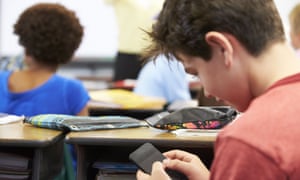
A boy uses his phone during a class.


There are a variety of apps for children and young people aimed at helping their mental wellbeing. Photograph: Business Images/Rex/Shutterstock

Young Minds has launched a website called HeadMeds to help young people find out about mental health medication, asking the questions they might not want to ask parents or doctors. For example, a teenager might want to know whether alcohol can be consumed while using anti-depressants, or what the side effects might be. It includes stories of other young people who have taken medication and their experiences, offering general advice and guidance.


Parenting programmes


In the midlands of Ireland, in Longford and Westmeath, parents are going back to school to learn to help children with mental health issues, taking seminars and group sessions on various issues, including improving young people’s self-esteem or helping a child with ADHD.


It is part of the Triple P positive parenting programme, one of the world’s most extensively researched parenting interventions, developed at the University of Queensland, Australia, in 1982. It offers a range of programmes to parents, from a light touch, such as community seminars, to more targeted help, such as group seminars over eight weeks, and workshops. So if your child had depression you could go to a group talk about how to build confidence and self-esteem or you could meet a professional. It helps parents put strategies in place.


[embedded content]

The idea of the programme, however, is to prevent these issues from arising in the first place. Mark Penman, who works for Triple P in the UK, said: “The idea is to get in early … rather than it getting to the stage where more serious mental health issues develop.”


Studies have shown the effectiveness of Triple P in lowering anxiety. The Missed Opportunities report by the Centre for Mental Health published in June highlighted Ireland’s success, calling for more programmes like this across the UK. A paper published in the Journal of Child and Family Studies pointed out that studies of humans and primates have shown that anxious offspring are particularly sensitive to the impacts of parenting, citing a study by Suomi (1997).


Self-help groups


Community-led projects have also been popping up around England, offering support to young people. In Exeter, for example, one woman, Debbie Humberstone, saw a gap in services and set up The Project.


“This support group exists because of my family’s experience,” she said. “My daughter developed severe mental health issues at the age of 15 (severe depression and anxiety, an eating disorder and self harm). She was admitted to inpatient care when she became suicidal at the age of 16 and spent five months in an adolescent psychiatric unit. To cut a very long story short, she is now coming up for 23 and lives a fully independent life. Jess (my daughter) helped me set up The Project in 2013, based around the support we wished we had had as a family, and the support she wished she had had access to.”


The project offers peer support groups for young people and a monthly support group for parents. It also provides mental health awareness talks and workshops to break down the stigma and discrimination around mental health problems.


Humberstone said: “We are being contacted almost weekly by people in other parts of the country asking if we run similar support in their areas. In fact, we are currently working on a model to replicate our service, to help other groups and organisations who are looking to set up something like we have.


“Money is always the issue. We received Comic Relief funding last year, which provides around half our funding for the next three years. We get no statutory funding, despite young people being referred into our service by schools, GPs, youth offending teams, social services and mental health services themselves. The rest of our funding is from local groups and organisations, plus some smaller grants.”


  • In the UK and Ireland the Samaritans can be contacted on 116 123. In the US, the National Suicide Prevention Hotline is 1-800-273-8255. In Australia, the crisis support service Lifeline is on 13 11 14. Hotlines in other countries can be found here.


Help for children"s mental health, from apps to parenting classes

12 Eylül 2016 Pazartesi

Can apps improve your mental wellbeing?

To the smartphone-addled among us, advising the use of apps to fix mental health problems might seem like telling someone who needs to get fit to live on jam and fags. But it’s happening all the same. While gadget and social media addiction are lampooned for increasing teenage depression, and complaints abound that the constant compulsion to check apps and message conduits leaves us frazzled and scatterbrained, purveyors of wearable tech, app designers and even the NHS really want us to use our phones for soul-soothing.


The idea of treating mental health digitally is not new. A PC-based online cognitive behavioural therapy (CBT) treatment for depression has been in clinical use for seven years now – rolling out newer such services via smartphone apps will make this kind of treatment even more accessible. Meanwhile, there are more than 500 mindfulness apps, offering meditation soundtracks, relaxation techniques and pearls of wisdom, not to mention the many fitness/self-optimisation apps making forays into mood tracking. Everyone’s at it, from Apple Watch’s Breathe, to the guy who invented the online monster adoption game, Moshi Monsters, Michael Acton Smith. Scrolling through his mindfulness app, Calm’s, sensory front page options – rain falling on foliage, a mountain lake – is blissful, but can increasing reliance on phones really help us find peace?


There is evidence that mental health apps can work. This summer, it was announced that Sleepio, a digital CBT programme for tackling insomnia, has had a successful NHS “real-world” trial, after being offered via the Manchester service, Self Help (this follows a placebo-group randomised control trial . The app assesses users’ worries, sleep schedules, lifestyle and bedrooms, before teaching them CBT techniques. Through improving their sleep, the 98 participants saw a 68% recovery rate from anxiety and depression symptoms, compared with an NHS average of 45%.


The app was co-created by Peter Hames, an NHS Innovation Fellow, and Colin Espie, who is professor of sleep medicine at Oxford University. It has already been privately administered to more than 750,000 staff members at US companies such as Comcast, LinkedIn, Boston Medical Center and the Henry Ford Health System. And Sleepio’s parent company, Big Health, recently secured $ 12m funding, to further scale up delivery of drug-free, mental-health treatments.


Meanwhile, the wearable-tech industry is extending its offer into the realm of stress relief. The idea being that devices can track personal biometrics, and then that data can be used to positively influence changes in our behaviour. Fitness brands such as the Misfit Ray and Jawbone Up3 offer rudimentary sleep tracking, and the opportunity to recognise causes for soaring resting heart rates. The upcoming Feel (another wristband) claims to detect mood via electrodermal activity, blood volume pulse and skin temperature. And clip-on devices Bellabeat Leaf, Prana and Spire track breathing.


When Neema Moraveji, chief scientist and co-founder at Spire, and director of the Stanford University Calm Lab, researched the physiological changes that manifest the body according to mood, he says they “found respiration to be a unique and interesting signal because you have direct control over it”. This was followed up by lab studies that, he says, “showed that if you give people feedback about their breathing, they can change it so easily that they don’t even need to stop what they’re doing”.


I started road-testing Spire while coincidentally doing a meditation course. It was encouraging to see all my calm streaks (as Spire calls them) on screen. And realising that a three-minute stress streak coincided with my computer inexplicably not allowing me to copy text from one email to another gave me a calm detachment about inevitable technical issues.


I liked that I could view my breath on screen as a wavy line. One of the app’s guided “boosts” involves following a pace-slowing dot along said line. Another “boost” talked me through alternate nostril breathing, which has a surprisingly settling effect (although I’m not sure I’d do it on the bus).


But my chill honeymoon didn’t last long. First I learned that my dad had had a mild-but-debilitating stroke, and then I accidentally reversed into a parked car while distracted by a screaming child. When I checked Spire to wallow in my dramatic breathing data, the app had detected zero stress.


I ask Moraveji whether this could be because I unknowingly breathe deeply to get through turmoil. “People do learn naturally to slow their breathing when they’re stressed,” he says, “and it might have been that you were so tense that you were holding your breath. That’s something we’re updating in the app.” My relationship with Spire isn’t over, but it no longer takes precedence over Instagram.


Claire Burge is a productivity specialist, brought in by companies (Virgin and Siemens, among others) to liberate staff from mental-energy draining, email-based cultures. She has thought about this question of phones as mental health tools a lot. “I don’t think it’s a conducive environment,” she says. “Phones create neural loops that mindfulness should counter, but that means a break away from the object that creates the neural loop in the first place.”


Even the creator of bestselling mindfulness app Buddhify, is having doubts about his industry. In a recent, widely circulated blog post, Rohan Gunatillake describes the app world as “warring fiefdoms”, battling for market domination, whereas, “community has historically always been part of the mindfulness tradition. Whether it is people practising together or teachers supporting each other with shared codes of ethics, engaging with peers is a central part of the culture”.


He also fears that the way digital mindfulness is monetised, by dangling limited free content up front, with subscriptions then offered if you want all the whistles and bells, risks financially excluding people. “The demographic is English-speaking, middle-class and financially stable,” he writes.


Moreover, mindfulness apps are largely peddling guided meditations, rather than providing the learning and insight you get from experienced teachers. Gunatillake wants to build a bridge between the two strands of mindfulness – traditional and digital – with teachers more involved in app design.


With apps reaching more people than face-to-face teaching can, he says, “nothing will influence how mindfulness is perceived and practised in our culture more in the next 20 years”.


Can apps improve your mental wellbeing?

23 Ağustos 2016 Salı

How memory apps can help people with dementia tap into their past | Anna Bawden

More than 650,000 people in England have dementia and that figure is expected to double by 2040. With wildly differing standards of care across the country, there is growing interest in the role technology could play.


When Robert Armstrong was admitted to The Uplands care home in Shrewsbury, he had a habit of waking up in the middle of night and wandering about. At first staff thought he was just a poor sleeper, but the 68-year-old would become very aggressive when care workers tried to guide him back to bed. He would often need medication to calm him down. It wasn’t until care workers started working more closely with the family to map his life history that they discovered Armstrong had been a milkman for 40 years and thought he was getting up to go to his job. “So when he woke up at 3am, the night staff gave him a cup of tea and biscuits and then he did his ‘rounds’,” says Mandy Thorn, managing director at Uplands. “Robert had a milk crate in his room and he went round leaving milk bottles outside all the residents’ doors. At 6am he had breakfast and went back to bed, while staff picked up the bottles and put them back in his crate, ready for the next day.”


The more that you know about an individual, the easier it is to care for them


Thorn says the effect was instant and transformed Armstrong’s quality of life until his death in early 2015. “We had no more aggression and no need for medication to calm him down. And he was really happy until the day he died.”


Thorn hopes the delay in finding out such crucial information will soon be a thing of the past. From September, Uplands will be using RemindMeCare, an app that uses reminiscence therapy to get people with dementia talking about their memories. Its software automatically creates content that matches the person with dementia’s life story. In addition to photos, the system pulls images of events, favourites places, films and music from the web to create a detailed multimedia profile of the person. This is then used to help stimulate conversation and memories enabling carers to build a better relationship with the individual. For group activities, the software can work out shared interests and help several residents to take part. And family members can upload relevant information to their relative’s profile and be actively involved in their care. “The more that you know about an individual, the easier it is to care for them,” says Thorn. “It will transform our business, make us more efficient, so staff spend more time with our residents, not on paperwork. With ReMindMeCare you have a digital record [of activities and interventions], you don’t have to worry about writing it all down.”


RemindMeCare is the brainchild of Simon Hooper and Etienne Abrahams, who both had family members with dementia. When his mother got dementia, Hooper started to put her life story on to a tablet for her carers to use. “I realised that early memories were the key to communicating with those with dementia and to improving person-centred care, and that it needed tech to record them, so that the memories would not be lost and would be available to each carer in turn,” he says. On meeting Abrahams at a party and discovering that he was building software to store his grandmother’s memories, photos and favourite music, they both realised there was a gap in the market and decided to develop a business. After a year’s planning, they raised money from care experts and crowdfunding and RemindMeCare was born in November 2015.


Samir Patel, owner of Oaklands Rest Home in the New Forest, Hampshire, which has been using the system since May, says: “It’s had a huge impact on our residents. It’s a nice way to engage with your loved one. You can still contribute to their life in a really positive way.”


Not all dementia apps are designed for use in care settings. This month saw the launch of two new apps that people with dementia can use independently (as well as with a carer, if they choose).


Book of You and Playlist for Life use photos, words and music to enable those with dementia to reminisce with carers, family and friends, about things that were important in their lives. These apps are part of a dementia citizens project run by the innovation charity Nesta. Both apps also aim to foster in-depth research on how technology can empower people with dementia to lead more fulfilling lives. Academics at Bangor and Glasgow Caledonian universities, who developed Book of You and Playlist for Life respectively, will conduct regular surveys with 500 users of the apps. “We want to show that technology improves the lives of those with dementia,” says John Loder, head of strategy at Nesta’s health lab. “Who do these apps really work for and how?”


The data may also challenge stereotypes. Early testing for Playlist for Life found that dementia patients did not necessarily want to listen to West End musical hits or the Beatles. “It is very easy to make assumptions about people with dementia and what they are going to like. The only thing they really wanted to listen to was Adele,” says Loder. “They liked the fact that they are listening to the same music as their children and grandchildren.”


Some names have been changed


How memory apps can help people with dementia tap into their past | Anna Bawden

27 Temmuz 2016 Çarşamba

How care apps for the elderly could disrupt tech"s obsession with youth

When Alan’s wife, Toby, was diagnosed with Parkinson’s four years ago, the retired geophysicist turned to a not-for-profit in Palo Alto, California – called Avenidas Village – for guidance. Through Avenidas, Alan learned about several online platforms that connect individuals who need home care with workers who provide it.


Now, once a week, Alan opens his Windows PC and logs onto the website of a company called Honor, which lets him summon a “CarePro” the way you would call an Uber. These “nice young women,” usually nursing students, look after Toby while Alan goes to attend a lecture or to rehearse with one of several chamber music groups, for which he plays violin.


For Eleanor, in the Bronx, it was her daughter Carol who made arrangements. “I don’t like computers … I don’t do Facebook,” Eleanor told me, smiling, when I asked how she kept up with her four grandchildren. But confined to a wheelchair after a stroke, Eleanor knew that if she was going to stay in the apartment where she had lived for 51 years with her late husband, she would need constant assistance. Now, two caregivers from Hometeam, a startup providing in-home care to seniors,take turns staying over. They communicate with each other, and with Carol, through an app loaded on a tablet that stands in the center of her coffee table, in a room lined with family portraits and travel souvenirs.


The market


Silicon Valley skews young and its companies are notoriously ageist. When Facebook founder Mark Zuckerberg turned 30 in 2014, the internet gleefully reminded him that he once said that he would hesitate to hire anyone that old. Another popular witticism is that San Francisco’s tech culture is focused on solving one problem: “What is my mother no longer doing for me?” Hence the seemingly endless investment in startups that offer food, laundry and cleaning services.


Conventional wisdom says that you cannot sell tech to the elderly. Yet over the past several years, the sheer size of the market has begun to attract investors. For them, the time has come to ask not what another mommy app can do for you, but what an app could do for your mommy. And big tech investors, like Facebook board member Marc Andreessen, are sensing a major opportunity.


As more ‘digital natives’ become responsible for their parents, they will look for solutions that offer ​​convenience


There are currently around 50 million Americans over the age of 65 , and 10,000 more turn 65 every day. A trillion dollars are spent on healthcare for American seniors every year. And more and more “digital natives” are entering the “sandwich generation”, the age when they are responsible for caring for both their children and their parents, while also meeting the demands of careers. It stands to reason that they will look for solutions that offer convenience, having spent their adult lives with Uber and TaskRabbit and Handy.


Since 2013, several startups have launched with the mission of bringing the on-demand model to elder care. HomeHero, based in Los Angeles, recently announced a program which facilitates transferring patients from the hospital to home with the help of a HomeHero caregiver. Hometeam, headquartered in New York, currently has several hundred caregivers providing services in four east coast states. Honor, in San Francisco, raised $ 20m – led by Andreessen Horowitz – in its first round of funding, and has established partnerships with the American Cancer Association and the American Parkinson’s Association.


Why the rush of investment?


The founders behind these companies are not the first to try to bring tech industry tools to the disorganized field of home care. Care.com was founded in 2006 on the model of an eBay or a Craigslist: it is a website that connects people looking to provide services, from babysitting to standardized test tutoring to elder care, with those who need it. Care.com left it up to users to negotiate their own financial arrangements. (Alan, an Honor user, reported having a terrible experience: “It was only $ 18 an hour, but $ 18 an hour of agony,” he said of a string of workers who proved unreliable.) Carelinx a “professional caregiver marketplace” focused on elders launched at the end of 2011. It was endorsed by theAmerican Association of Retired People. However, it also remained at the level of a platform or marketplace.


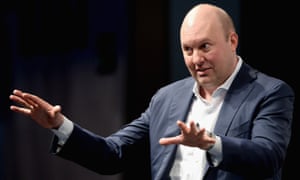
Venture capitalist and Andreessen Horowitz co-founder Marc Andreessen, who led investment in home care startup Honor.


Venture capitalist and Andreessen Horowitz co-founder Marc Andreessen, who led investment in home care startup Honor. Photograph: Michael Kovac/Getty Images for Vanity Fair

The new companies are different in that they provide the service themselves. Honor and Hometeam have both developed software designed to match user and care provider and to facilitate communications. Most often, that is with the children of the clients actually receiving the care. The apps also provide protocols for treating patients with particular conditions. Hence, the partnerships that Honor has created with the American Cancer Association and American Parkinson’s Association. Finally, these companies are creating new models to provide training and career development to care providers – a population that is growing along with the population of seniors.


Honor founder Seth Sternberg explains: “When we started looking at the nonmedical home care space, we realized that the problem was that home care professionals are treated really poorly. 56% of them are on some kind of government assistance. If you can’t take care of yourself how should we expect you to take care of someone else?” The average hourly wage of a home healthcare provider in California is $ 9.50. A San Francisco dog-walker, by contrast, earns $ 20.


Honor announced that they were making all of their CarePros employees, rather than independent contractors, in January 2016. Salaries start at $ 17.50 per hour, with healthcare benefits, equity, and opportunities for advancement. They have a huge and growing population of workers to draw on: there are currently between 2 and 3 million non-medical care professionals in the US. HomeHero followed by announcing that they were giving all of their workers W-2 status, with healthcare and benefits, on 1 March. Josh Bruno, the 29-year-old who startedHometeam,told me that they have used employees – not contractors – since the beginning, in July 2015. They currently have over a thousand actively working in four states on the East Coast.


Personal drive


The founders of these companies tell touching personal stories about revelations they had while struggling to care for their own families. For Sternberg, the lightbulb moment came when he was around 35: visiting his mother in Connecticut, he discovered that her driving had slowed to a crawl. For Bruno, it was the experience of watching his family trying to coordinate care for his nonagenarian grandfather. Bruno left his job and started volunteering at home healthcare agencies, convinced that he could learn how to create a company that would do it better.


Related: Big tech asked to pay their ‘fair share’ in taxes to help San Francisco’s homeless


It makes sense that young entrepreneurs would want to disrupt the home healthcare industry, which is valued at $ 80-100bn per year in the US and employs tens of thousands of contract workers across different local agencies. But there are other, more systemic reasons why these startups are well positioned to raise funds and to continue to expand.


New provisions of the Affordable Care Act, which became effective only in April, mean that hospitals will have incentives to coordinate post-release care for their patients. Whereas previously hospitals were reimbursed for such procedures on a case-by-case or a fee-for-service basis – reimbursed by Medicare for each treatment that a patient received – under the new arrangement, a hospital will only be allotted a certain amount of money to pay for treatment of a health issue such as a joint replacement or heart surgery.


This means that hospitals will be penalized if their patients are readmitted, meaning hospitals and insurance companies now have a real incentive to improve care after procedures.


The kinds of services that Honor and Hometeam provide have always been regarded as “non-medical”: the workers who deliver it do not need to have medical training, and are actually prohibited from administering any actual medical care. In the case of Eleanor, whom I visited in the Bronx, her daughter Carol comes once a week to lay out her pills. Her caregivers can only ask “Did you remember to take your pills?” but cannot legally instruct her to take them.


Until now, this kind of care has been performed by very low waged contract workers hired through agencies, and has not been seen as part of medicine or as eligible to be covered by medical insurance.


Ronald Greeno is an in-patient doctor who has worked in Los Angeles for 30 years. He sees this changing, and thinks this is part of what the investors backing the new startups are betting on. “There’s an emerging realization that homecare is healthcare at its most basic. The most basic elements are getting individuals to care for themselves. Are you eating right, exercising, seeing a doctor when we need to, getting the right preventative care done, and so on? That is the essential element of healthcare, and by the way the most cost effective.”


For now, individuals like Alan and Toby, or like Eleanor and her daughter Carol, seem happy to bear the expense – and even to adopt the rhetoric of friendliness that characterizes the relations of employers and employees in so many “disruptive”industries from ride sharing to co-living spaces.


On the day when I visited Eleanor, she was giving her Ghanaian home health aid, Serwa, instructions on how to prepare sweet potatoes with marshmallow for the Jewish Passover holiday the following week. As Serwa moved around the kitchen, Eleanor beamed: “It will be her first Seder.”


How care apps for the elderly could disrupt tech"s obsession with youth

30 Haziran 2014 Pazartesi

Too Many Games And Apps? Pediatricians Say Read Aloud To Your Children

You’ve probably heard the terms “summer slide” or “summer slump.” These terms refer to the finding out loss that occurs when kids are not in college. The Nationwide Summer season Finding out Association says that “research spanning a hundred many years shows that college students usually score decrease on standardized exams at the finish of summer season getaway than they do on the same tests at the beginning of the summer season.” (The difficulty with testing aside, this is nonetheless result in for concern).


Youngsters are engaged in intentional understanding pursuits most of the week for the duration of the school yr, but we really don’t supply as many intentional options for learning in excess of the summer season. If your property is anything at all like mine, there’s a good deal of video video games, a excellent amount of movies, hiking, digging, and operating around outdoors, but not a great deal of formal finding out. Once they begin camp, factors get much better. But it is nonetheless not perfect except if I’m actively engaged.


Of course, I’m not suggesting kids should be finding out Greek and studying algebra all summer time prolonged. Over achievement can be just as problematic as below achievement. Totally free perform is excellent. But making intentional structured opportunities for totally free perform is even much better.


Don’t forget that throughout the 12 months, they spend a good deal of time on words and books. How can we make positive they remain targeted on words and books all through the summer season getaway? One particular way is by reading through aloud as typically as feasible.


Last week, the American Academy of Pediatrics’ (AAP) Council on Early Childhood issued a recommendation that all dad and mom read to their youngsters from infancy. It may sound like that’s previous news. Following all, folks have stressed how important it is to go through to your children for decades.


You’ve probably heard about the renowned “Word Gap” review, in which “observers located that 86% to 98% of the phrases utilized by every little one by the age of 3 were derived from their parents’ vocabularies. In addition, not only were the words they used virtually identical, but also the average amount of words utilized, the duration of their conversations, and the speech patterns have been all strikingly equivalent to these of their caregivers.”


What’s a lot more, the amount of words that kids are exposed to would seem to correlate straight to socio-economic elements. In the most severe circumstances, the gap among wealthy and underprivileged can be as big as 30 million phrases. The amount of phrases that kids are exposed to in early childhood impacts their performance in early reading through training, and for that reason is a single of the very best predictors of lengthy phrase good results.


Tv impacts early childhood literacy negatively. A recent examine published in the Journal of Kids and Media discovered that dad and mom speak fewer phrases to their infants if the Tv is on. Even if no person is watching–even if the children are carrying out other things–it counts as Tv. The research located that “children 8 months to two many years of age are exposed to an typical 5.5 hrs of background Television per day, even though people 2–4 many years of age are exposed to an regular of four.4 hours. Thus, really youthful children invest a significant proportion of their waking hours in the presence of background Television.”


Here’s the problem: “background Television disrupts toddlers’ solitary toy play” and youngsters show “more frequent and shorter looks at toys and shorter bouts of centered interest with toys in the presence of background Television packages than when the Tv was off.” All of that does not seem to indicate considerably right up until you look at how it impacts language development.


I keep in mind when my children have been minor, I would put on grown up Tv exhibits that they barely understood. I figured if I heeded the AAP suggestions to restrict screen time for children underneath two years previous, I was protected. But it turns out that even if the children aren’t watching–if it is on in the background–it can even now have damaging influence on early literacy. The Journal of Kids and Media examine identified that “when the parent’s consideration was directed at the Television, he or she probably ignored the child, supplying fewer opportunities to interact and to introduce new words.”


Of course, nobody’s ideal and the point right here is not to make you panic, or worry. However, you ought to bear in mind that a lot of variables play a portion in how your children learn to read through. Also, keep in mind that reading ability is not just about educating children how to sound out phrases and comprehend text. Children also require to discover how to think about the texts they go through. This is why I believe that you ought to read through to your kids until finally they are outdated enough that they really don’t want you to read to them any longer.


Most mothers and fathers I know study books to their children when the children are little, image books like Dr Seuss. But they cease once the children are old adequate to study to themselves. Reading through “chapter books” to older children is equally essential.


My youngsters (boys 6 and eight) read through all the time. Partly since I make them go through all the time. I think it is like brushing their teeth, even if they really don’t want to read, I still demand it. But also, when they find a guide they like, I don’t have to even inquire them. They select to go through non-stop. At the moment my 6 yr old is reading the Amulet series of graphic novels. He’s received Doug Tennapel’s Cardboard and Poor Island on deck. My nine 12 months previous just read Orson Scott Card’s Area Boy and he also loves the Secret Agent Jack Stalwart series.


Strolling into a space and obtaining your kids studying a guide is great. But it is critical to continue reading through to them, specifically chapter books. It gives adults a chance to model extended term dedication to a story. It gives adults a opportunity to discuss complex emotional questions with their kids. And it provides adults a chance to display little ones what it means to inquire challenging concerns about complex texts.


So far this summertime my kids and I have presently study half a dozen books together. We snuggle in bed all around the e-reader. Here are three fantastic novels that my kids and I advise. They are all Newbery Medal winners or runners-up. The Newbery award winners record is 1 of my go to sources to locate new books.


The factor about all 3 of these books is that even although my nine 12 months outdated could probably read them all himself, it is nonetheless preferable that we study them together. They don’t have sufficient action to hold my boys absorbed on their own. They like chase scenes, aliens, monsters, and heroes. When they study with me, nonetheless, they get an publicity to other genres, new ideas, and other variations of storytelling.


FLora


Flora &amp Ulysses is the newest supplying from Kate DiCamillo. It is about a squirrel with super powers. The book is silly and smart. It functions divorced mothers and fathers, which is rare. Ever because my wife and I split a couple of years ago, I’ve observed how robust the cultural messaging is to inform my kids that their circumstance is not typical. I applaud Dicamillo for generating a story that explores some of the difficulties for young children of divorced parents with no producing it so explicit that it feels like soon after-school particular.


Due to the fact the protagonist of this guide, Flora, is not a boy on an journey, I doubt my sons would have read it by themselves. But they loved it when I read through it. They usually like the books I study aloud the ideal. Meanwhile, I get to subtly educate lessons by explicitly expressing my approval or disapproval of characters in the story after we finish every single night’s chapter.


billymilleryear


The Yr Of Billy Miller is a novel about a second grader making an attempt to make sense of his each day experiences. I discover this operate by Kevin Henkes is especially intriguing because it lacks a big above the top story. There is no great quest or adventure. It is about the daily anxieties of a second grader with an irritating younger sister. The most significant second is when Billy tries to keep up all evening.


My boys and I mentioned this book in detail while we have been reading through it. Initial I asked them if the feelings Billy expressed sounded familiar. They answered “yes.” And I followed up with a series of questions asking them how a grown up could create a story about a 2nd grader that sounded so genuine. “How could an adult know what a child thinks?” This type of questioning is excellent because it can make them feel about creating and offers the basis for the kind of essential examination they’ll want to do later in life–not only of books and videos, but also of everyday events. I’ve written in detail about how this variety of conversation about video games can help youngsters create metacognitive skills.


One and Only Ivan


The One particular And Only Ivan is a classic. It has quick chapters and simple language simply because it is written from a gorilla’s point of view. This guide is an quick traditional. I will not inform you too considerably about the story. Just know that it is about a gorilla who spends most of his existence in a tiny glass cage within a rundown buying mall. Dad and mom and little ones will each adore it.


I read this to my children in three nights. We couldn’t stop reading through. My youngsters explained it was one particular of the very best stories they ever heard. In fact, the story is easy, but it is so effectively advised that it carries massive emotional weight. At the finish of the book, tears were rolling down my cheeks. When little ones see grownups possessing genuine emotional reactions to books, they understand that books are powerful. They find out that authors are essential. They discover that concepts are influential. And they understand that feeling, empathy, compassion, and caring are just as useful as winning and achievement.


Jordan Shapiro is author of FREEPLAY: A Video Game Manual to Maximum Euphoric Bliss, and MindShift’s Guide To Games And Learning For information on Jordan’s upcoming books and events click here.


Too Many Games And Apps? Pediatricians Say Read Aloud To Your Children

20 Haziran 2014 Cuma

Smartphone medical doctor: self diagnosis with new apps


Healthcare tricorders are no longer just science fiction.


New advances in sensor technologies are harnessing the computing power we presently have in our smartphones to produce sophisticated devices the common particular person can use to diagnose themselves.


Armed with that information, men and women can understand a lot more about their personal physical condition and, probably even much more helpful, share that information with physicians remotely.


Smartphone medical doctor: self diagnosis with new apps

19 Haziran 2014 Perşembe

Health and fitness apps booming ahead of Apple"s iOS 8 launch

Usage of wellness and fitness apps on Apple’s iPhone and iPad is booming in 2014, in accordance to a review launched by mobile analytics company Flurry.


The company tracks more than six,800 apps in the overall health and fitness group, and claims that usage – measured by the number of occasions folks open and use the apps – has grown by 62% this yr, in contrast to 33% for apps in general.


Flurry says that this compares to 49% usage growth for overall health and fitness apps in 2013, versus 115% for apps total that year.


2014′s development comes ahead of the release of Apple’s iOS 8 application, which will include a committed Overall health app to track people’s well being data, and an initiative called HealthKit to integrate apps from other developers.


“A glance at wellness and fitness equipment retailed by Apple in the US is a excellent indication on how a lot of overall health, fitness and vital sign monitoring products the iPhone can change. These accessories come with applications that are designed for everyday use,” wrote Flurry’s chief executive Simon Khalaf in a site post.


“2nd, there has been a great deal of innovation in the apps themselves above the past two many years, specially when it comes to integration with Facebook and other prominent social networks… This innovation has enhanced the viral distribution of these apps by means of the social networking channel.”


Flurry claims that a new demographic of “Fitness Fanatics” is driving the growth of this certain app class, suggesting that 62% of these men and women are girls, skewing in the direction of the 25-34 and 35-54 yr-outdated age groups.


“We have a pretty great image of Fitness Fanatics. They are predominantly women age 25 to 54 who are sports activities supporters and lead wholesome lifestyles, and who are probably to have kids,” wrote Khalaf.


Flurry expects these individuals to be among the earliest adopters of wearable devices, like smartwatches and action-monitoring bands.


Although Apple is getting ready to launch Well being and HealthKit, rival Google is anticipated to unveil its very own Google Fit service for Android devices later this month.


Investigation company IHS Technological innovation recently predicted that global revenue of sports activities, fitness and activity-monitoring gadgets will grow from $ 2.2bn in 2014 to $ two.8bn in 2019, with the quantity of gadgets in use increasing from 84m in 2013 to 120m by 2019.


Unfitbit: when fitness monitoring goes incorrect


Health and fitness apps booming ahead of Apple"s iOS 8 launch

30 Mayıs 2014 Cuma

Junk food apps to entice kids "must be banned"


Dr Haiming Hang, of the University of Bath, called for regulation to manage the games, which are legal.


“There are basic ethical queries to be addressed,” he explained. “The Government needs to enforce labelling and introduce regulation on a par with television advertising. Organizations are manipulating youngsters into wanting foods and drinks that are substantial in salt, sugar and excess fat.”


They have been developed by a quantity of firms, such as McDonald’s and Coca-Cola.


Because 2007, businesses have been banned from advertising meals higher in unwanted fat, salt and sugar throughout children’s television programmes.


The regulation was brought in by Ofcom, the media regulator, but the ban does not lengthen to the internet.


Coca-Cola, which created games with McDonald’s, mentioned they had been aimed at young children aged 13 or over. McDonald’s said only its brand was noticeable in the game.


Junk food apps to entice kids "must be banned"

24 Mayıs 2014 Cumartesi

seven Fantastic Educational Apps And Games

A game virtually as addictive as Angry Birds, DragonBox combines 1st charge artwork style and smooth game mechanics to teach the fundamentals of algebraic considering. At initial glance, it appears like DragonBox is tricking children into learning algebra. It is not. Youngsters are truly performing algebra from the moment they begin the app. Trials have proven that, on regular, DragonBox takes about 42 minutes to teach kids most of the operations concerned in middle college algebra. IOS &amp Android. (Text by Jordan Shapiro)


seven Fantastic Educational Apps And Games

10 Mart 2014 Pazartesi

Are health-related apps on your smartphone excellent for your wellness?

On a dreary November afternoon, the news bulletins are dominated by the fallout from the Mid Staffordshire hospital scandal and predictions of another tough winter in A&E departments but, at LSO St Luke’s, a church turned concert hall in Old Street, east London, all is optimism and light.


The NHS may be lurching from one crisis to another but, to listen to the entrepreneurs gathered beneath the eves of this Hawskmoor-designed church a stone’s throw from tech city, the health cavalry is on its way.


Twenty health tech startups from around Europe have gathered at St Luke’s to pitch to a panel of venture capitalists in a Dragons’ Den-style competition. Up for grabs is a share of a €50,000 prize and the ear of an investor who can fast-track their device to market. The event’s sponsors, Johnson & Johnson, have billed it as a digital health masterclass.


First up is Johann Huber, co-founder and CEO of Soma Analytics, a London-based company that describes its product as the “world’s first evidence-based mobile resilience programme”. In plain English, Huber and his partners have developed a smartphone app that purports to measure employee stress levels by analysing their speech and texting patterns.


“Using our algorithm we can design a 21-day personalised programme to help employees manage their stress and build mental resilience,” he tells the dragons.


Next up is Paul Doherty, head of sales at Shimmer, a Dublin-based company specialising in “clinical grade wearable wireless sensing technology”, such as the Shimmer3, a slimline sensor that can be strapped to an athlete’s arm in training to provide coaches with biophysical data.


Doherty is followed by Andraz Ogorevc, a Slovenian entrepreneur pitching a mobile app and Bluetooth-enabled wristband that enables the wearer to send an SOS message within 20 seconds of suffering a heart attack. “The market is huge. We estimate there are 1.2 billion smartphone users with health conditions,” he says. “Our goal is 20 million users within five years.” The star of the afternoon, however, is Don Jones, vice-president of Qualcomm Life, a subsidiary of the chip maker Qualcomm and a big sponsor of wireless healthcare technology. In a slick 30-minute presentation, he takes his audience on a whistlestop tour of the fast-changing market for health apps and digital medical devices – a market predicted to be worth $ 26bn by 2017 in the US alone.


Medical apps Monitoring your own health is the key to the apps.


From the LifeWatch V, a smartphone embedded with sensors that enables users to monitor everything from body temperature and ECG to heart rate and oxygen saturation, to the YOFimeter, a compact wireless blood glucose meter for diabetics, Jones explains that new technologies are rapidly altering how, when and where people monitor and manage their health.


“Think of every way you have ever interacted with a medical professional or someone in a clinical setting – a doctor, a nurse, or your corner pharmacist – then think how that can be replicated digitally so that the process is both more convenient and faster,” he says. “The odds are that someone in Silicon valley is already working on it.”


To spur innovation, last year Qualcomm announced a $ 10m prize for a Star Trek-style “tricorder” to be awarded to the first developer to succeed in designing a mobile platform capable of diagnosing a set of 15 conditions, including pneumonia, diabetes and sleep apnea, without recourse to a doctor or nurse.


While that might sound like science fiction, 230 teams from more than 30 countries have registered interest. But you don’t have to upgrade to a device like the LifeWatch V to monitor your vital signs. If you have the latest smartphone you can probably achieve the same thing with an off-the-shelf plug-in sensor and a downloadable app. Indeed, Jones argues that it is only a matter of time before mobile medical technologies make booking an appointment with your GP for a blood pressure test obsolete.


“Imagine a future where every medical need is just a button away and you can access medical support whenever and wherever you need it,” he explains. “In other words, no more queuing for appointments or sitting in waiting rooms.”


Put that way, digital health sounds hugely attractive. After all, in a world where many people already use the internet to research their symptoms, waiting for your GP to order a test and refer you to a specialist can be hugely frustrating. In theory, digital health can sidestep that process by putting the same clinical expertise on a device that sits in your pocket or on a smartpatch attached to your skin and streaming the data wirelessly to your “care provider network”.


Similarly, more basic telehealth devices that allow the remote monitoring of patients with long-term health conditions have the potential to allow huge cost savings for the NHS by enabling nurses to manage patients with heart and weight issues or conditions such as chronic obstructive pulmonary disease (COPD) more efficiently in the community.


But do we really want to live in a brave new digital world where patients are their own doctors and there is no longer a need for us to submit to an interview in a clinical setting? What do we give up – and what do we lose – when health becomes nothing more than a stream of physiological outputs, a set of data to be parsed and quantified by algorithms managed by faceless medical providers?


Furthermore, what evidence is there that these technologies are suitable for every patient or that they will result in better medical outcomes? Isn’t there a danger that by inviting ever more intrusive digital surveillance we become slaves to technology rather than the masters of our own health?


Medical apps Development of the smartphone has spurred the industry.


There is nothing new about the self-monitoring of bodily functions. People have been examining their urine and stools for signs of disease since Roman times and, after the association of diabetes with excess sugar in the early part of the 19th century, the English physician and physiologist George Oliver began marketing a range of urine reagent papers for home use in 1883. The self-monitoring of diabetes took another leap forward in the 1970s with the production of the Ames Reflectance Meter, a 1.2kg battery-powered lead case featuring a moving needle that indicated blood glucose levels within about a minute of being operated, and by the 1980s the home management of diabetes using handheld glucose metering systems had become standard. The 1980s also saw the aggressive marketing of the first digital home blood-pressure monitors by companies such as Omron, spurred by mounting concerns about heart disease and the risks of hypertension, and by the end of the decade many women’s bedside drawers contained a pregnancy testing kit.


By the 1990s, as people became used to viewing health in terms of a set of risk factors and as multiple drug regimes for the management of long-term medical conditions became commonplace, so the notion of regular checkups and tests, in which vital signs are monitored as a matter of course, began to be seen as normal.


In retrospect, however, the key development was the launch of the iPhone in 2007, followed a year later by the 3G version and the opening of Apple’s app store. It soon became clear that with its built-in camera, audio and GPS mapping functions, the iPhone was much more than a mobile phone, it was a sophisticated self-tracking device – hence its adoption by the Quantified Self movement to record and track every facet of members’ lives. Factor in the ability to download the latest exercise and diet apps and it was only a matter of time before people would be using their smartphones to quantify health data too.


Qualcomm was one of the first chip makers to recognise the potential to transform healthcare – hence its decision in 2005 to set up the Wireless Life Sciences Alliance in San Diego with Don Jones as chairman.


At first, Jones concentrated on the development of wireless and connected health solutions to support research in the life sciences. But as the smartphone market took off and app developers began targeting health and medical needs, he soon realised the consumer market had much bigger potential.


He also had a personal interest. His son, Keenan, was born with a congenital heart defect and needs to monitor his heart regularly to check if his heart is beating normally. For years, Jones would drive Keenan to a cardiologist to be hooked up to a Holter monitor to measure his arrhythmia. But in 15 sessions, Jones claims the conventional Holters failed to produce any useful data.


“Finally, I got fed up and told the attending nurse, ‘you know we’re not going to have any more of your Holter monitors’,” says Jones. Instead, he used his industry contacts to test a series of prototype electronic monitors capable of giving continuous ECG readouts. It was one of these non-US Food and Drug Administration approved prototypes that eventually produced the ECG data his doctor required to decide whether Keenan needed an ablation or therapy.


Keenan, who is now 19, takes his own ECG readings every day using an AliveCor heart monitor that connects to his iPhone. If he’s away from home and his heart starts racing – as it did on a recent trip to Montana – he can email the readings directly to the nearest hospital, together with his medical history, confident that the correct medication will be waiting for him on arrival at the emergency room.


Data can also be sent automatically via the cloud to a patient’s health provider to order a new test or prescription using systems like Qualcomm’s 2net. Indeed, many doctors now prescribe apps, rather than drugs, so that patients can keep abreast of treatment protocols. Taking this idea further, Jones foresees a time when apps will also “prescribe doctors”, telling patients which specialist they should consult and how to contact them. As patches and monitors become smaller and more lightweight, he even envisages a time when vital sign data will be collected seamlessly, 24/7, without the need for the patient to take an active role. The next stage is to combine this vital sign data with other predictive data – such as genomic markers for conditions like breast cancer – to devise personalised treatment programmes tailored to a patient’s risk profile.


From a conventional medical standpoint, the rise of digital medicine is worrying, say some. This is not only because apps and smartphones have the potential to marginalise expertise, making it harder for doctors to cash in on their medical training. Giving people the ability to monitor their vital signs, it is argued, also risks generating needless anxiety.


As Dr Nick Mann, a GP with 22 years experience in an inner city London practice, puts it: “Monitors used around the clock may throw up false alarms. For example, an ECG monitor may throw up all kinds of arrhythmias over 24 hours. It can be disempowering for patients as the patient and staff switch to ministering to the production and influx of data rather than focusing on the doctor-patient relationship.”


Mann also questions whether such technology is beneficial for patients who are terminally ill. “The main priority for someone with end-stage COPD or advanced diabetes is the rest of the life they have left,” he says. “People don’t really want to be reminded of their illness day by day. What they want is to get on with living as healthy a life as possible.”


But perhaps the biggest objection is that these technologies may not necessarily result in more cost-effective medical care – a critical consideration in the context of a tax-payer funded system, such as the NHS, where investment in new technology must be justified on clinical and financial grounds.


Perhaps this explains why in 2009 the Department of Health agreed to fund the Whole System Demonstrator project – a randomised trial of 3,230 patients with diabetes, COPD or heart failure at 179 practices across southern England that compared emergency hospital admissions and mortality rates for those using teleheath devices with those using the usual care systems.


Preliminary findings, in 2012, suggested a 45% reduction in mortality and a 20% fall in emergency admissions for telehealth users and prompted Paul Burstow, then minister for care services, to sign a concordat with the telehealth industry and launch a campaign, 3millionlives, with the aim of rolling out telehealth devices to three million people by 2016, to save the NHS an estimated £1.2bn.


However, a more detailed followup analysis by the Nuffield Trust, published in the doctors’ journal the BMJ later in 2012, found that when the first three months of data were excluded the differences between hospital admissions and mortality in the two groups was negligible.


Worse, researchers found that differences in hospital costs between the two groups were also insignificant and that given the high startup costs of telehealth systems they were unlikely to generate anything like the projected savings. Since then, little has been heard of the government’s three million lives initiative and to date only 100,000 telehealth devices have been distributed to patients with long-term medical conditions.


Nevertheless, pilot trials are continuing in several NHS trust areas and, for those patients fortunate enough to have been recruited, the devices have been transformative. Take Haris Patel, 53, from Folkestone, Kent, who suffers from Parkinson’s, peripheral vascular disease and hypertension, as well as other conditions. Patel, who is confined to a wheelchair, used to be a regular user of Kent Medway emergency services. Since taking possession of a Viterion 500 telehealth monitor, however, he has been able to monitor his blood pressure, weigh himself regularly and send his blood sugar readings to his hospital for remote viewing by specialist nurses, reducing the need for emergency callouts. “I used to spend an average of eight to 10 months in hospital every year,” he says. “Now, when my blood pressure is high it can be dealt with instantly without the need to involve a consultant. It’s improved the quality of my life 100%.”


Patel says the machine has also given him a greater understanding and control of his condition and looks forward to the time when he can send the same data wirelessly.


Many consultants are also beginning to embrace the technology. At the Johnson & Johnson digital health masterclass, Dr Jon Shaw, a former surgeon, was pitching DocCom, a secure social networking platform for use by medical teams in hospitals. DocCom was born out of Shaw and co-founder Dr Jonathan Bloor’s frustration with hospitals’ reliance on bleeper and paging systems.


Why, they wondered, couldn’t the NHS have a system akin to Facebook that enabled consultants to communicate with colleagues outside ward rounds? By signing up to DocCom’s secure cloud-based platform, consultants can do that without the fear of breaching patient confidentiality. All they have to do is download an app to their mobile phone and confirm their identity in order to start texting colleagues straight away. So far, 10 NHS trusts have agreed to trial the system.


Another promising application is Safe Mobile Care. Devised by Dr David Morgan, a consultant head and neck surgeon in Birmingham, the system uses a touch-screen mobile phone that can be programmed with personalised plans for patients. Morgan claims that not only does the system reduce admissions for cardiac failure by about 80%, it also enables nursing teams to work more efficiently. Furthermore, rather than increasing patient anxiety, he argues the system helps patients to better understand their conditions and take control of the management of their health.


Morgan does not believe, however, that the technology is appropriate for all patients. “The idea that patients should have a device for life is a market-led idea to sell more devices than necessary.”


That sentiment was echoed at the masterclass at LSO St Luke’s. Although nearly every developer claimed patients’ needs were uppermost, the judges begged to differ, expressing concern that some startups seemed more focused on market share than in catering to a clinical need. Perhaps that explains why the dragons awarded the first prize to PxHealthCare, a Dutch startup whose product was developed specifically for breast cancer patients. Founded by Dr Anne Bruinvels, a pharmacist with a background in personalised medicine, the company aims to provide bespoke medical support to cancer patients by providing them with a suite of self-reporting tools. Using the company’s OWise app and web platform, patients can talk to their physicians and get advice about their drug regimes, enabling them to better manage their treatment plans.


At the same time, the data collected by OWise can be anonymised and shared with medical researchers to shed light on drug interactions and side-effects.


For these and similar applications to take off in the UK, however, developers will first have to convince sceptical GPs like Dr Mann. While Mann accepts that some patients may benefit from such devices, he doubts this is true of most patients he sees in his practice.


“As a doctor, I welcome anything that will improve patient care and be cost effective but so far the evidence from telehealth is that it doesn’t do either of those things,” he says. “In the NHS we haven’t got the luxury of giving people things just because they like them.”


For all that doctors may be reluctant to embrace these new technologies, however, social trends are not with them. Already, Britain and the US are facing a shortfall of doctors as the recruitment to medical schools fails to keep pace with an ageing population and the growing numbers of people living with long-term health conditions.


Back at St Luke’s, I ask Jones whether he thinks the medical profession will come round to digital health. “As with any new technology, you’re going to find early adopters and late adopters and a middle group who hang back,” he says. “I’m not sure it’s what all physicians want but I’m confident that a percentage of them will wholeheartedly embrace this technology and that eventually the rest of their colleagues will follow.”


Are health-related apps on your smartphone excellent for your wellness?

7 Şubat 2014 Cuma

ten overall health apps to assist you keep fitter and feel better

dr clare gerada

Dr Clare Gerada picks the ten health apps that she thinks are most beneficial. Photograph: Frank Baron for the Guardian


The smartphone is arguably one particular of the most transformational advances in overall health care we have observed in current years. This little gadget offers us access to a technological wonderland – the wellness app, and there are far more than 50,000 to chose from.


There are blood-strain cuffs linked to a smartphone sensors connected to phones that can gather myriad biological information apps that monitor blood sugar, analyse sleep, measure pulse and respiratory fee.


As a GP, I realize the power of this new engineering and I welcome the handle it gives my patients – generating shared decision-producing and self-care a actuality (and bringing exciting into it). But I also am wary of overestimating the energy of apps – either to change behaviour or enhance overall health. Measuring bodily functions is not every little thing. What can be measured isn’t going to usually matter – a little drop or rise in blood stress is neither here nor there. Medical doctors do a lot more than process information – and whilst this technological innovation is potent and wonderful, we should never ever fail to remember that medicine is an artwork, as nicely as a science.


BNF


The BNF is the doctors’ Bible, containing info on thousands of medicines – their indications, contra-indications, side-results, doses and a lot a lot more. Now alternatively of becoming contained in an ever-increasingly massive guide, this minor app saves time and room and improves patient safety by creating confident I prescribe the right medicine to my individuals.


NHS


Does what it says. You enter what you drink and it calculates this into units of alcohol. It assists track how a lot a single is consuming and provides free of charge personalised suggestions. I strongly suggest it. Utilizing it often prospects to decreasing consumption – as the harsh reality of how much a single drinks is brought home. One more app I’d suggest is Drink Coach.


thisheartthis


A bit of entertaining – but not confident what actual use this one may possibly have. Even so, for people fitness addicts who need to have instant affirmation of their fitness, this app is for you. Just touching the camera lens with your finger offers you your pulse fee.


walk


A fitness tracker that gamifies strolling. You’re advised a bomb has exploded at Inverness station and you have to transport a package deal the length of the Uk by foot to conserve the globe. The app is getting evaluated by King’s School London to see its effectiveness in increasing walking in patients with rheumatoid issues. Anything at all that gets people walking – given the obesity epidemic we face, must be a very good thing.


sleep


One particular of my favourites and one particular I advise to a lot of patients who endure from insomnia. This app monitors sleep pattern, tells you how prolonged you are in deep sleep and how long in light rest. It tells you how many hrs you truly are asleep – which is a whole lot longer than numerous sufferers think, and it wakes you up in the lightest phase of sleep so you can start the day feeling relaxed and rested.


big white


This is provides users with on-line help for psychological well being troubles. It gives a risk-free space to share experiences and get support – from genuine (not virtual) folks. The site is monitored 24/7 by moderators. The only down side is that it is subscription only – though some overall health service areas pay for their nearby population to use it.


diabetes


Created by Uk doctors and academics, this app functions out your chance of creating type two diabetes in the subsequent ten many years by asking you a series of simple inquiries. Becoming capable to predict if you are danger of diabetes ought to lead to a alter in behaviour.


sliders


Sliders allows you to track how you really feel about your wellbeing, energy amounts, sleep and so on, making use of queries you can set your self and basic sliders to input the answers. It then creates graphs that give you some insight into your highs and lows.


phobia


This app aims to cure customers of arachnophobia. It makes use of “‘systematic desensitisation” – primarily exhibiting sufferers a series of picture of spiders, from drawings to an interactive tarantula. Designed with the aid of a psychiatrist, the app has recently been accredited by the NHS.


headache


Allows you to track your headaches: when they start and end, how significant they are, which area of the head you really feel them and which medicine you get. This can support create up a picture of what triggers them and how you may possibly modify your behaviour to minimize them. This app is advisable by the NHS – its Wellness Apps Library is also a great place when seeking for health-related apps.


ten overall health apps to assist you keep fitter and feel better

24 Ocak 2014 Cuma

7 Excellent Educational Apps And Games

A game practically as addictive as Angry Birds, DragonBox combines initial rate artwork style and smooth game mechanics to educate the basics of algebraic pondering. At 1st glance, it appears like DragonBox is tricking youngsters into studying algebra. It is not. Kids are actually doing algebra from the moment they start the app. Trials have shown that, on regular, DragonBox takes about 42 minutes to teach little ones most of the operations concerned in middle school algebra. IOS &amp Android. (Text by Jordan Shapiro)


7 Excellent Educational Apps And Games

15 Ocak 2014 Çarşamba

7 Wonderful Educational Apps And Video games

A game almost as addictive as Angry Birds, DragonBox combines 1st rate art layout and smooth game mechanics to educate the basics of algebraic considering. At 1st glance, it looks like DragonBox is tricking little ones into finding out algebra. It’s not. Youngsters are actually carrying out algebra from the moment they start the app. Trials have proven that, on common, DragonBox requires about 42 minutes to teach kids most of the operations concerned in middle college algebra. IOS &amp Android. (Text by Jordan Shapiro)


7 Wonderful Educational Apps And Video games

31 Aralık 2013 Salı

Fat Loss Apps

Year following yr, fat reduction reigns as 1 of the most well-liked New Year’s resolutions. But weight problems remains an epidemic in the United States. Whether or not you want to lose 5 lbs or 50, stick with it in 2014, so that subsequent 12 months your purpose is just to preserve the excess weight off. With numerous apps and wearable tech designed to aid you meet your fitness ambitions, there are no excuses this year. Consume nicely, perform out, and stay motivated with the help of this technologies.


Lose It!


Lose It!


Lose It! has been 1 of the most well-known overall health apps on iTunes for many many years now. The effortless-to-use app can make it straightforward to maintain track of bodyweight reduction ambitions. Enter your existing weight and your preferred bodyweight and the app will inform you the greatest everyday calories you can consume to meet your aim.  Log fitness routines and scan barcodes on food items, to easily maintain track of your progress. Weigh by yourself every day and see a line graph of your progress. This free app is offered on iOS and Android, with extra expenses for upgrades.


Daily Workout routines


Daily Workouts


Conserve cash on a gym membership this 12 months. Perform out at residence! The Everyday Workout app is essentially a work out video for your smartphone or tablet, broken up into 5 or 10 minute routines. This app will get your butt, arms, abs and legs in form, although conserving you a time. The workout routines are as successful as your local fitness class.  This free app is accessible on iOS and Android, with further fees for upgrades.


Jawbone UP


Jawbone


“Wearable tech,” was definitely a catchphrase of 2013 and that is expected to proceed into the new yr. With fitness-tracking wristbands gaining acceptance, there’s no indicator that the momentum is slowing down. The Jawbone UP band is one particular of the a lot more popular devices and not too long ago came out with a new model, named the UP24. In addition to tracking actions taken and calories burned, the water-resistant band keeps tab on rest patterns through its smartphone app. Set an alarm to wake you up in your lightest rest phase, and the band promises you will be refreshed. Include pals to your “team,” and inform them to step it up! The Jawbone UP24 retails for $ 149.99


Fitbit


Fitbit


The Fitbit is one more contender for the hottest in wearable tech. The lately released Fitbit Force, is an improve to the Flex. Like the Jawbone UP, the Fitbit bands track steps taken and hrs slept. However not like the preceding Fitbit, the Force displays true-time information on the  band’s screen, doubling as a view. Sync with the app to track progress and compete with your pals.  The Fitbit Force retails for $ 129.95


ShopWell


ShopWell


In an era the place individuals track almost everything from carbs to gluten, ShopWell aids you maintain track of all your dietary requirements. Next time you are at the grocery store, scan barcodes of meals products and ShopWell will inform you if the item meets your needs. If not, it will recommend one more similar item that does.  Whether you’re hunting to lose bodyweight, keep away from allergy symptoms, or aid with diabetes, ShopWell will do you effectively. This free of charge app is offered on iOS.


Fat Loss Apps