Lesson etiketine sahip kayıtlar gösteriliyor. Tüm kayıtları göster

17 Nisan 2017 Pazartesi

The lesson of Prince Harry’s grief? We need mental health services for all | Suzanne Moore

One of my strongest memories of attending Princess Diana’s funeral is of sitting up high in Westminster Abbey and looking down on her young sons. During the long service no one touched them or hugged them, though everyone was moved by the handwritten “Mummy” card on top of her coffin. The much reviled Sarah, Duchess of York leaned over to see if they were OK. Otherwise, nothing. They were to be “brave”, I suppose. They had walked behind that coffin for a very long way, their heads bowed, impassive. Why had they been made to do that?


The dysfunction of the first family was challenged and disrupted at the funeral by Earl Spencer’s speech. The public grief was dismissed by much of the establishment – as Diana was herself – as hysterical, and it proved the polar opposite of the royal reaction. The family holed up in Balmoral. Charles could now work to get everyone to accept Camilla as his partner, which they largely did. And the boys? It seemed they must just get on with it.


Twenty years later, in a lovely interview with Bryony Gordon in the Telegraph, Prince Harry has now spoken about his grief and how it affected his mental health. The stiff upper lip and the repression required to keep it so is not the way forward. Acknowledging the problems and talking about them is.


The loss of his mother when he was 12 was at the root, Harry says, of his feeling of anxiety, which manifested itself in “fight or flight” responses when in public. He talks of his aggression – he found boxing helped with this – and the feelings of internal chaos and breakdown that come after a deliberate shut-down of emotion. He didn’t want to think about his mother as it would be too sad. Yet, of course, not thinking about loss does not mean its effects go away. Harry was supported by his brother, William; “shrinks” helped as well; and finally, being open helped too.


Seeing fellow soldiers with PTSD from serving time in Afghanistan made him realise that actually this was not the root of his mental health issues. Rather, he had pushed away emotions, shoved them right down, always saying life was fine when it wasn’t at all. “And then I started to have a few conversations and actually, all of a sudden, all this grief I had never processed started to come to the forefront and I was like, ‘There is actually a lot of stuff that I need to deal with.’”


Alongside this, he, William and Kate saw that in much of their charity work, mental health was intrinsically bound to many other issues, but not always addressed. They decided to work on this.


Harry has rightly been praised for talking personally and thus destigmatising mental health issues. This is no doubt excellent. The normalising of mental health problems, which it is estimated will affect a quarter of us at one time or another, is necessary, but so too is funding. Mental health services are in a very poor state and it is almost impossible to get help. Many people in Harry’s situation would not get access to counselling and would be offered antidepressants and possibly a short course of cognitive behavioural therapy, as this is considered most cost-effective. In acute cases, people in a state of severe breakdown are now forced to go to hospitals far from their homes because there are no beds to be found nearby. This is a real crisis, and it is more visible by the day on our streets.


Royals doing charitable work can help, but we need to think about how the whole of society copes with an epidemic of mental health problems in our young people.


Harry’s likeability and frankness, alongside William’s, have helped to rehabilitate the royals’ image: a facade of modernisation. Remember that at the time of their mother’s death the family was viewed as out of touch, anachronistic. Their lack of emotional engagement seemed to belong to another era. Charles’s treatment of Diana, and her refusal to accept the script that had been written for her, threatened their popularity. Lessons were learned and the princes have been part of this PR.


Indeed, Harry is not the first royal to go public with such issues, although I am very glad he has. His mother talked, after all, of her struggles with bulimia and her suicide attempts. She spoke of difficulties with self-esteem and how bulimia gave the illusion of comfort, followed by disgust. She talked of feelings of self-revulsion and the compulsion to “dissolve like a Disprin” back in 1993. Many dismissed her then as unstable, attention–seeking and manipulative as a result.


Twenty years after her death, the fact that her youngest child can open up in such a way and be widely praised for it shows, I hope, that the world has moved on. Now it’s time to make the help and support that was available to a prince available to all.


The lesson of Prince Harry’s grief? We need mental health services for all | Suzanne Moore

22 Mart 2017 Çarşamba

It"s good to talk: pupils gather for world"s largest mental health lesson

“Talking about mental health does not make you weak,” the world’s largest mental health lesson has been told. Til Wykes, a clinical psychologist, told an audience of more than 500 13-18-year-olds from around the country: “We want to get people to come to treatment early because if they come early, they recover faster and they recover better.”


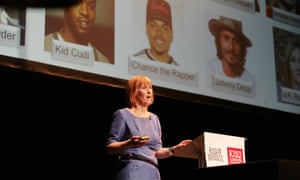
The event on Tuesday at Hackney Empire in east London, compered by the 4Music presenter Maya Jama, was designed to teach children and young people about what mental health is, how to protect it and deal with problems when they arise. Officially recognised as the Guinness World Record for the largest-ever mental health lesson, with 538 young people present, the hope is that it also raises general awareness about the issue among young people and helps combat the stigma surrounding it.


There were gasps from the pupils as they heard one in 10 five-to-16-year-olds have mental health problems, amounting to 850,000 children, and 75% do not get the help they need.


Wykes, who works at King’s College London, told pupils that in a class of 30 that meant on average three would have mental health problems at some point – or possibly more as the current estimate of one in 10 is believed to be out of date – so they were all likely to be touched by the issue in some way.


Dame Til Wykes


Dame Til Wykes, who helped organised the event, said if people come early, they recover faster and they recover better. Photograph: Martin Godwin for the Guardian

Hussain Manawer, the poet, mental health campaigner and soon-to-be astronaut who organised the event with Wykes, told the audience: “If you are going through something you need to speak to someone about it, but if you don’t feel comfortable about talking to your friends then maybe you need to evaluate who your friends are.”


Video messages of support from a host of celebrities were played and there was even backing from the Duke and Duchess of Cambridge and Prince Harry, who stressed “how important it is to talk about mental health”.


Manawer, who has his own YouTube channel, Hussain’s House, and has just released his first single, I’m ashamed, also drafted in entertainers to talk in person about mental health and entertain the children after the formal part of the lesson, which conformed to strict rules dictated by Guinness World of Records, including no toilet breaks or talking by pupils, except when asked to respond.


The 30-minute lesson touched on famous figures of the past such as Virginia Woolf, Isaac Newton and Winston Churchill who have suffered from depression, alongside contemporary names such as JK Rowling, Professor Green and Kelly Holmes, illustrating that being successful does not offer immunity from depression.


Pupils listen to the lesson at Hackney Empire


Pupils were told that that in a class of 30 on average three would have mental health problems at some point. Photograph: Martin Godwin for the Guardian

The dangers of cannabis – particularly high THC skunk – were also discussed, the damage done by using pejorative terms to describe people with mental health problems and the importance of sleep, as well as how staying online at bedtime has the potential to disrupt it. The audience was told about the importance of communication and the services offered by the Samaritans, Childline and Young Minds.


After the lesson, the pupils were entertained by the YouTube comedian Humza Arshad, Jordan Stephens (one half of hip-hop duo Rizzle Kicks) and singer Sinéad Harnett, although there were still serious points to be made.


“Hear me, I would have this [subject] on the national curriculum, I have no idea why it’s not,” said Danny-Boy Hatchard, who played Lee Carter – a character with mental health problems – in EastEnders. “Not all of us will use the circumference of a circle or algebra [but everyone will use this].”


It"s good to talk: pupils gather for world"s largest mental health lesson

2 Temmuz 2014 Çarşamba

A Lifestyle Lesson From My Aging Canine

My sweet dog, Tigra, acquiring extremely old, is visibly slowing down now.  She is teaching me about acceptance.  I do not want to understand it.  I really do not want to know that I will quickly have to allow go.


I am reminded of my clients who tell me that they see a problem correct in front of them, an aging parent or spouse getting too previous to control  anymore yet they really do not want to face it.  I emphathize and supply help and route. Now I really feel the very same about Tigra. I don’t want to encounter it.


And practically every single week, I hear from friends, colleagues and acquaintances that they are dropping their elders.  The Boomer generation is shedding mother and father and grandparents at an accelerating fee. Their elders are in their 80s, 90s and much more.  My friend’s grandmother is 104 and  rapidly declining.  My buddy is sad and she is getting a hard time with it, just as her daughter is receiving married.  She is a lot like the rest of  us.  Life goes on, and there are satisfied things to search forward to, but at the quite exact same time, we cannot portion with the ones we enjoy so effortlessly, no matter what else is occurring.  So a lot of of us are going through this turmoil now.


tigra


Intellectually, we realize that we are going to have to say goodbye and emotionally we really don’t want to do it.  I seem at my beloved pooch obtaining weaker by the day. The vet has kindly explained all the items that are failing. She is essentially dying of previous age.  She has practically provided up consuming.  I know people usually do the same close to the finish, as well. It is a indicator, nevertheless we urge them to eat nonetheless.  We really do not want to just say, ok, give up meals and I will make peace with your selection.  We coax Tigra to get a bit of this or that and she looks at me as if to say, “Don’t you get it?  I’m 16 many years old, I’m getting close to the finish, so just be all right with that”.  I’m not.  I’m so not all appropriate with it.


I am desperately trying to discover what the previous gal is attempting to teach me, that I need to accept that her end is inevitable.  You see, she has been my  nearly continuous  companion for these sixteen years. She comes to function and sleeps at my feet every single day.  We’ve had 1000′s of walks with each other and accomplished a zillion errands. She follows me around like a minor shadow.  And now, she appears like a skinny, frail and tired shadow herself.  It will not be long.  And I struggle to accept this.


The life lesson our pets teach us is that our time with the ones we love is ever so treasured.  We want to value it and not take it for granted. And we want to thank the ones who have given us so significantly for all they have done, regardless of whether they are human or pets.  And we need to just be with the sadness we truly feel when it is time to let go.


For my husband and me, this is rough going.  At the identical time, we are doing work together to hold all the happy memories with Tigra in mind.  We get a couple of days’ vacation. We get pleasure from our time.  Our daughter, sharing the diffiult emotions,  is managing last days of care with our pet until finally we return. We concentrate on our joys and the optimistic things in our very own lives: our health, our enterprise at AgingParents.com, our fulfilling and extended marriage, our youngsters.  We observe the full spectrum of emotions and we hold hands as we return property to deal with what is ahead of us. We know we’ll get by way of it. Each and every pet owner does somehow.  Every Boomer also. We people grieve our losses and we go on.


And for any individual reading through this who is dealing with a loss at this time, we’re with you. Attain out to hold someone’s hand if you can. Share it with the ones all around you. It actually aids.


Right up until following time,
Carolyn Rosenblatt
AgingParents.com


A Lifestyle Lesson From My Aging Canine

24 Nisan 2014 Perşembe

Stephen"s Story: a dying teenager gives charities a moving lesson in storytelling

Stephen Sutton

Stephen’s story encouraged the generosity of men and women across the world and has raised £1.5m for Teenage Cancer Believe in so far.


Stephen’s Story, the story of a dying teenage cancer patient who has recorded his sickness on social media in purchase to raise funds for charity, is getting an impact far past the Uk by capturing the imagination and encouraging the generosity of individuals from across the world.


To date, the viral campaign has raised £1.5m for Teenage Cancer Trust. Its power lies in the reality that it is not Teenage Cancer Trust’s story, but Stephen’s story. Every person at Teenage Cancer Believe in is deeply grateful and humbled by what Stephen, and people who have supported him, are reaching for us. It has produced a wave of awareness, engagement and providing that has the likely to transform what Teenage Cancer Believe in can accomplish.


Stephen has superbly and merely articulated what it truly is like for youthful folks with cancer in his very own words, and he has chosen what he will say and when. We would never have asked a youthful man facing the finish of his daily life to tweet a image and say farewell to the planet – and no charity ever would – but when Stephen did this, it sparked a social media response that no-one particular could have predicted.


Support users talk about your perform in their words, not yours – they never reference a communications manual or use important messages. We discover that assisting young men and women shape the companies we supply and what and how we speak implies we can be more authentic and accurate to them. This is certainly correct of our annual conference which sees 300 youthful men and women collect for a weekend and has been named Locate Your Sense of Tumour – by them, not by us.


Crucially Stephen’s story has been emotionally real. A young guy at the end of his lifestyle had a dream to increase £1m for the charity that had aided him. His dream captured people’s hearts. It was straightforward to give to. The emotion triggered the sharing. His predicament meant it had urgency and, the good news is, the infrastructure was in area.


We had been operating with Stephen on his fundraising for months. He had his very own JustGiving webpage and we had already set up the text to donate code. This meant that when his “last thumbs up” picture tweet got picked up, individuals have been capable to act immediately. We’ve been receiving all around 2,000 text donations an hour.


What we have learnt from the story is to reply swiftly, know your supporters and make confident you will not only verify your social media feeds in workplace hrs. This has took place due to the fact it was not a manufactured try to “go viral”. Folks see via that. I am positive there will be other lessons also, but for now our focus is on creating confident we honour the enormous present this younger guy has offered us and the youthful men and women who want our assist.


Kate Collins is the director of fundraising at Teenage Cancer Trust. Stephen continues to battle the disease and is still posting


If you perform in the charity sector, please join our free network for charity specialists.


The fundraising hub is funded by BTMydonate. All articles is editorially independent except for pieces labelled advertisement attribute. Locate out a lot more right here.


Stephen"s Story: a dying teenager gives charities a moving lesson in storytelling

31 Ocak 2014 Cuma

Healthcare Entrepreneurs Learn Essential Lesson From The Valley: Your Answer Is Not My Problem

The place do excellent products come from?  Are they driven by a breathtaking engineering advance, that suddenly permits you to remedy a variety of troubles in radical information methods, or do them come from listening closely to customers, figuring out precisely what they really want, and developing some thing exquisitely fit for objective?


For several – particularly in the academy – building radically new science or potent new technologies looks like the most essential path to health-related progress: figuring out what triggers cancer, or diabetes, or Alzheimer’s illness would most likely reveal crucial therapeutic options in every of these critical locations.


But reaching a scientific breakthrough or establishing a cool engineering doesn’t assure a valuable application will inevitably emerge.


In many circumstances, disappointed innovators and entrepreneurs belatedly learn that, as VC Dave McClure typically puts it (usually much more colorfully), “your solution is not my dilemma.”


Many wonderful concepts never go anywhere numerous large-potential startups fail because their resolution, although stylish, can not be matched to a problem somebody desires to fix.


I saw this vividly nearly a decade in the past, when I was asked to weigh in on a startup that created an remarkable drug delivery engineering, but could by no means figure out what medicine to in fact put in the device – they couldn’t figure out the killer app, so to speak.  It was a resolution in search of a difficulty, and it by no means located traction.


Much more just lately, I noticed this in the context of a new solution a big information startup was striving to promote even though the technological innovation was really mindblowing, the advantages the business was touting — such as a turnaround time of months vs days — didn’t resonate, due to the fact incumbent vendors supplied equivalent companies.   The new solution almost certainly had important differentiating functions, just not the ones the organization was selling.


Digital health entrepreneurs seem to be specifically vulnerable to this, frequently building classy technological offerings without having contemplating whether or not it solves a dilemma for which a client is ready to spend.  Innovators banking on the imminent arrival of value-primarily based care may possibly be particularly likely to find themselves in an awkward and uncomfortable scenario.


The require to much better recognize clients is also an important theme of Phil Rosenzweig’s just published Left Brain Proper Things  (my current WSJ review right here).   Rosenzweig explores why CEOs generally disregard decision analysis, and concludes that the highly managed conditions of experimental social science translate poorly to the true-globe, higher-stakes choices senior executives confront.   The solutions in this spot do not successfully talk to executives’ issues, major the writer to suggest researchers need to develop a greater comprehending of these messy complexities if they aspire to supply far more appropriate options.


An critical, perhaps inadequately appreciated example of the need for customer discovery comes from the pharmaceutical business, exactly where long and extremely uncertain merchandise growth cycles, mixed with a quickly changing external surroundings, has resulted in an abundance of clinical stage compounds that have grow to be efficiently stranded as the marketplace has altered.  Medication that have been initially created below 1 set of situations – with the goal of creating an enhanced hypertension drug, say, or a better diabetes drug – now seem to be much less exciting, leading the organizations that produced them to appear earnestly for new potential indications they are options in search of issues, and they are exceptionally frequent across the industry.


In response to the recurrent “your resolution is not my problem” challenge, many silicon valley specialists have been pushing an method that places far much more emphasis on customer want.


Ideo’s Kelley brothers, for instance, in their fantastic Innovative Self-assurance, continually emphasize human factors, the significance of “getting at people’s motivations and core beliefs,” and “deeply understanding human needs” – normally by going out and speaking to men and women and figuring out what these needs are.


Similarly, entrepreneurship guru Steve Blank has urged innovators to emphasis on client development, a priority he sophisticated in a latest program close to life science entrepreneurship he organized at UCSF and meticulously documented on his site.


Intriguingly, during his course, Blank asserted that customer growth represents a crucial missing hyperlink in translational study, as a lot of would-be innovators have a remarkably bad knowing of the consumers they are making an attempt to serve (articulated nicely in this Burrill Report podcast as well).   Throughout Blank’s program, group right after group of entrepreneurs had been startled by what they identified when they started to speak to customers, interactions that led numerous to revise their approaches dramatically.


Significantly, neither the Kelleys nor Blank are advocating customer advancement as a stand-alone technique, and each explicitly emphasize the worth of innovative engineering.  Their level is basically that if you want to be certain your technology is going to be beneficial to clients, you better place some hard work into thinking about who your clients actually are, and what they really want.


Great suggestions, of course – but what do you do when the moment has passed, when you’ve presently developed a promising solution, a powerful engineering, and risk-free new medication, some thing you feel has acquired to be helpful to somebody, someplace, but have no concept where the worth lies?  How do you connect merchandise with need?


Regrettably, that is a issue in search of a answer.


Healthcare Entrepreneurs Learn Essential Lesson From The Valley: Your Answer Is Not My Problem