charities etiketine sahip kayıtlar gösteriliyor. Tüm kayıtları göster

5 Mart 2017 Pazar

End humiliating restraint of mentally ill people, say charities

Mental health charities have called for an immediate end to the face-down restraint of patients, which is being used disproportionately on women and girls.


Organisations including Mind, Rethink Mental Illness, YoungMinds and Agenda say the practice is “frightening and humiliating” and “re-traumatises” female victims of violence and sexual abuse.


In an open letter to Jeremy Hunt, the health secretary, the charities point to evidence provided by Agenda, the alliance for women and girls at risk, revealing that patients are regularly restrained in some mental health units but others deploy non-physical means of calming patients or stopping acts of self-harm.


The letter states: “Given that more than half of women who have mental health problems have experienced abuse, restraint not only risks physical harm and can be frightening and humiliating, but being restrained, particularly face-down, can also re-traumatise those with a history of violence and abuse. Mental health units are meant to be caring, therapeutic environments, for people feeling at their most vulnerable, not places where physical force is routine.”


The latest government guidelines on restraint, from 2014, suggest face-down should not be used and that all other forms of physical restraint should be a last resort. But Agenda’s research found that one in five women and girls admitted to mental health units had been physically restrained and that they were more likely than men to be subjected to such treatment. Some trusts reported an average of more than a dozen face-down restraints per female patient.


In adult services, more than 6% of women – nearly 2,000 – were restrained face-down a total of more than 4,000 times. The figures exposed wide regional variations in the use of the practice.


Philippa Lalor has suffered mental health problems for more than a decade, with spells in several hospitals and units. She said that in some units, staff would subject her to face-down restraint two or three times a day. “I became extremely angry – it affects your relationship with the whole mental health system,” she said. “I felt worthless. I have a life and friends and all the normal things – people know I have mental health problems but I would never tell people I have been restrained in the way I have, it sounds so awful and it is so shameful. It’s only in the last year that I have started to recognise that I can’t blame myself.


“It can be mental health-trained nurses along with healthcare assistants, anyone – up to a team of eight people. It’s used to prevent self-harm and suicide. It is very painful. When you are face down you have only two options: your head goes into the floor, painfully; or you twist your head round 90 degrees, to an angle your head isn’t supposed to go. I have lifelong neck pain from it. I was once subjected to it because I threw an orange on the floor.


“Interestingly, when I had perhaps my most severe [problems], I was in an acute ward where they didn’t use restraint, they de-escalated the situation without restraint and did it professionally and properly.”


Agenda produced last week’s report after freedom of information disclosures from 51 of the 58 mental health trusts in England. Director Katharine Sacks-Jones said that trusts were clearly using restraint when alternatives were viable.


“Face-down restraint is something that is raised again and again as a traumatic experience by women we speak to,” she said. “We have cases of it being carried out by male nurses, in cases where a woman doesn’t want to take medication. If you are a woman who has been sexually or physically abused, and mental health problems in women often have close links to violence and abuse, then a safer environment has to be just that: safe and not a re-traumatising experience.


“Of course, there may be extreme situations where physical restraint needs to be used, of course there may be incidents where it is the only option, but there are trusts where it is used hardly at all and places where it is seemingly routine. Face-down restraint hurts, it is dangerous, and there are some big questions around why it is used more on women than men.”


End humiliating restraint of mentally ill people, say charities

18 Şubat 2017 Cumartesi

Charities call for NHS to stop rationing critical care

Theresa May has been urged by charity chiefs to stop the NHS rationing treatment for seriously ill patients and to find more money for their care in the budget next month.


About 30 health charities, including the Teenage Cancer Trust, National AIDS Trust and Motor Neurone Disease Association, have raised the alarm about NHS England “restricting and rationing treatment” because of underfunding, especially for patients with rare and complex conditions. The groups from the Specialised Healthcare Alliance said this rationing is taking place without sufficient public scrutiny. In a letter to the prime minister, they said NHS England is “choosing to restrict and ration treatments that patients with rare and complex conditions need – often without proper consultation with patients”. “We hope that you will take action to ensure full patient involvement in these decisions, and to ensure that any decision to ration treatment is overseen by democratically elected politicians,” they added.


The warning comes after health thinktank the King’s Fund said that politicians would be escaping culpability for rationing decisions, as plans due to come into force from April mean that even cost-effective treatments could be denied to patients.


Nicholas Timmins, a policy adviser at the organisation, wrote: “If the NHS can no longer fund new and cost-effective treatments, ministers should announce that decision case by case, and be held accountable for so doing”.


It emerged last month that cancer, diabetes and asthma patients could all be hit by the new affordability criteria, which means that drugs which cost the NHS more than £20m in total each year could be subject to restrictions.


The charity chiefs also raised wider concerns about funding for the NHS, which medics have said is under huge pressure this winter because of cuts to adult social care provided by councils.


Philip Hammond, the chancellor, is facing calls to give more money to the NHS next month after resisting an emergency bailout at the autumn statement. Instead, the government has launched a long-term review of social care and will allow councils to raise more through a local ‘precept’ (an extra charge to council tax bills which can only be used for adult social services) in the next couple of years.


No 10 and the Treasury appear to remain firmly against repeated calls from medics and the opposition for more cash for the NHS, indicating they are not prepared to change tack at the budget. But the charities say: “Our charities – and the patients we represent – are deeply concerned by the recent statements of Simon Stevens concerning the NHS’s relative underfunding. We urge you to ensure that this year’s budget provides the NHS with the funding it needs to deliver the standards of care patients expect.”


The charities issued their warning ahead of a Lords debate on the medical supplies bill this week, which Labour’s shadow health minister Lord Philip Hunt has described as a missed opportunity to “get rid of many of the restrictions on NHS patients using innovative new medicines”. A government spokesman said blanket restrictions on treatment are unacceptable and that the clinical needs of a patient, and the urgency with which they require treatment, must come first.


“The government is responding to the needs of the NHS by investing more money – £4bn this year – to fund its own plans for the future”.


Charities call for NHS to stop rationing critical care

15 Şubat 2017 Çarşamba

Charities" vital role in supporting children"s mental health | Catherine Roche

Public and political understanding of young people’s mental health is growing; the prime minister herself emphasised recently that mental illness too often starts in childhood and that, “when left untreated, can blight lives”.


Theresa May’s plans to offer every secondary school in the country mental health training, as well as strengthening links between schools and NHS specialist staff, are important steps in the right direction.


But it is equally important to prioritise support in primary schools. Half of all mental health problems start before the age of 14. Intervening at the earliest opportunity is vital.


This is something we at Place2Be understand all too well. For more than 22 years we have championed the role of primary schools in addressing young people’s mental health.


We work with children like seven-year-old Malik, who came to Place2Be when his mother was suffering from depression following the death of her own mother. Malik was so quiet he was almost invisible, but through one-to-one weekly counselling, using the medium of art and play, he grew into a young boy with the confidence to speak in front of his class.


The same is true of seven-year-old Abbie, who became increasingly anxious as she wasn’t getting to school because her mother had trouble getting up in the morning. We provided counselling support for both Abbie and her mum, who had been abused as a child and resorted to self-harming as a way to cope. We supported Abbie’s mum through a referral for a mental health assessment, giving her the tools to understand and cope with her problems, which in turn enabled her to become a reliable parent and get her daughter to school. With support Abbie was also able to manage her anxieties, develop self-confidence, settle and do well in class.


What would have happened if we hadn’t been there to support these young children and their families?


Many schools already provide mental health support on site, but the challenges they face in referring young people to overstretched child and adolescent mental health services (Camhs) are well documented. There is simply not enough provision and families face long waiting times.


Two-thirds of 10- and 11-year-olds worry all the time about things to do with their school life, home life or themselves


Our survey of headteachers found that over half of school leaders say it is difficult to find mental health services for pupils, and more than one in five who attempt to find support are unsuccessful. At the same time, nearly two-thirds of 10- and 11-year-olds are telling us they worry all the time about at least one thing to do with their school life, home life or themselves.


By intervening early in schools we can help to alleviate the pressure on Camhs – and prevent many young people reaching an unacceptable and dangerous crisis point.


Early intervention makes financial sense too. A Centre for Mental Health report highlighted that children with early conduct disorder are an estimated 10 times more costly to the public sector by the age of 28 than other children, and impose lifetime costs on society as a whole of around £260,000.


What role is there for the charitable sector within all this? There are many local and national voluntary organisations providing excellent in-school support across the country. At Place2Be, for example, we provide tried and tested services that are funded by our partner schools and voluntary contributions. We also offer training for child counsellors and professionals working with children. Campaigns such as Time to Change and Heads Together mean we are seeing a welcome increase in voluntary commitments from the public, companies and other donors to fund early intervention.


Addressing children’s mental health is everyone’s business and will require investment, expertise, commitment and joined-up working from the public, private and third sectors to ensure we deliver the high quality mental health support that our young people deserve to thrive in the future.


Names have been changed.


Catherine Roche is chief executive of Place2Be


Talk to us on Twitter via @Gdnvoluntary and join our community for your free fortnightly Guardian Voluntary Sector newsletter, with analysis and opinion sent direct to you on the first and third Thursday of the month.


Charities" vital role in supporting children"s mental health | Catherine Roche

23 Aralık 2016 Cuma

My Black Farmer Christmas Day TV ad will shine a light on small charities

When I decided to fund a TV commercial on Christmas Day, I didn’t realise it would lead to the start of a campaign to ask large businesses to change their approach to charitable giving and support small charities.


Here’s how that came about.


After I was diagnosed with acute myeloid leukaemia, which left me in need of a gruelling stem cell transplant, I spent the best part of 2014 in hospital. While there I benefitted from the amazing work that charities do, so when I left hospital I wanted to give something back.


I not only wanted to give the gift of funding but of awareness. I settled on a Christmas Day TV advert to highlight the work of a specific charity, as well as advertising on product packs. But when I approached some of the UK’s leading charities, I was shocked to be made to feel as if I had to prove myself and my brand to earn their approbation. Sadly I was too small for them, and they were too big to care.


the Black Farmer, Wilfred Emmanuel-Jones


Wilfred Emmanuel-Jones. Photograph: The Black Farmer

The experience made me look beyond these big, well-known charities to the smaller ones doing extraordinary work on a shoestring. They are overlooked when it comes to big corporate giving but their work is just as important, if not more so. I vowed then and there to do something to help.


I have written and directed a two-minute TV commercial (with no mention of the products I sell) and have secured a prime time spot on Channel 4 on Christmas Day, timed to air just after the Queen’s Christmas broadcast. This is the advert I wantto use to shine a light on these small-time heroes.


I approached a small, Tetbury-based national charity called Hope For Tomorrow, which works tirelessly to provide mobile chemotherapy units to local NHS Trusts so patients don’t have to travel for hours for treatment. The charity leapt at the chance to work with me because such opportunities to raise awareness of their work don’t come their way often, and I was thrilled to be involved with such a great cause.


But I was shocked by the huge gap between big and small organisations in the charity sector. The larger charities get the lion’s share of corporate giving, leaving the smaller ones scrabbling for scraps.


This is a flaw in the charity sector, and much of the problem comes from an unbalanced relationship with business. Large organisations mainly work with large charities that already have a global level of awareness. It’s almost as though businesses are glory hunting when it comes to charity partnerships, to the detriment of smaller charities.


I have launched a campaign calling for large corporations to support small charities and shout about the ones they are already supporting. So whatever your cause, please sign my pledge and help to make a change this Christmas.


I have also dedicated a page on my Black Farmer website to help businesses and small charities find each other. As businesses, it’s important to show that we care for bigger things than just the products we sell.


Talk to us on Twitter via @Gdnvoluntary and join our community for your free Guardian Voluntary Sector monthly newsletter, with analysis and opinion sent direct to you on the first Thursday of the month.


My Black Farmer Christmas Day TV ad will shine a light on small charities

24 Temmuz 2016 Pazar

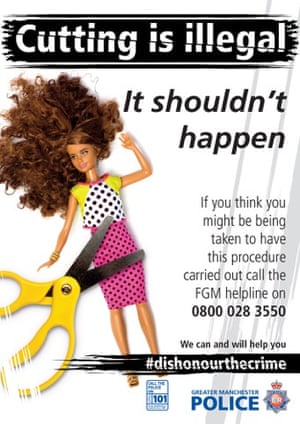
Police and charities launch anti-FGM campaign at Manchester airport

At 3am on Thursday morning, a group of police, border officers and charity workers joined the throng of holidaymakers at Manchester airport of to begin their summer campaign against female genital mutilation (FGM).


Cutting is illegal poster

Photograph: Greater Manchester police

Sometimes known as the ‘cutting season’, the school summer holidays are the most common time for girls in the UK to be taken abroad, usually to their family’s country of origin, and subject to mutilation.


Operation Limelight will see Greater Manchester police and their partners speaking to outbound passengers in July about FGM and again to inbound passengers at the end of August and into September.


Travellers will be made aware of the signs that indicate someone could be at risk and informed that it is illegal for UK nationals or permanent residents to perform FGM in the UK or abroad, with a maximum sentence of 14 years imprisonment.


The facts you should know about female genital mutilation

The first ever FGM figures in England were released last week showing that there have been nearly 6,000 new cases in the last year and that a further 65,000 girls under the age of 13 are at risk of the procedure, which can result in severe pain, shock and death as well as psychological problems such as post-traumatic stress disorder.


People who carry out the procedure, or ‘cutters’ are also known to come to the UK during this time to carry out FGM in the UK.


Now in its third year, Operation Limelight was designed to coincide with the school holidays of Greater Manchester and the surrounding areas of Liverpool, Yorkshire and Lancashire, which are also served by the airport.


‘Spread the word: it’s child abuse’


Detective Inspector Nathan Percival, Greater Manchester’s lead on FGM, has overseen a change in approach to FGM in the area.


“For so many years the police have gone off and done their own thing but we don’t do that anymore,” he told the Guardian. “We don’t charge in, but have a softly, softly approach. We’re learning each day from charities and voluntary sectors on how to approach – police shouldn’t be the baddies.


We need friends, siblings and community members to come forward


DI Nathan Percival


“For FGM it’s never just the police deciding we need to make arrests. Policy dictates now that FGM work should be multi-agency so we share information with partners at a strategy meeting to discuss the best thing for the child. We always aim to support the child and the family involved.”


Operation Limelight focuses more on raising awareness than chasing convictions (of which there have been none for FGM in the UK so far). All passengers are approached, without families being isolated. “It’s just basically chatting to people. We explain who we are, and ask whether they’ve heard of FGM or cutting. My tagline has always been: Spread the word: it’s child abuse, it’s illegal and there are serious health implications. If a criminal investigation springs, that is all well and good, but child safety is always the priority.”


In 2015, new FGM laws came into force in the UK. Under the Serious Crime Act, FGM protection orders can now be issued whereby potential victims or third parties can apply for an order to protect the person at risk. These orders can include the confiscating of passports. It is now mandatory for health and social care professionals and teachers to make a report to the police if they learn that a girl under 18 has been subject to FGM.


Percival believes mandatory reporting especially has helped to protect girls and Greater Manchester police has seen an increase in reports made to them of FGM – only nine reports were made to them three years ago, but last year, there were 94. The taboo nature of FGM remains one of the biggest obstacles to eradication, however.


“We need friends, siblings and community members to come forward, people who know that this child will be at risk this time of year. This is what we cry out for – for people to please come forward. It’s hard though, people have been carrying out FGM for thousands of years and believe that not doing it will bring shame on the family. We rely on partnerships and voluntary sector, charities like Afruka and Nestac who work in communities. These agencies work on a cultural level. They know they have a police officer who is really passionate about combatting FGM. I try and understand and put myself in their shoes. You have to with child abuse.”


Angie Marriot, a former nurse and independent consultant in honour based violence, forced marriage and FGM, worked on Operation Limelight for the first time this year.


“It’s been excellent to give out information and target a diverse population of people coming through the airport,” she said. “The opportunity is absolutely outstanding. We’re targeting everybody. I would say that 85% of people have been very positive endorsing the information they’ve been given.”


“Some of the people who’ve taken leaflets have said: ‘Oh we’ve heard about that’ and others have said: ‘What’s this? so we still know there’s a lot of work to do. There are lots of professionals out there who still don’t know about FGM. They don’t feel confident to report and overcome those cultural barriers and lots of people are fearful about being accused of being racist.


“There’s also an issue with funding. We hear about this 80 million pounds for violence against women, unfortunately that’s not trickling down to BME groups or specialists who’ve got that expertise.


“To see the police embrace a sensitive issue openly is remarkable, and GMP need to be commended for the outstanding work they’re doing here today.”


Everyone involved in the operation (police, border agents, consultants and charity workers) have volunteered their time for free.


Signs that a child may be at risk of undergoing FGM include


  • being taken ‘home’ to visit family

  • a special occasion to ‘become a woman’

  • an older female relative visiting the UK

Signs that a child may have recently been a victim of FGM include


  • the child is frequenting the toilet

  • the child is complaining of pelvic pain

  • a change in behaviour after going on holiday. For example, becoming suddenly submissive or anxious.

Anyone with concerns is asked to contact police on 101 or Crimestoppers anonymously on 0800 555111 or the FGM Helpline on 0800 028 3550. You can also contact the NSPCC on 0808 800 5000.


Police and charities launch anti-FGM campaign at Manchester airport

9 Temmuz 2014 Çarşamba

Charities warn of "alarming" rise in cancer check waits

“Final month, the NHS missed the cancer therapy target for the first time ever and these delays have clearly played a element in that. All the progress made on cancer care in the last decade is now at risk.”


Duleep Allirajah, head of policy at Macmillan Cancer Support stated the trends have been “alarming”.


He said: “The NHS is under strain and cancer dangers becoming overlooked and not provided the concentrate it demands. Every single individual hospital has a accountability to meet these targets, or they danger putting a patient’s very best possibility of survival at chance. Nonetheless, this government and the following also require to consider accountability.


Mark Flannagan, chief executive of the charity Beating Bowel Cancer stated no-one ought to have to wait six weeks for this kind of tests, which could decrease their survival probabilities .


He said: “These new figures are unacceptable and the NHS needs to do much more to enhance diagnostic referral to secondary care for cancer patients.”


An NHS England spokesman mentioned: “Timeliness of diagnosis and treatment is what individuals anticipate and is essential to supplying high high quality care. The vast majority of patients get their exams promptly with most patients waiting significantly less than three weeks from referral, despite the quantity of tests increasing by nearly 58,000 when in contrast to the same period final yr.”


Charities warn of "alarming" rise in cancer check waits

26 Haziran 2014 Perşembe

Government urged to introduce plain cigarette packaging by overall health charities

Illustration of mandatory packaging for cigarettes in Australia.

Illustration of mandatory packaging for cigarettes in Australia. Photograph: Tim Wimborne / Reuters


Overall health charities have urged ministers to ensure that plain packaging for cigarettes turns into law before the general election right after a delay they stated raised fears about the influence of tobacco firms.


Dr Harpal Kumar, chief executive of Cancer Study United kingdom, welcomed the government’s publication of draft rules to strip packets of their logos, colours and other marketing and advertising imagery. But he criticised the “11th hour” timing of the move on Thursday, two months soon after ministers originally promised the laws would appear.


No progress will be made until finally a more consultation on the strategy, announced by Jane Ellison the public overall health minister, has closed on seven August.


The very first consultation on forcing cigarettes to be sold in standardised packs ran from April to August 2012, “and each and every day since then hundreds more youngsters have began smoking,” Kumar said.


Soon after the latest consultation ministers will even now have to seek EU approval, which is expected to consider 6 months, just before it can introduce the measure. The prepare is strongly opposed by tobacco firms.


Dr Penny Woods, chief executive of the British Lung Foundation, stated plain packaging could show to be 1 of most powerful measures the coalition has taken to enhance public health.


“Nevertheless, with the draft laws getting published two months later on than originally planned, consulting and getting EU approval prior to the next election is going to be extremely tight. For the wellness of Uk children we hope this deadline is met. If it is not, I concern queries will be asked as to regardless of whether this late publication was just a delaying tactic by a government under strain from the tobacco sector,” stated Woods.


In December 2012 Australia became the very first country to implement plain packaging, although numerous nations, like Ireland, strategy to stick to suit. Cigarette cartons in Australia now carry pictures of the possible health care consequences of smoking, this kind of as people dying of cancer.


The move is credited with foremost to a 5% fall in cigarette income. Tobacco makers fear the move will be adopted internationally and drive down their product sales and revenue.


The coalition committed itself to plain packaging, but final yr suddenly abandoned the strategy amid claims about the role of Lynton Crosby, the Australian lobbyist who is in charge of the Conservatives’ approach for up coming year’s election. But lobbying by doctors alarmed at the U-flip prompted ministers to revive it.


Luciana Berger, the shadow public wellness minister, said the latest consultation was but one more delay and that almost 50,000 young children had taken up smoking given that the coalition very first explained it would introduce plain packaging.


Simon Clark, director of the professional-smoking group Forest, mentioned plain packaging would be “one more phase in direction of the infantilisation of Britain” and urged ministers to stay open-minded.


“The affect of plain packaging on retailers and shoppers could be extremely damaging. Proof suggests that standardised packaging could lead to the United kingdom getting flooded with fake cigarettes,” Clark stated.


Government urged to introduce plain cigarette packaging by overall health charities

12 Haziran 2014 Perşembe

Alcohol companies funding charities in order to obtain political influence, claims review

Alcohol causing 5,000 deaths a year

5 alcohol charities have acquired donations of up to £1m each and every in latest years from the drinks sector, says the review led by Dr Jim McCambridge. Photograph: David Jones/PA


Alcohol firms are adopting contentious tactics pioneered by the tobacco business by funding charities in order to gain influence within government, researchers declare in a new study published on Tuesday.


Drink makers, merchants and grant-generating trusts have given five alcohol charities donations of up to £1m each and every in recent many years as they have deliberately “used corporate philanthropy as a political device”, according to analysis by academics at the London College of Hygiene and Tropical Medication.


Addaction, which works with folks addicted to drink and medication, has acquired £1.56m in the course of the previous 3 years. That involves £1m from Asda to perform with youthful individuals aroundon damaging alcohol consumption and £560,000 from Heineken for a variety of tasks.


Similarly, the researchers’ trawl of Charity Commission data showed that Mentor United kingdom, which seeks to prevent alcohol-related harm amid children, took £421,000 between 2008-09 and 2012-13. It has also accepted a even more £100,000 because. That incorporated £371,000 from the drinks company Diageo and £100,000 from two trusts funded by earnings from sales of alcohol.


The revelations have caused concern since the two charities are the only wellness groups that continue to be involved in the coalition’s public health responsibility deal, which tries to reach voluntary agreements with meals and drink firms on how to tackle the large harms associated with obesity and alcohol misuse. They have continued to participate in spite of all other alcohol charities and medical groups that initially took element pulling out owing to worries that the approach – organised by the Division of Well being, which lauds it as a essential contribution to solving public wellness problems – was also dominated by representatives of the alcohol market.


“The reality that the only folks left within the responsibility deal procedure who are advocating for wellness are each market-funded is a result in of excellent concern, due to the fact absolutely everyone else who was representing well being walked out as they had no self-confidence in it,” explained Dr Jim McCambridge, lead author of the paper, which appears in the European Journal of Public Wellness.


Alcohol sector funding for the two charities confers a legitimacy on the obligation deal which it does not deserve, he added. “This [funding] is an instance of the business sowing division in the public well being neighborhood. It keeps alive the accountability deal, which otherwise may be dead.”


Katherine Brown, director of the Institute of Alcohol Scientific studies, an independent, thinktank not funded by the sector, said Whitehall civil servants she had spoken to were unaware that the two groups received income from industry bodies.


“Funding NGOs is a longstanding tactic utilised by tobacco and alcohol firms. It can help bolster corporate reputations, but, far more importantly, it can provide better access to government officials with the possible to influence public policy,” mentioned Brown. She called for greater transparency about the backers of organisations lobbying government on alcohol.


Addaction stated its receipt of this kind of funding had not influenced its aims, policies or positions, citing its help for minimal unit pricing of alcohol, which the coalition pledged to significantly contemplate introducing, but then rejected last 12 months and the alcohol market is strongly opposed to.


Provided its work with individuals whose lives have been wrecked by alcohol “it may look incongruous – or even compromising – that the charity will take cash from the United kingdom alcohol market”.


But it insisted that its partnerships had assisted adjust the market for the greater.


“In 2008 Heineken senior management visited an Addaction services and realized that their substantial-strength white cider brand names had been overly prevalent amid those looking for assist for alcohol troubles. Subsequently they delisted White Lightning and Strongbow Black and no longer promote any similar super-strength products.”


Mentor Uk said it had not obtained any money from the alcohol market because 2012 and denied that the Robertson Trust and Gannochy Believe in, themselves charities, were industry bodies.


Robertson has a near relationship with the Edrington Group, which tends to make well-acknowledged whisky brand names including Popular Grouse. Gannochy is funded by the profits from product sales of Bell’s whisky. The two trusts jointly fund Mentor UK’s perform in Polmont youthful offenders institution in Scotland.


Henry Ashworth, chief executive of the Portman Group, which speaks for the alcohol industry, staunchly defended back links in between companies and charities and the tasks they lead to. “This campaign by the London School of Hygiene &amp Tropical Medicine does wonderful disservice to thousands of charities that have created private sector funding partnerships to aid them achieve their charitable goals and it is outrageous to recommend they have a conflict of interest when they are transparent about their funding sources and have rigorous protocols in area to safeguard their independence,” he said.


“A lot crucial investigation and numerous charitable services would not exist without corporate assistance.”


Prof John Ashton, president of the Uk Faculty of Public Wellness, stated: “The wellness messages and policies that the alcohol industry favours are frequently without having an proof base. Such policies are unlikely to have any true effect on the tens of thousands of deaths, or hundreds of thousands of hospital admissions, that alcohol causes ever year.”


The study also uncovered that three other charities active in the United kingdom alcohol policy method – Drinkaware, the Robertson Believe in and British Institute of Innkeeping – “get virtually all their revenue from the alcohol business or from people working in the market”. None, though, is involved in the duty deal.


Alcohol companies funding charities in order to obtain political influence, claims review

24 Nisan 2014 Perşembe

Stephen"s Story: a dying teenager gives charities a moving lesson in storytelling

Stephen Sutton

Stephen’s story encouraged the generosity of men and women across the world and has raised £1.5m for Teenage Cancer Believe in so far.


Stephen’s Story, the story of a dying teenage cancer patient who has recorded his sickness on social media in purchase to raise funds for charity, is getting an impact far past the Uk by capturing the imagination and encouraging the generosity of individuals from across the world.


To date, the viral campaign has raised £1.5m for Teenage Cancer Trust. Its power lies in the reality that it is not Teenage Cancer Trust’s story, but Stephen’s story. Every person at Teenage Cancer Believe in is deeply grateful and humbled by what Stephen, and people who have supported him, are reaching for us. It has produced a wave of awareness, engagement and providing that has the likely to transform what Teenage Cancer Believe in can accomplish.


Stephen has superbly and merely articulated what it truly is like for youthful folks with cancer in his very own words, and he has chosen what he will say and when. We would never have asked a youthful man facing the finish of his daily life to tweet a image and say farewell to the planet – and no charity ever would – but when Stephen did this, it sparked a social media response that no-one particular could have predicted.


Support users talk about your perform in their words, not yours – they never reference a communications manual or use important messages. We discover that assisting young men and women shape the companies we supply and what and how we speak implies we can be more authentic and accurate to them. This is certainly correct of our annual conference which sees 300 youthful men and women collect for a weekend and has been named Locate Your Sense of Tumour – by them, not by us.


Crucially Stephen’s story has been emotionally real. A young guy at the end of his lifestyle had a dream to increase £1m for the charity that had aided him. His dream captured people’s hearts. It was straightforward to give to. The emotion triggered the sharing. His predicament meant it had urgency and, the good news is, the infrastructure was in area.


We had been operating with Stephen on his fundraising for months. He had his very own JustGiving webpage and we had already set up the text to donate code. This meant that when his “last thumbs up” picture tweet got picked up, individuals have been capable to act immediately. We’ve been receiving all around 2,000 text donations an hour.


What we have learnt from the story is to reply swiftly, know your supporters and make confident you will not only verify your social media feeds in workplace hrs. This has took place due to the fact it was not a manufactured try to “go viral”. Folks see via that. I am positive there will be other lessons also, but for now our focus is on creating confident we honour the enormous present this younger guy has offered us and the youthful men and women who want our assist.


Kate Collins is the director of fundraising at Teenage Cancer Trust. Stephen continues to battle the disease and is still posting


If you perform in the charity sector, please join our free network for charity specialists.


The fundraising hub is funded by BTMydonate. All articles is editorially independent except for pieces labelled advertisement attribute. Locate out a lot more right here.


Stephen"s Story: a dying teenager gives charities a moving lesson in storytelling

11 Nisan 2014 Cuma

The NHS is overlooking charities

x ray of lung with heart attack

Only 43% of individuals eligible for cardiac rehabilitation which assists people who have had a heart attack received it. Photograph: Peter Dazeley/Getty Images


Integration is usually held out as the resolution to numerous of the difficulties in the health sector. It’s a wonderful notion, but not everyone’s confident what it is and what it may feel like if we accomplish it.


We have an ageing population and people living with long-phrase wellness circumstances and co-morbidities will become much more several. We recognize the theory that more joined-up providers aid hold individuals effectively and out of hospital. This is excellent for them and since these patient groups account for 70% of the NHS price range, it really is also good for the taxpayer.


But turning the notion of integration into reality is not often straightforward. So here’s exactly where voluntary organisations can help.


At the British Heart Basis, we spend practically £30m a 12 months on prevention, survival and assistance exercise. This consists of funding or supporting much more than 1,150 healthcare specialists and working more than 60 lively projects across public health, prevention, services improvement and innovation. Most of these are co-created with and delivered by way of NHS bodies across the United kingdom in their pilot phase, so we have exceptional relationships with NHS organisations. We comprehend their issues and we also recognize these that sufferers face.


No matter what their dimension, charities can bring expertise, capabilities, skills, innovation, creativity and public and patient insight that many components of the NHS and social care system struggle with – and desperately need to have.


Certainly, a important role of charities is acting as a broker amongst and across the overall health and social care programs, assisting to transform competition into collaboration and integration about the demands of person individuals.


But I’m not however convinced the overall health services is usually ready or prepared to pay attention to what we’ve received to say, and the robust evidence we have to back it up.


Charities have played main roles in services re-style with NHS providers across the 4 nations of the United kingdom, strengthening referral pathways and service coordination.


These have yielded some essential successes. But take up has not often been complete.


Cardiac rehabilitation is an illustration. There is water-tight proof this exercise-based mostly programme for folks who have had a heart attack or heart surgical procedure lowers deaths and hospital re-admissions. And there is a swathe of Great clinical guidance on every single factor of its implementation. Yet final year’s nationwide audit showed only 43% of sufferers eligible for the programme obtained it.


What’s far more, learnings from BHF-funded innovation pilots could be utilized to the management of a selection of prolonged-phrase problems, not just cardiovascular disease. But these are not usually regarded.


For illustration, East Cheshire NHS trust has expanded a nurse-led support inside a hospital as properly as linking a lot more closely with a community-based mostly group. This has produced a versatile workforce to bridge care in primary and secondary settings.


We’re working tough to show our proof in a format and a language the health support understands. For example, we’re increasingly receiving our independently evaluated programmes recognised by NICE’s Good quality, Innovation, Productivity and Prevention (QIPP) collection of very best practice examples.


So it really is disappointing that evidence that has been place forward by charities is sometimes being readily discounted in numerous places of the NHS as “mere lobbying”. Right after all, we share the exact same goals and aspirations to ensure folks acquire the greatest care in the best way inside of the sources accessible.


Our knowing of patient require and our knowledge (backed by robust evidence of program) means we’re ideally placed to advise commissioners and suppliers on how to integrate providers to boost patient outcomes and make the ideal use of precious NHS sources.


The correct affect of charities engaging with clinical commissioning groups, clinical networks and commissioning help units can – and should – be aiding longer-term sustainability and consistency of high-quality, evidence-primarily based interventions at scale that make actual and good variations to patients’ lives.


But in also a lot of circumstances, the door is shut.


If we want the very best for our patients and supporters, for ourselves as shoppers of care and for the taxpayer, we need to have to recognise that the collective contribution of all of us is greater than the sum of our personal efforts.


Are you a member of our online local community? Join the Healthcare Professionals Network to receive normal emails and exclusive delivers.


The NHS is overlooking charities

25 Mart 2014 Salı

Charities can ease the burden on healthcare

The drive to open up public providers to competitors has proved controversial, nowhere far more so than in the NHS. Sir Stephen Bubb, chief executive of the Association of Chief Executives of Voluntary Organisations, wrote to David Cameron earlier this yr raising concerns that public sector monopolies could be replaced by “private-sector oligopolies”. Big personal sector providers are cornering new markets in public providers at the cost of charities and other smaller sized local community-focused organisations. Bubb argued that contracts are too usually focused on expense cost savings rather than “engagement, collaboration and social value”.


Large is not necessarily lovely when it comes to addressing ingrained, complicated and costly health challenges. Organisations that are close to their communities can react to their needs in a much more targeted way. Their knowing of their client group allows them to recognize pockets of unmet need to have and find innovative options, although engaging and galvanising neighborhood communities and assisting to co-ordinate providers across a variety of organisations.


The GSK Impact Awards winners, for charities enhancing neighborhood well being, demonstrate the distinctive contribution produced by these smaller sized organisations. For example, Mayfair Local community Centre in Shropshire operates with a neighborhood population with twice the nationwide common of men and women in excess of 65. Unsurprisingly, this includes a large quantity of folks residing with prolonged-term problems, who are far more very likely to be unnecessarily admitted to hospital if their needs are not managed nicely. In which GPs identify men and women at chance of hospital admission, Mayfair co-ordinates a package deal of support and care based within the community. It also assures that vulnerable men and women with long-phrase illnesses are paired with 1 of its 270 volunteers who help them to reside independently by helping with easy but crucial tasks like filling in forms and the buying. People supported by volunteers demonstrate a thirty% reduction in the want for property visits by NHS professionals, 71% reduction in emergency admissions and 55% reduction in the use of the GP out-of-hrs services.


Other regional charities perform with vulnerable groups and these with particular wants. Rise in Brighton, which supports victims of domestic violence, is working with the ambulance service to recognize these in need to have of assistance. Investigation suggests that two ladies a week are killed by a male spouse in the United kingdom and it is estimated that domestic violence charges the NHS £1.2bn annually to treat physical injuries. Rise has trained nearby ambulance services workers to determine new cases of abuse, boost prices of onward referral and break patterns of abuse, offering an innovative intervention which has tremendous human and monetary charges.


As many as one particular in twelve youthful men and women are caring for a loved ones member. This can take a heavy toll and several of them suffer emotional and behavioural problems and ill health. Gloucestershire Young Carers, yet another GSK Influence Award winner, functions with 70 neighborhood GP surgeries to identify young carers. It also performs with the neighborhood psychological wellness trust to increase hospital discharge arrangements to make certain that kids caring for mothers and fathers with mental ill wellness (forty% of GYC’s existing consumers) are recognized and provided with the help they require. It also encourages diverse services suppliers to come collectively to take a complete loved ones method, operating across health, education and grownup solutions to guarantee that younger carers get the assistance they require.


Individuals commissioning public providers face many challenges, not least significant economic pressures and the need for efficiency cost savings. The temptation to feel that contracts with huge, personal-sector companies will provide much better and a lot more price effective companies will often be there, but at what expense? It is important to not lose sight of the vital contribution produced by modest local community-primarily based organisations such as individuals supported via the GSK Influence Awards, and actually hear what they have to say.


Lisa Weaks is third sector manager for the King’s Fund


This article is published by Guardian Expert. Join the Healthcare Experts Network to get regular emails and exclusive delivers.


Charities can ease the burden on healthcare

11 Mart 2014 Salı

Psychological well being funding adjustments in NHS will place lives at chance, say charities

Norman Lamb

Norman Lamb, the care companies minister, has known as the decision to penalise psychological well being services ‘flawed and unacceptable’. Photograph: Steve Parsons/PA


Individuals with psychological well being troubles could die simply because of controversial NHS funding adjustments which breach ministerial pledges to treat sufferers with psychological or bodily situations equally, patient charities are warning.


Six leading mental health organisations say NHS England’s choice to cut the sum of money the sector will get in “tariffs” or fees for its providers from April will badly hit an region of NHS care that is previously “straining at the seams”.


They are angry that NHS bosses and Keep track of, the NHS’s financial regulator, are imposing a one.8% minimize in the volume of funds for non-acute care solutions, which consist of psychological wellness. That is higher than the 1.five% reduction in the spending budget for acute hospital-primarily based medical solutions.


In a letter published in Wednesday’s Guardian they warn that the selection “contravenes the government’s promise to place psychological and bodily healthcare on an equal footing and will place lives at danger”.


The co-authors of the letter incorporate the charities Thoughts and Rethink Mental Illness, the Royal College of Psychiatrists and the Psychological Overall health Network.


The differential tariff is becoming brought in to raise £150m to support acute hospital trusts shell out for the further staffing needed to comply with the recommendations of the Francis report into the Mid Staffs care scandal. NHS England and Check argued that non-acute services companies did not need added funds to tackle understaffing simply because Francis’s recommendations did not cover them. Nonetheless, David Cameron and several ministers have manufactured clear that companies of all kinds of NHS care ought to be improving their staffing amounts if necessary.


Doing so will price non-acute companies about £150m, the very same amount that they are losing in result to subsidise hospital solutions, in accordance to an estimate drawn up by the Basis Believe in Network.


Norman Lamb, the care services minister, has referred to as the determination to penalise mental health solutions “flawed and unacceptable”.


Lord Victor Adebowale, chief executive of the addiction and mental overall health charity Turning Point, has called the determination “bordering on laughable”. The NHS England board – of which he is a member – by no means discussed it just before it was approved, he explained, “and there are lessons that ought to be learned”.


The co-authors of the letter want NHS England to consider once more and cut both varieties of providers equally. But whilst NHS chief executive Sir David Nicholson last week acknowledged the criticism of the way the decision was reached, he manufactured clear that it would not be reviewed simply because acute hospitals necessary the income to hire much more nurses.


Psychological well being funding adjustments in NHS will place lives at chance, say charities

30 Aralık 2013 Pazartesi

Wellness charities inspire drinkers to abstain from alcohol in January

alcohol on shelves

Drinkers are currently being encouraged to have a sponsored alcohol-free January soon after the festive season. Photograph: Terry Waller/ Terry Waller/Demotix/Corbis


As get together-goers prepare to nurse their new year hangovers, health charities are urging people to consider staying off alcohol for the rest of the month.


Alcohol Concern and Cancer Research Uk are operating fundraising campaigns in which participants are sponsored for abstaining from drink all through January.


Alcohol Concern’s Dry January 2014 encourages people to avoid alcohol for 31 days and aims to “get folks talking and pondering about their drinking”.


Folks who consider component could “drop bodyweight, really feel far better, save income and make a big difference”, the charity stated.


A spokeswoman said thousands have previously signed up to the challenge.


She explained the campaign is aimed at social drinkers whose alcohol consumption could have “crept up on them”.


Emily Robinson, director of campaigns at Alcohol Concern, mentioned: “A lot of of us believe the way we drink isn’t a difficulty, but even obtaining just a few beers after work or a number of glasses of wine at residence also frequently can take you in excess of secure limits and shop up difficulties for the potential.


“We’re challenging individuals to consider component in Dry January and consider providing up booze for 31 days, and if it sounds like a large request you’re precisely the person we want to join us and have a go.


“It really is not about in no way drinking once again, it’s just the perfect opportunity for all of us to consider a breather and get pondering about our drinking.”


She additional: “We feel individuals will feel greater, sleep greater, conserve cash and they might also lose excess weight.


Cancer Investigation UK’s campaign, Dryathlon, is encouraging participants to turn out to be “dryathletes” by staying off booze for 31 days although obtaining sponsorship from close friends and family members members.


The 2013 Dryathlon campaign saw 35,000 dryathletes increase much more than £4m for the charity.


Anthony Newman, director of marketing and advertising at Cancer Investigation Uk, explained: “We know offering up alcohol and taking element in Dryathlon will genuinely test some people’s willpower, but we also know it’s something lots of people already do effectively.


“So, regardless of whether you are presently planning to give up alcohol for January or hunting to consider on an further challenge in the new year, why not signal up to Dryathlon and swap your lager for a latte, protected in the expertise that the income you raise will be helping us to beat cancer sooner.”


Wellness charities inspire drinkers to abstain from alcohol in January