Trying etiketine sahip kayıtlar gösteriliyor. Tüm kayıtları göster

19 Şubat 2017 Pazar

Smokers trying to quit hit by postcode lottery as GPs ration help

Smokers in England wanting to quit face a postcode lottery as cash-strapped councils and GPs restrict access to services that can help them.


The revelation has alarmed health experts and charities who claim that lives are being put at risk as a result of the fragmented provision.


Evidence obtained under the Freedom of Information Act shows that an increasing number of clinical commissioning groups – the 200 or so organisations that deliver NHS services in England – have been instructing GPs to stop providing the services. Many of the groups argue that it is no longer their responsibility.


In 2012, local authorities were made responsible for improving public health and given £2.8bn of ring-fenced grants to pay for it. But, as the grants have been pared back, councils have pulled their funding for stop smoking services.


This has led to a rationing of treatments – such as nicotine replacement therapies, bupropion (brand name Zyban) or varenicline (Champix) – in many areas. When used in conjunction with counselling, studies suggest the chances of a smoker quitting can be substantial.


Almost a quarter of a million people stopped smoking in the 12 months to April 2015 as a result of using the services, a quit rate of 51%. The services are said to have a high success rate in helping smokers in poorer communities stop.


“We are increasingly concerned that cuts in council spending, NHS cost pressures and a lack of joined-up thinking by central government are combining to block progress on cutting smoking, still the No 1 public health challenge facing the country,” said Deborah Arnott, chief executive of Action on Smoking and Health (Ash).


A briefing last year to clinical commissioning groups in Worcestershire said: “Worcestershire county council will only fund a smoking cessation service for pregnant women. The CCGs have considered the implications of this decision and due to the current financial challenges are unable to commit local funding to smoking cessation services or prescribing of products to support stop smoking attempts.


“GPs are therefore advised that no prescriptions for nicotine replacement therapy, bupropion or varenicline should be written for new patients from 1 April 2016.”


It added: “The CCGs appreciate that GPs will be in the difficult position of having to explain to patients that this service is no longer available.”


For every £1 invested in help to quit smoking, £2.37 is saved in treatment and lost productivity.


For every £1 invested in help to quit smoking, £2.37 is saved in treatment and lost productivity. Photograph: Matt Cardy/Getty Images

Restrictions have also been imposed in East Kent, York and Somerset. Windsor, Ascot and Maidenhead CCG told GPs last May: “The royal borough has commissioned a new smoking cessation service. From April 2016 Solutions4Health are commissioned to support only three groups: pregnant smokers, smokers with mental health issues and young people. The bottom line is that GPs are not commissioned to provide smoking cessation services.”


But local authorities are failing to plug the gap created by GPs discontinuing the service. A survey by Ash and Cancer Research UK has found that smoking cessation budgets have been cut in almost three in five authorities. Health organisations claim this is a false economy.


At least £1.4bn a year is spent on social care because of smoking-related illness, Ash says. Access to services for patients needing surgery – known as “Stop before the Op” – is considered particularly important.


Smokers are 38% more likely to die after surgery than non-smokers due to higher risks associated with lung and heart complications; higher risks of post-operative infection; impaired wound healing and the need for longer hospital stays and higher drug doses.


The National Institute for Health and Care Excellence estimates that for every £1 invested in quit smoking services, £2.37 will be saved on treating smoking-related diseases and lost productivity.


But the service is not considered a priority. A report by the British Thoracic Society, published in December, shows that NHS hospitals are falling “woefully short” of national standards when it comes to helping patients quit.


It found that 72% of hospital patients who smoked were not asked if they would like help in stopping.


Since last May, all cigarettes must be sold in plain packs that carry the message “get help to stop smoking at www.nhs.uk/quit”. But the fragmented nature of stop smoking provision means some people are being told to contact services miles out of their local authority area.


For example, the site directs smokers in Worcester to a service in Solihull some 35 miles away – for which they do not qualify.


“It’s alarming that a pre-operative patient advised to stop smoking will only get NHS help if they live in the right place – a postcode lottery that will damage patients’ health and certainly cost the health service money in the long run,” Arnott said.


A Department of Health spokesman said smoking rates in England were the lowest they have ever been as a result of its policies. “The needs of individual communities vary significantly across the country, and local areas are best placed to understand local needs,” the spokesman said.


Smokers trying to quit hit by postcode lottery as GPs ration help

18 Şubat 2017 Cumartesi

What I’m really thinking: the woman trying for a baby

I’m 33, and my husband and I have been trying to conceive for three years. When we were ready, we threw caution to the wind and decided that if it happened naturally, it would be wonderful. Then as the months passed, we began to wonder if there was something wrong, so we got tested. My husband’s fertility is A++; his swimmers are practically Phelps-like in their speed and precision. My eggs, on the other hand, are a little more Humpty Dumpty.


In the past year I’ve been referred to doctors, specialists, naturopaths and acupuncturists. They all ask the same questions. And despite their years of experience, most of them still fill silences with ridiculous lines like, “It’ll happen when you least expect it.” The last thing you should say to a woman who is desperately trying to have a baby is, “Try not to think about it.” It’s all we think about.


We unlucky few reach a point in the road where we start living our lives period to period, or pregnancy test to pregnancy test. We wake and immediately calculate which day it is in our cycle. Is today a sex day? Am I ovulating? Every little pull or twinge in our tummies, we read far more into than we should. Imagine, then, how tough it is when all the practitioners tell you to lower your cortisol levels and stop stressing about conception.


Lo Cole illustration of stork for what i’m really thinking

Illustration: Lo Cole

I’m doing my best to remain calm and working every day on finding inner peace and fulfilment – even if my truest fulfilment in life would be to become a mother.


If you know someone who’s trying for a baby, don’t ask questions, and unless you’ve struggled with conception yourself, don’t offer advice. It doesn’t help.


Tell us what you’re really thinking at mind@theguardian.com


What I’m really thinking: the woman trying for a baby

30 Ocak 2017 Pazartesi

Dementia Diaries: "It"s like trying to go through a brick wall" – video

Dementia Diaries is an audio diary project that captures people’s diverse experiences of living with dementia, now the leading cause of death in the UK. While the origin of the disease is still unclear and symptoms can vary greatly, these recordings, here with accompanying film, aim to capture some of the complexity of each caller’s individual perspectives


Dementia Diaries: "It"s like trying to go through a brick wall" – video

7 Ocak 2017 Cumartesi

My partner bought me a Fitbit but I’m a couch potato – is it worth trying?

Every week a Guardian Money reader submits a question, and it’s up to you to help him or her out – a selection of the best answers will appear in next Saturday’s paper.


This week’s question:


I’ve been given a Fitbit Flex by my partner. I’m a bit of a couch potato and reckon I won’t use it that much. Should I try and take it back and swap it for something else, or can other Fitbit users convince me it’s worth keeping? Did it work for you?


Do you have a problem readers could solve? Email your suggestions to money@theguardian.com or write to us at Money, The Guardian, Kings Place, 90 York Way, London N1 9GU.


My partner bought me a Fitbit but I’m a couch potato – is it worth trying?

23 Kasım 2016 Çarşamba

The enormous pop-up clinic trying to bridge America’s health divide | Amy Woolard

Nearly 33 million Americans – more than 10% of the country’s population – have no health insurance. While the very poorest are entitled to Medicaid coverage, millions more narrowly fail to qualify, but remain too poor to pay for private health insurance. Among those who do qualify for subsidised plans or manage to pay insurance contributions, paying for minor treatments such as fillings and eye tests is often a problem, as they may not be covered by basic healthcare plans. Even finding local doctors who accept Medicaid can be so challenging that it can seem easier just to work through the pain or to self-medicate.


Virginia is one of 19 states refusing federal dollars to close the healthcare “coverage gap” for people not poor enough for Medicaid, but too poor for anything else. Yet at the Wise County Fairgrounds in Southwest Virginia, for one late-July weekend each year, there is a small glimmer of hope. For three days, a non-profit organisation known as Remote Area Medical (RAM) builds a pop-up clinic – the largest of its kind in the US – from the ground up, and serves more than 2,000 patients from more than 15 different states. These patients come in the hope of getting cavities filled, lungs x-rayed and new pairs of glasses made – for free.


RAM was founded in 1985 by Stan Brock, a British philanthropist, actor, author, naturalist, cowboy and former TV host. The organisation is funded entirely via private donations and – except for a small, paid staff – completely dependent upon thousands of volunteers for everything from performing oral surgery to making up bags of Cheerios to hand out to patients’ toddlers. In addition to international and disaster-relief missions, the group has held more than 800 general health-clinic events across 12 states throughout the southern and south-western United States. In the past five or six years, it has added urban stops such as Los Angeles and Chicago to its regular locations.


As I pull up to the Wise County Fairgrounds clinic this summer, dozens of rows of cars glint in the sun – patients’ vehicles in one field, volunteers’ in another. Those seeking care are given entry numbers based on the order in which they arrive, and cannot leave without forfeiting their place. Many make plans to camp out for up to two days before the gates even open – sleeping in their cars, in tents, or on the ground, to make sure they snag a low number.


By 3.30am on Friday,volunteers with torches are moving from car to tent to car in the patient lot, handing out admission numbers for the day. By the time the sun rises at 6am, they have given out 1,600 tickets to the clinic. On Saturday morning, they will give out about 600 more.


I meet Sheila Harris, a 58-year-old former paralegal, in the early hours of the opening day. Sheila has worked her whole life, but after the birth of the last two of her six children, steady legal work dried up, and she now earns only a small income taking care of children in her home. She is one of the first hundred people allowed through the gates. Hundreds more are packed outside the fairgrounds’ fences, waiting to hear their numbers announced via megaphone.


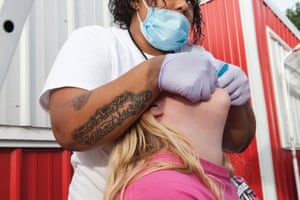
A woman receives dental care at the Wise County RAM clinic.


A woman receives dental care at the Wise County RAM clinic. Photograph: Dawn Whitmore

Sheila, her daughter Amy, her sister Cindy, Cindy’s daughter Elizabeth, and four other family members have travelled for three hours to arrive at Wise two days early. These eight adults and one toddler would end up sleeping in their two cars for four days. During the first couple of nights, they would drape blankets over the windows for privacy, but would take them down after it made the cars too hot to sit in, much less sleep.


It is everyone’s first time at the clinic, except for Cindy, who has been twice before and led the group on this trip. Once, she says, she arrived early enough to be the very first patient served. “It was still a long couple days, though,” she says.


Cindy is here this year to get new glasses and to support her 29-year-old daughter Elizabeth, who also needs glasses, as well as the extraction of two molars. Elizabeth also hopes to get a partial denture plate. She had a bad fall a couple of years ago and broke her top front teeth, most of which have been completely missing for years. At the time of her fall, she had decent health insurance, but still had to pay $ 1,000 from her own pocket, to rebuild just one tooth, which later cracked again anyway. Cindy and Elizabeth now both receive disability benefits – essentially their only source of income. Without RAM, a new pair of glasses with a current prescription would be a luxury item.


Sheila needs glasses, too, but is first set to have six teeth removed – a couple of which are already in pieces – and upper dentures made and fitted. Neither Sheila nor Elizabeth will smile open-mouthed. They haven’t smiled that way for years, out of embarrassment. “I guess I’ve kind of withdrawn from people because of it,” Sheila says. “I used to talk to anyone, anywhere, about anything – real outgoing – but I haven’t been like that in a long time.”


Sheila pulls a roll of Tums antacid tablets from her shorts pocket and says it’s the only thing she’s been able to eat since the day before, on account of her nerves. She’s brought the broken dental crown with her “in case they can use it or something”, and holds it tightly.


It is cool outside before sunrise,but the temperature will reach a humid 35C by late morning, and get even hotter by Saturday. The site has no air-conditioned spaces, apart from the mammogram and radiology trucks. Volunteers drive back and forth across the grounds all day, handing out cold water and chilled neck wraps.


Though traffic through the medical stations is steady, the main attractions of every RAM clinic are the dental and eye-care services. At the Wise County Fairgrounds, the organisation sets up about 80 mobile dental stations under large tents – one section of tents reserved for cleanings by hygienists, a second block for fillings, and, in the back tent, four or five long rows of stations for extractions. The vision and medical services are each delivered in two large barns. The makeshift examination rooms are livestock stalls, with bedsheets hung for privacy.


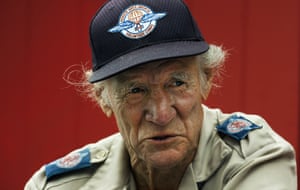
Stan Brock. founder of the RAM clinic, watching the operation in Wise County.


Stan Brock. founder of the RAM clinic, watching the operation in Wise County. Photograph: Paul J. Richards/AFP/Getty Images

The full Wise County clinic footprint is immense: one general-support volunteer working as a patient escort could easily walk 15 miles or more in a day. Specialised services such as x-rays, mammograms, and orthopaedics are provided in converted lorries or large camper vans. Other tents, offering treatment for substance abuse, counselling to help smokers quit, and mental healthcare, as well as clothing and book donations and a pharmacy, are scattered wide across the grounds. The only bathrooms – for patients and volunteers – are several dozen portaloos.


Other such RAM clinics may be smaller, but they operate under similar conditions. One in Smyth County, Virginia, is set up on the asphalt and in the emptied hangars of the local airport. Services there must shut down at a particular time so that planes can be moved back inside. One Tennessee clinic is held right on the Bristol Motor Speedway infield, a famous Nascar racing track; Stan Brock can often be seen on the track on his bicycle, vigorously pedalling angled laps.


“Poor teeth, I knew, beget not just shamebut more poorness,” writes Sarah Smarsh in her 2014 Aeon essay on class and dental hygiene. One woman sitting near Sheila and her family in Extraction Row says she has recently been fired from a waitressing job after losing a couple of her front teeth. Her manager didn’t want her in front of customers. Food service has made up the entirety of her employment history, and she is having trouble getting hired permanently elsewhere for similar reasons. Even when she was working, she says, she couldn’t afford the cost or time off necessary to treat her teeth – or anything else, for that matter. The RAM clinic, once a year, is her sole source of healthcare. She now works as a temp in one of the many call centres planted in Southwest Virginia.


Dr Joe Smiddy, one of the long-time volunteer doctors on site, has seen similar scenarios play out for patients here, time and again: “Once they lose their teeth, or they have unsightly teeth, they lose part of their own marketability. They have trouble finding a job,” he says. “Course, when they lose their job, they lose any healthcare they might have had. And then you can have substance issues where people are self‑medicating with tobacco and street drugs for what is real pain and real anxiety.”


Poverty also begets limited choices. Sugar provides a cheap and legal high and caffeine does the same. Both can be used to self-medicate and as an easy way to make your kids happy when you can’t afford much else.


Nearly 100,000 people in Southwest Virginia receive Supplemental Nutrition Assistance Program benefits (formerly known as “food stamps”). A family of four receives $ 115 per week on average for food, or just about $ 16 per day. “The economics of this community,” says Terry Dickinson, executive director of the Virginia Dental Association, “are such that when they go to the grocery store and buy food, it so happens they get a lot more food when they buy highly processed, high-carbohydrate foods, and, instead of water, they pick soda pop or sports drinks, or any of that stuff that’s just as cheap.”


Unhealthy processed foods are not just cheaper: they do not spoil as quickly, and they can take less time and fewer ingredients to prepare. “What you want for everyone is personal responsibility,” says Dickinson, “but you’ve got to give people the education and tools they need to make those decisions.” And, he says, for people living in poverty, “we just haven’t done a good job of that. These are people in survival mode.”


Living in survival mode means prioritising where you spend your limited income. A 2015 survey conducted by the Federal Reserve Board to determine what practical effects, if any, the economic recovery was having on families, found that 46% of Americans did not have enough money on hand to cover an unexpected $ 400 expense. When that expense is a medical emergency, it often leaves only two options: use a credit card if you have one, or forgo care until the pain goes well past emergency and becomes unbearable.


Putting stock in a long-term investment such as one’s health requires hope. Embedded in preventative and rehabilitative care is the presumption of a long, fulfilling life. Health insurance is an invisible protection – it does not fill a hungry stomach, or power a refrigerator, or fill a petrol tank.


Sheila is in Dr Dan Laskin’s dental chair and is about to have her extractions done. There are picks, forceps, syringes and what looks like a hammer and small chisel on the tray beside her. Even when you’re having six teeth pulled, if your dental care is happening under a tent at a fairground, you are given some numbing lidocaine, a few large, well-placed shots of novocaine, and not much more of an anaesthetic cushion than that.


The procedure is probably as smooth as it could be, though Sheila often moans and wriggles from the pressure. The dental assistant gets her to close her eyes and talks her through some visualisation strategies involving her favourite place: the beach. It takes about 30 to 45 minutes before the procedure is finished, and the experts are ready for whoever is next in line. Numbed and frazzled, Sheila says to Laskin through the packed gauze, “You are freaking amazing!” and hugs him.


Elizabeth has already had her two extractions done, and is now at the dentures station, where another dentist has inserted a tray of paste into her mouth that will become the mould used to make her partial plate. The dentist has to keep the tray pressed tight against Elizabeth’s swollen, sore jaw for about a minute. Afterwards, she says she didn’t mind it too much: “It was easier than getting my teeth yanked out!” She heads over to the vision section to get in the long line for glasses.


Observing the makeshift clinic, it sometimes feels more like a carnival than a hospital. Occasionally, in between seeing patients, you can catch Joe Smiddy picking a banjo in the clinic bluegrass band he has pulled together with a few regular volunteers. Smiddy is a 74-year-old retired pulmonary specialist, now a full-time medical volunteer, who grew up in Wise County, the grandson of a coal miner. He got his commercial driver’s licence in order to drive the 18-wheeler that holds his mobile x-ray office to RAM clinics. Smiddy has seen it all: most of what he has to share with me begins with “And I can say this because I’m from here.”


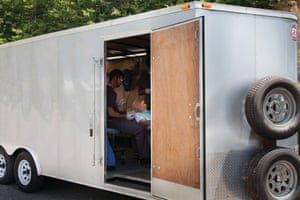
Many of the facilities at RAM clinics are housed in specially adapted trailers, lorries and vans.


Many of the facilities at RAM clinics are housed in specially adapted trailers, lorries and vans. Photograph: Dawn Whitmore

“The people of Southwest Virginia,” he advises me, “are self-reliant, and their self-reliance and their love for their people and their land is such a wonderful thing, but it’s also what holds them here. There’s a social importance to people who are from here being really glued here. So why would we move to another part of Virginia? Why wouldn’t we move to where the jobs are? But we’re totally averse to doing that, and so we have a large population who live in an economically deprived area. The schools are struggling. The churches are struggling. Every time they build a Walmart, it puts several mom-and-pop stores out of business. Your barbershop’s gone because you get your hair cut at Walmart, your beauty salon, your auto-repair – everything Walmart. And then you’ve got people working at Walmart who don’t have health insurance, either.”


People not in poverty often ask those who are to move in various ways – off street corners when they’re homeless, away from their depressed hometowns when they’re unemployed. They are asked to move couches, off front porches and cars, off blocks.Politically, they are usually asked to move out of their own way.


All of the qualities that Smiddy describes, though, are what most people would probably say they want in a healthy community. We want people to love and care about their land and neighbourhoods and to know one another. We want a shared history, vibrant cooperation. These are all characteristics we celebrate, it seems, everywhere but communities of poverty. In places like Southwest Virginia, we do not honour these relationships, or underwrite them – socially or financially – in the same way we do in middle-class or affluent regions. Instead, what we reinforce, as a matter of policy and entertainment, are the rural stereotypes.


In his mobile rig, Smiddy will x-ray “just about anything you can put in front of the machine”. He mostly looks at lungs, though. “We’re a belt of lung disease,” he says. “Southwest Virginia is a belt of asthma, COPD [chronic obstructive pulmonary disease], emphysema, and, of course, heart attacks, strokes, and diabetes. Part of that is smoking – we in Southwest Virginia have a tradition of starting smoking at an early age. There are towns where the average age of starting smoking for current lung patients was age 10.”


But part of it, he says, is the coal dust and environmental allergens. When business was booming, coal workers were paid well and offered decent health insurance, but layoffs and closures have left many in the region with poor health, and poorer prospects for work and the healthcare coverage that used to come with it.


“All of the politicians are singing this little fairytale that coal is coming back,” Smiddy says. “They’re living in that fairytale, and so what they’re not doing is accepting the reality that we could plan, we could think ahead. We could reach broadly to incorporate everybody – schools, churches, civic organisations, mayors, community leaders – that we all pull back together and say, ‘We have a goal, and our goal is that we’re going to try to predict as best as we can the jobs of the future, and we’re going to start now.’ I don’t mean to be ugly when I say that there may be some people who will miss that curve, but we could build for their children.”


Coal is complicated in Appalachia, the mountainous region within which Southwest Virginia sits. The coal industry has torn up pieces of Southwest Virginia and the bodies of those who have mined it, but as it has declined here, the men and women it employed – many of whom have at most graduated high-school – have slipped from relying on steady middle- and upper-income salaries to prospecting for minimum wage. The classified ads in places such as Wise and Coeburn, Virginia, are thin and advertise for such positions as “Customer Service Representative 1” and “Cashier (Part Time)”. We may be able to replace coal with other comparable energy sources, but we have not yet prioritised how to comparably replace coal jobs.


“I mean, how many call centres can you put down here?” Dickinson says. All people want here, he repeats, is a good-paying job.


By Saturday, all eight of Sheila Harris’s family have spent four days and three nights living in two cars. They have had to stay this long to wait for their glasses and partial dentures to be finished.


Cindy and Amy walk over to a large tent where a few thousand brand-new frames – all donated – are set out on long folding tables so that patients can select the styles they like. A few regular volunteers consult on shape and fit.


The barn where the sight tests are given is a touch cooler than outside, mostly because the room has to be kept dark for the testing. The majority of patients here are getting basic checkups and prescriptions written or updated, but occasionally – as with the dentists – the optometrists diagnose more serious health issues: glaucoma, cataracts, macular degeneration, diabetes. Prior to their eye tests, some patients don’t even realise they need glasses.


Dr Victoria Molnar Weiss is the optometrist who runs all the Virginia RAM vision clinics. Weiss and the other eight or nine volunteer optometrists and ophthalmologists will see one third of the 2,200 patients coming through the Wise clinic over the weekend. She explains that the possibility of getting new glasses can be the lure that first brings patients to the clinics, and then, over time, their trust grows. “The patients see us up at 3am too, so it kind of helps them feel like we’re all in this together,” she says.


What also helps is the ability to use the money they might otherwise have spent on frames, lenses, and an eye test on other necessities. People living in poverty are often playing a losing game with whatever limited income they have: skipping a power bill to pay for a visit to the optician might work for a month, but it could put them behind for a year. Much easier to keep using old lenses, squint a little harder, and live through the migraines.


Elizabeth’s partial plate is finally ready. The dental technician is fitting it for her, taking it in and out of her mouth in between filing her teeth down to eventually arrive at the best fit. After a few revisions, they are both satisfied. The technician does not have a mirror, but holds up her iPhone with a forward-facing camera so Elizabeth can see herself. She has front teeth for the first time in years. She smiles and tries not to at the same time. She is now crying. Her mother, Cindy, is crying. The dental technician and I are both crying as we watch mother and daughter cry and hug each other. Elizabeth even hugs me. “It doesn’t feel normal to smile. It feels weird,” she says.


By Saturday evening, the whole family has got just about everything they came for: glasses, extractions, dentures, and even a few bags of clothes and shoes from the donations tent. They are nearly packed up when Sheila discovers her van will not start. She seems much less worried than I would be. This has happened multiple times before – she knows how to fix it herself, she says. She crawls underneath the van and reattaches a loose wire, and when she tries it, the engine turns over.


Late on Sunday morning, I catch up with Sister Bernie Kenny of the Medical Missionaries of Mary just as the clinic is closing down. Sister Bernie is a nurse-practitioner who first persuaded Stan Brock to bring RAM to Virginia back in 1999. “Today we had a young woman, 27 years old, who had all her teeth out,” she says straight away, before I can say a word past “Hello”. “And her hope for dentures is 2018. How can she live? How can her self-esteem, or her nutrition, or her hope of ever getting a job? It saddens me. But the wonder of being here is all these volunteers with one purpose: to help one another. All denominations, all faiths, all colours, everybody together, and we get energy one from another.”


Clients wait their turn to see dentists and medics.


Clients wait their turn to see dentists and medics. Photograph: Dawn Whitmore

I ask her what she would do if I gave her a magic wand that she could wave and change one thing for the patients here at RAM. She gives a version of the same answer that all the nurses and doctors and most of the patients give when I ask them: “Everybody has the right to healthcare – it’s not a privilege,” she says. “Your neighbour’s health affects you, so you want the best for your neighbour as well as yourself.”


Sister Bernie, like all the nurses and doctors and patients, says that dental and vision coverage need to be included in basic healthcare policies. Consider this: someone living in poverty with no health insurance gets a toothache, but swallows the pain for months. She finally goes to ER when it gets too bad to eat, sleep, or work. She sees a nurse or a doctor, but not a dentist, so the actual cause of the pain stays untreated. The ER doctor gives her some antibiotics and maybe some prescription pain medications. She uses up the prescription and then maybe looks for something cheaper on the street to dull the pain, because the tooth is never fixed. No one I speak to mentions heroin or methamphetamine by name – it’s always just “street drugs”. In the meantime, the abscessed tooth could go septic and turn just as deadly as an overdose.


Sister Bernie sees this repeatedly, across generations of families. “But the people who come to RAM want to be healthy,” she says. “A lot of them don’t take vacations, or can’t. They come here.” One patient I met started off from her house two days before the clinic opened. She had walked 27 miles to Wise just to have a couple teeth pulled. Then walked 27 miles back.


Access to healthcare is about more than just reducing the travel time between patients and doctors – it’s about bringing down those intangible barriers that make a distance seem impossible to cross. The stereotypes that teach that people living in poverty get what they deserve, the employment barriers that leave medical and dental students with a mortgage worth of school debt, such that they cannot afford to treat people who cannot afford to come to them for care. RAM does not solve and will not solve the US healthcare crisis – or poverty, for that matter – but it clears a path. One that starts right in our own backyards.


This article is adapted from an essay published in the autumn 2016 issue of the Virginia Quarterly Review.


Follow the Long Read on Twitter at @gdnlongread, or sign up to the long read weekly email here.


The enormous pop-up clinic trying to bridge America’s health divide | Amy Woolard

19 Eylül 2016 Pazartesi

Detox, Cleanse and Intermittent eating: Should you being trying these?

Intermittent Fasting, Detox, Cleanses


Should you be trying it?


I get asked frequently, “So, what do you think about cleansing, detox or intermittent eating?”


Without going into detail right now about what each one is….


Here is my response:


I think if you do not know what you are doing, why you are doing it and the risks/side effects involved, then you can do more harm than good.


For some people and at the right time they can be a useful tool as part of a healthy way of life. But most people want to start with a cleanse or a detox or dive right into intermittent eating and this I do not support.


Do I think that everyone should be trying these methods?


No, I don’t and here is why:


If you are eating the Standard American Crap Food Diet, you don’t need to start with intermittent eating or fasting or cleansing.


Three reasons why you should not start your dietary changes with a detox, cleanse or intermittent eating.


  1. Because you need to learn how to eat a healthy whole foods diet first! Start by making slow changes and when you have a whole foods diet as part of your routine for 6 months to a year then you can look at some other options to add in.

  2. You need all the nutrient dense food you can get right now! If you have been consuming the standard American diet, it is likely that you have nutrient deficiencies. You do not want to add in intermittent fasting right away-intermittent eating is when you skip a meal, usually breakfast and do not break your fast until around the 14-16 hour mark.  Typically you are eating only in a small window of time.   How are you going to get the nutrients you need from food if you skip a meal or do a  juice cleanse?

  3. If you have been eating an unhealthy processed diet, the odds are that you have some blood sugar issues.  If you skip a meal right now or do a detox or cleanse that is limited in protein, this can disrupt your blood sugar even more.

You actually are detoxing and cleansing.


When you start to make changes from a crap food diet to one of whole foods, trust me you will be detoxing and cleansing your body.


How will you know?


Well, your stools will probably change and early on they may look a little funky and may have a strong or even foul odor to them.


You may even notice a smell change to your sweat as you expel toxins via your skin.  If you have no heart health issues, hypertension or diabetes, infrared sauna may be a good add in at this time as long as your medical professional approves.


Your body will start to remove toxins in the body once you give it real food.  At first you may feel like you have the flu; this is normal for a few days and even up to a week as your body expels the waste.


Here is what will happen


  1. Toxins will start to be released from the tissue, typically fat tissue.

  2. The enzymes of the liver will help to convert those toxins from fat soluble to water soluble molecules.

  3. The liver will then attempt to neutralize those toxins but in order to do so it requires an abundance of vitamins, minerals, nutrients and antioxidants (see how important your diet is to detox?)

  4. Once these toxins are neutralized they will circulate through the blood into the kidneys and are released in your urine.  If they are not neutralized (say because you are continuing to eat the Standard American Crap Food Diet) the kidneys will not pick them up and they will continue to circulate and end up back in your fat tissue where they will continue to wreak havoc on your body.

So as you can see, you don’t need a supplement, what you need is real food to detox, cleanse and feel better!


Start Here:


  • Start and end your day with 16 ounces of filtered water

  • Remove common culprits such as Teflon pans (throw them out please), fluoridated toothpaste (no, you do not need fluoride-more on that in a future blog) and make your own deodorant instead of using aluminum containing products (you can put raw, unfiltered apple cider vinegar on cotton balls and dab on arm pits for a quick solution).

  • Protein at every meal

  • Vegetables and/or salads every day ( lettuce and tomato on your sandwich does not count as meeting your vegetable needs)

  • Quality fat sources such as avocado, olive oil, coconut , raw nuts and seeds

Fruits, vegetables, quality fats and proteins, fiber from the fruits and veggies, and adequate amounts of water, maybe some gentle herbal teas-yup, that is all you need. Not a detox kit or skipping meals or tons of herbs.  Herbs can be supportive and I do like to add herbs in for various reasons, but again not until after the dietary transition has begun.


Right now focus on food!  Many people just read up on detox herbs and supplements and try them without knowing the consequences and end up doing more harm than good. More is not necessarily better.  And some herbs or supplements may not be the right ones for you, especially if you have any chronic health issues or are on medications.


In today’s society if it isn’t a pill for a quick fix, we tend to want the herb or supplement to help us lose weight and to give us more energy.  Sorry, there are no quick fixes in life.


You need to start with the diet!


Once you have the diet down, work with a nutrition professional who can guide you to the next step. Do you want to lose weight?  Intermittent eating can help…when the time is right.  Do you still get headaches and have fatigue?  There are additional herbs and supplements that can be helpful but you won’t know you need them if you don’t address diet first.


Many people say “But I eat a healthy diet already”.  I say show me. Give me a detailed diet log.  Sadly, many are eating the wrong foods for their bodies.  Please work with someone or if you are reading information on the internet, check the source and do some homework first-after all this is your body we are talking about!


What diet do I recommend? 


Even before diet, I like to start with mindfulness. Ask yourself this: do you eat in front of the TV, the computer, while driving, while standing or walking?  Do you inhale your food rather than chew eat bite and enjoy your meals? If you this sounds like you then BEFORE you change your diet, practice mindfulness!


As far as diet goes, it is individualized as we have different ethical views; different food likes and dislikes different cultural food preferences and religious guidelines.


I like a diet that takes out the common allergens and inflammatory foods-so one that does not include pasteurized “cow” dairy, gluten, corn or soy (non-fermented).  Stick to a diet that does not include “invented foods” which is usually anything that is in a box or package and is a prepared meal or snack.  Just because it says it is “Organic macaroni and cheese” does not mean it is the best choice.


Your diet should not consist of processed foods such as sugary foods, refined white flour products and so forth.


However some of the guidelines above may be impractical for you due to ethical or religious beliefs.  This is when you need to work with someone to fine tune the diet. For instance you may be vegetarian, but eat donuts and bagels and pasta all day long. That may be vegetarian but it is a blood sugar and nutrient deficient nightmare of a diet! Just because you eat vegetarian, does mean you eat healthy!


What results should you expect with a healthy food “detox” plan?


  • By the third week (often sooner) increased energy and less fatigue

  • Less brain fog, more clarity

  • Easier bowel movements

  • Improved sleep

  • Weight loss

  • Clearer and more vibrant facial skin

  • Improved mood, better able to withstand stress

  • Stronger immune system

Here are some meal examples:


Breakfast:


  • eggs, cooked in coconut oil or grass fed butter-blend in some spinach- with org. nitrate free bacon or sausage and sweet potato hash; add in some herbs such as garlic and cilantro

  • goat, sheep or coconut yogurt sprinkled with nuts and seeds

  • steel cut gluten free oats with apples, cinnamon, and almond butter

  • homemade breakfast bars

  • left overs

  • pancakes made with coconut and almond flour and side of eggs or bacon

  • green protein smoothies (limit the fruit) add in flax, chia or hemp seeds, bee pollen and more to give it a boost.

  • quinoa breakfast bowl with black beans and goat milk cheese and veggies

Lunch:


  • salad bowl-dark leafy greens, whatever veggies you have, sprouts and  a protein such as garbanzo beans, chicken, fish, eggs or steak, drizzled with homemade oil and vinegar dressing

  • tuna fish or egg salad on bed of lettuce with hummus and veggies and flax crackers and fermented pickles

  • mason jar to go meals-put veggies, protein and fats in a mason jar to take to work-drizzle with homemade dressings

  • soups-use a blender to make the night before-have with a salad

  • left overs

  • Teff, millet or quinoa bowl with veggies, homemade dressing (make large batches at a time) and fried eggs or salmon

Dinner


  • combine a protein with veggies (try a medley instead of just one) and a side of carbs

  • lemon chicken, side salad, sweet potatoes and a tablespoon of fermented sauerkraut

  • shrimp stir fry with basmati white rice or cauliflower rice

  • marinated grass fed beef with roasted root vegetables and pea medley

  • crock pot- pot roast one dish meal

  • ground beef pasta sauce with bean pasta and side salad

Is it too expensive to eat healthy?


It does cost a bit more in the beginning until you weed out all the crap. But then it will start to replace those fast food meals, cereals, snacks, juice, soda, energy drinks and so forth and it will balance out.


Some say that it cost roughly 50 cents more per day per person so if you add that up for a family of four it could add up to an added $ 730 per year. But wait, you will be healthier, so less trips to the doctor and ER, possibly medication reduction or elimination and more. In the end it balances out.


Does it take too much time to eat healthy?


I get it. We come home from work tired, we don’t want to cook.  Allow yourself a night or two per week to not cook.


But make an effort to the other nights, whether that is putting meals in the crockpot before you leave for work or making a bunch of meals on the weekend and freezing them. Find what works for you.  I typically post on my fb page quick and simple recipes that are healthy. I don’t want to spend my day in the kitchen either!


Once you start eating healthy you will notice more energy and more motivation.  Thus you will have the energy and motivation to prep healthy meals.


Let me know your thoughts on this and if you are in the process of switching to healthier habits.  I would love to hear what is and isn’t working for you!


Sources


Bauman, E. & Friedlander, J. (2014) Therapeutic Nutrition.  CA: Bauman College


Dube, D. Detoxification. On Fitness Magazine. Vol 16, No. 1, 2015 www.onfitnessmag.com


Kresser, C.   (11/17/10) Intermittent fasting, cortisol and blood sugar.   http://chriskresser.com/intermittent-fasting-cortisol-and-blood-sugar/


Karen Brennan, MSW, CNC, Board Certified in Holistic Nutrition (candidate), author of the E book Tru Foods Depression Free Nutrition Guide; How Food Supplements and herbs can be used to lift your mood and owner of Tru Foods Nutrition Services, LLC believes in food first when addressing the root causes to your health conditions.  For more information, visit her website at www.trufoodsnutrition.com


As a nutrition professional, Karen does not treat, cure nor diagnose. This information


Detox, Cleanse and Intermittent eating: Should you being trying these?

18 Ağustos 2015 Salı

Guarding patients and trying to keep Britain healthy | Letters

Junior medical professionals are not ready to accept changes to their contracts that would negatively affect patient care and doctors’ safety. In July, the overall health secretary attacked doctors’ professionalism and dedication to sufferers in a deliberate mischaracterisation of the care they and other NHS staff deliver to sufferers each and every day and night of the week. At the same time he gave physicians just eight weeks to agree to new negotiations on a potential new contract for junior physicians (Hospital consultants encounter ultimatum, sixteen July). It has rapidly turn into clear that the so-referred to as negotiations on contracts for junior medical doctors offered by Jeremy Hunt do absolutely nothing to deal with our worries and are rather an imposition in all but title. It is for this explanation that junior doctors have rejected the United kingdom government’s offer to re-enter negotiations.


By merely going along with a government hell-bent on receiving something signed, sealed and delivered as swiftly as possible, we would be letting down junior doctors and the patients for whom they care.


The British Health-related Association is clear that what the government is proposing for junior physicians is unacceptable. To get the BMA back around the table it is important that the government reverses its position on extending regimen doing work hours from 60 hrs a week to 90 removing essential safeguards that discourage employers from producing junior medical professionals function dangerously lengthy hrs making modifications to spend so that it no longer matches the experience junior medical professionals acquire via their training.


Junior medical doctors are not prepared to agree contract alterations that would threat patient security and doctors’ wellbeing. This has been our position all along and – in the absence of any try by the government to handle our considerations – remains our place right now.


It is time the government puts an end to the attacks on doctors’ professionalism, reverses its hardline stance and performs with junior physicians in a real negotiation for a contract that is excellent for patients, medical doctors and the NHS.
Dr Andrew Collier and Dr Kitty Mohan
BMA junior medical professional committee co-chairs, British Health care Association


Your editorial (17 August) is proper to highlight that George Osborne’s austerity agenda is the most critical concern dealing with the NHS. Although he has agreed to ringfence the NHS price range, this nevertheless equates to cutting back, because healthcare inflation runs at three-four% a yr due to rising demand, escalating population and pricey new healthcare technologies. To make up that 3-four% gap the NHS was asked to make “efficiency savings” of £20bn in between 2009 and 2014, acknowledged as the “Nicholson” challenge. This has not only resulted in a crisis in A&ampE and general practice, and a steep boost in cancelled operations, it has really resulted in a fall in NHS productivity (according to the chief economist of the Wellness Foundation) primarily due to the costs of recruiting agency staff (£2.5bn a year) needed to keep the services operating right after so several long lasting employees had been laid off or not replaced. But, despite the worsening crisis, Osborne is inflicting the same prescription at an even increased dose of £22bn of savings by 2020. Coupled with cuts to public wellness price range and nearby social companies, there is no way the NHS can sustain secure and powerful complete solutions. This is why there has been this kind of outrage over Jeremy Hunt’s strategies for a “seven-day NHS”. The calls for charging, co-payment and different funding versions are previously coming from the appropriate. Anticipate individuals calls to get louder and much more regular as the winter kicks in.
Dr Clive Peedell
Co-leader of the National Overall health Action Celebration, Consultant clinical oncologist


The Nationwide Institute for Wellness and Care Excellence (Good) blames physicians and sufferers for the overuse of antibiotics but the dilemma goes much deeper (Resist patient strain on antibiotics, GPs urged, 18 August). As a patient I’ve been prescribed 11 antibiotics in the last 9 years. 1 of them saved my lifestyle, two permitted me to have an operation, but the other people did me more harm than good.


Due to the fact I know about the problems, obtaining researched and written about them for a lot of many years as they relate to antibiotic overuse in farming, I’ve asked my physician each time if they had been truly required.


The dilemma, I feel, is two-fold. Healthcare and veterinary schools teach tiny but drug-based medication and, as a result, medical professionals and vets have small to offer except antibiotics. And in the pursuit of ever-less expensive milk, meat and eggs, intensive farmers are driven by economics to use antibiotics to enhance productivity.


So place some of the blame on the universities and some on the government, which is hand in glove with the drug businesses that want to sell as many antibiotics as they can. But at a more instant level, why doesn’t Great prepare a selection of leaflets for non-urgent circumstances, which physicians could hand to sufferers alternatively of prescriptions? I’ve discovered the challenging way that there are typically better options and also that pharmacists are typically greater at giving good advice than doctors.
Richard Younger
Policy director, Sustainable Food Believe in


The announcement by Diabetes Uk that an enhance in the number of diabetes cases threatens to bankrupt the NHS (Report, theguardian.com, 17 August) has reignited discussions about a sugar tax. Remembering that 90% of diabetes circumstances in the United kingdom are variety 2, this could be worth pursuing, but there is a much more basic cause from which most of the danger variables emerge, which is not being talked about.


That is our relentless complete-time work culture, which sees numerous of us sitting at desks for eight hrs a day, 5 days a week, if not a lot more, bookended of program by a sit-down commute morning and evening. This operate culture, which is so typical to us that it looks almost ordained is in truth really unnatural and is the explanation that numerous of us are rest-deprived, don’t consume well and lack physical exercise – 3 recognized causes of sort two diabetes. It is difficult, though, for any a single individual to drop out of the dominant function culture, particularly if they have family responsibilities. Both one drops out and is underemployed, or gets utilized to an expanding waistline.


It doesn’t have to be this way. A shorter working week, shorter operating days and much more function flexibility would allow us much more time to pursue lively hobbies and leave us less tired. This would go a extended way in the direction of reducing the quantity of individuals who produce diabetes and would almost certainly do a good deal for stopping cancer and heart illness too. It is all well and good for the government to inform us to exercising more and consume healthily, but at the exact same time, it encourages an ethos of long and difficult work. For our own well being, as scandalous as it sounds, we want to work significantly less.
Angela Dennis
London


Guarding patients and trying to keep Britain healthy | Letters

10 Nisan 2014 Perşembe

A Secret To Living Lengthy And Trying to keep All Your Marbles

Can you avert Alzheimer’s Ailment?   Can you keep away from currently being like 5.two million older individuals across this nation with dementia?


As far as we know, no 1 factor can stop this brain killing illness.  However, there is growing evidence that a Mediterranean diet plan can defend us.  The latest Johns Hopkins Overall health Alert reports on two separate studies that propose that this  kind of eating can protect towards cognitive decline.


The 1st research, reported in the Annals of Internal Medicine identified that emphasis on plant based food items, such as fruits, vegetables, beans, nuts, grains, and fish with limited full-unwanted fat dairy and meat protected against cognitive impairment, specifically Alzheimer’s Condition.  The Alert reviews that even folks who adhered moderately to this kind of diet program had protective effects from it.


healthy eating


The second study, reported in the Journal of Neurology, Neurosurgery and Psychiatry looked at a comparison of two groups of people in their 70s.  One group followed the Mediterranean diet program and the other followed a reduced unwanted fat diet regime.


Following six many years, these who followed a Mediterranean diet program scored significantly larger on standardized cognitive tests than people who followed the minimal-body fat diet plan. Individuals who scored higher have been also significantly less most likely to develop mild cognitive impairment or dementia.
These two scientific studies are not the first to propose that a plant primarily based diet program with restricted red meat, constrained animal unwanted fat and plenty of fruits and vegetables can ward off Alzheimer’s Condition or other dementias.  Yet, Americans keep eating tons of red meat, full excess fat dairy merchandise, and not enough fish.  And as a society, we eat far fewer than advised quantities of fruits and vegetables.


Alzheimer’s Illness is the 6th leading result in of death in the U.S.  There are now multiple scientific studies that present the very same benefits as those recently reported in the most current Health Alert from Johns Hopkins. If you discover what research show about how to stop the other largest killers in our country, this kind of as heart illness, stroke and cancer, they say practically specifically the very same thing:  eat a great deal of fruits and veggies, little meat, more fish and stick to plant sources of body fat, this kind of as nuts and olive oil  instead of animal excess fat.  it’s all the very same: stop a single and you presumably help avoid multiple dangers of receiving sick or dying as well young.


Are we, as Americans consuming a quick meals laden, fried food hefty, unhealthy diet plan since we really do not know what’s very good for us? Certainly not!  We hear this identical info all the time about how to stop ailment and live longer. We know what’s good for us.  We’re perhaps just as well unwilling to alter.


So here’s the challenge.


Do you know anyone who has dementia? Do you have an aging parent with dementia?  Do you want to be like that, a burden to your loved ones?  If not, make a promise to yourself. Commence small. Change a single issue in your day-to-day eating routines by taking out something that is not excellent for you. (Soda?  A serving of red meat? Fries?)  And add in one excellent factor ( an apple, an orange a green salad) every day.  It’s a begin.  Maybe you’ll progress to a lot more than a single if you set your thoughts to it.


As for me, I dwell in Marin County, California, with the longest lived females in the U.S. and the fifth longest lived men.  We’re loaded with fresh fruits and greens, complete grain meals (gluten totally free for the believers, also) and fresh fish aplenty, as we’re just north of San Francisco,on the Bay.  Around here it is less difficult to consume properly due to the fact so numerous options are accessible for the right stuff.  If you aren’t so lucky, you can nonetheless do it. It just will take a lot more function. At AgingParents.com we’re robust advocates for healthy aging, as we see also significantly in our clients’ mothers and fathers of what unhealthy aging seems to be like. To me, the prospect of living extended with no dementia is worth the perform.


Believe about how your meals options now affect your odds down the road.  Healthy aging or as well quick decline? Change for the better, one stage at a time. And may you live a long and healthy existence with all your marbles.


Until up coming time,
Carolyn Rosenblatt
AgingParents.com


A Secret To Living Lengthy And Trying to keep All Your Marbles