done etiketine sahip kayıtlar gösteriliyor. Tüm kayıtları göster

13 Şubat 2017 Pazartesi

"I wouldn"t have done this at 18": why I switched to a nursing degree

To study nursing takes a certain kind of student. Ian Noonan, head of the mental health nursing department at King’s College London, draws an analogy: “A lot of people give up their seat for someone else on the tube,” he says, “having made a decision on whether that person is less able than them. But then many people don’t look. You might look down at your paper or your electronic device instead. We can teach you how to decide whether someone is able or not – but we can’t teach you that motivation to look up and to notice.”


Noonan himself trained as a musician before mental health nursing, and says that students who move to nursing from other disciplines often bring something extra to the job. “A broader world view helps in understanding the patient’s own values and why they might be different to their own. It’s about ethical perspectives as well as empirical evidence. Even geography, theology, philosophy students – subjects that don’t seen so connected to nursing – can have a lot to offer,” he says.


So what motivates students to change course?


‘Everyone on my course has found our attitudes have changed’


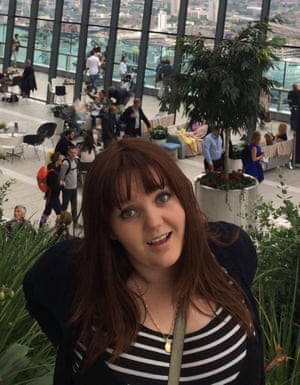
Freya Sewell, 30, is a second-year mental health nursing student at Edinburgh Napier University


Freya Sewell student nurse copy


Freya Sewell.

“Without our health we can’t fulfil what we can do. Whether mental health or physical health – it’s all part of the same person. That’s why I wanted to become a mental health nurse.


“I’m 30 now, but I wouldn’t have wanted to do this at 18 or 19. I did not know as much then about relationships between people and how they can affect all of us. Everyone on my course has found our attitudes have changed – and we come from a huge range of ages and backgrounds.


“I come from a family of artists and academics and my degree was in fine arts at Edinburgh, where I have stayed ever since. Course fees are still paid for here and you get a bursary; without that I wouldn’t be able to do the course. I’m also a support worker for people with learning disabilities. Most other nursing students do bank nursing [providing temporary cover], but I like working in the community and want to do so when I’m qualified.”


‘I wasn’t sure I had it in me to be a nurse’


Rose Abell, 27, is studying for a master’s in nursing studies at Glasgow Caledonian University


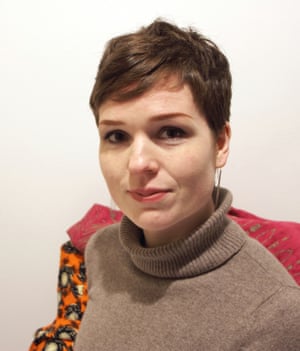
Rose Abell


Rose Abell.

“I always wanted to be a nurse, but my granddad, who brought me up, didn’t think it was prestigious enough. I decided to go into international relations instead. I first did a degree in economics and Chinese at Westminster and then an MA in international economics.


“I got a job with a major drinks company, but realised I didn’t like business. Then I worked at the EU in Brussels as a secretary, but I didn’t like that at all either.


“By this time, my granddad had been in hospital and changed his mind about nursing after being cared for by nurses. But I wasn’t sure I had it in me to be a nurse. A lot of nursing is about being an understanding person and I wasn’t sure I could always do and say the right thing.


“But while doing my MA in Berlin I worked part-time in a nursing home. I realised then that I could talk to people about what is important to them. I am now doing a master’s in nursing studies at Glasgow Caledonian. The course prepares you if you want to go on and do a PhD, but I want to be a nurse.”


‘I wanted a more definite career path’


Imogen Dobie, 24, studies mental health nursing at City University


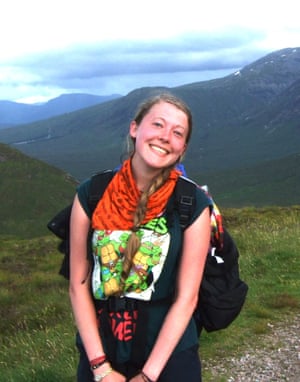
imogen dobie


Imogen Dobie.

“My school had a rather old-fashioned view of nursing, so if anything we were encouraged to consider medicine. At first, I considered becoming a clinical psychologist. I did a psychology PGDip after my first degree in medical neuroscience at Sussex University. But I wanted a more definite career path – with nursing you know you’re going to be a nurse.


“I’m now a final-year mental health nursing student at City University. I like the mix of things mental health nurses can do with service users, and that it is less biologically focused than medicine. But it is a real shame that our skills can’t be transferred into jobs in other countries, when general nursing can be.


“I moved to London to do the course. You can train and work with such a diverse population. And whatever mental health service you want to work in, it’s here.


“There is a sense that our role is being subsumed by some other professions. Occupational therapists do a lot of the therapeutic work around daily living skills, psychologists do the more in-depth, one-to-one work with service users. If the incoming role of nursing associates can administer medicines, then I’m not sure what we’ll be left with.


“My mum was a mental health nurse in the 1980s and tells me that I don’t have to be ‘just a nurse’, that I can go into management or research. But I don’t want us all to be pushed behind the scenes.”


‘There’s such a buzz in A and E’


Aimee Wong, 26, studies adult nursing at King’s College London


Aimee Wong.


Aimee Wong.

“I did a degree in geography at Manchester because I liked the subject. I wasn’t sure about my career options; I thought I might be a teacher. I worked for a computing company in an office role for a year and didn’t like it, it wasn’t sociable. Then I went travelling for a couple of years and taught English in Taiwan. Whilst there I did some voluntary work with patients who have HIV.


“When I came back to London, I needed a job and Lewisham Hospital was doing a mass recruitment of healthcare assistants. I requested a job in accident and emergency because I thought it would be exciting. I loved it: there’s such a buzz in A and E. There is always something going on.


“I worked there for a year and it really opened my eyes to what nurses can do. They do a lot of personal care, but there is a huge overlap between medicine and nursing. Now I’m doing a pre-registration degree in adult nursing and want to go on to be an advanced practitioner.


“The course placements are really varied. I’ve been on a cardiac surgery ward and an acute medical ward. I really enjoyed that, even though it was working with really unwell people, who often died. When that happened, it brought the whole team together. You don’t get that with other jobs.”


Keep up with the latest on Guardian Students: follow us on Twitter at @GdnStudents – and become a member to receive exclusive benefits and our weekly newsletter.


"I wouldn"t have done this at 18": why I switched to a nursing degree

8 Şubat 2017 Çarşamba

What can be done to tackle the youth mental health treatment gap? | Paul Burstow

By 2020 one in three teenagers will have access to cancer treatment in England. Think about that: only one in three. There would be an outcry. It would be scandalous, horrifying, unacceptable.


It is not true, however. Unless you delete the word “cancer” and insert “mental health”, and then it is.


In medical terms, there is a treatment gap. The number of children and young people living with a diagnosable mental illness far exceeds the number who get any help. One in 10 children suffer a diagnosable mental illness, yet just one in four of them receive treatment. By 2020 the gap may close, a little, if plans in NHS England’s Five Year Forward View for Mental Health [pdf] are realised, but only a little.


Over half of lifelong mental illness and distress shows its first signs in adolescence. We have an opportunity to do something to change people’s lives for the better and dramatically reduce the number of adults living with entrenched mental health problems. This is a great prize.


In her first major speech of 2017, Theresa May stressed the importance of prevention. Green papers on social justice, family and the role of schools in monitoring mental health and wellbeing are in the pipeline.


But can the treatment gap be closed by scaling up access to treatment and providing more digital options alone? Where will the workforce come from to provide the extra services and sessions required?


What if we could reduce the number of people getting ill in the first place? What are the underlying causes of rising levels of mental distress in children and can we put in place measures that increase resilience and reduce risk? If so, what are the most promising approaches?


Our ambition is to look beyond treatment and containment towards prevention and early intervention.


These are some of the questions Birmingham University is setting out to explore in its new policy commission. I will be chairing the commission, working with a range of experts, and together we are calling for evidence from non-governmental organisations, academics, public agencies, thinktanks, and people with lived experience of mental health issues across the UK and internationally.


I first outlined the ambitions of the university’s mental health commission in my inaugural lecture last autumn. Our ambition is to put together a new approach that looks beyond treatment and containment towards prevention and early intervention.


There is already some good evidence of what works in mental health promotion and illness prevention. As minister for mental health I commissioned the London School of Economics to review the evidence [pdf] and rates of return on investment. Among the findings was that school-based social and emotional learning programmes return £84 for every £1 invested. However, often the “saving” does not land in the budget of those who must make the investment. Siloed budgets and misaligned institutional objectives get in the way.


Last year I wrote about my visit to New York to learn about Mayor Blasio’s mental health programme: NYC Thrive. Thrive is a city-wide action plan devised from a population health perspective. It is trying to break down some of the silos. It involves schools and colleges, housing providers, the police and businesses. Prevention and early intervention are at its heart.


The West Midlands has set out its ambitions in its own Thrive strategy and the mayor of London is also working on plans.


Over the next 12 months the commission will be taking evidence, looking at the most promising ideas and setting out the actions that government and other agencies can take to make the shift to an ethos of prevention.


Join the Social Care Network to read more pieces like this. Follow us on Twitter (@GdnSocialCare) and like us on Facebook to keep up with the latest social care news and views.


What can be done to tackle the youth mental health treatment gap? | Paul Burstow

22 Eylül 2016 Perşembe

Julia Gillard: "We"ve made progress in education and gender equality – but more must be done"

A few years ago, an outbreak of cholera and other deadly diseases swept through one of the poorest villages in the northern region of Ghana, taking the life of Ruhainatu’s mother, Jamila.


Ruhainatu was in her teens. A decade ago, Jamila’s death would have extinguished Ruhainatu’s chances of getting the education she needs to succeed in life. Instead of going to school, she would have taken on her mother’s role of caring full time for her home and family.


But efforts by the Ghanaian government, together with development partners like the Global Partnership for Education, have strengthened the country’s education system. Now Ruhainatu and girls like her have a more hopeful prospect for life. One of the top performing students in the local school, Ruhainatu has ambitions to go away to university to become a nurse and then return to her village to help others remain healthy.


Ruhainatu has ambitions to go away and train as a nurse.

Ruhainatu has ambitions to go away and train as a nurse. Photograph: GPE/ Stephan Bachenheimer

Her story is one of countless affirmative real-life testimonials showing how educating girls can help them be healthier, more economically prosperous and become more civically empowered women. Their new knowledge can also improve the health and wellbeing of others around them.


But enabling children to succeed requires the right combination of support, so that they will be healthy, well-nourished and can attend a quality school that has access to clean drinking water and toilets.


Providing school meals and deworming programmes, for example, can have an important impact. The 2016 Unesco global education monitoring report notes that school meals and deworming programmes promote better education outcomes, especially for girls. For very poor families, the prospect that their daughter will be fed means that sending her to school is a more attractive option than keeping her at home so she can attend to domestic duties, farm work or taking goods to market. Greater access to clean water can also translate into education improvements for girls, by reducing the time they take to collect water for the family and giving them more time for school.


This give-and-take between education and other social development factors has received more emphasis since the unveiling of the sustainable development goals (SDGs) last year. We are breaking down the silos that have historically divided development sectors. Education and global health groups now understand that improvements in each are essential to progress for both and we are already creating opportunities for deeper collaboration.


Now the evidence of what works is increasingly clear, let’s just get on with it and drive progress on the mutually reinforcing goals for global education (SDG 4) and gender equality and women’s empowerment (SDG 5).


For groups like the Global Partnership for Education, whose board I chair and which partially funded the program in Ghana that helped Ruhainatu, “getting on with it” includes continuing to support countries to close the gender gaps in their education systems.


We are breaking down the silos that have historically divided development sectors.


Closing those gaps requires recognising and breaking down barriers to gender equality. Poverty is the biggest, but other significant factors include ethnicity, language, disability, early marriage, the distance from home to school, gender-biased pedagogy, fragility and conflict, absence of proper sanitary facilities, pressure to take care of family or earn money, and insecurity within and on the way to school.


We – in education or in any other related development sectors – could accomplish much more in less time if there was sufficient political support and enough financing. This includes first and foremost more domestic financing for education by developing countries themselves. But it also requires more donor funding. We can’t “just get on with it” when education’s share of overseas development aid has fallen from 13% to 10% since 2002. The International Commission for Financing Global Education Opportunities, notes in its just-released report that under present trends, only one in 10 young people in low-income countries will be on track to gain basic secondary-level skills by 2030. Clearly, this is completely unacceptable.


The Education Commission, on which I serve as a commissioner, advocates for a range of far-reaching transformations to improve education. The commission’s work provides new evidence on what works and costs out what it would take for the world to educate every child.


The call to action in financing is to increase total spending on education from $ 1.2tn (£0.9tn) per year today to $ 3tn (£2.3tn) by 2030. That’s a big jump but not an insurmountable one.


Making the leap starts with developing countries, donors, NGOs, the private sector and many others choosing right now to just get on with it.


Join our community of development professionals and humanitarians. Follow @GuardianGDP on Twitter.


Julia Gillard: "We"ve made progress in education and gender equality – but more must be done"

12 Eylül 2016 Pazartesi

Clinton campaign admits "we could have done better" handling pneumonia news

Hillary Clinton’s campaign has acknowledged mishandling news of her pneumonia, as Donald Trump sought to capitalize on growing questions over his opponent’s trustworthiness at a critical moment in their race for the White House.


“We could have done better yesterday,” wrote Clinton communications director Jennifer Palmieri on Monday, after some Democrats began questioning whether the campaign had been fully transparent in its weekend accounts of her health.


“In retrospect, we could have handled it better in providing more information. That’s on us. We regret that,” added press secretary Brian Fallon.


Clinton was filmed losing her footing and being assisted into a waiting van after leaving early from a memorial for 9/11 victims in New York on Sunday.


Initially, campaign aides said she had “overheated”, though Clinton later insisted “I’m feeling great, it’s a beautiful day in New York,” after she left her daughter’s apartment, where she was taken to rest.


But once the video footage emerged – which appeared to support eyewitness accounts of a more serious incident – the campaign issued a short statement from a doctor revealing she was being treated for pneumonia.


A sign along a road near Hillary Clinton’s home on Monday in Chappaqua, New York.


A sign along a road near Hillary Clinton’s home on Monday in Chappaqua, New York. Photograph: Don Emmert/AFP/Getty Images

Clinton had been diagnosed on Friday but the condition went undisclosed despite the campaign chastising reporters who had questioned bouts of coughing at recent public events.


The campaign now says Clinton will release “additional medical information” from her doctor in the next few days “to further put to rest any lingering concerns”, but insists there are “no other underlying conditions, the pneumonia is the extent of it”.


“I expect by the middle or back end of the week she will be back out there on the campaign trail,” Fallon told MSNBC. “If it was up to her she would be travelling to California today but it was her doctor’s advice [to rest at home].”


However, even if Clinton does bounce back quickly, the incident is raising fresh questions over trust which could cause more lingering political complications.


“Antibiotics can take care of pneumonia. What’s the cure for an unhealthy penchant for privacy that repeatedly creates unnecessary problems?” wrote Barack Obama’s former adviser David Axelrod.


His tweet prompted Palmieri’s first acknowledgement of regret, in which she added: “But it is a fact that [the] public knows more about HRC than any nominee in history”.


Their public exchange was seized on by the Trump campaign, which said it demonstrated a familiar pattern of secrecy by the Clintons.


“It’s incredibly important to be forthcoming,” said the Republican’s campaign manager Kellyanne Conway. “If you have a diagnosis of pneumonia, just be honest about it when you’re saying you’re overheating. Just say, ‘by the way, I’m on antibiotics’.”


Trump immediately claimed he would soon be releasing the results of a recent physical examination of his own, telling interviewers: “It’s interesting because they say pneumonia, but she was coughing very, very badly a week ago … It’s very interesting to see what’s going on.”


Clinton’s campaign and its backers nonetheless pushed back against criticism regarding transparency. Trump, they pointed out, had thus far declined to release his tax returns and refused to offer policy specifics on issues ranging from immigration to the fight against Islamic State.


The state of Trump’s own health was also unclear, with a brief statement from his personal doctor of 25 years in December providing few medical details and serving as the only record offered by his campaign.


The doctor’s statement described the Republican nominee in the sort of hyperbolic language typically associated with Trump, declaring him “the healthiest individual ever elected to the presidency” if successful in his pursuit of the White House. Trump’s physician, Dr Harold Bornstein, said last month he put the document together in five minutes while awaiting a limo sent by Trump to collect the letter.


Republican presidential candidate Donald Trump attends the ceremony in New York Sunday.


Republican presidential candidate Donald Trump attends the ceremony in New York Sunday. Photograph: Andrew Harnik/AP

Despite repeatedly criticizing Clinton’s “stamina” in recent weeks, Trump was cautious on the topic of the former secretary of state’s health on Monday, saying in an interview: “I hope she gets well soon.”


The Republican nominee instead focused his fire on Clinton’s comments on Friday about half of Trump’s voters being in “the basket of deplorables”. Although she has since expressed regret for being “grossly generalistic” in saying “half”, she still stood by her characterization of Trump supporters. Clinton has continued to reiterate: “Trump has built his campaign largely on prejudice and paranoia and given a national platform to hateful views and voices.”


The Trump campaign has seized on these remarks and is now airing a television ad highlighting them in several swing states. The ad includes footage of Clinton grouping “the racists, sexists, homophobic, xenophobic, Islamophobic, you name it” into the basket of deplorables.


The stumbles for Clinton come as polls appear to show Trump reducing a previously large gap, to an average of three points.


Even as her campaign sought to rein in any political damage from the past few days, several Democrats argued that the focus on Clinton’s health had been overblown by the media.


“Every candidate I have ever worked for has gotten sick on the trail and worked through it because you can’t take days off in a close race,” wrote Dan Pfeiffer, a former senior advisor to Obama.


Bill Burton, who served as Obama’s national press secretary in 2008, said campaign aides would have been “understandably skittish about making announcements about secretary Clinton’s health” while Trump was pushing conspiracy theories about her wellbeing.


“Will it feed a narrative? Sure,” he said in an interview. “But only because the media gets led around by the nose by Donald Trump.”


And while the media was quick to cast the incident as problematic for Clinton, Burton said it could in fact provide her with a small boost in the polls.


“People respond when they think someone’s being treated unfairly,” he said.


“For Hillary Clinton to have pneumonia and even still give a press conference, convene a national security meeting, attend a memorial service in the hot sun for an hour and a half, and then take criticism for having pneumonia all the while … I don’t think the American people are going to punish her for actually performing quite well in the face of what’s an exhausting illness.”


Clinton campaign admits "we could have done better" handling pneumonia news

27 Şubat 2014 Perşembe

Prescription Addiction: What Can Be Done About Increasing Rx Overdoses?

The evening information is filled with fatal automobile crashes and shootings. But drug overdoses destroy practically 40,000 individuals a year, accounting for much more deaths than vehicular accidents or homicides.


Drug overdoses are on the rise in America, fueled largely by prescription meds. Reversing the course of this epidemic will require some dramatic adjustments.


The Details


Drug overdose charges climbed more than 100 % amongst 1990 and 2012. But what most men and women don’t recognize is that nearly 60 percent of drug overdoses end result from prescription medicines. In truth, 3 in four drug overdose deaths involve an “opioid analgesic” discomfort killer such as oxycodone, hydrocodone or methadone.


Opioids can precise an enormous toll on human lives. Opioid use damages families and communities, and fees U.S. employers a fortune.


Non-healthcare use of prescription opioids charges the U.S. upward of $ 53 billion, in accordance to the Clinical Journal of Discomfort. That’s $ 42 billion from misplaced workplace productivity, $ 8.2 billion in criminal justice costs, $ two.two billion from treatment method and $ 944 million from health care problems.


Morphine was isolated and synthesized in the 1800s. (Photo credit: Wikipedia)

The chemical construction of morphine, an opioid that was isolated, synthesized and marketed commercially in the 1800s. (Photo credit: Wikipedia)


These devastating results are not isolated to any 1 local community. They’re located in all communities: rural and urban, affluent and lower cash flow, minority and bulk.

The History


For about 6,000 many years, opioids have been used to treat soreness and other medical problems. The initial source of opioids was opium, derived from the Eurasian poppy. In the 1800s, morphine was isolated and synthesized, generating it commercially offered for the first time.


For numerous decades major up to the 21st century, doctors debated the most suitable use of these effective drugs and their spot in the therapeutic arsenal.


In the 1960s, America saw a sharp boost in the abuse of each prescription and illicit medicines. In response, the federal government began a crackdown on prescription medication as Congress tightened restrictions to limit counterfeit prescriptions.


In parallel, there was a cultural shift within the area of medication, resulting in a important lessen in how regularly doctors used opioids to deal with acute and chronic discomfort.

The Pendulum Swings


These developments drove down the quantity of opioids prescribed for soreness, but some critics were concerned medical professionals and politicians had gone as well far. Scientific studies conducted in the late ‘80s and early ‘90s confirmed overall health care providers have been, in some situations, beneath-treating discomfort.


So, the pendulum swung however once more. The field of medication shifted its stance on pain management in the mid-1990s, viewing the broader use of opioids as a reasonably secure treatment method approach. There was a belief that a patient experiencing ache must be given as higher of a dose of opioids as necessary for as lengthy as essential, regardless of the actual trigger of discomfort.


Concurrently, ache management authorities – some funded by the makers of these effective medications – began assuring participants at continuing medical schooling meetings that dependence and addiction would not take place in the encounter of genuine pain.


We have since realized these assertions were incorrect. But the injury was completed.


Prescription Addiction: What Can Be Done About Increasing Rx Overdoses?

21 Şubat 2014 Cuma

The NHS program to share our healthcare information can conserve lives – but need to be done appropriate | Ben Goldacre
Every thing would be much simpler if science genuinely was “just an additional type of religion”. But health-related knowledge isn’t going to appear out of nowhere, and there is no ancient text to manual us. As an alternative, we learn how to save lives by learning huge datasets on the healthcare histories of hundreds of thousands of men and women. This information assists us determine the causes of cancer and heart illness it assists us to spot side-effects from helpful treatment options, and switch patients to the safest medicines it aids us spot failing hospitals, or rubbish surgeons and it helps us spot the regions of greatest need to have in the NHS. Numbers in medicine are not an abstract academic game: they are created of flesh and blood, and they demonstrate us how to avoid pointless soreness, struggling and death.


Now all this vital work is currently being place at risk, by the bungled implementation of the care.data project. It was supposed to link all NHS information about all patients with each other into one particular giant database, like the 1 we already have for hospital episodes as an alternative it has been put on hold for 6 months, in the face of plummeting public assistance. It ought to have been a breeze. But we have noticed arrogant paternalism, crass boasts about commercial profits, a lack of clear governance, and a failure to talk simple science appropriately. All this has left the area open for wild conspiracy theories. It would consider extremely minor to correct this mess, but time is short, and lives are at stake.


The care.information venture was promoted in two techniques: we will use your data for lifesaving investigation, and we will give it to the personal sector for industrial exploitation, creating billions for the UK economy. This marriage was a clear mistake: by and massive, the public assistance public analysis, but are nervous about commercial exploitation of their wellness information.


Now the teams behind care.data are trying to row back, explaining that entry will only be granted for investigation that benefits NHS individuals. That is laudable, but possibly a really broad notion. It is a single we would want to unpack, with clear, worked examples of the variety of issues they would permit, and the variety of things they would refuse. But that’s not achievable simply because, bizarrely, the specific ideas, suggestions, committees and rules that will establish all these choices have not however been plainly set out. This poses numerous difficulties. First of all, the public are becoming asked to assistance anything that feels intuitively scary, about the privacy of their health care records, without having becoming told the information of how it will perform. Secondly, the field has been left open to conspiracy theories, which are tough to refute without concrete advice on how permissions for accessibility truly will function.


That said, many criticisms have been absurd. There has been limitless discussion around the thought of wellness insurers buying wellness information, for illustration, and making use of them to reject large-risk sufferers. Contact an insurer correct now and see how you get on: inside minutes you will be asked to declare your total health care background, waive confidentiality and grant entry to your complete healthcare notes anyway.


Numerous have complained about drug firms getting access to data, and this is much more complicated. On the a single hand, arrangements like these are longstanding and essential: if medicines regulators get a number of uncommon side-impact reviews from patients, they go to the drug firm and force them to do a big research, examining – for example – 10,000 patients’ data, to locate out if individuals on that drug genuinely do have much more heart attacks than we’d assume. To do this, the United kingdom well being regulator itself sells business the information, in the previous from anything named the GP Investigation Database, which holds millions of people’s records presently. This wants to come about, and it really is very good. But equally, men and women know – I have undoubtedly shouted about it for long sufficient – that the pharmaceutical sector also misuses information: they hide the results of clinical trials when it fits them, very legally they check personal doctors’ prescribing patterns to guide their advertising and marketing efforts, and so on. The public never trust the pharmaceutical sector unconditionally, and they’re appropriate not to.


Trust, of program, is essential right here, and which is currently in brief provide. The NSA leaks showed us that governments were casually assisting themselves to our private information. They also showed us that leaks are tough to handle, due to the fact the Nationwide Safety Agency of the wealthiest nation in the globe was unable to stop a single younger contractor stealing thousands of its most highly delicate and embarrassing paperwork.


But there is a a lot more specific explanation why it is difficult to give the team behind care.information our blind faith: they have been caught red-handed giving false reassurance on the extremely real – albeit modest – privacy threats posed by the program.


Tim Kelsey is the guy running the display: an ex-journalist, passionate and engaging, he has drunk far more open-information Kool-Support than anybody I have ever met. He has evangelised the business positive aspects of sharing NHS data – possibly because he made millions from setting up a hospital-ranking internet site with Dr Foster Intelligence – but he is also admirably evangelical about the electrical power of data and transparency to spot troubles and drive up requirements. Sadly, he gets carried away, stepping up and announcing boldly that no identifiable patient data will leave the Wellness and Social Care Info Centre. Other people supporting the scheme have done the exact same.


This is false reassurance, and that is poison in medicine, or in any area exactly where you are striving to earn public trust. The information will be “pseudonymised” before release to any applicant firm, with postcodes, names, and birthdays removed. But re-identifying you from that data is much more than possible. Here is 1 instance: I had twins last year (it’s great it truly is also partly why I’ve been creating less). There are 12,000 dads with comparable luck each 12 months let’s say two,000 in London let’s say one hundred of people are aged 39. From my quick on the internet bio you can operate out that I moved from Oxford to London in about 1995. Congratulations: you’ve now uniquely identified my overall health record, with out using my title, postcode, or anything at all “identifiable”. Now you have discovered the rows of information that describe my contacts with health solutions, you can also uncover out if I have any healthcare problems that some may well contemplate embarrassing: incontinence, probably, or mental overall health issues. Then you can use that info to try and smear me: a regimen occurrence if you do the perform I do, whether it’s huge drug firms, or dreary tiny quacks.


This risk is not automatically massive, but to say it isn’t going to exist is crass: it is false reassurance, which eventually undermines trust, but it truly is also needless, and counterproductive, like hiding information on side-results alternatively of discussing them proportionately. To the ideal of my understanding, we have never ever nevertheless had a significant information leak from a medical investigation database, and there are a lot all around already but then, we are standing on the verge of a significant improve in the variety of people accessing and making use of healthcare data. There are methods we can consider to minimise the risks: only release a subset of the 60 million United kingdom population to each and every applicant only give out the smallest feasible amount of information on each patient whose information you are sharing suggest that individuals come to your data centre to run their analyses, as an alternative of downloading data, and so on. But, although the care.data undertaking might be arranging to do some of those things, the ground rules haven’t been correctly written out yet.


In any case, even safeguards this kind of as these can be worked about. There are firms out there operating in the grey areas of the law, aggregating information from each and every source and leak they can uncover, producing enormous, linked datasets with information from direct marketing and advertising lists, online purchases, mobile cellphone organizations and much more. Who’s to know if an individual will begin quietly aggregating all the little chunks of our well being information?


This, of course, would be illegal. As Tim Kelsey and other folks are keen to stage out, re-identifying or leaking information in any way would be a “criminal offence”. But as this task lands, we’re all turning out to be rapidly mindful that incompetence, malice and creepiness around confidential data is policed with a worryingly light touch. Private investigators have tiny difficulty getting confidential information from staff in the police force, banks and tax offices, for instance.


Here’s why: it took a prolonged time for anyone to realise that Steve Tennison, a finance manager in a GP practice, had accessed patients’ records on 2,023 events above the course of a yr, despite the fact that this was related to his work on only three occasions. The vast majority of records he snooped on belonged to younger females: he repeatedly accessed the record of one particular female he had gone to college with, and that of her son. The highest penalty for this is a fine, with a ceiling of £5,000 in magistrates courts. Tennison was fined £996, in December 2013. This is why the public truly feel nervous, and this is what we want to correct.


It really is painful for me to create critically about a undertaking like care.information, simply because I love healthcare data, and I know the very good it can do. We have a golden chance in the Uk, with 60 million folks cared for in one glorious NHS. Opt-outs would destroy the data, and the growing calls for an opt-in method would be worse: opt-in killed men and women by holding back organ donation, and a lot more than that, it would exacerbate social inequality about information, simply because the poorest patients, individuals most likely to be unwell, are also the least engaged with services, the least probably to opt in. They would turn into invisible.


So here is my tips: if you are thinking of opting out – wait. If you run care.information – listen. There are three issues the government can do to rescue this undertaking.


First of all, make a correct announcement about what you will do in the 6-month delay. You can’t rely on blind believe in when it comes to sharing private medical records, so describe that you’ll be coming back soon with a clear story. Kind out the governance framework, present unambiguous principles and rules explaining how data will be shared, checklist the specific clinical codes you happen to be proposing to upload, then give actual-world examples of the variety of accessibility applications that would be approved, and the kind that would be rejected. This is fair, and wise.


Secondly, display the public how lives are saved by medical investigation. This requirements examples, from the vast archives of medical analysis on cancer, heart condition and a lot more. Alongside that, give a clear nod to the modest risks, and an explanation of how they will be mitigated. Never be witnessed to give false reassurance on these risks if you do, you will get rid of patients’ trust for ever.


Lastly, we need to have stiff penalties for infringing healthcare privacy, on a grand and sadistic scale. Fines are useless, like parking tickets, for people and organizations: anybody leaking or misusing personal medical information requirements a prison sentence, as does their CEO. Their firm – and all subsidiaries – should be banned from accessing health care data for a decade. Rush some check cases by means of, and hang the bodies in the town square.


If the government do all this, they have a very good possibility of conserving a important data project, and permitting medical analysis that saves lives on a biblical scale to continue. If the government try out to fudge – with half measures, superficial PR and false reassurance – then care.data will fail, and it may well bring down other wise public overall health study with it. Lives are at stake. This cannot be left to the final minute in the six-month pause, and time is precious. It truly is February. If you are contemplating of opting out, please don’t. But mark your diary for Could.


The NHS program to share our healthcare information can conserve lives – but need to be done appropriate | Ben Goldacre