optimism etiketine sahip kayıtlar gösteriliyor. Tüm kayıtları göster

2 Ocak 2017 Pazartesi

Optimism v pessimism in 2017: the comedian and the psychologist debate

One day last year, Liam Williams locked himself out and tried to climb in through his bedroom window. “I’d done it before very skilfully when drunk,” he says, “but this time I was hungover, so I guess I had that reduced inhibition, but not that derring-do – you know, the reckless optimism of a drunkard.” It didn’t end well. “It was only the first storey but I didn’t have any shoes on and it was quite a high window. I fell and broke my heels. It really hurt.”


The comedian is telling this story to psychologist Philippa Perry and me as we meet in a London cafe to consider the merits of optimism and pessimism. Is pessimism necessarily bad for you? What health benefits come with being optimistic? Does being optimistic help you in relationships? Does being pessimistic make you pragmatic about a prospective lover’s shortcomings? If you’re as bleakly pessimistic as Eeyore, can you change? If you’re as misguidedly optimistic as Mr Micawber, can you get a firmer grip on reality? More troublingly, what looks like pessimism to one can seem like optimism to another. Consider Williams’s attempted break-in. Perry suggests that his climb was optimistic. Liam worries it was doomed by pessimism. “It comes under the heading of risk-taking,” says Perry. “Optimists are more likely to take risks – they think they can drive into that gap in traffic or climb through windows.” She pauses before adding: “That’s not necessarily a good thing.”


“I was a bit desperate,” says Williams, “so I made a ridiculous decision. As I was climbing, I lacked that crucial optimism that I was going to get in. I was physically impaired and I probably had a narrative in my head that this wasn’t going to go well, which I wouldn’t have had when I was drunk.”


[embedded content]

Liam Williams: Can Things Make You Happy? on YouTube

“That,” says Perry, “is the self-fulfilling prophecy thing.” What does that mean? “If I go to a party expecting to have a good time, look people in the eye, I may well do. If I walk in hang-dog thinking nobody wants to speak to me, I probably won’t.” Viewed thus, Williams expected to fall. Perhaps he even wanted to.


Soon after the fall, a friend asked Williams how he’d been feeling at the time. “I said maybe a bit depressed. And she said: ‘Maybe you took a reckless decision because you were depressed.’” Williams compares this to the EU referendum: “Maybe it was like Brexit – ‘My life is so shit at the moment that I can take this grave, reckless decision and at least something will be different.’” The year 2016 was, he thinks, marked by such pessimism. “Those who voted for Brexit and Trump were so pessimistic about how things are going, they felt any change must be better.”


“Which,” adds Perry insightfully, “is quite optimistic.” Good point: to their opponents, such as Williams, Brexiteers and Trumptonians may have looked like pessimists who, in a fit of infantile petulance, were destroying their respective polities. But, seen another way, they were cock-eyed optimists who believed change was possible.


Williams tells us he has turned away from standup, in part because he feared he was making his audiences as politically apathetic and pessimistic as he was. In 2014, he did a show in Edinburgh called Capitalism, which (despite the Guardian’s five-star review) made him queasy. His routine revolved around mocking his lack of political fibre: the twentysomething Cambridge English graduate didn’t have what it took to go on protests or join Occupy. Nor did he have the intellectual drive to develop a sophisticated critique of capitalism by reading Thomas Piketty or Slavoj Žižek, still less act on it.


“I kept thinking: ‘There’s a lot wrong with the world, and crises are getting worse, but I can’t change any of it,” he says. Lots of people feel that way, I suggest, especially twentysomethings, and their impotence then slides into pessimism. “That’s right. But I detected in myself an apathy, a willingness to focus on trivialities,” he replies. “I wouldn’t do a show like that again, because those who saw it might walk away having let themselves off the hook.” Maybe our most evisceratingly pessimistic comedians – think Frankie Boyle or Stewart Lee – let us off the hook in the same way. Perhaps (and this is just my own pessimistic thought) comedy is a successful business model in austerity Britain because it provides alibis for inaction – and, as a result, makes things worse.


So Williams has turned his back on standup. Instead, he has co-written and performs in what he calls a panto for grown-ups, called Ricky Whittington and His Cat. “He turns up in London full of optimism,” says Liam, “and finds it hostile and plagued with rats.” Still is, I point out. “Then he leaves in despair before hearing voices calling him back. He projects his inner voice on to the bells. They call him back.”


Perry says this is not unusual: “He can’t own his optimism, but projects it on to the bells.” True, but on the plus side, he overcomes his pessimism, returning to London, becoming mayor and building state-of-the-art cycle lanes or whatever it was he did.
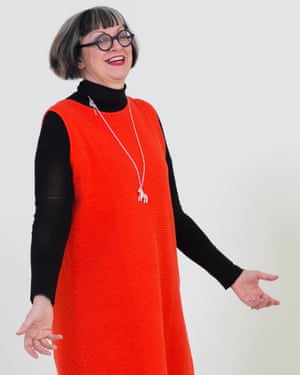


Philippa Perry


‘Pessimists see the worst in people – that’s why they’re more interesting’ … Philippa Perry. Photograph: David Levene for the Guardian

So, if Williams is anything to go by, pessimism is bad for you. But it’s more complicated than that, says Perry. She hands me a list of pros and cons for both outlooks. Pros of optimism include: better mental and physical health, quicker recovery rates after illnesses and operations, lower stress, longer life, higher trust in others and thus better relationships. Pessimism’s pros include: better at budgeting, better insured, on time. Interesting: both she and Williams arrived on time, suggesting that they’re both pessimists. “Pessimists are always punctual,” says Perry. “Optimists think the bus is going to be on time, that they can get somewhere quicker than they can.” I’m hating optimists already.


But surely, even if you’re an optimist, it’s better to be with a pessimist? At least they’ll be on time. And they’re better company. “Pessimists are much more cynical,” says Perry. “They see the worst in people – that’s why they’re more interesting. Though you wouldn’t want to be on a desert island with one.”


Nonetheless, recent research suggests that pessimism is actually bad for you. A 2011 study, published in Stroke, a journal of the American Heart Association, measured respondents on a 16-point optimism scale and found that, for every point increase, there was a corresponding 9% decrease in acute strokes over the two-year follow-up period. But why? “Our work suggests that people who expect the best things in life actively take steps to promote health,” says Eric Kim, who has researched the subject for the Harvard TH Chan School of Public Health.


But this was called into question in early 2016 by Helsinki researchers who studied middle-aged Finns and found that, while pessimism was linked to an increased risk of death from coronary heart disease, there was no indication that optimism led to a decreased risk.


Both studies have one thing in common: they suppose optimism and pessimism to be measurable. Levels of pessimism were measured in Helsinki by asking people to respond to such gloomy statements as: “If something can go wrong for me, it will.” Optimism, meanwhile, had such choice lines as: “In uncertain times, I usually expect the best.”


None of this, you’d hope, means it’s easy to pigeonhole respondents. “Maybe labelling someone either way is as reductive as saying they’re an extrovert or introvert,” says Williams. Good point – yet scarcely a month goes by without another study telling us that optimists are healthier.


Here’s another problem. What if pessimism is something you’re doomed to by genes and environment? A 2006 study suggested that outlooks are forged in childhood. Those with high socioeconomic status, unsurprisingly, were more optimistic. More interesting was the idea that pessimism tended to stick even in the face of socioeconomic fluidity. So if you had a poor, miserable childhood, you might well be pessimistic even as you bask on your parvenu yacht off Corfu.


“That’s not to say you’re hard-wired to either,” says Perry. “You can change.” So we can cultivate optimism? How? Kim suggests keeping a log for a fortnight of any kind things you do for others, to achieve your “best possible self”, as well as attending mindfulness courses, getting into therapy, writing down three things each day you are grateful for. Then, at the end, you see how you feel.


There is, says Perry, a neurophysiological basis to the possibility of becoming optimistic: the brain’s left inferior frontal gyrus fires up with good news; the right inferior with bad news. But if your life is marked by bad news, that left inferior is apt not to register good news. “Most people are optimists, and the more optimistic you are, the less likely the right inferior is to respond to negative information,” she says.


Here’s an interesting problem with optimism. You can have too much of it. Neuroscientist Tali Sharot, author of The Optimism Bias, argues that 80% of us suffer from the illusion that supplies her book’s title. “The idea,” says Perry, “is that the optimist knows smoking kills but thinks: ‘It just won’t kill me.’” Or, as Sharot puts it: “We underestimate our likelihood of suffering from cancer, or being in a car accident. We overestimate our longevity, our career prospects. In short, we’re more optimistic than realistic, but we are oblivious to the fact.”


Sounds like we should cultivate pessimism then. I’ve brought along Arthur Schopenhauer’s On the Suffering of the World, in which the German pessimist describes the nature of human life thus: “We begin in the madness of carnal desire and transport of voluptuousness, we end in the dissolution of all our parts and the musty stench of corpses … Does it not look as if existence were an error the consequences of which grow more and more manifest?” Though I place the book prominently on the cafe table, neither comedian nor psychologist is tempted to pick it up.


“Since that fall, my life has been better,” says Williams. “I’ve pulled myself together and it made me reflect.” “So did you get another key cut?” asks Philippa. “I gave one to the neighbours,” he replies. “You’re marvellous!” she says chirpily. “That’s learning to trust people.”


Williams fills his teacup – his half-empty teacup – and looks doubtful. “But there’s a degree of pessimism in that, right?” he says. “Because I know I’m going to forget the keys again.”


Optimism v pessimism in 2017: the comedian and the psychologist debate

Optimism v pessimism in 2017: the comedian and the psychologist debate

One day last year, Liam Williams locked himself out and tried to climb in through his bedroom window. “I’d done it before very skilfully when drunk,” he says, “but this time I was hungover, so I guess I had that reduced inhibition, but not that derring-do – you know, the reckless optimism of a drunkard.” It didn’t end well. “It was only the first storey but I didn’t have any shoes on and it was quite a high window. I fell and broke my heels. It really hurt.”


The comedian is telling this story to psychologist Philippa Perry and me as we meet in a London cafe to consider the merits of optimism and pessimism. Is pessimism necessarily bad for you? What health benefits come with being optimistic? Does being optimistic help you in relationships? Does being pessimistic make you pragmatic about a prospective lover’s shortcomings? If you’re as bleakly pessimistic as Eeyore, can you change? If you’re as misguidedly optimistic as Mr Micawber, can you get a firmer grip on reality? More troublingly, what looks like pessimism to one can seem like optimism to another. Consider Williams’s attempted break-in. Perry suggests that his climb was optimistic. Liam worries it was doomed by pessimism. “It comes under the heading of risk-taking,” says Perry. “Optimists are more likely to take risks – they think they can drive into that gap in traffic or climb through windows.” She pauses before adding: “That’s not necessarily a good thing.”


“I was a bit desperate,” says Williams, “so I made a ridiculous decision. As I was climbing, I lacked that crucial optimism that I was going to get in. I was physically impaired and I probably had a narrative in my head that this wasn’t going to go well, which I wouldn’t have had when I was drunk.”


[embedded content]

Liam Williams: Can Things Make You Happy? on YouTube

“That,” says Perry, “is the self-fulfilling prophecy thing.” What does that mean? “If I go to a party expecting to have a good time, look people in the eye, I may well do. If I walk in hang-dog thinking nobody wants to speak to me, I probably won’t.” Viewed thus, Williams expected to fall. Perhaps he even wanted to.


Soon after the fall, a friend asked Williams how he’d been feeling at the time. “I said maybe a bit depressed. And she said: ‘Maybe you took a reckless decision because you were depressed.’” Williams compares this to the EU referendum: “Maybe it was like Brexit – ‘My life is so shit at the moment that I can take this grave, reckless decision and at least something will be different.’” The year 2016 was, he thinks, marked by such pessimism. “Those who voted for Brexit and Trump were so pessimistic about how things are going, they felt any change must be better.”


“Which,” adds Perry insightfully, “is quite optimistic.” Good point: to their opponents, such as Williams, Brexiteers and Trumptonians may have looked like pessimists who, in a fit of infantile petulance, were destroying their respective polities. But, seen another way, they were cock-eyed optimists who believed change was possible.


Williams tells us he has turned away from standup, in part because he feared he was making his audiences as politically apathetic and pessimistic as he was. In 2014, he did a show in Edinburgh called Capitalism, which (despite the Guardian’s five-star review) made him queasy. His routine revolved around mocking his lack of political fibre: the twentysomething Cambridge English graduate didn’t have what it took to go on protests or join Occupy. Nor did he have the intellectual drive to develop a sophisticated critique of capitalism by reading Thomas Piketty or Slavoj Žižek, still less act on it.


“I kept thinking: ‘There’s a lot wrong with the world, and crises are getting worse, but I can’t change any of it,” he says. Lots of people feel that way, I suggest, especially twentysomethings, and their impotence then slides into pessimism. “That’s right. But I detected in myself an apathy, a willingness to focus on trivialities,” he replies. “I wouldn’t do a show like that again, because those who saw it might walk away having let themselves off the hook.” Maybe our most evisceratingly pessimistic comedians – think Frankie Boyle or Stewart Lee – let us off the hook in the same way. Perhaps (and this is just my own pessimistic thought) comedy is a successful business model in austerity Britain because it provides alibis for inaction – and, as a result, makes things worse.


So Williams has turned his back on standup. Instead, he has co-written and performs in what he calls a panto for grown-ups, called Ricky Whittington and His Cat. “He turns up in London full of optimism,” says Liam, “and finds it hostile and plagued with rats.” Still is, I point out. “Then he leaves in despair before hearing voices calling him back. He projects his inner voice on to the bells. They call him back.”


Perry says this is not unusual: “He can’t own his optimism, but projects it on to the bells.” True, but on the plus side, he overcomes his pessimism, returning to London, becoming mayor and building state-of-the-art cycle lanes or whatever it was he did.


Philippa Perry


‘Pessimists see the worst in people – that’s why they’re more interesting’ … Philippa Perry. Photograph: David Levene for the Guardian

So, if Williams is anything to go by, pessimism is bad for you. But it’s more complicated than that, says Perry. She hands me a list of pros and cons for both outlooks. Pros of optimism include: better mental and physical health, quicker recovery rates after illnesses and operations, lower stress, longer life, higher trust in others and thus better relationships. Pessimism’s pros include: better at budgeting, better insured, on time. Interesting: both she and Williams arrived on time, suggesting that they’re both pessimists. “Pessimists are always punctual,” says Perry. “Optimists think the bus is going to be on time, that they can get somewhere quicker than they can.” I’m hating optimists already.


But surely, even if you’re an optimist, it’s better to be with a pessimist? At least they’ll be on time. And they’re better company. “Pessimists are much more cynical,” says Perry. “They see the worst in people – that’s why they’re more interesting. Though you wouldn’t want to be on a desert island with one.”


Nonetheless, recent research suggests that pessimism is actually bad for you. A 2011 study, published in Stroke, a journal of the American Heart Association, measured respondents on a 16-point optimism scale and found that, for every point increase, there was a corresponding 9% decrease in acute strokes over the two-year follow-up period. But why? “Our work suggests that people who expect the best things in life actively take steps to promote health,” says Eric Kim, who has researched the subject for the Harvard TH Chan School of Public Health.


But this was called into question in early 2016 by Helsinki researchers who studied middle-aged Finns and found that, while pessimism was linked to an increased risk of death from coronary heart disease, there was no indication that optimism led to a decreased risk.


Both studies have one thing in common: they suppose optimism and pessimism to be measurable. Levels of pessimism were measured in Helsinki by asking people to respond to such gloomy statements as: “If something can go wrong for me, it will.” Optimism, meanwhile, had such choice lines as: “In uncertain times, I usually expect the best.”


None of this, you’d hope, means it’s easy to pigeonhole respondents. “Maybe labelling someone either way is as reductive as saying they’re an extrovert or introvert,” says Williams. Good point – yet scarcely a month goes by without another study telling us that optimists are healthier.


Here’s another problem. What if pessimism is something you’re doomed to by genes and environment? A 2006 study suggested that outlooks are forged in childhood. Those with high socioeconomic status, unsurprisingly, were more optimistic. More interesting was the idea that pessimism tended to stick even in the face of socioeconomic fluidity. So if you had a poor, miserable childhood, you might well be pessimistic even as you bask on your parvenu yacht off Corfu.


“That’s not to say you’re hard-wired to either,” says Perry. “You can change.” So we can cultivate optimism? How? Kim suggests keeping a log for a fortnight of any kind things you do for others, to achieve your “best possible self”, as well as attending mindfulness courses, getting into therapy, writing down three things each day you are grateful for. Then, at the end, you see how you feel.


There is, says Perry, a neurophysiological basis to the possibility of becoming optimistic: the brain’s left inferior frontal gyrus fires up with good news; the right inferior with bad news. But if your life is marked by bad news, that left inferior is apt not to register good news. “Most people are optimists, and the more optimistic you are, the less likely the right inferior is to respond to negative information,” she says.


Here’s an interesting problem with optimism. You can have too much of it. Neuroscientist Tali Sharot, author of The Optimism Bias, argues that 80% of us suffer from the illusion that supplies her book’s title. “The idea,” says Perry, “is that the optimist knows smoking kills but thinks: ‘It just won’t kill me.’” Or, as Sharot puts it: “We underestimate our likelihood of suffering from cancer, or being in a car accident. We overestimate our longevity, our career prospects. In short, we’re more optimistic than realistic, but we are oblivious to the fact.”


Sounds like we should cultivate pessimism then. I’ve brought along Arthur Schopenhauer’s On the Suffering of the World, in which the German pessimist describes the nature of human life thus: “We begin in the madness of carnal desire and transport of voluptuousness, we end in the dissolution of all our parts and the musty stench of corpses … Does it not look as if existence were an error the consequences of which grow more and more manifest?” Though I place the book prominently on the cafe table, neither comedian nor psychologist is tempted to pick it up.


“Since that fall, my life has been better,” says Williams. “I’ve pulled myself together and it made me reflect.” “So did you get another key cut?” asks Philippa. “I gave one to the neighbours,” he replies. “You’re marvellous!” she says chirpily. “That’s learning to trust people.”


Williams fills his teacup – his half-empty teacup – and looks doubtful. “But there’s a degree of pessimism in that, right?” he says. “Because I know I’m going to forget the keys again.”


Optimism v pessimism in 2017: the comedian and the psychologist debate

1 Kasım 2016 Salı

Why are those in charge of the NHS blinded by delusional optimism?

A year ago I predicted that the deficits, shortfalls, waits and safety concerns that were growing fast at the time would keep growing, putting the NHS under insurmountable strain.


Broadcasters and thinktanks were unwilling to make similar forecasts, despite the evidence, because they either believed the government’s reassurances or were afraid to be seen as negative speculators.


Yet my predictions proved optimistic. The NHS today has bigger deficits, increased staff shortages, waiting times not seen for more than a decade, and an utterly demoralised workforce, exemplified by the junior doctor dispute.


The hyper-careful General Medical Council recently highlighted how serious the situation has become with its unprecedented declaration of “a state of unease in the medical profession”.


Three examples demonstrate the steep gradient of decline:


  • In two years, the key performance marker, A&E waits, has worsened from more than 95% of patients waiting four hours or less to under 90%. The number of patients waiting over four hours has doubled – two million in the past year, with nearly a quarter of a million in February alone, a 400% increase on the February figure five years ago. Figures published this month show the numerb of patients waiting in ambulances outside A&E for more than an hour, unable to be taken into the hospital, has doubled in a year.

  • In 2013-14, the NHS deficit was £114m. In 2015-16, the deficit of a single trust, Barts Health, was £134m and the NHS deficit was £2.45bn – a 20-fold increase in two years. Nearly all trusts finished 2015-16 in a deficit and have remained there.

  • The number of delayed discharges from hospital, which have been a big problem for years, are also increasing at an alarming rate. The delays are not only unpleasant, they waste a lot of money and lead to worse care. This month, the Care Quality Commission suggested this problem is reaching a tipping point [pdf].

Despite this, news of the NHS meltdown has been buried. It was displaced from headlines by the EU referendum, and last winter’s deterioration was concealed due to the fact that the NHS broke tradition by not publishing national weekly performance information for that period.


The shortfall in money and staff needed to meet demand and the parallel shortfall in social care still exist. If nothing is done to arrest this, the decline will accelerate. Waits will get longer and some patients will die before being treated, while others will become permanently disabled and lose their livelihoods. Yet those responsible for the NHS still refuse to act, blinded by their own delusional optimism, or perhaps wilful deception.


From its inception, the NHS worked on a fixed-cash limit, which placed limitations on what was provided. Something fundamental changed with the Blair/Brown resource injection into the NHS in the early 2000s. The increases were undoubtedly generous but accompanied by a foolhardy view that because of that practically anything was possible. As John Reid, former secretary of state put it: “We’ve given you the money. Now do the job.” He might also have added a helpful reminder to use the money wisely.


By 2006, the NHS was in financial meltdown: resources had increased but demand had soared. Things were belatedly put back on an even keel by optimising deployment of the resource injections. But by the time of the coalition government in 2010, it had become impossible to do this. Resources were constrained and prices reduced to below cost, but still demand grew.


The final nail in the coffin was the creation of NHS England in 2014, which had no responsibility for providers or their viability and sustainability, but which had power to buy services at prices that didn’t meet costs at volumes that exceeded trusts’ capacity to deliver services punctually and safely.


In 2014, NHS England’s Five-Year Forward View claimed that with an investment of £8bn, the NHS would be able to make up the rest of the £30bn deficit in efficiencies – this despite the fact that those who had to find the savings had not been consulted. Repeatedly since then, there have been government claims (eerily reminiscent of Reid’s) that the NHS has been given what it asked for and that should be enough. Not so.


Within a month of the Forward View being published, the NHS entered its worst winter crisis in a decade, unforeseen in the document and only eclipsed by the next: that of last winter. Two years on, the sunny uplands predicted in the Forward View are nowhere to be seen.


Is there a way out? Possibly. To maintain services and meet increased service demand, prices must be based on real costs, not buyers’ wishes. If they were, capable providers would survive and thrive. Incapable ones could be replaced, creating reasonable competition and reducing costs to the minimum safe level. If buyers wanted more from their investment they would have to pay more – as we do in other aspects of our lives. This would create a self-regulating, efficient system. So why don’t we just do it?


Join the Healthcare Professionals Network to read more pieces like this. And follow us on Twitter (@GdnHealthcare) to keep up with the latest healthcare news and views.


Why are those in charge of the NHS blinded by delusional optimism?

8 Eylül 2016 Perşembe

NLP Tip: Optimism and Your Personal Success

It makes sense that optimism would be good for your personal goals, and even your well-being, but it’s shocking just how good optimism for your health.


An article titled Optimism and Your Health published by Harvard Health Publications says, “According to a series of studies, optimism helps people cope with disease and recover from surgery. Even more impressive is the impact of a positive outlook on overall health and longevity. Research tells us that an optimistic outlook early in life can predict better health and a lower rate of death during follow-up periods of 15 to 40 years.”


15-40 years!


Any efforts spent building a more optimistic outlook, therefore, are wise investments. One way is to begin to let go of our uncanny attachments to negativity.


Often times we unknowingly limit ourselves to past negative experiences by our use of language. For example, if you have a history of a particular behavior, such as being bad at certain skill, you will limit yourself by saying “Oh, I’m bad at that,” as if it were a fact that is present and unchanging.


What many of us don’t realize is that we are forcing this generalization into reality by using words in limiting ways..


If we simply change our wording, the door to a whole new world of possibility will be opened.


Instead of referring to a past experience as if it were a present fact, use words like “In the past…” or “At one point in time…”


Doing this will unleash more possibility, and open up your mind to the idea that you can get better at it, and that your previous experience is not one that must remain. Your bad experience is not being projected into future experiences, and you are closer to beginning with a clean slate.


If believe that you are bad at something, instead of utilizing and activating the negative feeling of being bad at something, say “I wasn’t very effective at the time”. Simply changing “bad” to “wasn’t very effective” opens up the positive end of the spectrum, and allows us to see that there is room for improvement.


References
Optimism and your health – Harvard Health. (n.d.). Retrieved from http://www.health.harvard.edu/heart-health/optimism-and-your-health


NLP Tip: Optimism and Your Personal Success

19 Mart 2014 Çarşamba

Why MS sufferers like me need to have the highs and lows of unrealistic optimism | Peter Thompson

Patient taking piils

‘Four instances the typical dose of statins? What the hell? Make it eight instances, please.’ Photograph: Cultura/Rex


One more day, yet another bit of thrilling news about a medical breakthrough. For a a number of sclerosis patient like me, the course of a day can see you raised from a height of happiness and expectation at a headline to a minimal brought on by qualification and modest print. In some techniques, the best breakthrough would be a pill that protects one particular towards people highs and lows. Meanwhile one particular has to fall back on an capacity to study in between the lines, differentiate journalistic hyperbole from health care realism, and come to a conclusion that makes it possible for for hope but prepares for disappointment.


Today’s information is that specific statins, taken in higher dose, might assist to slow down the progress of MS in its later stages. At very first glance this seems like two marauding birds killed with one extremely cheap stone. As a 53-12 months-previous man who enjoys a sausage roll, I have been worrying more about my cholesterol amounts not too long ago than about the signs and symptoms of my MS, and right here comes a pill that guarantees to deal with both. All of a sudden, fears that I had about the side-results of statins are dissipated by the hopes that one particular has about the side-effects of statins. Exactly where just before I had rejected the idea of going on a drug like that each day for the rest of my life, now I can’t wait to get down to the GP to get place on the trial dose.


4 times the regular? What the hell? Make it eight occasions, please, and how does it match in with the additional vitamin D3 I am taking, and the additional folic acid and vitamin B12, and cod-liver oil by the spoonful, and all the other issues that have been suggested by healthcare personnel and friends?


But underneath all this optimistic clutching at straws there is the recognition that one has an sickness, an sickness that is not going to go away, that is possibly going to get worse and that – even if this new miracle remedy proves to be correct – will slow the shrinking of the brain only from .six% to .3% a 12 months. On the other hand, in no way have 3-thousandths of the trillions of neurons and nerve cells in my brain seemed so useful and worth preserving.


And this is the issue: the unrealistic optimism that is an essential portion of human character drives us to believe in miracle cures, regardless of whether they be statins, the lottery, or the spittle of a supposed messiah. Existence without the highs and lows of hope and dashed expectations would hardly be a existence really worth living.


When creating about my diagnosis in the Guardian some many years ago, I said that science was not my god, but it could be my salvation. That remains my position today, and I feel it is frequently the place of several folks with numerous various ailments and illnesses. Beneath the drugs and lotions and new-age quackery that our pains and aches lead us in the direction of, there is an undertow, an underpinning and an imagined certainty that – as with all those other ailments that were once so typical and are now so uncommon – ours too will a single day be a distant memory. Perhaps not to us, but, as Brecht when put it: to those who come later on.


Why MS sufferers like me need to have the highs and lows of unrealistic optimism | Peter Thompson

4 Ocak 2014 Cumartesi

I really feel out-of-character optimism about the 12 months ahead

After rehab

Now R does not come near us when he is drunk.


The vacation is over and I sort of miss it. All the festive food has been eaten, the undressed tree has been slung out, and the youngsters and I are preparing as soon as a lot more to wake up in the dark for early college commences. Esther Greenwood, the protagonist in Sylvia Plath’s novel, The Bell Jar, stated: “I felt overstuffed and boring and disappointed, the way I constantly do the day soon after Christmas, as if what ever it was the pine boughs and the candles and the silver and gilt-ribboned presents and the birch-log fires and the Christmas turkey and the carols at the piano promised by no means came to pass.” I usually strongly relate to this feeling, but after a relatively pleased Christmas, I have an out-of-character, unseasonal optimism for the fresh year ahead.


I have now had ample time to digest the entire of Christmas, and am safely on the other side: I can say with certainty that it went properly. In the past, Christmas has been a harmful time for huge loved ones dramas all the ripest arguments and deepest resentments would by some means emerge in the course of the festive period.


There was, for example, the 12 months my father made a decision to chop firewood at the bottom of our garden for the total of Christmas Day due to the fact my mom had known as him a grumpy previous sod, and the time my younger brother lobbed a roast potato at my head simply because he believed I had more turkey on my plate than he had. Or the Christmas when my senile, cantankerous grandfather brought an air rifle to the table and threatened to destroy us all, in among mouthfuls of cheese and biscuits. At the time, I was two so do not remember, but apparently we all crept out of the house and into the auto, leaving my grandfather to recall who and in which he was.


There were no such disputes or scenes this yr, and I consider, on reflection, it was by far my most calm Christmas ever. I left my fighty past behind me for after and took a break from the position of aggressor or perpetrator in which arguments had been concerned. Of course, I still permitted myself a fair bit of sotto voce swearing, but I refrained from heated, unresolvable rows.


It has been a refreshing alter. Christmas or not, I employed to be often at loggerheads with R. We would save up all our bile for bombastic slanging matches, normally just as we had just set out for a “wonderful” walk or sat down to a “pleasant” dinner with each other. We would say indicate things that were tough to retract, factors that, in the second, we believed we believed, but later on understood to be knee-jerk reactions to the other’s spiteful outbursts.


And Christmas Day always utilized to finish with a battle, usually instigated by me since I needed R to know that he had failed yet again to handle his drinking – or if he was controlling his consuming, it was to the detriment of everybody else’s very good mood, simply because he would be in a fiercely uptight mood. Final Christmas, I’m sure our day ended with me spouting: “I’m right, you are drunk, shut up.”


I am ashamed of how often we would enter into these fights, but I don’t allow the guilt eat me: I realise that last 12 months we have been in a grim location. R was in denial and drinking, albeit in fits and bursts, betwixt brief intervals of abstinence in which he was struggling to sustain his sobriety.


I played the position of capable controlling partner, the occupied martyr performing every little thing that necessary to be done at Christmas due to the fact I deemed R incapable. I felt lonely and out of handle and so did he. We had been in a quite unhealthy connection, and the New Yr brought, in my mind, much less hope and much more difficulty.


Rapidly forward to this yr and factors have certainly enhanced. Progress, nonetheless slow, has been manufactured: obtaining the punctuation of critical dates in the calendar to remind me of this is helpful. I can do a “spot the distinction” exercise along an annual timeline. Whereas last 12 months, R would have been lolling by the fruit machine in his favourite pub each evening of his Christmas holiday – most definitely consuming pints with double whisky chasers – this yr he has been far far more existing for the kids. He does not come close to us when he is drunk.


And things are far better now that we are not residing collectively. Yes, I miss R like mad at occasions, but till I am sure that we can rub along in the same residence collectively relatively peacefully, separate is how I want us to stay.


The Christmas break was a fine time to destroy undesirable habits, and a unusual chance to devote treasured time with each other as a household. I want to go forward with less fighting and hopefully far more loving.


I really feel out-of-character optimism about the 12 months ahead