debate etiketine sahip kayıtlar gösteriliyor. Tüm kayıtları göster

1 Mart 2017 Çarşamba

Shared concerns unite all sides of the euthanasia debate | Peter Beresford

Brigit Forsyth, the actor best know as Thelma in Whatever Happened to the Likely Lads? is currently playing a terminally ill musician on stage. Her character in Killing Time says she’s a “prime candidate for a one-way trip to Switzerland”. Forsyth has disclosed that her GP grandfather helped dying patients end their lives and that she is in favour of euthanasia. Her comments are the latest in a long line of opinions on legalised assisted dying reported in the press, which has a habit of oversimplifying the complex arguments for and against. And this seems to be damaging our ability to hold meaningful public debate on the subject.


With this in mind, a study funded by the Joseph Rowntree Foundation sought the views of people with strongly opposed opinions on the matter. Participants in both groups included people with palliative care backgrounds, older and disabled people, those from organisations concerned with care and support and individuals from academic, social work and policy backgrounds.


What emerged is a surprising amount of common ground. People with apparently polarised views on legalising the right to die often shared areas of interest and concern. It is these areas that should form the basis for further public discussion, argues the report, Assisted Dying: Developing the Debate, which is published on Wednesday by the Shaping Our Lives network of user-led groups, service users and disabled people.


Shared concerns included clear agreement that palliative care for terminally ill people is inadequate. Whether for or against assisted dying, participants showed a willingness to discuss quality of life for terminally ill people, the value placed on good-quality care, and how to invest in and provide access to this care in the face of economic inequality.


Participants recognised that the debate on legalising assisted dying was taking place in an unequal society: we often place lower social value on older, sick, and disabled people. The research identified a willingness to discuss prevailing societal values, including the concept of “being a burden” on society; the value society placed on social care and support work; and our social attitudes towards death and dying. “How should assisted dying be funded?”, “Where should it be performed?”, and “What methods and means of self-administering a fatal dose should be used?”, were just some of the common questions raised.


Despite disagreement about the extent to which detailed processes and safeguards should be included in assisted dying legislation, participants from across the spectrum of opinion generally agreed that the “how” questions were not being discussed in enough depth.


Areas of shared understanding also emerged when respondents discussed ethical and existential ideas around death and dying, including the psychological aspects of pain and suffering, both for individuals and their loved ones. “All participants had a wish to find the best way forward with compassion for people who are terminally ill, regardless of being for or against legalising assisted dying,” the report concludes.


The study shows that the issues are far more complex than much of the public debate has so far allowed. Death and dying is a core issue for human beings, and public debate must reflect this. It is time to embrace the personal, social, policy and ethical issues that participants have highlighted.


Back in the theatre, Forsyth’s dying musician is visited by a young carer (Zoe Mills) who feels it is her duty to help put older people out of their misery. According to the reviews, she comes to realise that life and death is more nuanced.


Shared concerns unite all sides of the euthanasia debate | Peter Beresford

22 Şubat 2017 Çarşamba

Misleading data mars the debate on alcoholism | Letters

The recent focus given by the MPs Liam Byrne and Jonathan Ashworth to the plight of children and families of alcoholics has shed a welcome light on an important question – how best do we support individuals and families affected by substance misuse?


However, the use of exaggerated numbers to support the cause is misleading and unhelpful. Recent reports, including the Guardian’s (16 February) claimed 2.5 million children live with an alcoholic parent. Yet according to the references provided this is in fact untrue by a factor of more than three. The reference by an all-party parliamentary group on the children of alcoholics to a report by the Children’s Commissioner leads to data on hazardous drinking, not alcohol dependency. These are very different things – and it clearly states there are 700,000 children of dependent drinkers, not 2.5 million.


The reference also cites a report written in 2012 that relies on a study published in 2009 that no doubt used even older data. It ignores the fact that over the past 13 years alcohol consumption per head in the UK has fallen, harmful and binge drinking is down, and young people drink less than ever. UK society is becoming ever more moderate and abstemious. It would be far better to have a debate that is honest and balanced, not out of date, inaccurate or misleading.
Dave Roberts
Director general, Alcohol Information Partnership


Join the debate – email guardian.letters@theguardian.com


Read more Guardian letters – click here to visit gu.com/letters


Misleading data mars the debate on alcoholism | Letters

22 Ocak 2017 Pazar

The increasingly polarised debate on abortion imperils women | Sonia Sodha

Imagine the outcry. A charity offering a common medical procedure – 70,000 a year, more than in the NHS itself – is found guilty of terribly poor standards of care. You’d expect some calls for the chief executive’s head; others claiming this represents the creeping privatisation of the NHS; and serious questions asked about how NHS commissioners were unaware of the issues.


This did, in fact, happen last year. The charity was Marie Stopes International and the procedure was abortion. The Care Quality Commission found serious problems. Staff responsible for getting consent from pregnant girls under 16 were not trained in recognising signs of child sexual abuse. Doctors left clinics before all patients had been discharged, leaving them with nurses untrained to deal with emergency situations. And inspectors observed a case where doctors failed to ensure a visibly distressed woman with a learning disability understood the procedure she was about to undergo when seeking consent.


The CQC’s report was rightly couched in the neutral, objective tones of a regulator. But for believers not just in a woman’s right to choose but her right to safe healthcare, it was an upsetting read. Marie Stopes voluntarily suspended some of its services straightaway as a result. (They’re now up and running again, having satisfied the CQC they have addressed their concerns.)


But its initial media response left much to be desired. A spokesperson characterised the problems as ones of governance and protocol and said they did not endanger the safety of women. Its chief executive declared its intention to regain full assurance from the CQC within a few days, hardly the sign of an organisation on top of serious failings. Yet with one or two exceptions , this was met by women’s rights campaigners with overwhelming silence. No pro-choice voices expressed outrage or demanding accountability for these failings in women’s care.


I have friends who found it an easy decision, others agonising. The debate feels dominated by two extremes


Our abortion debate in the UK is – thankfully – nowhere near as fraught in tone and tenor as in the US. But the broader reaction to the Marie Stopes case reveals how little room it has for nuance. In saying nothing, the pro-choice lobby left the way clear for the religious right to brazenly assert that our abortion law isn’t fit for purpose. They’d have done that anyway, but it’s a sad indictment that most commentary on this case came from a few blogs on religious websites.


The case raises issues that have gone unaddressed. The CQC gives hospitals and GP surgeries, unlike abortion clinics, a clear rating that tells patients whether they are outstanding or inadequate. Surely women have the right to know this about the clinic where they are getting an abortion? The good news is that the government has signalled that this may be about to change.


It also raises lack of parity in regulation of physical and mental health services. The debate about abortion counselling has become dreadfully polarised: anti-abortion campaigners such as Nadine Dorries argue that a charity providing abortion services cannot offer truly independent counselling because they are open to accusations they’ll use that counselling to pressurise women into using their services.


I don’t believe for a minute that charities such as Marie Stopes would set out to offer biased counselling: it would be a betrayal of its charitable mission. But like all forms of counselling and psychotherapy, abortion counselling isn’t subject to independent regulation. Anti-abortion organisations such as Life can offer independent counselling with no regulation at all. And given the issues uncovered by the CQC at Marie Stopes, it’s fair enough to ask questions about the quality of its counselling service. Because it’s unregulated, we just don’t know.


This nuance risks getting lost altogether. Many pro-choice campaigners argue that the media overdramatise abortion as more psychologically difficult for the average women than it really is. It does, but there’s no one size fits all. I have friends who found it an easy decision, others agonising. The debate feels dominated by two extremes: the belief that abortion is the worst thing that can ever happen to a woman and the idea that every woman saunters out of her appointment whistling.


A woman’s right to choose is the product of a hard-won fight. In that context, I can understand how demanding a better regulatory regime for substandard providers or introducing tougher counselling standards might feel like ceding ground. But what if our morally fraught debate means we neglect the equally important question about whether women are getting the quality of care they deserve?


Comments will be opened later


The increasingly polarised debate on abortion imperils women | Sonia Sodha

2 Ocak 2017 Pazartesi

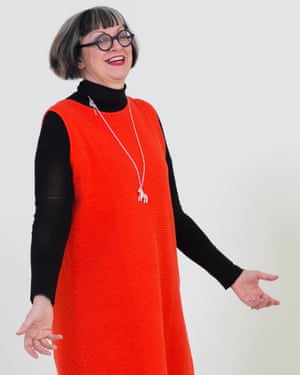
Optimism v pessimism in 2017: the comedian and the psychologist debate

One day last year, Liam Williams locked himself out and tried to climb in through his bedroom window. “I’d done it before very skilfully when drunk,” he says, “but this time I was hungover, so I guess I had that reduced inhibition, but not that derring-do – you know, the reckless optimism of a drunkard.” It didn’t end well. “It was only the first storey but I didn’t have any shoes on and it was quite a high window. I fell and broke my heels. It really hurt.”


The comedian is telling this story to psychologist Philippa Perry and me as we meet in a London cafe to consider the merits of optimism and pessimism. Is pessimism necessarily bad for you? What health benefits come with being optimistic? Does being optimistic help you in relationships? Does being pessimistic make you pragmatic about a prospective lover’s shortcomings? If you’re as bleakly pessimistic as Eeyore, can you change? If you’re as misguidedly optimistic as Mr Micawber, can you get a firmer grip on reality? More troublingly, what looks like pessimism to one can seem like optimism to another. Consider Williams’s attempted break-in. Perry suggests that his climb was optimistic. Liam worries it was doomed by pessimism. “It comes under the heading of risk-taking,” says Perry. “Optimists are more likely to take risks – they think they can drive into that gap in traffic or climb through windows.” She pauses before adding: “That’s not necessarily a good thing.”


“I was a bit desperate,” says Williams, “so I made a ridiculous decision. As I was climbing, I lacked that crucial optimism that I was going to get in. I was physically impaired and I probably had a narrative in my head that this wasn’t going to go well, which I wouldn’t have had when I was drunk.”


[embedded content]

Liam Williams: Can Things Make You Happy? on YouTube

“That,” says Perry, “is the self-fulfilling prophecy thing.” What does that mean? “If I go to a party expecting to have a good time, look people in the eye, I may well do. If I walk in hang-dog thinking nobody wants to speak to me, I probably won’t.” Viewed thus, Williams expected to fall. Perhaps he even wanted to.


Soon after the fall, a friend asked Williams how he’d been feeling at the time. “I said maybe a bit depressed. And she said: ‘Maybe you took a reckless decision because you were depressed.’” Williams compares this to the EU referendum: “Maybe it was like Brexit – ‘My life is so shit at the moment that I can take this grave, reckless decision and at least something will be different.’” The year 2016 was, he thinks, marked by such pessimism. “Those who voted for Brexit and Trump were so pessimistic about how things are going, they felt any change must be better.”


“Which,” adds Perry insightfully, “is quite optimistic.” Good point: to their opponents, such as Williams, Brexiteers and Trumptonians may have looked like pessimists who, in a fit of infantile petulance, were destroying their respective polities. But, seen another way, they were cock-eyed optimists who believed change was possible.


Williams tells us he has turned away from standup, in part because he feared he was making his audiences as politically apathetic and pessimistic as he was. In 2014, he did a show in Edinburgh called Capitalism, which (despite the Guardian’s five-star review) made him queasy. His routine revolved around mocking his lack of political fibre: the twentysomething Cambridge English graduate didn’t have what it took to go on protests or join Occupy. Nor did he have the intellectual drive to develop a sophisticated critique of capitalism by reading Thomas Piketty or Slavoj Žižek, still less act on it.


“I kept thinking: ‘There’s a lot wrong with the world, and crises are getting worse, but I can’t change any of it,” he says. Lots of people feel that way, I suggest, especially twentysomethings, and their impotence then slides into pessimism. “That’s right. But I detected in myself an apathy, a willingness to focus on trivialities,” he replies. “I wouldn’t do a show like that again, because those who saw it might walk away having let themselves off the hook.” Maybe our most evisceratingly pessimistic comedians – think Frankie Boyle or Stewart Lee – let us off the hook in the same way. Perhaps (and this is just my own pessimistic thought) comedy is a successful business model in austerity Britain because it provides alibis for inaction – and, as a result, makes things worse.


So Williams has turned his back on standup. Instead, he has co-written and performs in what he calls a panto for grown-ups, called Ricky Whittington and His Cat. “He turns up in London full of optimism,” says Liam, “and finds it hostile and plagued with rats.” Still is, I point out. “Then he leaves in despair before hearing voices calling him back. He projects his inner voice on to the bells. They call him back.”


Perry says this is not unusual: “He can’t own his optimism, but projects it on to the bells.” True, but on the plus side, he overcomes his pessimism, returning to London, becoming mayor and building state-of-the-art cycle lanes or whatever it was he did.


Philippa Perry


‘Pessimists see the worst in people – that’s why they’re more interesting’ … Philippa Perry. Photograph: David Levene for the Guardian

So, if Williams is anything to go by, pessimism is bad for you. But it’s more complicated than that, says Perry. She hands me a list of pros and cons for both outlooks. Pros of optimism include: better mental and physical health, quicker recovery rates after illnesses and operations, lower stress, longer life, higher trust in others and thus better relationships. Pessimism’s pros include: better at budgeting, better insured, on time. Interesting: both she and Williams arrived on time, suggesting that they’re both pessimists. “Pessimists are always punctual,” says Perry. “Optimists think the bus is going to be on time, that they can get somewhere quicker than they can.” I’m hating optimists already.


But surely, even if you’re an optimist, it’s better to be with a pessimist? At least they’ll be on time. And they’re better company. “Pessimists are much more cynical,” says Perry. “They see the worst in people – that’s why they’re more interesting. Though you wouldn’t want to be on a desert island with one.”


Nonetheless, recent research suggests that pessimism is actually bad for you. A 2011 study, published in Stroke, a journal of the American Heart Association, measured respondents on a 16-point optimism scale and found that, for every point increase, there was a corresponding 9% decrease in acute strokes over the two-year follow-up period. But why? “Our work suggests that people who expect the best things in life actively take steps to promote health,” says Eric Kim, who has researched the subject for the Harvard TH Chan School of Public Health.


But this was called into question in early 2016 by Helsinki researchers who studied middle-aged Finns and found that, while pessimism was linked to an increased risk of death from coronary heart disease, there was no indication that optimism led to a decreased risk.


Both studies have one thing in common: they suppose optimism and pessimism to be measurable. Levels of pessimism were measured in Helsinki by asking people to respond to such gloomy statements as: “If something can go wrong for me, it will.” Optimism, meanwhile, had such choice lines as: “In uncertain times, I usually expect the best.”


None of this, you’d hope, means it’s easy to pigeonhole respondents. “Maybe labelling someone either way is as reductive as saying they’re an extrovert or introvert,” says Williams. Good point – yet scarcely a month goes by without another study telling us that optimists are healthier.


Here’s another problem. What if pessimism is something you’re doomed to by genes and environment? A 2006 study suggested that outlooks are forged in childhood. Those with high socioeconomic status, unsurprisingly, were more optimistic. More interesting was the idea that pessimism tended to stick even in the face of socioeconomic fluidity. So if you had a poor, miserable childhood, you might well be pessimistic even as you bask on your parvenu yacht off Corfu.


“That’s not to say you’re hard-wired to either,” says Perry. “You can change.” So we can cultivate optimism? How? Kim suggests keeping a log for a fortnight of any kind things you do for others, to achieve your “best possible self”, as well as attending mindfulness courses, getting into therapy, writing down three things each day you are grateful for. Then, at the end, you see how you feel.


There is, says Perry, a neurophysiological basis to the possibility of becoming optimistic: the brain’s left inferior frontal gyrus fires up with good news; the right inferior with bad news. But if your life is marked by bad news, that left inferior is apt not to register good news. “Most people are optimists, and the more optimistic you are, the less likely the right inferior is to respond to negative information,” she says.


Here’s an interesting problem with optimism. You can have too much of it. Neuroscientist Tali Sharot, author of The Optimism Bias, argues that 80% of us suffer from the illusion that supplies her book’s title. “The idea,” says Perry, “is that the optimist knows smoking kills but thinks: ‘It just won’t kill me.’” Or, as Sharot puts it: “We underestimate our likelihood of suffering from cancer, or being in a car accident. We overestimate our longevity, our career prospects. In short, we’re more optimistic than realistic, but we are oblivious to the fact.”


Sounds like we should cultivate pessimism then. I’ve brought along Arthur Schopenhauer’s On the Suffering of the World, in which the German pessimist describes the nature of human life thus: “We begin in the madness of carnal desire and transport of voluptuousness, we end in the dissolution of all our parts and the musty stench of corpses … Does it not look as if existence were an error the consequences of which grow more and more manifest?” Though I place the book prominently on the cafe table, neither comedian nor psychologist is tempted to pick it up.


“Since that fall, my life has been better,” says Williams. “I’ve pulled myself together and it made me reflect.” “So did you get another key cut?” asks Philippa. “I gave one to the neighbours,” he replies. “You’re marvellous!” she says chirpily. “That’s learning to trust people.”


Williams fills his teacup – his half-empty teacup – and looks doubtful. “But there’s a degree of pessimism in that, right?” he says. “Because I know I’m going to forget the keys again.”


Optimism v pessimism in 2017: the comedian and the psychologist debate

Optimism v pessimism in 2017: the comedian and the psychologist debate

One day last year, Liam Williams locked himself out and tried to climb in through his bedroom window. “I’d done it before very skilfully when drunk,” he says, “but this time I was hungover, so I guess I had that reduced inhibition, but not that derring-do – you know, the reckless optimism of a drunkard.” It didn’t end well. “It was only the first storey but I didn’t have any shoes on and it was quite a high window. I fell and broke my heels. It really hurt.”


The comedian is telling this story to psychologist Philippa Perry and me as we meet in a London cafe to consider the merits of optimism and pessimism. Is pessimism necessarily bad for you? What health benefits come with being optimistic? Does being optimistic help you in relationships? Does being pessimistic make you pragmatic about a prospective lover’s shortcomings? If you’re as bleakly pessimistic as Eeyore, can you change? If you’re as misguidedly optimistic as Mr Micawber, can you get a firmer grip on reality? More troublingly, what looks like pessimism to one can seem like optimism to another. Consider Williams’s attempted break-in. Perry suggests that his climb was optimistic. Liam worries it was doomed by pessimism. “It comes under the heading of risk-taking,” says Perry. “Optimists are more likely to take risks – they think they can drive into that gap in traffic or climb through windows.” She pauses before adding: “That’s not necessarily a good thing.”


“I was a bit desperate,” says Williams, “so I made a ridiculous decision. As I was climbing, I lacked that crucial optimism that I was going to get in. I was physically impaired and I probably had a narrative in my head that this wasn’t going to go well, which I wouldn’t have had when I was drunk.”


[embedded content]

Liam Williams: Can Things Make You Happy? on YouTube

“That,” says Perry, “is the self-fulfilling prophecy thing.” What does that mean? “If I go to a party expecting to have a good time, look people in the eye, I may well do. If I walk in hang-dog thinking nobody wants to speak to me, I probably won’t.” Viewed thus, Williams expected to fall. Perhaps he even wanted to.


Soon after the fall, a friend asked Williams how he’d been feeling at the time. “I said maybe a bit depressed. And she said: ‘Maybe you took a reckless decision because you were depressed.’” Williams compares this to the EU referendum: “Maybe it was like Brexit – ‘My life is so shit at the moment that I can take this grave, reckless decision and at least something will be different.’” The year 2016 was, he thinks, marked by such pessimism. “Those who voted for Brexit and Trump were so pessimistic about how things are going, they felt any change must be better.”


“Which,” adds Perry insightfully, “is quite optimistic.” Good point: to their opponents, such as Williams, Brexiteers and Trumptonians may have looked like pessimists who, in a fit of infantile petulance, were destroying their respective polities. But, seen another way, they were cock-eyed optimists who believed change was possible.


Williams tells us he has turned away from standup, in part because he feared he was making his audiences as politically apathetic and pessimistic as he was. In 2014, he did a show in Edinburgh called Capitalism, which (despite the Guardian’s five-star review) made him queasy. His routine revolved around mocking his lack of political fibre: the twentysomething Cambridge English graduate didn’t have what it took to go on protests or join Occupy. Nor did he have the intellectual drive to develop a sophisticated critique of capitalism by reading Thomas Piketty or Slavoj Žižek, still less act on it.


“I kept thinking: ‘There’s a lot wrong with the world, and crises are getting worse, but I can’t change any of it,” he says. Lots of people feel that way, I suggest, especially twentysomethings, and their impotence then slides into pessimism. “That’s right. But I detected in myself an apathy, a willingness to focus on trivialities,” he replies. “I wouldn’t do a show like that again, because those who saw it might walk away having let themselves off the hook.” Maybe our most evisceratingly pessimistic comedians – think Frankie Boyle or Stewart Lee – let us off the hook in the same way. Perhaps (and this is just my own pessimistic thought) comedy is a successful business model in austerity Britain because it provides alibis for inaction – and, as a result, makes things worse.


So Williams has turned his back on standup. Instead, he has co-written and performs in what he calls a panto for grown-ups, called Ricky Whittington and His Cat. “He turns up in London full of optimism,” says Liam, “and finds it hostile and plagued with rats.” Still is, I point out. “Then he leaves in despair before hearing voices calling him back. He projects his inner voice on to the bells. They call him back.”


Perry says this is not unusual: “He can’t own his optimism, but projects it on to the bells.” True, but on the plus side, he overcomes his pessimism, returning to London, becoming mayor and building state-of-the-art cycle lanes or whatever it was he did.


Philippa Perry


‘Pessimists see the worst in people – that’s why they’re more interesting’ … Philippa Perry. Photograph: David Levene for the Guardian

So, if Williams is anything to go by, pessimism is bad for you. But it’s more complicated than that, says Perry. She hands me a list of pros and cons for both outlooks. Pros of optimism include: better mental and physical health, quicker recovery rates after illnesses and operations, lower stress, longer life, higher trust in others and thus better relationships. Pessimism’s pros include: better at budgeting, better insured, on time. Interesting: both she and Williams arrived on time, suggesting that they’re both pessimists. “Pessimists are always punctual,” says Perry. “Optimists think the bus is going to be on time, that they can get somewhere quicker than they can.” I’m hating optimists already.


But surely, even if you’re an optimist, it’s better to be with a pessimist? At least they’ll be on time. And they’re better company. “Pessimists are much more cynical,” says Perry. “They see the worst in people – that’s why they’re more interesting. Though you wouldn’t want to be on a desert island with one.”


Nonetheless, recent research suggests that pessimism is actually bad for you. A 2011 study, published in Stroke, a journal of the American Heart Association, measured respondents on a 16-point optimism scale and found that, for every point increase, there was a corresponding 9% decrease in acute strokes over the two-year follow-up period. But why? “Our work suggests that people who expect the best things in life actively take steps to promote health,” says Eric Kim, who has researched the subject for the Harvard TH Chan School of Public Health.


But this was called into question in early 2016 by Helsinki researchers who studied middle-aged Finns and found that, while pessimism was linked to an increased risk of death from coronary heart disease, there was no indication that optimism led to a decreased risk.


Both studies have one thing in common: they suppose optimism and pessimism to be measurable. Levels of pessimism were measured in Helsinki by asking people to respond to such gloomy statements as: “If something can go wrong for me, it will.” Optimism, meanwhile, had such choice lines as: “In uncertain times, I usually expect the best.”


None of this, you’d hope, means it’s easy to pigeonhole respondents. “Maybe labelling someone either way is as reductive as saying they’re an extrovert or introvert,” says Williams. Good point – yet scarcely a month goes by without another study telling us that optimists are healthier.


Here’s another problem. What if pessimism is something you’re doomed to by genes and environment? A 2006 study suggested that outlooks are forged in childhood. Those with high socioeconomic status, unsurprisingly, were more optimistic. More interesting was the idea that pessimism tended to stick even in the face of socioeconomic fluidity. So if you had a poor, miserable childhood, you might well be pessimistic even as you bask on your parvenu yacht off Corfu.


“That’s not to say you’re hard-wired to either,” says Perry. “You can change.” So we can cultivate optimism? How? Kim suggests keeping a log for a fortnight of any kind things you do for others, to achieve your “best possible self”, as well as attending mindfulness courses, getting into therapy, writing down three things each day you are grateful for. Then, at the end, you see how you feel.


There is, says Perry, a neurophysiological basis to the possibility of becoming optimistic: the brain’s left inferior frontal gyrus fires up with good news; the right inferior with bad news. But if your life is marked by bad news, that left inferior is apt not to register good news. “Most people are optimists, and the more optimistic you are, the less likely the right inferior is to respond to negative information,” she says.


Here’s an interesting problem with optimism. You can have too much of it. Neuroscientist Tali Sharot, author of The Optimism Bias, argues that 80% of us suffer from the illusion that supplies her book’s title. “The idea,” says Perry, “is that the optimist knows smoking kills but thinks: ‘It just won’t kill me.’” Or, as Sharot puts it: “We underestimate our likelihood of suffering from cancer, or being in a car accident. We overestimate our longevity, our career prospects. In short, we’re more optimistic than realistic, but we are oblivious to the fact.”


Sounds like we should cultivate pessimism then. I’ve brought along Arthur Schopenhauer’s On the Suffering of the World, in which the German pessimist describes the nature of human life thus: “We begin in the madness of carnal desire and transport of voluptuousness, we end in the dissolution of all our parts and the musty stench of corpses … Does it not look as if existence were an error the consequences of which grow more and more manifest?” Though I place the book prominently on the cafe table, neither comedian nor psychologist is tempted to pick it up.


“Since that fall, my life has been better,” says Williams. “I’ve pulled myself together and it made me reflect.” “So did you get another key cut?” asks Philippa. “I gave one to the neighbours,” he replies. “You’re marvellous!” she says chirpily. “That’s learning to trust people.”


Williams fills his teacup – his half-empty teacup – and looks doubtful. “But there’s a degree of pessimism in that, right?” he says. “Because I know I’m going to forget the keys again.”


Optimism v pessimism in 2017: the comedian and the psychologist debate

5 Ekim 2016 Çarşamba

Tim Kaine and Mike Pence clash on abortion at vice-presidential debate – video

Vice-presidential candidates Tim Kaine and Mike Pence went head-to-head on Tuesday evening at the first and only vice-presidential debate. The two candidates sparred on the right to an abortion. ‘The very last thing that the government should do is have laws that would punish women who make reproductive choices,’ Kaine said


Tim Kaine and Mike Pence clash on abortion at vice-presidential debate – video

12 Temmuz 2014 Cumartesi

Desmond Tutu plea for "assisted dying" just before historic Lords debate

Desmond Tutu, one particular of the world’s most eminent religious leaders, has created an extraordinary intervention in the debate above assisted death, by backing the correct of the terminally sick to finish their lives in dignity.


Writing in the Observer, the 82-year-outdated retired Anglican archbishop, revered as the “moral conscience” of South Africa, says that laws that stop men and women getting helped to finish their lives are an affront to people impacted and their families.


He also condemns as “disgraceful” the treatment of his old friend Nelson Mandela, who was stored alive by way of many unpleasant hospitalisations and forced to endure a photograph stunt with politicians shortly before his death at 95.


Tutu, who calls for a “thoughts shift” in the appropriate to die debate, writes: “I have been lucky to spend my life working for dignity for the residing. Now I wish to apply my thoughts to the problem of dignity for the dying. I revere the sanctity of life – but not at any price.”


Tutu’s intervention comes at the start of a momentous week in the assisted dying debate. On Friday, the Property of Lords will witness one particular of the most considerable moments in its latest background when peers debate an assisted dying bill proposed by the former lord chancellor, Lord Falconer. A record number of peers – 110 so far – have registered to talk.


On Saturday the former archbishop of Canterbury Lord (George) Carey spoke out in favour of the bill. But in an report in the Instances, Justin Welby, the present archbishop and head of the Church of England, reaffirmed the church’s conventional hostility to any move that would endanger the principle of the sanctity of lifestyle. In a indicator of the debate that has now been unleashed inside the Anglican communion, the bishop of Carlisle, the Right Rev James Newcome, named for a royal commission to examine the “essential concern” at length.


Falconer’s proposed legislation would make it legal for a medical professional to hand more than a lethal medicine to a terminally sick patient who is believed to have less than six months to live.


Tutu notes that Falconer’s bill will be debated on Mandela Day, which would have been the 96th birthday of South Africa’s initial black president. He calls for his very own nation to follow Britain’s lead in examining a adjust in the law.


“On Mandela Day we will be considering of a excellent guy,” he writes. “On the same day, on 18 July 2014 in London, the Property of Lords will be holding a 2nd hearing on Lord Falconer’s bill on assisted dying. Oregon, Washington, Quebec, Holland, Switzerland have currently taken this phase. South Africa has a tough-won constitution that we are proud of that must give a basis to guidebook modifications to be created on the legal status of end-of-existence wishes to help the dignity of the dying.”


Speaking to the Observer, Falconer, who mentioned he was now assured that his bill would reside on in parliament beyond Friday’s debate, claimed that the intervention by Tutu illustrated that religious faith should be no obstacle to supporting a modify in the law. He said: “I am truly glad that an individual of his stature is taking part in this crucial debate. It is a debate in which nations look to other countries for guidance. For a person of Archbishop Tutu’s stature, knowing and human knowledge to communicate out is genuinely welcome. He is an Anglican bishop who has shown his moral power to the planet much better than anyone. I very a lot hope that it will indicate that religion is not a bar to supporting this bill.”


A London rabbi, Jonathan Romain, speaking on behalf of 60 religious leaders in help of the Falconer proposals, stated he believed that backing the bill was the “religious response” to a scenario the place healthcare progress allowed people to live on in a physical and mental state that several felt was intolerable. He said: “I see no sanctity in struggling, practically nothing holy about agony.”


Jane Nicklinson, widow of the campaigner Tony Nicklinson, a sufferer of locked-in syndrome who fought for the appropriate to be helped to die in the United kingdom, mentioned she believed public opinion was now in favour of adjust, including: “I hope that it is correct amid people that matter – the decision-makers.”


Falconer’s proposals are getting fiercely opposed by crucial figures such as Welby, and campaigners for the rights of disabled individuals. Richard Hawkes, chief executive of the disability charity Scope, explained he feared the bill would place some individuals underneath strain to end their lives. He mentioned: “Why is it that when men and women who are not disabled want to commit suicide, we attempt to talk them out of it, but when a disabled man or woman would like to commit suicide, we focus on how we can make that achievable?”


Even so, in his article for the Observer, Tutu says that he has been moved by the case of a 28-yr-outdated South African, Craig Schonegevel, who suffered from neurofibromatosis and felt forced to end his life by swallowing twelve sleeping tablets and tying two plastic bags all around his head with elastic bands since doctors could not assist him.


Tutu writes: “Some say that palliative care, such as the giving of sedation to make sure freedom from pain, ought to be enough for the journeying towards an easeful death. Some folks opine that with excellent palliative care there is no need to have for assisted dying, no want for people to request to be legally offered a lethal dose of medication. That was not the situation for Craig Schonegevel. Others assert their appropriate to autonomy and consciousness – why exit in the fog of sedation when there’s the substitute of becoming alert and genuinely current with loved ones?”


He also discloses that he has now had a conversation with his household about his own death. “I have come to realise that I do not want my lifestyle to be prolonged artificially,” he writes. “I believe when you need to have machines to support you breathe then you have to request queries about the top quality of daily life becoming experienced and about the way funds is becoming invested. This might be challenging for some folks to contemplate.


“But why is a existence that is ending getting prolonged? Why is income currently being invested in this way? It could be much better spent on a mom providing birth to a little one, or an organ transplant necessary by a young man or woman. Funds should be invested on these that are at the starting or in total movement of their daily life. Of program, these are my private opinions and not of my church.”


There was bitter controversy in South Africa in April last 12 months when President Jacob Zuma and other African Nationwide Congress politicians visited Mandela at his residence with a Television crew. The statesman looked weak, rheumy-eyed and uncomprehending. Mandela’s household and private assistant condemned the publicity stunt as exploitative and in poor taste. Tutu echoes that view. “What was done to Madiba was disgraceful,” he writes. “There was that occasion when Madiba was televised with political leaders, President Zuma and Cyril Ramaphosa. You could see that Madiba was not completely there. He did not speak. He was not connecting. My good friend was no longer himself. It was an affront to Madiba’s dignity.”


“People need to die a respectable death,” he continues. “For me that signifies obtaining had the conversations with these I have crossed with in daily life and being at peace. It means getting able to say goodbye to loved ones – if feasible, at home.”


He adds: “I can see I would most likely incline in the direction of the high quality of lifestyle argument, whereas other individuals will be far more cozy with palliative care. Yes, I think a good deal of men and women would be upset if I said I needed assisted dying. I would say I would not mind, truly.”


Tutu, who chaired South Africa’s Reality and Reconciliation Commission, and admitted he was “angry with God” during apartheid, has never been afraid to consider unpopular positions or stir debate. Mandela once explained of him: “Sometimes strident, often tender, in no way afraid and seldom with out humour, Desmond Tutu’s voice will often be the voice of the voiceless.”


Desmond Tutu plea for "assisted dying" just before historic Lords debate

11 Temmuz 2014 Cuma

Obesity debate: Charity welcomes surgery option for those with diabetes


New draft guidance from the National Institute of Health and Care Excellence (Great) suggests that obese men and women with the problem ought to be assessed for bariatric surgical treatment – this kind of as getting a gastric band fitted to decrease the dimension of the stomach or a gastric bypass, the place the digestive method is re-routed past most of the abdomen.


Information from the Nationwide Diabetes Audit display that around 71% of men and women with sort two diabetes had been diagnosed in the last decade. And all around half (47%) of people with the situation have got a BMI over thirty. If these figures had been extrapolated this could imply that as a lot of as 800,000 could be deemed for this kind of surgery on the NHS.


PA


Obesity debate: Charity welcomes surgery option for those with diabetes

8 Temmuz 2014 Salı

The New York Occasions Revisits The "Debate" In excess of Electromagnetic Fields, Reviving Baseless Fears, While Ignoring What Has Been Learned

Yesterday, in its Science Occasions section, the New York Times published a piece by Kenneth Chang titled “Debate Continues on Hazards of Electromagnetic Waves.”   The report appears below a new heading “Time Travel,” an occasional column that “explores subjects covered in the Science Times 25 many years ago to see what has altered – and what has not.”


To match the new format, Chang referred to a Science Occasions post from 1989 that talked about the achievable adverse overall health effects from electromagnetic fields (EMF) produced by power lines, electrical appliances and machinery, and wiring in the home.


Even so, in actuality this situation came to prominence 10 many years earlier, when an post was published claiming that young children who lived near electrical power lines were twice as probably to die of cancer as children who had been not exposed.


This research was the catalyst for many additional scientific studies above the following three decades, and many assessments by scientific organizations and wellness agencies.  As a outcome we have actually discovered anything about EMF.


Friends meet and chat, using a cell phone to s...

Buddies meet and chat, utilizing a cell cellphone to say hi, Puerto Vallarta, Jalisco, Mexico (Photograph credit score: Wonderlane)


But Chang interviewed a professor of public well being David O. Carpenter, because he had been interviewed 25 many years in the past for the Science Instances article.  Carpenter has lengthy been voicing his concern about EMF, and he tells Chang, “The whole thing is very worrisome.  We see the guidelines of the iceberg, but we have no idea how large the iceberg is.  It ought to concern us all.”


According to Carpenter, “Almost absolutely nothing has altered in 25 many years in terms of the controversy, even though the evidence for biological effects of electromagnetic fields continues to increase stronger.”


As the report indicates, a lot of the concern has shifted away from the incredibly-minimal frequency EMF (ELF-EMF) from energy lines and appliances to the higher frequency radiofrequency (RF) waves utilised by cellular telephones and Wi-Fi.


By acquiring his update from Professor Carpenter, Chang is receiving a very skewed see of the pertinent proof that has accumulated in excess of the past decades.  Carpenter is related with the Bioinitiative Working Group, a fringe group whose members are convinced that the two varieties of waves (ELF-EMF and RF) are probably dangerous.


This view contrasts with that of any number of specialist organizations and well being agencies that have assessed the wellness results of ELF-EMF and radiofrequency power and found no steady or credible proof of a threat.  These incorporate: the American Bodily Society, the Nationwide Cancer Institute, the American Cancer Society American Cancer Society, the Nationwide Academy of Sciences, and the Global Commission on Non-Ionizing Radiation Protection.


People who look to have a vested interest in believing that EMF/RF are hazardous at the levels at which people are exposed in everyday life have a tendency to cite evidence that suits their argument.


Exactly where cell phones are concerned, they tend to cite a minority of epidemiologic research by a single study group in Sweden that seem to link use of mobile phones to enhanced threat of certain brain cancers.  But they ignore the significantly more substantial entire body of studies from all in excess of the globe which demonstrate no this kind of association.


They also disregard the fact that, in spite of the dramatic growth of cell mobile phone use over the past two decades, there has been no improve in brain cancers, either in the U.S., in Scandinavia, or elsewhere.


The believers also are quick to point to experimental studies that appear to show damaging results on cells.  However, it is usually difficult to know how the final results of this kind of studies – if appropriate – apply to complete organisms, and specifically to humans.


In 2011, the International Company for Analysis on Cancer assessed the evidence with regards to cell phones and basically located no experimental evidence supporting a role of this sort of vitality in the cancer method.  However, in an extra of caution, the agency labeled radiofrequency radiation a “possible carcinogen.”


As the Occasions article indicated, technology is evolving, and properly-created scientific studies ought to be conducted to check the results of its use.  But that is quite different from the mindset of these who select isolated, and probably anomalous, benefits in support of their conviction that power lines or cell phones are creating adverse well being effects.


The New York Occasions Revisits The "Debate" In excess of Electromagnetic Fields, Reviving Baseless Fears, While Ignoring What Has Been Learned

19 Haziran 2014 Perşembe

Minnesotas ban on triclosan adds fuel to the chemical compounds debate

“Although several people have in no way heard of triclosan, most of us have it in our bodies”, says state senator John Marty, who supported Minnesota’s current ban of the controversial chemical. The 1st state to do so, Minnesota’s determination, he says, “adds to the growing pressure on private care item makers to phase it out”.


Unilever, Procter &amp Gamble and Johnson &amp Johnson, all massive corporate players in the individual care merchandise industry, have either restricted the use of triclosan in their merchandise or announced ideas to phase it out. But their decisions have been largely based mostly on client concern rather than scientific proof and legislation. All three dispute claims that triclosan is unsafe for people.


The debate started in the 70s, when triclosan was very first introduced in a surgical scrub. Considering that then, it has become the most generally utilized antibacterial ingredient in customer items globally. And with its growing level of use, scrutiny of the chemical has followed. Some scientific studies suggest that triclosan is now found all through the environment, which includes surface waters, soil, fish tissue, even human breast milk. A single examine claims that triclosan was found in 75% of urine samples from more than 2,000 individuals analyzed.


Despite this, the US Food and Drug Administration (FDA) suggested in 2010 that triclosan was not acknowledged to be hazardous to humans but did acknowledge that numerous scientific research have surfaced since its last review of the substance. The FDA is taking into account these latest studies in its current overview of triclosan.


“Despite strong industry strain, I would guess that the company will carry on to review the situation for a couple more years ahead of negotiating a “voluntary agreement with the market” to quit incorporating triclosan,” says senator Marty. He adds that the FDA “almost in no way in fact bans products – they let the industry voluntarily withdraw the merchandise with no acknowledging that the wellness risks were well founded”.


In an additional twist, scientific studies, like the FDA’s, declare there is no proof that triclosan in antibacterial soaps and physique washes gives any advantage in excess of washing with standard soap and water. Unilever, Johnson &amp Johnson and Procter &amp Gamble all failed to respond to the Guardian’s request for comment on these studies.


Shoppers come first


Worldwide health care organization Johnson &amp Johnson, which produces several popular skin and body care items, says triclosan’s capability to block a crucial bacterial enzyme is what makes it so successful, and because people lack that enzyme, “no acknowledged evidence has shown a chance to human health”. Wanting its shoppers to have “peace of mind” even so, Johnson &amp Johnson says it is continuing its investigation program to find out new choices and has committed to phasing out the use of triclosan in its items by 2015.


Once more, despite defending its security, customer solution organization Proctor &amp Gamble also decided to eradicate triclosan from its few items containing it, this 12 months.


Elegance and personalized care business Avon announced in April its own phase-out plan. “Although scientific evidence supports the secure use of triclosan in consumer items, we have manufactured this determination based mostly on the preferences expressed by some of our buyers for goods with out triclosan,” it states. Avon says it is no longer using triclosan in new item improvement and it has begun changing the chemical in existing goods.


Also involved in the debate is Unilever, which says that triclosan is an powerful anti-bacterial ingredient, which “we use in a restricted variety of merchandise the place it has a clear position in sustaining health and hygiene”. According to the firm, its Security and Environmental Assurance Centre (SEAC) continually critiques the newest scientific information and it is “confident that triclosan is secure at the level utilised in our products”.


Many businesses feel regulating or restricting particular substances can be a substantial challenge, in terms of the complexity of getting rid of or replacing a substance and the related costs. “You have a lot of people with a good deal of vested curiosity in the economics of an current chemical”, says Michelle Harvey, senior retail project manager at the Environmental Defense Fund (EDF).


“There is a genuine degree of disagreement as to what the chance of particular chemical compounds of concern genuinely is and whose science is better,” she adds. Even so, when the science is suggesting a substance is dangerous to people, “you need to have to err on the side of that being right”. She adds that in the chemical substances market there is a grey location that produces “a great deal of toing and froing” between the corporate and science communities.


“We think that companies that want to do the proper thing are leaning in the course of constricting chemical compounds in the items they sell, such as restrictions that drive in direction of greener chemistry. Simply because they recognize that this is what there customers expect of them,” says Harvey.


Managing chemical substances


The consideration triclosan has obtained recently is most likely to push chemical management even more up the corporate sustainability agenda. With tighter chemical regulation becoming launched in the US, businesses, specifically these in the cosmetics and individual care merchandise industry, are possessing to make certain their sustainability methods include robust chemical management programs.


Along with Minnesota’s ban, Vermont lately passed into law the Toxic-Free Families Act, which, as well as listing chemical compounds of concern, offers the state the ability to enforce substitution of potentially hazardous chemical compounds. California also just lately progressed its own chemical restriction rules requiring makers to minimize toxins in some family things.


But it is Minnesota’s “bold law”, which demands the phase out of triclosan in customer soaps by 2017, says senator Marty, that could bring around nationwide awareness of other probably hazardous chemical compounds and the value of chemical management. “The real effect of this legislation will probably arise long just before the ban requires effect in 2017, by encouraging other states to adopt related bans and by rising pressure on the sector to quit employing triclosan,” he says.


At present, legislation restricting triclosan in other states is only pending in New York but with the likes of Vermont and California cracking down on the use of chemical substances of concern, a domino effect is a real probability. The implications of the ban are twofold, says Sarah Doll from Safer States, a network of diverse environmental health coalitions and organizations. “One, it sends a sturdy signal to the marketplace and we are likely to begin seeing a lot more “triclosan free of charge” goods available. And two, I would anticipate that subsequent state legislative season (beginning in 2015) you will see much more state legislatures choosing up the situation. I base these statements on my encounter with other state ban payments, for illustration BPA, phthalates etc”.


However, senator Marty describes the US regulatory program as “one that does not operate under a “precautionary” technique, in which regulators err on the side of public safety when figuring out whether or not it is acceptable to use a chemical like triclosan”.


He says, rather it tends to allow chemicals or merchandise to be developed and offered, even if there are overall health worries, until finally there is very sturdy, nearly incontrovertible, proof that the product will trigger important harm.


“This is problematic when the public assumes that government regulators would not enable individuals to promote goods that could harm them. Nonetheless, that is the actuality,” he adds.


The supply chain hub is funded by the Fairtrade Basis. All content material is editorially independent except for pieces labelled as advertising attributes. Find out a lot more here.


Minnesotas ban on triclosan adds fuel to the chemical compounds debate

17 Haziran 2014 Salı

Nurses debate £10 fee to check out GP

British nurses are organizing to debate no matter whether GPs must begin charging individuals for appointments.


The Royal College of Nursing’s (RCN) annual conference in Liverpool will go over whether the union backs the thought of charging men and women a fee to see their loved ones doctors.


Typically the RCN has stood behind the belief that the NHS must be cost-free at the level of delivery. But nurses have place forward the motion, saying that NHS finances are “not infinite”.


Andy McGovern, a hospital nurse in London, said he would propose a motion calling for fixed fee to see a GP. Study advised something from 57p to £10, he advised the Everyday Mail. “We want to have a robust and truthful debate about what we’re going to do in the future simply because the cash is not there,” McGovern said.


An RCN spokesman stated clarity was required over how a lot funds the well being services would have in the long term so health oficials could program properly.


Not too long ago medical professionals debated the identical concern. Making particular patients pay out a fee for some providers would “emphasise the value” of GPs, the British Health care Association’s (BMA) regional medical committees conference was advised in Could.


But the proposal was shot down by a number of foremost medics like a former chairman of the BMA’s GP committee, Dr Laurence Buckman, who said it would lead to “survival of the richest, not therapy of the sickest”.


The RCN chief executive and standard secretary, Dr Peter Carter, mentioned: “Nurses care passionately about the NHS and are not afraid to have hard debates about its long term.


“This week we have created it clear that the way to deal with the monetary troubles the NHS faces is not to assault the shell out of devoted personnel who are propping the support up. But nurses also acknowledge that the health service faces huge challenges.


“GP charging is a controversial topic and one that goes to the heart of the debate about what the NHS is and should be. It’s a brave debate to have and an important one particular.


“The political events need to adhere to our lead and make it clear now, as we head in direction of a basic election, what their policies are on potential NHS funding. Now is the time to end the guessing game and commence speaking about viable options and a clear long term vision for the NHS.”


Nurses debate £10 fee to check out GP

16 Haziran 2014 Pazartesi

Strong rhetoric on the two sides of e-cigarettes debate but tiny proof

Electronic cigarette

A woman smoking an electronic cigarette. Photograph: Rex Characteristics


E-cigarettes are either going to save hundreds of thousands of lives by helping folks to quit smoking or they are going to destroy millions of lives by luring youngsters and younger folks into the habit. It is extremely challenging for the onlooker to know what to feel, when the rhetoric is flying in the two directions from very eminent folks who all have a passionate commitment to public overall health.


The most current letter to Margaret Chan, director basic of the Planet Well being Organisation, swings the pendulum firmly back to the place of the opponents of a cost-free industry in e-cigarettes. The language is challenging and uncompromising. It is signed by these who concern, primarily based on decades of proof of negative behaviour, that the tobacco companies are obtaining concerned in the nicotine delivery units in buy to undermine bans on cigarette marketing and smoking in public locations.


The letter is a response to a single from 53 scientists to Chan, sent on 3 June, which stated in no less direct language that treating e-cigarettes like tobacco would deprive smokers of a new and increasingly popular way to quit. E-cigarettes, the scientists say, are a really useful harm reduction instrument, permitting smokers to get their nicotine resolve without having the deadly tar in cigarettes. Amongst these who signed the earlier letter have been Professor Gerry Stimson, of Imperial University, who has been at the forefront of harm reduction advocacy in medication the former government drugs adviser David Nutt and Michel Kazatchkine, ex-head of the Global Fund, whose primary interest is HIV.


The opposing letter has twice the amount of signatories, from all over the planet. They fear a comeback by Massive Tobacco, which is turning into the most significant player in the e-cigarette industry. They do not think claims that the market wants to diversify. E-cigarettes could demonstrate to be a rewarding market place, but globally tobacco is massive, and increasing in the developing world. Why would Huge Tobacco support e-cigarettes if they are probably to shrink that market, the opponents inquire.


The WHO has been moving in their direction. Some smaller European countries, this kind of as Slovenia, have been asking for suggestions, and there are stories of e-cigarette shops opening outside colleges. In October, the WHO will meet to go over no matter whether to carry e-cigarettes into the framework convention on tobacco control, a single of the proudest achievements of the WHO, despite the fact that the guy who played the lead role in its improvement whilst at the WHO, Derek Yach, now of the Vitality Institute in New York, is 1 of the 53 signatories opposing that.


There are imagined to be two million men and women employing e-cigarettes in the Uk, and a lot of of them say they have managed to cease smoking as a result. A lot of argue passionately that they have been rescued from harm and that everyone must have a correct to use them if they want to. Powerful feelings have led to outbursts of anger and even vitriol on Twitter, and some public health medical doctors say they have been threatened. That has increased their personal conviction that malign forces – in the form of the tobacco business – should be pulling the strings.


In the end, only very good scientific proof will persuade the critics of e-cigarettes that they are not a danger. The studies that have been carried out, this kind of as a recent a single by Professor Robert West, from University College London, which showed that e-cigarettes had been far more effective than nicotine substitute treatment in helping people quit smoking, are not ample, opponents say. Their argument is that, till we know, we ought to opt to be secure rather than sorry.


Strong rhetoric on the two sides of e-cigarettes debate but tiny proof

5 Nisan 2014 Cumartesi

The Fantastic British Vape-off debate

Smokers, and the companies that provide tobacco items, are arguably the most-maligned customers and producers of the modern age. What they do, and how they get and sell their drug of decision, is lawful and taxable, but they are topic to more and more restrictive legislation.


In the past week, the Government announced that even before the next basic election, branded tobacco packaging will be outlawed. Businesses will be forced to adopt standardised, plain packaging with well being warnings following research showed that similar policies in Australia reduce the charges of smoking amongst children. They might hate the new laws, but even smokers and tobacco suppliers now admit that this is hardly the healthiest of industries or habits.


Which is exactly where e-cigarettes come in. Customers puff on a battery-powered cartridge filled with nicotine – the addictive element in tobacco – but there is no hazardous tar or other ingredients.


British American Tobacco launched its e-gadget, known as Vype, earlier this 12 months and last month advertised its solution on tv – a key watershed for an industry that for decades has been banned from advertising in this way. Celebrity supporters incorporate Lily Allen and Cheryl Cole, and many healthcare specialists are advocates of the gadgets, believing they have the possible to conserve hundreds of thousands of lives.


Rob Edwards, 32, a graphic designer, has popped into the Vape Lab for a fast “smoke” after lunch ahead of going back to perform. “It’s nicer to sit right here in the warm and have a coffee and a vape than it is to be standing about outdoors the office, acquiring cold and obtaining a fag,” he says. “I’ve been vaping for about six months now. I even now smoke a bit but I’m utilizing this far more and far more. It’s cheaper and more healthy.”


Hollywood star Leonardo DiCaprio with an e-cigarette at last year’s French Open (INF)


Product sales of e-cigarettes in the United kingdom rose by 340 per cent to £193 billion among 2012 and 2013, according to analysis published final month by the buyer firm Mintel. In the space of a couple of years – the 1st gadgets have been launched in 2007 – they have overtaken sales of other cessation items such as gum and patches, and an estimated 1.3 million individuals in Britain now use them.


But the jury is nonetheless out on their efficacy – and safety. Last week, the Welsh Assembly published a White Paper that contained proposed legislation banning the use of e-cigarettes in public places on the basis that they “normalised” smoking behaviours. Fire chiefs are also concerned that smokers are unaware of risks. The South Yorkshire brigade warned final week that individuals did not realise that the heating components inside of e-cigs can overheat and begin fires.


The Royal College of Doctors is due to formulate its policy on e-cigarettes at a council meeting in Could, with sources saying it is very likely that the physique will back their use.


“These products are probably a huge force for great,” explained Prof John Britten, the chairman of the RCP’s tobacco advisory group. “It’s about performing what ever you can to inspire individuals to stop smoking. It’s not about potential smokers, it is about the ten million folks in the United kingdom who are smoking now, of whom 5 million will die in the following decade. Of course the message need to be don’t smoke, but I consider we can add that if you are going to smoke, then consider an e-cigarette.”


Prof Britten says the products are so well-known because they supply the nicotine hit to the back of the throat but also replicate other actions that are so addictive to smokers – getting one thing to hold and the “drug sharing behaviours” of acquiring and lighting up.


But e-cigarettes continue to be controversial. There are concerns close to no matter whether the flavoured nicotine cartridges – which contain caramel, chocolate and mint – will appeal to youngsters and act as a “gateway” to real cigarettes. The long-phrase health results are also unknown – as is the evidence on whether the devices actually assist individuals to end smoking or just hold them reliant on nicotine.


Pop singer Lily Allen vaping (MAX MUMBY)


Their surge in reputation has been so fast and recent that there is no reliable evidence to show regardless of whether e-cigarettes are helping to minimize smoking prices and associated deaths.


Dr Penny Woods, chief executive of the British Lung Basis, stated the devices did have “immense potential” but additional: “We nonetheless need more analysis into the use of


e-cigarettes prior to we get as well carried away. Even though there is no evidence that e-cigarettes present anything at all like the very same overall health hazards as smoking tobacco, there are worries in excess of the assortment and security of some of the elements discovered in the vapour that customers inhale. It is not fully clear that all the factories abroad where they are manufactured comply with the sort of safety standards we would anticipate in the United kingdom, so tighter regulation of the manufacturing process would surely get rid of some of these doubts.”


Regulation, all sides of the debate agree, is going to be crucial. At the minute, the market place is largely unregulated. The Government would like to see e-cigarettes licensed as medicinal goods, which means they would be subjected to strict marketing rules as properly as stringent checks on their manufacture and in which they can be offered. But final month the European Parliament passed legislation that from 2016 will see them classed as consumer merchandise, subjecting them to the same principles as other tobacco goods such as wellness warnings and a ban on promoting.


How the Government and the EU resolve this difference remains to be seen. In a somewhat surprising alliance, several medical pros and e-cigarette producers would like to see a form of “medicinal regulation light”, possibly in the exact same way that painkillers this kind of as Nurofen are sold. Constrained marketing would be allowed and the products would be tested but not to the very same degree as a prescription drug. Below the medicines route, units would also only be subject to 5 per cent VAT.


As effectively as regulation, there is also controversy of how the non-smoking population will tolerate the vaping craze. The pub chain J D Wetherspoon’s and most eating places have banned the units.


But there is no doubting that they are hugely well-known. In a village pub in Grantchester, Cambs, Mark Hughes, 50, puffs on his e-cigarette after perform. A smoker for far more than 25 many years, he started out vaping final July right after a bout of bronchitis.


“I’ve provided up twice before but began yet again the two times,” he says. “This works genuinely nicely. I haven’t had a cig for months and I come to feel so considerably better for it. I can sit with folks who smoke, have my puffer, and I do not feel any diverse.”


But, faced with a long flight to Vietnam for a holiday next month (virtually all airlines have banned e-cigarettes), how will he cope?


He looks somewhat horrified, then calms down: “I’ll be Ok. And I can puff as soon as I get off the plane.”


The Fantastic British Vape-off debate

4 Nisan 2014 Cuma

Rationing NHS care: why we require a serious debate | David Lock

Rationing healthcare on the NHS

‘We can never ever invest “enough” on the NHS simply because the a lot more we invest, the much more demand there will be for healthcare.’ Photograph: Christopher Furlong/Getty Pictures


The NHS is not investing our tax money properly. There is a broad professional consensus that as well much is being spent on hospital buildings it cannot afford, and it is failing to lessen investing on drug treatments that do not work. But many nearby NHS leaders are as well frightened to try and persuade the public of the situation for adjust. Reforms are delayed for dread of upsetting politicians who seek re-election.


Rationing healthcare treatment options to manage fees is regarded as an explosive problem in politics. In America, congresswoman Michelle Bachmann stated that the thought of therapy cost becoming taken into account, and at times withheld due to economic motives, would be a “horrific notion to our nation’s doctors”.


In contrast to this political rhetoric, in the law courts it is accepted that rationing is part of the healthcare enterprise. The supreme court of the United States accepted paying doctors to ration care, saying that there must be “some incentive connecting physician reward with treatment rationing”. In the United kingdom, the court of appeal has similarly held that it is lawful for the NHS to ration accessibility to healthcare. Political, not legal, constraints hold back NHS reform and the losers are vulnerable sufferers who do not get the remedy they need, whilst funds is wasted on hospitals that are not justifiable and solutions of marginal benefit.


Nigel Lawson observed that “the NHS is the closest factor the English have to a religion”. However, as with all religions, informed debate is clouded by myths. The very first is that the NHS does not have sufficient income. Investing on the NHS rose sevenfold in between 1949 and 2002 (making it possible for for inflation) and has continued to rise because then. We can in no way devote “ample” on the NHS due to the fact the far more we invest, the more demand there will be for healthcare.


Yet another misconception is that investing in the NHS is the best way to enhance the nation’s well being. This is untrue around 80% of deaths from the main ailments, this kind of as cancer, are attributable to lifestyle risk variables like smoking or a poor diet plan. Further spending on medical therapy for folks with preventable ailments is not an successful intervention. The third myth is that the NHS delivers most of its care in hospitals, when in fact 92% of care is carried out by GPs or in the local community.


These untrue but typically held beliefs have created it virtually not possible to have a wise discussion about what treatments ought to be funded, and how we must adjust the footprint of NHS buildings to get greater value for income. We have the Nationwide Institute for Wellness and Care Excellence in the United kingdom, and the US has the Patient Centred Outcomes Study Institute. But they are underfunded, dominated by supplier interests, and can only scratch the surface of the rationing debate.


This conversation is important but it are not able to occur unless individuals who make the choices locally invest much more time, energy and resources in educating the public about the alternatives that need to have to be created. Nearby NHS leaders need to shout loudly that not every cancer drug can be financed, not each and every small A&ampE unit should remain open, and a lot of local community hospitals are totally uneconomic. It is their job to counter the myths of objectors waving shrouds.


So far, the role of getting the “big undesirable wolf” who cuts A&ampE or maternity units has been left to faceless managers and the occasional brave public overall health medical professional. But the fiscal issues dealing with the NHS are now both huge and shut. There is an urgent need to have to move services into the community in buy to help the increasing elderly population. The overall health services desperately requires unprecedented amounts of structural modify.


Nearby commissioners have, by and huge, failed at genuine patient engagement, usually simply because it is an afterthought. The conventional NHS way is to make selections first and seek advice from the public afterwards. This is bad policy, and it leads to bad options. The public will only believe modify is necessary if they are trusted with all the data, the options are openly debated at an early stage, and they are repeatedly advised that we can only commit the money once. To give credit score the place it is due, NHS England is attempting challenging to lead debate but the true conversation requirements to happen at a neighborhood level. The job of GP commissioners is to be local community leaders for change. It implies dealing with the neighborhood press and difficult the vested interests, such as politicians, who are nicely-financed and will fight.


If this does not happen, elected politicians will oppose clinically needed change, and that will slow or avoid reform. The losers will be the frail elderly individuals who don’t get the providers they need, whilst massive amounts of money are becoming wasted elsewhere.


Barrister and former Labour get together politician David Lock will be delivering a lecture, Health rationing: how do legal and political constraints impede politicians taking required choices?, hosted by the Center for Transnational Legal Studies on 7 April


Join the Healthcare Specialists Network to receive standard emails and exclusive delivers.


Rationing NHS care: why we require a serious debate | David Lock

2 Nisan 2014 Çarşamba

A debate about how hospitals use data is essential

open door in hospital

Except if we develop a method open to external audit and evaluation, there is little point in possessing arguments about who is ‘fiddling’. Photograph: Christopher Thomond


A report this week from Dr Foster highlighted the dramatic rise in the variety of patients recorded as being in hospital for palliative care in excess of latest many years. The report pointed out that these shifts had an effect on the dependability of mortality measurement given that patients who come into hospital for palliative care are expected to die in contrast to individuals brought in for treatment. The level of the report was to draw attention to the fact that, due to the fact of the principles about coding of hospital data, patients admitted for remedy who die in hospital can be recorded in the very same way as individuals admitted for palliative care.


This is a problem due to the fact it impacts the dependability of the information we have about the requirements of care in the NHS. If the information we use to judge the place services are functioning and exactly where they are not gets corrupted, we need to have to repair it. How we do that should be the focus of any debate on the problem.


Nonetheless, coverage and argument have a tendency to drift into a distinct spot – an spot of far better contention and dispute. Just before you know it the word “fiddling” starts getting flung about.


Each information story about the Dr Foster report incorporated estimates from various other authorities suggesting that the shifts in coding pattern had been ‘fiddling’.


There are several individuals who feel that inaccurate recording is typically deliberate. There are other individuals who are quite convinced it is all innocent mistakes. Take the report earlier this yr from the Nationwide Audit Workplace, which discovered that a variety of NHS hospitals had offered inaccurate info about their waiting times. The Department of Well being was at pains to say that no person had deliberately changed the information to mislead.


The two points of view are unhelpful. Accusations of fiddling do not, on the complete, aid to identify the very best way to repair the dilemma. Protestations of innocence are even worse, as they are also usually understood to imply that there is not genuinely a dilemma at all.


An audit at Royal Bolton hospital found they had been wrongly coding patients as getting sepsis (with no comment on the intentions of these involved). A second investigation by a separate auditor confirmed this discovering but concluded the errors had not been intentional. The organisation felt vindicated by the second report, despite it concluding they had recorded data inaccurately.


Speculating on the deliberateness or otherwise of inaccurate information recording is unhelpful, partly simply because people understandably reply quite emotionally to accusations of dishonesty. But also, simply because it misses the genuine triggers of inaccurate data – the reality that we knowingly run public companies in a way that is bound to create inaccurate information – even if every person is acting with the ideal possible intentions.


To describe how, we want only search at the instance of waiting instances. Hospitals are under enormous stress to make positive that individuals do not breach national waiting time targets. As a end result, if you are operating a hospital or responsible for waiting listing management, if anybody appears to have breached the waiting checklist target you are on it immediately. You will identify any attainable reason why the information is wrong. Errors get eradicated really speedily and do not get repeated. Errors to the discredit of the hospital are unlikely to ever go undiscovered or unaddressed.


In contrast, repairing errors that go the other way is nobody’s priority. So if blunders occur – say a patient fails to consider the very first supplied appointment and finds herself being put to the back of the queue when she should not have been with the end result that she appears as a short waiter when in actuality she has waited months – that does not seem as a difficulty that anybody wants to resolve. As a end result, misunderstandings and practices which trigger inaccurate coding that acts in the favour of the hospital, but not patients, are likely to thrive undiscovered.


The remedy does not lie in generating accusations about dishonesty it lies in getting really clear that mis-recording of information is critical irrespective of whether or not it was deliberate or not. It lies in treating the duty to record information accurately in public providers with the same seriousness as the duty to record economic accounts accurately. It lies in putting in area appropriate systems for the audit and validation of public sector information.


We can also phone on the public to help make confident information is exact. The best way to make positive that information about individuals is recorded accurately is to make certain that the patients themselves have accessibility to their data.


Until finally we develop a system that is designed to generate trustworthy info – one particular that is open to external audit and to overview by the individuals whose lives are recorded in public sector data – there is little stage in getting arguments about who is fiddling and who is not.


Join the Guardian healthcare network to receive standard emails and exclusive provides.


A debate about how hospitals use data is essential