[unable to retrieve complete-text content material]
Can You Persuade Your Aging Mother or father Move To Assisted Residing?
[unable to retrieve complete-text content material]
1 of the very first items I did, as the shock numbed – it never fully goes away – was to Google “Dignitas”. I felt I was dropping handle of my existence at least the selection of selecting my death may alleviate the sense of vulnerability I was feeling. But I found that Dignitas is hugely expensive – and anyway, I want to die in my personal bed with birdsong in the garden, or at least in a hospice with trees glimpsed through a window. I really do not want to die in a foreign clinic, miles from home.
The level I am trying to emphasise is that from the extremely starting, the likelihood of getting some option over how and when I die – even if I never use it – would have done so considerably to help with the psychological burden of becoming terminally ill. When I was properly, I was conscious of Dignitas. But I’d never ever stopped to consider the arguments for and towards assisted dying. Now my sickness has brought me face to face with this complex and nevertheless really subjective situation.
Following the formal terminal diagnosis, I have had palliative chemotherapy and radiotherapy. I have also had smart help from a hospice nurse, beneficial assist from a counsellor, and an outpouring of compassionate enjoy from family and close friends.
I have been christened and confirmed, also. Some have referred to this as a rediscovery of my faith, whilst other individuals have understandably concluded that I have been fastening a spiritual seatbelt, just to be on the secure side. But really, I have never ever misplaced my faith – getting unwell has just created it more powerful.
Being aware of I had the alternative to spare my household any added struggling, however – and, above all, the soreness of a probably lengthy and tough death – would support me so considerably now. And if I had been emotionally more powerful, we would all benefit.
Apart from Dignitas, there is the DIY route – suicide. The practicalities appal me, although. Suppose I bodge it? Could I be that cruel to whoever found me? Or suppose my teenage kids located me by error?
The law can flip a confusingly blind eye to deaths at Dignitas and the suicides of the terminally ill, but it will not grapple with the actuality. These ought to not be the only resort for men and women who want option.
So with no Dignitas or suicide, I am effectively trapped. I can’t finish my work as a mom (if a single ever does), nor can I protect my young children from the suffering I could face. We are urged to shield our children with every thing from bike helmets to world wide web porn blockers, but we can not have assist to achieve a swift, dignified finish to depart them with uplifting rather than agonising recollections.
I haven’t really discussed assisted dying with my household due to the fact it’s hypothetical. My son recently remarked, though, that a single would have to be extremely brave to select it, and I agree, although I still want that decision.
If it were achievable, I am only contemplating of assisted dying in the direction of the really finish. I’d carry on wanting to reside as long as I could, but it is individuals ultimate weeks of deterioration, lack of dignity and, as far as I recognize, consistent soreness that I would want to stay away from.
Traditionalists communicate of the sanctity of human daily life: it is not our will but God’s to choose when we die. But the moment we pick therapy, we influence the time of our death. I feel that my God would realize my longing for the decision to steer clear of struggling for my family, and myself. He is, after all, a father.
Other people cite their worry of a “slippery slope” in which virtually everyone gets to be eligible. But certainly we can consider heart from areas the place assisted dying is not abused, such as in Oregon, in the United States, exactly where a Death with Dignity Act has been in force for 16 many years. Only a really modest quantity of sufferers decide on an assisted death – fewer than 80 per 12 months.
Lord Falconer’s Bill has rightly raised numerous problems surrounding assisted dying. It has been so beneficial to study, hear and speak about dying, which still remains a taboo.
As I write, I am relishing the gift my medical doctors have given me of one more wonderful summer. It is a summer season supported by adore but made possible by health-related expertise. How complete it would be if I were in a position to select – ought to I wish – a fantastic ending.
Jane Stephen is a pseudonym. Payment for this article has been donated to Cancer Study United kingdom and the author’s local hospice
“Great good quality end of daily life care can alleviate considerably of the struggling of the dying process. We must carry on to strive to enhance it. For a minority of individuals who are dying, no matter how great the end of life care they do not want to go on struggling.
He insisted his Bill, which he said was equivalent to the Oregon model, had help amongst both the disabled and wider population.
But some 47% stated they believed legalising assisted suicide would “inevitably” lead to some vulnerable men and women opting to end their lives to avoid becoming a burden on their loved ones.
Lord Falconer’s prior attempts to get the legislation onto the statute guide have constantly run into fierce opposition and a lack of parliamentary time.
A list of around 130 peers have put their names down to communicate in the course of the debate, which is anticipated to final for ten hrs. They will be offered cost-free votes on the problem as it is a matter of conscience.
But Prime Minister David Cameron on Wednesday spoke of his “worry” about legalising euthanasia, saying he was “not convinced that more actions need to be taken”, and that “people might be being pushed into issues that they will not actually want for themselves”.
The Residence of Lords is debating, on Friday, a question the answer to which has an effect on every man or woman in the land – must we permit medical professionals to aid and abet the suicides of some of their patients? Because this is what Lord Falconer’s Private Member’s Bill quantities to.
Lord Falconer seems to be below the misapprehension that his Bill has the backing of the Supreme Court. The Court has surely known as for Parliament to take into account whether or not the law must be altered. But, insofar as it has ventured into the dangerous territory of how it may possibly be altered, its pondering seems to be far eliminated from what Lord Falconer’s Bill is proposing.
In his judgment 3 weeks in the past the President of the Court speculated – no a lot more than that – that the balance among providing some individuals the selection of assisted suicide and guarding other people from harm as a result may perhaps be accomplished if (and allow us quote him verbatim) “no support could be given to a particular person who wishes to die except if and right up until a Judge of the Substantial Court has been content that his wish to do so was voluntary, clear, settled and informed”.
My own examination of Lord Falconer’s Bill demonstrates it to be deeply flawed. Its so-known as safeguards are feeble: they are similar to placing up a discover not to go close to the edge of a cliff but not placing a railing there to stop men and women falling above. It defines terminal illness in this kind of a way as to carry huge numbers of people with chronic illnesses and disabilities within its ambit. It has no compliance system. I could go on and on. But, given that the Supreme Court has known as on Parliament to deal with this query and as Lord Falconer’s Bill is on the table, we need to give it our complete consideration.
In this procedure I hope the House of Lords will devote rather significantly less time focusing on philosophical rules, like autonomy, and far more on the challenging practicalities of life that numerous of us face in our every day lives. It is all very effectively for a minority of sturdy-willed and self-assured individuals to assert that they want for themselves what they call (incorrectly, as it presently exists) a “proper to die”. I am far more concerned with the plight of the underdog – of significantly ill and disabled folks who are struggling to cope with existence amid poor social care, inadequate housing and loneliness (that growing ailment of our society) and who do not want to die – but who could all as well easily locate themselves drawn into ending their lives out of depression or despair.
Choice is a wonderful issue but it has to be true choice, and many folks just do not have that. As peers we are used to taking decisions for ourselves, we know how the law operates and we are normally capable to look after our personal interests with no difficulty. But we must remember nowadays that many people’s encounter of lifestyle, specifically the sick and the disabled, is much less about undertaking and far more about becoming completed to. These are the men and women who want our help and safety.
Patronising, some might say. But as legislators we have a duty to ensure that any laws we make do not expose other men and women to harm. That is what leads to me to fret about the notion of supplying help with suicide inside the NHS.
Baroness Grey-Thompson is a crossbench peer
The Residence of Lords is debating, on Friday, a question the solution to which affects every single particular person in the land – should we allow medical professionals to aid and abet the suicides of some of their sufferers? Due to the fact this is what Lord Falconer’s Personal Member’s Bill quantities to.
Lord Falconer seems to be below the misapprehension that his Bill has the backing of the Supreme Court. The Court has undoubtedly referred to as for Parliament to contemplate whether the law should be modified. But, insofar as it has ventured into the harmful territory of how it may well be transformed, its thinking would seem to be far removed from what Lord Falconer’s Bill is proposing.
In his judgment three weeks in the past the President of the Court speculated – no much more than that – that the stability among giving some men and women the option of assisted suicide and guarding other folks from harm as a result may well possibly be achieved if (and allow us quote him verbatim) “no support could be given to a man or woman who wishes to die except if and till a Judge of the Large Court has been content that his want to do so was voluntary, clear, settled and informed”.
My own examination of Lord Falconer’s Bill demonstrates it to be deeply flawed. Its so-named safeguards are feeble: they are related to putting up a recognize not to go close to the edge of a cliff but not putting a railing there to cease individuals falling more than. It defines terminal sickness in such a way as to bring big numbers of individuals with continual illnesses and disabilities inside of its ambit. It has no compliance system. I could go on and on. But, because the Supreme Court has named on Parliament to deal with this query and as Lord Falconer’s Bill is on the table, we have to give it our total consideration.
In this process I hope the Property of Lords will devote rather less time focusing on philosophical concepts, like autonomy, and much more on the tough practicalities of life that numerous of us encounter in our everyday lives. It is all extremely effectively for a minority of sturdy-willed and self-assured men and women to assert that they want for themselves what they call (incorrectly, as it previously exists) a “right to die”. I am a lot more concerned with the plight of the underdog – of significantly sick and disabled individuals who are struggling to cope with daily life amid bad social care, inadequate housing and loneliness (that growing disease of our society) and who do not want to die – but who could all too easily locate themselves drawn into ending their lives out of depression or despair.
Option is a wonderful point but it has to be genuine selection, and numerous folks just do not have that. As peers we are employed to taking decisions for ourselves, we know how the law functions and we are generally able to seem right after our own interests without issues. But we should keep in mind right now that several people’s experience of lifestyle, specially the sick and the disabled, is much less about performing and a lot more about getting completed to. These are the individuals who require our assist and safety.
Patronising, some may possibly say. But as legislators we have a duty to make sure that any laws we make do not expose other people to harm. That is what leads to me to fret about the notion of offering support with suicide within the NHS.
Baroness Grey-Thompson is a crossbench peer
The Home of Lords is debating, on Friday, a question the answer to which impacts each individual in the land – ought to we allow doctors to assist and abet the suicides of some of their sufferers? Simply because this is what Lord Falconer’s Personal Member’s Bill amounts to.
Lord Falconer would seem to be underneath the misapprehension that his Bill has the backing of the Supreme Court. The Court has definitely called for Parliament to contemplate whether the law must be changed. But, insofar as it has ventured into the unsafe territory of how it might be transformed, its contemplating would seem to be far eliminated from what Lord Falconer’s Bill is proposing.
In his judgment three weeks in the past the President of the Court speculated – no much more than that – that the balance between providing some people the decision of assisted suicide and safeguarding other folks from harm as a end result may well perhaps be attained if (and allow us quote him verbatim) “no assistance could be given to a man or woman who wishes to die unless of course and until finally a Judge of the High Court has been content that his wish to do so was voluntary, clear, settled and informed”.
My very own examination of Lord Falconer’s Bill displays it to be deeply flawed. Its so-referred to as safeguards are feeble: they are similar to putting up a observe not to go close to the edge of a cliff but not putting a railing there to stop folks falling more than. It defines terminal sickness in this kind of a way as to deliver big numbers of folks with continual illnesses and disabilities inside of its ambit. It has no compliance system. I could go on and on. But, given that the Supreme Court has referred to as on Parliament to deal with this query and as Lord Falconer’s Bill is on the table, we should give it our complete consideration.
In this procedure I hope the House of Lords will spend rather significantly less time focusing on philosophical principles, like autonomy, and more on the tough practicalities of life that numerous of us encounter in our daily lives. It is all quite well for a minority of powerful-willed and self-confident people to assert that they want for themselves what they get in touch with (incorrectly, as it currently exists) a “proper to die”. I am far more concerned with the plight of the underdog – of seriously unwell and disabled individuals who are struggling to cope with daily life amid bad social care, inadequate housing and loneliness (that increasing ailment of our society) and who do not want to die – but who could all as well simply discover themselves drawn into ending their lives out of depression or despair.
Selection is a fantastic issue but it has to be actual option, and a lot of people just do not have that. As peers we are utilised to taking selections for ourselves, we know how the law operates and we are normally capable to look right after our personal interests with no trouble. But we ought to don’t forget right now that many people’s knowledge of existence, especially the sick and the disabled, is much less about performing and far more about getting done to. These are the folks who require our aid and protection.
Patronising, some could say. But as legislators we have a duty to ensure that any laws we make do not expose other people to harm. That is what triggers me to fear about the notion of providing assistance with suicide inside the NHS.
Baroness Grey-Thompson is a crossbench peer

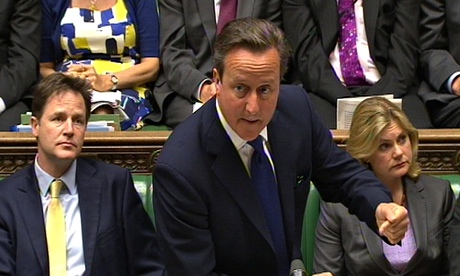
The issue was raised by during prime minister’s questions ahead of the second reading of Lord Falconer’s assisted dying bill. Photograph: PA
David Cameron has said he is worried about moves to legalise euthanasia although he would be happy for the Commons to debate the issue of assisted dying.
Speaking ahead of a controversial debate on the issue in the House of Lords, the prime minister said he was “not convinced that further steps need to be taken” by parliament on the issue.
The issue was raised by Sir Richard Ottaway during prime minister’s questions ahead of the second reading of Lord Falconer’s assisted dying bill, which would allow doctors to prescribe a lethal dose to terminally ill patients judged to have less than six months to live.
“In the recent case of [Tony] Nicklinson on the question of assisted dying, Lord Neuberger, the president of the supreme court, said that parliament now had the opportunity to consider reform of the law in the knowledge that if parliament doesn’t act, the courts may. This could raise serious constitutional issues,” Ottoway said.
“Does he agree that whatever your views on the subject, the other place is to be commended for having a debate, but what the public really want is a debate in this house?”
Cameron suggested William Hague, the new leader of the House of Commons, would think about allowing MPs to talk about the issue as well.
“I am very happy for a debate to be held here and of course there are now opportunities for backbenchers to hold debates in the chamber and I am sure the new leader of the House of Commons who I am sure we all want to welcome to his place, will be listening carefully to that request,” he said.
“For myself I am not convinced that further steps need to be taken, I worry about legalising euthanasia and people might be being pushed into things that they don’t actually want for themselves, but by all means let’s have the debate.”
Former archbishop of Canterbury Lord Carey has said he changed his mind on the issue of assisted dying, after considering cases like that of locked-in syndrome sufferer Tony Nicklinson and “the reality of needless suffering”.
However, the church is officially opposed to the idea and Justin Welby, the archbishop of Canterbury, has spoken strongly against it.
On Tuesday, leading doctors called for terminally ill patients who are suffering “unendurably” to be able to end their lives with doctors’ help, in an 11th hour attempt to persuade the Lords to back such plans.
Twenty seven senior figures, including 11 present or former presidents of royal medical colleges and a former NHS medical director, wrote to every peer urging them to back the bid to legalise assisted dying.

The issue was raised by during prime minister’s questions ahead of the second reading of Lord Falconer’s assisted dying bill. Photograph: PA
David Cameron has said he is worried about moves to legalise euthanasia although he would be happy for the Commons to debate the issue of assisted dying.
Speaking ahead of a controversial debate on the issue in the House of Lords, the prime minister said he was “not convinced that further steps need to be taken” by parliament on the issue.
The issue was raised by Sir Richard Ottaway during prime minister’s questions ahead of the second reading of Lord Falconer’s assisted dying bill, which would allow doctors to prescribe a lethal dose to terminally ill patients judged to have less than six months to live.
“In the recent case of [Tony] Nicklinson on the question of assisted dying, Lord Neuberger, the president of the supreme court, said that parliament now had the opportunity to consider reform of the law in the knowledge that if parliament doesn’t act, the courts may. This could raise serious constitutional issues,” Ottoway said.
“Does he agree that whatever your views on the subject, the other place is to be commended for having a debate, but what the public really want is a debate in this house?”
Cameron suggested William Hague, the new leader of the House of Commons, would think about allowing MPs to talk about the issue as well.
“I am very happy for a debate to be held here and of course there are now opportunities for backbenchers to hold debates in the chamber and I am sure the new leader of the House of Commons who I am sure we all want to welcome to his place, will be listening carefully to that request,” he said.
“For myself I am not convinced that further steps need to be taken, I worry about legalising euthanasia and people might be being pushed into things that they don’t actually want for themselves, but by all means let’s have the debate.”
Former archbishop of Canterbury Lord Carey has said he changed his mind on the issue of assisted dying, after considering cases like that of locked-in syndrome sufferer Tony Nicklinson and “the reality of needless suffering”.
However, the church is officially opposed to the idea and Justin Welby, the archbishop of Canterbury, has spoken strongly against it.
On Tuesday, leading doctors called for terminally ill patients who are suffering “unendurably” to be able to end their lives with doctors’ help, in an 11th hour attempt to persuade the Lords to back such plans.
Twenty seven senior figures, including 11 present or former presidents of royal medical colleges and a former NHS medical director, wrote to every peer urging them to back the bid to legalise assisted dying.

Lord Falconer’s bill would let adults in England and Wales with significantly less than 6 months to reside to receive assist to end their lives, subject to their fulfilling strict criteria. Photograph: Alamy
Leading medical professionals have referred to as for terminally sick sufferers who are suffering “unendurably” to be able to finish their lives with doctors’ help, in an 11th hour try to persuade the Lords to back this kind of programs.
Twenty-seven senior figures, which includes 11 existing or former presidents of royal healthcare colleges and a former NHS health care director, have written to each peer urging them to back Lord Falconer’s bid to legalise assisted dying, which is due to come before parliament on Friday.
“We believe it would give the alternative of relief to a tiny but considerable variety of individuals who suffer unendurably in the course of the terminal days or weeks of a hard illness regardless of the ideal that palliative care can provide,” they create.
More than a hundred peers are presently scheduled to talk in the debate, which will be the very first on a bill to legalise assisted dying because 2006.
The medical professionals include Sir Richard Thompson, the president of the Royal College of Physicians, which represents the UK’s 30,000 hospital physicians Sir Michael Rawlins, the former chair of the Nationwide Institute for Health and Care Excellence (Wonderful), which sets specifications in the NHS and Dr Graham Winyard, who was the NHS’s medical director in England from 1993 to 1999. All 27 have expressed their views in a personalized rather than representative capacity.
The letter has been organised by Sir Terence English, a former president of the Royal College of Surgeons, who is also a patron of Dignity in Dying. The signatories request peers to recognise “that the narrow scope of the bill does not permit for assisted suicide when the patient is not terminally sick, as is practised in Switzerland, nor for voluntary euthanasia, as in Belgium and Switzerland, where a medical professional administers the lethal medicine”.
The physicians seek out to refute one of the largest objections to Falconer’s private member’s bill by stressing that it would “minimise the potential for coercion by other people and make sure that the determination to end life is taken solely by the patient”. The bill would permit adults in England and Wales with less than six months to dwell to acquire help to finish their lives. Two medical doctors would independently verify the patient’s state of health and that he or she had created an informed determination to die. 1 of the two medical professionals would then give the medication with which the patient would finish their life, if he or she asked for them.
Rawlins stated that as he would end his own life if he grew to become gravely ill, everybody in that position should have the same right. “I strongly feel that, subject to suitable safeguards, folks whose lives have become intolerable from bodily illness ought to be assisted to die. I myself, under this kind of conditions, would most surely seek to do so, and as a pharmacologist I would have the understanding of how to do it. It would consequently be hypocritical of me to deny other people the very same chance.”
One more signatory, Professor John Ashton, the president of the Faculty of Public Wellness, informed the Guardian earlier this month that medical professionals ought to be ready to act as “midwives” to help terminally ill individuals die days or weeks early.
Assisted dying would empower individuals, the medical doctors publish. “We hope that assisted dying or, as some would have it, physician-assisted suicide for the terminally ill, will turn out to be legal and therefore allow dying sufferers who meet the criteria to have this degree of manage in excess of the ultimate days of their daily life. The substitute is for them to have to consider a number of unpalatable options, including support from buddies or relatives or travelling abroad to die with no the guidance and help of a sympathetic physician.”
Lord Carey, the former Archbishop of Canterbury, revealed at the weekend that he had modified his mind on assisted dying. He said he now supported it “in the face of the actuality of needless suffering. In strictly observing the sanctity of existence, the Church could now truly be promoting anguish and pain, the extremely opposite of a Christian message of hope”, he explained.
The current archbishop of Canterbury, Justin Welby, nonetheless, has stated Falconer’s bill is “mistaken and hazardous”. The church would like the peer to withdraw his bill and a royal commission to investigate the problem.
The Royal College of Physicians (RCP) and Royal School of GPs (RCGP) are both opposed to assisted dying. In their most latest surveys of their members’ views, 73.2% of hospital doctors and 77% of family members physicians said they had been against legalising it.
Dr Maureen Baker, the RCGP chair, mentioned: “Terminal sickness is an extremely nerve-racking time that brings about several patients to turn out to be depressed and frightened. The school is opposed to a alter in the law to allow assisted dying since it would be not possible to implement with out getting rid of the likelihood that individuals may be in some way coerced into the choice to die.”
It is also anxious that legalisation would be the start of “a slippery slope” which would lead to the correct to an assisted death currently being extended to those who could not consent on grounds of capacity and those who are severely disabled.
Christian groups also criticised the dctors’ intervention.
Alistair Thompson, a spokesman for the campaign group Care Not Killing, explained: “These are a quantity of medical doctors who are contrary to the huge bulk of the health-related specialists who do not assistance assisted suicide and euthanasia. When it is talked about by medical doctors, as it was at the British Health-related Association conference, it is constantly rejected. The letter is practically nothing new, and earlier iterations of it haven’t come to something.”
Andrea Minichiello Williams, the chief executive of Christian Concern, said: “This bill masquerades as compassionate but would swiftly turn out to be an instrument of oppression of the most vulnerable in society. There is all the distinction in the globe in between removing remedy and actively killing someone. As soon as that line is crossed we open the floodgates to cruelty and abuse.
We must not allow medical doctors to move from practising care to facilitating death. If we do, we break the bond of believe in and area those who want medical professionals most at the greatest risk from them.”
A Ministry of Justice spokesman stated: “The government believes that any adjust to the law in this emotive area is an situation of personal conscience and a matter for parliament to determine, rather than government policy.”
The majority of people who are terminally sick want what Dr Peter Saunders, of the Christian Health-related Fellowship, calls “assisted living” rather than “assisted dying”. This is what the Christian-inspired hospice motion seeks to do, enabling these nearing the finish of their lives to put together for a peaceful and very good death. The truth that excellent hospice care is primarily based on a postcode lottery is what ought to shame us, rather than not obtaining our very own solution to Dignitas in Switzerland.
Rightly, Lord Carey has pointed out that where assisted dying (by any name) has been permitted, it has led to a widening of the provision past the terminally sick to people who are disabled, depressed or just exhausted of existence. He says that it would be “outrageous” if assisted dying have been to be extended to such categories in this nation. But the instances on which he relies present exactly how the arguments will not remain for the terminally unwell alone, but will be extended to other individuals.
There is no exact science that identifies who is dying and when they are going to die. Individuals who have been given six months, or significantly less, to dwell sometimes survive for years. Who will be responsible for premature deaths if Falconer’s Bill gets law?
And let’s not overlook Christian teaching on the worth of the human person, the duty of care and the prohibition on killing, specially the elderly. It is true, of program, that “thou shalt not kill” does not mean officiously maintaining individuals alive at all costs. Individuals can refuse treatment and medical professionals can withdraw it if it is ineffective, unduly intrusive or unbearably unpleasant. But the all-crucial word in these situations is “intention”. What is meant: relief of discomfort, or the death of a patient?
We also have to get account not just of challenging cases but the vast majority of the disabled, the elderly and the vulnerable. They can not be left at the mercy of an ever-widening definition of individuals thought eligible to die, as dictated by people who manipulate public view. We need to uphold the value of a human life, perform to relieve suffering and honour the health care profession’s part in preserving existence, not destroying it.
I proceed to phone Lord Carey a buddy and I hope he will continue to see me as a friend too, but for the sake of the weakest in our society, we cannot permit the announcement of his support for Lord Falconer’s Bill to go unchallenged.
There is speak of setting up a Royal Commission to take into account this complete matter. This could be a optimistic improvement as it would allow all sides to contribute. Such a commission must be genuinely representative of professional opinion in this region –and it will have to consider account of what the Judaeo-Christian tradition teaches about the human man or woman. It is on this that our values are based. Oh that Lord Carey had attended to it more totally than he has.
I think the goal of the briefing was to stimulate an write-up on roughly the lines that you see before you: approximately, that is, but not precisely. Often you begin a discussion with a standard prejudice to agree with somebody – and then, as the conversation goes on, you locate yourself prey to misgivings.
The youthful female from Dignity in Dying was charming and persuasive, but as we talked about the precise terms of the Bill, I started to be concerned that it may possibly indeed pave the way for one thing unintended – one thing unsightly and distressing: not precisely a culture of death, but a globe in which it was just too simple to opt for this state-accepted self-extinction.
The dilemma lies in the initial couple of paragraphs, exactly where the Bill defines individuals who would be eligible to consider the “medicine” (a euphemism if ever there was a single) or to have it administered to them. They should be somebody who has a terminal sickness and who “as a consequence of that terminal sickness is reasonably anticipated to die within 6 months”. Now I am certain that infinite care has gone into the drafting of that phrase, but it absolutely encompasses a potentially quite broad group of people.
Many hundreds of thousands of people, old and youthful, locate themselves living on with terminal illnesses – cancers and other afflictions – for a very extended time and clearly a wonderful several will favor lifestyle to the different. It goes with out saying that numerous are capable of taking continuing interest and pleasure in their lives. But it is also accurate of these men and women that their situations could deteriorate fairly quickly – and that they could die within a comparatively brief area of time.
In other phrases, there are a huge amount of men and women whose deaths would not come as a massive shock to a medical professional – and who could therefore be described as people who could “reasonably be anticipated to die inside 6 months”. I would like to see this language tightened up, so that the class of those who may well be eligible for the “medicine” is not as broad as it presently appears. Definitely it cannot be past the abilities of the parliamentary draftsmen to amend the phrase slightly, so that assisted dying could be offered only to these who “could not reasonably be expected to survive more than six months”.
You may say there is not a lot difference among the two categories. I consider the difference is extremely significant. It is the difference between the sturdy probability of death inside 6 months, and the overpowering probability of death within 6 months. It is the big difference in between the group of individuals who could very effectively be claimed by the Reaper at any time within the up coming six months, and the group of individuals who are obviously not going to survive significantly longer. This change would restrict the amount of individuals eligible for assisted dying – even though naturally it would nonetheless drastically increase the choices for alleviating suffering at the finish of our lives.
I believe it appropriate to be cautious, since we are proposing to make a very huge alter in our strategy to death and dying: providing men and women a lot more of a proper to decide on when to die, and over all offering the state an obligation to support us consciously to do away with ourselves, if specified problems are satisfied.
I am positive it is a adjust the public broadly supports, and 1 whose time has come. But lifestyle is valuable and our psychology fragile. Individuals struggling terminal illnesses can very easily uncover themselves under strain – external or inner – to make selections from which, naturally, there is no going back.
If we are going to take this step, we must make it a tiny 1, and see how it goes. I would like to see the Falconer Bill apply not to all these who may possibly properly die in the next six months, but only to individuals whose lives are overwhelmingly probably to be extremely close to the end.
In the wake of Lord Carey’s dramatic intervention, the Bishop of Carlisle, the Rt Rev James Newcome, said that the Church would now back a royal commission to re-examine the concern.
Bishop Newcome, who speaks for the Church in the Lords on health concerns, said that whilst bishops had been “surprised” by the content and timing of the former Archbishop’s post, it had highlighted “just what an important situation this is”.
This week, the House of Lords will think about a proposal by Lord Falconer to permit medical professionals to prescribe terminally ill sufferers a lethal dose of medicines if they are believed to have significantly less than six months to lifestyle. Lord Falconer explained yesterday that there was now clear momentum for modify.
Lord Carey publicly broke ranks with the official Church of England position on assisted dying with a newspaper post yesterday morning. In a main departure from his own earlier position on the concern, Lord Carey argued that Christian teaching did not rule out helping individuals to finish their lives out of compassion.
Even though polling suggests that a bulk of standard churchgoers could assistance a adjust in the law, Lord Carey was the initial main figure in the church to articulate that see.
Now Tutu has backed him by claiming good quality of lifestyle should be considered when debating the problem.
Creating in The Observer, he mentioned: “I have been fortunate to spend my life working for dignity for the living. Now I want to apply my thoughts to the situation of dignity for the dying. I revere the sanctity of daily life – but not at any cost.”
He went on: “People ought to die a respectable death.
“For me that indicates obtaining had the conversations with these I have crossed with in life and becoming at peace. It indicates getting ready to say goodbye to loved ones – if possible, at home.”
The former Archbishop of Cape Town exposed he had mentioned his own death with his loved ones.
“I have come to realise that I do not want my lifestyle to be prolonged artificially,” he explained.
“I believe when you require machines to support you breathe then you have to inquire queries about the high quality of lifestyle currently being knowledgeable and about the way cash is being invested. This may be difficult for some men and women to think about.
“But why is a life that is ending becoming prolonged? Why is income currently being spent in this way?
“It could be much better invested on a mother offering birth to a baby, or an organ transplant necessary by a young individual. Cash must be invested on those that are at the starting or in total movement of their life. Of course, these are my personal opinions and not of my church.”
He additional: “I can see I would almost certainly incline in direction of the quality of existence argument, whereas other people will be a lot more cozy with palliative care. Yes, I feel a whole lot of individuals would be upset if I said I desired assisted dying. I would say I wouldn’t thoughts, truly.”
He mentioned that Falconer’s bill will be debated on Mandela Day, which would have been the 96th birthday of South Africa’s 1st black president.
He named for his home country of South Africa to stick to Britain’s lead in re-examining laws about assisted dying.
“On Mandela Day we will be contemplating of a great guy.
“On the same day, on 18 July 2014 in London, the Property of Lords will be holding a 2nd hearing on Lord Falconer’s bill on assisted dying. Oregon, Washington, Quebec, Holland, Switzerland have presently taken this step.
“South Africa has a difficult-won constitution that we are proud of that ought to offer a basis to guidebook modifications to be produced on the legal standing of finish-of-life wishes to assistance the dignity of the dying.”
Tutu added: “What was done to Madiba [Nelson Mandela] was disgraceful.
“There was that occasion when Madiba was televised with political leaders, President Jacob Zuma and Cyril Ramaphosa. You could see Madiba was not completely there. He did not speak. He was not connecting. My pal was no longer himself. It was an affront to Madiba’s dignity.”
London rabbi, Jonathan Romain, has also spoken on behalf of 60 religious leaders in assistance of the Falconer proposals.
He explained reform was needed now health care advances meant people had been currently being stored alive in a bodily and psychological state that a lot of felt was intolerable.
He said: “I see no sanctity in struggling, practically nothing holy about agony.”
Desmond Tutu, one particular of the world’s most eminent religious leaders, has created an extraordinary intervention in the debate above assisted death, by backing the correct of the terminally sick to finish their lives in dignity.
Writing in the Observer, the 82-year-outdated retired Anglican archbishop, revered as the “moral conscience” of South Africa, says that laws that stop men and women getting helped to finish their lives are an affront to people impacted and their families.
He also condemns as “disgraceful” the treatment of his old friend Nelson Mandela, who was stored alive by way of many unpleasant hospitalisations and forced to endure a photograph stunt with politicians shortly before his death at 95.
Tutu, who calls for a “thoughts shift” in the appropriate to die debate, writes: “I have been lucky to spend my life working for dignity for the residing. Now I wish to apply my thoughts to the problem of dignity for the dying. I revere the sanctity of life – but not at any price.”
Tutu’s intervention comes at the start of a momentous week in the assisted dying debate. On Friday, the Property of Lords will witness one particular of the most considerable moments in its latest background when peers debate an assisted dying bill proposed by the former lord chancellor, Lord Falconer. A record number of peers – 110 so far – have registered to talk.
On Saturday the former archbishop of Canterbury Lord (George) Carey spoke out in favour of the bill. But in an report in the Instances, Justin Welby, the present archbishop and head of the Church of England, reaffirmed the church’s conventional hostility to any move that would endanger the principle of the sanctity of lifestyle. In a indicator of the debate that has now been unleashed inside the Anglican communion, the bishop of Carlisle, the Right Rev James Newcome, named for a royal commission to examine the “essential concern” at length.
Falconer’s proposed legislation would make it legal for a medical professional to hand more than a lethal medicine to a terminally sick patient who is believed to have less than six months to live.
Tutu notes that Falconer’s bill will be debated on Mandela Day, which would have been the 96th birthday of South Africa’s initial black president. He calls for his very own nation to follow Britain’s lead in examining a adjust in the law.
“On Mandela Day we will be considering of a excellent guy,” he writes. “On the same day, on 18 July 2014 in London, the Property of Lords will be holding a 2nd hearing on Lord Falconer’s bill on assisted dying. Oregon, Washington, Quebec, Holland, Switzerland have currently taken this phase. South Africa has a tough-won constitution that we are proud of that must give a basis to guidebook modifications to be created on the legal status of end-of-existence wishes to help the dignity of the dying.”
Speaking to the Observer, Falconer, who mentioned he was now assured that his bill would reside on in parliament beyond Friday’s debate, claimed that the intervention by Tutu illustrated that religious faith should be no obstacle to supporting a modify in the law. He said: “I am truly glad that an individual of his stature is taking part in this crucial debate. It is a debate in which nations look to other countries for guidance. For a person of Archbishop Tutu’s stature, knowing and human knowledge to communicate out is genuinely welcome. He is an Anglican bishop who has shown his moral power to the planet much better than anyone. I very a lot hope that it will indicate that religion is not a bar to supporting this bill.”
A London rabbi, Jonathan Romain, speaking on behalf of 60 religious leaders in help of the Falconer proposals, stated he believed that backing the bill was the “religious response” to a scenario the place healthcare progress allowed people to live on in a physical and mental state that several felt was intolerable. He said: “I see no sanctity in struggling, practically nothing holy about agony.”
Jane Nicklinson, widow of the campaigner Tony Nicklinson, a sufferer of locked-in syndrome who fought for the appropriate to be helped to die in the United kingdom, mentioned she believed public opinion was now in favour of adjust, including: “I hope that it is correct amid people that matter – the decision-makers.”
Falconer’s proposals are getting fiercely opposed by crucial figures such as Welby, and campaigners for the rights of disabled individuals. Richard Hawkes, chief executive of the disability charity Scope, explained he feared the bill would place some individuals underneath strain to end their lives. He mentioned: “Why is it that when men and women who are not disabled want to commit suicide, we attempt to talk them out of it, but when a disabled man or woman would like to commit suicide, we focus on how we can make that achievable?”
Even so, in his article for the Observer, Tutu says that he has been moved by the case of a 28-yr-outdated South African, Craig Schonegevel, who suffered from neurofibromatosis and felt forced to end his life by swallowing twelve sleeping tablets and tying two plastic bags all around his head with elastic bands since doctors could not assist him.
Tutu writes: “Some say that palliative care, such as the giving of sedation to make sure freedom from pain, ought to be enough for the journeying towards an easeful death. Some folks opine that with excellent palliative care there is no need to have for assisted dying, no want for people to request to be legally offered a lethal dose of medication. That was not the situation for Craig Schonegevel. Others assert their appropriate to autonomy and consciousness – why exit in the fog of sedation when there’s the substitute of becoming alert and genuinely current with loved ones?”
He also discloses that he has now had a conversation with his household about his own death. “I have come to realise that I do not want my lifestyle to be prolonged artificially,” he writes. “I believe when you need to have machines to support you breathe then you have to request queries about the top quality of daily life becoming experienced and about the way funds is becoming invested. This might be challenging for some folks to contemplate.
“But why is a existence that is ending getting prolonged? Why is income currently being invested in this way? It could be much better spent on a mom providing birth to a little one, or an organ transplant necessary by a young man or woman. Funds should be invested on these that are at the starting or in total movement of their daily life. Of program, these are my private opinions and not of my church.”
There was bitter controversy in South Africa in April last 12 months when President Jacob Zuma and other African Nationwide Congress politicians visited Mandela at his residence with a Television crew. The statesman looked weak, rheumy-eyed and uncomprehending. Mandela’s household and private assistant condemned the publicity stunt as exploitative and in poor taste. Tutu echoes that view. “What was done to Madiba was disgraceful,” he writes. “There was that occasion when Madiba was televised with political leaders, President Zuma and Cyril Ramaphosa. You could see that Madiba was not completely there. He did not speak. He was not connecting. My good friend was no longer himself. It was an affront to Madiba’s dignity.”
“People need to die a respectable death,” he continues. “For me that signifies obtaining had the conversations with these I have crossed with in daily life and being at peace. It means getting able to say goodbye to loved ones – if feasible, at home.”
He adds: “I can see I would most likely incline in the direction of the high quality of lifestyle argument, whereas other individuals will be far more cozy with palliative care. Yes, I think a good deal of men and women would be upset if I said I needed assisted dying. I would say I would not mind, truly.”
Tutu, who chaired South Africa’s Reality and Reconciliation Commission, and admitted he was “angry with God” during apartheid, has never been afraid to consider unpopular positions or stir debate. Mandela once explained of him: “Sometimes strident, often tender, in no way afraid and seldom with out humour, Desmond Tutu’s voice will often be the voice of the voiceless.”
For the duration of all my many years of pastoral care, I have by no means had the privilege of currently being with a person when they die. I’ve visited dying colleagues and friends at St Luke’s hospice, Cape Town, in the final period of their lives I’ve witnessed their becoming cared for beautifully – but I have by no means been there at the actual minute of passing. I’ve been asked why I consider it a privilege to be present when temporal death requires location. It comes from my belief system. It is the wonder of a new life beginning, the wonder of an individual going to meet their maker, returning to their supply of lifestyle. In some methods, death is like a birth it is the transition to a new lifestyle.
I am myself now closer to my end than to my starting.
Dying is portion of life. We have to die. The Earth are not able to sustain us and the hundreds of thousands of folks that came ahead of us. We have to make way for people who are nevertheless to be born. And considering that dying is portion of daily life, talking about it should not be taboo. Men and women ought to die a respectable death. For me that indicates getting had the conversations with people I have crossed in daily life and being at peace. It signifies being able to say goodbye to loved ones – if attainable, at residence.
Lately I mentioned my wishes with my youngest daughter, Mpho: my option of the liturgy, the hymns, and who ought to preach. I would like to lie overnight in St Mary’s Cathedral in Johannesburg. It was such an important area in my existence it is in which I grew to become a deacon, the place so a lot of crucial issues occurred. I would like to be cremated some individuals are not cozy with that notion. I’d like my ashes to be interred at St George’s Cathedral, Cape Town.
There are certain African traditions I am not relaxed with: the turning of images to encounter the wall, the clearing of furniture from the bedroom and putting of straw mats for the ladies to sit on for days. I am comfy that on my passing these traditions must not be followed. It concerns me how individuals get into debt at funerals, purchasing expensive caskets, slaughtering animals they can sick afford to shell out for. I want to position model modesty. I would like a basic coffin, the 1 of plain wood, with the rope handles. I would like modest refreshments following my funeral. If folks want to slaughter an animal as portion of classic ritual, I’d be satisfied with a sheep or a goat – it does not need to be a large animal. My memorial stone must also be modest. My concern is not just about affordability it truly is my sturdy preference that money ought to be spent on the residing.
This will take me to the question of what does it indicate to be alive. What constitutes quality of daily life and dignity when dying? These are massive, essential questions. I have come to realise that I do not want my daily life to be prolonged artificially. I feel when you want machines to aid you breathe, then you have to inquire concerns about the quality of life being experienced and about the way income is currently being invested. This might be challenging for some men and women to contemplate.
But why is a existence that is ending getting prolonged? Why is cash currently being spent in this way? It could be far better invested on a mother giving birth to a child, or an organ transplant required by a younger person. Money need to be invested on these that are at the beginning or in complete flow of their life. Of course, these are my personalized opinions and not of my church.
What was carried out to Madiba (Nelson Mandela) was disgraceful. There was that event when Madiba was televised with political leaders, President Jacob Zuma and Cyril Ramaphosa. You could see Madiba was not totally there. He did not communicate. He was not connecting. My friend was no longer himself. It was an affront to Madiba’s dignity.
It is important for all of us to talk about death and our dying. A survey was completed of physicians in the United kingdom in 2008. As numerous as two-thirds of them stated they had difficulty discussing end-of-daily life care with their sufferers. Doctors have been once healers of life and easers of death. In the 20th century the coaching for the latter has been neglected.
Death can come to us at any age. The clearer we are about our end-of-daily life preferences, the easier it will be for our loved ones and our medical professionals. I am coming to recognize the importance of possessing a residing will or advance directive, as some men and women get in touch with it. I do not want artificial feeding or to be on an artificial breathing machine – I will not want people to do their damnedest to preserve me alive.
I have learned there are wider societal rewards to living wills. In La Crosse, Wisconsin, where doctors campaigned for decades for all grownups to sign their finish-of-daily life preferences, a single advantage has been the savings, for families, for the government and healthcare organizations – savings now utilised a lot more creatively elsewhere. The second upside is that getting discussions earlier in life appears to put people’s minds at rest and they reside longer – how else do you describe that daily life expectancy in La Crosse is now statistically greater than other similar geographies?
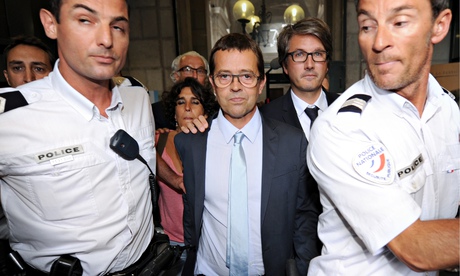
I was asked not too long ago what I would want for myself if I had a terminal sickness and my quality of existence was significantly deteriorating. This yr I followed the situation of the French doctor Nicolas Bonnemaison, who assisted many people to die. It was anticipated that there could be a hefty prison sentence. Numerous witnesses, family members members incorporated, wrote to support the doctor’s actions as compassionate. The doctor was acquitted. There have been jubilant celebrations. And Britain’s supreme court lately ruled that a ban on assisted suicide is incompatible with human rights.
We require to revisit our own South African laws which are not aligned to a constitution that espouses the human correct to dignity. On our own soil Craig Schonegevel, right after 28 years of struggling with neurofibromatosis, made a decision his quality of daily life was too poor. He’d had so many surgical procedures the believed of enduring more was unbearable. He could uncover no legal help to help him die. On the evening of 1 September 2009, he swallowed twelve sleeping tablets, place two plastic bags above his head tied with elastic bands and was located dead by his dad and mom the next morning. Craig desired to end his lifestyle legally assisted, listening to his favourite music and in the embrace of his beloved mother and father, Patsy and Neville. Our legal system denied him and his household this dignity.
I am coming to recognize the value of language on this delicate problem. The words euthanasia and suicide carry damaging connotations. Suicide is deemed a premature death typically accompanied by mental instability. Craig’s thinking was crystal clear he desired autonomy and dignity.
Some say that palliative care, such as the giving of sedation to ensure freedom from pain, should be adequate for the journeying in the direction of an easeful death. Some folks opine that with great palliative care there is no want for assisted dying, no need to have for men and women to request to be legally given a lethal dose of medication. That was not the situation for Craig Schonegevel. Other people assert their appropriate to autonomy and consciousness – why exit in the fog of sedation when there’s the substitute of becoming alert and genuinely existing with loved ones?
I have been lucky to commit my life working for dignity for the living. Now I want to apply my thoughts to the problem of dignity for the dying.
I revere the sanctity of lifestyle – but not at any cost. I confirm I do not want my life prolonged. I can see I would most likely incline towards the top quality of existence argument, whereas other people will be a lot more relaxed with palliative care. Yes, I consider a great deal of folks would be upset if I mentioned I wanted assisted dying. I would say I wouldn’t thoughts truly.
On Mandela Day on Friday we will be contemplating of a fantastic man. On the identical day in London, the Residence of Lords will hold a second hearing on Lord Falconer’s bill on assisted dying. Oregon, Washington, Quebec, Holland, Switzerland have already taken this phase. South Africa has a hard-won constitution that we are proud of that need to offer a basis to manual changes to the legal standing of finish-of-life wishes to assistance the dignity of the dying.
On our continent of Africa, dying as an elderly person is a privilege. We are sadly also acquainted with the early deaths of loved ones. War, violence, HIV/Aids and socioeconomic diseases take their toll. We want a thoughts shift in our societies. We want to think. We need to question. What is existence? And is not death portion of residing – a normal part of existence?
Desmond Tutu is archbishop emeritus of Cape Town and a Nobel peace laureate. He is chair of the Elders, an worldwide group of former political leaders brought collectively by Nelson Mandela to operate for peace, justice and human rights
In the Lords in 2006, during a earlier try to adjust the law, he warned that if aiding a person to finish their lifestyle was permitted, it would quickly be “treated as casually as abortion”. While many opponents of the proposal argue that Christianity forbids any assisted suicide, Lord Carey has been persuaded that the commandment “Thou shalt not kill” must not mean prolonging suffering.
The Church of England distanced itself from his position yesterday but Lord Falconer, the Labour former lord chancellor, stated it demonstrated that the Church’s official opposition to the Bill was not automatically representative of its wider membership.
It is understood that Lord Carey was moved by the situation of Tony Nicklinson, the locked-in syndrome sufferer who fought a legal battle to be permitted to die, ahead of starving himself.
The Bill would not have directly applied to Mr Nicklinson as he was not terminally sick but it is understood that his situation prompted Lord Carey to reconsider the wider concern.
Last month, following a situation brought by Mr Nicklinson’s widow, Jane, the Supreme Court urged Parliament to overview the blanket ban on assisted dying or encounter feasible intervention by the courts on human rights grounds.
Under Lord Falconer’s prepare, modelled on the technique in the US state of Oregon, doctors would be capable to offer a fatal dose of medicines to sufferers judged to have significantly less than 6 months to dwell. Patients would administer thesubstance themselves but could acquire support if unable to do so. The approach would need two doctors’ signatures.
Lord Falconer said: “The variety of people who assistance this Bill is fairly considerable even from practising and energetic members of the Church of England and also other churches this kind of as the Roman Catholics as well as for example the Jewish local community.
“The Anglican church at the really top, by which I have in thoughts the bishops in the Property of Lords, has been really opposed, but it has not been the feeling that they signify their congregations.”
Opponents of the Bill stated they were “flabbergasted” at Lord Carey’s adjust of place. Dr Peter Saunders, of the Christian Medical Fellowship, stated: “There is no biblical precedent or justification for compassionate killing.
“There is a world of variation – ethically, legally, philosophically and theologically – amongst assisting someone to kill themselves with a lethal drug on the one hand and proportionate discomfort relief or withdrawal of meddlesome therapy on the other.” Bishop Michael Nazir Ali, the former Bishop of Rochester, and a pal of Lord Carey, mentioned: “We have to not assume that we know when folks are going to die. Lord Carey himself understands of individuals, that I also know of, who were provided six months to dwell and lived for many years afterwards.”
A spokesman for the Church of England explained: “The Church of England is opposed to assisted suicide.” He said that the Basic Synod passed a movement in February 2012 which “expresses its help for the present law on assisted suicide as a mean of contributing to a just and compassionate society in which vulnerable individuals are protected”.
While we completely agree that the ease of pain and struggling must be the priority when a patient is nearing the finish of lifestyle, and keeping a patient alive at all fees is not steady with compassionate care, we would like to counter some of Professor John Ashton’s assertions (Best doctor’s assisted dying contact, 2 July).
First, his remarks on the use of sedative prescription drugs at the finish of existence advised that the administration of doses that would finish lifestyle in a dying patient would not represent a major departure from current finish-of-life prescribing of prescription drugs provided to ease suffering. There is no evidence to demonstrate that medications used for relief of distress and symptom handle at the finish of daily life shorten lifestyle, and are not prescribed with this intention. To be assured of ending a person’s daily life with these drugs, prescribing practices would want to modify radically. Second, Prof Ashton voices his assistance for assisted suicide for individuals in the last days and weeks of daily life, but the clinical practice he describes appears to be a lot more in line with voluntary euthanasia, which is excluded from the assisted dying bill. The expertise in Oregon shows that the bulk of men and women who the provisions of the Death with Dignity Act are the much more “vigourous” terminally unwell who are not normally days from death. educed consciousness amounts are frequent in the last days of life, and decision-creating as nicely as the ability to get and swallow medication could be impaired.
We strongly advocate for compassionate end-of-lifestyle care, but argue that assisted suicide is not merely an extension of existing practice and ought to not be construed as such.
Prof Matthew Hotopf
Professor of standard hospital psychiatry, King’s University London Institute of Psychiatry
Dr Ollie Minton
Locum advisor and honorary senior lecturer in palliative medicine, St Georges University of London
Dr Annabel Price
Advisor psychiatrist in liaison psychiatry for older individuals, Cambridge and Peterborough foundation mental wellness believe in
• Prof Ashton suggests that the specialist equivalent of midwives need to assist terminally unwell patients and “if needed shorten the finish of their lives”.
A midwife, virtually “1 who is with the mother”, never ends a mother’s life no matter how unpleasant or distressing the birth. Prof Ashton, like several men and women, seems to be unaware of the massive numbers of medical professionals, nurses and allied overall health experts who have the privilege of getting “with the patient” at the end of life, and so act as midwives to the dying in assisting to ease soreness and suffering.
I am disappointed that there was almost no media coverage of One Possibility to Get it Correct, the latest report of the Leadership Alliance for the Care of Dying People, in response to the Neuberger overview Much more Care Less Pathway. The alliance report focuses on enhancing compassionate care at the finish of life. It is this report that merits our attention rather than altering the law to allow euthanasia or assisted suicide.
David Jeffrey
Honorary lecturer in palliative medication, University of Edinburgh
• I believe the views of Andrea Williams of Christian Concern would not be supported by the majority of her fellow Christians, as most people, believers or not, do not want to see their nearest and dearest suffer a prolonged and painful death. This has been demonstrated in several pieces of study and surveys of public view.
While I don’t claim to recognize her religious beliefs, I tolerate them and accept that she has a right to hold them. What I assume from her – and other religions – is a tolerance of my beliefs, without resorting to claims that medical professionals will be “killing” sufferers. The problem is about men and women who are dying and in great pain getting given the legal appropriate to ask for help to die as swiftly as attainable. That support could, in theory, be provided by an individual other than a medical professional.
If Ms Williams and her supporters are happy for their lives to be prolonged when they are dying and in wonderful pain, that is their choice. But please will not impose your selection on folks who have a diverse view at the finish of their life.
Graham Ross
London
• It was misleading that your front web page was headlined “Top doctor’s assisted dying call” when Dr Ashton’s total interview was a balanced account of the public wellness wants affecting this nation. Assisted dying and the Falconer bill, due to be debated in the House of Lords later on this month, are firmly resisted by the other health care royal colleges (Dr Ashton’s group is a faculty of the Royal School of Doctors), and by numerous medical doctors who perform in direct patient care of terminally ill sufferers (in contrast to public health specialists).
There are serious hazards that this policy would be uncontrollable, major to “incremental extension” (to other classes of individual), and to implicit pressure on vulnerable individuals to accede to voluntary assisted dying. There is proof that excellent palliative care, in which the NHS is a planet leader, strongly mitigates calls for assisted suicide, which are commonly withdrawn when such care is knowledgeable.
The current law functions nicely, combining a firm steer against exploitation and abuse with permitted judicial leniency in the uncommon hard situations.
Peter D Campion
Emeritus professor of main Care Medicine, University of Hull
• Giles Fraser has given the identical sermon twice (Loose canon, five July 2014 and three Might 2013). He is taking part in God. He knows we have a correct to daily life but rules that we ought to not have a appropriate to death. He confuses alternatives forced on us by thoughtless care employees with personalized alternatives that we want to make ourselves. We can presently make private options, all carefully competent and countersigned, to refuse therapy to prolong daily life. The Mental Capability Act 2005 gives for this kind of advance choices. This legal refusal of therapy can previously lead to earlier death.
Chris Coghill
Oxford
• As a doctor I locate the accusation of attempting to “play God” offensive. Searching right after men and women who are suffering, particularly at the end of their lives, I see no God that is compassionate or just.
Dr Jacinta Derks
Rowlands Castle, Hampshire
• As a retired GP I was pleased to see Prof Ashton’s thoughtful help for assisted dying. I was unsure about this concern until it impacted my family members. Last year my mother, absolutely immobile, in finish-stage heart failure and with serious and agonizing ulcers, decided she could not cope with her daily life any longer. he chose to starve herself to death. It took over two weeks and was horrendous for her and everybody caring for her. Certainly a far more humane strategy would have been to support her decision and assist her on her way.
Alex Booth
Bath
• The discussion close to Lord Falconer’s bill on assisted dying has been created even more challenging by the careless use of words which may be etymologically appropriate but have widely differing connotations. It would be beneficial to assign more specific meanings to the terms assisted dying, assisted suicide, killing and euthanasia, so that we can at least agree on what we are talking about.
The word “kill” has no spot in this debate – killing is what Dr Harold Shipman did. “Suicide” typically has overtones of personalized tragedy but does not apply to a timely finish to a terminal illness. “Assisted suicide” is the suitable term for a mentally competent individual with unbearable but non-terminal bodily disability who seeks aid to die. “Euthanasia” ought to be reserved for conditions the place the individual has in no way been, or is not now, competent to request and consent to assisted dying. The term “assisted dying” in Lord Falconer’s bill refers only to grownup individuals who know they are dying, and are competent to make a decision about and participate in energetic measures in ending their life. Neither “assisted suicide” nor “euthanasia” as defined right here are envisaged in this bill.
Those opposing Lord Falconer’s bill cite the difficulty of protecting vulnerable individuals but there would be much more safety for individuals if the legality or otherwise of assisting a certain personal to die have been to be established ahead of that help is given, rather than right after the death. Wellness pros, and palliative care specialists in specific, would be protected from complaints by the deceased’s family members.
Lord Falconer’s bill will end result in a robust legal framework to exchange the recommendations set out in 2010 by Keir Starmer, the then director of public prosecutions.
Professor Sir David Hall
Sheffield
• Andrea Williams appears to be missing the point. The individuals concerned are not “getting killed” they are dying, and wish to cut quick the suffering they are enduring. To do this they require access to medicines that medical professionals have chosen to make obtainable only on healthcare prescription. Assisted dying is what it says: the patient self-administers medication that a physician makes available to him or her.
Elizabeth Brown
Harrogate
• Professor John Ashton sums up the emotions and wishes of so many people living with cancer. How reassuring it would be to know that a sort medical professional would be prepared to end the patient’s struggling when shut to death, without worry of prosecution. Having lately moved home, and been diagnosed with cancer, I hope to kind this kind of a connection with my medical doctor. Even much better would be adjust in the law.
Marguerite Christmas
Stamford, Lincolnshire
• It is about time medical leaders came off the fence and supported the view of the majority of medical professionals and the public (from polls) who really feel the law on assisted dying should be produced far more humanitarian, and a appropriate of the person to figure out.
It is actually only since the Shipman case that doctors, specifically GPs, have been frightened to help their individuals stay as comfortable as feasible throughout their last weeks or days, regardless of whether or not this meant shortening their life. The consequence has been unnecessary struggling. If a patient’s thoughts is sound and he or she wants to finish their struggling by dying, and safeguards such as two independent clinicians authenticate the request, then a doctor need to be in a position to assist the patient.
If in excess of the final handful of centuries we have won rights over how we might dwell our lives , it looks illogical to all of a sudden take these rights away at the end of existence, due to the fact of an individual else’s beliefs that we may possibly not share.
Peter Brown
Newton Ferrers, Devon
• Professor Ashton’s suggestion that doctors must assist in ending the life of terminally unwell sufferers would accord nicely with a market place based mostly economy. I would not propose that such an concept entered the professor’s mind but it would assuredly enter that of other folks. Caring for the depressed and terminally unwell is high-priced each financially and emotionally and the simplest and cheapest response is to just dispose of this kind of. That is not the mark of a civilised society.
We currently have a government which has lower the NHS to, and sometimes beyond, the bone and this in spite of evidence to present that it is by far the most value-successful way to deliver overall health care. A civilised society ought to provide good quality care to people in this kind of want and not fob them off with cheap choices, even if it indicates, horror of horrors, that taxes require to be improved.
Beware also the law of unintended consequences, the elderly with lower self-esteem who come to feel that they would be much better “out of the way”.
Alan Pentecost
Maidstone, Kent
• I read through with excellent curiosity John Ashton’s post. I agree with every little thing he has said. As a physiotherapist who has previously worked in a hospice, I recognised that a primary perform of healthcare experts is to empower one’s sufferers. At times, the only empowerment left on offer is the decision of the exactly where and when of death and this must be afforded to our patients in their very best curiosity.
My mother died following asking for help in dying which was denied to her. Her final request to me was to help to alter “this ridiculous law”. From the change of law in Oregon, it is clear that sufficient safeguards have ensured that no patient is coerced into assisted dying: quite the reverse. Patient opting for assisted dying are informed folks who have also been causative in their personal lives. Why deny them the alternative of currently being causative in their deaths? I hope that the Home of Lords see fit to assistance Lord Falconer’s bill on 18 July.
Lindsay Flower
Abbots Langley, Hertfordshire
It difficulties MPs and peers to back the bill, describing them as “our timid lawmakers”.
Supporters of the bill welcomed the intervention, saying it was recognition that a “growing number” of medical doctors and other healthcare personnel support a adjust in the law.
But the BMA insisted that the journal did not represent its views or people of the wider healthcare occupation.
In just over two weeks Lord Falconer’s bill, which would allow medical professionals to prescribe lethal doses of drugs to terminally sick patients with a “settled intention” to finish their lives, will have its initial complete parliamentary airing with a second reading debate in the Residence of Lords.
Members of each houses are to be given a free vote on the concern and ministers, including Norman Lamb, the care minister, have presently signalled they would assistance it.
Last week the President of the Supreme Court, Lord Neuberger, publicly challenged Parliament to review the law on assisted suicide or encounter intervention by the courts.
The court turned down a challenge involving the loved ones of Tony Nicklinson, the “locked-in syndrome” sufferer who fought a lengthy campaign for assisted suicide, but signalled it could be prepared to declare the ban on assisting an individual to take their very own existence as “incompatible” with human rights if Parliament did not act.
“Let us hope that our timid lawmakers will rise to the [court’s] challenge,” the editorial remarks.
It goes on: Folks must be capable to workout decision in excess of their very own lives which must include how and when they die, when death is imminent.
“In current decades, respect for autonomy has emerged as the cardinal principle in health care ethics and underpins developments in informed consent, patient confidentiality, and advance directives.”
“Recognition of an individual’s appropriate to establish his or her best interests lies at the heart of this journal’s method to advance the patient revolution in wellness care.
“It would be perverse to suspend our advocacy at the second a person’s days have been numbered.”
Dr Peter Saunders, campaign director of the Care Not Killing Alliance, explained: “While autonomy is important it has to be balanced against other principles such as public security.
“None of us believes autonomy is absolute, if we did we would have to say that there was no location for law because every single law restricts personal autonomy.”
Sarah Wootton, Chief Executive of Dignity in Dying explained: “We are delighted that the British Health care Journal has backed Lord Falconer’s Assisted Dying Bill.
“The recognition by the leading healthcare journal of the importance of safeguarded patient choice in finish of daily life care is to be welcomed, and comes at a time when a developing amount of foremost wellness care experts are supporting this kind of decision.”
Dr Mark Porter, chair of the BMA Council, stated: “There are strongly held views inside of the medical profession on the two sides of this complex and emotive issue.
“The BMA remains firmly opposed to legalising assisted dying.
“This problem has been often debated at the BMA’s policy forming yearly conference and latest calls for a adjust in the law have persistently been rejected.
“The BMJ is a wholly owned subsidiary of the BMA, and quite rightly has editorial independence.
“Its position on assisted dying is an editorial decision and does not reflect the views of the BMA or the health care occupation.
“Our concentrate have to be on creating sure every single patient can accessibility the really best of palliative care, which empowers individuals to make selections in excess of their care.”

‘If assisted dying were legalised, a physician or nurse would be present when the patient took the daily life-ending prescription.’ Photograph: Burger/Phanie/Rex Attributes
Prof John Ashton’s courageous and humane stance on the want to alter our attitudes towards death and dying could not be more timely, given that Lord Falconer’s assisted dying bill is to attain its crucial second studying in the Residence of Lords on 18 July.
Ashton’s phone for “midwives for the finish of life” is a response to a severe problem in the way the healthcare profession approaches the care of dying individuals. In element, as Ashton factors out, this is driven by the false expectation that there is a health-related answer to each and every problem and an unwillingness to recognise when health care interventions are futile, or worse, compounding the patient’s suffering.
The development of palliative care, in whifch Britain has led the way, is partly a corrective to this unthinking perspective. It begins with the acknowledgement that there is a time to move away from aggressive treatments and the illusion of remedy to a concentrate on symptom handle. But we require to recognise that even though this serves the demands of the bulk of individuals, many nonetheless suffer terribly.
A current survey has located that even in hospices (which provide the best attainable care) 2% of people – at least 6,000 adults – have no relief in the course of the final 3 months of daily life. We can anticipate that this proportion rises for the final days and hrs.
No civilised society can ignore this degree of struggling. On grounds of compassion alone, the Falconer bill have to command our assistance. If it is passed into law it would be feasible for terminally sick, mentally competent adults with a settled want to die to be given a life-ending prescription by a doctor.
Numerous oppose this on religious grounds, even though the majority of people with religious beliefs (60-70%) are in favour of assisted dying. Individuals who oppose the bill have to recognise that in performing so they are riding roughshod above a fundamental principle of medicine and healthcare ethics – respect for patient decision. And they must also remember the options to medically assisted dying: botched suicide attempts, death by voluntary starvation and dehydration, pilgrimages to Switzerland and assist from one-off amateurs who have the threat of prosecution hanging more than them.
The 17-12 months encounter of the Death with Dignity Act in Oregon has shown that a law similar to the a single proposed by Falconer (although the latter has much more safeguards) can be administered securely. The worries expressed by opponents that it may well have adverse consequences for health care care and society have not been realised. The Oregon Hospice Association at first opposed assisted dying. It withdrew its opposition following eight years of the law, finding that there was “no proof that assisted dying undermined Oregon’s finish-of-lifestyle care or harmed the interests of vulnerable individuals”.
Ashton’s intervention is notably critical because numerous supposedly representative health care bodies have a stance of opposition to assisted dying. This is despite the see of the bulk of physicians (some 61% in a recent poll) that organisations this kind of as the British Medical Association should continue to be neutral, as this is a matter for society, not the medical occupation, to decide.
If assisted dying had been legalised, a medical doctor or nurse would be current when the patient took the life-ending prescription. This would not correspond fully to Ashton’s thought of the equivalent of a midwife at the end of life. But it would be a wonderful improvement on the current scenario, where healthcare employees are obliged to deny aid to some sufferers at the time of their biggest require. In quick, to abandon them.

French former doctor Nicolas Bonnemaison (centre) leaves court in southwestern France on 25 June 2014. Photograph: Gaizka Iroz/AFP/Getty Photos
On the exact same day that the United kingdom supreme court dismissed an argument that doctors in the ought to escape prosecution if they support individuals finish their lives, a doctor in France who gave lethal injections to seven terminally ill individuals was cleared of wrongdoing.
In neither country is the law clear reduce. Neither the terminally ill nor their physicians know exactly exactly where they stand. Time and once again, it is the attorneys and the judges who are known as on to interpret the minutiae of laws and guidance which a lot of on each sides of the debate take into account unsatisfactory.
In France, the acquittal of Dr Nicolas Bonnemaison was acclaimed by those who hope to see adjustments in the law. His attorneys explained the decision would force politicians to velocity up modify. French president François Hollande stated in 2013 that a nationwide debate was needed and has mentioned he intends to introduce a bill to parliament on assisted dying, which polls recommend has public support – as in the United kingdom.
Lord Falconer’s bill, which will quickly have a second reading, champions the rights only of these who are terminally sick – not people who find their lives intolerable – whoand can express their sturdy desire to die.
In that respect, it is closely primarily based on the model in Oregon in the US, in which assisted dying for the terminally sick was legalised in 1997. In 2008, up coming-door Washington state passed a equivalent law, followed by Vermont in 2013. Surveys have proven that oThere, 1 in six individuals talk to family members and buddies about assisted dying, but just one particular in 50 go on to talk to their physician and begin to be screened for suitability. A single in 500 in fact finish their daily life.
This is extremely diverse from the scenario in the Netherlands and Belgium, which in 2002 legalised voluntary euthanasia for the terminally ill and in instances of hopeless and unbearable struggling that cannot be alleviated. In 2013 in the Netherlands, euthanasia accounted for 2.9% of deaths, and in Germany suicide is legal and aiding somebody by offering the implies is technically inside of the law. There is the possibility of prosecution on a variety of counts, however, this kind of as a duty on relatives and medical doctors to seem after the wellbeing of a loved ones member or patient.
But in a separate intervention, 1 of Britain’s prime psychiatrists, argues nowadays that due to the fact of the troubles of determining people’s state of mind, there are “no achievable safeguards” which could adequately safeguard the vulnerable if the law is transformed.
Baroness Hollins, a former president of both the British Medical Association and the Royal University of Psychiatrists, explained the strategy would amount not only a significant modify to the law but to the “principles that underpin health-related practice” itself.
Below the 1961 Suicide Act, it is at present a crime carrying up to 14 years in jail, to support a person to get their very own life.
But prosecution tips now make clear that individuals who allow loved-ones to travel abroad, such as to Switzerland, to end their lives are probably to escape costs, in specified conditions, if they are obviously acting out of compassion.
Supporters of Lord Falconer say a adjust in the law is urgently necessary to finish uncertainty and enable people to die in dignity at a time and spot of their deciding on.
But opponents declare that safeguards written into the bill could be swept away in practice.
The letter – also signed by Baroness Campbell of Surbiton, who suffers from a degenerative illness, Dr Alice Maynard, chair of the disability charity Scope, and the actors Liz Carr and Mik Scarlet between other people – argues that the bill would reinforce inequality towards disabled and older individuals.
It argues: “Why is it that when people who are not disabled want to commit suicide, we consider to talk them out of it, but when a disabled individual needs to commit suicide, we emphasis on how we can make that attainable?
“We think that the campaign to legalise assisted suicide reinforces deep-seated beliefs that the lives of sick and disabled folks are not well worth as a lot as other people’s that if you are disabled or terminally sick, it is not well worth being alive.
“Disabled individuals want assist to live – not to die.”
The bill was published last yr but did not go by way of the Parliamentary procedure for timetabling reasons. Right after currently being launched in the Lords it is anticipated to have its first complete debate prior to the summer recess.
If it clears the Lords it would then pass to the Commons the place MPs say support has grown in current years.
David Cameron and Nick Clegg, who each personally oppose the adjust, have nonetheless promised MPs and peers a free vote and some ministers have signalled they would do so.
In an article on telegraph.co.united kingdom, baroness Hollins asks: “How robust is the idea of a settled intent?
“I suggest that this is rather a fluid notion. And how can it be established by a doctor who has been launched to the patient solely for the purpose of supplying lethal drugs?
“People do change their thoughts.
“This took place to a pal dying of motor neurone ailment who advised me 6 months prior to his death, that he would gladly consider a lethal prescribed drug if it was available. A lot closer to his death, when he was very frail and incapacitated, he confided that it had been a treasured journey and he had so valued the closeness and closure that this time had brought him.
“He died gently and peacefully getting learnt to allow go.”