Freeman etiketine sahip kayıtlar gösteriliyor. Tüm kayıtları göster

6 Ekim 2016 Perşembe

Sorry, Sally Phillips, but a woman should be able to know if her unborn baby has Down’s syndrome | Hadley Freeman


I’ve always been a fan of Sally Phillips. I loved her as the chain-smoking feminist Shazza in Bridget Jones, of course, as well as the nightmare girlfriend from the past in Green Wing. But mainly I loved her for the 90s feminist sketch show Smack the Pony. Some women experience their feminist awakening when they read The Female Eunuch or Andrea Dworkin. For me, it came from Nora Ephron and Smack the Pony, in which Phillips, along with Fiona Allen and Doon Mackichan, gloriously satirised the rigid expectations placed on women, often by other women.


Which brings me to Phillips’ documentary, A World Without Down’s Syndrome?, which screened on Wednesday night on BBC2. There has been an enormous amount of publicity for this documentary, with praise for Phillips’ clearly heartfelt intentions. The actor has an adorable young son, Olly, who has Down’s syndrome, and one of her aims is to provide a counterbalance to the almost entirely negative depiction of Down’s syndrome in both society and the media. For this, she should be loudly applauded. True, her wholly positive depiction of her life with a child with Down’s syndrome is as partial as the wholly negative ones, not least because her son is relatively high-functioning and Phillips and her husband are able to afford help. Still, as I said, it’s a much-needed corrective, and hats off to her.


But that is not all Phillips and her film are arguing for. Rather, the documentary was pegged to the imminent availability of non-invasive prenatal testing on the NHS, which is a safe and more accurate method of screening for Down’s syndrome than the form currently available, and with no risk of miscarriage. This, according to Phillips, is “sad, it’s just horrible, really”. Later, she describes herself as “really quite angry” about it.


To argue for screening is not to argue, as Phillips suggests, that people with Down’s don’t have a right to life


Phillips makes no bones that she is coming at this subject from a deeply personal perspective, one that is occasionally blurred with tears during her film. This perhaps explains why such a bright woman repeatedly and determinedly conflated equipping pregnant women with knowledge about their unborn baby – that is, being screened – and the advice they are then given about it. No doubt some medical professionals have advised women to have terminations after receiving a positive test; there absolutely should be campaigning about how this kind of information is imparted to expectant women and mothers who have just given birth.


This, however, does not mean that women should be denied available information about their unborn baby’s health, and instead be unnecessarily surprised at birth with a situation for which they may be entirely unprepared. Phillips is right: rates of Down’s syndrome probably will decrease with the rise of easier, more accurate screening. But she is wrong to then draw the conclusion that women should therefore not be informed about the health of their in utero baby.


Phillips did not know Olly had Down’s syndrome until he was born. But this, she says, was a good thing, because by having no choice she was compelled to see how much Olly benefits her family. “That made me wonder whether choice is always the wonderful thing it’s cracked up to be,” she says, a statement which casts something of a shadow on her description of herself as “pro-choice”. But while not having a choice has worked out wonderfully for her family, no consideration is given to women who do not have Phillips’ aforementioned privileges. A single mother with two jobs and three kids, for example, might not find similar benefits from a lack of choice. It is very difficult to see how compelling women who genuinely feel they cannot care for a child with special needs to give birth helps anyone, least of all people with Down’s syndrome.


To argue for screening – and for women to have the freedom to make their own choice with the information – is not to argue, as Phillips suggests, that people with Down’s syndrome don’t have a right to life, or should never have been born. The point is it’s the woman’s choice about what’s best for her and her family, whatever the situation. Early in the film Phillips meets Prof Sue Buckley, who works at Down’s Syndrome Education. “We don’t believe that a diagnosis of Down’s syndrome should be a reason for termination,” Buckley says to a solemn Phillips.


And therein lies the rub: the idea that women should only have terminations for reasons someone else finds acceptable. How about if a woman feels too young to have a baby, or too poor, or doesn’t want to be tied to the man she conceived with for the rest of her life, or she doesn’t want a third baby, or any baby at all – are these permissible reasons for a termination? They are all pretty common ones. Or is it just a Down’s syndrome diagnosis that is deemed an unacceptable cause for an abortion? In more controversial areas, such as sex-selection abortion, the correct approach is to tackle the attitudes behind it, not ban abortion per se. Similarly, with Down’s syndrome screening what needs examining is the image around the syndrome and the way doctors discuss it, not the screening itself. It’s the attitudes, not the science, that’s the problem. Science is what gives women the choice. Which brings me to the nub of Phillips’ documentary.


Phillips, a committed Christian (which was not mentioned in the documentary), and her many online supporters insist that they’re not anti-choice – they just want women to make “informed” choices. The lie of this was revealed when Phillips met Kate, a woman who terminated her pregnancy after she was told her baby would have Down’s syndrome. Kate talked about how she read blogs, positive (“loads”) and negative, by parents of children with Down’s syndrome. She felt “informed”, and she then opted for a termination. Phillips says afterwards to the camera that she felt Kate was wrong: “Kate didn’t want a child like mine. That was difficult to hear.”


So it’s not choices that are “uninformed” that are the problem, it’s choices Phillips and others of her mindset don’t agree with. It is human for Phillips to relate these stories so closely to herself, but it is also astonishingly solipsistic and, given that she is doing so on such a public platform, potentially destructive. I am not generally given to making hand-wringing proclamations about what the BBC should and should not show, but it is genuinely shocking that BBC2 decided to screen a documentary with such a blatantly anti-choice message.


Phillips opened her documentary with the following questions: “What kind of society do we want to live in and who should be allowed to live in it?” The answer to the latter is, of course, everyone, which is the status quo – and more screening would not change that.


Phillips’ inference that screening will lead to babies with Down’s syndrome not “being allowed” to live in this society is dishonest. Anything that gives women more objective scientific information about their pregnancy is good.


The question of what kind of society we want to live in is, to my mind, even more simple: one in which women are not dismissed as “uninformed” or “wrong” on national TV – or anywhere – for making a choice about their pregnancy, and that goes equally for women who decide to carry their Down’s syndrome baby to term, or women who opt for a termination. Feeling is not fact, and being pro-choice means supporting all women’s choices, not just the ones you agree with. I’m pretty sure Smack the Pony once taught me that.


Sorry, Sally Phillips, but a woman should be able to know if her unborn baby has Down’s syndrome | Hadley Freeman

10 Eylül 2016 Cumartesi

Don’t blame the fashion world for the cult of skinny – even Roald Dahl plays his part | Hadley Freeman

It’s September, which means – exciting! – it’s fashion Groundhog Day again. This consists of fashion weeks starting up, followed swiftly by the announcement of a political initiative to protect women against this evil on the catwalk. (Another feature of fashion Groundhog Day, incidentally, is a slew of articles by male columnists expressing bafflement at why the models are so thin, which can be summed up as: “I don’t find this sexy, so why?!” However would we know how to look without men telling us what turns them on?)


Anyway, the latest initiative comes courtesy of the Women’s Equality party, which has launched a campaign demanding, among other things, that British designers and retailers stop using size zero clothes in shows and photoshoots. This, the WEP claims, “will tackle negative body image issues and eating disorders”.


I’m going to ignore the all-too-predictable connection between fashion models and eating disorders here, because I’ve written enough for this lifetime about how absurdly reductive it is to suggest that a mental illness is caused by Vogue. Instead, I’ll say this: the WEP is perfectly within its rights to address this issue, but – spoiler alert – it will not make a blind bit of difference. There have been efforts to legislate against fashion’s obsession with skinniness in the past; these laws, wherever they’re passed, always get a lot of play, because the media love a story that allows them to run a photo of a skinny model at least as much as the fashion industry likes the skinny model herself.


So it would be understandable if you were confused as to why things haven’t changed. The problem is not only that the laws are rarely enforced, but also that they are the equivalent of rearranging the Titanic’s deck chairs. For a start, fashion is too international for one country’s legislation to make a difference – especially, I’m sorry to say, when it’s this country doing the legislating. With the exception of Burberry, British-based fashion companies simply do not spend enough on international advertising for any laws to have an effect; the rest of the world won’t even see the photographs. Slapping legislation on a tiny British brand will not change the aesthetic if Chanel and Prada can carry on as before.


While fashion represents the connection between skinniness and perfection in its purest form, it is also the end point. By the time a woman is looking at fashion photography, she’ll have gone through years of indoctrination that the less of her there is, the better. It’s there in all the children’s books and films, in which the evil women are plump and the nice ones are slender (Roald Dahl is especially bad on this). It’s there in pretty much every film ever made (the only person I’ve interviewed with an evident eating disorder was not a model but an actress). And it’s there in the general atmosphere of being female today, the things you grow up hearing the adult women around you saying about their bodies, the way they decline dessert. According to a report just published by the Children’s Society, teenage girls are unhappier than ever, especially with their bodies, which they compare unfavourably with those of their friends and celebrities.


This masochistic tendency towards self‑erasure is a complicated issue, something a well‑meaning but overly simplistic campaign against thinness in fashion can’t fix. The WEP has also suggested including body-image lessons as part of the school curriculum, which is a better idea (and, tellingly, it has had less pick-up, what with it lacking the vital excuse for a photograph of a model). But instead of fussing about the meaningless phrase “size zero”, or conflating thinness with anorexia, the WEP would be more effective if it looked at the prevalence of eating disorders in the fashion industry and exposed this. Instead of pretending it can tell fashion editors what to put in their magazines, the WEP could talk to them to get a more realistic sense of the problem, and get them on side.


If we really want to end the association between female skinniness and female aspiration, women need to be doing this on an individual, focused level, not leaving it to politicians to act on an amorphous, collective one. Look at the way you talk about your body and what you eat, especially in front of young girls. Call out publications that condescend to larger women and feature photographs only of slim ones. Remind your female friends and your daughters that their jeans size is not a measurement of their personal value.


It is easy to damn the fashion industry for promoting skinny as the feminine ideal. It’s harder to admit that it is only echoing back too many of our own darkest thoughts, our own self-loathing.


Don’t blame the fashion world for the cult of skinny – even Roald Dahl plays his part | Hadley Freeman

3 Ağustos 2016 Çarşamba

Am I just paranoid? You asked Google – here’s the answer | Daniel Freeman

Paranoia is the erroneous idea that people are targeting you for harm.We don’t talk about it nearly enough, but every day each of us must decide whether or not to trust other people. There’s no way around these decisions: they’re an inevitable part of life. Real threats do exist, so not to consider risks would be naive. The difficulty is that we seldom know what another person is actually thinking, least of all when we are the topic. It is easy to misread the intentions of others. But when we are overly suspicious, too mistrustful, then we are advancing along the paranoia spectrum.


It is increasingly being accepted that paranoid thoughts are much more widespread than previously thought


There are daily reminders that the modern world is dangerous: news bulletins, CCTV cameras, and public security announcements are just several of many constant reminders to be wary. But paranoia has always been with us. Francis Bacon, the Renaissance philosopher, captured the danger of tilting our worldview to the mistrustful: “Suspicions amongst thoughts are like bats amongst birds – they ever fly by twilight. Certainly they are to be repressed, or, at the least, well guarded. For they cloud the mind, they lose friends, and they check with business, whereby business cannot go on currently and constantly. They dispose kings to tyranny, husbands to jealousy, wise men to irresolution and melancholy.”


Excessive mistrust ends in the psychologically painful position of isolation; Graham Greene, in The Ministry of Fear, describes how, “it is impossible to go through life without trust: that is to be imprisoned in the worst cell of all, oneself.”


You’re not the only one


Man and woman holding each other’s hands


‘Many people have a few paranoid thoughts, and a few people have many paranoid thoughts.’ Photograph: Martin Lof/Getty Images/amana images RM

No one who is troubled by unfounded suspicions need feel ashamed or embarrassed: most of us, at some point in our lives, will experience them. (You can read vivid accounts here).


A major UK mental health survey in 2007 found that almost one in five respondents felt that people were against them. Some 8% of those questioned reported feeling as though people were deliberately trying to harm them or their interests. And 2% suspected that a group of people was plotting to cause them serious harm or injury. Self-report surveys cannot distinguish between mistrustful misinterpretations and actual experiences of hostility (or the substantial hazy ground between).


Related: I battled my anxiety by making people laugh. Funnily enough, it works | Naomi Petersen


So virtual reality was used to present members of the public with exactly the same computer simulations of social situations. The computer characters were programmed to behave neutrally, but, nonetheless, one in three people perceived hostility from the avatars. Those reporting paranoia about the avatars were also reporting such fears in daily life. The evidence is clear: many people have a few paranoid thoughts, and a few people have many paranoid thoughts.


Paranoia carries a confusing array of meanings. Hippocrates (born about the year 460BC) is credited with coining the word. He used the term – combining the Greek words for “beside” (para) and “mind” (nous) to create a word meaning “out of one’s mind” – to describe the delirious ramblings during a fever. In everyday conversation, paranoia is sometimes used to refer to any fear, including about a partner’s potential infidelity. Excessive jealousy is a form of mistrust but in psychiatry it is not labelled as paranoia. What is typically missing is the key element that the partner is deliberately trying to cause harm.


Why people get paranoid


Single mother with baby


‘Poor sleep exacerbates anxious and fearful emotions.’ Photograph: Alamy

Recent studies in the field have meant a transformation in the understanding of paranoia. It is clear that multiple, interacting causes are at work. Nature and nurture are equally important. Little is known about the individual genes linked to paranoia, but environmental risks have been identified. For example, paranoia is more likely to occur if others have actually been bad to you, and cannabis use can be one contributory factor for vulnerable individuals.


The psychological state of the individual in which paranoia thrives is well-established. Paranoia feeds on the feelings of vulnerability created by low self-esteem. A tendency to worry brings fearful but implausible ideas to mind. Poor sleep exacerbates anxious and fearful emotions, and a range of subtle perceptual disturbances are easily misinterpreted as signs of danger from the outside world. Reasoning biases such as jumping to conclusions, failing to consider alternative explanations, and focusing only on events that seem to confirm the paranoid thought, lock fears into place. The use of defensive countermeasures – such as avoiding feared situations – means that we don’t get to learn that things are actually OK.


Reducing paranoid thoughts


Female friends chatting over lunch


‘Re-evaluate the initial fears, perhaps with feedback from trusted friends.’ Photograph: David Hanover/Tony Stone

At the heart of paranoia is the mistaken idea of a current threat. To overcome it, we need to relearn that we are safe, that things are all right. For some people, it is enough to re-evaluate the initial fears, perhaps with feedback from trusted friends. The strongest learning comes from direct experience: going into the feared (but safe) situations to find out that nothing untoward occurs. Once we know that paranoia is a poor guide, it becomes easier to dismiss.


A sense of trust is more likely to take hold if the key psychological factors have been tackled; paranoid thoughts are, for example, much less likely when we are feeling self-confident, spending less time engaged in worrying, sleeping well, and are immersed in meaningful activity. Sometimes it is necessary to find ways to prevent past bad experience clouding the view of the present.


When paranoia is particularly severe – when we believe the fears strongly, are significantly distressed, and they impact on our lives – then professional help can be needed. Cognitive behavioural therapy (CBT) specifically tailored for paranoia can be helpful, while antipsychotic medication is typically prescribed for severe paranoia in the context of psychiatric diagnoses such as schizophrenia.


The questions to ask yourself


A man talking in a group therapy session


‘We are beginning to not only Google paranoia but to talk about it.’ Photograph: Alamy Stock Photo

If you’re struggling to decide whether your suspicious thoughts are justified, you should ask yourself these 10 questions:


1. Would other people think my suspicions are realistic?


2. What would my best friend say?


3. Have I talked to others about my worries?


4. Is it possible that I have been oversensitive and exaggerated the threat?


5. Is there any indisputable evidence for my suspicions?


6. Are my worries based on ambiguous events?


7. Are my worries based on my feelings rather than indisputable evidence?


8. Is it very likely that I would be singled out above anyone else?


9. Is there any evidence that runs contrary to my suspicions?


10. Do my suspicions persist despite reassurance from others that they are unfounded?


The probability that your fears are unrealistic increases the more you feel that: no one else fully shares your suspicions; there is no indisputable evidence to support your worries; there is evidence against your suspicions; it is unlikely that you would be singled out; your fears persist despite reassurance from others; and your fears are based on feelings and ambiguous events.


It is increasingly being accepted that paranoid thoughts are much more widespread than previously thought. The stigma attached to them has begun to lessen. Encouragingly, we are beginning to not only Google paranoia but to talk about it. This openness is likely to help us to take a calm, measured, and judicious approach to balancing appropriately our levels of trust and mistrust.


Am I just paranoid? You asked Google – here’s the answer | Daniel Freeman

30 Haziran 2014 Pazartesi

The scandal of widespread mental illnesses left untreated | Daniel and Jason Freeman

Envision you are the campaigns manager of a political get together. You are conscious of a public well being crisis that, at any 1 time, has an effect on a third of the population, lowers existence expectancy as drastically as smoking, is much more disabling than angina, asthma, or diabetes, and minimizes GDP by around 4% every single yr. You know this crisis can be considerably – and cheaply – alleviated. Wouldn’t you make the issue a central theme in your election campaign?


Not in the United kingdom, it would seem. The crisis in question is a single of mental overall health, however what our politicians propose to do about it stays unclear. If they are in need to have of assist, they could usually start off with a mindful reading of a new book by the economist Richard Layard and clinical psychologist David Clark.


At the heart of Thrive: The Electrical power of Evidence-Based mostly Psychological Therapies is a bewildering conundrum. Mental illness is very widespread: one in 3 individuals will expertise a problem at some level throughout their lifetime in any one year, 19% of us will endure from an nervousness disorder, 13% from a substance problem, and seven% from depression. If private misery on this scale isn’t ample to move politicians to action, an yearly price to the exchequer of about £28bn (not counting NHS expenses) may be expected to do the trick. Nevertheless most individuals get no health-related aid for their circumstances, and of the minority that do get therapy, really few get the most successful form.


This is a scandal that tells us significantly about the lack of importance our society areas on mental health. Had been these individuals suffering from a significant and continual physical ailment, the story would surely be extremely various. Would we tolerate a circumstance in which the majority of individuals suffering from diabetes, heart illness, or arthritis had been left to fend for themselves, or asked to make do with inferior therapies?


The injustice is compounded by the reality that we now have effective treatments for a very wide selection of psychological problems. A lot of of these remedies – verified by dozens of randomised controlled trials – are variants of cognitive behavioural treatment, even though other therapies this kind of as counselling are powerful for specified problems.


CBT is at times criticised as an overly simplistic, when-dimension-fits-all method. Layard and Clark remind us that when carried out properly CBT is far much more nuanced. For each and every difficulty, clinicians build and test a certain theoretical model of symptoms and leads to and on this basis create a targeted therapy technique. The aim is not to produce a blithely complacent Stepford population, but to help individuals obtain meaningful and optimistic modify in their lives.


CBT is not simply successful, it is also comparatively low cost – undoubtedly when in contrast to the spiralling costs of medicines such as antidepressants. Opponents imply that this is what makes CBT appealing to policymakers, as if value have been an index of effectiveness. They overlook the reality that if it were genuinely so appealing to politicians it would be offered to all who require it, just like hypertension medication or insulin. Nevertheless most men and women are utterly unaware of the existence of these new psychological therapies.


Layard and Clark are not, it must be stated, disinterested observers. But they undoubtedly know, from extensive first-hand knowledge, whereof they speak. Clark is arguably the country’s most eminent clinical psychologist and a pioneer in the treatment of anxiety. Layard, a life peer and a leading economist at the London School of Economics, has led the get in touch with for happiness to be regarded a crucial criterion of national good results. Together, they developed the notion of the Improving Access to Psychological Therapies (IAPT) scheme, which was launched in 2007 with the aim of education 6,000 new therapists and supplying help for the 15% of individuals who produce typical mental wellness issues every single yr.


IAPT has helped 1000′s of people, but it’s as well tiny-scale. The dilemma lies with funding bodies – healthcare commissioners in the Uk or insurers in the US – who see psychological therapy as an effortless area to minimize. “Many will only pay out for 6 sessions of treatment,” say Layard and Clark, “as if it might be all right to authorise half a heart operation.”


Antidepressant medicine, on the other hand, is doled out by physicians on an industrial scale. But of program pharmaceutical businesses are immensely wealthy and extremely energetic lobbyists. Advocates for psychological therapies can’t compete, even though investigation exhibits that this is the variety of remedy that people would desire to obtain.


CBT, as Layard and Clark acknowledge, does not perform for absolutely everyone. And it doesn’t suggest that we really don’t want to tackle the triggers of psychological illness, this kind of as poverty, tension, and lack of social support. But it’s time we got serious about tackling psychological problems, ramping up research and providing folks with the remedies that have been proven to function.


Just five% of the United kingdom wellness study budget goes on mental well being. IAPT is run on a reasonably paltry £340m per 12 months. Can we afford to finance this expansion? That’s a query one particular could hardly picture being asked in relation to, say, heart illness. Furthermore, Layard and Clark argue that it would price us nothing in net terms, since of financial savings in welfare payments (such as sick shell out) and bodily healthcare expenses (mental and bodily wellness issues are usually interlinked, which means that we can assume a 20% reduction in bodily healthcare costs as a direct outcome of psychological therapy).


We require to increase radically the IAPT scheme: growing the quantity of therapists boosting the percentage of folks with problems who can acquire therapy minimizing waiting lists covering all geographical regions offering therapy to kids as well as adults including individuals with chronic bodily well being circumstances and delivering assist for these with significantly less typical, but typically really disabling, mental overall health circumstances this kind of as schizophrenia.


Failing to do so, as Layard and Clark conclude, would be “sheer discrimination towards people who are mentally unwell, and an abuse of human rights … Potential generations will be astonished at how blind we were. They will also be amazed that we were so cruel.”


Comply with @ProfDFreeman and @JasonFreeman100 on Twitter


The scandal of widespread mental illnesses left untreated | Daniel and Jason Freeman

14 Mayıs 2014 Çarşamba

Mental illness has an effect on us all even in the happiest nation on Earth | Daniel and Jason Freeman

Which is the happiest nation on the planet? Followers of The Killing might be stunned to find out that it is Denmark. Nordic noir gives us a claustrophobic country shrouded in fog and lashed by icy rain, stalked by serial killers and riddled with corruption: a land from which noble souls this kind of as Sarah Lund are compelled to flee, in no way – sadly – to be observed again.


In stark contrast, the Planet Happiness Report 2013, written by major academics, finds that ranges of self-reported happiness are larger in Denmark than anyplace else, with fellow Scandinavian nations Norway and Sweden also in the leading five. The United kingdom is 22nd and the US 17th. The lowest ranked nations – out of 156 – are Rwanda, Burundi, the Central African Republic, Benin, and final of all Togo.


Why are the Danish so content? The Planet Happiness Report cites variables this kind of as wholesome daily life expectancy, GDP per capita, amounts of social help, freedom to make daily life selections, perceptions of corruption, and the degree of generosity shown by citizens. Other professionals have highlighted Denmark’s high degree of revenue equality: this is a nation, it appears, in which individuals genuinely are “in it with each other”.


Provided that amounts of happiness are so high in Denmark, it is reasonable to assume that Danes also appreciate excellent mental health. But a examine published this month by the American Health care Association tells a quite different story – one that demonstrates just how common mental health troubles are, irrespective of in which individuals come about to reside.


One particular of the a lot of constructive factors of life in Denmark is its universal health care technique. As component of that technique, treatment method for mental sickness is recorded in the Danish Psychiatric Investigation Register: a resource that supplies scientists with a treasure trove of information. Considering that 1969, for every single particular person living in Denmark the register has logged admissions to psychiatric hospitals, visits to outpatient psychiatric clinics, attendance at psychiatric emergency departments, and all diagnoses. As such, it gives a extensive and uniquely thorough picture of treatment method for psychological issues in the nation.


On the basis of the register’s data, researchers estimated that 38% of Danish females and 32% of Danish men will get therapy for a psychological disorder at some stage throughout their lifetime. Keep in mind: these statistics only contain cases serious enough for skilled support to be required. Of program, there are likely to be numerous more individuals with psychological overall health problems who for one cause or yet another will not seek out treatment. This is why representative epidemiological surveys usually create even increased estimates for mental sick well being than the Danish examine. But for all these who criticise such surveys for which includes troubles that are mild or transient, this most current investigation constitutes a forceful riposte. Psychological illness is not a figment of more than-eager clinicians’ imagination the problem is actual and widespread.


The Danish outcomes have fascinating particulars. As we have noted in a earlier write-up for this site women are much more likely than males to build a psychological wellness issue, and this pattern is definitely evident in Denmark. We also see the classic dichotomy in the kinds of psychological overall health problem skilled by men and women. When it comes to so-known as “internalising” conditions, costs for Danish girls are increased than for Danish guys: for anxiety issues 19% of ladies will get treatment method in contrast with 13% of males for depression the figures are 16% and 9% respectively. Men, on the other hand, are much more vulnerable to “externalising” problems: in Denmark 8% of males will acquire treatment method for alcohol or drug troubles, twice the figure for women.


Consuming problems this kind of as anorexia nervosa and bulimia are a lot far more prevalent amongst females (three%) than males (.2%). Boys, however, display greater costs than ladies of issues in early childhood such as autism (.9%, .two%) and finding out disabilities (one.eight%, one.two%).


The Danish review also gives us a extremely clear sense of when psychological wellness issues have a tendency to come up. For both sexes and for most situations, it usually manifests in the course of adolescence and early adulthood. The statistics show a significant improve in circumstances from ages ten to twenty, a peak in the early 20s, and then a steady lessen with age. Mood disorders such as depression, nonetheless, become much more prevalent again right after the age of 65, and an additional clear exception to this pattern are natural troubles this kind of as dementia, for which charges rise significantly from the age of about 70 (the lifetime danger of natural mental health troubles in Denmark was 12% for females and 9% for guys).


There is no reason to believe that the Danish statistics are anomalous. Nicely-run, scientifically credible epidemiological surveys propose that each and every year 38% of individuals living in the EU knowledge psychological illness, with anxiety ailments the most commonly seasoned dilemma. That equates to 165 million people. But fewer than a third of these individuals acquire any form of therapy, with even fewer offered the most efficient types of intervention. The scale of distress to which these figures attest is cause adequate for action. But policymakers may also get on board the fact that psychological difficulties are estimated to cost the EU €800bn annually.


Correct now the United kingdom is marking Psychological Health Awareness Week. In the light of this timely reminder of how frequent psychological illness is – even in the happiest countries – the stigma still connected to these problems is exceptional. Rather significantly everybody can assume either to encounter a problem themselves or to know a person who has, and nevertheless 9 out of 10 folks employing mental overall health services in England report encountering discrimination as a consequence, with considerably of that hostility coming from family members and buddies.


As a society, it is substantial time we faced up to the fact that psychological sickness is just as regimen as physical sickness (and assuredly no a lot more shameful), and offered the higher-top quality, timely care that these circumstances require.


Adhere to @ProfDFreeman and @JasonFreeman100 on Twitter


Mental illness has an effect on us all even in the happiest nation on Earth | Daniel and Jason Freeman

7 Mart 2014 Cuma

At final, a promising alternative to antipsychotics for schizophrenia | Daniel and Jason Freeman

Envision that, right after feeling unwell for a while, you go to your GP. “Ah,” says the doctor decisively, “what you want is medicine X. It is frequently quite successful, even though there can be side-results. You may obtain weight. Or feel drowsy. And you could develop tremors reminiscent of Parkinson’s condition.” Warily, you glance at the prescription on the doctor’s desk, but she hasn’t completed. “Some sufferers find that sex gets to be a issue. Diabetes and heart problems are a chance. And in the long phrase the drug might actually shrink your brain … “


This situation could sound far-fetched, but it is exactly what faces individuals diagnosed with schizophrenia. Considering that the 1950s, the illness has typically been handled employing antipsychotic medication – which, as with so numerous medications, were discovered by likelihood. A French surgeon investigating treatments for surgical shock found that 1 of the drugs he attempted – the antihistamine chlorpromazine – created potent psychological effects. This prompted the psychiatrist Pierre Denker to give the drug to some of his most troubled patients. Their signs and symptoms enhanced significantly, and a major breakthrough in the treatment method of psychosis appeared to have arrived.


Many other antipsychotic medication have followed in chlorpromazine’s wake and today these drugs comprise ten% of complete NHS psychiatric prescriptions. They are expensive products: the NHS spends much more on these drugs than it does for any other psychiatric drug, which includes antidepressants. Globally, close to $ 14.5bn is estimated to be invested on neuroleptics every single 12 months.


Considering that the 1950s the method of all too numerous NHS psychological health teams has been a straightforward a single. Assuming that psychosis is mostly a biological brain problem, clinicians prescribe a neuroleptic medicine and everybody does their degree greatest to get the patient to get it, usually for long intervals. There can be tiny doubt that these drugs make a constructive variation, decreasing delusions and hallucinations and making relapse less very likely – offered, that is, the patient requires their medication.


Sadly, dropout costs are higher. This is partly since individuals occasionally do not accept that they are sick. But a significant reason is the side-effects. These vary from drug to drug, but they are common and for several individuals are worse than the signs and symptoms they are created to deal with.


In addition, antipsychotics will not function for everyone. It is estimated that six months soon after initial currently being prescribed them, as several as 50% of individuals are both taking the medication haphazardly or not at all.


The typical remedy for this most significant of psychiatric illnesses, then, is expensive, regularly unpleasant, and not always powerful even for those who carry on taking the medicines. But it is what we have relied on – which aids to make clear why the final results of a clinical trial, recently published in The Lancet, have created so much curiosity and debate.


A staff led by Professor Anthony Morrison at the University of Manchester randomly assigned a group of patients, all of whom had opted not to consider antipsychotics, to treatment as normal (involving a selection of non-pharmaceutical care) or to remedy as typical plus a course of cognitive treatment (CT). Drop-out charges for the cognitive treatment had been low, whilst its efficacy in lowering the symptoms of psychosis was comparable to what medication can attain.


So what exactly is CT for schizophrenia? At its core is the concept that the patient should be encouraged to speak about their experiences – just as they would for each and every other psychological condition. Psychosis isn’t viewed as a biological illness that one particular either has or does not have. Instead, just like each other mental disorder, psychotic experiences are seen as the severest circumstances of ideas and feelings – notably delusions and hallucinations – that many of us expertise from time to time.


Functioning with each other, the patient and therapist create a model of what is causing the experiences, and why they’re recurring. These aspects will fluctuate from person to particular person, so what is produced is a bespoke account of the individual’s knowledge, which is then utilised to manual treatment method. For illustration, a particular person so worried by paranoid fears that they won’t set foot outside may well be helped to trace the roots of their nervousness to previous experiences to gradually check out their fearful ideas and to discover to control their nervousness although obtaining on with the pursuits they enjoy. An individual troubled by hearing voices will be assisted to recognize what’s triggering these voices, and to build a more assured, empowering partnership with them.


These are early days. Nonetheless, most of the meta-analyses of CT’s efficacy for psychosis, when extra to regular treatment method, have indicated definite (albeit modest) advantages for individuals, with the Lancet review showing that CT is better than other psychological treatment options for decreasing delusions and hallucinations. The most recent guidelines from the UK’s Nationwide Institute for Overall health and Care Excellence (Good) recommend it for people at risk of psychosis and, when mixed with medicine, for men and women with an ongoing dilemma.


But not everyone is convinced, and even though the analysis published in The Lancet is encouraging, it was little scale. CT for psychosis is nevertheless evolving, and we feel that evolution should prioritise three key areas.


1st, we need to target on comprehending and treating personal psychotic experiences. As we’ve reported in a prior publish, there is rising purpose to doubt the usefulness of the diagnosis “schizophrenia”. The phrase has been utilised as a catch-all for an assortment of uncommon thoughts and feelings that frequently have no intrinsic connections, and aren’t qualitatively various from people seasoned by the standard population. Every single psychotic experience could therefore require a tailored treatment method.


2nd, we need to construct on the current transformation in knowing the triggers of psychotic experiences, taking a single aspect at a time (insomnia, say, or worry), creating an intervention to adjust it, and then observing the results of that intervention on an individual’s difficulties.


And last but not least, we should pay attention to what patients want from their treatment – for example, by focusing on bettering ranges of wellbeing, which have a tendency to be quite reduced amid individuals with schizophrenia.


What about costs in contrast with drug remedy? A program of CBT is typically just more than £1,000, but if it prospects to a reduction in the amount of time individuals invest in hospital and their use of other solutions, or a return to work, then it simply pays for itself.


The Good guidance on psychosis and schizophrenia, updated this 12 months, is unequivocal:


“The systematic evaluation of financial proof showed that provision of CBT to men and women with schizophrenia in the Uk enhanced clinical outcomes at no further expense. This obtaining was supported by economic modelling undertaken for this guideline, which


advised that provision of CBT may end result in net value savings to the NHS, linked with a reduction in potential hospitalisation costs.”


If the genuine promise of cognitive treatment can be fulfilled, we might at final have a genuinely effective, relatively low-cost, and side-result-free of charge substitute to antipsychotics for individuals individuals who don’t wish to get them. View this area.


Daniel and Jason Freeman are the authors of Paranoia: the 21st Century Worry. Daniel is a professor of clinical psychology and a Health-related Analysis Council Senior Clinical Fellow at the University of Oxford, and a Fellow of University University, Oxford. Twitter: @ProfDFreeman. Jason is a psychology writer. Twitter: @JasonFreeman100


At final, a promising alternative to antipsychotics for schizophrenia | Daniel and Jason Freeman

23 Ocak 2014 Perşembe

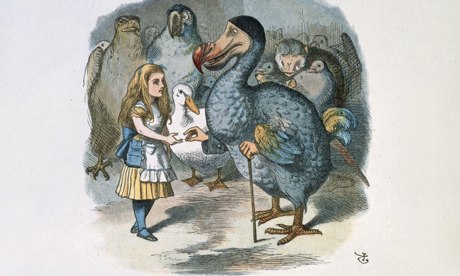
Are all psychological therapies equally powerful? Never inquire the dodo | Daniel and Jason Freeman

Alice and the Dodo from Alice

When it comes to psychotherapy techniques, there are winners and losers – contrary to what the dodo informed Alice. Illustration: John Tenniel/The Bodleian Library


“Everybody has won and all need to have prizes,” declared the dodo in Alice in Wonderland when asked to judge the winner of a race about a lake. As judgements go, it is admirably even-handed and optimistic. But in the globe of mental overall health the dodo’s decision has come to symbolise a bitter dispute that strikes at the very heart of psychotherapy.


The “Dodo Bird Verdict”, first suggested in the 1930s by the American psychologist Saul Rosenzweig, proposes that the numerous and different varieties of psychological therapy are all equally powerful. It tends to make no distinction no matter whether, for illustration, a individual is currently being treated with tactics drawn from psychoanalysis, neurolinguistic programming, or cognitive behaviour treatment (CBT). What actually aids a patient to recover are simple variables such as the possibility to discuss their worries with a experienced and sympathetic therapist or the degree to which they are prepared to engage with the treatment method.


Understandably, the Dodo Bird Verdict has ruffled many feathers inside of the profession, and provoked a slew of scientific studies aiming to corroborate or disprove the thought. Are some kinds of psychotherapy genuinely much more successful than others for certain problems? There is plentiful information to propose that the reply to that query – contrary to Rosenzweig’s theory – is “yes”. But that data tends to come from investigation carried out by proponents of the ostensibly superior treatment, leaving sceptics to conclude that their conclusions are not impartial.


This tends to make the final results of a examine of therapies for the eating disorder bulimia nervosa, published this month in the American Journal of Psychiatry, all the more convincing. Bulimia is characterised by binge eating, followed by attempts to compensate by making oneself vomit, taking laxatives or diuretics (water tablets), fasting, and/or working out frantically. Underlying this behaviour is an intense concern – an obsession, even – with physique form and bodyweight.


Bulimia is fairly widespread. One particular big US examine, for instance, located that nearly one% of adolescents aged 13-18 had skilled the problem at some level in their existence. A lot of of these youngsters reported that their sickness created it extremely challenging for them to have a standard daily life, and it damaged their relationships with loved ones and buddies. The review also found that adolescents with bulimia had been a lot more most likely to think about, or even attempt, suicide.


Provided bulimia’s prevalence and possibly disastrous consequences, it is plainly crucial that we understand what remedies operate best, which is why researchers at the University of Copenhagen recently in contrast the efficacy of two well-known psychotherapies: CBT and psychoanalysis. The benefits were remarkable.


In the examine, 70 patients with bulimia nervosa were randomly assigned both to two years of weekly psychoanalytic therapy or twenty sessions of CBT spread in excess of 5 months. At the core of the psychoanalytic technique is the notion that bulimic behaviour represents an attempt to management problematic emotions and desires. The therapist aids the consumer to speak about these buried feelings and to comprehend how they are connected to the bulimia. And when the personal has realized to accept and control their deepest wishes, the theory goes, the distress disappears and with it the signs of bulimia.


CBT, on the other hand, is targeted at the signs and symptoms themselves: the aim is to cease the binge eating as speedily as possible. For CBT practitioners, bulimia is driven by the belief that one’s self well worth is determined by one’s consuming habits, form and fat. Therapists display the personal how to recognize and challenge such beliefs, make clear the cycle of binge eating, and encourage typical eating patterns and a much more versatile and reasonable set of dietary tips. They work with the patient to devise programs to deal with occasions when binge consuming becomes far more probably, and to minimise the likelihood of a relapse.


Even although the participants in the Danish trial received vastly unequal quantities of remedy in excess of an extended timespan – with individuals provided psychoanalysis seeing their therapist far far more than these allotted CBT – it was CBT that proved a lot more effective. Soon after five months, 42% of the CBT group had stopped binge eating and purging for individuals acquiring psychoanalysis the figure was just 6%. Following two many years, the proportion of the psychoanalysis group who had been free of charge from bulimia had risen to 15%. But this was still a long way brief of the achievement of the CBT group right after two years (44%), in spite of the fact that by then it was 19 months given that the finish of their course of remedy.


The Danish trial gives actual grounds for hope: CBT, it appears, can carry about main improvements for a lot of individuals with bulimia. But the significance of the examine goes additional, since its leaders, Stig Poulsen and Susanne Lunn, are not CBT professionals but hugely skilled psychoanalysts. Indeed, not only was the study conducted at a clinic devoted to psychoanalysis, the program of treatment method was developed by Poulsen and Lunn themselves.


Even far more remarkably, however the CBT therapists obtained two days of specific training and standard supervision from a planet leader in CBT for consuming issues, they have been much less seasoned than people accountable for the psychoanalytic remedy.


Despite all this, CBT simply came out on leading. As an editorial in the American Journal of Psychiatry commented: “we applaud the candor of the lead investigators for being so forthright in their presentation of the findings. This can’t have been what they hoped to locate and indeed was not what they hypothesised.”


So when it comes to psychotherapy, it looks the dodo was incorrect. Whilst quick-term therapies may possibly generate equivalent results for some illnesses, such as depression, we shouldn’t presume that the variety of treatment individuals obtain is in essence inconsequential. Alternatively we need to recognise that some are much better for specified problems than others, redouble our efforts to determine these and increase them, and guarantee that the most successful therapies are obtainable to all who need them.


Daniel Freeman is a professor of clinical psychology and a Health-related Analysis Council senior clinical fellow in the division of psychiatry, University of Oxford. Jason Freeman is a psychology writer. On Twitter they are @ProfDFreeman and @JasonFreeman100. They are the authors of The Stressed Intercourse: Uncovering the Truth about Guys, Girls, and Psychological Well being 


Are all psychological therapies equally powerful? Never inquire the dodo | Daniel and Jason Freeman

9 Ocak 2014 Perşembe

Do not be concerned, be pleased: overcoming fret may possibly be key to mental wellness | Daniel and Jason Freeman

Eating disorder: a slim teenage girl sees herself as overweight in the mirror

A tendency to excessive worry has been linked to eating problems, paranoid pondering, drug dependence and submit-traumatic tension disorder. Photograph: Ted Foxx/Alamy


Are you weary of “new year, new you” positive thinking exercises? Exhausted of striving to really feel Tiggerish in the cold, dark, midwinter mornings? Why not try out this fast experiment to redress the stability. All you have to do is think about that something wonderful has occurred in your daily life: perhaps you’ve run into an old pal maybe you have been promoted at perform or you happen to be about to head off on holiday. Now request oneself what could go incorrect. In what terrible ways could it all fall apart? What disastrous chain of events might unfold? Never think solutions, feel issues. Open the be concerned floodgates and enable oneself to be swept away.


As you are probably to find out when you attempt this depressing small exercising, with a sufficiently negative outlook even the happiest moments in existence can become a supply of anxiety and anxiety. When we fear, we grow to be preoccupied with an facet of our lives, desperately making an attempt to anticipate what may possibly go incorrect and what may possibly happen if it does. Though we might think be concerned is constructive, really all it usually does is decrease our mood. And when we start off worrying it can be difficult to stop.


So be concerned can be an immensely strong psychological mechanism, but may well it also be a defining issue in the growth of mental sickness? Can studying it deepen our understanding of what psychological illness is, how it comes about, and how it differs from psychological well being?


As you may know if you read through about the hoo-ha following publication of the newest edition of the Diagnostic and Statistical Guide of Mental Issues, the amount of officially recognised psychiatric issues has mushroomed in current many years, and now stands at all around 3 hundred. That giant complete has attracted a great deal of criticism – and with some justification – but in truth a lot of of these conditions are rather similar. It is greater to feel rather of three major groupings of problems: internalising (most frequently, depression and anxiousness) externalising (addiction, for instance, or anti-social behaviour difficulties) and psychosis (with its characteristic signs usually bracketed under the label of schizophrenia). Nevertheless, even these 3 broad groupings share many of their triggers, which has led some researchers to speculate that underlying and unifying all mental sickness might be a single trigger: the so-named “p factor of psychopathology”.


At the social degree, we know that poverty, isolation, and unfavorable daily life occasions all elevate the risk of psychological wellness problems. But when it comes to the psychological p factor, there is increasing proof that it may possibly be extreme be concerned. When be concerned will get out of hand, it now appears, a quite wide range of psychological well being troubles can follow in its wake.


This sort of “transdiagnostic” strategy represents a key shift in the way we think about fret. Typically, problematic worrying has been demarcated as a certain problem: generalised anxiety disorder. And in that box it has remained. (The exception to this rule is depression, for which persistent worry about the past is a recognised symptom. But it is not referred to as be concerned: it really is called “rumination”. “Fret” is defined as anxious thinking about the future.)


But true daily life would seem to display a lamentable lack of respect for programs of psychiatric classification. Rather than currently being a separate disorder, extreme fear has been shown to play a important position in the development and persistence of paranoid contemplating, publish-traumatic tension disorder, alcohol and drug dependence and insomnia. It has also been linked to the incidence of consuming disorders.


The idea that several psychological issues have extreme worry in typical appears plausible. As most of us know from bitter knowledge, worry brings the most unlikely – and unpleasant – concepts to thoughts, keeps them there no matter how hard we try out to shake them off, and convinces us that the events we dread actually may come about.


If persistent worry is possibly so damaging to our mental health, what can be completed to fight it? Interestingly, we tend to fear much less as we increase older. Men and women aged 65-85, for illustration, report fewer worries than those aged 16-29. But apart from basically waiting for the years to pass, the evidence is strongest for an adapted kind of cognitive behavioural therapy. This reasonably brief, a single-to-1 treatment is based on a comprehensive model showing how problematic worry is triggered, maintained and overcome. Sufferers are assisted to notice when they are worrying, to interrupt this habitual thinking style, and then consider option approaches of reacting to life’s difficulties.


So far this variety of CBT has primarily been utilised with individuals suffering from generalised nervousness disorder. A current meta-evaluation of 15 research, for illustration, showed that CBT was far more successful than other therapies (or than a non-treatment handle) at assisting men and women recover from generalised anxiousness disorder and stay effectively.


But it is now beginning to be piloted for other situations – the Oxford Cognitive Approaches to Psychosis Group, for instance, is testing its efficacy in significant paranoia.


How does CBT tackle fear? For one factor, it assists individuals to re-assess their beliefs about its positive aspects. Like a lot of of us, people who are susceptible to excessive fear tend to presume that it helps them. They could think, for instance, that worrying helps them to anticipate and remedy troubles that it offers the motivation essential to tackle people troubles or that it prepares them for the worst if a answer cannot be discovered. They could even truly feel that by worrying about an occasion they can avoid it occurring – in spite of realising that it is pure superstition. Finding out to challenge these varieties of beliefs can be a massive phase forward.


CBT also teaches us to confine our worrying to a typical set time period of 15 minutes or so every day. When worrying ideas arise at other occasions, the trick is to conserve them for later and allow them go. “Expressive creating” can be powerful also: you describe your worries in as significantly detail as you can, focusing on what it feels like, and resisting the temptation to analyse what’s creating your thoughts. And never underestimate the energy of distraction: operate out when you happen to be most likely to be concerned and prepare a pleasurable, absorbing exercise you can do as an alternative.


Several of CBT’s strategies for tackling be concerned are not rocket science: with the proper guidance we can all place them into practice. By carrying out so we’re not simply sparing ourselves hrs of futile fretting. If extreme fear is genuinely the p factor it would seem to be, we’ll also be addressing a single of the essential determinants of our psychological overall health.


Daniel Freeman is a professor of clinical psychology and a Health care Research Council Senior Clinical Fellow in the division of psychiatry, University of Oxford. Jason Freeman is a psychology writer. On Twitter they are @ProfDFreeman and @JasonFreeman100. They are the authors of The Stressed Intercourse: Uncovering the Reality about Males, Women, and Psychological Health 


Do not be concerned, be pleased: overcoming fret may possibly be key to mental wellness | Daniel and Jason Freeman