left etiketine sahip kayıtlar gösteriliyor. Tüm kayıtları göster

24 Nisan 2017 Pazartesi

"Life improved when I left London": readers on tackling air pollution

About 40 million people in the UK are living with illegal air pollution levels, according to analysis commissioned by the Labour party.


Earlier this month the Guardian reported thousands of children across England and Wales are exposed to illegal levels of air pollution from diesel traffic, putting the health of young children at risk in the long term.


Under pressure to lower pollution levels and improve the quality of the country’s air, the government is facing criticism for a last-minute bid to delay the publication of its clean-air plan, which the high court had said must be produced by 24 April.


After a call-out asking readers for their experiences of air pollution, some of them tell us how they’re tackling the issue.


‘Despite being let down by our council we are determined to fight on’



A march attended by Aire Valley Against Incineration (AVAI) supporters


A march attended by Aire Valley Against Incineration (AVAI) supporters.

We currently have quite high levels of air pollution in the areas around Bradford and Leeds. Our council has given the go-ahead for a private company to build an incinerator in the bottom of the Aire Valley – near homes, schools and a sports facility. The incinerator is not for household waste, but for industrial waste that will be shipped in from all over the country by 70 HGVs a day. One of the roads that these lorries will use is Hard Ings Road, Keighley, which is already on the Greenpeace energy desk’s map as being over the legal pollution limits.


We are campaigning hard to stop the building of this incinerator. We are also very concerned about the location – at the bottom of a valley that experiences regular temperature inversions which will make it very difficult for the pollution to disperse. We have nearly 6,000 members on our Facebook group, more than 8,500 signatures on the online petition and more than 2,100 objections have been made on the council’s planning portal. A recent march that we organised was attended by over 600 local people. Despite the fact that our council has let us down, we are determined to fight on!


Rachel Shimbles, 47, from Keighley


‘I’d encourage people to seriously consider leaving London. My quality of life shot up when I did’


As an ex-Londoner, I know how bad air pollution can be in the capital. Kendal air is much cleaner – but we still have places where legal levels of pollution are being routinely breached. I campaign with 20’s Plenty for Kendal as a way to encourage people to walk and cycle more in our compact little town – to make Kendal less congested, safer, cleaner, quieter and even more attractive as a place to live and to visit.


I’d encourage anyone to seriously consider leaving our capital. My quality of life shot up when I moved up here – and clean air was definitely a part of that. But – and it’s a big but – no one should be under the illusion that everything is rosy outside our big cities. It isn’t.


Paul Holdsworth, 57, from Kendal


‘I have lobbied local politicians, Defra and my MP’


We live in a densely populated urban environment and have been badly affected by the smoke and particulate pollution from a neighbour’s wood burner coming into our home for months at a time. As a result and after investigating the associated pollution issues we have become acutely aware of the significant health risks and damage regularly breathing this pollution causes, its effect on our quality of life and the long-term health risk. However, after we complained to our local authority we have found our hands have been tied behind our backs with the council failing to act.


I am active on Twitter, have lobbied local politicians, Defra, our MP, and contacted Gary Fuller (the senior lecturer in air quality measurement at King’s College, London). Having grown up during the implementation of the Clean Air Act, we mistakenly believed it had put an end to the blight of air pollution. A new Clean Air Act for the 21st century is needed to impose proper balanced controls. Pollution is a choice, breathing is not.


cleanairforall2, 55, from London


‘I switch off air fresheners when I can’
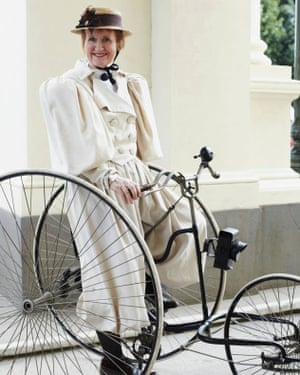


Cecilia taking part in a vintage bike parade


Cecilia taking part in a vintage bike parade. Photograph: Rita Platts

I set up a campaign called Gasp in 1980 (Group Against Smoking in Public). We achieved most of our goals but my intolerance to other forms of air pollution has caused me to run one-woman campaigns against other unwanted forms of air pollution. More recently I have campaigned against so-called “air fresheners” which pump out noxious fumes in an effort to cover everyday smells. They make me heady and nauseous. I often go into local shops and switch them off if I can find them hidden. I now won’t go to a hotel or get in a taxi that uses plug in air fresheners. I wish there was a national campaign to stop the sale and use of these things. I’m also a lifelong cyclist and have campaigned over many years on the benefits of cycling including the positive impact of cycling on air pollution.


Cecilia Farren, 67, from Bristol


‘We’re in the process of moving away to get away from the traffic’


The road on which we live has very high levels of traffic. It is a poor area, with many families renting their accommodation. My wife’s asthma has definitely worsened and the noise from the road is constant, as the traffic includes many HGVs and buses. Recently, the road was closed for a month to replace the mini-roundabout at one end with a traffic-light system.


The month was bliss for the residents, but once the road reopened the traffic worsened with a corresponding effect on the quality of air. We are now in the process of moving away to a location that is quiet, but one that we are not sure we can afford. Right now, we feel like the gamble is worth it to get away from this road.


Craig Hambling, 34, from Colchester


"Life improved when I left London": readers on tackling air pollution

20 Nisan 2017 Perşembe

Police cannot continue to fill gaps left by mental health cuts, report says

Police cannot continue to pick up the slack for cuts in other public services, especially the shortage in mental health provision, Her Majesty’s chief inspector of constabulary has warned.


In an annual state of policing report, Sir Tom Winsor highlights a “modern tsunami of online fraud” and increased police awareness of crimes against the elderly and child sexual exploitation as among the increasing daily pressures facing officers.


“The police are considered to be the service of last resort. In some areas, particularly where people with mental health problems need urgent help, the police are increasingly being used as the service of first resort. This is wrong,” says the chief inspector.


Winsor, who was appointed by Theresa May when she was home secretary, says the failures of other public services, especially in respect of children’s and adolescent mental health, too often leave the police to fill the gaps long after the chances of effective intervention have been lost.


His annual report identifies 18 of the 43 forces where the need for improvement has been highlighted in at least one of HMIC’s inspection themes of effectiveness, efficiency and legitimacy. Only one, Bedfordshire, was rated as “inadequate” for one category.


Winsor says that in many cases, police leaders are “still too sluggish” to ensure their plans are sound to the new demands on their forces. He says for too long a culture of insularity, isolationism and protectionism has prevented chief constables from making the most effective use of new technology: “The blinkers have to come off,” he says.


Winsor also warns that the police are behind many other organisations in their use of technology, saying it should be giving them unprecedented ability to exchange, retrieve and analyse intelligence.


“The provision of mental healthcare has reached such a state of severity that police are often being used to fill the gaps that other agencies cannot. This is an unacceptable drain on police resources and it is a profoundly improper way to treat vulnerable people who need care and help,” he says.


“The obligation of the police is to prevent crime. This is not only because this makes society safer – both in reality and in perception – but also because it is far cheaper to prevent a crime than it is to investigate and arrest the offender after the event. The same is true of mental ill health, which is not a crime.


“It is an old adage that an ounce of prevention is better than a pound of cure, and this is particularly true when the cure fails and an emergency intervention is required to protect the safety of an individual in distress and, often, people nearby.


“By the time depression or some other mental disorder has been allowed to advance to the point that someone is contemplating suicide, or engaging in very hazardous behaviour, many opportunities to intervene will have been missed by many organisations.


“When that intervention takes place on a motorway bridge or railway line, or when someone is holding a weapon in a state of high distress, the expense to all concerned is far higher than it should be. The principal sufferer is the person who is ill, especially when it is realised that his or her suffering could have been much less or even avoided altogether,” concludes Winsor.


Police cannot continue to fill gaps left by mental health cuts, report says

14 Mart 2017 Salı

"Lots of nurses have already left": EU workers head for exit

Since news of the UK’s looming departure from the European Union hit, lots of industries have spoken out about fears of losing European workers. On Monday academics from Oxford University said staff would go if they were not reassured about their future. It comes amid news that EU citizens working in the NHS are thinking of leaving in the next five years.


We asked you about how the loss of European workers may affect, or is already affecting, your sector. We heard from a variety of people, including professors and doctors, who expressed concern that workers are already leaving. Here are a selection of your stories.


Construction worker


John, 51: The unwelcome atmosphere is turning people away from construction


I am an Irish national who has lived and worked in London for nearly 30 years. I’ve made my life and family here. I’ve added to the community and to the industry. Throughout the UK, there is a lack of adequate training or interest from many in joining the construction industry. There has always been a strong interest from migrant communities. In my experience, the unwelcome atmosphere is turning people away and we do not train or encourage people into this industry. We need migrant workers.


People working in construction


Photograph: Martin Dalton/REX/Shutterstock

Financial consultant


Andy, 39: We had a large number of Europeans working here but now they are nearly all gone


I work for a medium-sized financial provider who deals with a very diverse client base from around Europe. I am an EU citizen myself, but I am still in the UK. At work we had a large number of Europeans working in our customer support and sales teams but now they are nearly all gone (they have either progressed somewhere else in London or have left the country). We have now two non-Europeans who both can speak French in customer support. Only one guy in the sales department speaks German. He now does everything for the German client base. If he is sick or on holiday we have no German front office. We have no more Spanish or Italian speakers. The sad part is that overall we have actually increased the number of EU employees, just not in the UK. Around 40-50% of the overall workforce has left as we moved technical departments and finance functions (even director positions) abroad to keep access to our European markets. Most of those who lost their jobs were English. And with every job that moves abroad the London office loses relevance.


The doctor


May, 43: I predict many doctors will leave, especially those now in training


EU nationals working in the NHS express significant concerns regarding their right to stay and their careers. London used to be a world-open and liberal place, welcoming and supportive. Working in the NHS was stimulating and exciting. The outlook for the future is bleak. And there is zero reassuring communication from the UK government. I predict many doctors – especially in training – will leave. I have worked for the NHS 16 years. I have personally spoken to many doctors and midwives who are strongly considering leaving. I know of people who did not renew research contracts but I have not met anyone who has left already.


European people working for the NHS feel utterly disappointed and disillusioned.


May


The team spirit in the NHS was and is stimulating. However, it is mainly created by the multinational teams that have in common a love and dedication to their specialty and medicine in general. British people hugely benefited. With the Brexit vote it feels that this effort, hard work and dedication is completely unappreciated and ignored. It is no surprise European and non-European people working for the NHS feel utterly disappointed and disillusioned. They will go where their work is appreciated.


NHS worker


Photograph: Peter Byrne/PA

The entrepreneur


Gerard, 31: I plan to shut down operations in London for Berlin. I don’t want to deal with Brexit


I work for an internet startup across London and Berlin. I see both cities competing already for tech talent. London will definitely lose that battle long-term. I haven’t left yet, but I plan to shut down operations in the UK when article 50 is triggered. I’m lucky enough to have clients in Europe or unlucky enough to have them there – whatever the case I don’t want to deal with Brexit.


Since then I’ve been taking fewer UK clients knowing I will leave. I just feel sadly unwelcome now.


Gerard


I loved London and I will always remember refreshing the Guardian website while counting the referendum results. It was like everything I was building fell apart. Since then I’ve been taking [fewer] UK clients knowing I will leave. I just feel sadly unwelcome now.


The professor


Simon, 51: I am moving to another EU country to take up another university post


I work in the university sector and the lifeblood of our work is provided by academics and researchers from all over the world, particularly from the EU. In addition, many of our students come to the university to study from abroad. The European Union’s framework funding programmes including Horizon 2020 have been key to ensuring that the UK punches well above its weight in research and development. The loss of EU workers and access to the networks provided by the EU will have a devastating effect on the UK higher education sector.


I am a UK national who has decided to leave. I am moving to another EU country to take up another university post. Although Brexit was not the only reason for this move (the new role will be an advancement in my career), it was a decisive factor in making me apply for the job given the future uncertainties in the UK higher education sector.


The nurse


Karen, 40: Five nurses have left already


Before [the] Brexit [vote] we used to have hundreds of applicants in nursing. Now we hardly see 50. All staff are tired and worried about what will come next. In my department 60% of nurses are EU citizens and already five of them have handed in their notice. I am an EU citizen myself and I’m already making plans to leave UK for good. The healthcare sector will collapse and I don’t want to be part of it.


Web designer


Ben, 25: A European worker recently left. It was a big loss for the team


I work in web design and development. We’ve benefited greatly from the expertise of EU workers in our team. But now one of our main designers, responsible for delivering engaging websites, print media, presentations etc for clients has left. Her husband is in research of some sort (I’m not sure exactly what it is) and his funding was moved out of the UK. Given that she wasn’t feeling welcome in the UK any more, it was a no-brainer for them to simply move. It is a big loss for the team.


  • Some names have been changed


"Lots of nurses have already left": EU workers head for exit

2 Mart 2017 Perşembe

Countries pledge millions to plug hole left by US "global gag rule"

Countries have pledged tens of millions for family planning schemes in developing countries to plug a gap left by Donald Trump’s ban on US funding to groups linked to abortion.


About 50 governments are attending the hastily convened She Decides conference in Brussels on Thursday, with early pledges closing in on $ 100m (£80m).


Sweden and Finland each promised €20m to compensate for the reinstated “global gag’ rule”, which bans US funding for NGOs that provide abortion or information on the procedure to women in developing countries.


The UK has sent the international development minister, Rory Stewart, to the one-day conference, but it remains unclear if the government will announce a financial contribution.


Organisers hope to raise $ 600m. “This is not a conference against the American administration; this is a conference for something,” Sweden’s deputy prime minister, Isabella Lövin, told the Guardian.


“We are expressing our strong support for women’s rights, for the progress that has been made. Access to contraceptives and sexual reproduction is a vehicle for development and the eradication of poverty.”


In an executive order signed last month, Trump reinstated the global gag rule, a US aid policy Republican presidents since Ronald Reagan in 1984 have imposed but their Democrat counterparts have lifted.


Sweden’s international development minister cited evidence from the World Health Organization showing that, under George W Bush’s presidency, the rule increased abortions and maternal deaths from unsafe terminations. “This is something we can prevent,” she said.


Alexander De Croo, Belgium’s deputy prime minister, told the Associated Press: “This should not be a moment where we are taking steps back into the dark ages.”


Belgium, Denmark, the Netherlands and Norway have pledged $ 10m each, with further contributions expected to be announced by other wealthy countries.


A government spokeswoman was unable to confirm whether he would announce any financial contribution from the UK.


The Department for International Development has previously described the UK as a global leader on family planning. It points to “a major international summit this summer to secure commitments that increase access to family planning services for women and girls in the world’s poorest and most fragile countries”.


Other wealthy countries are expected to announce donations. Canada’s minister of international development, Marie Claude Bibeau, said: “Women’s rights begin with their right to control their bodies. We should never take that away from them, especially for young adolescents. Canada is proud to stand with its partners and will always stand up for women’s rights everywhere.”


Afghanistan, Chad and Ethiopia are among the developing countries sending representatives to the conference, where they are expected to give evidence on how funding for family planning makes a difference to women’s lives.


Organisers have also expressed hope that US foundations may get involved by contributing funds. While the conference has been warmly welcomed by NGOs, some have voiced fears the money cannot be raised quickly enough to fill the shortfall left by Trump’s executive order.


Lövin expressed hope of hitting the target, but said Thursday’s conference was only the first step.


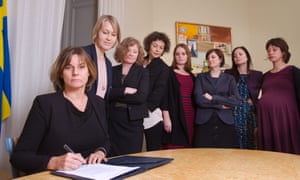
Sweden’s deputy PM, Isabella Lövin, signs bill seen as a parody of Donald Trump signing the ‘global gag’ order.


Sweden’s deputy PM, Isabella Lövin, signs bill seen as a parody of Donald Trump signing the ‘global gag’ order. Photograph: Johan Schiff/EPA

The Swedish deputy prime minister made headlines last month when she appeared to parody Trump and the all-male lineup in the Oval Office that signed the global gag order.


Lövin, who is also environment minister, tweeted a picture of herself and female colleagues, as she signed Sweden’s climate law.


But she brushed aside questions she was mocking Trump and his administration, saying: “The message was not that we were only women in that picture; the message was that we are taking leadership when it comes to tackling climate change.


“This was my staff and myself and my state secretaries and I was signing a bill and that’s all.”


Countries pledge millions to plug hole left by US "global gag rule"

9 Şubat 2017 Perşembe

Drilling into a child"s leg left me thinking about empathy in nursing

I take a breath to steady myself. I’m about to drill into a child’s leg. She’s awake.


I’m part of a team who are desperate to get intravenous access into a eight-year-old. We need to be able to administer anaesthetic drugs and sedation so that we can put her on a ventilator because her oxygen level is dangerously low. Normally, we’d do this by injecting into a vein, but when you’ve had as many intravenous lines as this young girl has, there comes a point when your veins can’t take any more.


This is a procedure I have done many times, always because we have run out of other options. So why is it different today? This is a family I have known over a number of years in my professional role. I have seen this child grow from a baby into a girl of eight. Life is tough for them; she has multiple complex medical needs, she is unable to do many of the things most of us take for granted. I have seen this family through many ups and downs, hospital stays too numerous to count, admissions to the paediatric intensive care unit in the double digits. They cope. They just get on with it, and somehow they keep a sense of humour.


For all that, however, I know they don’t want this. Watching someone drill into your child’s leg with something that looks like a gun with a 5cm-long needle on the end of it in order to place an intraosseus cannula (a drip into the bone marrow) is not OK.


I tell the mother that we don’t have any choice. We need to be able to give the medication urgently and this is the last resort. She knows. We look at each other and she tells me, “OK”.


This is a procedure normally reserved for people in cardiac arrest or unconscious. There’s a good reason for that: it hurts. I do what I can in the short time I have to reduce any pain as much as possible. I use cold spray and some local anaesthetic under the skin.


Her oxygen levels are dropping rapidly. If we can’t improve them, her organs will suffer damage and she’ll get worse. The situation will become life-threatening in around 10 minutes.


This isn’t a particularly difficult procedure but everything is harder when you’re under pressure, when it really matters, when all eyes in the room are on you, including the child’s parents. As I inject the local anaesthetic, she moves. I know she can feel it and I feel a rush of emotion on her behalf. I tell her what’s coming and I can hear her parents reassuring her, kissing her, stroking her hair.


One more deep breath for me and the needle is through the skin. I depress the trigger to start the drill and am aware of the sound it makes as I enter the bone. No parent should have to witness this. In a second or two it’s done. Success. Relief. I have a rush of adrenaline and my hand shakes as I disconnect the drill from the cannula.


I say sorry to her and I look at her parents. They nod. It’s OK. One of my colleagues says, “Good job” and I know that he means, “I get it.”


We give the medications she needs and are able to pass the breathing tube into her windpipe without a problem. Her oxygen level starts to come up.


I’ve been in this job a long time, and I am still caught unaware by a rush of feeling sometimes. It’s important to remember the human aspect of this job. Although I’m here to do a job, for some families on the receiving end of the treatment I give, this is the biggest thing that’s ever happened to them. If I can’t recognise how it makes them feel and be a part of that, then I can’t do this job. I think for a moment about what I tell my junior nurses: “When you stop feeling it, it’s time to go” and I know that for this, and so many other reasons, I’m exactly where I should be.


Some details have been changed


If you would like to contribute to our Blood, sweat and tears series about memorable moments in a healthcare career, read our guidelines and get in touch by emailing sarah.johnson@theguardian.com.


Join the Healthcare Professionals Network to read more pieces like this. And follow us on Twitter (@GdnHealthcare) to keep up with the latest healthcare news and views.


Drilling into a child"s leg left me thinking about empathy in nursing

3 Şubat 2017 Cuma

Doctors shortage left 4 million patients without cover last year

At least 4 million people were left without access to an out-of-hours doctor at some point last year because of inadequate staff cover and pressure on resources, it has been revealed.


The figures, which have raised alarm about patient safety in the NHS, were obtained by the GP’s magazine Pulse in a freedom of information request to 104 out-of-hours commissioners of care.


Ten of the providers, covering about 4 million people, admitted that on some occasions last year shifts had been left unfilled, leaving patients with no out-of-hours cover.


In the areas hit, patients were told to go to A&E, while services had to rely on non-medically qualified urgent health practitioners, or nurses and paramedics.


Pulse identified five of the areas worst hit in 2016 as:


  • Peterborough, where there were nine shifts and 230,000 patients were left without access to an out-of-hours GP. All children under the age of four were “defaulted” to A&E, the magazine said.

  • Tower Hamlets, east London, where no GP was available on 12 occasions. This meant a population of more than 250,000 was told to contact A&E or the “community night team”.

  • Doncaster, where nurses and paramedics had to cover a population of 300,000 patients on three occasions, with no GP available by phone on one occasion.

  • The Highlands, which has a population of 340,000, where there were 31 times when out-of-hours centres were closed due to lack of staff. Shifts there had to be covered by centres up to a 30-minute drive away.

  • In southern and western Northern Ireland, the survey found that one GP regularly had to cover 370,000 patients overnight.

Many of the doctors in those areas spoke of their concern for the safety of patients.


Dr Frances O’Hagan, who works for the out-of-hours service in southern and western Northern Ireland told Pulse the system was “broken”. She added: “Having only one doctor on call used to be rare but is becoming the norm.”


Dr Dean Eggitt, medical secretary for Doncaste’sr local medical committee, said “the system is not safe”. He added: “I think 24-hours-a-day patients should be able to contact a senior clinician, a GP. If that is not available that is a very serious situation that must be remedied asap.”


Dr Alan Woodall, an out-of-hours GP in England and a GP partner in Wales, told Pulse: “The pressures on the out-of-hours service are approaching critical.


“I cover an area that stretches 800 sq miles on the evening shift because there is nobody else. It only takes two sick people at either end of the patch to result in doctors having to be pulled in from other patches, leaving their area uncovered. We are constantly trying to firefight demand.


“Because of the rota gaps and pressure on resources, we will have to employ a lot of urgent care practitioners and paramedics to help us cope.”
Other GPs told Pulse high insurance costs were a factor in why doctors turned down shifts.


Dr Emma Rowley-Conwy, who works in south-east London, said: “Indemnity is a deterrent as it costs about 10 an hour to get insurance from a defence organisation.”


The Royal College of GPs urged the government to do more to make out-of-hours working more attractive to family doctors.


Prof Helen Stokes-Lampard, chair of the organisation, said more GPs were needed to tackle a national shortage, but the high cost of insurance was also to blame.


She said patients should be able to access GPs when they need it, and that it “very concerning” that this was not always the case.


Stokes-Lampard said the Pulse report “hammers home how important it is for the government to make good on its promise to deliver 5,000 more extra GPs by 2020”.


Ruth Rankine, deputy chief inspector of general practice at the Care Quality Commission, said


“If we find on our inspections that staffing levels are leading to patients receiving unsafe care and treatment, including delays in response times, then we have a range of enforcement powers we can use to ensure that appropriate action is taken.”


Doctors shortage left 4 million patients without cover last year

19 Ocak 2017 Perşembe

Nurse shifts left unfilled at nearly every hospital in England, figures show

Almost every hospital in England has fewer nurses on duty than each believes are needed to guarantee safe patient care, research shows.


Analysis of official data by the Health Service Journal (HSJ) found that 96% of NHS hospital trusts in England had fewer nurses covering day shifts in October than they had planned and 85% did not have the desired number working at night.


The disclosure of such widespread failure to ensure hospitals are properly staffed has prompted fresh concern that a chronic lack of nurses and the NHS’s dire finances are putting patient safety at risk.


Nurse shortages have led to patients having to wait for medication, going unwashed or not having observations done on time, the HSJ said.


Janet Davies, the chief executive of the Royal College of Nursing, said: “This is yet more evidence that there are too few nurses caring for patients, putting people at serious risk. Safe staffing levels aren’t an optional extra. Having the right number of nurses is essential to ensure that patients can recover properly.”


The college estimates there are as many as 24,000 vacancies for nurses across the UK.


Nurses told the HSJ that understaffing meant hospitals were already providing substandard care, leading to patient safety “near misses”.


The figures are the worst hospitals have recorded since they were obliged to start publishing details of staffing levels in 2013, in the wake of a report on the Mid Staffordshire care scandal.


The number of trusts that do not have planned numbers of staff at work has gone up despite the recruitment of record numbers of nurses by acute hospitals. Limits introduced in 2015 on the amount hospitals can pay to hire agency nurses may help explain why staffing levels are dropping in many places.


One nurse said: “Sometimes observations get missed and I can recall many times where the patient is found to be deteriorating when they are eventually done. This gives you immense stress as you are left with the realisation you did not pick up on your patient’s condition early enough to prevent an acute episode.”


Another said: “I have seen patients not have proper care, dressings not changed, [and] not given the choice of shower or a wash as it takes more time that we do not have.”


HSJ reached its conclusions by examining data on nurse staffing levels that trusts release through the NHS Choices website. These include the numbers present in general medical wards, maternity units, surgical wards and intensive care units at 214 acute hospitals.


In hospitals in England, a nurse is meant to look after no more than eight medical patients, and the ratio can be as low as one to one in neonatal and intensive care units.


The figures show that Dewsbury and district hospital in West Yorkshire had 75% of the number of nurses it had planned to have on duty last October, down from the 87% it managed in the first three months of 2015.


Princess Alexandra hospital in Harlow, Essex, which went into special measures that month, covered 77% of shifts, as did Pontefract general infirmary in West Yorkshire.


The HSJ found that some trusts were employing unusually high numbers of healthcare assistants. That may suggest they are replacing nurses with cheaper personnel who have little clinical training.


Prof Peter Griffiths, of Southampton University, a member of NHS Improvement’s safe staffing committee for acute wards, said: “This is clearly not a good place for the NHS to be and it isn’t getting any better.” He said healthcare assistants could help plug gaps but relying on them to deputise for nurses in the long term risked compromising patient safety and involved “the risk of a false reassurance”.


The shadow health secretary, Jonathan Ashworth, said: “Tired, overworked nurses cannot be expected to continue providing the quality of care which patients need. The government needs to do much more to make sure nursing remains an attractive profession and to ensure hospitals can get in place the number of nurses they need to keep patients safe.”


A Department of Health spokesman said: “We expect all parts of the NHS to make sure they have the right staff in the right place at the right time to provide safe care. That’s why there are already almost 26,000 extra clinical staff, including almost 11,400 additional doctors and over 11,200 additional nurses on our wards since May 2010.”


Nurse shifts left unfilled at nearly every hospital in England, figures show

5 Ocak 2017 Perşembe

Long-time residents left in limbo by Brexit vote | Letters

With growing unease I read the story about fellow EU citizen Monique Hawkins, whose application for a document certifying permanent residency was rejected by the Home Office even though she seems to have fully complied with the rules when submitting her application (Report, 29 December). I am German, 61 years old, married to a British husband and 16 years in the UK. Throughout these years I did my best to integrate. I worked, never claimed any benefit and participated in community life through voluntary work. The people around me never let me feel “foreign” or unwelcome and genuinely treat me like a fellow citizen. Like Mrs Hawkins, I never thought it was necessary to have my immigration status certified. This changed after the Brexit vote, because the life my husband and I have built together entirely depends on my right to remain in the UK. Consequently, I also decided to apply for British citizenship, which requires certification of permanent residency.


Like Mrs Hawkins, we discovered that our marriage is treated differently to non-EU/UK marriages and that it is discounted as a reason for certifying my status because I am an EU national. So I ploughed through the 85 pages of the application form and submitted it, together with the required evidence as advised in the guidance notes, feeling confident that I had done everything right. But after reading Mrs Hawkins’ story, I began to think that decisions made by the Home Office involve more unspoken rules and processes than can possibly be foreseen by applicants. My application is still being processed and I will let you how I get on.
Regina Erich
Stonehaven, Aberdeenshire


• My wife is Swedish and has lived in the UK for 60 years, while proudly retaining her Swedish citizenship. She has been married to me for 57 years, is as English in her social and cultural experience as any English person and probably speaks our language more correctly than most native English speakers. She now suffers from dementia and is physically more or less immobile. She would be unable to conduct the defence of her right to be here herself, but if I were to write to the Home Office on her behalf would we receive a similarly disgraceful and insensitive letter as others, whose experiences you have reported, have done? Or maybe, even, immigration officers would turn up on our doorstep at 5am and cart my wife off to the nearest detention centre.
Name and address supplied


• The case of the Dutch mother of English children being advised by the Home Office to leave Britain after living here for 24 years perfectly legally, is not going to be an isolated one. Either in the UK or the rest of Europe. Significant numbers of internal refugees will be created because people are resident by virtue of EU citizenship while not necessarily meeting local residency rules. Many of these people will also fail to qualify for services, such as health, if they return to their country of origin.


A typical example would be a UK citizen who has spent modest life savings on an apartment in the Spanish Costas and has been surviving there on the British state pension for a year or two. Registering for Spanish residence can be daunting without the language skills and resources to pay for advice. Some like the Dutch mum would not be eligible and, should they be asked to leave once the protection of EU citizenship is removed, would arrive in Britain without the right to use the NHS and would also be ineligible for the house benefits needed to secure accommodation. The number of people displaced across Britain and Europe could run into millions. HMG and the EU negotiators will have to find a way of preventing what could become a significant internal refugee crisis among their own citizenship.
Olly Cooper
Cambridge and Algarrobo, Spain


• Re EU citizens applying for British citizenship and the long processing times, the Home Office’s pathetic response was to say that they had launched an express passport check-in service. They failed to say that the cost of nationalisation is over £1,000 plus all the add-ons, eg biometric residences permit, medical checks etc, and the process takes six months or more. A super premium service is £8,750.
Margaret King
Polegate, East Sussex


• It would seem that some EU citizens when applying for permanent residence in the UK are being subjected to requirements concerning comprehensive health insurance that the NHS clearly states they do not need to have (Call to scrap rule barring some EU citizens from the UK, 31 December). If a person from the EU, EEA or Switzerland is moving to England, a quick check of the NHS website reveals that: “Provision of free NHS treatment is on the basis of being ordinarily resident and is not dependent upon nationality, payment of UK taxes, national insurance (NI) contributions, being registered with a GP, having an NHS number or owning property in the UK.” Furthermore, “ordinarily resident means, broadly speaking, living in the UK on a lawful and properly settled basis for the time being.”


Is the Home Office trying to take away the rights of some EU citizens that the Department of Health states that they are entitled to?
Paul Tattam
High Peak, Derbyshire


• Join the debate – email guardian.letters@theguardian.com


• Read more Guardian letters – click here to visit gu.com/letters


Long-time residents left in limbo by Brexit vote | Letters

22 Aralık 2016 Perşembe

A toxic leak left Corpus Christi with no water for days. A taste of things to come? | Sarah McClung

Corpus Christi, Texas, calls itself the “sparkling city by the sea”. But lately it doesn’t feel very sparkling. The city imposed a four-day ban on consuming any tap water last Wednesday. No one could drink the water, shower, bathe, do dishes, wash laundry, hands, faces or children with it. There were fears that a corrosive asphalt emulsifier Indulin AA86 had snuck all the way from the city’s industrial district into our homes due to a “back-flow incident”. There was water, water everywhere, and not a drop to drink.


On 1 December, the Corpus Christi city hall received the first report of dirty water from Refinery Row. On 7 December the city hall received their second, on 12 December their third. By then the water was shimmery, sudsy – just the kind of sheen we would soon fear creeping into our commodes.


On 14 December, city hall told us not to consume tap water. If it was contaminated with Indulin AA86, then drinking it could sear our stomachs, light up our lungs and burn any bodily organ it contacted through water or air.


Where were the men and women who would put public safety before all else? Where were the leaders who would make sure that the companies in charge installed and maintained a backflow preventer that would have kept Indulin AA86 where it belonged: out of our tap water.


But this is only Corpus Christi, a forgotten scab of a city. A tiny, immaterial industrial outpost marking naught but the dwindling Texas shoreline as it slopes and surrenders on its muddy fall to Mexico. This is the small potatoes of municipal incompetence; until it isn’t. Until we look to the future of the Trump administration and see the shimmering signs of far worse to come.


Streets need their protectors, cities need them too. And countries? Most notably, a country that’s among the biggest environmental offenders, a country whose ties to big business, big oil, big money are notorious for putting profit before the public good? That kind of country doesn’t need Scott Pruitt, it doesn’t need Rex Tillerson and it certainly doesn’t need Rick Perry.


Had Corpus Christi taken as much care with its public facilities as it does with the maintenance of private residencies, my two-year-old daughter might not have known what it was to be thirsty on the morning of 15 December, 2016. But with a Trump administration around the corner, I have to check myself: four days without water is nothing compared to the damage that four years without oversight, without vigilance, without care could do to our water and to our land.


Four days of thirst. Will it foreshadow the harm that Trump’s fossil fuel friends in the cabinet will bring? We all know the line-up: Scott Pruitt, a climate change denier and advocate for fossil fuel, at the helm of the EPA; Rick Perry, a climate change denier and apostle of Texas oil and gas directing the department he famously forgot he wanted to eliminate; and Rex Tillerson, a man whose successful devotion to commercial profit as the CEO of ExxonMobil is the absolute epitome of placing private over public good.


This is the very formula for successful municipal management that helped land me and my family thirsty and hunting for water last week. This is the very mindset that may have introduced Indulin AA86 into our water supply. This the very philosophy that sent me scouring supermarket shelves for four hours in three towns while my daughter cried in her carseat.


Our water is back now; the ban has been lifted. But every time I turn on the tap I hesitate, I hope for the best. That feeling will only grow stronger the closer we get to a Trump administration.


A toxic leak left Corpus Christi with no water for days. A taste of things to come? | Sarah McClung

18 Aralık 2016 Pazar

The poor must not be left to pick up the tab for everyone’s social care | Letters

Theresa May’s decision to single out Ealing for attack on adult social care at prime minister’s questions is bizarre and unfair (Councils can get social care cash early, says PM, 15 December). Despite significant funding pressures, Ealing council has one of the best re-ablement services in the country, with 93% of older people who use this service still at home three months after hospital discharge, a record we are proud of. Ealing works closely with our local NHS to provide a seamless discharge service: our rate of delays to discharge due to social care issues is average, not the worst.


Since 2010, government cuts have led to a reduction in Ealing’s adult social care budget of nearly 20%. The council tax precepts the government has allowed us are sticking plasters by comparison. I’m proud that, rather than levying a precept on Ealing residents, as the prime minister seems to want us to do, our success in growing Ealing’s economy and building homes has provided us with the resources to provide extra social care funding that more than matches what a precept would raise. We’ve allocated £2.3m extra for social care this year, rising to £4m by 2019, along with a £5m transformation fund to redesign services so fewer people need intensive help in future.


Councils, like Ealing, that are innovating, redesigning and delivering high-quality social care in very difficult financial conditions, while not demanding extra money from just about managing local families, deserve Theresa May’s praise, not her censure.
Cllr Julian Bell
Labour leader of Ealing council


• My Labour-controlled local authority recently announced cuts to its budget of £82m up to 2020 and more than 400 job losses. These are on top of the cuts already implemented of £250m and 2,000 redundancies since 2010. In real terms, the council’s budget will have been cut by 50%. Any small increase to social care funding through higher council tax has to be set in this overall context (Council tax hike considered to cover social care costs, theguardian.com, 12 December).


All over the country, local authorities are facing a similar funding crisis, with accumulating evidence of how vital local services have been decimated and the serious consequences for local communities. No amount of Orwellian double-speak about efficiency savings, partnership working and smart delivery should be allowed to disguise the fact that the loss of skilled workers, the closure of facilities and cutbacks to services are leading to the biggest crisis of local provision ever seen in this country.


It’s time for councillors to reject the logic of imposed austerity. There should be a coordinated campaign by all Labour-led authorities not to set another round of cuts budgets. To the predictable response that the government will threaten to suspend councillors and impose administrators – so what? Nothing could be worse than meekly accepting what is, effectively, the destruction of local government in any recognisable form. They should be leading a campaign to restore real local democracy and funding to provide decent local services. Get up off your knees and fight for the working-class communities you are supposed to represent.
Steven Schofield
Bradford


• Changes to council tax and the social care precept will seem to many nothing more than a temporary fix. There is real concern about the postcode lottery nature of these tax-raising powers intended to fund our ailing social care system.


While the changes to the social care council tax precept from 2% to 3% over the next two years are welcome, they do not provide additional funding. The government has missed the opportunity to bring forward some of the £1.5bn additional funding for social care through the Better Care Fund already announced for 2019/20.


The most deprived areas in the UK derive the lowest proportion of their income from council tax. The government’s intention in allowing councils to increase council tax is to spread the financial burden of the nation’s rising social care bill. But council tax payers in deprived areas may be less likely to be able to afford the increase, and many of these who are on low incomes will already be paying reduced rates.


The UK has a long tradition of providing care to those who need it most. If that is to continue, the government must invest in a robust social care system that can cater for all based on needs and not on geography. From a taxpayer’s perspective this is a zero-sum game. For every £1 not invested in social care, the cost to the NHS is considerably more.
Paul Dossett
Head of Public Sector, Grant Thornton UK LLP


• Gaby Hinsliff is right (Do-it-yourself social care only works for the very rich, 16 December). Grown children’s ability to step in where the state fails to care for their elderly parents becomes increasingly decisive. But with the proposed increase in council tax the state is forcing the unemployed to step in. Since April 2013 the unemployment benefits of grown children have been taxed by 259 councils out of 326 in England. Taxation of the weekly £73.10 jobseeker’s allowance/income support/employment and support allowance of single mothers and vulnerable citizens deemed fit for work by the Department for Work and Pensions will now be increased to require the least able to step in to pay for the care of anyone’s elderly parents.


Tenants are also forced to step in by paying not only the increase in council tax but also increases in rent out of their unemployment benefits since April 2013; that is due to the cuts in housing benefit called “local housing allowance”, “single room supplement” or “benefit cap”. Some of them are struggling to pay off rent, council tax, utility and fines arrears that accumulate during the three-month absence of income caused by a benefits sanction.


The supreme court has noted the injustice of taxing benefits in Mosley v Haringey. “Their income was already at a basic level and the effect of Haringey’s proposed scheme would be to reduce it even below that level and thus in all likelihood to cause real hardship, while sparing its more prosperous residents from making any contribution to the shortfall in government funding.”
Rev Paul Nicolson
Taxpayers Against Poverty


• I have cancer (non-Hodgkin’s lymphoma) and I was recently taken by ambulance to Plymouth’s Derriford hospital with a pulmonary embolism (a blood clot on the lung). I was admitted to A&E around 1am but spent more than 12 hours on a trolley until a bed could be found for me on the medical assessment unit (MAU). I was one of many patients – most were elderly and frail – waiting on trolleys where there was very little spare room for any more. Nursing staff told me that the delay was because the MAU could not find beds on other wards for patients ready for transfer. I was also told this problem was caused by these wards struggling to discharge medically fit older people because these patients needed social care that is not available.  


My experience is just one example of the crisis facing hospital services around the country. Patient care is suffering as a direct result of the economically misguided and unjust consequences of this government’s austerity programme. This policy should be reversed by central government providing immediate funds directly to local government to enable an equitable and adequate provision of social care services to free up beds in NHS hospitals and relieve the pressures on A&E services.
Nigel Charles
South Brent, Devon


• Join the debate – email guardian.letters@theguardian.com


• Read more Guardian letters – click here to visit gu.com/letters


The poor must not be left to pick up the tab for everyone’s social care | Letters

7 Ekim 2016 Cuma

The Tories lurch left and right without a clue where they really stand | Gaby Hinsliff

If Ed Balls didn’t have the medium of dance through which to express his feelings, he might be forgiven for wanting to punch a wall right now. So perhaps we can expect a more than usually vigorous turn from the former shadow chancellor on this week’s Strictly Come Dancing. Imagine the frustration of losing a seat last May, only for some of your political thinking to live on, also in May. Theresa May, that is.


This has been a depressing, frightening week in UK politics; a time when genuinely ugly things have been said, then half-unsaid, but not forgotten. But it’s the worst possible time for progressives to abandon hope. May has not lurched right, or left, or towards the centre ground. She’s done all three.


She’s moved left into the kind of borrow-and-build, state-led economic strategy that Balls would recognise, and into an anti-fat cat rhetoric Ed Miliband absolutely did recognise, judging by his single sardonic tweet in response to hints of a clampdown on energy prices: “Marxist, anti-business interventionism imho [in my humble opinion]”.


But she’s also moved sharply rightwards on immigration, something Labour agonised over in the last parliament but couldn’t bring itself to do, even though it was clearly what many working-class voters wanted.


And all the time she’s talking of what she calls the “new centre ground”, although centre of gravity is perhaps closer to the mark; not some balanced ideological midpoint between left and right, but the great confusing expanse of political territory where those labels stop making sense, because public opinion seems to be left-ish on some things (believing big business must be screwing them over) but right-ish on social issues. And if that looks confusing and contradictory from the outside, imagine how it feels on the inside.


This week has revealed a government still interestingly unsure of its ground


May was right to point out this week how many politicians and journalists were wrong about Brexit. But her attack on the dreaded leftie liberal elite disguises the fact that they certainly weren’t alone in getting it wrong. Plenty of outers didn’t see victory coming either, judging by private conversations in the run-up to the referendum, and nor did many of May’s current cabinet.


Not long ago the health secretary, Jeremy Hunt, was earnestly telling us how Brexit would hurt the NHS, and Amber Rudd was socking it to leavers in the TV debate. What a difference a referendum makes. This week Hunt, an instinctive internationalist whose wife is Chinese, was trumpeting plans to train more British-born doctors instead of importing them – prompting a furious row over whether foreign doctors are being tacitly encouraged to leave.


Rudd, a socially liberal ex-journalist, meanwhile suggested companies be forced to publish data about how many foreign staff they employ. In a country happily relaxed about immigration, that might have sounded more pointless than sinister. In the current climate, she was accused of being one step away from handing out yellow stars.


And yes, it’s scary stuff. But it also falls apart surprisingly quickly when prodded, and therein lies the ray of hope: this isn’t a cabinet of racists. It’s a cabinet peppered with people terrified of being exposed as closet liberal elitists, clumsily second-guessing what people they’d once have regarded as racists think, only without the instinctive feel that true believers often have for when they’re going too far. Push back hard enough, and they give surprisingly fast.


Within hours, May was clarifying that she didn’t actually want to send any foreign-born doctors back, while Rudd was on radio explaining that her plan wasn’t necessarily going to happen – and the odds, given the instant backlash from business, are certainly against it. (When ministers asked firms to publish minimal and anonymised data about male and female salaries as part of its equality strategy, the furious complaints about red tape and unfair bad publicity nearly killed the plan. If they’re that afraid of a little light feminist critique, imagine how chief executives feel about ending up on some far-right hit list of supposedly “unpatriotic” businesses reliant on Romanians.)


If Rudd wants to see how divisive this idea might prove in the workplace, meanwhile, she could simply look down the cabinet table. Boris Johnson was born in New York, lived there until he was five, and until last year held dual American and British passports. Should May have hired a homegrown foreign secretary? Or should we be embarrassed to live in the sort of country where anyone would raise that question?


The damage is done now, of course. Some people will have heard the dog whistle all right, but missed the dogs being called off later. Sadly, those who have felt unwelcome here since June may simply feel more so. But the whole episode reveals a government still interestingly unsure of its ground, precisely because much of this isn’t naturally its ground; it’s still feeling its way in circumstances most ministers didn’t anticipate.


That means it can be shamed, it can be reasoned with, and now its defences have been tested properly its weak spots are more obvious – as are the places where arrows ping helplessly off its armour. And Labour ought to know, because it’s been there.


There was more than a whiff of Blue Labour – the economically leftwing, socially rightwing, heavily nostalgic movement that was fashionable for a while under Ed Miliband – about May’s agenda this week, and that provides some interesting clues as to where it might get unstuck. Team Miliband liked Blue Labour’s ideas on economic justice but balked at their awkward, uncomfortable messages on immigration (with the arguable exception of Balls, who was raising concerns over freedom of movement back in 2010).


Judging by the wild applause for every mention of Brexit in Birmingham, and the silence when May promised to protect workers’ rights, Red Toryism has a similar problem in reverse. But if the 2015 election result is anything to go by, cherrypicking the easy bits and ignoring the harder ones doesn’t work; like trying to dance a waltz without a partner, people can see something’s missing.


Trying to keep both ideologically warring halves of the package together, however, is like trying to waltz with someone who’s trying to make you dance the Charleston. Blue Labour excelled at capturing what angry voters thought, but could never quite turn it into coherent policy. Judging by last week, the Red Tories are about to find out how that feels.


The Tories lurch left and right without a clue where they really stand | Gaby Hinsliff

30 Ağustos 2016 Salı

When it comes to menopausal hormone therapy, women are left guessing at the risks | Margaret McCartney

As a freshly minted doctor in the early 1990s, I attended lectures describing hormone replacement therapy – which is now known, in this context, as MHT, menopausal hormone therapy – as close to a miracle cure-all. Women shouldn’t worry their pretty little heads, it was implied at the time, because doctors knew best – and this treatment would not only make them feel fantastically sexy, but prevent cardiovascular disease and strokes. Promotion, back then, went beyond recommending it for menopausal symptoms. It was the elixir of life, preventing future illness and making women look younger.


Let’s sidestep the sexist and ageist undertones of that era, and fast forward to the publication of the Women’s Health Initiative study in 2002, which found that the treatment increased the risk of breast cancer. For every 10,000 person-years of combination menopausal hormone therapy use (oestrogen plus progesterone), there were seven more heart attacks, eight more strokes, eight more blood clots on the lungs, and eight more invasive breast cancers. In the ensuing years, the amount of menopausal hormone replacement being prescribed fell by half.


In November 2015, the National Institute for Health and Care Excellence (Nice) published new guidance on treating the menopause. In a press release, it suggested that menopausal hormonal treatment was being underprescribed, and GPs needed to prescribe it more. “For the last decade, some GPs have been worried about prescribing HRT, and women worried about taking it …” it wrote. “For health professionals, the guideline should boost their confidence in prescribing HRT, having fully discussed the woman’s individual circumstances with her.”


That seemed pretty clear, but now a new UK study apparently shows that the risks of breast cancer have been underestimated and “nearly tripled” when women were taking hormone treatment for menopause.


So should I still feel confident about prescribing it? Is this a high or a low risk? Is it a risk worth taking? Well, that depends on the patient. There will be women who regard the risks as reasonable because they experience such enormous benefits. Then there are other women who would consider a much smaller risk of serious harm unacceptable. Autonomy rules, and there is no “correct” answer (although I suspect the General Medical Council would be quick to hold doctors to account for what was viewed as reckless prescribing). But to make that autonomy meaningful, we have to be able to make a rational, informed choice. That needs quality data. So what does the latest study tell us?


It’s a prospective, cohort study, which specifically looked for hormone use and age at menopause, which many other studies have not. Just over 39,000 women had their age at menopause documented, and 775 of these developed breast cancer. They found that the women who used combination MHT were more likely to develop breast cancer by a factor of 2.7; this risk dissipated when the women stopped the MHT, but rose the longer it continued.


The NHS offers detailed decision aids for treatments for everything from arthritis to angina – but none on the menopause


We need to put this into context: 2.7 times a small number is still a small number, so you need to know what your risk was to start with. For a woman aged between 50-70, the risk of breast cancer is about 5%. Is an increase to about 13% for the years a woman is taking the hormones worth it? I don’t know. But I am also concerned as to whether this cohort are truly representative of the population at large, because the women who volunteered for this study were not asked to participate randomly, but were recruited through newsletters sent out by a breast cancer charity. They may, therefore, have been more likely to have a family member with breast cancer, or share the same environmental risks as friends with breast cancer, and so faced a higher risk to start with.


I also don’t reliably know how much the change in breast cancer risk is per woman: as one of the authors, Dr Michael Jones, told me: “Our results are internally consistent and we can talk about relative changes, but we cannot make external extrapolations in absolute risk to the whole UK.” In other words, care is needed – and we will need this data to be replicated in other data sets before we can be confident that it applies equally to other women.


Uncertainty is a hallmark of medical decision making. If a woman develops breast cancer while taking MHT, no one can be sure whether it would have happened in any case. We need context. We can’t control our genes, but what other risk factors can we at least partially control? Cancer Research UK says that 9% of breast cancers are linked to obesity, 6% to excess alcohol, and 3% to insufficient physical activity. In context, MHT is linked to 3% of all breast cancers. If this has been underestimated, as the new study claims, by up to 60%, that means that up to 5% of all breast cancers could be linked to MHT. But there are so many ongoing uncertainties that I think pinning it down to the last percentage point makes this look more accurate than it is.


So what do we do in the meantime? GPs are under enormous pressure anyway – each of our appointments is just 10-12 minutes long, with an average of 2.5 problems being discussed, so there’s barely time to make a safe diagnosis, never mind discuss most of the side effects for each possible treatment. There has been a quiet revolution in medicine in the last decade, a realisation that making choices is often hard to do well. There are now a wealth of “shared decision aids” online, based on high-quality evidence and with the emphasis on assisting patients, not dictating “choice”. They work in different ways; some are online or DVD-based, and they usually try and lay out the pros and cons of treatments in a logical way, giving the person enough time and information to make high-quality decsions.


These have been shown to help people make better decisions about treatment choices – and using them before or after GP appointments is a useful way of making oneself surer of healthcare choices.


The NHS has a website devoted to detailed decision aids for treatments for everything from arthritis to angina – but none, so far, on the menopause. Nice does have an information section on its website about the pros and cons of hormone treatment for menopause, but doesn’t provide any numbers about the risks – or define what they mean by “low-risk”, in common with other US decision aids – and while that might be enough information for some women, it’s unlikely to be detailed enough for others.


We need better quality information that doesn’t offer more certainty than we actually have: we are in a new era of medicine, and honesty about the knowns and unknowns, and the limitations of our knowledge is essential. I will continue to prescribe MHT, but when it comes to discussing risks and benefits, I suspect I will be answering many questions with an honest “I don’t know”.


When it comes to menopausal hormone therapy, women are left guessing at the risks | Margaret McCartney

10 Ağustos 2016 Çarşamba

Emily’s List aims to shift US Congress to the left – state by state

In the midst of a political season in which all eyes are on the US presidential election, one of America’s largest women’s rights political advocacy groups is turning its attention to a new mission: state legislative races.


Emily’s List, a group that traditionally focuses on electing individual pro-choice women to office, announced a new plan to target seven vulnerable states where they believe they can flip the some of legislatures from red to blue – and then, perhaps more permanently, the US Congress.


The idea is that if the group can help elect enough Democratic women in state legislatures by the 2021 congressional redistricting cycle, they’ll be able to swing both many state houses and the House of Representatives in favor of Democrats, and make it more likely to pass legislation in favor of reproductive rights and women’s equality.


“Currently, Republicans control 68 of 98 legislative chambers in the United States,” said Emily’s List president Schriock. “That’s a result of the 2010 elections, when the Democrats lost so many state legislatures.”


Once there, she said, “Republicans gerrymandered a huge number of Congressional seats,” a reference to the constitutionally-protected redistricting process, leading to the Republican takeover in the US House. They also pushed what she termed “an extreme anti-choice legislative movement” on the state and federal level, while blocking any progress on equal pay legislation, child care assistance, paid sick time or family leave.


The women of Emily’s List want that to stop. To that end, on Tuesday the organization launched Focus 2020, vowing to help elect enough pro-choice Democratic women in 2016, 2018, 2020 and beyond that they will be able to build Democratic legislative majorities in 14 states in time to affect the partisan make-up of the US Congress.


“We’ve got to end this process of gerrymandering by Republicans,” Schriock added. “We have to make sure that we have fair districts in this country, so that we can fight over ideas, not process.”


First up in 2016, Emily’s List is pushing candidates in Michigan, Maine, New Hampshire, Nevada, Minnesota, New Mexico and Colorado – all states that have passed or nearly passed anti-abortion legislation over the last few years.


In Colorado, widely seen at the original home of the so-called “personhood” movement – which attempts to define fetuses as people under the law and thereby classify abortion and even some methods of birth control as murder – the senate went from blue to red in 2014, after a razor-slim Democratic majority created by the recall of two pro-gun-control Senators in 2013 failed to hold.


To change that, Emily’s List has endorsed three pro-choice women in state senate races there, though Democrats need to only pick up two seats. Rachel Zenzinger, who is challenging a Republican incumbent, Laura Woods, to retake the seat she she lost to Woods by 663 votes in 2014 is one of them.


Zenzinger describes her race as “a swing district in a swing country in a swing state” where “you would think [Woods] would be trying to defend and protect women and women’s issues, but she’s done the exact opposite”.


Woods supported a variety of anti-abortion bills in the last session, including ones that Zensinger said “ranged from mandatory, invasive ultrasounds to defunding a local university because it used fetal tissue for research” in addition to one that would have defunded Planned Parenthood.


Given the anti-abortion movement’s history of unsuccessfully putting “personhood” legislation on the ballot, Zenzinger believes that many Republicans “will try to seek action legislatively, where they have the opportunity to control the agenda if they are able to maintain the Republican majority” in the state senate.


But beyond the immediate concerns for reproductive rights in the state, Zenzinger says that if her party fails to regain a majority presence in the state Senate by 2020, her constituents will see a “significant rolling back of the clock, just trying to go back and undo some of the good, progressive work that has been done over the past few years that really benefitted everybody in Colorado” – let alone anything that might be on a Democratic president’s agenda.


Last April, the Michigan state House of Representatives passed a budget defunding Planned Parenthood. It’s another state where Emily’s List is backing candidates under the Focus 2020 initiative in an attempt to bring that state’s House of Representatives back under a Democratic majority. One of these candidates is Collene Lamonte. Like Zensinger in Colorado, Lamonte also lost a seat she held during the 2014 midterm elections. She’s running to regain the seat she lost to a Republican opponent.


“A lot of issues in Michigan, things are not able to move forward because of a lack of women in our political system right now. Pay equity in our state is a huge issue – Michigan is lower than the national average when it comes to pay equity for women. And we haven’t been able to get that addressed with our current legislature,” Lamonte says. “And we continue to see bills that restrict women’s access to proper healthcare in the state. We need to ensure that women receive proper access to healthcare when they need it, without facing barriers.”


In 2018, Emily’s List plans to expand its focus to Ohio, Pennsylvania, Florida, Georgia, North Carolina, Virginia and Wisconsin – many of which have legislatures that are notoriously hostile to women’s reproductive rights, and some of which have voted for national Democrats even while their Congressional delegations skew Republican.


“We know that we have three full election cycles ahead of us,” said Schriock. But, if Republicans are able to gerrymander as many districts in 2021 as they did in 2011, “Women for generations are going to be left behind in this country.”


Emily’s List aims to shift US Congress to the left – state by state