police etiketine sahip kayıtlar gösteriliyor. Tüm kayıtları göster

20 Nisan 2017 Perşembe

Police cannot continue to fill gaps left by mental health cuts, report says

Police cannot continue to pick up the slack for cuts in other public services, especially the shortage in mental health provision, Her Majesty’s chief inspector of constabulary has warned.


In an annual state of policing report, Sir Tom Winsor highlights a “modern tsunami of online fraud” and increased police awareness of crimes against the elderly and child sexual exploitation as among the increasing daily pressures facing officers.


“The police are considered to be the service of last resort. In some areas, particularly where people with mental health problems need urgent help, the police are increasingly being used as the service of first resort. This is wrong,” says the chief inspector.


Winsor, who was appointed by Theresa May when she was home secretary, says the failures of other public services, especially in respect of children’s and adolescent mental health, too often leave the police to fill the gaps long after the chances of effective intervention have been lost.


His annual report identifies 18 of the 43 forces where the need for improvement has been highlighted in at least one of HMIC’s inspection themes of effectiveness, efficiency and legitimacy. Only one, Bedfordshire, was rated as “inadequate” for one category.


Winsor says that in many cases, police leaders are “still too sluggish” to ensure their plans are sound to the new demands on their forces. He says for too long a culture of insularity, isolationism and protectionism has prevented chief constables from making the most effective use of new technology: “The blinkers have to come off,” he says.


Winsor also warns that the police are behind many other organisations in their use of technology, saying it should be giving them unprecedented ability to exchange, retrieve and analyse intelligence.


“The provision of mental healthcare has reached such a state of severity that police are often being used to fill the gaps that other agencies cannot. This is an unacceptable drain on police resources and it is a profoundly improper way to treat vulnerable people who need care and help,” he says.


“The obligation of the police is to prevent crime. This is not only because this makes society safer – both in reality and in perception – but also because it is far cheaper to prevent a crime than it is to investigate and arrest the offender after the event. The same is true of mental ill health, which is not a crime.


“It is an old adage that an ounce of prevention is better than a pound of cure, and this is particularly true when the cure fails and an emergency intervention is required to protect the safety of an individual in distress and, often, people nearby.


“By the time depression or some other mental disorder has been allowed to advance to the point that someone is contemplating suicide, or engaging in very hazardous behaviour, many opportunities to intervene will have been missed by many organisations.


“When that intervention takes place on a motorway bridge or railway line, or when someone is holding a weapon in a state of high distress, the expense to all concerned is far higher than it should be. The principal sufferer is the person who is ill, especially when it is realised that his or her suffering could have been much less or even avoided altogether,” concludes Winsor.


Police cannot continue to fill gaps left by mental health cuts, report says

14 Mart 2017 Salı

Thomas Orchard death: police cleared of manslaughter

Three Devon and Cornwall police staff have been cleared by a jury at Bristol crown court of the manslaughter of a man with mental health issues who collapsed while in custody after a heavy webbing belt was placed around his face.


Thomas Orchard suffered a cardiac arrest and brain damage after the belt was held across his face for more than five minutes.


The Independent Police Complaints Commission (IPCC) has been investigating Devon and Cornwall police and senior management for suspected corporate manslaughter.


The Health and Safety Executive has also been looking into whether the force breached health and safety legislation. The results of those investigations are due to be announced soon.


A number of officers also face disciplinary proceedings over Orchard’s death.


The jury’s decision is a huge relief to the three men on trial, who would have been the first British officers to have been convicted of killing a suspect while in custody.


A number of jurors wept as the verdicts of not guilty were delivered. The judge, Mrs Justice Cheema-Grubb, said: “The defendants can be discharged from the dock.
Members of the jury, thank you very much for your attention in this case.”


Speaking outside court, Orchard’s parents, Ken and Alison, said: “Today we join a growing group of people who have lost loved ones in police custody and have found no sense of justice.


“Thomas cannot be brought back, but we want his needless death to bring about change. The change we want most is in the attitude of the police, particularly towards those with mental health vulnerabilities.


“The pain for the past four-and-a-half years has diminished us and today is a setback but, on behalf of those vulnerable people and in memory of our Tom, our fight for truth and transparency continues.”


Thomas Orchard trial: CCTV shows police restraining him

Sgt Jan Kingshott, 45, and civilian detention officers Simon Tansley, 39, and Michael Marsden, 56, had denied manslaughter. They argued the force used on Orchard, 32, was proportional and lawful.


Orchard, who had paranoid schizophrenia, was arrested in October 2012 following a disturbance in Exeter city centre and taken to the city’s Heavitree police station.


The officers insisted the US-made emergency response belt (ERB) had been used to stop Orchard from biting or spitting at them and said it was an approved piece of equipment supplied to them by Devon and Cornwall police for that purpose.


The prosecution said the ERB had been wrapped tightly around Orchard’s face when he was carried in a prone position and then placed face down in a cell and had restricted his ability to breathe.


The case raises important questions about how people with mental health problems are treated in custody. According to the IPCC, about half of all deaths in or following police custody involve detainees with some form of mental health problem.


Orchard family: ‘If police had treated this as a medical crisis, Thomas would be alive’

Orchard’s family expressed deep concern at how he was treated.


“I’m completely certain that, had it been picked up as a mental health crisis and taken to a place where that was understood, he would be alive,” Alison Orchardsaid. His sister, Jo, added: “Tom was really, really let down. It was clearly a medical crisis, not a criminal one.”


They are angry at Devon and Cornwall police. Alison Orchard said: “I think I have seen an arrogance and I think I’ve seen them not take this death seriously.”


Deborah Coles, the director of the campaign group Inquest, said: “Irrespective of the verdict, it has been a matter of significant wider public interest that this prosecution was brought.


“Thomas’s death is amongst the most horrific that Inquest has ever seen. Thomas was in crisis and should have been taken to hospital. Instead he found himself bound and gagged with a restraint belt across his face in what must have been a terrifying ordeal.


“At a time when police are calling for more restraint equipment, including spit hoods and Tasers, we need to question priorities. Surely the first and most urgent need must be to train officers to respond safely and humanly to those in mental health crisis.


“We hope that this trial and the immense courage Thomas’s family have shown will help lead to changes in police culture and practice so urgently needed.”


After the hearing the IPCC said it has submitted a report from an investigator who had included the opinion that the three officers acquitted – together with four other Devon and Cornwall police officers who were involved in the arrest and restraint of Orchard – have cases to answer for gross misconduct. The final decisions on whether whether disciplinary proceedings should be brought are under deliberation.


The IPCC continues to examine Devon and Cornwall police’s corporate decision-making about the ERB. Investigators are conducting detailed analyses to fully understand the force’s policies and processes governing its use. An independent expert with a background in health and safety has also been instructed in relation to this matter.


The watchdog identified a risk in the way the ERB was used on Orchard as a spit hood and wrote to all chief constables in England and Wales in November 2012. The letter expressed concern that such use of an ERB posed a risk to the individuals being restrained.


Thomas Orchard death: police cleared of manslaughter

13 Mart 2017 Pazartesi

Northern Ireland police raided premises searching for abortion pills

The Police Service of Northern Ireland raided two premises on International Women’s Day searching for abortion pills that are illegal in the region.


No pills were found during searches last week, including one at a workshop belonging to Belfast pro-choice campaigner Helen Crickard. Crickard said she felt “violated and humiliated” over the raids on her premises in South Belfast.


The PSNI confirmed on Monday that the raids had taken place. Det Supt Bobby Singleton stressed that abortion was a “sensitive issue that divides opinion within society”.


However, Singleton added that where an offence has been committed, the PSNI had a duty to bring offenders to justice.


Unlike the rest of the UK, doctors cannot prescribe abortion pills in Northern Ireland.


Singleton said: “Offences of procurement of an abortion are outlined in Sections 58 & 59 of the Offences against the Person Act 1861 and Child Destruction Sect 25 (1) Criminal Justice (NI) Act.


“These offences can reasonably be suspected in circumstances where persons order prescription medications which are known to be used or advertised as suitable for inducing an abortion.”


Last year three women handed themselves into a police station in Derry, stating they had procured and taken illegal abortion pills and requested that they be prosecuted, in protest at Northern Ireland’s restrictive abortion laws. Since then, pro-choice campaigners have continued to challenge the PSNI to arrest them after they admitted purchasing abortion pills for other women in Northern Ireland.


Also in 2016, a 21-year-old woman was given a suspended prison sentence for buying drugs online to induce a miscarriage. She had been reported by her flatmates after they found out she had taken the abortion pills leading to a termination.


A mother is also facing prosecution for procuring abortion pills for her then underage daughter who fell pregnant.


Women in Northern Ireland who want to terminate a pregnancy can either travel to England or Wales for an abortion at a cost of around £1,000-£2,000. Northern Ireland residents are not eligible for the procedure on the NHS and have to pay for private treatment, as well as the cost of the flight and hotels.


Alternatively women at an early stage of pregnancy can buy mifepristone and misoprostol pills online, for around £60; the pills are considered safe and reliable in the first 10 weeks of pregnancy. As well as buying the pills on the internet, pro-choice campaigners have also flown the drugs into Northern Ireland via drones.


Northern Ireland police raided premises searching for abortion pills

11 Mart 2017 Cumartesi

New South Wales police asked to investigate fake doctor

NSW police have been asked to investigate a man who allegedly stole a doctor’s identity and managed to remain employed for more than a decade at four of the state’s hospitals.


Shyam Acharya has already been charged by the Australia Health Practitioners Regulatory Authority but NSW Health Minister Brad Hazzard says the maximum $ 30,000 penalty is woefully inadequate.


He has asked police commissioner Andrew Scipione to pursue the case after previously leaving it to federal authorities.


Hazzard said a police investigation could help NSW Health’s efforts to seize Acharya’s North Ryde house, estimated to be worth at least $ 1.25 million, in order to recoup his wages.


“There is a possibility that if this person were convicted of fraud, we may be able to get some of the money back under the proceeds of crime legislation,” Hazzard told reporters on Saturday afternoon. However, he said seizing the home could be complicated because another person, possibly Acharya’s wife, was on the title.


Hazzard also confirmed plans for an independent inquiry into how Acharya was allegedly able to “con the entire health system”. Acharya is said to have posed as Dr Sarang Chitale by entering Australia on a fake passport and gaining registration with the Medical Board of NSW.


He worked in hospitals at Manly, Hornsby, Gosford and Wyong while the real doctor practised as a specialist in the UK. Acharya is now on the run and believed to have fled overseas.


Labor’s health spokesman Walt Secord is backing efforts to seize the Acharya’s house and has given in-principle support to an independent investigation. “The community has a right to know if his activity led to clinical errors,” he said in a statement. “Thousands of patients and their families have question marks over their treatment.”


Since allegations about Acharya became public less than a week ago, Hazzard said about 30 people had called NSW Health believing they had been treated by him.


Twenty-six were either mistaken or had been treated by Acharya but had suffered no adverse affects as a result. The remaining four cases are still being investigated.


“The health department has indicated to me at this point that there doesn’t appear to be any serious concerns, but certainly we’ve got to look at everyone,” Hazzard said.


New South Wales police asked to investigate fake doctor

31 Ocak 2017 Salı

Northern Irish woman was reported to police by GP over abortion pills

A Northern Irish woman who was prosecuted for obtaining abortion pills for her underage pregnant daughter was reported to police by a GP, the British Pregnancy Advisory Service has revealed.


Launching an information campaign in Northern Ireland aimed at helping women access safe abortion medication and follow-up services, the BPAS said that a climate of fear over such prosecutions was risking lives in the region.


Last week, the mother won the right to challenge the decision to prosecute her for procuring the abortion pills for her daughter, who was 15 at the time.


BPAS said cases such as these would deter women from seeking follow-up care when needed for fear that they will face criminal sanction.


The charity stressed that no healthcare professional is obliged to report anyone who accesses the abortion pills in the province. Despite this BPAS confirmed that it was a GP who reported the mother, who cannot be named for legal reasons, over buying the abortion pills for her child.


In Northern Ireland, the maximum penalty for the crime of administering a drug to induce miscarriage under the Offences Against the Person Act 1861 is life imprisonment.


Except in cases where there is a direct threat to a mother’s life, almost all abortions are banned in Northern Ireland’s hospitals.


Ann Furedi, BPAS chief executive, said: “We have launched this information campaign today not to encourage women to break the law but in recognition that this is happening. Northern Ireland’s strict abortion law means women determined to end a pregnancy but who cannot travel must turn to online pills. These women are no less deserving of follow-up care and support than the women we see in our clinics.


“Recent court proceedings have sent out a deeply worrying message – that women are not able to speak openly and honestly with their clinicians. Those who are driving the prosecutions have created a damaging climate of fear for women and those caring for them.”


Furedi said BPAS had launched a 24-hour information hotline to help women in Northern Ireland access safe abortion pills.


She said: “We know that there are women who are in need of care but afraid to access help. So today we want to send a clear message: if you have taken abortion pills and need advice, we are here for you, 24 hours a day, every day.”


Last year, pro-choice campaigners used a drone that was flown across the Irish Sea to deliver abortion pills to women in Northern Ireland.


In April last year, a 21-year-old woman received a one-year suspended sentence at Belfast crown court for procuring her own abortion by using a poison, and of supplying a poison with intent to procure a miscarriage. The court was told she had been arrested after her flatmates in Belfast reported her.


Two years ago, the UN’s human rights committee said the severe restrictions on terminations in the region were putting Northern Irish women’s lives at risk.


An estimated 2,000 women travel to English hospitals and clinics from Northern Ireland every year to have terminations. There is strong opposition to liberalising the province’s strict anti-abortion laws across the floor of the Northern Ireland assembly.


The 1967 Abortion Act was never extended to Northern Ireland and all the main local political parties oppose it.


Northern Irish woman was reported to police by GP over abortion pills

10 Ocak 2017 Salı

Police investigate reports of saline bag tampering at hospital

Police are investigating reports that saline bags were tampered with at a hospital in Cumbria.


Security has been increased at Cumberland infirmary, in Carlisle, after a member of staff discovered last week that a small number of the bags had apparently been tampered with.


A spokesman for the North Cumbria university hospitals NHS trust said there was “no indication that any patients have been adversely affected” by the apparent breach.


Dr Rod Harpin, the medical director of the trust, said: “I can confirm that the trust contacted the police on Wednesday 4 January regarding a small number of saline bags at the Cumberland infirmary in Carlisle which appear to have been tampered with.


“We immediately implemented our serious incident procedures and there is no indication that any patients have been adversely affected but we continue to monitor this closely. Patient safety is our absolute priority and we will continue to work closely with the police.”


The trust said considerable work had been done since the incident to review medicines across the hospital and increase security.


Cumbria police said: “We can confirm that we have been notified by the Cumberland infirmary in Carlisle of a number of bags of saline solution which have been tampered with.


“The investigation is at an early stage and enquiries are ongoing to establish the circumstances and the constabulary is working closely with the hospital.”


In May 2015, Filipino nurse Victorino Chua was jailed for life for murdering vulnerable patients by tampering with their saline bags at Stepping Hill hospital in Stockport.


Chua was ordered to serve a minimum of 35 years for murdering two patients and poisoning 20 others by injecting insulin into saline bags and ampoules.
These were unwittingly used by other nurses, causing a series of insulin overdoses to mainly elderly victims.


Police investigate reports of saline bag tampering at hospital

14 Aralık 2016 Çarşamba

Humberside police distribute shatterproof pint glasses to pubs

Humberside police have distributed thousands of shatterproof pint glasses to pubs and clubs across the region in an attempt to reduce glassing injuries as drunken violence increases over the festive period.


Police estimate that each such incident costs the health and emergency services more than £500,000, and say the polycarbonate cups are less likely to cause lifelong scarring and blindness if used as a weapon.


Insp Alex Weeks from Humberside police community safety said the scheme meant that those costs were significantly reduced “and most importantly, people who would now have impaired vision do not.


“The polycarbonate rollout project has been partnership working at its best and provided excellent value for money, and has undoubtedly helped keep people safe on nights out,” Weeks said.


The polycarbonate cups last up to four times longer than their glass counterparts, and are more efficient due to less breakage, fewer replacement costs, easier stacking and insulating qualities.


The scheme has been funded by a £10,000 grant from the Humberside police and crime commissioner, Keith Hunter, who urged more venues to take part in the project.


“[There] are still many licensed establishments which do not use them and I hope this latest campaign will encourage them to do so. The benefits to everyone are obvious and the investment made is very worthwhile compared to the potential damage caused.”


Police have been distributing the glasses to venues in Hull and east Yorkshire since 2008, but this year they are inscribed with messages urging both victims and witnesses of domestic abuse to report it to the authorities.


Slogans on the side of the glasses urge drinkers to “Speak out, we will listen”, “Don’t ignore domestic abuse” and include the hashtag #YouMatter.


DCI Phil Gadd, part of the Protecting Vulnerable People Unit, said that the police were trying to get family and friends to play their part by calling the force if they suspected a loved one was the perpetrator or victim of domestic assault. “The message is simple – don’t ignore domestic abuse,” he said.


According to Alcohol Concern, drink-related crime in the UK is estimated to cost between £8bn and £13bn a year.


Humberside police distribute shatterproof pint glasses to pubs

16 Kasım 2016 Çarşamba

Ban use of police cells for people in mental health crisis, MPs told

People suffering a mental health crisis should never be held in police cells as they find it terrifying and become even more unwell, ministers will be told.


Peers will move an amendment to the policing and crime bill on Wednesday to ensure that adults who are feeling suicidal, are psychotic or are self-harming are never taken to police stations for assessment. It already plans to do that for under-18s.


The number of people to whom that happens has fallen sharply in recent years and the number taken instead to hospitals has risen as a result, after widespread concern about the practice.


“When you’re in a mental health crisis you may become frustrated, frightened and extremely distressed. Your behaviour could be perceived as aggressive and threatening to others, but you desperately need support and compassion,” said Paul Harmer, the chief executive of the mental health charity Mind, which is leading the calls to end the practice.


“Being held in a police cell and [in effect] treated like a criminal only makes things worse. Now is the moment to ban this damaging practice once and for all.”


Figures show there were 2,100 instances of adults being detained under section 136 of the Mental Health Act in police cells in England and Wales during 2015-16, and it also happened with 43 children and young people aged under 18.


West Yorkshire police detained people 269 times in a police cell under section 136 during 2015-16, while Avon and Somerset did it 242 times, and South Wales 192. Officers usually take someone in crisis to a cell only when there is no “place of safety” available in a local NHS hospital.


Yet, the 2,100 figure was 53% fewer than the 4,537 to whom that happened the year before. Numbers fell dramatically during Theresa May’s time as home secretary from 2010. For example, in 2011-12 a total of 9,000 people were taken to police cells after being detained.


Similarly, the number of under-18s taken to a police cell had fallen from 256 in 2013-14 to 43 last year.


Joan Walmsley, a Liberal Democrat peer, will use the Lords debate on Wednesday to try to push through the change.


Insp Wayne Goodwin, Kent constabulary’s mental health liaison officer, said: “Kent police believe the use of police cells for those detained under the Mental Health Act should be a never event. Cells are not appropriate places for anyone detained under the act and we know that their use can add to the trauma of the crisis and potentially delay that person’s recovery.”


The Home Office said adults should only be taken to police cells in “exceptional circumstances” but did not comment on the call for a ban.


A spokeswoman said: “We are committed to ensuring those in mental health crisis get compassionate care and that no one is taken to a cell when they have committed no crime and solely because there is no alternative safe place for them. Significant progress has been made by the police and health partners in halving the use of police cells for those in mental health crisis over the last year. But there is still more work to be done.


“Changes to legislation through the Policing and Crime Bill will ban the use of police cells for under 18s in mental health crisis, and ensure they can only be used as a place of safety for adults in genuinely exceptional circumstances.”


Ban use of police cells for people in mental health crisis, MPs told

5 Kasım 2016 Cumartesi

"You see tough things as a police officer. I felt sick as memories flooded back"

When people used to ask me, a serving police officer, how I was feeling, “OK” became an easy phrase to use. It didn’t show how much I was hiding.


I have worked for Essex police for more than 30 years. After 20 years of service, in 2013 my mental health started to decline. There were no big warning signs, no alarms, no sirens, just the start of a really difficult period of my life.


As a police officer, you see tough things. I started to have flashbacks to certain incidents I had encountered. I would feel sick as some memories flooded back. At other times I would feel an overwhelming sense of despair, feeling that life was just not worth it.


Alan Phillips


Alan Phillips: ‘There were no big warning signs’

In January 2014 I started to drink, a little too much most days. My behaviour at work became more erratic and on several occasions I was spoken to by supervisors. I wanted to tell them how I felt but I couldn’t find the words. I gave little clues but these were not picked up on. When anyone asked me if anything was wrong, I’d always respond that I was OK.


Mentally, I crashed in April 2014. I spent a week-and-a-half unable to move, not washing, shaving or dressing, just staying in bed. I finally saw a doctor. I’d been off work nearly a week and my wife encouraged me to go.


This wasn’t the end of the problems – I still live with stress, depression and symptoms of post traumatic stress disorder. But at the moment, I’m managing; I’m working. I’m open about my mental health now and that has changed a lot. Being in the police force can mean you encounter some difficult things. This condition is not because we are weak; thoughts of suicide are not a sign that you are a coward. This condition is one suffered by the strong.


I have been involved with Mind’s Blue Light programme from the beginning. Mind’s research shows that nearly two-thirds (63%) of emergency service staff and volunteers have contemplated leaving their job or voluntary role because of stress or poor mental health.


The Blue Light infoline offers vital support to people in the emergency services who may be experiencing similar feelings to the ones I had. It serves an important purpose. If you have any worries at all about your mental health while working in the emergency services and are afraid to tell someone, this service can offer a confidential ear and tailor support to the field you work in.


Once you speak, people will listen, but you have to tell them.


Alan Phillips is a detective constable in Essex police. Mind has just run a Blue Light Infoline awareness week.


For more news, opinions and ideas about the voluntary sector, join our community – it’s free!


"You see tough things as a police officer. I felt sick as memories flooded back"

1 Kasım 2016 Salı

Police failed to notice revoked driving licence before fatal collision

An 87-year-old motorist was killed in a head-on motorway crash two months after police failed to notice his driving licence had been revoked because of dementia, an inquest has heard.


Albert Newman and a passenger in a van died after the “confused” motorist drove the wrong way for up to 30 miles along the M42, A42 and M1 in the early hours of 12 October last year.


An inquest heard Newman had been reported to Nottinghamshire police in August 2015 by a bank worker who spotted him driving his Mazda despite “severe” signs of dementia.


The hearing in Loughborough, Leicestershire, was told a police officer who visited the pensioner’s Nottingham home assessed his welfare, but did not check a printout showing he had no valid licence or MOT.


Newman and 27-year-old Michael Luciw, also from Nottingham, died at the scene after the Mazda crashed into a Ford Transit van in the outside lane of the southbound M1 near Lockington, Leicestershire.


The north-west Leicestershire coroner was told overhead signs warning that a car was driving the wrong way were activated near Birmingham because of an error by Warwickshire police.


Although a motorist had called police at 2.01am to report that Newman’s car was driving north on the southbound M42, the information was “incorrectly logged” and passed to Highways England as an incident involving a southbound vehicle.


Pamela Oxlade, a witness who was travelling towards Birmingham airport with her husband, told the inquest: “We were fortunately just past a lorry when suddenly, out of nowhere, there were two balls of light. It was really quick and it was just unreal because you couldn’t see the outline of the car in the dark.


“I dialled 999 and spoke to a gentleman, explained what had happened and he just said they were aware of it. We said we were almost half an hour from the M1 and going towards Birmingham. It was such a great relief to hear that he was aware of it.”


The inquest was told that approximately 20 minutes after the near-miss, Oxlade spotted motorway signs near Birmingham warning motorists to slow down because of a car travelling in the wrong direction.


Before the crash Newman’s car was recorded as being in Nottingham at 11.19pm and he is thought to have joined the M42 via an exit slip road at junction 9 in north Warwickshire.


Details of prior contact between Nottinghamshire police and Newman, whose licence was revoked in December 2013, were given to the inquest by DS Jackie Alexander, of the force’s professional standards department.


She told the hearing Newman was reported to police by a member of staff at a bank in Sneinton Dale, Nottingham, who expressed concern that he was driving on the afternoon of 12 August last year.


The call was initially graded as an immediate priority but was later downgraded to “urgent” and an officer was asked to attend Newman’s address.


Alexander told the inquest: “The beginning of the message was clear that this was about his driving. The officer did not note that part of the message and focussed on the welfare part of the message. He came to the conclusion that everything was OK in respect of this gentleman and signed the message off accordingly.”


During her evidence, Alexander agreed with the coroner, Trevor Kirkman, that the visit had been an opportunity to recognise that Newman’s licence had been revoked, that he had been driving and should not have been.


Kirkman asked the senior officer: “The most basic of steps to verify that Mr Newman had authority to drive – ie, a current licence – were not taken?”


Alexander replied: “That’s correct sir.”


Earlier in the hearing, the driver of the Transit van, Andrew Harrington, who was travelling from Ilkeston in Derbyshire to Carlisle with Luciw, told how they joined the M1 minutes before the crash.


Harrington, who suffered a broken pelvis, told the hearing: “We were just getting up to 70mph and the next minute I saw a set of headlights. I swerved slightly and the next minute it was all over – we were up in the air and landed on the crash barrier.”


The inquest was adjourned until 8 December after the coroner requested further information to be provided by Nottinghamshire police and Highways England.


Police failed to notice revoked driving licence before fatal collision

25 Ekim 2016 Salı

The police can’t continue to pick up the pieces of Britain’s mental health cuts | Ian Blair

In my time as the deputy and then commissioner of the Metropolitan police, my primary concerns were with terrorism and issues around diversity. But a constant problem for my officers was dealing with people exhibiting psychotic behaviour in public, which seemed to be getting worse. A main driver of this was the inadequacy and local unpredictability of mental health services.


Since I left office in 2008 the situation has deteriorated more dramatically than I could have imagined, with the latest report suggesting that police across England and Wales are now using powers under section 136 of the 1983 Mental Health Act 50% more than they did a decade ago – nearly 30,000 times in 2014-15. These numbers are a symptom of a crisis in mental health provision.


Section 136 is the power given to police officers to remove individuals who appear to be exhibiting signs of acute mental distress from public places to what is described as “a place of safety”. This should be a hospital but, in an emergency, can be a police station.


There is a similarity here with the much more widely understood crisis in social care for the elderly, with too many simply frail people staying in hospital when they should be being looked after at home. The closure of many psychiatric hospitals in the 1980s under the policy of “care in the community” has put pressure on mental health provision, while the increased geographical mobility of many families makes care by relatives much more challenging


But the real issue, both in social care and mental health, is that money is being spent on crisis-handling rather than on prevention.


The police and hospital A&E units have, in the past decade, become the only 24-hour public services for people in crisis. The police have had severe funding cuts but are still there at the end of a telephone. Anyone working in the NHS will admit that the government’s vaunted “parity of esteem” between physical and mental health has not been honoured, particularly for young people. Meanwhile local authority budgets, which part-fund child and adolescent mental health service and community health teams, have not been protected at all.


In my early service in the 1970s it was a rare sight to see a cell door open with an officer sitting outside, watching


This means funds for services that would have previously been available are being rationed on the basis of seriousness of need. Adult care provision is being refused by cash-strapped local authorities to hundreds of thousands of people who would have previously received it; now they will only get it when their incapacities worsen to the point where they end up in A&E, then in a ward from which they cannot be released because there is no adult social care service to support their recovery at home.


I have lost count of the number of officers dealing with distressed young people – and of friends and acquaintances whose children are so ill as to be taken by police to local psychiatric institutions only to be assessed as not ill enough to be given a bed. All of these are therefore released into the care of community mental health services, whose budgets have also not been protected. Over 200 people took their own life last year while under the care of such services, which lack sufficient resources to prevent difficulties becoming disasters.


Last year the government announced that police cells should never be used for the housing of mentally ill people. Fine, but announcing that something is forbidden is not the same as providing an alternative, as was highlighted during prime minister’s questions last week.


In my early service in the 1970s it was a rare sight in a police station to see a cell door open with an officer sitting outside, watching over a vulnerable person with mental health problems because there was nowhere more suitable to take him or her. Later, it became less rare. Contrary to the government’s intention, that sight will probably remain commonplace for some time, as will cases on the street where officers end up dealing with psychotic individuals without sufficient backup from mental health professionals. It is interesting that the chief constable of Devon and Cornwall is reported to be threatening to sue his local NHS trusts over a lack of mental health beds.


The social care crisis will affect most of us in the coming years, whether as patients or as relatives. Such experiences can be deeply distressing and long-lasting, but unless more money is put into mental health provision, both in residential care and in the community, significant numbers of people will suffer; and families will face the acute and agonising dilemma of how to look after someone at home whose psychotic state is unpredictable, occasionally violent and sometimes self-harming.


Meanwhile the police will continue working to provide a service for which they were not and are not designed. When Robert Peel, who founded the Metropolitan Police in the 1820s, said the police are “only members of the public who are paid to give full-time attention to duties which are incumbent on every citizen in the interests of community welfare”, I don’t think he envisaged them as community mental health workers.


The Home Office judges the success or failure of individual police services by reductions in crime – not on dealing with mental health crises – but unless NHS and council-run mental health services are adequately funded, too much police time will continue to be taken up with a task they are ill-equipped to perform, and which risks jeopardising their role as protectors of the community from crime and terror.


The police can’t continue to pick up the pieces of Britain’s mental health cuts | Ian Blair

22 Ekim 2016 Cumartesi

Police launch inquiry into death of woman ‘refused’ an abortion by Sicilian doctors

Italian police are investigating a dozen doctors at a Sicilian hospital after the family of a 32-year-old woman who died after a miscarriage claimed she was not given adequate medical attention. The family says that her doctor had professed moral objections to abortion.


The death of Valentina Milluzzo, who was five months pregnant with twins when she miscarried and fell ill, has reignited a debate across Italy about the high number of gynaecologists and obstetricians who refuse to provide abortions. As a result, women may not get the medical attention they require in emergency situations.


The investigation into the Cannizzaro obstetrics and gynaecology hospital in Catania on the east coast of Sicily was opened after the family of Milluzzo, who became pregnant through in-vitro fertilisation, said a doctor refused to intervene even though her life was at risk.


Milluzzo had been admitted to the hospital two weeks earlier, after going into premature labour. After the death of one of the foetuses, Milluzzo reportedly became very ill and her blood pressure dropped rapidly. Her family asked for the other foetus to be aborted but say her doctor refused. Milluzzo died within hours on 16 October of septic shock.


Milluzzo’s partner, Francesco Castro, told reporters that his wife was “screaming in pain for nearly 12 hours” when he asked the doctor to intervene. Milluzzo had already given birth to one foetus, which was stillborn, but Castro said the doctor told him he could “not intervene” because he objected to abortion and the other foetus still had a viable heartbeat.


Milluzzo’s parents have backed her husband’s recollection of events but the hospital has disputed the account, saying that an abortion would not have been necessary in Milluzzo’s case because she was already miscarrying.


Paolo Scolio, a doctor at the Cannizzaro, admitted that all of the doctors in the hospital were conscientious objectors to abortion but that other specialists could technically have been called in if required.


Catania’s prosecutor is now investigating a dozen doctors, which could lead to charges of manslaughter, according to Italian press reports.


Beatrice Lorenzin, the Italian health minister, said doctors were permitted to conscientiously object to performing voluntary abortions on patients, but that doctors were not allowed by law to withhold medical treatment when women’s lives were at risk. This point was reiterated by a national association of Catholic doctors, who said they had to do whatever was necessary to save a woman’s life it if was in danger.


Abortion has been legal in Italy since 1978, but the rules surrounding the medical procedure are stringent. Under Italian law, doctors can perform an abortion during the first 90 days of pregnancy. But after that a woman must either be physically or mentally at risk because of the pregnancy or have evidence of a serious problem with the foetus.


The most recent government figures show that about seven in 10 Italian gynaecologists refuse to carry out abortions on the grounds of conscientious objection. The proportion of doctors who object has risen from about 59% in 2005 to 70% in 2013.


The health ministry had previously denied that the increasing number of doctors in Italy who were refusing to perform abortions posed any risk to women, because the number of abortions was decreasing.


When the health ministry was asked earlier this year whether Italy could ensure that women had access to safe abortions given the high rate of objectors, the ministry said that the workload of doctors who did perform abortions was sustainable.


The number of doctors who object differs from region to region, but Sicily is among the areas with the highest number of doctors who will not carry out abortions, with a rate of about 87.6% of gynaecologists in the region refusing to perform the procedure.


The International Planned Parenthood Federation, a global group that supports abortion rights, said the case had eerie echoes of the death in 2012 in Ireland of 31-year-old Savita Halappanavar, who was admitted to Galway University clinic with severe abdominal pain and high fever but was denied an abortion. She died of septicaemia.


“Italy is not Ireland and abortion has been legal in Italy for 40 years,” the group said. “The tragic death of Valentina highlights the brutality of a system that permits objecting health care providers to disrespect the law.


“Far too many doctors and medical staff put their personal conscience before a woman’s conscience, life and dignity.”


Police launch inquiry into death of woman ‘refused’ an abortion by Sicilian doctors

18 Ekim 2016 Salı

Five Tips to Avoid Being Harassed by the Police

Five Tips to Avoid Being Harassed by the Police


The country is well aware of the increasing police brutality and statistics that support these claims.  Every individual regardless of race, creed or religion has become scared for their lives during police encounters and interactions.  Due to this police brutality epidemic many people are refusing to leave their homes unless they have to or avoiding speaking with the police altogether.  As well as many individuals outright refuse to contact the police if they are in danger or are in need of help from local law enforcement just to avoid losing their own lives.


It doesn’t matter what color your skin is, what you believe in or your sexual orientation it seems that everyone at anytime can be victimized from the brute force of a single police officer.  So much so that advocacy groups have arisen that support filming the police in order to provide sufficient evidence that these agents of the state are in fact getting away with cold blooded murder.  Fortunately though you can avoid being bothered by the police altogether by simply remembering that they are human too and with all humans there are just some things that we tend to avoid if we can.  Here are five tips to avoid being harassed by the police.


Drive in the Rain


Just like everybody else police officers too do not want to stand in the rain.  An average shift for an officer can be between eight and ten hours and being cold and wet the majority of that time makes for an uncomfortable shift.  While driving in the rain a police officer will be much more reluctant to pull somebody over.  This doesn’t mean they won’t stop you for speeding or running red lights but you can feel better knowing that if an officer is behind you while it’s raining you will not need to be in fear for your life.


Appear Controversial


Bumper stickers typically describe the individual an officer is about to stop prior to the initial traffic stop itself.  Depending on these bumper stickers an officer will assume a personality which will decide his attitude and outcome of a traffic stop.  Appearing controversial such as political, religious and environmental bumper stickers will help the officer avoid asking too many questions and speed the process of the traffic stop along.  Police officers avoid topics that could lead to debates that cover a variety of laws that they themselves may not be educated in.  Appearing controversial, not contradictory, will help smooth out traffic stops keeping them short and simple.


Carry Religious Texts


Even if you are not very religious carry your preferred religious or spiritual text close by in plain sight at all times during a traffic stop.  Most police officers avoid getting involved in conversation regarding religion and if brought up will pick up the pace of the traffic stop in order to avoid controversy.  Pleading the Fifth Amendment is an option but to ensure a quick traffic stop suggest that the officer join in a prayer for the both of you.  If they refuse do not be offended and if they agree than you will have surpassed the stigma of fear that is entailed during traffic stops as well as you will have provided positive energy for both you and the officer.


Upgrade Hands-Free Technology


Many police officers will lie and say that they have spotted you distracted with an electronic device while driving as cause for their initial traffic stop.  This is a form of harassment that usually cannot be proven.  Ensure that police officers cannot harass you by providing proof that you have upgraded your electronics to hands-free technology.  Whether it is a Bluetooth headset or your phone connected to your vehicles’ radio this will ensure that the immediate cause for the traffic stop is nullified.  With this police officers will have difficulty looking for other reasons to issue a ticket and will quickly return to their vehicle leaving you free to go.


Support Police, Firefighters and EMS


You don’t have to agree with them but do show your support and your concern for them.  Many people feel that if you do not support the police than you are against them.  This is simply not true.  Many people disagree with methods used by police as well as excessive violence but many people naturally support the idea that they feel a little more secure when a police officer is there to help them solve a crime that they are a victim of.  This is our taxpaying dollars hard at work.  Show your support of not just police but also firefighters and EMS as they too often work directly side by side with police.  Showing this support on your vehicle during a traffic stop will help to reduce tension that the police officer may have prior to pulling you over.  Knowing that he too is supported by a kind and cordial individual will help to mitigate stress and fear felt by both parties during these scenarios.


Five Tips to Avoid Being Harassed by the Police

9 Ekim 2016 Pazar

Police say they are becoming emergency mental health services

Police say they are being relied on as an emergency mental health service and that cuts in psychiatric provision are probably to blame, the Guardian has learned.


Officers point to an increase of more than 50% in a decade in the use of powers to detain people under section 136 of the Mental Health Act. It allows police to remove someone from a public place and take them to a place of safety.


On Monday police chiefs begin new initiatives to help officers cope with the mental health crisis being played out on Britain’s streets. Alex Marshall, head of the College of Policing, said: “There is a real risk the high number of cases that frontline police deal with is because the police are stepping in where other agencies would have provided the support.”


Police suspect a dramatic increase in their use of emergency powers to deal with people suffering a mental health crisis is because of cuts to community psychiatric care. The number of instances of section 136 powers being used increased to 28,271 last year, up from 17,417 in 2005-06.


Marshall said: “This is a real live issue in all parts of the country. People in a mental health crisis should receive support, whatever time of day or night, from a properly trained mental health professional.”


Section 136 is used, for instance, in cases where officers have talked someone down from jumping from a bridge or on to a train line, or have found someone who is distressed or agitated in the street.


The lead on mental health issues for the College of Policing, Insp Michael Brown, told the Guardian: “Police are relied on as an emergency crisis service more now than previously. The police are using the power more. This may be attributable to some areas not having enough availability to care for people in the community, as opposed to in mental health hospitals and units.”


Support for the police view came from a study last week (pdf) from the university of Manchester showing that suicide rates were higher for those being cared for in the community than in mental health units.


In the last year 200 people took their lives while being cared for in the community and experts say community mental health crisis teams are under too much pressure.


Brown said some of the apparent increase in use of the emergency mental health powers could be because of better reporting but the majority is because of an increase in demand: “For lots of other reasons, a 10,000 increase in a decade [of section 136 use] is almost certainly because of a greater number of incidents police are attending,” he said.


On Monday the College of Policing launches guidelines aimed at getting police to avoid using force when having to deal with those they believe may be suffering from acute mental health problems. Some cases have ended in deaths, with families left grieving and police under investigation. Marshall said: “The officer dealing with an emergency very rarely knows the history of the person standing in front of them.”


Police will get a minimum of two days of training on mental health issues, with some officers getting more.


The college’s new guidance urges officers to avoid using force. “Failure to listen and actively engage in dialogue to draw out an explanation for apparently aggressive or odd behaviour represents a missed opportunity to de-escalate and resolve a situation informally before arrest and restraint may be necessary. An individual who is frightened, confused or injured may appear to be experiencing mental illness, but this should not be assumed before the subject has had a good opportunity to explain what is going on.”


The increased use of section 136 powers by police has happened despite several forces sharply reducing their use of the power because of street triage schemes, in which mental health experts go to patients and assess them, thus avoiding police having to detain them.


As well as government funding, police have put greater effort towards reducing the number of mentally ill people being held in cells because health services do not have beds for them. That initiative has been successful, although there are sharp local variations, probably due to local health service capacity.


In the Avon and Somerset force area one in six people detained because of concerns about their mental health spend time in a cell. In Merseyside the figure is zero.


Last week it emerged that a police chief is threatening to take legal action over his force having to cover the gaps in mental health services. Shaun Sawyer, the chief constable of Devon and Cornwall, threatened to sue his local NHS trusts over a lack of mental health beds. He said he would no longer tolerate a practice he regards as unlawful.


In one case a mentally ill victim of sexual assault had to be held in a police cell as no bed was available in a hospital, the Exeter Express and Echo reported.


• In the UK, the Samaritans can be contacted on 116 123. In the US, the National Suicide Prevention Hotline is 1-800-273-8255. In Australia, the crisis support service Lifeline is on 13 11 14.


Police say they are becoming emergency mental health services

19 Eylül 2016 Pazartesi

Police urge home secretary to ban FGM practitioner from entering UK

Scotland Yard is urging the home secretary, Amber Rudd, to intervene in the case of woman from Sierra Leone who carries out female genital mutilation and is said to be seeking entry into the UK.


The Metropolitan police applied to the court for a female genital mutilation protection order and also for an order to prevent the woman from entering the UK.


But Mr Justice Holman, sitting in London, said the question of whether the woman could enter the country was a matter for the secretary of state, not the court.


The woman, who was not named in court, is understood to be Kharday Zorokong, who was part of a Sierra Leonean delegation that included the minister for gender, Dr Sylvia Blyden, to the 73rd session of the UN committee on the rights of the child in Geneva last week. Zorokong performs FGM, but is opposed to operations on children under 18. Campaigners feared that she would come to the UK as part of Blyden’s delegation after the meeting in Geneva.


Zimran Samuel, appearing for the police, said officers had been asked by acampaigner in her 40s, who was also an FGM survivor, to take action to ban the cutter.


Samuel did not name the cutter but said she had a “high-profile status” as the head of a council of cutters in her community. Because of her status, people in the UK would want to use her services, even although it is illegal here, he said.


Later, Samuel said that he was concerned that there was a “loophole” in the law set up to protect women and girls against FGM. While FGM orders, introduced in the serious crime bill, allowed the protection of named individuals, it did not allow protection in this case. He told the judge that a request to the home secretary to be stop Zorokong from entering the UK was “in motion”.


The judge said he found FGM “abhorrent and a terrible scourge on women”, but “the right thing is to try to get the secretary of state not to let this woman in”.


After the judge declined to make any orders, the Metropolitan police said in a statement: “The MPS is now considering what other options are available to prevent the entry into the UK of a person who may wish to carry out FGM.”


DS Wendy Morgan, from the MPS sexual offences, exploitation and child abuse command, said: “FGM is illegal and constitutes child abuse. A lot of work has been done to raise awareness over the last few years of this horrific practice, highlighting the short- and long-term health risks and the absence of any religious teaching that supports it. However, we are not complacent and more still needs to be done.


“The Met spends time highlighting the support available to those who may be at risk. When victims come to us with concerns over the risks they face, no matter what stage they are at in their life, the Met takes take these concerns very seriously.


“Police have a responsibility to act to protect vulnerable people and prevent people, especially the vulnerable, from becoming victims of crime. The Met will always to seek to follow the law to carry out this responsibility.”


Before the Ebola outbreak forced a temporarily ban on the practice, it was estimated that 88% of Sierra Leonean girls were cut, the seventh highest rate of the 28 countries in which FGM is practised.


While FGM is not illegal in Sierra Leone, ministers have proposed outlawing the practice among under-18s. But many anti-FGM campaigners in the country say this will have little impact, as it is traditionally the parents who make the decision of a daughter, irrespective of age.


Nimko Ali, an anti-FGM campaigner and founder of Daughters of Eve, said she welcomed the judge’s comment and was hopeful that Rudd would take action. She said that cutters in Sierra Leone had a powerful role and political clout in the country.


Ali said: “I’m hopeful that this will be successful. The symbolic nature of the judge saying: ‘I haven’t got the power but you should explore other areas’ is very welcome. The sense of impunity with which this woman (Zorokong) can sit on the UN and say that FGM is an act of consent. If she were to visit the UK it would be a propaganda mission.”


Anti-FGM campaigners from Sierra Leone have condemned Zorokong’s appearance before the UN. At the meeting, Blyden spoke about protecting under-18s from FGM but insisted that an adult women should be allowed to “do what she wants to her body”, ignoring the pressure upon women to undergo mutilation.


Yasmin Jusu-Sheriff, part of the Not In My Name coalition with Equality Now, said it was inappropriate that Zorokong was present at the UN last week.


The first ever recorded figures for FGM, reported in July, showed that between April 2015 and March 2016 there were 5,702 new cases in England. Most of the women and girls were born in Africa and underwent the procedure there, but at least 18 were subjected to FGM in the UK.


Police urge home secretary to ban FGM practitioner from entering UK

2 Eylül 2016 Cuma

Police raise concerns after letting vulnerable patient sleep in patrol car

A chief constable has expressed deep concern that a patient with serious mental health problems had to sleep in the back of a police car in a hospital car park because there was no bed available for her.


Katie Simpkins, 23, from Corsham in Wiltshire, was detained under the Mental Health Act for her own safety but there was no hospital bed available in the whole of the county. Officers allowed Simpkins to sleep under a blanket in the back of their patrol car and watched over her until a bed became available.


She and her husband, Tristan Simpkins, 25, released a photograph of her in the back of the police car to try to raise awareness of the lack of beds available in such situations.


The chief constable of Wiltshire police, Mike Veale, said officers were often having to take responsibility for vulnerable people with mental health problems who ought to be in the care of health professionals.


He said that in the past week officers had persuaded a 17-year-old girl with schizophrenia to come down from the roof of a car park, only to be told there were no beds available for her anywhere in the county. He also said officers held a man in a cell for more than 48 hours because there was no mental health care facility available for him.


Veale said: “A police officer is not the appropriate person to be dealing with a vulnerable member of the public who has an illness and poses a real risk to their own health and wellbeing. My police officers and staff face difficult, stressful and sometimes dangerous situations every day. They are not trained to provide specialist care to people with complex problems. They don’t know the background of these people, their medical history or their personal details.


“These issues have always been here for the police, and not just in Wiltshire, but are becoming more acute as austerity bites and there is increased pressure on social care and healthcare services.”


Police had detained Simpkins under section 136 of the act early last Saturday when she suffered a mental health crisis. Her husband said police rang round but could not find a place for her in a mental health unit.


They took her into the custody suite at Melksham police station until later on Saturday afternoon, when officers were told a bed was available at Green Lane hospital in Devizes. However, when they got there at 5pm they were told it was not ready.


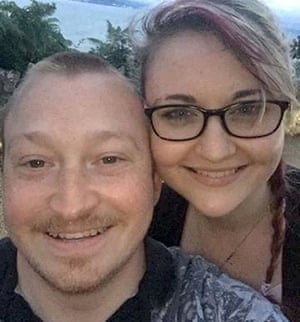
Tristan and Katie Simpkins


Tristan and Katie Simpkins. Photograph: Tristan Simpkins/PA

Mr Simpkins said: “The hospital suggested she go back to custody and they would call when it was ready, but the police officer said custody is not the right place for her. He didn’t want to risk her missing the bed so he said they’d wait, and he’d wait with us.


“Katie had her medication, became drowsy and he let her sleep in the back of the police car with her blanket. When I saw her lying in the back of the police car I felt frustrated, but I’ve become used to it. I feel hopeless.”


He praised the way the police had tried to help. “It wasn’t their fault they couldn’t get a bed but these officers were all really lovely with her,” he said. She was finally admitted at 9pm.


Angus Macpherson, the police and crime commissioner for Wiltshire and Swindon, said: “This is not an isolated incident. Such incidents are happening once or twice a month [in Wiltshire]. The picture of Katie Simpkins huddled beneath a blanket in the back of a Wiltshire police car has understandably caused concern to the public. I have said it before and I will say it again: custody is simply not the right place for someone in a mental health crisis.”


Avon and Wiltshire Mental Health Partnership NHS trust confirmed there were only two beds available for people detained under section 136, which gives police the power to take a person from a public space to a place of safety.


A trust spokesperson said: “We work closely with the police to ensure they know the availability of places of safety. In this instance we were unable to provide a bed straight away and there clearly could have been better communication. We apologise and will be mindful of this in the future. Once the matter came to our attention, we made contact with Mr Simpkins to give him and his wife our full support.”


Last month the government announced that the Avon and Wiltshire trust was among those that had successfully bid for a share of a £15m fund to improve provision of mental health places of safety.


A Department of Health spokesperson said: “When a person is experiencing a mental health crisis they need the right care, in the right place and at the right time. We are fully committed to improving mental health services across the country.”


Police raise concerns after letting vulnerable patient sleep in patrol car

Mental health trust apologises after woman has to sleep in police car

A mental health trust has apologised after a patient had to sleep in the back of a police car in a hospital car park because there was no bed available for her.


Katie Simpkins, 23, from Corsham in Wiltshire, was detained under the Mental Health Act for her own safety but there was no hospital bed available in the whole of the county.


Officers allowed Simpkins to sleep under a blanket in the back of their patrol car and watched over her until a bed became available.


She and her husband, Tristan Simpkins, 25, released a photograph of her in the back of the police car to try to raise awareness of the lack of beds available in such situations.


Avon and Wiltshire Mental Health Partnership NHS Trust confirmed there were only two beds available for people detained under section 136 of the Mental Health Act, which gives police the power to take a person from a public space to a place of safety.


A trust spokesperson said: “We work closely with the police to ensure they know the availability of places of safety. In this instance we were unable to provide a bed straight away and there clearly could have been better communication. We apologise and will be mindful of this in the future.


“Once the matter came to our attention, we made contact with Mr Simpkins to give him and his wife our full support.”


Police had detained Katie Simpkins under section 136 early last Saturday.


Her husband said police rang round but could not find a place for her in a mental health unit. They took her into the custody suite at Melksham police station until later on Saturday afternoon, when officers were told a bed was available at Green Lane hospital in Devizes. However, when they got there at 5pm they were were told it was not ready.


Tristan Simpkins said: “The hospital suggested she go back to custody and they would call when it was ready, but the police officer said: ‘Custody is not the right place for her.’ He didn’t want to risk her missing the bed so he said they’d wait, and he’d wait with us.


“Katie had her medication, became drowsy and he let her sleep in the back of the police car with her blanket. When I saw her lying in the back of the police car I felt frustrated – but I’ve become used to it. I feel hopeless.”


He praised the way the police had tried to help. “It wasn’t their fault they couldn’t get a bed but these officers were all really lovely with her,” he said. She was finally admitted at 9pm.


Sgt Mike Hughes, who oversees mental health issues for Wiltshire police, said: “When a person is in crisis and has been detained under the Mental Health Act we always endeavour to avoid detaining them in custody, which is only ever used as a last resort. However, sometimes no health-based place of safety is available and our main priority has to be keeping the person safe from harm.”


He added: “There is always room for improvement, and we continue to work closely with our partner agencies to make sure all the people we have contact with receive the best possible support and care.”


Mental health trust apologises after woman has to sleep in police car

30 Ağustos 2016 Salı

Top 10 Signs of a Police State

Top 10 Signs of a Police State


As terrorism rapidly spreads worldwide the governments of each country are heavily arming and militarizing their police forces.  In essence, every country worldwide is slowly becoming a police state.  Here are the top 10 signs of a police state to see if your country is becoming one too.


  1. Consent of Political Leaders

Firstly, the political leaders of your country will all consent to this arrangement with a limitation on individual liberties in order to do so.  This includes arresting without cause, indefinite detention, continuous tracking and spying and of course additional crimes that would be considered “terrorism”.  A great majority of leaders will consent to these terms with the exception of a few that don’t whom will be quickly be labeled as “unpatriotic”.


  1. Free Speech Zones

The second sign of the top 10 signs of a police state will be a quick limitation of free speech as well as the creation of free speech zones.  Those who speak out against the militarization of police forces will be labeled dissenters and because of the popularity of such outspoken words free speech zones will be established.  This means you could be arrested if protesting in certain areas and even your internet communication posts could be deleted if noticed online.


  1. National Registry Database

Through every means necessary every citizen will be forced to be on some sort of national registry database.  This includes firearms owners, those without medical insurance, those living from paycheck to paycheck and even those who make their income under the table.  The point of a national registry database is to make sure every citizen can be thoroughly monitored in order to prevent dissenters before they begin.


  1. Liberties in Exchange for Security

When the political leaders have already agreed to the terms they will expect the citizenry to do so also.  Although the average citizen is affected entirely on a larger scale from a police state than your local senator.  This will be the expectations that political leaders will create especially with the help of the media.


  1. Stock Piles

It will become well known that the police, military and every other government organized force will begin to stock pile large amounts of storable food, ammunition and even gear and equipment.  Although many will be suspicious the media will pass it off as a conspiracy theory for those who draw to much attention to the fact.


  1. Secrecy

Secrecy, secrecy and more secrecy.  From spying to indefinite detention without committing a crime secrecy will be all over the place.  Political leaders will admit to secrecy but pass it off as the “norm” as well as the media will speak only as if the secrecy is necessary to national security.  More like a “don’t ask too many questions if you can’t handle the truth” kind of a society.


  1. Open Abuse of Power

Since political leaders will be getting away with so much open secrecy other scandals will arise in which these same political leaders will face no punishment.  This would be the open abuse of power in the top 10 signs of a police state.  Scandals in which countrymen are killed will have no fault with political leaders even if negotiated and approved by those same political leaders.  No days in office suspended or even so much as a jail sentence these political leaders will display nothing but abuse of the law and of their positions with no sign of consequences.


  1. Propaganda and Whistle Blowing

Along with the open secrecy and abuse of power, political leaders will start propaganda campaigns that desensitize the majority of the citizens.  Fortunately a small rogue group of citizens will start a whistle blowing trend from deep inside government controlled and funded agencies that will reach out to individuals in the media that are determined to open the eyes of the public.  Although it sounds like the plot to a great movie the fact of the matter is that this will be and currently is real life.


  1. False Flags

In order to keep the public in fear false flag operation will be initiated by shadow operatives of an underground government.  These shadow operatives will be working for the agenda of the few political leaders that have the most to gain from a completely controlled police state.  These political leaders will be the same leaders who control businesses in foreign lands and have great political influence to waging either war or peace.


  1. Revolution and Martial Law

Before all the conspiracies can be deemed true and before the corrupt political leaders can be prosecuted martial law will be enacted as a final move followed shortly by revolution.  Most times the enemy is already decided however, during a revolution sides will be chosen by every individual citizen: Are they for or against a police state and ultimately a new world order?  This revolution will happen before any corrupt political leader ever sees a day in jail.  Analyze these 10 signs and decide does your country show the top 10 signs of a police state?


Source:


The Top 10 Signs of the Encroaching Police State


Top 10 Signs of a Police State

24 Temmuz 2016 Pazar

Police and charities launch anti-FGM campaign at Manchester airport

At 3am on Thursday morning, a group of police, border officers and charity workers joined the throng of holidaymakers at Manchester airport of to begin their summer campaign against female genital mutilation (FGM).


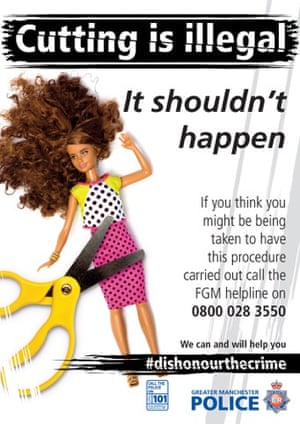
Cutting is illegal poster

Photograph: Greater Manchester police

Sometimes known as the ‘cutting season’, the school summer holidays are the most common time for girls in the UK to be taken abroad, usually to their family’s country of origin, and subject to mutilation.


Operation Limelight will see Greater Manchester police and their partners speaking to outbound passengers in July about FGM and again to inbound passengers at the end of August and into September.


Travellers will be made aware of the signs that indicate someone could be at risk and informed that it is illegal for UK nationals or permanent residents to perform FGM in the UK or abroad, with a maximum sentence of 14 years imprisonment.


The facts you should know about female genital mutilation

The first ever FGM figures in England were released last week showing that there have been nearly 6,000 new cases in the last year and that a further 65,000 girls under the age of 13 are at risk of the procedure, which can result in severe pain, shock and death as well as psychological problems such as post-traumatic stress disorder.


People who carry out the procedure, or ‘cutters’ are also known to come to the UK during this time to carry out FGM in the UK.


Now in its third year, Operation Limelight was designed to coincide with the school holidays of Greater Manchester and the surrounding areas of Liverpool, Yorkshire and Lancashire, which are also served by the airport.


‘Spread the word: it’s child abuse’


Detective Inspector Nathan Percival, Greater Manchester’s lead on FGM, has overseen a change in approach to FGM in the area.


“For so many years the police have gone off and done their own thing but we don’t do that anymore,” he told the Guardian. “We don’t charge in, but have a softly, softly approach. We’re learning each day from charities and voluntary sectors on how to approach – police shouldn’t be the baddies.


We need friends, siblings and community members to come forward


DI Nathan Percival


“For FGM it’s never just the police deciding we need to make arrests. Policy dictates now that FGM work should be multi-agency so we share information with partners at a strategy meeting to discuss the best thing for the child. We always aim to support the child and the family involved.”


Operation Limelight focuses more on raising awareness than chasing convictions (of which there have been none for FGM in the UK so far). All passengers are approached, without families being isolated. “It’s just basically chatting to people. We explain who we are, and ask whether they’ve heard of FGM or cutting. My tagline has always been: Spread the word: it’s child abuse, it’s illegal and there are serious health implications. If a criminal investigation springs, that is all well and good, but child safety is always the priority.”


In 2015, new FGM laws came into force in the UK. Under the Serious Crime Act, FGM protection orders can now be issued whereby potential victims or third parties can apply for an order to protect the person at risk. These orders can include the confiscating of passports. It is now mandatory for health and social care professionals and teachers to make a report to the police if they learn that a girl under 18 has been subject to FGM.


Percival believes mandatory reporting especially has helped to protect girls and Greater Manchester police has seen an increase in reports made to them of FGM – only nine reports were made to them three years ago, but last year, there were 94. The taboo nature of FGM remains one of the biggest obstacles to eradication, however.


“We need friends, siblings and community members to come forward, people who know that this child will be at risk this time of year. This is what we cry out for – for people to please come forward. It’s hard though, people have been carrying out FGM for thousands of years and believe that not doing it will bring shame on the family. We rely on partnerships and voluntary sector, charities like Afruka and Nestac who work in communities. These agencies work on a cultural level. They know they have a police officer who is really passionate about combatting FGM. I try and understand and put myself in their shoes. You have to with child abuse.”


Angie Marriot, a former nurse and independent consultant in honour based violence, forced marriage and FGM, worked on Operation Limelight for the first time this year.


“It’s been excellent to give out information and target a diverse population of people coming through the airport,” she said. “The opportunity is absolutely outstanding. We’re targeting everybody. I would say that 85% of people have been very positive endorsing the information they’ve been given.”


“Some of the people who’ve taken leaflets have said: ‘Oh we’ve heard about that’ and others have said: ‘What’s this? so we still know there’s a lot of work to do. There are lots of professionals out there who still don’t know about FGM. They don’t feel confident to report and overcome those cultural barriers and lots of people are fearful about being accused of being racist.


“There’s also an issue with funding. We hear about this 80 million pounds for violence against women, unfortunately that’s not trickling down to BME groups or specialists who’ve got that expertise.


“To see the police embrace a sensitive issue openly is remarkable, and GMP need to be commended for the outstanding work they’re doing here today.”


Everyone involved in the operation (police, border agents, consultants and charity workers) have volunteered their time for free.


Signs that a child may be at risk of undergoing FGM include


  • being taken ‘home’ to visit family

  • a special occasion to ‘become a woman’

  • an older female relative visiting the UK

Signs that a child may have recently been a victim of FGM include


  • the child is frequenting the toilet

  • the child is complaining of pelvic pain

  • a change in behaviour after going on holiday. For example, becoming suddenly submissive or anxious.

Anyone with concerns is asked to contact police on 101 or Crimestoppers anonymously on 0800 555111 or the FGM Helpline on 0800 028 3550. You can also contact the NSPCC on 0808 800 5000.


Police and charities launch anti-FGM campaign at Manchester airport

23 Ağustos 2015 Pazar

Australian police detainees employing ice at record costs: survey

Connected: No ice epidemic but growing purity is performing damage, say researchers


Australian prisoners are using amphetamines at record prices, and the most potent type, methamphetamine, is driving this rise, a survey of police detainees by the Australian Institute of Criminology has unveiled.


As component of the annual Drug Use Monitoring in Australia survey, 3,456 adult police detainees had been questioned about their drug use in between July 2013 and December 2014 at six places across Queensland, New South Wales, South Australia and Western Australia. Urine samples were also taken to corroborate answers provided.


“Overall, in 2013–14 the most notable trend in illicit drug use within the Australian detainee sample was a 13% enhance in detainees testing positive to amphetamines,” a report on the survey findings launched on Sunday mentioned.


Connected: Methamphetamine use the largest drug issue dealing with Australian police – report


“This was largely due to an 11 percentage-level improve in detainees testing good to methamphetamine.” Methamphetamine is far more generally acknowledged as ice, and current research suggests its strength and purity has risen, triggering more harm to end users.


Of the prisoners surveyed, 37% examined optimistic to amphetamines, in contrast with 24% the previous 12 months. It marked the highest recorded rate of amphetamine use in the survey’s history, with the previous peak becoming 35% in both 2003 and 2004.


The survey has been running because 1999, generating it the largest and longest-working survey of drug use between police detainees in Australia.


The director of the Australian Institute of Criminology, Chris Dawson, said the findings meant it was important to proceed to closely monitor methamphetamine market trends, this kind of as availability and purity.


“This new information shows the continuing nationwide rise in methamphetamine use amongst Australian police detainees,” he wrote in a foreword to the report.


Connected: Queensland’s ‘war on drugs’ a waste of police time, says Ted Noffs Foundation


“Methamphetamine use was recognized in 23% of urine samples supplied by detainees in Adelaide, 24% in Bankstown, 34% in Brisbane, 37% in East Perth and 52% in Kings Cross.


Whilst specialists are unsure why ice use has elevated provided it remains reasonably costly when in contrast to other medicines, the availability of ice as a end result of growing local awareness and sophistication in how to manufacture it is suspected to have contributed.


The majority of prisoners surveyed – 78% – reported that when ice supply was low, they managed to abstain from utilizing the drug, but did not boost their use of much more readily offered drugs, this kind of as alcohol.


“These findings suggest that provide-side reduction methods may possibly be successful in terms of harm minimisation: that is, a reduction in supply appears to lessen use of that drug with out escalating the use of other substances,” Dawson wrote.


Relevant: Tony Abbott to establish nationwide drug taskforce to tackle ice ‘scourge’


Nonetheless, cannabis continues to be the most typically detected drug amid police detainees. Even though peak cannabis use between prisoners was recorded in 1999, when 61% tested constructive, 46% examined positive in the most latest survey.


Alcohol use was also substantial, with 41% of detainees reporting that they had drunk alcohol in the 48 hrs prior to their arrest.


“The regular quantity of alcohol detainees reported consuming on the final occasion of drinking was 19 regular drinks, although it was as large as 31 standard drinks for the sub-group of detainees who reported consuming a combine of beer, wine or spirits on the last event,” the report found.


The regular in the earlier 12 months was 22 normal drinks, the report said.


Australian police detainees employing ice at record costs: survey