Letting etiketine sahip kayıtlar gösteriliyor. Tüm kayıtları göster

21 Eylül 2016 Çarşamba

By failing to update their warnings, drug regulators are letting patients down

US drug regulator the Food and Drug Administration (FDA) has issued warnings about possible side effects of taking varenicline. Varenicline (marketed as Chantix in the US, and Champix in the UK) is a drug which can help people stop smoking. The FDA’s warnings are out of date, do not reflect the scientific evidence, and urgently need to be updated. They may have led the public and clinicians to incorrectly believe that there was strong scientific evidence that varenicline causes or exacerbates mental health problems. Given varenicline is the most effective way to successfully stop smoking, these safety concerns may have resulted in fewer people successfully stopping smoking.


A brief history FDA’s warnings over varenicline


In May 2006 the FDA approved varenicline for use as a medication to help people stop smoking. This was the first treatment licensed for smoking cessation since 1997, and initial evidence suggested that people who took it were more likely to successfully stop smoking. However, it was not long before concerns were raised that people prescribed varenicline were experiencing mental health side effects. Newspapers reported a series of anecdotes that people taking varenicline had suicidal behaviour. The FDA’s Adverse Event Reporting System (AERS) suggested patients prescribed varenicline were more likely to report suicidal behaviour than patients prescribed other medications. The key question was, are these differences a result of taking varenicline, or is it just that patients prescribed it had a higher risk of these events even before they were prescribed treatment? Were they due to correlation or causation?


The FDA attempted to answer this question in a safety review that was published in February 2008. They concluded that “[varenicline] may cause worsening of a current psychiatric illness even if it is currently under control and may cause an old psychiatric illness to reoccur.” In July 2009, after pressure from the media and consumer groups, the FDA went further, mandating that varenicline carry a “Black Box warning”. Black Box warnings are the FDA’s strongest warning about possible side effects of drugs. The Black Box warning for varenicline highlights “the risk of serious neuropsychiatric symptoms in patients using these products”. Symptoms included changes in behaviour, hostility, agitation, depressed mood, suicidal thoughts and behaviour, and attempted suicide.


The FDA then commissioned two large observational cohort studies to examine the risks associated with varenicline. They also instructed Pfizer to conduct a large randomised trial to investigate the side effects of varenicline in people with mental health problems.


Results from the observational studies were reported in October 2011. In both studies people prescribed varenicline had similar risks of being hospitalised for psychiatric problems as patients prescribed nicotine replacement therapy – in other words, there was no evidence of increased risk. However, these were observational studies, rather than experimental (randomised trials), so could not prove that varenicline did not cause adverse outcomes. However, most epidemiologists would regard these studies as more reliable evidence than the anecdotal case reports and newspaper reports which originally raised concerns about these risks. Nevertheless, in response to this new evidence, the FDA “determined that the current warnings in the varenicline drug label, based on post marketing surveillance reports, remain appropriate” and did not remove the Black Box warning.


Meanwhile, further observational studies were amassing evidence about whether varenicline use is associated with adverse events. In 2009, our colleagues found no evidence that patients in UK prescribed varenicline had higher risks of suicidal behaviour. In 2013, we updated this evidence to include over 100,000 patients, and again found that patients prescribed varenicline had similar risks of suicidal behaviour and similar rates of self-harm. In 2015, we systematically reviewed the literature of randomised controlled trials, and again found that participants given varenicline had similar risks of suicide and self-harm as those given placebo.


In March 2015 the FDA issued a further update. Despite mounting evidence about the safety of varenicline, they did not change their warnings. In 2016, the randomised controlled trial the FDA commissioned reported its findings. This trial randomised 8,144 people to receive varenicline, nicotine patch, bupropion or placebo, and found that people allocated to varenicline rather than nicotine replacement products experienced fewer moderate and severe mental health adverse events. The European Medicine Agency, which regulates pharmaceuticals in Europe, recently updated the information it provides about varenicline. In contrast, to date the FDA has refused to update its warnings.


Correlation does not equal causation


Patients who take medications are different from the general population. This means that even if patients prescribed a drug are more likely to have a particular adverse event this does not necessarily prove that these events are caused by the drug. In the case of varenicline, people who smoke are different from the general population on average; they are usually poorer, sicker, and more likely to have mental health problems. So the fact that patients taking varenicline reported higher rates of suicidal behaviour than patients prescribed other drugs in the FDA Adverse Events Reporting System, may have been because these patients were at higher risk of these events, before taking varenicline. This means these adverse events are unreliable evidence of the difference when taking varenicline or other nicotine replacement products.


Spurious safety warnings can be extremely harmful


In 1998 a paper was published which suggested that there might be an association between taking the measles, mumps and rubella (MMR) vaccine and developing autism. These claims were false, and multiple, large, well-conducted studies have proven that these claims were false, and the MMR vaccine is not associated with, and does not cause autism. Nevertheless, these warnings led to a substantial fall in vaccination rates, and an increase in cases of measles. So it is vital for regulators to distinguish between side effects which are caused by drugs, and potential events which the drugs do not cause. These could be events that are correlated with a medication, or risks for which the regulator does not have any reliable evidence.


In 2007 3.9 million patients took varenicline in the US. In 2012, after the safety warnings were issued, only 1.2 million patients took varenicline. Thus a potential cost of issuing safety warnings is that fewer patients take otherwise effective medications.


What should we do now?


From the first warnings about potential adverse effects of varenicline on mental health in November 2007 to today, 4.1 million people are likely to have died from smoking related disease in the US alone. The FDA’s Black Box warning of mental health problems associated with varenicline is inconsistent with the latest scientific evidence. Ultimately, it could discourage people from using the most effective smoking cessation treatment. In 14th of September 2016, the FDA’s expert advisory group for drug safety met and again reviewed the evidence about the side effects associated with varenicline. The vote was close: they voted 10 to 9 in favour of advising the FDA to remove its warning. However, given the committee’s lack of consensus, it is not clear if the FDA will follow their guidance. In our opinion, given the evidence, the FDA needs to urgently revise this safety warning.


Dr Kyla Thomas is a National Institute for Health Research funded Clinical Lecturer in Public Health Medicine based at the University of Bristol and an Honorary Consultant in Public Health. She tweets sporadically @drkyla_thomas. Dr Neil Davies is an epidemiologist based in the MRC Integrative Epidemiology Unit at the University of Bristol. He occasionally tweets from @nm_davies. These views are their own.


A longer more detailed version of this blog post was published in the Addiction journal available here.


By failing to update their warnings, drug regulators are letting patients down

2 Eylül 2016 Cuma

Police raise concerns after letting vulnerable patient sleep in patrol car

A chief constable has expressed deep concern that a patient with serious mental health problems had to sleep in the back of a police car in a hospital car park because there was no bed available for her.


Katie Simpkins, 23, from Corsham in Wiltshire, was detained under the Mental Health Act for her own safety but there was no hospital bed available in the whole of the county. Officers allowed Simpkins to sleep under a blanket in the back of their patrol car and watched over her until a bed became available.


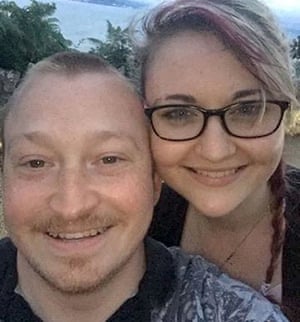
She and her husband, Tristan Simpkins, 25, released a photograph of her in the back of the police car to try to raise awareness of the lack of beds available in such situations.


The chief constable of Wiltshire police, Mike Veale, said officers were often having to take responsibility for vulnerable people with mental health problems who ought to be in the care of health professionals.


He said that in the past week officers had persuaded a 17-year-old girl with schizophrenia to come down from the roof of a car park, only to be told there were no beds available for her anywhere in the county. He also said officers held a man in a cell for more than 48 hours because there was no mental health care facility available for him.


Veale said: “A police officer is not the appropriate person to be dealing with a vulnerable member of the public who has an illness and poses a real risk to their own health and wellbeing. My police officers and staff face difficult, stressful and sometimes dangerous situations every day. They are not trained to provide specialist care to people with complex problems. They don’t know the background of these people, their medical history or their personal details.


“These issues have always been here for the police, and not just in Wiltshire, but are becoming more acute as austerity bites and there is increased pressure on social care and healthcare services.”


Police had detained Simpkins under section 136 of the act early last Saturday when she suffered a mental health crisis. Her husband said police rang round but could not find a place for her in a mental health unit.


They took her into the custody suite at Melksham police station until later on Saturday afternoon, when officers were told a bed was available at Green Lane hospital in Devizes. However, when they got there at 5pm they were told it was not ready.


Tristan and Katie Simpkins


Tristan and Katie Simpkins. Photograph: Tristan Simpkins/PA

Mr Simpkins said: “The hospital suggested she go back to custody and they would call when it was ready, but the police officer said custody is not the right place for her. He didn’t want to risk her missing the bed so he said they’d wait, and he’d wait with us.


“Katie had her medication, became drowsy and he let her sleep in the back of the police car with her blanket. When I saw her lying in the back of the police car I felt frustrated, but I’ve become used to it. I feel hopeless.”


He praised the way the police had tried to help. “It wasn’t their fault they couldn’t get a bed but these officers were all really lovely with her,” he said. She was finally admitted at 9pm.


Angus Macpherson, the police and crime commissioner for Wiltshire and Swindon, said: “This is not an isolated incident. Such incidents are happening once or twice a month [in Wiltshire]. The picture of Katie Simpkins huddled beneath a blanket in the back of a Wiltshire police car has understandably caused concern to the public. I have said it before and I will say it again: custody is simply not the right place for someone in a mental health crisis.”


Avon and Wiltshire Mental Health Partnership NHS trust confirmed there were only two beds available for people detained under section 136, which gives police the power to take a person from a public space to a place of safety.


A trust spokesperson said: “We work closely with the police to ensure they know the availability of places of safety. In this instance we were unable to provide a bed straight away and there clearly could have been better communication. We apologise and will be mindful of this in the future. Once the matter came to our attention, we made contact with Mr Simpkins to give him and his wife our full support.”


Last month the government announced that the Avon and Wiltshire trust was among those that had successfully bid for a share of a £15m fund to improve provision of mental health places of safety.


A Department of Health spokesperson said: “When a person is experiencing a mental health crisis they need the right care, in the right place and at the right time. We are fully committed to improving mental health services across the country.”


Police raise concerns after letting vulnerable patient sleep in patrol car

2 Ekim 2015 Cuma

Food items We Won’t Have If We Maintain Letting Bees Die

About 1-third of the world’s crops rely on the honeybees for pollination. The past decades honeybees have been dying at an alarming fee. Fewer bees will sooner or later lead to significantly less availability of our preferred whole food items and it will also drive up the charges of several of the fruits and veggies we consume on a day-to-day basis.


Although some actions have been taken in the past, our bees are nevertheless dying and something needs to be carried out to make confident our most favored food items do not go into extinction.


What’s Triggering Enormous Bee Deaths?


About fifty years in the past our world looked a total good deal different. Bees had an abundance of flowers to feast on and there were fewer pests and illnesses threatening their meals chain. These days even so, nature has to make spot for industrialization and our bees are getting a tough time locating very good pollen and nectar.


And if clearing their dinner tables from great high quality food wasn’t bad ample already, farmers are extensively employing herbicides and insecticides, which trigger a phenome known as Colony Collapse Disorder (CCD) exactly where bees get disorientated and poisoned and can not discover their way back to the hive. Or when they deal with to get back, they die from intoxication.


“We want excellent, clean foods, and so do our pollinators. If bees do not have adequate to eat, we will not have enough to consume. Dying bees scream a message to us that they can not survive in our existing agricultural and urban environments,” states Marla Spivak, an American entomologist, and Distinguished McKnight University Professor at the University of Minnesota.


Record of Foods We Will Have To Go without having If The Bees Go


While we do not need to have bees to pollinate all our food simply because they either self-pollinate or rely on the wind (like rice, wheat, and corn), several of our favorite foods will disappear from our kitchen tables.


Food items in the danger zone include:


  • Apples

  • Mangos

  • Kiwi Fruit

  • Peaches

  • Berries

  • Onions

  • Pears

  • Alfalfa

  • Cashews

  • Avocados

  • Passion Fruit

  • Beans

  • Cruciferous greens

  • Cacao/Coffee

  • Cotton

  • Lemons and limes

  • Carrots

  • Cucumber

  • Cantaloupe

  • Watermelon

  • Coconut

  • Beets

  • Turnips

  • Chili peppers, red peppers, bell peppers, green peppers

  • Papaya

  • Eggplant

  • Vanilla

  • Tomatoes

  • Grapes

  • Several seeds and nuts


A considerable drop in population, or full extinction, of honeybees will make these food scares or even non-existent. So to keep our body healthier and our kitchen table exciting we have to consider action prior to it is as well late.


What You can Do


  • Plant bee friendly plants in your garden or green community space.

  • Restrict the use of pesticides or use organic options.

  • Acquire neighborhood, organically grown make and honey to assistance the beekeepers and farmers in your spot.

  • Donate to non-profit organizations, like Pollinator Partnership, to support protect, grow, and strengthen bee populations.


Sources: CNN,  NCBI, and onEarth.


Really don’t neglect to download my Cost-free Book “Amy’s House Kitchen”, packed with my family’s preferred healthy, clean and delicious recipes. Or connect with me on Facebook or Google+

If you are interested in detoxing, clean consuming, shedding bodyweight, and modifying your lifestyle with out feeling hungry and counting calories, click here


Food items We Won’t Have If We Maintain Letting Bees Die

31 Mayıs 2014 Cumartesi

I"m letting myself off the hook for currently being scatty

After rehab

Now when I can not cope on my very own, I can request for aid. Photograph: Guardian


The oldest man on my street, Eric, has misplaced his keys for the umpteenth time this week. In the time that he repeats the routine of shuffling gradually from the front door to his vehicle, opening the passenger door, turning on the light, looking via his important wallet beneath the light, unclipping a random key and then strolling gradually back to his front door to see if it performs, day has become night.


“Need any help?” I shout from across the street, simply because Eric is deaf in one ear. “No, no,” he replies cheerfully, but I cross the street anyway. I often seem for physical indications of degeneration, such as dirty clothing, fingernails, or a strong smell of urine that would propose he hasn’t been washing. But he is immaculate as ever, his shirt ironed, cuffs and collar clean. When we locate the important that functions for his door, I observe that the hall of his house is as tidy as an officer’s mess. The only factor that is falling apart is his mind, and the pace at which it is occurring is alarming.


Up right up until a few weeks ago Eric had neighbours, Stan and Eva. They have been in the very old-age stage of lifestyle together. Eric would drive 200 yards to the shop to collect their newspapers if if it was raining or, if dry, he would stroll with his stick. Stan died a couple of weeks in the past and Eva has been taken into residential care so almost everything in Eric’s daily life has modified. And swiftly.


Contact this the starting of dementia. Get in touch with it immense grief. Get in touch with it loneliness. It is surely not craziness. Eric is in his late 80s, and in the number of many years I have lived on the street with him he has in no way been anything at all other than completely with-it. In previous age, the reasons for losing one’s thoughts can be a mixture of all these items and it is hardly surprising, but virtually constantly upsetting.


I believe I’ve misplaced my keys practically each and every time I get to my front door, but I am not old. I get in touch with my children by the cat’s name, my brothers’ names. But this is just confusion, tiredness.


The mental deterioration that I really feel comes from a wish to try to management the way in which my brain actually operates. I have usually been chaotic, usually scatty. Seldom am I wholly current in a area. Yes, I can do issues to improve the methods in which I perform, but like someone who is naturally very organised, I have to recognize that there is only so considerably of one’s persona that can be modified. Yet I still have typical fights with my character traits: every day, all the way.


Get lost keys: I berate myself for being this kind of a scatterbrain when I actually do lose my keys, ie when they are not lying in the bottom of my bag along with wrapperless tampons and a half-eaten sandwich. I think about these keys currently being picked up by an opportunistic passerby who might try to break in to the residence and steal a lot more keys to valuable issues, keys that lie in a bowl proper by the front door, like metal soup.


But, slowly, I am letting myself off the hook. I am admitting that absolutely everyone at some level loses their keys. I am making an attempt not to see this as a unique problem related with people like me, who find substantial pressure bearable, but the chaos of day-to-day existence difficult to deal with.


I’ve always had strange, illogical ways of considering and often use individuals odd, illogical ways to try to kind out my issues. For illustration, when I was nine, I got worms. My mother took me to the doctor, and I bear in mind thinking he looked like he had been taken down from a shelf and dusted off. He frightened me ahead of he even spoke and it was an knowledge that even now helps make me shudder.


When the worms returned, I believed I was abnormal, a serial catcher of bad things, and I feared currently being sent back to that outdated GP with the cold fingers. So I advised no a single, and manufactured a vow to myself to wait until finally I was 11, when I’d be permitted to consider a bus all by myself to the chemist in town to get some tablets (we lived in a village with only a publish workplace and a pub).


Two years. I would rather have waited two many years with an itchy bottom and an insatiable appetite, than tell my mom. The worms left of their very own accord, but my twisted logic did not. It is still here, but now I can see it for what it is and ask for support when I can’t cope on my personal. It can not modify personalities or behaviour, but it gives me a specific empathy for and understanding of other individuals.


I"m letting myself off the hook for currently being scatty

7 Mart 2014 Cuma

Letting a widow maintain her husband"s sperm is a victory for compassion | Ally Fogg

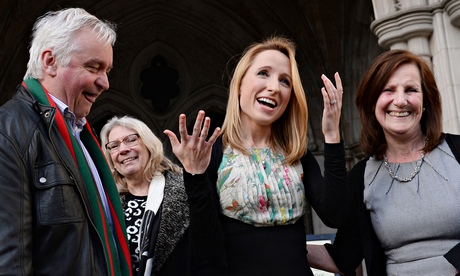
Beth Warren won her high court fight to preserve her late husband

Beth Warren leaves court with her mom Georgina Hyde (right), and her in-laws Kevin and Helen Brewer, after winning the right to preserve her late husband’s sperm. Photograph: Stefan Rousseau/PA


There can be couple of selections in daily life a lot more critical than opting to conceive a little one. Even inside the most secure and stable relationship and conditions, it is by no means effortless to be certain you have picked the correct time – emotionally, financially and for one’s future existence trajectory.


Who would not be moved by the story of Beth Warren whose partner of eight years, Warren Brewer, was diagnosed with a terminal brain tumour. Just before commencing Brewer’s treatment method, the couple froze his sperm to permit Warren to carry their baby if and when she wished to do so. They married in a hospice six weeks prior to his death, and she took his 1st identify as her married title.


At 28 many years of age, and grieving following her bereavement, Warren needed time to choose what to do subsequent, time the law did not allow her. The Human Embryology and Fertilisation Authority insisted that a donor should frequently renew consent for sperm storage, with no exception for the deceased. This indicates that the permission Brewer granted to his new wife to use his sperm to conceive a baby would have expired in April 2015.


Warren challenged that rule and now the large court has decided in her favour: she will be permitted to continue to store her late husband’s sperm for a time period of up to fifty five many years until finally April 2060.


The verdict is a victory for compassion, justice and typical sense. As a society we have prolonged accepted a mother’s right to make a decision to carry and raise a kid alone it happens fairly frequently for a broad variety of reasons. In interviews, Warren herself has acknowledged that it would be a massive ethical determination to carry a kid into the world in full knowledge that she or he will never ever know a organic father. That she recognises this is enormously to her credit, and just underlines that the choice need to lie in her risk-free hands, not the arbitrary rulings of state authority.


Sperm vial frozen Donors previously had to often renew consent for their sperm to be kept frozen. Photograph: David Levene


We can note that if she decides to proceed, the youngster or youngsters will not be born into the traditional ideal of a household unit, but all issues regarded as extremely handful of of us are. It would seem clear that any child born out of this determination will be brought into the planet with really like, devotion, caution and care, and that is a quite damned good start in existence for anyone.


There may possibly be other individuals who feel this is not in Warren’s very own interests. She is a youthful female with her complete existence ahead of her, who could move on to a new daily life, a new spouse and new prospective customers. That could be correct, but whether or not this kind of advice is excellent or negative is beside the point – it is no one’s business but her own. Conceiving a youngster with her late husband might not be the most rational selection, but because when was enjoy – either to a spouse or to their offspring – a question of rational equations?


There is also the problem of Brewer’s wishes. It looks clear that he desired his wife to have the freedom to choose to carry his infant ought to she wish to do so. Rules that had been drafted as a protection, to enable donors to modify their mind at a future date, had here become a restriction, obstructing the dying wishes of a young man.


Debates on such circumstances invariably turn out to be bogged down in regardless of whether or not conceiving with only a single residing mother or father is the correct or wrong choice. This is profoundly misplaced. The only query must be whose choice it is to make. For me, there can only be one reply. Today’s ruling is the right determination – not simply because it will permit Warren to conceive a youngster with her late husband, but since it does not force her to do so in a rush to judgment at a time of immense anxiety, sadness and upheaval, and with a non-negotiable deadline hanging above her head. Allow her now celebrate her legal victory, grieve and heal as nicely as she can, and make her determination when the time is correct for her. I do not doubt for a minute that she will choose nicely.


Letting a widow maintain her husband"s sperm is a victory for compassion | Ally Fogg