3 Şubat 2017 Cuma

25 Ocak 2017 Çarşamba
Doctors save Canadian woman"s life by removing her lungs for six days
In what is believed to be the first procedure of its kind in the world, doctors in Canada have saved a young mother’s life by resorting to a radical solution – they removed her lungs for six days while she waited for a transplant.
In April, Melissa Benoit arrived at a Toronto hospital with a severe lung infection. Doctors soon realised that Benoit, who had been born with cystic fibrosis, had just hours to live, leading them to consider the unprecedented approach.
“It was a difficult discussion because when we’re talking about something that had never to our knowledge been done before, there were a lot of unknowns,” Dr Niall Ferguson of the University Health Network, the health authority responsible for the Toronto general hospital, told a news conference on Wednesday.
A recent bout with influenza had left the then 32-year-old fighting off respiratory failure, forcing doctors to keep her sedated and on a ventilator to help her breathe. “She got into a spiral from which her lungs were not going to recover,” said Ferguson. “Her only hope of recovery was a lung transplant.”
Benoit was put on a temporary life support device but her condition continued to deteriorate; the bacteria in her lungs became resistant to most antibiotics, sending her body into septic shock and her blood pressure dropping. One by one, her organs began shutting down.
Her team of doctors gathered together to weigh a bold solution they had contemplated for years but never carried out – the removal of both her lungs in hopes of eliminating the source of the bacterial infection.
The list of unknowns was long, from the risk of bleeding into the empty chest cavity to whether her blood pressure and oxygen levels could be sustained once her lungs were removed.
“What helped us is the fact that we knew it was a matter of hours before she would die,” said Dr Shaf Keshavjee, one of three surgeons who operated on Benoit. “That gave us the courage to say, if we’re ever going to save this woman, we’re going to do it now.”
Benoit’s husband, Chris, gave doctors the go-ahead, thinking of their three-year-old daughter. “We needed this chance,” he said. “Things were so bad for so long, we needed something to go right.”
In mid-April, a team of 13 began a nine-hour surgery to remove Benoit’s lungs. Filled with mucous, each lung was swollen and as hard as a football, said Keshavjee. “Technically, it was difficult to get them out of her chest.”
Hours later, her condition began to dramatically improve. “And literally within minutes – it was probably around 20 minutes after having taken those infected lungs out – her blood pressure normalised, and they could remove all the blood-pressure-supporting drugs and just leave her on the pumps that were providing the circulation,” Keshavjee told the Canadian Press.
A small artificial lung was connected to Benoit’s heart, while other devices oxygenated and circulated her blood. As they waited for replacement lungs to become available, doctors wondered how long she could be supported like this. “We didn’t know if we’d get [them] in one day or one month,” said Keshavjee.
Six days later a pair of donor lungs became available and Benoit underwent a successful lung transplant.
Since then, her strength has steadily improved. Months in the hospital had initially left her without the ability to hold her head up, sit up or stand, but in the past month she has begun walking without a cane or walker. The ordeal also damaged her kidneys, but Benoit is soon hoping to be well enough to receive a kidney transplant from her mother.
When Benoit first learned of the surgery that had saved her life, she didn’t believe it. “It took me a while to realise what happened. I just couldn’t piece it together,” she said. “You really come from the brink of death to back living at home. But I’m just so grateful, so happy to be home.”
Doctors save Canadian woman"s life by removing her lungs for six days
9 Temmuz 2014 Çarşamba
Removing the battery: can a medical doctor make a decision how a patient must die? | Ranjana Srivastava
The pleasantries exchanged, she smooths her dress and positions herself in a a lot more relaxed spot in the hard chair. She nudges her walking frame away and untangles the oxygen tubing so that it doesn’t strain against her nostrils. She does all this in a silent, deliberate motion.
We had met only once prior to. That was when she found out that her nagging “winter cough” was really a signal of the lung cancer that had permeated her whole entire body. She said she had constantly acknowledged she would create cancer, from the day she declared to her mortified mothers and fathers that nothing at all would unyoke a modern girl from her cigarettes. Nevertheless, the diagnosis was not without its accompanying shock and sadness.
A former teacher, she had dissected the particulars of her diagnosis. Her husband, and fellow smoker, had succumbed to the same sickness. She was intent on staying away from what she imagined was his wretched encounter of chemotherapy. Shakily at times but with admirable equanimity, she informed me that she was going residence to Bristol the place her ancestors rested. So I am relatively stunned to see her return to see me.
Taking a shallow, unpleasant breath, she begins, “You thought I’d be gone by now.”
“Gone to Bristol, yes”, I reply, producing a mental note of her pallid skin and more bodyweight loss given that we met. “What happened?”
“I stored my cardiology appointment.”
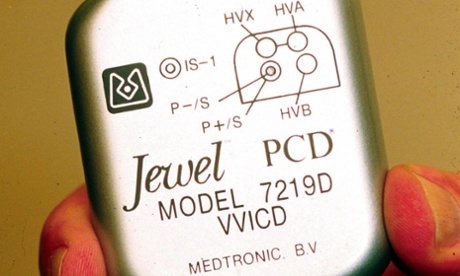
Tears nicely up in her exhausted eyes. I slide a box of tissues along the desk. I know that a defibrillator had been inserted years ago following a cardiac arrest that she miraculously survived. I have a terrible sense of what’s coming.
“He mentioned that the battery is due for substitute. But given that I have a terminal illness, I might want to reconsider it.”
She seems at me and falters. “I mean, he was pretty but what he was truly saying is that given that I am going to die anyway, why complicate issues by fending off a cardiac arrest?”
Misplaced for phrases, I just wait.
“Modern medicine is all about choice”, she says, stifling a sob. “I can choose to die from lung cancer or a cardiac arrest.”
“I am sorry”, I lastly say. “You could have done with no the latest news.”
“I was reconciled to a slow but predictable decline from cancer, barring a crisis. But if my defibrillator runs out of battery, I could actually drop dead. It’s not the dying but the awful selection in amongst that upsets me.”
Slowly, we pick by way of her thoughts – ranging from extremely practical matters like finalising her will, to existential concerns about the nature of suffering. I grow to be aware that I am not fairly giving my patient the certainty or even solace she seeks. Her dilemma is so confronting that I really feel hampered by doubt and dread that a misspoken word or a careless expression could lead to a cascade of distress.
Cardiac arrest or lung cancer. Ought to we try to change the battery?
My heart sinks. I locate myself unequal to the monumental activity of assisting my patient navigate the most hard selection of her life. I feel back wistfully to my ethics fellowship, exactly where a team of doctors, ethicists and philosophers would have illuminated the numerous complexities and offered the treating clinician with advice.
The weightiest selections in medicine are not about which tests to purchase, or what medicines to prescribe they in fact get spot at the sharp intersection of medication and ethics. A lot of facets of daily health-related practice ultimately turn out to be schedule – involving pattern recognition, accumulated expertise and a healthier dose of conjecture.
Certainly, doctors need to master these aspects of the work in buy to treat patients efficiently. But alongside the program run of managing diabetes, administering antibiotics and repairing fractures, momentous choices unfold that do not comply with a tidy protocol.
The wife of a somnolent, demented man insists on a feeding tube, saying it is apparent that he can even now connect with his loved ones. In the absence of an sophisticated directive, whose selection is it to place or refuse the tube?
Who has the final say in turning off a cancer patient’s ventilator assistance? Who must grapple with the patient who sees nothing at all wrong with acquiring an illegally harvested kidney? Who in the long run decides whether to disable the pacemaker of a quadriplegic elderly man?
Anyone who has actually been involved in these charged choices understands that basically quoting the law, if there is a single, feels woefully inadequate. The procedure calls for the two head and heart. Extraordinary calls get manufactured in hospitals since anything “just feels right” to 1 doctor, or because the ramifications of a program of action are far from evident. These conditions can depart patients exposed to idiosyncratic, probably unethical practice – and result in doctors enduring qualms.
The excellent and increasing ethical dilemmas of modern medication call for a different type of physician: one particular who can make rapid selections the place needed but who also possesses depth, sagacity and the ability to acknowledge when a case moves into a blurred ethical room. Regrettably, the latter is the things that ten-minute, corporate medication leaches out of us. Later, many realise they both never acquired the skill and judgment to make difficult calls, or lost it along the way.
From genome sequencing to gender choice, from cost of care to withdrawal of care, our healthcare dilemmas are mounting with the advent of new technologies. The role of a hospital clinical ethics committee can be invaluable for physicians and individuals searching for counsel.
But, in numerous areas, ethics committees are even now synonymous with study ethics that serve a vital, but limited, objective. Roughly twenty% of individuals enrol in clinical trials. The figure in cancer is less than 5%. Minorities, non-English speakers and the elderly are dismally represented.
A lot of more individuals than this encounter an ethical dilemma in the program of a prolonged illness. We all benefit from the insights of practicing clinicians, medical professionals and nurses, with robust ethics education, who see genuine-existence patients with real-daily life dilemmas. At times they form consensus, or help us value the flaws in our contemplating. Other instances they help us to see that it’s typical to really feel conflicted or dejected, but to remain the course.
Weeks later, I received a note from my patient in Bristol. She declined a new battery. “It wasn’t straightforward” she wrote, in her profoundly understated way, ahead of thanking me for listening. I can not think about the ordeal she went by way of before arriving at her selection.
Removing the battery: can a medical doctor make a decision how a patient must die? | Ranjana Srivastava