treating etiketine sahip kayıtlar gösteriliyor. Tüm kayıtları göster

12 Mayıs 2017 Cuma

The life-changing flying eye hospital treating blindness across the globe

In Kitwe, the second largest city in Zambia, young mother Verah is carrying her one-year-old daughter, Racheal, into the consultation room at the eye annexe. The only dedicated paediatric eyecare centre in the country, the Kitwe annexe also attracts patients from neighbouring Angola and Congo. Racheal is here for surgery to remove the bilateral cataracts that prevent her from seeing.


A few months after Racheal was born, Verah noticed that something didn’t seem right with her vision. “I would move my hands in front of her face but she would not react. I would move things past her eyes but she would not follow them,” she explains.


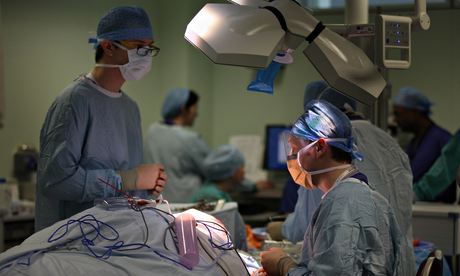
The team of nurses, anaesthetists and paediatric ophthalmologists treating Racheal have been trained and are being continually supported by peers from some of the world’s most respected eye hospitals, who fly in on a specially adapted plane – the flying eye hospital – thanks to an initiative of Orbis, an international blindness prevention charity.


“Orbis volunteers who come to share their knowledge and give technical support are very good – most of them have been working for a long time so they have very good experience,” says Chineshe Mboni, the paediatric ophthalmologist treating Racheal. “So we have some from the US, Britain and Israel etc. Techniques are different around the world, so we get a mix of everything.”
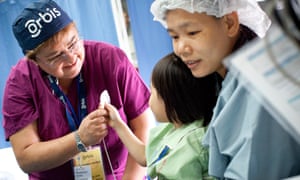


A volunteer ophthalmic nurse in the recovery room.


A volunteer ophthalmic nurse in the recovery room. Photograph: Geoff Oliver Bugbee/Orbis

Sharing experiences and discussing cases with the visiting Orbis medical volunteers “raises your confidence, to see that what you are doing is what everyone else is doing around the world”, Mboni concludes.


Globally, 285 million people are blind or visually impaired and yet for 80% of them, this could be prevented with access to the right treatment like the surgery Mboni is able to give Racheal. Orbis focuses its efforts in Africa, Asia and Latin America because 90% of the world’s 39 million blind people live in developing countries. Many of the conditions causing blindness – such as cataract and trachoma – can be easily treated. The loss of sight these conditions can cause have a huge impact as it will impede a person’s ability to gain an education, prevent them from finding employment and can plunge families into a life of poverty.


Ann-Marie Ablett, a nurse from the University Hospital of Wales in Cardiff, has been giving up four weeks of her annual leave to volunteer with Orbis since 2003. “You can’t change everything overnight but you can start with one patient and help them,” she says. “If everyone plays their small part together, you can make changes.”


Ablett is speaking in a terminal at Stansted Airport and just outside is the flying eye hospital, here for a short promotional visit. The white MD-10 aircraft on the tarmac looks like a typical passenger plane. In fact, this is a 46-seat classroom complete with audio-visual equipment that transmits live surgeries that can be watched in 3D. The lead surgeon, who is just next door in a state-of-the-art operating theatre, can be asked questions throughout the procedure. The aircraft, donated by FedEx, also features pre- and post-op spaces and a laser suite.
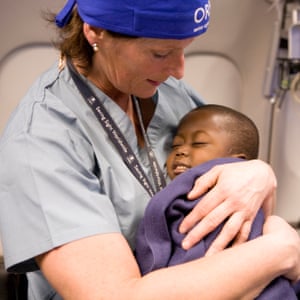


A patient wakes up from surgery.


A patient wakes up from surgery. Photograph: Orbis

Orbis’s main aim is to train eyecare teams and strengthen hospitals in the 92 countries where it works. It’s for this reason that Ablett first chose to volunteer. She says: “We’re not in the developing country just for numbers, we’re there to teach so that means we do less surgeries but when we fly off to the next country, the local doctors have got the skills to treat their own patients because they were trained up.”


Dr Jonathan Lord, global medical director for Orbis, went from being a regular volunteer to giving up his position as a consultant at Moorfields eye hospital in London and becoming a staff member for the charity before being promoted to his current role.


“I was just hooked after my visit trip,” he says. “Seeing the flying eye hospital work in real life, in the field with the patients being treated on the plane and that treatment being part of a really comprehensive training package that is upskilling all the groups of staff that are needed for each surgery, is amazing.


“The need round the world is huge. You realise the magnitude when you look at some of the statistics. In Ethiopia, there is a population of over 80 million, but [until recently] there was little over 80 ophthalmologists practising in the whole country. When I left Moorfields, it had over 150 covering just the catchment area of London.”
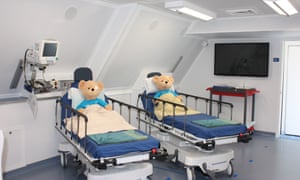


Recovery Room


The flying hospital’s recovery room. Photograph: Orbis

Programmes usually last two weeks, and require a lot of pre-planning with a team from Orbis flying in ahead to consult on what would be most helpful to the healthcare professionals in that country. The plane will land at a local airport and the team of local surgeons, nurses and anaesthetists board to join their volunteer counterparts. Meanwhile, another team of volunteers goes to the local hospital to provide training using the equipment in situ. At the end of the week, the teams swap.


Becoming hooked after stepping foot on the plane is a running theme among staff and volunteers, including the pilots, all FedEx employees who volunteer their time. Gary Dyson, who has been involved since 2001, says: “On my first trip, which was to China, I saw a child who couldn’t see on Monday but could see on Wednesday. It’s such a life-changing event for them.”


For Racheal, the short surgery will have undoubtedly had that effect. As Mboni removes the patches, she blinks a few times and waves her hands in front of her eyes, before looking up and seeing her mother for the first time.


News is spreading across Zambia of successes like this, Mboni says. “[People] know we can act fast, so they are telling patients with eye conditions – ‘This problem? Go to Kitwe central hospital’.”


Join the Healthcare Professionals Network to read more pieces like this. And follow us on Twitter (@GdnHealthcare) to keep up with the latest healthcare news and views.


The life-changing flying eye hospital treating blindness across the globe

6 Şubat 2017 Pazartesi

Treating former child soldiers and refugees is tough yet fascinating

My first client of the day is Ahmed. He witnessed around 30 people, including family members, drowning when the boat in which they were crossing to Europe, sank in a storm. He feels guilty for surviving. He was one of the youngest on the boat, so was wearing one of the few life jackets.


This morning I’ll try to help Ahmed with the flashbacks he has every time it rains, with the nightmares that wake him every night about drowning, people calling his name in the darkness, bombs falling, bodies on the street. He is claiming asylum in the UK. He knows that some people don’t want him here, but he’s frightened of going home. His home town is being bombed, and he doesn’t feel wanted there either.


For all the stories of human suffering, these are also narratives of survival


After Ahmed, I’ll see Erica, who was beaten so badly by her husband that she has a metal plate in her skull; Louise, who regained consciousness in the middle of an operation, able to feel everything but unable to move or raise the alarm; and Alex, who dreams every night about the colleague he could not save when their vehicle was hit by an IED in Afghanistan.


As a trauma therapist, this is a normal day for me. Some people associate post-traumatic stress disorder (PTSD) only with military veterans, but my clients come from a huge range of backgrounds. Almost any life-threatening experience can cause PTSD, as can sexual assaults, witnessing terrible things happen to someone else, or hearing about them repeatedly as part of your job.


There is still a stigma associated with many mental health problems, and PTSD is no exception. Some people feel it is a sign of weakness, and they should just be able to get over what has happened. Others are unaware that help is available, or that treatments are effective.


There is no shortage of referrals, and managing the waiting list is a constant struggle. Trauma therapists spend their days listening to some of the most heartbreaking and horrifying stories imaginable. Confidentiality prevents us talking about what we have heard outside of the therapy room, but we support each other with time, care, biscuits and humour.


NHS trauma services exist in various cities across the UK, but service provision is patchy and postcode-dependent. Cuts over the years have put further pressure on mental health services which are already spread thin, leaving many therapists feeling burnt out by unachievable targets and endless waiting lists. Insidious measures to cut costs, such as limited session numbers, freezes on recruitment and service restructures (another word for cuts) continue to whittle away services, and lead to patients waiting longer for less treatment.


Why would I choose to work in this field? It is fascinating. I’ve heard firsthand accounts of what it is like to be recruited as a child soldier, to survive the Rwandan genocide, to travel Basra’s road of death. Perhaps not experiences everyone would want to hear but, for all the stories of human suffering, these are also narratives of survival. My clients have escaped, endured and overcome events which can, and have, killed many others. I bear witness to their fortitude, and help them mend the mental scars.


Thankfully, many of my clients recover. Trauma memories are not forgotten, but they can fade. Through treatment, clients achieve goals which many of us take for granted, like sleeping through the night without nightmares, or meeting new people without fearing they will be attacked. Things which were previously out of reach because of their symptoms, like working and having relationships, become achievable.


There is no magic pill or quick fix to treat PTSD. The most effective treatments are trauma-focused. Rather than avoiding the horrific memories, therapy involves talking about them, processing what happened, and making sense of what can feel senseless. We spend some sessions out of the office, helping clients to overcome situations and places which they have been avoiding, teaching them to discriminate the past from the present.


As a therapist, seeing someone who has been so mentally, emotionally, and often physically, damaged, begin to heal is incredibly rewarding. On a gloomy day, I read the cards and letters that clients have written to me after treatment. They tell stories of recovery and hope.


Knowing the potential for recovery will help me in my session with Ahmed today. At the moment he feels that he lost everything worth living for in that storm over the Mediterranean. Today, we’ll start picking up the pieces. We’ll talk about what happened, and grieve for the losses. We’ll try to put the bad memories in the past, so that he can look towards a future. When that happens, it will remind me again why I do my job.


Some details have been changed


If you would like to write a blogpost for Views from the NHS frontline, read our guidelines and get in touch by emailing sarah.johnson@theguardian.com.


Join the Healthcare Professionals Network to read more pieces like this. And follow us on Twitter (@GdnHealthcare) to keep up with the latest healthcare news and views.


Treating former child soldiers and refugees is tough yet fascinating

14 Aralık 2016 Çarşamba

Physicians: Essential Oils Can Help in Treating Depression

Over the last decade, essential oils have taken the UK — and much of the world — by storm as all-purpose household cleaners and deodorisers, relaxation aides and face washes. New data from physicians shows that many essential oils are also helpful in treating depression.


A new article published in Yahoo News notes that some physicians claim mild, situational forms of depression can be treated using essential oils.


While noting that essentials oils “are not a cure-all”, naturopathic physician Mark Sherwood of the Functional Medical Center in Tulsa, Oklahoma, notes that essential oils such as those found in lavender and chamomile “can help” in easing depression and improving general mood.


Sherwood’s observation is one of many linking essential oils — natural oils derived from extracts of lavender, ylang ylang and other plants — is one of many, with numerous doctors linking oils to improved mental and physical health throughout the last century.


The improvement in mood and treatment of depression can occur through the body’s olfactory system — better known as the sense of smell. Physicians believe inhaling some oils can trigger stimulation in certain parts of the brain.


These include the parts of the brain that trigger specific emotions, leading many to believe that oils can result in sense-driven feelings of happiness and satisfaction. Certain essential oils are also linked to stimulation of the parts of the brain that store memories.


This data isn’t strictly anecdotal; several studies have linked the use of essential oils to mood improvement, particularly in new mothers.


One study, from the Iranian Journal of Nursing and Midwifery Research, noted that women who used lavender oil in the weeks after childbirth were less stressful, less anxious and less likely to feel depressed than their peers.


Another, from the Biomed Research International journal found that in people suffering from long term, chronic pain, the use of aromatherapy oils resulted in a measuring improvement in anxiety and stress levels, with a significant reduction in depression.


Results appear to be fast, with the Biomed Research International study indicating a significant improvement after four weeks of aromatherapy treatment.


The cognitive benefits of essential oils, in particular the neuroprotective properties of lavender, are also of interest to physicians.


Many of the benefits of lavender oil observed in humans are replicable in non-human testing. A 2013 study of rats shows that long-term exposure to lavender oil led to a reduction in anxiety — a signal that the benefits of many essential oils are far from a placebo effect.


While the benefits of essential oils may be useful in treating depression, doctors advise that they shouldn’t be used to replace clinical and pharmaceutical treatments. Sherwood notes that using essential oils alone to treat depression is “kind of ridiculous.”


Dr Brent Bauer, of the Mayo Clinic, recommends that people suffering from depression view oils as a supplement to treatment, not a treatment on their own:


“Once you have a good foundation from a conventional standpoint, you can jointly explore where other complementary therapies — such as aromatherapy, exercise, meditation, yoga [and other approaches] might be right for you.”


Physicians: Essential Oils Can Help in Treating Depression

24 Ekim 2016 Pazartesi

Are you treating a hematoma the right way?

Can you recognize a hematoma in your body? Do you know how to use home remedies to treat a hematoma correctly? Learn more about definition, symptoms, causes, complications and home remedies in this article.


What is a hematoma?


A hematoma is a formation of collected blood out of blood vessel which appears when the wall of a blood vessel, vein or capillary has been injured. There are variety of position that may have a hematoma such as subdural hematoma, intracranial epidural hematoma, spinal epidural hematoma, ear or aural hematoma, subungual hematoma (under the nail) and more.


How can I know a hematoma?


Signs and symptoms of a hematoma are various that base on position and type of the hematoma. In general, some common symptoms consist of headache, pain, weakness, discoloration, loss of bowel control if it is an epidural hematoma, swelling and redness. If you have a subdural hematoma, your symptoms are probably weakness on one side, easy to falling, confusion, seizures. What’s more, if your affected position is too large that can appear a necrosis.


Why I get a hematoma?


There are many reasons that lead to a hematoma. Trauma is the popular cause of a hematoma. When your tissue is affected by an injury the blood vessel is damaged and blood might clot. Therefore it will form a hematoma. On the other hand, due to surgical intervention, dental procedures and injection of medications blood vessels are damaged and appear hematoma around the site of procedure. However, a hematoma happens spontaneously without cause or specific trauma.


Beside, there are many medications which perhaps prolong healing process. They are aspirin, vitamin E, ibuprofen, Motrin, Aleve, Plavix. Therefore, you should ask your doctor carefully before you take these medications.


Otherwise, pelvic bone fractures and menstruation can cause a hematoma.


What are complications of a hematoma?


The most common complication for all type of hematoma is infection due to poor blood supply. Moreover, the affected area is too large and severe in the legs you might be easy to get an amputation if no blood flow return.


How to treat a hematoma


Treatment of a hematoma belongs to the position, symptoms and status of the hematoma. For a mild hematoma you can use some home remedies such as:


– Rest: Get an immobilization to avoid further injury which affect to the hematoma.


– Ice: ice packs are the best way to reduce pain and swelling for acute injuries. Wrap ice packs into a clean towel then put on the hematoma for 20 minutes each time, repeat 4 to 8 times a day to get effective.


– Elevate: put your legs above your heart level to prevent blood flow to that site and help ease the hematoma’s dimensions.


– Lavender oil: Add a few drop of lavender oil into a cold water bowel then stir it. Apply on the hematoma area by a clean towel with that mixture. Lavender oil has multiple functions with our body such as reduce inflammation, soothe pain, prevent skin irritation. Know more about lavender oil here: Lavender Oil – The Oil of Health Benefits


– A warm compress: The appropriate temperature for warm compress is 37 to 40 degree Celsius. This is good for recovery because it helps dilate the blood vessels to increase the circulation. However, you might consider that this do not use for treat a hematoma in the early onset.


– Turmeric powder: this is common herbal which be used in almost Asia countries. Potentially, turmeric powder helps reduce inflammation and infection. You can take a pinch of turmeric powder and dissolve in a glass of warm milk and drink once per day. You are actually happy after using this solution. Read more health benefits of turmeric here: 10 Benefits of Turmeric that You Might Not Know About


These are some home remedies to treat a hematoma at home. If you applied for a few days it could not reduced then you should seek a medical attention.


Resources:


https://authorityremedies.com


https://www.ncbi.nlm.nih.gov/pubmed/8138636


https://www.ncbi.nlm.nih.gov/pubmed/26770417


More by Jenny Heth:


Are you treating a hematoma the right way?

7 Eylül 2016 Çarşamba

Doctors lack experience and expertise in treating transgender patients, study says

Doctors and therapists are struggling to give transgender patients the best medical care because of a lack of expertise and experience, according to a new study from Appalachian State University in North Carolina.


The study, published this month in Sage, examined interviews with healthcare workers around the country, finding that medical providers are facing “vast amounts” of uncertainty when treating trans patients. Current guidelines carry little scientific evidence to show they work, writes the author, and the medical community’s narrow definition of what it means to be trans only exacerbates the issue.


“My research begins by asking what happens when there is no scientific evidence and little clinical experience to base medical decisions,” said the report’s author stef shuster (whose legal name is written in lowercase letters), an assistant professor of sociology at Appalachian State University. “This particular feature of trans medicine introduces the potential for providers to bring bias or limited knowledge into their work with trans people.”


Transgender is the umbrella term used to describe people who don’t identify with their biological, or so-called “assigned” sex. According to the American Psychological Association, a person who is trans has an “internal sense” of being a man or a woman, or something outside of these categories.


Often, trans people will seek to change their physical appearance and biology to resemble the identified gender, known as sex or gender reassignment surgery. It’s not a straightforward process, and generally requires multiple meetings with both doctors and therapists. Transgender medicine covers both physical care, such as estrogen or testosterone hormone therapy, as well as mental healthcare, to help a trans person transition both physically and socially.


When determining whether a person is a candidate for medical treatment, doctors, therapists and other health professionals typically use a set of clinical guidelines created by the World Professional Association for Transgender Health (WPATH), a nonprofit that promotes transgender healthcare. The guidelines lay out a series of steps, starting with one or more visits with a therapist, who decides whether sex reassignment surgery is the correct course of treatment.


If the therapist concludes that the person is indeed transgender, the trans person is sent to a doctor to receive treatment such as hormone therapy or surgery, including reshaping the breasts or the genitals to resemble the identified gender.


The process has many challenges, according to the study. The fact that a trans person’s fate is placed entirely in a therapist’s hands is morally questionable and controversial, writes shuster. Transgender medicine has also been built around the idea that to transition means to switch from male to female or vice versa. But that’s changing, shuster says.


“More recently, trans people’s understandings of their selves and bodies have become more fluid, and ‘cross’-gender transitioning is not always the ultimate goal,” writes shuster, who asked to be identified with the pronoun “they” rather than “he” or “she”. “The nuance in gender identification that trans people bring to the clinic exacerbates providers’ uncertainty.”


The study interviewed 23 doctors and psychologists who have chosen to work in transgender medicine. Many had entered the field because they personally knew someone who had trouble finding a provider to treat them. Only two of the participants worked exclusively with trans people, while just one identified as transgender.


According to the study, uncertainty about how best to treat a trans patient was something that was regularly experienced by all of the respondents. To cope with this uncertainty, providers used current guidelines to help inform their decisions.


The study found that some providers closely followed guidelines, while others were more flexible and interpreted them on a case-by-case basis.


Those new to the profession and those with a decade or more experience tended to be more rigid, expecting trans people to be “100% certain” about their desire to undergo sex reassignment surgery. One reason for this, writes shuster, is that more experienced providers may be slower to accept changing notions of what it means to be trans, while those new to their profession lacked the experience to confidently chart their own course.


One respondent named Sarah, a therapist in private practice, said she closely followed guidelines to ensure a patient didn’t come to regret their decision to transition later on.


“I can’t have you wake up on a surgeon’s table and say, ‘Who are you and what are you doing to my body?’ That has happened,” she said. “So I am really good about wanting to be holistic with people, and saying, please just let me be your therapist.”


This absolute power to decide the course of another person’s future made some of the participants uncomfortable. Alexis, a social worker, said although she has refused to okay some people for sex reassignment surgery, the double standards in transgender medicine versus other areas of medicine doesn’t always sit right with her.


“It is a tough function to fulfill,” Alexis said. “In all other areas of mental health practice, I don’t really have to give permission to people to do things.”


The idea that a trans person has to be absolutely certain about their desire to transition doesn’t take into account the complicated and oftentimes changing nature of gender identity, writes shuster. For instance, some people might start hormone therapy but decide months later that the treatment isn’t right for them.


“Trans people are allowed little room to explore their identities on their own terms,” writes shuster.


It also gets more complicated when people identify as “gender fluid” rather than explicitly male or female. One participant, Brandon, a psychologist at a university clinic, said it’s much easier for a therapist to make a decision when the boundaries are clear and a person wants to transition from male to female or vice versa.


“In the land of non-binary gender folks, you have to wade through waves and waves of ambiguity,” he said. “You have to build way more of a relationship with the person and establish a whole lot more trust.”


Respondents that took a more flexible approach to the guidelines said they weighed up what was more harmful: to treat someone even when it isn’t clear they are ready for medical treatment, or to not treat someone at all.


“It seems far less harmful to give someone hormones long term and take some risk that it might kill them, where maybe before they were suicidal,” said Anna, a family practitioner at a community clinic. “It is not for me to say to any given person, ‘Well you are not quite suicidal so I don’t think it is worth the risk.’”


Shuster describes gender as a “socially-ascribed category” that cannot be simplified or standardized. More research is needed in the area of transgender medicine, shuster says, especially from the perspective of the medical community. Shuster also urges doctors and therapists to be less dogmatic and allow trans patients to have more ownership in the process.


“From a trans patient perspective, healthcare encounters might feel easier to negotiate if providers stopped emphasizing this narrow definition of ‘transgender’,” shuster says. “And opened up more dialogue for their trans patients to describe how they understand their own identities and bodies.”


Doctors lack experience and expertise in treating transgender patients, study says

8 Ağustos 2016 Pazartesi

I’m treating pregnant women with Zika and this is what it’s like | Christine Curry

As a medical student, I remember reading books about the early days of the HIV epidemic and wondering what it was like for doctors to take care of patients who had a new, unknown disease. It seemed to me like it would be frightening for both patients and doctors alike. I didn’t expect that early in my career as an OB-GYN, I would be caught in the middle of another new disease outbreak – Zika.


Most people who catch this virus feel fine. Some will end up with a fever, rash, aches and pains and red eyes (conjunctivitis), or rarely, a serious nerve disorder called Guillain-Barre. But in pregnancy there can be very serious consequences for the baby. As of July 28, the World Health Organization reports that nearly 2,000 babies worldwide are affected with microcephaly or central nervous system malformations associated with Zika.


I teach and practice obstetrics and gynecology at the University of Miami Hospital and Jackson Memorial Hospital, and I treat pregnant women who have been infected with Zika: so far over a dozen women. We began preparing to care for infected women in January. Now, it is part of the daily care we provide. And with first known cases of local mosquito-borne transmission in the continental US reported in Wynwood, a neighborhood in Miami, the risk has become even more real.


How am I, and other doctors who care for pregnant women, dealing with this new disease?


When I talk to patients these days, I ask them where they or family members have traveled recently. These are questions OB-GYNs across the country may ask pregnant patients. And since I practice in Miami, I might also ask patients if they have been in Wynwood, the neighborhood where local mosquito transmission has occurred. Since Zika is primarily spread by mosquitoes, I also talk with patients about avoiding mosquito bites and using bug repellent. Sexual transmission is also possible, and we talk about that, too.


The patients I worry about the most now are those who live or work in Wynwood and those who’ve traveled to countries where Zika is more widespread, or those who show the symptoms of Zika infection. We are being vigilant for evidence of spread to other parts of the Miami area.


If I am worried that a pregnant patient has been infected with Zika, I order tests to confirm the diagnosis. The state of Florida has announced that starting next week there will be free Zika testing for all pregnant women through the Department of Health.


If a Zika infection is confirmed, we then have to talk about the risks that she is willing to accept in her pregnancy. If a patient infected with Zika is in her first or second trimester, then we can talk about staying pregnant or having an abortion.


While we think that the first trimester is the time of greatest risk, we still don’t know if there is ever a safe point in pregnancy. So how much risk is she willing to accept? What would it mean to have a sick baby in her family? How would she get support no matter what options she chooses? Those answers will be different for everyone.


And these conversations are difficult, because there is still so much we don’t know about Zika.


For instance, we don’t know how many pregnant women who are infected with Zika will have babies with brain problems – there is no perfect percentage I can give her so she can weigh her options.


One study from Brazil found that of the women who were pregnant, had symptoms of Zika and had blood tests confirming infection, a startling 29% of the pregnancies had some sort of issue, such as microcephaly or abnormal brain structure, for instance. But other computer modeling studies have put the risk for the general population of pregnant women who are infected in the first trimester at about 1%. It’s these wide ranges in outcomes that makes counseling patients so difficult.


And that’s not the only unknown about Zika.


How does the virus get into the fetus? Researchers are still figuring that out. In which trimester does infection pose the highest risk? As with other infections in pregnancy, it seems that the first trimester is the most at risk, but there are still plenty of unknowns. And do complications for the fetus vary by time of infection? It is going to take time to understand all of the risks.


To answer these questions, countries are creating registries of pregnant women with Zika to gather data about what happens to their pregnancies and the babies after birth. Departments of health in each state keep anonymized data on all pregnant women with Zika. This data gets fed into the CDC’s surveillance system, the US Zika Pregnancy Registry.


As of July 28, the CDC was monitoring over 900 pregnant women in the United States and US territories with laboratory evidence of Zika infection based on blood testing. Researchers want to know if these babies have the same mental development and meet the same milestones as other infants, or if they have eye or ear problems that cannot be seen on ultrasound or immediately after birth. The CDC also reports 15 babies with birth defects from pregnancies with laboratory evidence of Zika infection and six pregnancy losses in the United States as of July 28.


If a woman is in her third trimester and has been infected with Zika, at each visit we focus on planning for birth, monitoring the baby by ultrasound and reviewing the latest research together.


Since this is such a fast-moving and public epidemic, we are sharing the research with our patients to keep them involved and help them understand why it is so important to collect as much information as possible.


We might also plan for monthly ultrasounds. It is possible that a baby that looks normal on one ultrasound may show problems on a later ultrasound. Some problems can develop over time and become obvious later. However, ultrasounds can’t detect every problem, and microcephaly isn’t the only problem Zika can cause. So, we plan her delivery at a hospital with pediatricians who know about Zika and can be prepared to care for the newborn, and look at the baby’s eyes and ears and in some cases do brain imaging tests after birth.


Even with planning, there are still many questions we can’t answer for our patients. For instance, if a baby is born with microcephaly, we don’t know the exact issues that the baby might have. This means the mother won’t know right away if her child will lead a normal life or will always need medical care.


Physicians like me are learning about Zika along with our patients. This takes a dose of humility on our part and an understanding from our patients that we learn something new every single day.


With daily news and internet updates, patients are able to stay just as up-to-date as the doctors. I will have patients print out a news article or a research finding and bring it to their appointment, highlighted and with questions in the margins.


But this barrage of media can also lead to confusion and concern when the information is constantly changing. For this reason, it is so important to have open lines of communication with our patients, and be honest about the uncertainties.


This piece originally appeared on The Conversation


I’m treating pregnant women with Zika and this is what it’s like | Christine Curry

25 Temmuz 2016 Pazartesi

Aloe Vera Plant: A Natural, Alternative Medicine Used for Treating Diabetes, Psoriasis, Weight Loss, Cancer, and More

One alternative medicine frequently sought to treat diabetes and other adverse health conditions is the aloe vera plant.  For centuries, this amazing plant has been used for a variety of medicinal purposes — including treating diabetes, cancer, skin care, weight loss, psoriasis, sunburns, and more.


Recently, there was a pooled analysis of nine studies that examined the effect of oral aloe vera in people with diabetes and pre-diabetes.


Here’s more on the recent findings — plus, remedies and other medicinal uses this wonderful plant has to offer.


Aloe Vera Plant


The name aloe vera is derived from the Arabic word “Alloeh” meaning “shining bitter substance.”  Two thousand years ago, Greek scientists regarded aloe vera as the universal panacea. The Egyptians called aloe “the plant of immortality.”


The botanical name of aloe vera is Aloe barbadensis miller. It belongs to Asphodelaceae (Liliaceae) family.  It is a shrubby, perennial, pea- green color plant.  The aloe vera plant grows mainly in the dry regions of Asia, Europe, America, and Africa.  In India, it’s found in Maharashtra, Gujarat, Tamil Nadu, Rajasthan, and Andhra Pradesh.


Today, the aloe vera plant has been used for various purposes in dermatology, as well as other natural health remedies.


Folk Medicine


Aloe vera has been used as folk medicine for centuries.  The people of India, Mexico, Japan, China, Egypt, and Greece have used aloe vera for a variety of medicinal purposes for thousands of years.


Historically, aloe was used topically to heal wounds and for various skin conditions.  Today, aloe vera is used as an alternative remedy for a variety of conditions, including diabetes, asthma, epilepsy, and osteoarthritis.  Aloe vera has been found to be useful in the treatment for seborrheic dermatitis, psoriasis vulgaris, and genital herpes, as well.


Additional topical uses help to relieve sunburns, burns, and osteoarthritis.  And — the U.S. Food and Drug Administration (FDA) approved aloe vera as a natural food flavoring.


Health Properties


Aloe vera contains 75 potentially active essential health elements — amino acids, minerals, enzymes, sugars, salicylic acids, saponins, lignin, and vitamins.


  • Vitamins: The aloe vera plant contains vitamins A (beta-carotene), C and E, which are antioxidants. It also contains vitamin B12, folic acid, and choline. Antioxidant neutralizes free radicals.

  • Enzymes: Aloe vera contains eight enzymes: aliiase, alkaline phosphatase, amylase, bradykinase, carboxypeptidase, catalase, cellulase, lipase, and peroxidase. Bradykinase helps to reduce excessive inflammation when applied to the skin topically, while others help in the breakdown of sugars and fats.

  • Minerals: The plant provides calcium, chromium, copper, selenium, magnesium, manganese, potassium, sodium, and zinc. They are essential for the proper functioning of various enzyme systems in different metabolic pathways and few are antioxidants.

  • Sugars: The aloe vera provides monosaccharides (glucose and fructose) and polysaccharides: (glucomannans/polymannose). These are derived from the mucilage layer of the plant and are known as mucopolysaccharides.  Recently, a glycoprotein with antiallergic properties — called alprogen and novel anti-inflammatory compound, C-glucosyl chromone — has been isolated from aloe vera gel.

  • Anthraquinones: It provides 12 anthraquinones, which are phenolic compounds traditionally known as laxatives. Aloin and emodin act as analgesics, antibacterials and antivirals.

  • Fatty acids: The aloe vera plant provides four plant steroids: cholesterol, campesterol, β-sisosterol and lupeol.  All these have anti-inflammatory action.  Lupeol has antiseptic and analgesic properties.

  • Hormones: The plant contains auxins and gibberellins.  This compounds help in healing wounds.  They also have anti-inflammatory action.

  • Other uses: Aloe vera provides 20 of the 22 human required amino acids and 7 of the 8 essential amino acids. It also contains salicylic acid that possesses anti-inflammatory and antibacterial properties. Lignin, an inert substance, when included in topical preparations, boosts penetrative effect of the other ingredients into the skin. Saponins are soapy substances that form about 3 percent of the gel and have cleansing and antiseptic properties.

Alternative Remedy for Diabetes


Diabetes is a global epidemic and a leading cause of disease and death.  Recently, there was a pooled analysis of nine studies that examined the effect of oral aloe vera in people with diabetes and pre-diabetes.  The analysis is the work of researchers at the David Grant USAF Medical Center at Travis Air Force Base in Fairfield, California.  They reported their findings in The Journal of Alternative and Complementary Medicine.


In the United States, the authors note nearly 21 million people have diabetes.  The cost of treatment and loss of productivity in 2012 due to diabetes was $ 245 billion. The global cost is expected to “exceed a staggering $ 490 billion” by 2030.


The researchers note, “The data suggest that patients with an FBG ≥200 mg/dl may see a greater benefit.”  This group saw an average FBG reduction of 109.9 mg/dl.


More importantly, the results of this analysis “support the use of oral aloe vera for significantly reducing both FBG (46.6 mg/dL) and HbA1c (1.05%) in prediabetic and diabetic patients.”


Fewer than half of the patients with type 2 diabetes have their disease well controlled.  However, there is a need for new, affordable, and effective medications — without unfavorable side effects.  Estimates are that up to 49 percent of diabetics have taken dietary supplements or used other forms of complementary and alternative medicine in an effort to treat their diabetes or other health condition.


This recent analysis suggests there should be further investigations of the medicinal plant as an anti-diabetic compound.


Additional Uses


Though aloe vera has wide spectrum of properties and uses — some of them could be myths and some of them could be magic.


Aloe vera does not have just one ingredient that makes it healthful.  Different compound groups of nutrients work together to make the aloe vera plant effective.


The plant is quite useful across a wide spectrum of conditions.  The various elements that make the aloe vera plant so effective are nutrients rather than drugs.  The juice may complement medicinal treatments.  Some cancer patients are noted for saying the aloe vera plant helps to reduce nausea and increase energy.  Additionally, the aloe vera plant may also minimize low blood counts caused by chemotherapy or radiation, according to some reports.


In the future, controlled studies are required to prove the effectiveness of aloe vera under various conditions.  Nevertheless, the aloe vera plant does provide a number of health benefits worth noting.


Aloe Vera Plant: A Natural, Alternative Medicine Used for Treating Diabetes, Psoriasis, Weight Loss, Cancer, and More

17 Haziran 2014 Salı

Hospitals to be paid by NHS to claw back fees of treating foreigners

Speaking to a lunch organised by the Parliamentary Press Gallery, he said: “I have no dilemma whatsoever about foreigners making use of our NHS as extended as they contribute to it, both through having to pay taxes or by means of paying out expenses.


“We require to be a lot far better at collecting that revenue so today we are announcing a new scheme to recover money specifically from EU and EEA site visitors.”


Mr Hunt also pointed out that other countries have been very efficient at charging for treating Britons overseas. The current bill was a lot more than £800million a year.


In contrast, he explained, “we acquire a grand total of £29million for EU site visitors and tourists who come here.”


He explained: “We need to be recovering a good deal much more funds, and we really don’t and the explanation is because trusts have no monetary incentive to report an individual as an EU visitor.”


In a later question and solution session, Mr Hunt also said the Coalition would not be bringing in a new levy to force firms to lower ranges of sugar in food items and drinks. He said: “We are not organizing for a sugar tax.”


Mr Hunt was also drawn on no matter whether folks must be capable to charge plastic surgical procedure expenses to the NHS except if there was a clear “clinical need”.


He stated: “We ought to not be performing cosmetic function on the NHS. The selections are taken on a basis of clinical want locally.


“But I have manufactured it clear I am against purely cosmetic function being accomplished. There will be times when there is a psychological wellness need that a local doctor has stated is quite serious but I do recognize people’s reservations about some of the factors that happen.”


Figures disclosed by The Telegraph in December showed that 8,000 people have had “tummy tucks” on the NHS in the past six years, at an estimated price of £50million.


The plastic surgery procedure, which charges up to £6,500 to have privately, is offered largely to obese patients, but also in some instances to ladies who have been left depressed by the effect pregnancy has had on their bodies.


Hospitals to be paid by NHS to claw back fees of treating foreigners

4 Haziran 2014 Çarşamba

NHS hospitals to be provided bonuses for treating individuals effectively

Currently around £2.3bn a year is allotted to NHS organisations by way of “functionality incentives” but Mr Stevens is keen to guarantee that clinical outcomes, and the views of sufferers about how they are handled get sufficient emphasis.


In his very first significant speech as NHS England chief executive, Mr Stevens also known as on the overall health service to be at the “forefront” of advances in personalised medicine, so patients can get treatment method tailored to their genetic make-up.


Simon Stevens said the wellness support should be at the “forefront” of advances in treating sufferers based on their genetic make-up.


The NHS should “actively exploit the basic transformations in modern day western medicine”, he explained.


It has to “grab these opportunities with each hands”, he added.


“As we’re discovering with cancer, what we after believed of as a single condition might be dozens of distinct conditions. So typical diseases may possibly in truth be extended households of very unusual ailments.


“That will call for much higher stratification in individualised diagnosis and treatment method. From carpet-bombing to precision targeting. From one-size-fits numerous, to a single-dimension-fits-a single.


“The NHS ought to be at the forefront of this global health-related revolution.”


Mr Stevens also thorough new designs of care for the NHS, following an interview with The Day-to-day Telegraph last week in which he signalled programs to increase nearby hospitals, in a shift away from “mass centralisation”.


The NHS chief executive stated different regions should reply flexibly to the wants of their populations, but known as for much more care to be delivered in the neighborhood.


He explained groups of GPs and social staff could form new teams, functioning with both neighborhood hospitals or district hospitals, to carry about enhancements in health and social care, specially for the elderly.


Even so, the NHS chief executive said changes in the way care is delivered, with shorter stays, and much more day treatment method and use of techology, imply the total variety of hospital beds is likely to keep minimizing, as in other countries.


He said: “Our essential interest – as sufferers and as personnel – is in care and health, not bricks and mortar. Yes we do require healing facilities and modern tools, but the in which, and the how, is bound to maintain modifying. For excellent reason, some beds and buildings will doubtless proceed to close over the coming decade, just as they will in France, Germany, the US, Canada, Australia, Sweden and any other nation you care to identify.”


After decades in which NHS hospital care has been more and more centralised, Mr Stevens mentioned contemporary services should be judged by how properly they meet the demands of neighborhood populations, not by the size of their buildings.


He stated: “Beds are more and more an anachronistic currency for assessing the clinical content of a regional acute hospital, a community or cottage hospital, an urgent care centre, an elective care centre, an expanded major care centre and so on.”


Other countries had proven that it was feasible to deliver better local and local community-oriented services, he explained, by generating far better use of new technologies.


NHS hospitals to be provided bonuses for treating individuals effectively

23 Nisan 2014 Çarşamba

Channel 4 interactive documentary to examine value of treating NHS patients

Channel 4

Channel 4′s NHS documentary will give viewers the chance to give their views on who must be handled. Photograph: Christopher Furlong/Getty Images


The price of treating NHS individuals will be examined in a new Channel four interactive documentary that the broadcaster says offers viewers the likelihood to “choose for themselves who ought to receive the therapy”.


With the doing work title of NHS: The Value of Residing, the series has been commissioned as campaigners are at the moment urging pharmaceutical giant Roche to lessen the cost of a pioneering breast cancer remedy following it was rejected for widespread use by the NHS on price grounds.


In accordance to Channel four NHS: The Value of Living will have, “a dwell presence through the broadcast of the documentaries [and] this progressive format will challenge viewers to choose for themselves who need to receive the remedy and how the NHS ought to spend its rapidly depleting funds”.


Actual particulars are even now becoming worked out of how the programme will function – nonetheless, it will not be a type of Patient Idol or X-ray Issue design-show as viewers will not in fact have the last say on who receives the treatment method, only register their opinions on both a web site or Twitter feed.


The 4-component series will be followed by a reside debate, which is most likely to provoke view as with the NHS paying on typical more than £2bn a week, its fees are growing quicker than its spending budget.


Channel 4 head of documentaries Nick Mirsky stated: “The series will reveal the charges of every patient to the NHS and explore the complex ethical and monetary dilemmas faced by clinicians as these become an more and more prevalent factor in the care they are ready to offer sufferers.


“NHS: The Cost of Living will inquire viewers – would you make decisions differently about where and how the NHS spends its income if you knew the complete emotional, social and health-related context of each therapy? We can’t afford to supply all the medical remedy that we would like to – in the debate programme we will ask our viewers where and how we draw the line – who must receive it and who should be denied.”


It will be made by new independent production company Voltage Television, series created by Jon Alwen and executive developed by Sanjay Singhal.


Singhal explained: “It truly is an ambitious programme combining robust character-led storytelling, hard entry, strong journalism and innovation in kind – with tricky moral dilemmas operating by way of its core. We couldn’t hope for more from our very first series.”


The series will air later this 12 months.


• To contact the MediaGuardian news desk e mail media@theguardian.com or cellphone 020 3353 3857. For all other inquiries please contact the main Guardian switchboard on 020 3353 2000. If you are writing a comment for publication, please mark clearly “for publication”.


• To get the most recent media news to your desktop or mobile, stick to MediaGuardian on Twitter and Facebook.


Channel 4 interactive documentary to examine value of treating NHS patients

13 Mart 2014 Perşembe

Care houses locking up sufferers and treating safeguards as "optional"

The peers echoed calls for the court to be opened to better to scrutiny and stated it was viewed as “remote and inaccessible” and was barely understood by the families who need to be capable to rely on it.


They additional that despite the fact that it serves an important perform it is now creaking below the weight of operate and urgently demands more staff.


But the committee, set up to evaluation the application of the Mental Capacity Act, reserved its most severe criticism for the way in which care houses and hospitals deprive vulnerable individuals of their simple freedom.


It condemned the present orders recognized as Deprivation of Liberty Safeguards (DoLS) as “not fit for purpose” and referred to as for them to be scrapped and replaced with a considerably less complicated system.


The committee, chaired by Lord Hardie, the former Lord Advocate of Scotland, hailed the Act as a “visionary” piece of legislation but said the way it is becoming implemented is failing those it ought to protect.


Deprivation of Liberty Safeguards had been introduced to ensure that men and women are only restrained or locked in when other significantly less restrictive possibilities have been tried.


Despite the fact that officially there had been fewer than twelve,000 DoLS orders obtained last year, the committee located that it was probably that a lot of more vulnerable folks have been deprived of their freedom without any authorisation.


“Evidence suggested that 1000′s, if not tens of 1000′s, of people are becoming deprived of their liberty without having the protection of the law, and therefore without having the safeguards which Parliament meant,” they concluded.


“Worse nonetheless, far from being utilized to safeguard individuals and their rights, they are often employed to oppress individuals, and to force on them decisions created by other folks with out reference to the wishes and feelings of the particular person concerned.”


The report blames an attitude of “paternalism” in the NHS and “risk-aversion” in the care sector for the widespread use of restraint.


Lord Hardie additional: “The intention of the safeguards is to offer legal safety for men and women who are being deprived of their liberty for their own security.


“For example, someone with dementia could be prevented from leaving a care house alone because they are at chance of receiving misplaced.


“In many situations complying with the Act is handled like an optional add-on – nice to have, but not essential.


“In quick, the Act is not getting implemented.”


1 council which provided evidence stated that they have been typically viewed as “paperwork processes to make restrictions on a individual ‘legal’, rather than … real and real safeguards for people.”


Norman Lamb, the care minister, said: “I share the concern expressed in this report.


“It is completely unacceptable to unlawfully deprive vulnerable individuals of their rights.”


Simon Parkinson of Mencap said: “It is scandalous that a lot more than 7 many years soon after the legislation was enacted a lot of experts do not understand what is in the Act and what they must do.


“This is nevertheless yet another illustration of the health care occupation failing people with a learning disability and their families by not understanding or applying the law.”


Caroline Abrahams, director of Age Uk, said: “It is alarming that the committee has discovered widespread lack of understanding and comprehending of the Mental Capability Act.


“Individuals who lack mental capacity are entitled to be treated with respect for their rights and status as citizens, otherwise they have little protection towards neglect and abuse.”


Sarah Norman, of the Association of Directors of Grownup Social said: “We accept that where improvements are required, improvements must be manufactured.”


Care houses locking up sufferers and treating safeguards as "optional"

17 Şubat 2014 Pazartesi

Loneliness is killing us – we need to begin treating this disease | Philippa Perry

A winter walk alone

‘Feeling isolated can disrupt rest, increase blood stress, weaken immunity, boost depression and reduced subjective wellbeing.’ Photograph: Ocean/Corbis


That loneliness is a wellness situation would not have been a shock to Mother Teresa who as soon as explained: “The largest disease right now is not leprosy or cancer or tuberculosis, but rather the feeling of becoming undesired, uncared for and deserted by everyone.”


But now doctors have quantified the effects of the loneliness condition, warning that lonely men and women are practically twice as probably to die prematurely as individuals who do not suffer feelings of isolation. Being lonely it would seem, is a lot a lot more worrying for your wellness than weight problems.


In a report called Rewarding Social Connections Market Profitable Ageing that Professor John Cacioppo presented in Chicago at the weekend, the effect of satisfying relationships on the elderly was measured.


Cacioppo’s group identified that friendships aided older men and women develop their resilience and capability to bounce back soon after adversity, as properly as an capability to gain power from tension rather than be diminished by it.


Not surprisingly, there is no corresponding excellent news for these significantly less effectively linked to other people. Loneliness has dramatic consequences on well being. Feeling isolated from other people can disrupt sleep, raise blood strain, reduce immunity, improve depression, reduce overall subjective wellbeing and increase the stress hormone cortisol (at sustained high levels, cortisol slowly wears your physique down).


Older individuals can stay away from the consequences of loneliness by staying in touch with former colleagues, taking component in family members gatherings and sharing great instances with loved ones and pals, says Cacioppo. Moving away from an established local community to retire to a seaside idyll could often be a error, but such excellent typical sense most likely isn’t going to go far adequate.


The Lonely Society, a 2010 report commissioned by The Psychological Wellness Basis, cited a link in between our “individualistic society” and the enhance in frequent psychological well being disorders in the last 50 many years.


It also drew on investigation exhibiting that psychological wellness difficulties occur far more regularly in unequal societies exactly where vulnerable men and women are typically left behind. By squandering “social capital” in the individualistic pursuit of greater wealth, or treating social networks as incidental, are we neglecting a element of existence that makes us content and keeps us healthful for longer?


This report also estimates analysis that suggests lonely people frequently share particular qualities: these contain much more of a background of loss or trauma and a childhood spent with unfavorable, critical and harsh parenting.


Loneliness is typically the core feeling that offers rise to feelings of anger, sadness, depression, worthlessness, resentment, emptiness, vulnerability and pessimism. Lonely individuals regularly really feel that they are disliked, are typically self-obsessed and lack empathy with other folks. They fear rejection and hold themselves at a distance, which feeds the loneliness.


Folks who are lonely often think that everybody else is undertaking Ok whilst they are not. They think they are the only ones carrying a burden. I have had customers speak about putting their “game encounter” on rather than sharing truthfully about themselves. And it can be challenging to know when it is suitable to make the move from the former to the latter.


So in an ageing society with far more and more folks living on their own, what is the answer? I feel that it is never ever too late to change, and that psychotherapy can help folks to heal the wounds from their past and create new patterns of relating to other individuals. But a dependency on this professional relationship may also develop, with the therapist turning into a substitute for building confidants outdoors the consulting room.


I am on the advisory board of The Speak for Health Company Ltd (T4H) which is a social enterprise set up by psychotherapist Nicky Forsythe. It trains individuals in the loneliness-stopping skills of authentic sharing and empathic listening. Following a quick preliminary training, the groups set up prolonged-term peer support programs that are proven to boost wellbeing substantially. The greatest aim of T4H is to create networks of confidants where any person can locate a spot to connect at a deeper degree.


It appears that at least some GPs and wellness managers do realise that combating loneliness is key to keeping very good health. A forward-searching scheme funded by the NHS in Islington will this year fund 12 Speak for Overall health programmes, providing 180 free locations to Islington residents for adults at any stage in life.


Individuals with out entry to this kind of a programme could also contemplate joining a 12-phase group such as Feelings Anonymous or Depression Anonymous, in which they will be capable to place aside their “game faces” and share truthfully about themselves on a deeper degree. Not like individual psychotherapy, the connections made in this kind of groups can be integrated into the participants’ lives past the group.


This kind of schemes can help folks of any age to develop self-acceptance, making it easier for them to relate to other individuals and connect on such a degree that loneliness, if not eradicated, at least gets to be much less of a threat to health.


Loneliness is killing us – we need to begin treating this disease | Philippa Perry

15 Ocak 2014 Çarşamba

Ministers treating middle class elderly like "second class citizens"


Caroline Abrahams, charity director at Age United kingdom, mentioned: “Under the current program, two older folks in the very same care residence can acquire really various ranges of safety underneath the Human Rights Act based mostly solely on how their care has been arranged and paid for.


“This is not only fundamentally wrong, it indicates that if an older individual who pays for their care is abused or suffers from neglect and poor care they have much less legal redress than an individual in the exact same unfortunate place whose care is funded by the State.


“We are disappointed and amazed that the Government desires to preserve this loophole intact simply because they have said they want to enhance the place of older individuals who spend for their personal care by means of this legislation.


“There is no greater way to attain this than by granting every older man or woman equal accessibility to legal redress if their care goes badly incorrect.”


Care houses can be taken care of as “public bodies” beneath the Human Rights Act, meaning that they could be sued for failing to treat elderly folks with respect.


But this applies only to state – funded residents, which means that the forty per cent who pay out their personal way are not protected. Even so, the amendment could be blocked when the care bill passes via the Property of Commons.


A spokesman for the Division of Well being said: “Extending the Human Rights Act in this way would not make individuals or companies deal with individuals they care for with any a lot more dignity and respect than they need to. Men and women with personal care will even now have rights and protections underneath recent law.”


Ministers treating middle class elderly like "second class citizens"