response etiketine sahip kayıtlar gösteriliyor. Tüm kayıtları göster

2 Nisan 2017 Pazar

Paramedic stress: "We"re micro-managed by people checking response times"

Peter (not his real name) has been a paramedic with an NHS regional ambulance service in the south of England for almost 20 years. He took two months’ sick leave because of stress in 2015.


I once turned up at a house where a woman and her daughter were crying hysterically because her husband – a man in his 30s – had passed away from a heart attack. And then the couple’s son came home from school to find his dad lying there and his mum and sister in that state. It was awful. I ended up crying with the family while we waited an hour for the police to arrive.


You do become emotionally involved. You end up putting things like that, which you have witnessed or dealt with, into a filing cabinet in your head, but over the course of a career that filing cabinet fills up.


Paramedics get stressed for many reasons and the dramatically increased demands on NHS ambulance services in the last four or five years have only made that worse.


The job can be stressful and upsetting anyway, given you’re treating an injury or illness or dealing with someone who might die. You’ve got to treat the patient, and deal with anxious relatives. That’s all very tiring and pressurising and very stressful.


And we’re under growing stress because there are too few paramedics to deal properly with the number of people calling 999 and then being sent an ambulance. We’re busy all the time. The response times we’re meant to stick to are a big part of that.


The bosses transfer the pressure they’re under to meet those performance targets on to us. We’re micro-managed by people who spend all day looking at computer screens, checking how response times are going.


We’re supposed to answer Red 1 and Red 2 calls – the most urgent ones – within eight minutes. But the reality of an understaffed service that hasn’t invested in more staff to keep up with growing demand means that that can take 20-30 minutes.


My ambulance service covers a rural part of the country. I’ve ended up driving 50-60 miles to respond to an urgent call, because there was no one else nearer to attend. Driving all that way at high speed, with a blue light on, is very stressful, believe me.


Then there’s the hours. We’re meant to work 12-hour shifts. But it’s never just 12 hours; it’s usually 13, 14 or 15. And we do four shifts in a row. The closure of ambulance stations is a massive issue too. Traditionally paramedics have seen them as almost their homes and the other people working there as like their family, but closures mean we have fewer and fewer of such places that we can come back to and discuss the ups and downs of the day with people who understand.


Stress is very common, especially among those who’ve been on the job for 15-20 years; their coping mechanisms aren’t as fresh as among the younger paramedics. Four of the 30 paramedics at my ambulance station have been off with stress over the last few years. They just couldn’t face coming in for another run of 14- or 15-hour shifts.


I’ve had time off myself for that reason. Two years ago I needed almost two months off because I was so stressed from the demands of the job. The pressure on me had become unreasonable. My stress was quite severe and I’ve never fully recovered, to be honest. My family say it’s really aged me. It’s taken a massive toll.


I’ve seen colleagues with 30 years in the service suddenly decide that they can’t do the job any longer because they can’t cope with all the different demands on us. I’ve got to the point where I don’t want to put my green uniform on any more.


Paramedic stress: "We"re micro-managed by people checking response times"

10 Ekim 2016 Pazartesi

Nine ways funding for the global HIV response could go further

1 | Protect and promote human rights


Public resources are wasted on enforcing laws that criminalise HIV transmission and dehumanise at-risk populations. By contrast, laws that protect at-risk populations are powerful, low-cost tools that help ensure that financial and scientific investments for HIV are not wasted. Enacting laws based on sound public health and human rights will ensure new prevention and treatment tools – such as PrEP [pre-exposure prophylaxis], male circumcision and microbicides – reach those who need them. Changes in the legal and policy environment, along with other interventions, could lower new adult HIV infections to an estimated 1.2 million by 2031 (compared to 2.1 million if current efforts continue unchanged). Mandeep Dhaliwal, UNDP


2 | Make drugs cheaper


One way to make limited funds go further is to challenge drug companies on the high price of life-saving drugs. The use of unmerited patents by pharmaceutical companies to secure monopolies on their products must stop. Make Medicines Affordable is working with civil society to challenge unmerited patents and use Trips agreement flexibilities. Julia Powell, International Treatment Preparedness Coalition


In lower middle-income countries, the average antiretroviral (ARV) treatment cost for a new adult patient is around $ 350 [£283]. Of that, just 40% is the cost of the ARV – 35% is non-ARV recurrent costs (clinical salaries, laboratory etc) and then 25% is programme management. We really need to dissect non-drug costs and find ways to reduce costs with regard to generic licensing and optimising manufacturing costs. Anand Reddi, Gilead Sciences


3 | Support LGBT groups


There are some great new global funds supporting funding for local and national LGBT groups so that they can gather data on access to medicines for their community, in a way that ensures their confidentiality and safety. The Rapid Response Fund, funded by the Elton John Aids Foundation (EJAF), the President’s Emergency Plan for Aids Relief (Pepfar) and UNAids, will support civil society organisations that are led by, or work closely with, MSM [men who have sex with men] and LGBT people and communities, to implement rapid responses to situations or events that threaten their access to HIV services. Grants of up to $ 20,000 [£16,000] are available. Mike Podmore, STOPAIDS


4 | Support adherence to ARVs


Drug resistance is a huge issue and one to which we are only just waking up. The World Health Organisation has produced a 2017-21 action plan which, I think, underlines that we have neglected to focus on adherence and support people not just to access ARVs, but to stay on them. Mike Podmore


5 | Integrate HIV into health sectors


Finance ministers tend to think in terms of sectors (eg health) or a clusters of sectors (eg the social sectors – education, health, social welfare), rather than in terms of individual issues like HIV. We need to integrate Aids financing into domestic health financing and make the argument to finance ministers that they need to increase investment in the social sectors, and health in particular. We need to underscore why this is an important investment in human capital and, therefore, in economic development. David Wilson, World Bank


6 | Collect and spend taxes on health


Some countries with major HIV epidemics have actually progressively reduced the share of the government budget they allocate to health, and many African countries with major HIV challenges collect a smaller share of GDP as revenue – and spend more collecting that small share – than comparable economies elsewhere. We must ensure that a significant share of the greater revenue collected is allocated to health, and spent as efficiently as possible. David Wilson


7 | Integrate HIV and water and sanitation programmes


Safe water can make an enormous difference to the health and wellbeing of people living with HIV. It can increase drug effectiveness by reducing diarrhoea and collaboration between HIV specialists at Safaids and in the water and sanitation sector have identified ways to integrate water and HIV programming more effectively in southern Africa to streamline investments. In addition, a recent systematic review showed that water and sanitation interventions to reduce morbidity among people living with HIV were cost-effective, particularly when incorporated into complementary programmes. Louisa Gosling, WaterAid


8 | Coordinate responses


In the HIV/Aids space, we can work with others focusing on health to share costs. In Malawi, for example, our mobile clinic teams test and treat for malaria and TB even though our core focus is HIV. Also, in our door-to-door testing pilot – where a team of eight canvases a village over a week to perform HIV tests – that same team will check for bed nets. If they do not have one, our HIV testing team will leave one and teach the family how to use it. One team, but two major health issues covered. Joel Goldman, The Elizabeth Taylor AIDS Foundation


9 | Push for more funding


We must reject the assumption that we will/can have less money and, instead, make it clear that less money, or even maintaining the same levels of funding, will lead to an increase in infections and deaths globally. Many organisations working on the global HIV and TB responses are shouting loudly about the funding alarm. It became even more urgent when the Kaiser Family Foundation found that global donor financing had reduced by 13% from 2014 to 2015. Our only way forward is to increase general public awareness and demand for donors and INGOs to increase HIV and TB funding up to 2020, and make it possible to end the epidemics by 2030. If not, we risk a terrifying rebound of the epidemics that we will struggle to get a grip on again. Mike Podmore


Read the full Q&A here.


Join our community of development professionals and humanitarians. Follow @GuardianGDP on Twitter.


Nine ways funding for the global HIV response could go further

13 Eylül 2016 Salı

Campaigners criticise UK government’s response to air pollution warning

Campaigners have attacked the government for rejecting calls by MPs for greater action on air pollution, as severe pollution episodes were predicted for parts of the UK this week.


MPs warned in April that dangerously high pollution in British cities was a “public health emergency”, and told ministers to take further measures, including more clean air zones and a diesel scrappage scheme.


In its formal response on Tuesday, officials claimed that the government was already spending heavily on cleaner transport and that it plans to consult on a framework for clean air zones later this year.


“We will introduce new, tougher targets which will drive down air pollution from all sources, reducing transboundary pollution and significantly reducing the number of premature deaths across the EU caused by poor air quality,” said the response.


The MPs had wanted all cities to be able to charge polluting vehicles instead of just the five which government is planning to allow. But officials responded: “Local authorities can take action as and when necessary to improve air quality and we encourage them to do so.”


“[The government] has established the UK as a global leader in ultra low-emission vehicles. We are one of the largest and fastest growing markets in Europe and last year around one in five battery electric cars sold in the UK was built in the UK”.


It also flatly rejected the idea of a diesel scrappage scheme: “We have considered the use of scrappage schemes … and have concluded that this may not be an appropriate and proportionate response.”


The publication came as the environment department warned of “very high” air pollution – the worst on the scale – in and around Hull on Wednesday, and “high” pollution across much of northern England. The health advice for very high episodes is for the entire population to reduce physical exercise outdoors, and for asthma sufferers and other vulnerable groups to avoid any exertion.


— Adam Vaughan (@adamvaughan_uk) September 13, 2016

If you’re in Hull tomorrow, try not to breathe the air. Yuck. Yet another e.g. of need for more air pollution action pic.twitter.com/MZ8eaR63tn


Health and environment groups reacted angrily to the government response, saying plans to reduce UK pollution were “inadequate” and “in disarray”.


“Despite the mounting evidence of the dangers people face having to breathe our illegally dirty air, the government is refusing to take the bold action needed to cut the 40,000 early deaths from air pollution each year in the UK,” said a spokeswoman for Friends of the Earth.


Bridget Fox, transport campaigner at Campaign for Better Transport, said: “It’s clear that the government’s rhetoric on tackling lethal and illegal levels of air pollution is still not matched by action.”


In mid-October, judges at the high court will consider a legal challenge against the government’s pollution action plan by the environmental law firm, ClientEarth, which last year won a victory in the supreme court against the government on its failure to meet EU air quality limits.


But David Cameron’s former energy and environment adviser said continuing legal action was unhelpful. In an article on the Green Alliance thinktank’s blog, Stephen Heidari-Robinson said that: “[court action] focuses on compliance with EU standards for just one pollutant, rather than addressing the problem holistically to save lives”.


“Worse, it encourages the belief that Brexit can simply sweep away the problem (it can’t). Second, it sets up a zero sum game – ban cars, save lives – when, to solve the problem with the consent of the population, we need to improve air quality and maintain mobility. And, third, it scares the hell out of officials who might end up in court and diverts their attention towards feeding the legal document monster.”


In a statement ClientEarth chief executive, James Thornton, said court action was a last, but necessary, resort. “It is necessary … particularly when tens of thousands of lives are at risk because an intransigent government persistently fails to comply with the law, which is where we find ourselves on air pollution in the UK.


“What sort of democracy would we be living in if we as citizens have to comply with the laws put in place by government, but ministers can ignore them when they feel like it? Many autocrats enjoy such an ability to ignore the law. But since Magna Carta, we have committed to live under the rule of law, government and citizen alike.”


Campaigners criticise UK government’s response to air pollution warning

1 Temmuz 2014 Salı

David Cameron calls for global response to superbugs

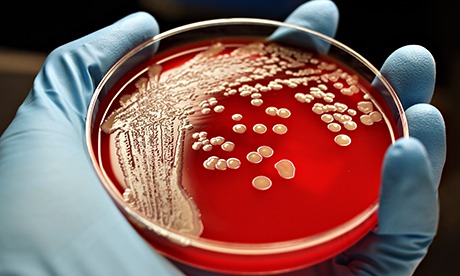
MRSA Petri dish

MRSA, a single of the most current generation of antibiotic-resistant bacteria. Photograph: R Parulan Jr/Getty Photographs/Flickr RF


Antibiotic-resistant superbugs threaten to plunge the world back to the “dark ages” of medicine, in accordance to David Cameron, who pledged that the Uk will lead a international hard work to develop new medicines. The prime minister went on to get in touch with for a coordinated global response to the emergence of untreatable bacteria, which he decribed as one of the greatest overall health threats dealing with the globe today.


“This is not some distant threat, but some thing occurring appropriate now,” Cameron advised the Instances. “If we fail to act, we are hunting at an practically unthinkable situation where antibiotics no longer work and we are cast back into the dark ages of medicine, in which treatable infections and injuries will kill when once again. That simply are not able to be allowed to take place and I want to see a stronger, much more coherent worldwide response.”


The prime minister is to announce an independent review led by Jim O’Neill, the former chief economist at Goldman Sachs, to identify why new medication have failed to emerge on the international market. The evaluation is expected to concentrate on the advancement and regulatory environment about antibiotics.


Cameron, who said earlier this month that instant action is required to accelerate the development of medication for dementia and oversaw a push during the UK’s G8 presidency last year to set a global ambition of discovering a remedy by 2025, is stated to have raised the issue of antibiotic-resistant superbugs during final year’s G7 summit.


He went on: “When we have had these difficulties in the previous, no matter whether it is how we tackle HIV and Aids, how it is possible to lead the planet and get rid of illnesses like polio, Britain has taken a lead and I consider it is correct we take a lead once more.”


Scientists estimate that there are 5,000 deaths a yr in the United kingdom due to strains of bacteria that have evolved resistance to antibiotics. There have been warnings that the continuing rise in resistance could have wider repercussions in the future. Surgical treatment, and treatment method for ailments such as leukaemia, would be hard to carry out if there were no signifies to destroy off random infections in sufferers.


The pharmaceutical sector has produced three generations of antibiotics in the previous 60 many years. The very first integrated all-natural penicillins. Nonetheless, this group fell by the wayside as bacteria evolved enzymes that broke the medicines apart. The 2nd had been synthetic penicillins, modified in the lab to resist the bugs’ enzymes. Bugs gained resistance to these also. The third generation, carbapenems, have been even more modified. In 2003, the 1st microbes arrived in Britain that are immune to even these.


David Cameron calls for global response to superbugs

30 Haziran 2014 Pazartesi

ECT and ketamine in the treatment of depression - a response

Earlier this month, the Observer reported that a group of top wellness specialists were calling for our project involving combining electroconvulsive therapy (ECT) and ketamine to be abandoned. The study, named ‘Ketamine augmentation of electroconvulsive therapy to improve outcomes in depression’ and led by the University of Manchester, is timely and crucial.


Depression is typical and is a main trigger of disability, and at times death. There are many therapies accessible, like psychological therapies and antidepressants, but some men and women do not recover with these approaches. As a result, there remains the need to locate other approaches to aid them. This is exactly where ECT comes in. ECT is previously getting utilized in the NHS and advisable as a treatment method choice by the Nationwide Institute for Wellness and Care Excellence (Good) for individuals with moderate or severe depression following failure to respond to other therapies. It appears to be the most effective treatment known to alleviate extreme depression but remains controversial.


The academics who are calling for our examine to be halted query the effectiveness and security of ECT, and a lot of of them have publicly indicated their opposition to ECT. Even so ECT has been the subject of cautious independent evaluation by Nice, who have concluded from the proof that it is an powerful brief-term treatment for depression but at the price of cognitive side effects, such as memory difficulties. The primary goal of our study is to investigate no matter whether these side effects can be decreased or eliminated.


Ketamine is described by the critics of the review as a ‘street drug’. What they neglect to say is that it is primarily an anaesthetic in everyday use throughout the NHS, including for young children, and is regarded as a secure drug when utilised in a clinical context. In our examine, supported by the Healthcare Research Council and the National Institute for Health Study, ketamine is currently being used as element of the anaesthetic that is routinely provided for ECT. We are testing the hypothesis, primarily based on function elsewhere, that ketamine will block the disruptive result of ECT on contemplating and memory.


The administration of ketamine with ECT is nothing at all new. It has been utilised occasionally as the anaesthetic for ECT for a lot of years and far more recently there have been a number of tiny studies investigating the mixture, numerous with a similar hypothesis to ours. However these studies have been also little to give a definitive solution, which is why a bigger study this kind of as ours is vital in buy to clarify whether or not ketamine need to be provided as portion of standard ECT remedy. What the other research do offer, nevertheless, is evidence that ketamine can be can be securely given as the anaesthetic. They also display that when it is employed in the way we are performing so in our study, in a low dose with each other with another anaesthetic, the short-lived psychological results of ketamine this kind of as confusion and hallucinations are seldom witnessed. The opinion expressed by the critics, that ketamine and ECT is a particularly risky mixture, is just not borne out by the proof.


The last misrepresentation made of our review is that inaccuracies or omissions in the details given to participants could influence their determination about remedy. We only approach people after they have already determined to have ECT for their depression and have offered informed consent to their clinical group following becoming informed of the positive aspects and dangers of undergoing ECT. This is a clinical decision completely independent from our review, and therefore the implication that we could somehow entice folks to have ECT could not be even more from the truth. We are confident that the details offered to individuals about the use of ketamine (or a placebo) in this research is exact, and it has been reviewed both by our service consumer group, and an NHS Study Ethics Committee.


The reality about the review is that it seeks mostly to investigate regardless of whether or not it is achievable to reduce one of the major problems associated with ECT. If productive, it will be immensely advantageous to individuals who need to have this remedy to alleviate their depression.


ECT and ketamine in the treatment of depression - a response

27 Haziran 2014 Cuma

Glastonbury: guy dies soon after suspected response to ketamine

“At this stage we believe this was an individual response to ketamine and was not from a poor batch of the drug.”


Ketamine is a effective anaesthetic and is used as a horse tranquiliser by vets.


Till the 1990s, ketamine – referred to as K or Unique K by users – was typically identified only as an anaesthetic but then use proliferated within the rave scene.


Police warned festival-goers on Twitter on Thursday: “Please do not consider medicines at Glasto.”


In an additional tweet, the neighborhood force said: “Ketamine and alcohol dangerously affect your heart and breathing say @PHE_uk – it can be deadly and you will not know what or how robust it is.”


The man’s death comes right after a 67-year-previous female died of natural causes at the festival. Her death is not being handled as suspicious and the police feel she could have had an underlying health-related issue.


According to the neighborhood force, a total of 85 crimes had been reported inside of two days, a lessen of thirty per cent on final year. Virtually half of the crimes reported have been home thefts.


Police have employed monitoring software program to find 1 stolen cellphone and arrested a single lady.


Inspector Liz Hughes, of Avon and Somerset Police, stated: “Thanks to a tracking app, we’ve been capable to recover a stolen cellphone, which exhibits that they truly do perform.


“They are truly useful and I would urge anyone who hasn’t presently acquired a single put in to do so right now.


“We have also arrested 3 guys on suspicion of theft and this demonstrates that there are a quite modest number of individuals who come right here intending to steal and spoil the enjoyable for everybody else.


“Whilst the arrests are a good stage, it is a reminder to us all to search following your possession extremely meticulously.”


Glastonbury: guy dies soon after suspected response to ketamine

17 Haziran 2014 Salı

Statins, the ethics of preventive medicine, and the nocebo response | @guardianletters

1948. Doctor-patient consultation

The standard medical doctor-patient partnership. The GP contract can shell out physicians to encourage wholesome lifestyles, but is not that morally dubious? Photograph: Popperfoto/Popperfoto/Getty Photos


The Royal Colleges of Physicians and GPs are opposed to Good proposals for population-level prescription of statins (Medical doctors call for rethink on prescribing statins, eleven June). As 1 of the designers of the Newcastle University simulation on healthier ageing, it is gratifying to see this scenario currently being played in the true world. Coming in the very same week that we hear that one-third of the population is at high danger of kind two diabetes, probably we can consider an even far more fascinating situation: tagging obese patients with stepometers? If this is combined with rewards and penalties, the question is also ethical and philosophical, not health care: by what moral authority should medical doctors handle behaviour? A scenario today, but actuality tomorrow?


Prevention of avoidable diseases is starting up to look like the only way to save the NHS from bankruptcy, but this calls for the NHS to become a behavioural-adjust organisation that promotes specific lifestyles. The energy is there to do this. The GP contract can pay physicians to fill this new part, but is not that morally dubious? Well being follows an income gradient: the reduce the cash flow, the a lot more unhealthy the “lifestyle”. Unhealthy lifestyles of folks on lower incomes are not freely chosen. Minimal pay, unemployment, and minimal social and financial standing funnel by means of to lower self-esteem. Stress and depression improve the threat of self-treatment by way of tobacco, alcohol, sugar and fat. Lower earnings also increases your likelihood of living in poor housing, and not getting capable to afford healthful meals or exercise appropriately.


Doctors can intervene by filling individuals up with statins or forcing patients to dress in new technological innovation to monitor activity, blood sugar and cholesterol. Delivered at the population level, these measures will perform by skating in excess of the biggest trigger of poor wellness, which is low earnings. Are medical doctors prepared to do this dirty work? They have a choice. Physicians and GPs are firmly camped in the leading one% of income. As inequality is turning out to be a hot topic and we are heading towards an era when unequal incomes may possibly be addressed, may possibly the schools set an instance by voluntarily limiting doctors’ shell out to a a number of of typical earnings? Taking a hit in your own wallet is a potent stage, as befits the hallowed standing of medicine.
Kenneth Charman
Going to fellow, Changing Age Network, faculty of health-related sciences, Newcastle University


• I was interested in Sarah Boseley’s mention of the “nocebo result” (Professor at centre of statins row says public becoming misinformed, 14 June), although it didn’t quite describe the nature of this phenomenon, which truly has small if anything to do with middle age, and maybe far more to do, as she says, with people just not wanting to be on capsules. My late father, Dr Walter Kennedy, very first coined the term “nocebo response” in a health-related paper back in 1961. He utilized the Latin nocebo (“I shall injure”) as the opposite of placebo (“I shall please”) to indicate any unpleasant response to real or dummy remedy, this being a response within the patient themselves, and not due to the pharmacological action of a medication.


In other words, there is not a “nocebo effect”, only a “nocebo response”. Unfortunately, the term nocebo is occasionally utilized incorrectly for an lively drug’s unwanted pharmacologically induced unfavorable side-effects. Kennedy plainly stated that nocebo responses ought to in no way be baffled with real pharmaceutical side-results.
Dr Peter Kennedy
Wivenhoe, Essex


Statins, the ethics of preventive medicine, and the nocebo response | @guardianletters

30 Mayıs 2014 Cuma

Simon Stevens: NHS need to back nearby hospitals Twitter response

The NHS should move away from large centralised hospitals and in direction of neighborhood services to care for folks in their own communities, the new NHS England chief executive has mentioned. Simon Stevens mentioned there necessary to be new designs of care created close to smaller sized neighborhood hospitals. Right here are some of your tweets responding to his comments:


@sajajohnson @GdnHealthcare Needs a lot more income to fund this and the PFI for the megacentres previously in existence. Who will workers them?


— Dr John G Hughes (@johnghughes3) Might 30, 2014


@GdnHealthcare Good! but a lot more essential to cease enormous economic wastage on the tendering procedure NHS vs Private


— jenny.bremner (@BremnerJenny) May possibly thirty, 2014


@GdnHealthcare centralisation is the way we get better concentration of expertise &amp efficiency with dilution high quality of care suffers


— Julie Longworth (@bushbytiger) May thirty, 2014


DH’s programs for 15-thirty specialised hospitals would have wrecked neighborhood health economies all over country. Good to see Simon Stevens rowing back


— Clive Peedell (@cpeedell) Could 30, 2014


@GdnHealthcare Final handful of years have been about hospitals feeling extremely threatened – stifles innovative response. This will help greater considering


— diana smith (@mulberrybush) May thirty, 2014


Agree with @mulberrybush NHS must start off with patient and operate backwards, like a business. Focusing on primary care is key @GdnHealthcare


— The Information Surgery (@DataSurgeryUK) May thirty, 2014


@nedwards_1 @HPIAndyCowper thrilling to see Simon Stevens advocating for smaller hospitals as a centrepoint in local communities…


— John Myatt (@JMMyatt) May thirty, 2014


@GdnHealthcare Also need functional oversight to accessibility #innovation, research &amp new remedies &amp involvement in determination creating @SDenegri


— Rachel Joynes (@investigation_ramble) Could 30, 2014


Calm down every person. Simon Stevens not promising new hospitals in every single town. May possibly just be giving lifeline to some smaller DGHs although


— Alison Moore (@AliJaneMoore) May thirty, 2014


New NHS CEO says NHS is at a defining minute but no mention of culture or patient security. http://t.co/R61us3KdCG


— Gary Walker (@garywalkeruk) Could 29, 2014


Much more political irony !! It looks this Simon Stevens was a former advisor on health to Bliar, the man that closed all the modest hospitals


— Mark Bowden (@markbowdn) May possibly thirty, 2014


@GdnHealthcare he is not far off, NHS is misaligned with support delivery for persistent care, get that appropriate, care improves, charges will drop


— Christian Symonds (@chris_symonds1) Could thirty, 2014


Argued on BBC information channel that Simon Stevens both conservative (conserve nearby hosps) and radical (transform out of hosp care)


— Chris Ham (@profchrisham) Could thirty, 2014


@GdnHealthcare nevertheless makes it possible for them to push on with privatising services &amp tendering out, so no wonderful change in the greatest aim, for me


— Mark Robertson (@TheRobbo1) Might thirty, 2014


@GdnHealthcare Stevens’ comments present that two many years on from Health Act getting passed, NHS architecture nonetheless evolving and in state of flux


— Ben Nunn (@BenNunnUK) Could 30, 2014


@SocietyGuardian @GdnHealthcare all extremely well but absolutely nothing can disguise the fact that if the NHS is not funded properly services will be reduce


— Mary Brooks (@MarygBrooks) Could thirty, 2014


@sajajohnson @GdnHealthcare encountering outstanding nearby post op rehab care with my mum, it is targeted, effective + investing in recovery


— Sally Crowe (@sally_crowe) May 30, 2014


Have your say by commenting under the line or tweeting us @GdnHealthcare


Simon Stevens: NHS need to back nearby hospitals Twitter response

22 Mayıs 2014 Perşembe

Antibiotic-resistant bugs need international response, say health specialists

Handful of antibiotics

Scientists creating in the journal Nature say an international panel on antimicrobial resistance should be developed. Photograph: Murdo Macleod for the Guardian


Public well being experts have called on planet leaders to establish a international organisation to battle the growing risk from drug-resistant bugs.


Antibiotic-resistant pathogens have reached every country, with some sufferers being treated with medication that are now the last line of defence towards infections. Scientists gathered at the Royal Society in London on Thursday warned the predicament is so desperate that a international response in line with efforts to combat climate adjust is needed.


About five,000 men and women a 12 months die in Britain from infections that are resistant to antibiotics, and drug resistance is expanding steadily, eroding the effectiveness of doctors’ most strong antibiotics.


Writing in the journal Nature, Jeremy Farrar, head of the Wellcome Believe in, and Mark Woolhouse, professor of infectious ailment epidemiology at Edinburgh University, urge globe leaders to set up an global panel on antimicrobial resistance to maintain current medication operating and develop options. Based mostly on the UN’s intergovernmental panel on climate modify, they say it should be charged with locating approaches to slash the use of antibiotics to avoid the spread of resistance, and work with business to create medicines and treatments to fight infections triggered by bacteria, but also viruses and parasites.


Last 12 months, the United kingdom launched a five-12 months program to enhance use of antibiotics, bolster surveillance of resistant bugs and create tests for the infections. OneAnother area that wants improvement is schooling of healthcare college students, who normally devote only a week finding out about antibiotics.


But Woolhouse mentioned that, as with climate change, countries had to take action together: “A national plan is not sufficient. We need to handle this issue internationally. We need to have everyone on board.”


“In terms of the threat to my personal overall health, and that of my kids, and my family’s wellness, I am considerably much more concerned about antimicrobial resistance than I am about climate modify,” Woolhouse added.


Britain’s most senior health-related adviser mentioned antimicrobial resistance will be put on the Cabinet Office’s national danger register at the end of the year, putting drug resistance on a par with pandemic flu and terrorism as considerable civilian threats.


Dame Sally Davies, the chief health care officer, has driven the concern substantial on to the government and global agenda. On Friday, the Globe Health Organisation will vote in Geneva on a resolution to create its personal global action program to battle antimicrobial resistance.


Previously, Davies has warned of an “apocalyptic” situation in which people going into hospital die from program operations due to the fact there are no antibiotics to treat them. Antibiotics will even now be helpful for a lot of years, but it could consider a lot more than a decade to create new drugs. There have been no new courses of antibiotics for 25 many years.


“I will not want to see my children, or their children, or even myself in hospital with an untreatable infection,” Davies said.


To slow the rise of antibiotic resistance, GPs and clinicians want to prescribe medicines much more prudently, but other action wants to be taken. The medicines are still used broadly in agriculture, regardless of an EU ban stopping their utilization as growth promoters. The ban was simply side-stepped by offering animals the medication for diverse factors.


“The issue of antimicrobial resistance is very analogous to worldwide warming. You’ve acquired to do issues in the Uk, and have a United kingdom policy, but at the very same time, you have acquired to have an worldwide policy,” mentioned Michael Moore, the antimicrobial resistance champion for the Royal University of General Practitioners.


Antibiotic-resistant bugs need international response, say health specialists

7 Mayıs 2014 Çarşamba

Premature menopause is linked with bad contemplating and response times

They had been also one third far more probably to have proven a decline in their reaction instances and general considering ability, 7 many years later on.


The findings have been published in BJOG: An International Journal of Obstetrics and Gynaecology.


The tests included recognising a line drawing they had been proven previously, the amount of phrases they could believe of in a given class this kind of as colors or animals in thirty seconds, connecting numbered circles and the mini-psychological state examination which covers general pondering potential.


The researchers said the final results ought to mean that surgical procedure to get rid of the ovaries in girls below the age of 40, which induces menopause, ought to take into account the result on thinking and memory.


They discovered that remedy with hormone replacement therapy at the time of menopause did not counteract the changes in thinking and memory.


There was some proof that HRT could be advantageous for visual memory, but it could increase the danger of bad verbal fluency, it was found.


Lead writer, Dr Joanne Ryan, postdoctoral study fellow in Neuropsychiatry at Hospital La Colombiere, in Montpellier, France, mentioned: “Both premature surgical menopause and premature ovarian failure, had been connected with extended-term negative effects on cognitive function, which are not fully offset by menopausal hormone therapy.”


Pierre Martin Hirsch, BJOG deputy editor-in-chief, stated: “With the ageing population it is critical to have a greater knowing of the long term effects of a premature menopause on later-life cognitive perform and the prospective benefit from utilizing menopausal hormone treatment.


“This research adds to the existing proof base to propose premature menopause can have a significant influence on cognitive function in later on lifestyle which healthcare professionals must be aware of.”


Premature menopause is linked with bad contemplating and response times

5 Mayıs 2014 Pazartesi

Pakistan"s failure to quit spread of polio sparks global emergency response

A Pakistani child is vaccinated against polio by a health worker in Islamaba

A Pakistani youngster is vaccinated against polio by a overall health employee in Islamabad. Photograph: Muhammed Muheisen/AP


Pakistan’s failure to stem the spread of polio has triggered international emergency overall health measures , with the World Overall health Organisation (WHO) recommending all residents need to present proof of vaccination prior to they can leave the nation.


The emergency measures also apply to Syria and Cameroon, which along with Pakistan are witnessed as posing the best chance of exporting the crippling virus and undermining a UN strategy to eradicate it by 2018.


Pakistan is in the spotlight as the only country with endemic polio that noticed situations rise final 12 months. Its caseload rose to 93 from 58 in 2012, accounting for a lot more than a fifth of the 417 situations globally in 2013.


The virus has lately spread to Afghanistan, Iraq, Israel and Syria, and has been discovered in sewage in the West Financial institution, Gaza Strip and greater Cairo, explained WHO assistant director basic Bruce Aylward. It also appeared in China two many years in the past.


“In the bulk of these re-infected areas, the viruses circulating truly trace back to Pakistan within the final twelve-18 months,” Aylward advised reporters on a conference call.


Pakistan has referred to as an emergency meeting of senior provincial and federal health officials for Wednesday to finalise how to employ the new demands.


“The greatest option would be vaccinating the passengers at the airport departure where polio vaccination cards would be issued to the passengers. Human resource and vaccines would have to be worked out for the purpose,” state minister for health services Saira Afzal Tarar stated in a televised broadcast.


“It would be most useful as men and women usually have to fly in emergencies.”


Aylward explained Pakistan had carried out tremendous perform to restore security in Peshawar after deadly attacks on wellness staff had impeded the battle against polio. The race to meet a target to eradicate polio by 2018 was still feasible, he explained.


“In terms of the 2014 operating target to try out and cease transmission, from the data presented, obviously Pakistan would be the only country that would be regarded ‘off track’ in terms of its capacity to meet that deadline,” he extra.


The WHO chief, Margaret Chan, declared the resurgence of the ailment to be a public overall health emergency of worldwide concern, the very first such designation considering that a 2009 flu pandemic.


The travel restrictions need to remain in place right up until there is a complete yr with no new exports of the disease, or six months if the countries can display they have carried out substantial-high quality eradication routines in contaminated and high-threat locations.


The WHO’s emergency committee, an independent group of specialists that drew up the suggestions, will meet in 3 months to assess the countries’ actions, or sooner if required.


The measures published on Monday have been the minimal actions that could be taken with no unnecessarily disrupting travel or trade, but significantly stronger measures could have been suggested, Aylward said. People consist of full vaccination programmes, restrictions on much more nations and suggestions on nations of arrival.


The WHO says ten million individuals are walking today thanks to efforts to wipe out the ailment, which primarily affects children underneath five many years outdated. It says financial designs demonstrate eradicating polio would save at least $ 40bn to 50bn more than the subsequent 20 many years.


Polio passes effortlessly from person to man or woman and can spread quickly amid kids, especially in the type of unsanitary situations endured by displaced individuals in war-torn regions, refugee camps and regions where wellness care is constrained.


The virus invades the nervous method and can trigger irreversible paralysis inside hrs. The WHO has repeatedly warned that as extended as any single youngster stays contaminated with polio, young children all over the place are at risk.


There is no remedy for the disease but it can be prevented by immunisation. The polio vaccine, administered several times, can shield a kid for daily life.


Pakistan"s failure to quit spread of polio sparks global emergency response