values etiketine sahip kayıtlar gösteriliyor. Tüm kayıtları göster

20 Mart 2017 Pazartesi

Residential care costs "can soak up over 50% of property values"

The cost of an average stay in a residential care home can swallow up more than half the value of an individual’s house in some parts of the country, according to new research.
The findings, which show that the typical person entering residential care will face a total bill of £50,000-£93,000 depending on where they live, will fuel the debate about social care funding.
The chancellor, Philip Hammond, announced in this month’s budget that an extra £2bn would be granted to social care in England over the next three years. He also said the government would produce a discussion paper later this year that looks into how to fund social care in the future.
The new research from the mutual insurer Royal London, whose director of policy is the former pensions minister Steve Webb, found that variations in house prices around the UK mean the cost of a typical residential care home stay could range from 18% to 56% of the value of the average house.


It described the situation as a lottery and said many people were at risk of losing “a large part of the value of their home” if they were hit with such costs.
It said that for most pensioners, their house was likely to be by far the biggest asset on which they would need to draw to meet care home bills. For many, that will mean selling the family home to pay the fees.
For people in north-east England, where the average house price at the end of 2016 was just under £129,000, an average stay of 30 months in a local home costing £554 a week would eat up 56% of the value of their home. The total bill would be £71,000.
For those living in London, where the average house price is around £484,000, 30 months of residential care at a typical cost of £666 a week would only account for around 18% of the value of their home. The total bill would be £86,000.
The equivalent percentages for south-east England, East Anglia and the Midlands were 29%, 32% and 40-41% respectively.
The research relates to residential rather than nursing care. For those who need nursing care, the total bill is likely to be smaller because average stays in nursing homes are significantly shorter than those for residential homes,which more than offsets the higher weekly costs of nursing care.
Webb, a former Liberal Democrat MP, said successive governments had “failed to grasp the nettle” when it came to care costs, and that urgent action was needed.


Residential care costs "can soak up over 50% of property values"

1 Aralık 2016 Perşembe

Sending fat smokers to the back of the queue is a betrayal of NHS values| Polly Toynbee

The Vale of York has been granted permission this week by NHS England to put fat people and smokers to the back of the queue for operations. Starting in January, their treatments will be delayed a year; the obese must lose 10% of their body weight, and smokers give up for at least two months.


The Royal College of Surgeons says it is “very disappointed that NHS England and No 10 seem to be backing this arbitrary policy”.


It’s always good advice to live healthily, but this crosses a new red line. The clinical commissioning group (CCG), which buys services for people in York and Selby, is the first to be given official permission, agreed by Downing Street, to discriminate against particular patients – something forbidden in the (non-justiciable) NHS constitution. But the CCG is in trouble, in July judged “inadequate” and put into special measures and prescribed a “financial turnaround” for its debts.


Rationing will always be a part of the NHS social contract. Every system in the world rations: just look at the strict limits in US health insurance policies. There never was, or can ever be, an instant, ever-open door – however much politicians pretend, with their impossible seven-day pledges on no extra money, that there can be. But the UK system is judged one of the most efficient in the world, getting the biggest bang for its modest bucks, spending less than similar countries.


The key is its unique gatekeeping GPs who dispense the great bulk of treatment, while the National Institute for Health and Care Excellence (Nice), devised by the last Labour government, judges which drugs and treatments are good enough value for money for the NHS. The rule of thumb is to spend up to £30,000 for an extra year of good quality life.


Right from 1948, when the NHS was first set up, waiting lists were the traditional rationing mechanism. When governments tightened spending, waiting times grew, which was good for surgeons’ private practice.


For the first time in history, the last Labour government all but abolished waiting lists, something seasoned NHS experts never thought possible. With a spending increase of 7% a year, new targets saw waiting times drop from sometimes two years to just 18 weeks maximum, and two weeks for suspected cancers. Surgeons’ incomes plummeted, as did payments for private healthcare.


But in the present crisis, rationing is tightening everywhere. You get only one cataract fixed where CCGs think one eye is enough. The list of treatments being struck off is lengthening, and the postcode lottery of what your CCG pays for produces injustices.


I reported recently on a podiatry clinic treating severe diabetics that can give some patients a cast that cures ulcers in eight weeks. Those in other CCG areas get a cheaper bandage, which means healing takes 52 weeks. In the past, old people were often denied many life-enhancing treatments. All such rationing may be unfair, but at least it was never personal.


The abiding principle was that the NHS treated people in order of medical need, according to resources available. Minor complaints went to the back of the queue. Urgent cases were treated first, followed by those people likely to be rendered wheelchair-bound and needing social care if they did not get surgery on hips or knees – as will many of these obese patients.


The system was blind to everything but medical priority, a founding NHS principle that treated viscount and vagrant according to urgency, priest and sinner in next-door beds regardless of rank or virtue.


But once a patient’s personal failings can be taken into account, where does that lead? More people on low incomes are obese and smoke, and therefore already suffer worse health. This is for a host of psychosocial reasons, including the sheer stress and hardship of being at the bottom. (See Michael Marmot’s work, or the irrefutable evidence from Richard Wilkinson and Kate Pickett, authors of The Spirit Level, on the link between low status and poor physical and mental health.)


The poor often get worse NHS treatment, having less sharp elbows, and living in areas where the best doctors are harder to recruit. Undoubtedly most will have tried to lose weight and quit smoking, but public health budgets for obesity and smoking programmes have been cut, and are set to shrink again. This blaming of the individual conveniently shuts out social context. Don’t they have free will, these people? Politically, they will be easy to cast to the back of the queue, shamed into silence for their fatness and addiction. They will make much less fuss than local campaigners against any closures to hospital units.


This opens up new horizons: how much easier rationing becomes when we can blame the patients. Hey presto, waiting lists can be pared right down, targets hit, leaving only the virtuous on the lists.


But who are they? Let’s weed out anyone in any way responsible for the burden they put on the NHS. Away with the boy racers smashing themselves up with their first motorbikes and cars. Out with the extreme sports addicts – the climbers, potholers, boxers, base jumpers paragliders, skiers and F1 drivers, who get their adrenaline kicks at the NHS’s expense. Forget all sports injures.


Away with my own age group, too: drinking too much wine of an evening, slowly corroding our livers: a host of cancers are caused by drink and diet. And what about people bitten by their own horrible, fierce dogs? Or idiots tripping over while texting on smartphones?


As Hamlet said, use every man after his desert (or perhaps desserts) and who shall ‘scape whipping? Until now, in the NHS, the service may have creaked under the strains of the worst funding crisis in its history, but the quality of mercy was not strained. That has been the NHS’s great moral strength, as with the Red Cross or Médecins Sans Frontières, or indeed the Hippocratic oath itself. In treating the sick, let there be no discrimination over their moral worth.


Sending fat smokers to the back of the queue is a betrayal of NHS values| Polly Toynbee

2 Temmuz 2014 Çarşamba

Republican family members values put women"s lives in danger around the world | Craig Lasher

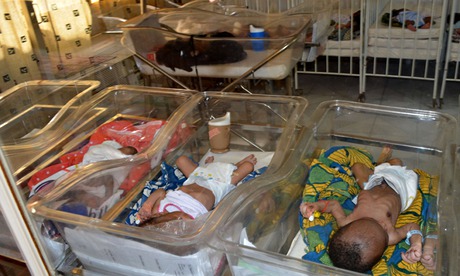
MDG : Babies in incubators at the maternity of Niamey, Niger

Babies rest in incubators at a hospital in Niamey, Niger. Policies espoused by US Republicans could influence millions of families. Photograph: AFP/Getty


Final week, a committee in the US Home of Representatives accepted a paying bill that would slash funding for international family members organizing and reimpose a damaging policy that minimizes contraceptive accessibility and tramples on the rights of healthcare companies.


On Monday, the supreme court ruled that some US employers could deny staff accessibility to birth handle coverage if they declare a religious objection to contraception.


Is it just me, or do we seem to be in retreat? This most current disregard for girls – in the US and overseas – is not sudden, but it is undoubtedly disappointing. In several approaches, we have been fighting the exact same battle for the previous 30 many years. But the battle lines have shifted and, often, we have to struggle to retain hard-won ground.


When I commenced doing work on this issue in the early 80s, there was correct, bipartisan help for family members organizing. Some of the most sincere anti-abortion Republicans realised that the steady, commonsense public policy position for them to consider would be to help overseas loved ones arranging funding. Far better accessibility to contraception would lessen unintended pregnancies and abortions, especially unsafe abortions.


The international gag rule, also known as the Mexico City Policy, was 1 of the first instances of the domestic anti-selection agenda interfering with the overall health and lives of ladies in creating nations. Introduced thirty many years ago, in the course of the Reagan administration, the policy bars foreign organisations that receive US household arranging assistance from utilizing their personal personal, non-US government funds to offer data, referrals, or providers for legal abortion, or to advocate for the legalisation of abortion in their own nations.


Considering that it was introduced, the gag rule has been subject to the vagaries of US politics – imposed or kept in location by Republican presidents, and repealed by Democrat leaders. However it was rescinded by President Obama on taking workplace in 2009, Republicans in the Property have tried every year since to reinstate it.


Their efforts are testament to a rightward shift in US politics, which includes an emboldened anti-selection motion that has continued to obtain political electrical power. The middle has shrunk, the partisan divide has grown, and the Republicans getting elected to Congress now are much more intense and bent on undermining women’s wellness and rights. Under the guise of “guarding the unborn”, the misguided policies they espouse threaten the overall health and lives of millions of girls and families.


The US’s $ 610m contribution to worldwide family members arranging and reproductive well being in fiscal year 2014 aided 31 million ladies and couples receive contraceptive companies and supplies. It prevented 7 million unintended pregnancies and 3 million abortions (2 million of them unsafe), and saved the lives of 13,000 women. In addition, 60,000 fewer kids misplaced their mothers.


The reality is that family preparing saves women’s lives. But in Washington these days, the facts do not matter. Last week Republicans on the Home investing committee imposed a totally needless cap on international loved ones preparing funding.


The Residence committee bill proposes cutting global household preparing funding by $ 149m, practically 25% from current amounts. Using evaluation from the Guttmacher Institute, this would outcome in far more than seven.seven million fewer couples utilizing contraception, far more than one.6 million further unintended pregnancies, and 745,000 more abortions. Almost three,000 a lot more ladies would die in pregnancy or childbirth, and 13,400 more kids would get rid of their mothers. So much for loved ones values.


We have been fortunate in that throughout the previous couple of many years, Republican attacks in the Residence have been blocked by Senate family members preparing champions, in which, for now at least, Democrats retain manage. This has essentially resulted in upkeep of the status quo on family arranging policy and on funding. The Senate model of this year’s spending bill counters the House by such as $ 644m for global loved ones organizing, and a everlasting, legislative repeal of the worldwide gag rule.


But this uneasy stalemate could adjust, based on the outcomes in key races in November. If Republicans get manage of the Senate, the truce will be broken and battle lines redrawn. The drastic cuts the Home committee accepted final week could be critically deemed in an omnibus spending bill, and an offensive could be mounted by opponents to attempt to force the gag rule on a professional-option president.


The wellness of girls all around the planet is far too critical to carry on to be thrust on to the frontline of US domestic culture wars.


Craig Lasher is director of US government relations at Population Action International


Republican family members values put women"s lives in danger around the world | Craig Lasher

28 Haziran 2014 Cumartesi

The good results of the NHS lies in the strength of its values | The massive problem

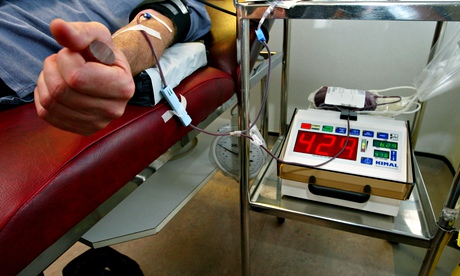
Blood donation

The altruism of blood donors is what aids to drive the NHS. Photograph: Martin Argles for the Guardian


As a committed NHS advisor (element retired) dealing with leukaemias amid other haematological issues, I read through Will Hutton’s column with wonderful fulfillment (“The NHS is loved and effective, so why the obsession with reform?”, Comment). Not due to the fact I want a pat on the back, but due to the fact his position on the NHS and condemnation of the present government’s systematic and determined undermining of the organisation resonate with my own and numerous others’ attitudes. He is right to assess that its power lies in the underlying “value driven” ethos. His reference to the “drive to cure” uniting the teams, such as the altruistic blood and marrow donors, is, in my mind, what it is all about and why I function in it.


It was the freedom from getting to be commercial that permitted me and my colleagues to location the patients’ interests as our paramount concern. By no means getting to query how a patient was to spend for their remedy has been a great privilege.


Susan J Kelly


Kidlington


Oxon


It’s genuinely good to know that Will Hutton has seasoned very first-class leukaemia companies with the NHS at the superb UCL, but he will know the problems that other sufferers expertise due to the fact of the variability of individuals companies across the NHS. He will also recognise the issues of concerns of late diagnosis of cancer highlighted by Macmillan cancer care. Most major patient groups, as nicely as the NHS Confederation, are arguing strongly for new models of well being and social care that are much better co-ordinated about patients’ lives and not overall health providers’ organisational requirements.


We believe in the ethos of the NHS and that it is powerful adequate to go with these adjustments demanded by sufferers. The last factor the NHS requirements as it faces the challenges of better demand is complacency.


Professor Paul Corrigan


and Mike Parish, chief executive, Care Uk


c/o Reform


London SW1


It is a shame that politicians are not as candid in public as they are in private about the problems dealing with the NHS. Increasing patient demand, falling resources, workforce shortages: the image sadly is the exact same during the NHS. However, politicians in public seem to ignore this reality and instead meddle in the NHS in a way that ends up contributing to the problem rather than solving it.


The Health and Social Care Act wasted enormous amounts of time and assets on an experiment that is already fragmenting the delivery of care by introducing needless competition. It is not surprising in this climate that a BMA poll located that three-quarters of the public thought politicians designed their polices to win votes rather than improve care.


We require our policymakers to be transparent about the state of the NHS and to end inflicting sick considered-out policies on a overall health services that is already struggling. Most importantly, politicians need to have this conversation in public rather than hiding their remarks behind close doors.


Dr Mark Porter


Chair of BMA Council


London WC1


Toby Helm reminds us that the pointless £3bn shake-up of the NHS caused by Andrew Lansley was not voted for and not spelled out in the 2010 election manifesto (“Minister: NHS is out of our management”, Information). Actually, it is far worse than that. He had informed us clearly that it was not going to happen. At the British Pharmaceutical conference in 2009, in front of a number of hundred pharmacy and scientific colleagues, Mr Lansley informed me, in response to a direct query, that no main NHS reorganisation was planned. His reply was, for a politician, surprisingly clear and unequivocal. So was the palpable sigh of relief between my 700 or so colleagues at this welcome information. I will not forgive Mr Lansley or his celebration for getting so very cost-effective with the truth.


Brian Curwain


Christchurch, Dorset


Dorset


The good results of the NHS lies in the strength of its values | The massive problem

30 Mayıs 2014 Cuma

Pat Money: My household values

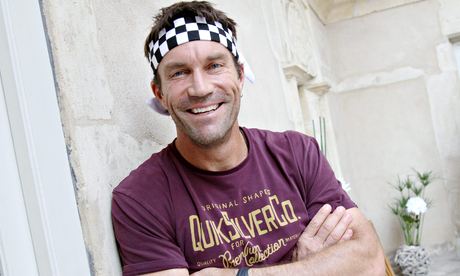
PAT CASH AUSTRALIA NANCY FRANCE 07 June 2012

Past Money: ‘If it wasn’t for my children, I may possibly have killed myself.’ Photograph: Allstar Image Library/Alamy


My 1st title was never ever supposed to be Patrick. My mothers and fathers had agreed I would be Brendan Patrick. My dad was not at the hospital when I was born and when he came to choose us up, Mum handed him the birth certificate with Patrick as my very first title. She had altered it with no discussing it with him. My middle title had grow to be her maiden title, Hart.


We had a large family members house in Melbourne. I was the first of three children my mum, Dorothy, had with my dad. But she’d had 3 young children from her 1st marriage so my two half-brothers and sister had been usually popping in and out. Mum was the disciplinarian. She was a powerhouse and has a strong personality, that’s fair to say. But she is also extremely sweet and wacky.She’s is 83 but when you meet her, you will not overlook her.


I was raised as a Roman Catholic. My mum is American so didn’t have any loved ones close to, but my dad’s mother and father lived nearby so we often visited them right after church. My dad, Patrick Sr, was one of nine so I had plenty of cousins.


I went to the neighborhood Catholic school, exactly where I played just about each and every sport. Dad played for 1 of the huge football teams in Melbourne, but later grew to become a lawyer. A single of my earliest recollections is him teaching me how to kick a football when I was five. He received me my very first tennis lessons when I was nine.


Dad passed away a couple of years ago. He was my No one supporter and my manager during my career.He guided me and was usually there with assistance, so it was terribly painful. He was at Wimbledon when I won the men’s final in 1987 and famously climbed up to the players’ box. I remember offering him the hug I’d often needed to give him. It was an amazing minute.


I became a dad at 21. My son Daniel was born on my birthday. I had been with his mum, Anne-Britt, a Norwegian model, about six months before she got pregnant. I was pretty frightened about the whole factor. I was at Daniel’s birth in Norway. Watching childbirth was a bit of a shock. We are now great friends. He is almost 28 and operates for me part-time – he is an specialist in social media and helps seem soon after that side of things for me.


I separated from Anne-Britt when our second kid, our daughter Mia, was really younger. I considered I would in no way see the youngsters again but we created a dedication that we would the two commit as significantly time as we could with them. There was a good deal of travelling, but we produced it perform.


I had four kids by the time I was 29. I got married in 1990 to my now ex-wife Emily and we had our twin sons, Shannon and Jett, who are 19. The most important issue in the globe to me was to be a hands-on dad. I had a whole lot of injuries when they have been young, so I was in and out of the circuit, which meant I was close to a honest bit.


If it wasn’t for my youngsters, I might have killed myself. I suffered from serious depression from the age of 19 until 35. It is no secret I experimented with medicines when I was younger, but the actual situation was why I felt the require to. It was down to the pressure I was underneath playing for my country, the expectations I put on myself and the expectations folks put on me. I ended up checking into rehab for depression. Items acquired much better when I retired from taking part in professionally. I am setting up a basis for youthful athletes that will have a huge psychological-well being element to it.


I grew to become a grandfather at 44. My daughter had a tiny girl, Talia, now 4, when she was 22 and a son, Patrick, last year. I thought I was way too younger to be a grandad and I informed her that! But I really like spending time with the youngsters.Little Patrick was named after me and his grandfather, so that was a proud and emotional second.


I have a partner now. We have been collectively several years but I am not allowed to speak about her. I have had two long-term relationships in the past and I know that when I’ve been warned, it’s better not to say anything at all.


Pat Cash plays at BNP Paribas Tennis Traditional at the Hurlingham Club, London SW6, with Tim Henman and Andy Murray from 17 to 20 June. To book tickets go to bnpparibastennisclassic.com


Pat Money: My household values