The new leader of Britain’s 50,000 family doctors says the “five-a-day” target for fruit and vegetable consumption should be revised because it is unaffordable for many Britons.
In her first interview since becoming the chair of the Royal College of GPs, Dr Helen Stokes-Lampard told the Observer: “For people that have got a low income five-a-day is really, really hard. It’s expensive to have five-a-day. I get my five-a-day, no problem, but for many people they can’t afford that five-a-day.” Fruit and vegetables should be reduced in price to encourage greater uptake, she said.
In general, consumption targets that people find unachievable or unrealistic should be rethought because they demoralise those who do not achieve them, Stokes-Lampard said.
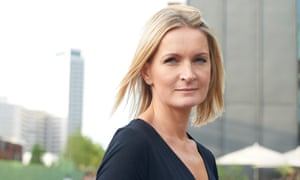
Dr Helen Stokes-Lampard, the new Chair of the Royal College of General Practitioners, says alcohol guidelines also need to be adapted. Photograph: Andy Hall for the Observer
She also doubted the wisdom of always trying to persuade smokers to give up. “Many people love to smoke still. Any reduction they can make is a good thing.Encourage them to reduce. If you only say to them ‘the only positive outcome is quitting’, then you’re going to turn them off, you’re not going to be able to have an ongoing conversation.”
Stokes-Lampard speculated that the alcohol guidelines introduced in January, which state that men should drink the same maximum 14 units a week that women have been advised to stick to for years, risked being seen as too strict. “It’s realistic, because a lot of people don’t drink that much. But, for those who do, that seems like a hard task to achieve,” she said.
Grains for breakfast, vegetables for lunch, smoked salmon for dinner. No wheat, no dairy, no sugar; 45 minutes of exercise every day. It’s a draconian and unbalanced regime even for someone with a sensible reason to lose excess weight. If you’re a 21-year-old who weighs eight stone, it’s clearly both unnecessary and profoundly unhealthy. And yet this was Rosie Nelson’s daily intake and expenditure of energy for four months back in 2014, as a result of a visit to one of the country’s most powerful modelling agencies.
Nelson had started modelling work at the age of 18, when her body was still developing. When she moved from her native Australia to Britain, her intention was to continue. And the agency in question liked her look – except for the fact that she was, they said, too big. Specifically her hips, which were around the 37- or 38-inch mark, but needed to shrink to 35.
I ask Nelson, now 24 and still modelling, what that moment felt like. “You get sucked into thinking that what they say is the only way to be,” she replies. “They control your life. They’re getting you your jobs, they’re providing you with your income, and you become like a slave to it. The industry’s so consuming that you forget about the real world. In the real world I’m incredibly thin, but in the modelling world I’m still too big. So when they asked me to lose weight, I accepted it.” But worse was to come. Grains consumed, exercise taken, social life shunned, she slimmed her hips down to 35 inches and went back to the agency.
“They said, just lose more weight – get down to the bone,” remembers Nelson. “They pressed on my hips and I just sat there thinking, no, I can’t. I can’t physically lose more weight. I was in shock. I didn’t know what to say.”
It turned out to be a pivotal moment. In its aftermath, Nelson decided she couldn’t return to her previous weight-loss programme, which she describes as “a horrible routine of essentially killing myself”.
She started working with smaller agencies, where she was encouraged to remain at a healthy weight. At the same time she began to speak and write about her experiences, committed to raising awareness of the potentially destructive power the fashion industry wields. That’s why, after a day’s work, she has joined Sophie Walker, leader of the Women’s Equality party (WEP), and Jada Sezer, a plus-size model on the verge of launching her own clothing range, to talk about WEP’s forthcoming campaign, which will operate on social media under the hashtag #NoSizeFitsAll.
Jada Sezer, pictured in 2013, was the face of London Fashion Week’s first plus-size show. Right, Rosie Nelson in her ultra-thin days. Composite: Rio Romaine and courtesy Rosie Nelson
For Walker, whose organisation has existed for a little over a year and is committed to change through cross-party collaboration, we are in the middle of a public health crisis that includes 1.6 million sufferers of eating disorders, 89% of them women and girls, and brings with it an economic cost of £1.3bn a year in lost productivity and healthcare bills. WEP’s campaign, which is backed by industry commentator and professor of diversity in fashion Caryn Franklin, will focus on what Walker believes is at the root of the problem: the sample sizes used by the fashion industry.
These “tiny, tiny little clothes”, says Walker, “are such that normal-sized women have to starve themselves to fit into them. And we’re not talking a three-day soup diet here, which would be bad enough; we’re talking weeks and weeks and weeks of systematic malnutrition, for which young women are paid to fit into these tiny little sizes. And so the first part of this campaign is to say that we think that by this time next year, when London Fashion week kicks off, the British Fashion Council should have in place a system whereby the designers showing in London must show at least two sample sizes, one of which must be more than a UK size 12.”
In addition, WEP is calling for legislation that will require all models hired or rehired by agencies to have a minimum body mass index (BMI) of 18.5; any lower, and they will have to see a doctor from a list of accredited medical experts to be signed off as healthy. This, says Walker, would bring the UK into line with law in France, Spain and Italy. She deems it “frankly embarrassing that we haven’t done this yet”. Her party’s campaign also calls on UK fashion magazines to feature at least one editorial piece per issue that includes plus-size models, and for body image to become a compulsory part of personal, social and health education at school.
Sophie Walker, head of the Women’s Equality party, is leading the campaign against ‘tiny, tiny little clothes’. Photograph: Suki Dhanda for the Observer
How likely does Walker think a change in legislation really is? She points to the fact that her party is the only one to work across political divides to achieve change, and to what happened when she ran in the London mayoral race, suggesting that it led “proud feminist” Sadiq Khan to launch a gender pay audit in City Hall. “He stole the policy because he was worried about losing the votes.” Her party, she argues, can bring its thousands of members and registered supporters to the table – the campaign will mobilise them to write to the British Fashion Council in support.
Does she worry that one plank of their demands – the insistence that models’ BMIs be monitored – will seem to some as if women are once again being medicalised or placed under enforced scrutiny? “You think that’s not already happening?” says Walker. “What we’re doing is the first step towards liberating women from that scrutiny. We have all lived with that pressure all of our lives.
“I have been everything from a size eight to a size 18, and I can tell you at every point in my life which size I’ve been and when. We live with this. And I am 45 years old. I have been living with it for 30 years and I’m tired of it. I’m seeing it happen to my children, I’m seeing my daughters – my seven-year-old and my 14-year-old – under the same pressures.” She adds that there are girls in her younger daughter’s class who talk about their “thigh gap” – the crucial space that indicates one’s legs are thin enough to be considered attractive. “What we are doing here is about removing that scrutiny, not adding to it. We are creating a situation where women can be healthy and work, rather than being paid to be unhealthy and contribute to this awful public health issue.”
The images that bombard women and girls are nothing new. For as long as there has been mass media, idealised pictures of the human body (generally, thin women and muscled men) have permeated cinema, television, newspapers and magazines – sometimes attempting to sell consumers products, sometimes simply illustrating a story. But in the age of the internet, says Sezer, an additional layer of imagery has appeared – not courtesy of businesses advertising their wares, but produced instead by the individual, via such platforms as Instagram or YouTube. Often, she says, such images are Photoshopped, or highly selective – and yet they are presented as authentic everyday life. In that category one might put extreme “clean eating” and hardcore exercise regimes.
Mark Fast Catwalk show at London fashion week in 2010. Photograph: Yui Mok/PA
Yet Sezer also believes that social media has brought much that is positive, and can be utilised as a force for good. Now 27, she was doing a master’s degree in child psychotherapy when she realised that she was drawn to finding out the root causes of people’s lack of confidence and “flipping it on its head and saying, you can do anything you want”. The immense popularity of her own Instagram feed led to her being signed to agency Models 1 and becoming the face of London Fashion week’s first ever plus-size show.
She stuck to modelling for the following two and a half years, including a stint in New York. It was there, she says, “I became really flat, and stripped back of everything. I felt like I’d hit a glass ceiling, and I felt like they weren’t pushing the boundaries fast enough, they weren’t seeing a gap could be broken into.” She was also segregated, a plus-size model restricted to working with plus-size brands. “I felt, surely that’s not right? When I got into modelling, I didn’t even know I was a plus-size model. I had no perception of what my body looked like.” Returning to live in London, she began to develop other strings to her bow, working as an ambassador for the charity Young Minds, and designing her own range of clothes, Sezer, which will launch online this month.
Both Sezer and Nelson are realistic about the fashion industry, and the paths they’ve pursued. Sezer accepts that, in New York, “I didn’t feel like I could be as much of an activist. I didn’t feel like I had much control. You’re a model. You do as you’re told… you’re being hired to look beautiful on set, and that’s it.” Nelson acknowledges that the bigger agencies “are the ones that get you the greater jobs – the high fashion, the Top Shop, the H&M”. Does she feel that she’s lost out? “Definitely. I definitely would have had better clients being with a bigger agency, because they have the contacts for it. So I have potentially ruined my career by not being a slave to the industry. But I chose my own health and happiness over my career, which is the best decision I could have made.”
Sezer ascribes the continuing power of such agencies to the ingrained idea that they can make would-be models’ dreams come true. But, she says, it’s a flawed idea, because the agencies themselves are always chopping and changing, telling their charges to alter their appearance according to their latest guess of what will appeal. And, as she points out, “agents have a role to play, but they’re the middle man between the designer and the model. If a designer is producing such a small size, then agents can only give them the models that fit into their sizes.”
Which brings the argument back to the issue of the sample size, which all agree trickles down into the wider fashion and retail culture. Given that women’s bodies are so various, why has its dominance persisted for so long? Walker argues that we’ve collectively bought into “the myth that creative integrity is dependent on the fantasy of a tiny woman. Which to me is like saying that the tobacco industries were presenting a myth of the wild west, and that actually it was nothing to do with them that we all got lung cancer”.
And, adds Sezer: “If you look back at the history of fashion, the majority [of designers] were men, and it was their ideal of what beauty was. And that seeped down into being these frail, almost boy-like figures.”
What does Walker hope will happen now? Her ambition is that the landscape will have changed by next year’s London fashion week. She is soon to approach Sadiq Khan to ask that, if it doesn’t, he should be withdrawing LFW funding. She’s also writing to Maria Miller, chair of the women and equalities select committee, to consider holding a public hearing “with those fashion designers to explore why they believe that their success is so intrinsically linked to an unattainable level of thinness in women”.
And underlying all this activity is her belief that the fashion industry, quite apart from its ethical responsibilities, has allowed itself to be constrained by its own rules, and is thereby marginalising a potentially huge market.
She is determined that the campaign represent a step change, in which the onus is no longer on women and girls to resist the messages that surround them, but on the disappearance of the messages themselves.
“The previous work that’s been done to contest this has been a very gentle, softly-softly approach, and there was a lot that had to be done in terms of raising awareness,” she says. “All of those campaigns are valid and important, but now we’re at the point where we’ve got to say, enough: this has got to stop.”
Family planning is much more than a vital health and human rights intervention (Critical moment for family planning as funds come under pressure, 28 July). Investments in voluntary family planning are also investments in sustainable development, and therefore should be of as much of concern to ministers of finance as to ministers of health.
In the developing world, about 190 million pregnancies occur each year, of which 73 million (39%) are unintended. These unintended pregnancies often end in abortions (49% of the time, and many unsafe), unintended births (38%) or miscarriages (13%), with detrimental health and economic effects for many women and their families. Behind these statistics are untold stories of human suffering and lives taken off track, underscoring the urgent need for greater investments in family planning.
Related: Critical moment for family planning as funds come under pressure
However, only 1% of all overseas development assistance is allocated to family planning. Funding from local governments is typically even lower. In too many countries, programmes remain weak and political commitment is lacking. Family planning is assigned a low national priority, relegated to the health budgets of donors and the portfolios of health ministers, who are often battling a range of other health issues.
From a broader perspective, this low priority is a mistake, because family planning programmes have a wide array of development benefits that often are under-appreciated. In addition to the improved health and empowerment of women and girls, fewer births lead to a boost in the growth of GDP per capita; reduced pressure on the need to build schools, clinics and infrastructure; reduced environmental degradation; and greater political and social stability, as youth unemployment declines. A dollar invested in family planning returns multiple dollars in savings in other development sectors.
Family planning must therefore be reclassified as a development intervention. If we’re truly serious about meeting the sustainable development goals, we must embrace the rare investment opportunities that drive progress on many different development fronts – family planning chief among them. John Bongaarts Vice-president and distinguished scholar, Population Council
• Join the debate – email guardian.letters@theguardian.com
The problem will be raised at the BMA conference in Harrogate following week and a summit will be held with ministers on July 10.
The conference will also hear warnings that programs to open GP surgeries from 8am to 8pm seven days a week are “unaffordable and inappropriate in the context of financial austerity”.
The BMA has stated that basic practice is in crisis with reduced funding forcing some practices to close and health-related college students refusing to train as family members physicians. It has also warned that increasing workloads are pushing doctors into early retirement.
1000′s of GPs are even now practising in Victorian terraced houses, which are not match for 21st century medication, Dr Chaand Nagpaul, chairman of the BMA’s GP committee said. He added: “The government is in denial. The rhetoric of moving hospital companies into the neighborhood hasn’t a hope with out the premises in the local community to house them.”
He added: “GP premises are fossilised … They are woefully inadequate and there has been no national investment.”
The preliminary results of a survey of GPs discovered:
- Three in 5 practices say their medical professionals have to share consulting rooms, and of these, half say this restricts treatment method.
– More than two thirds feel their premises limit the GP companies and local community providers they can provide.
– A lot more than half of respondents have not witnessed significant refurbishment to their premises since 2004.
The CQC began inspecting GPs for the first time last 12 months and identified the buildings to be a major problem. One practice was not permitted to register with the CQC to legally treat patients right up until it offered doors to its consultation rooms. Another had to use a Portacabin for further space.
A Department of Health spokesman said NHS England was prioritising applications for funding at the moment.
She stated: “GPs agreed to be at the heart of our radical ideas for a lot more personalised community care.
“This was in return for cutting their targets by much more than a third to free of charge up more time with individuals.
“GP premises must be match to help provide a single seamless support for the elderly and most vulnerable.”
‘It can make no sense that only medical professionals can judge no matter whether the grounds for the Abortion Act have been pleased.’ Photograph: Richard Gardner / Rex Attributes
Underneath the Abortion Act 1967, it is a legal requirement for two health-related practitioners to signal kind HSA1 notifying the grounds beneath which an abortion is carried out. The two practitioners have to certify their opinion, formed in great faith, that at least one ground for termination of pregnancy exists, and they agree on that very same ground.
Only in emergency situations involving grave threat to the life or mental overall health of a woman may possibly a medical professional act alone.
Final yr, even so, the director of public prosecutions (DPP) made the decision not to prosecute a amount of medical professionals who had pre-signed these legal paperwork soon after the Care Good quality Commission discovered proof that this amounted to regimen practice at 14 clinics. In 1 case so several forms had been “rubber stamped”, that the medical doctor concerned was located to have left several years previously.
The DPP concluded that it was not in the public curiosity to prosecute, simply because there was no evidence that any abortions had been carried out that would not otherwise have been carried out if two medical doctors had legitimately signed HCA1. In impact, as with the concern of gender selection, it was left for the General Medical Council to deal with as a professional disciplinary matter.
The row has re-ignited due to the fact the GMC has also made a decision not to consider any action other than to situation the medical professionals concerned with formal notices and demand a dedication that they will, in long term, act inside the law.
Would they have taken this line had the practice extended to consent kinds for health-related or surgical procedures? Probably not, as that would have immediately harmed personal patients, but it could also be argued that allowing medical professionals to disregard the law with out even a skilled sanction simply because it was program practice or junior doctors have been unfamiliar with the terms of the act also sets a unsafe precedent. It is challenging to see how this choice fits with the GMC’s core purpose, which is to defend sufferers by ensuring proper specifications in the practice of medicine. How can any medical doctor “form an opinion in very good faith” about whether the grounds for a termination of pregnancy are inside the law, if he or she has no intention of ever discussing it, let alone seeing the personal concerned. The actions of the physicians who pre-signed the kinds have been certainly each illegal and unethical.
The GMC selection may possibly have been a pragmatic one particular based mostly on a judgment that it would be unfair to single out individuals for punishment when this was regimen practice, but it ought to not have excused people in senior roles who definitely had a duty not only to realize the law but also to guarantee that junior employees acted inside it. Pre-signing was also symptomatic of wider attitudes within some abortion clinics exactly where a “no concerns asked” technique also risked turning a blind eye to the abhorrent practice of gender choice.
The GMC decision is also unsafe territory since it plays into the hands of individuals with an altogether various agenda: to deny ladies accessibility to risk-free and legal termination of pregnancy.
Across the Atlantic, that appropriate is below grave risk and it would be a blunder to get a complacent view that it could never ever occur here.
In 2012, 190,972 terminations of pregnancy have been recorded, a price of 16.five per 1,000 ladies aged 15-44 resident in England and Wales, a figure that continues to fall steadily from the peak of 18.6 per 1,000 in 2007. The multiagency perform to decrease teenage pregnancies and increase accessibility to contraception is paying out off and the target on preventing unwanted pregnancies needs to proceed. Contrary to some of the alarmist messages on repeat abortions, no lady chooses this as her favored approach of contraception.
Moving forward, it helps make no sense to prolong outdated and paternalistic attitudes that only physicians can make judgments about no matter whether the grounds for the Abortion Act are pleased. It tends to make even significantly less sense to leave the predicament as it is now with doubts about the legal obligation for a medical professional to have noticed the girl to whom kind HSA1 refers clear advice have to be issued as to regardless of whether medical doctors could signal based mostly on proof from clinical nurse experts. A alter to enable clinicians other than doctors to certify immediately would, however, demand an amendment to the Abortion Act.
In my see, the act is no longer fit for purpose. This would be a good time for a wider evaluation of the ethical arguments and public attitudes, and to create a legal framework match for the 21st century.
The Obama administration’s announcement this week that far more than one.one million people signed up for a health prepare on the federal exchange from October one to December 24 signifies a massive push will be necessary in the last 3 months for the 7 million enrollment objective to be met.
In addition to these one.one million that the Centers for Medicare & Medicaid Solutions said signed up by means of the federal exchange, analysts estimate an added 800,000 t0 one million others signed up on the far more than two dozen state-run exchanges. The Obama administration has yet to comment on what the complete count is in between the federal and state exchanges for newly insured Americans taking advantage of broader coverage that begins Wednesday, New Year’s Day, beneath the Reasonably priced Care Act.
But it’s clear to this level that the administration isn’t nevertheless to the halfway point of the 7 million that the nonpartisan Congressional Budget Workplace projected in a September memo linked here. Even the CBO report, written prior to the disastrous launch of healthcare.gov, predicted a December spike in enrollment amid people eligible for subsidies to get wellness benefits from a personal insurance business.
“We project that Marketplace enrollment will start off slowly, with significant peaks in December,” the CBO memo said.
The objective is inside reach, say several analysts.
The Washington Post’s Wonkblog touted “Obamacare just may well net its seven million sign-ups.” And other analysts in different reviews this
President Barack Obama’s signature on the health insurance reform bill at the White Home, March 23, 2010. The President signed the bill with 22 various pens. (Photograph credit score: Wikipedia)
week have mentioned they had been impressed with the more than 975,000 Americans who signed up from December 1 until the Christmas Eve deadline for coverage slated to commence Jan. one.
The Obama administration does not seem anxious.
“We are in the middle of a sustained, 6-month open enrollment time period that we expect to see enrollment ramp up in excess of time, a lot like other historic implementation efforts we’ve noticed in Massachusetts and Medicare Element D,” Marilyn Tavenner, administrator, Centers for Medicare & Medicaid Solutions stated of the slow enrollment starts for the two the Medicare drug advantage and the Massachusetts state wellness insurance coverage system.
Each well being insurance programs are now deemed a good results in the amount of participants enrolled.
But critics of the law say the administration’s numbers may not really place a dent in the quantity of uninsured Americans offered there have been four million or far more individuals who had their policies cancelled since their programs didn’t comply with the law’s crucial health benefit provisions and other guidelines.
Americans can still indicator up for coverage through the finish of March. Buyers who missed the Christmas Eve deadline to get coverage that starts Thursday of this week can signal up and be covered as of Feb. one, the administration said final week.
Under the law, hundreds of thousands of Americans can get a subsidy of up to $ five,000 to buy an array of overall health plan alternatives that contain individuals offered by Blue Cross and Blue Shield plans, Aetna (AET), Cigna (CI), Humana (HUM), UnitedHealth Group (UNH).