Sources etiketine sahip kayıtlar gösteriliyor. Tüm kayıtları göster

20 Mart 2017 Pazartesi

From hot chocolate to pre-packed salads: the surprising sources of salt

Most processed foods will fail to meet salt-reduction targets set this year by Public Health England. This week, research by the Consensus Action on Salt and Health (Cash) showed how out of 28 categories surveyed, only one (bread rolls) will meet the targets. Salt is added to make processed food taste better – 75% of the salt we consume comes from this type of food.


Too much salt, which is linked to heart disease, high blood pressure, strokes and kidney disease, is causing more than 14,000 preventable deaths a year, says Cash. You would expect crisps and ready meals to have a high salt content – and you might also be aware that foods such as bread can contain a lot – but the researchers also found that sweet products, such as Galaxy Ultimate Marshmallow hot chocolate contained salt, with one serving containing 0.8g –more than a typical packet of ready-salted crisps (0.46g). With the current maximum daily recommended intake of salt at 6g – a teaspoon – easily exceeded by many, where else is salt hiding?


Cereal


One 30g serving of Kellogg’s cornflakes contains 0.34g of salt, but even the company’s very sweet cereals, such as Crunchy Nut Cornflakes and Caramel Bites granola, contains the same amount.


Crumpets


Crumpets: salty


Crumpets … 1.55g. Photograph: foodfolio/Alamy

Last year, Cash found that Warburtons liked to use salt in its crumpets, with the highest being its giant crumpet, with 1.55g of salt. Eat two, and you’ve had more than half of your daily salt allowance.


Anchovies


It’s not news that salted fish contain a lot of salt. But the recommended serving size might surprise you. A single fillet is a serving – and contains 9% of your daily salt allowance. Have you seen the size of an anchovy fillet? It’s barely bigger than krill.


Pizza


Tesco Meat Feast pizza … 3.6g

Tesco Meat Feast pizza … 3.6g Photograph: Tesco

Again, this is about serving size. Do you really only eat half a supermarket pizza? A 290g Pizza Express La Reine pizza, with mushrooms and prosciutto, is supposed to serve two people, according to the manufacturer. Eat the whole thing and you’ll have consumed 3.92g of salt (65% of your RDA). A whole Tesco Meat Feast pizza will deliver 3.6g.


Pre-packed salads


Healthy, yes? It depends what you go for. Waitrose’s hot-smoked salmon and potato salad has 1.6g of salt, more than a quarter of your maximum level; Tesco’s chicken and bacon pasta salad contains two servings, each with 2.3g of salt.


Soup


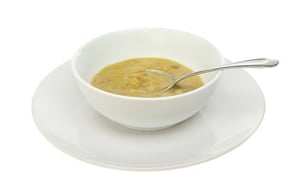
Soup … 2.6g a can

Soup … 2.6g a can. Photograph: Richard Griffin/Getty Images/iStockphoto

In canned soups, ham or bacon can up the salt content (half a can of pea and ham soup from Crosse & Blackwell contains 1.3g), but many vegetable soups are just as salty. You’ll also get 1.3g of salt in half a can of Heinz vegetable soup and half a carton of New Covent Garden vegetable soup. Hands up if you only eat half a can.


Cheese


Salty cheeses, such as feta (2.51g per 100g) or halloumi (2.71g) have high levels, but other cheeses we might not think of as “salty” also contain a fair bit of salt. A 30g portion of Stilton contains around 10% of your RI, and cheddar doesn’t contain much less.


From hot chocolate to pre-packed salads: the surprising sources of salt

9 Ocak 2017 Pazartesi

Food and Supplement Sources of Vitamin B12

It’s often said, for most people, that B12 is generally needed to be obtained as a supplement, rather than from food.


I’m not 100% sure I agree with that, but today I want to share some of what I have learned about the various B12 supplements available, as well as different food options to obtain this much needed vitamin.


B12 Supplements


It’s commonly written that the very best way to get B12 as a supplement, is via an injection. The vial is filled with a liquid that is injected directly into the muscle. Most of the time, the patients that get prescribed B12 bring the vials to their doctors for the injection.


Not that I am suggesting this, but I discovered that it is easy enough to get the needles for self-administration. Many people around where I live, when they want needles for steroids or B12, they often just ask a random pharmacy for needles for insulin injections. That’s all that is needed to be said in order to get a handful of needles for self-administration. I haven’t confirmed, but I have been told, that it’s not “OK” to self-administer B12, so this sneaky trick is needed if that is what one wants to do. Seems strange to me.


At any rate…


Another common way to get B12 is through the skin with some sort of adhesive patch. This is referred to as the “transdermal” method. Users often put a patch just behind their ear, so that it remains out of sight. This is also an area with a thin layer of skin which allows for more thorough absorption of the vitamin.


The third common approach to take B12 supplements is called the “sublingual” approach, which simply involves the dissolving of a tablet under the tongue. This is probably the most common approach, but considered by many to be the least effective since it needs to go through the digestive tract. It’s suggested that less is absorbed with this approach.


Now, going back to the injection method… all of the vials of B12 that I have ever seen use the cyanocobalamin form of B12. This is considered an inferior form because the body must go through a process before the B12 becomes usable, and it is also derived from cyanide, according to some sources. (1)


According to WebMD.com, “Cyanocobalamin is a man-made form of vitamin B12…” (2)


My mom has been seeing a doctor for an injection every time she has the need for a “B12 lift” as she calls it, for the past 15 years. She has been told she has pernicious anemia and will need injections of B12 for the rest of her life. She was also told that it is required to go to a doctor for the injection, and that she cannot do it from home. She has never measured her B12 levels, and has never tried to get to the source of the issue either.


This doesn’t feel right to me.


Anyway, moving along…


The other, more superior form, is called methylcobalamin. As Mike Adam states in his article on the topic, methylcobalamin “is the form that exists in nature, and it is pre-methylated, meaning it’s ready for your biochemistry to put to immediate use.” (1)


Foods with B12


Most of the foods that are considered the “top sources of vitamin B12” are foods that vegans and vegetarians are meant to avoid. They are typically animal foods, or by-products of animals.


In fact, according to a doc on VegetarianNutrition.net, “milk, yogurt and cheese, along with eggs, are the only vegetarian food items that naturally contain significant levels of vitamin B12,” and that some “plant foods may be fortified with B12,” and “these include rice and soy beverages, plant- derived meat analogs, ready-to-eat breakfast cereals, and nutritional yeast.” (3)


Does Colostrum have Vitamin B12?


Colostrum, often called “pre-milk”, is given to the baby through the breast during nursing, at least for those lucky enough to have been breastfed.


According to a PubMed abstract, “Colostrum obtained within 48 hours of delivery contains high concentrations of vitamin B12.” (4) Of course, that doesn’t necessarily have a lot of relevance for our ongoing needs of B12.


However, many people are supplementing their diets with bovine colostrum, which is said to be acceptable for even those that are lactose intolerant, as it contains only small amounts of lactose. (5) At any rate, besides having a myriad of important vitamins, bovine colostrum is also said to support the immune system, and contain all essential fats, carbs, and proteins. (6) It reached a new level of popularity when Daniel Vitalis revealed it to the world with his Surthrival line or products, but apparently has been being used for health reasons well before that.


In the 1950s, colostrum was used to treat rheumatoid arthritis (RA), for example. (7)


Shiitake Mushrooms for B12


Another increasingly popular food, that is often referred to as a supplement, is that of the medicinal mushroom. A lot of times, these are taken in tincture form, or concocted into a tea, or as a combination of hot water and alcohol extraction.


Popular mushrooms that are making their way into the medicine and nutrition cabinet include: reishi, shiitake, and chaga.


According to the article, Vitamin B12 for Vegans Confirmed on THE POLYMATHIUM web site, “Viable Vitamin B12 for Vegans available for centuries as common component of Japanese daily diet… Shiitake Mushroom.” (8) Good news right?


In Conclusion


Either way, as most people know, Vitamin B12 is critical for optimal health. There probably is no “best way” to obtain it. And whether you get it from foods (vegan or otherwise), from supplements (or whole foods like mushrooms referred to as supplements), from fortified foods, from digging in the dirt, or any combination of these methods, it’s critical to have a full understanding of the symptoms of deficiency, and its value to health.


I am currently supplementing with the Methylcobalamin form of B12 sublingually. I am going to check my levels next month to be certain I am at optimal rates. I feel it’s important to measure your approach to nutrition to be hopeful you aren’t just contributing to expensive urine.


Cheers to your superior health!


Raw Michelle is a natural health blogger and researcher, sharing her passions with others, using the Internet as her medium. She discusses topics in a straight forward way in hopes to help people from all walks of life achieve optimal health and well-being. SUBSCRIBE here to get more from Raw Michelle!


Sources for this article include:
(1) [Natural News] Vitamin B-12 warning: Avoid cyanocobalamin, take only methylcobalamin, by Mike Adams
(2) [WebMD.com] Cyanocobalamin (Vitamin B-12)
(3) [Vegetarian Nutrition] Vitamin B12 in Vegetarian Diets
(4) [PubMed] Vitamin B12 in human colostrum and milk. Quantitation of the vitamin and its binder and the uptake of bound vitamin B12 by intestinal bacteria.
(5) [SovereignHealthInitiative.org] Answers to the Most Commonly Asked Questions About Bovine Colostrum
(6) How Surthrival 6 Hour Colostrum Is Different – A Review
(7) [DrAvard.com] Colostrum, by Rebecca Frey.
(8) [The Polymathium] Vitamin B12 for Vegans Confirmed


Food and Supplement Sources of Vitamin B12

7 Nisan 2014 Pazartesi

Increase Your Blood with the Very best Organic Sources of Vitamin K

Vitamin K is the identify offered to a group of excess fat-soluble nutritional vitamins that are largely responsible for aiding blood clot formation in our bodies. In truth, the reason why vitamin K was by no means named vitamin F (the next logical stage right after vitamin E) was to emphasize its central function in blood well being: the “K” really stands for “koagulation,” the German word for “clotting.”


In healthier instances, deficiencies in vitamin K had been unusual since conventional diets incorporated a lot of leafy green greens – the world’s greatest sources of the vitamin. As processed foods started to dominate our dinner tables in the twentieth century, nevertheless, deficiencies in this critical nutrient, which can lead to effortless bruising, nose and gum bleeding, and weakening of the bones, started out to emerge. Luckily, avoiding or correcting a vitamin K deficiency is basically a case of consuming a lot more whole meals that are wealthy in it.


Kale – Kale is generally regarded as the king of vitamin K, and it is the initial vegetable men and women need to turn to when suffering from a deficiency. According to Self‘s “NutritionData,” 1 ounce (28 grams) of cooked kale supplies our bodies with 229 micrograms of vitamin K, which is a whopping 286 percent of our advised every day intake (RDI). Kale also includes large amounts of vitamins A and C, which are antioxidants that guard us from accelerated aging and degenerative ailments.


Note: Although naturally-sourced vitamin K is non-toxic and can be consumed in extra without problems (unless you’re on blood thinning medicines), kale also happens to be wealthy in oxalic acid, a toxic natural acid that is identified to bind itself to calcium in our bodies, leading to muscle discomfort and other concerns. Therefore, consuming kale on a regular basis should be avoided when feasible.


Herbs – Herbs have extended been regarded as far more of a medicine than a normal foods, and a cursory glance at their nutritional profiles aids clarify why: Packed with far more vitamins and minerals per bodyweight than even some of the most celebrated vegetables, herbs can aid transform even the blandest of meals into powerhouses of nutrition. This is specially real of basil, sage, and thyme, which are especially wealthy in vitamins – such as vitamin K. In fact, excess weight-by-bodyweight, sage truly includes larger concentrations of vitamin K than kale itself. Remember to stick to non-irradiated herbs if you prefer dried herbs to fresh ones.


Spinach – The bright, vibrant-seeking leaves of the spinach plant are famously packed with nutrients, and cooking them in fact looks to boost their dietary value. One particular cup of cooked spinach provides us with 138 micrograms of vitamin K, or 173 % of our RDI. Our bodies will also get huge quantities of vitamin A, folate, dietary fiber, manganese and, of course, iron – the crucial macromineral for which spinach is very best-acknowledged. Spinach is also higher in oxalic acid, even so, so really do not go overboard.


Spring onions – Spring onions, also referred to as scallions or green onions, are popular in salads and as toppings on soups and stews. One ounce of them contains 58 micrograms of vitamin K, or 72 % of our RDI. They are also very good sources of calcium, iron, potassium, and manganese. Try out and consume them raw when attainable – cooking them depletes their mineral material.


Broccoli – Broccoli has usually been the darling of nutritionists. Indeed, typical consumption of the plant’s flowering head has been regularly linked to improved brain perform, regulation of blood strain and, thanks to its substantial carotenoid content material, remedy of deteriorating eyesight, poor immunity, and even cancer. We can also include “improves blood health” to that record, however, given that a single ounce of cooked broccoli supplies us with virtually 40 micrograms of vitamin K – sufficient to meet half of our RDI.


Brussels sprouts – They might taste disagreeable, but our grandmothers have been appropriate: sprouts really are great for us. Aside from containing far more vitamin C than most other greens, these tiny round vegetables are also bursting with vitamin K – 39.3 micrograms of it per ounce, to be exact. You could assist disguise their taste by sauteing them in a garlic broth, pickling them, or drenching them in olive oil (which will also add some useful fats to the meal).


Michael Ravensthorpe is an independent writer whose analysis interests contain nutrition, different medicine, and bushcraft. He is the creator of the internet site, Spiritfoods, by way of which he promotes the world’s healthiest foods.


Increase Your Blood with the Very best Organic Sources of Vitamin K

30 Mart 2014 Pazar

"Almost everything Is Great" And "Sterile Productivity": Two Frequent Sources Of Organizational Dysfunction -- And Hope -- In Biopharma

Two of the most typical causes of organizational dysfunction may possibly also be powerful forces for great – if only we can identify and control them appropriately.


“Everything Is Awesome”


We’ve all been there, struggling to keep our jaws from dropping as we observe a polished colleague make clear to senior management how a particular venture is moving much quicker, far better, or cheaper than the information as we know them may propose.    The opportunity – better than anticipated!  The difficulties – manageable, and largely solved!  The staff – collaborative and impassioned!  Everything – wonderful!


It tends to make sense.  Everyone prefers hearing very good news to bad news, and everyone likes the notion of problems eliminated from their plate rather than added.   You will nearly definitely go further, faster if you constantly supply very good information and remedies rather than bad news and much more troubles.


The real kicker right here is attribution bias.  We inevitably attribute good results or failure to leaders rather than circumstances.  A coach that can make a statistically foolish decision that takes place to lead to victory will be lionized, even though a wise coach who occurs to get rid of the huge game might be fired.  (See Michael Mauboussin’s fantastic Achievement Equation for a a lot more total, extremely engaging discussion of these troubles.)


The collective consequence of these influences are properly-known: troubles are minimized or kicked down the road – arguably an even much more frequent technique in today’s IBGYBG world of intense employee mobility, but also a distinct issue in industries like pharma characterized by unusually long timelines.  It is undoubtedly tempting to imagine this bias assists clarify the remarkably high failure price of phase 3 research – earlier phase trials may possibly not have been designed with adequate stringently, nor evaluated with appropriate rigor.


At the same time – though perhaps much less obviously – we should also identify how important, vital, and needed (at least to a level) a deep sense of optimism is to organization success, especially in industries requiring substantial innovation, and exactly where important new products emerge from higher threat, higher reward projects, an setting exactly where most factors will not function, and the ingoing probability of achievement is inherently really minimal.


Most essential progressive tasks wouldn’t get really far without having  irrationally positive leadership, an advocate with the potential to see a ray of hope by means of a sea of gloom, and the audacity to continue where a lot more affordable folks might quit.  Data also suggest confidence (even, and possibly specifically excessive confidence) can enhance overall performance in some situations.


Taken to an excessive, nevertheless, and you have (in accordance to a priceless Valleywag post by Sam Biddle), today’s Silicon Valley, which “demands uniform positivity, towards all evidence for positivity, and punishes cynicism or mere criticism as witchcraft.”


At least in drug advancement, traders usually identify the optimism that’s baked in, and (outdoors of ultrasexy areas like immuno-oncology) tend to be really cautious about early outcomes.  The challenging challenge for biopharma executives is cultivating optimism — so that teams sally forth into brutal battles against outrageous odds — even though preserving a sense of pragmatism, so that excessive very good income does not go into bad, doomed tasks.


In addition, given the inevitable incentives for participants to game the method, and the asymmetric details among participants and everybody else, the perfect remedy would look to involve, inevitably, making sure participants have real skin in the game, and a stake in the ultimate final result – i.e. have more to drop by kicking the can down the street then by calling it quits and shifting consideration to a a lot more promising undertaking .  Notably, this is specifically the kind of strategy David Grainger of Index Ventures has repeatedly advocated.


“Sterile Productivity”


It is difficult to think of a trait that better defines the productive middle manager – specifically in huge and mid-sized pharma – than the capacity to search occupied, with tons of deliverables, lots of reviews, tons of exercise, and all of it documented – or at least documentable.   It’s sterile productivity.


My sense is this reflects a mixture of personality and function, but the result is that most organizations harbor a huge number of pretty influential managers who produce little light but a ton of heat, the result of futile cycles that churn by way of resources and leave employees dispirited.


As soon as once again, I suspect that a key component of the issue, at least in biopharma, stems from the length of growth cycles, which are so long that it can be tough to effectively assess overall performance based mostly on the high quality of selections, and rather, there is a powerful tendency to revert to proximal, method metrics that are effortlessly measured.  The outcome: you get what you incent, and the consequences can be a rather cynical, procedure-oriented culture that values exercise over all else, and exactly where creativity can struggle for expression.


But, just before we indulge ourselves in this generalization, we would do effectively to keep in thoughts the suggestions of IDEO’s Kelley brothers, creativity experts who remind us of the significance of doing versus simply considering.  The most successful creatives in organizations seem to be to be the ones biased in the direction of action, who are ready to get something accomplished, and then iterate, versus abstractly and incessantly questioning which strategy may be best.


"Almost everything Is Great" And "Sterile Productivity": Two Frequent Sources Of Organizational Dysfunction -- And Hope -- In Biopharma

5 Mart 2014 Çarşamba

The Greatest Dietary Sources of Iodine

Iodine is an crucial trace nutrient that is responsible for making thyroid hormones. These hormones are accountable for regulating the metabolism, which influences the pace with which our bodies use power, the regulation of body temperatures, cholesterol, and heart costs, psychological and bodily development, and much more. Without having an satisfactory intake of iodine, our metabolic process would become sluggish, resulting in a plethora of serious health care circumstances – such as an inability to shed bodyweight.


Sadly, iodine deficiencies are widespread all through the planet simply because iodine is seldom located in land-based meals this kind of as fruits and veggies. In purchase to receive sufficient of this vital nutrient by way of diet, we require to look to the oceans.


Sea veggies – Sea veggies, or seaweeds, are the kings of iodine – which helps make sense, since iodine ions largely concentrate in oceans and saltwater pools. Even though all sea greens are rich in iodine, probably the biggest supply is bladderwrack. 50 grams of dried bladderwrack contain above a hundred % of our recommended everyday intake (RDI) of iodine. Moreover, considering that bladderwrack is a natural seawater plant, its iodine ions are far more effortlessly-absorbed than these of iodized salt and other inorganic sources. Other sea veggies with unusually higher ranges of iodine contain arame, dulse, kombu, nori, and wakame. 50 grams of each will practically undoubtedly meet an adult’s RDI of iodine, unless of course the seaweed is of bad high quality.


Himalayan salt – Although numerous folks meet their RDI of iodine via iodized table salt, I can not suggest it given that table salt (sodium chloride) is toxic to the human entire body, and the iodine with which it is fortified is inorganic and synthetic. As an alternative, favor actual salt this kind of as unrefined sea salt or – far better yet – Himalayan salt. Half a gram of Himalayan salt includes a total spectrum of 84 trace minerals, including 250 micrograms of iodine (or 167 percent of our RDI). The great factor about true salt is that it can be extra to almost any meal. Simply sprinkle it atop your foods and you will never ever have to fret about iodine yet again.


Fish – Most fish and seafood are good sources of iodine. One 3-ounce serving of cod, for instance, supplies us with 99 micrograms of iodine (or 66 percent of our RDI). Another great source is shrimp (3-ounces offers us with 23 % of our RDI). Even processed fish food items such as Fish Sticks and Fish Fingers contain tiny amounts of iodine, though I really don’t advocate them for evident factors.


Baked potatoes – Baked potatoes are 1 of the best land-primarily based source of iodine, but please bear in mind that soil top quality plays an crucial function here. Typically speaking, 1 medium-sized baked potato with skin contains around 60 micrograms of iodine, or forty percent of our RDI. Organically-farmed potatoes, grown on nutrient-rich soil, often incorporate far more.


Plain yogurt – Although yogurt is very best-known for its calcium and protein material, this curdled milk solution is also remarkably rich in iodine. One particular cup of yogurt gives us with 90 micrograms of it, or 60 percent of our RDI. For comparison, 1 cup of milk includes 56 micrograms of iodine.


Navy beans – Beans are hugely nutritious, and can be found in several “foods richest in” lists. Iodine is no exception. Half a cup of cooked navy beans, for instance, supplies us with 32 micrograms of iodine, or 21 % of our RDI. Other good sources contain lima beans, string beans, and soybeans.


Other respectable sources of iodine incorporate turkey breasts, boiled eggs, dried prunes, strawberries, and cranberries.


Michael Ravensthorpe is an independent writer whose research interests include nutrition, different medication, and bushcraft. He is the creator of the web site, Spiritfoods, by means of which he promotes the world’s healthiest foods.


The Greatest Dietary Sources of Iodine

19 Şubat 2014 Çarşamba

The B Nutritional vitamins: Their Individual Roles and Greatest Dietary Sources

The B nutritional vitamins are a group of eight water-soluble vitamins that are found in whole, unprocessed food items. Even though these vitamins – which had been as soon as considered to be a single vitamin, “vitamin B” – are chemically distinct from one particular another, their roles in our bodies often overlap. These roles can be summarized as: Aiding cell metabolism, preserving brain and nerve perform, creating red blood cells, and breaking down carbohydrates, body fat, and protein for fuel. This post, however, is made up of a much more comprehensive record of the biological functions carried out by every single B vitamin and the very best foods from which we can obtain them.


Thiamine is named vitamin B1 due to the fact it was the initial B vitamin to be found. It is nicknamed the “anti-stress” vitamin because it assists to strengthen our immune methods and enhance our bodies’ capabilities to stand up to stressful circumstances. Additionally, it assists our bodies kind adenosine triphosphate (ATP), a nucleotide that is a main source of energy for cellular reactions.


Deficiencies in thiamine are uncommon, and are usually limited to alcoholics and men and women struggling from anorexia and Crohn’s illness. Excellent sources of thiamine consist of seeds, nuts, brewer’s yeast, blackstrap molasses, kale, potatoes, liver, and eggs.


Riboflavin is an antioxidant that helps our bodies to fight totally free radicals, which are rogue atoms or atomic groups that contribute in direction of degenerative illnesses and accelerate the aging procedure. Riboflavin also aids us facilitate cell development, make red blood cells, and transform vitamin B6 and vitamin B9 into usable forms.


Like thiamine, deficiencies in riboflavin are rare and largely constrained to these with poor diet programs. Great sources of riboflavin incorporate almonds, organ meats, raw milk, yogurt, Brussels sprouts, and spinach.


Like all the B vitamins, niacin plays a part in converting carbohydrates, body fat, and alcohol into vitality. Even so, it also helps us manufacture various intercourse and stress-connected hormones in our adrenal glands, boost our circulation, and sustain our skin health.


Niacin is the only B vitamin that is steady in heat, that means that small of it is misplaced throughout the cooking procedure. Consequently, most of us will have no dilemma obtaining sufficient of it by means of diet program. That said, especially good sources of niacin incorporate meat, fish, nuts, mushrooms, and most protein-rich foods.


Pantothenic acid assists our bodies to manufacture red blood cells and steroid hormones. It also helps us use other B nutritional vitamins (notably riboflavin) and maintain a wholesome digestive tract. Additionally, we need pantothenic acid to synthesize cholesterol. In reality, a derivative of pantothenic acid, pantethine, is presently getting studied for its cholesterol-lowering positive aspects.


The title “pantothenic acid” originates from the Greek word “pantos,” which indicates “everywhere.” And that’s exactly where you will discover pantothenic acid: in nearly all entire foods. For that reason, except if your diet regime consists nearly solely of canned and refined meals, you are unlikely to suffer from a deficiency.


Pyridoxine, which is better-known as vitamin B6, assists our bodies make neurotransmitters – chemical compounds that carry signals from 1 cell to another. It is necessary to preserve brain advancement and function, and to make the mood-regulating hormones norepinephrine, serotonin, and melatonin. Moreover, vitamin B6 helps us regulate the ranges of homocysteine in our blood, and also aids our absorption fee of vitamin B12.


However severe deficiencies in vitamin B6 are rare, mild deficiencies can have an effect on children and the elderly. If you’re suffering from nervousness, muscle weakness, irritability, short-term memory loss, and poor concentration, consider eating far more foods rich in vitamin B6 like salmon, tuna, cheese, lentils, spinach, carrots, brown rice, sunflower seeds, and chicken.


Biotin, also called vitamin H, is essential for the manufacturing of fatty acids, metabolic reactions involving the transfer of carbon dioxide, and regulating blood sugar levels. It also plays a essential position in cell development and the metabolism of amino acids.


Deficiencies in biotin are unusual simply because our intestinal bacteria generate it in excess of our body’s daily needs. This is why most nations do not prescribe a advisable day-to-day consumption of it.


Folic acid (as effectively as “folate,” its naturally-occurring type located in entire meals) is one of the very best-recognized, and most widely-studied, B vitamins. Our bodies want it to synthesize and repair DNA, type red blood cells, and facilitate cell division and growth. For this explanation, it is important that infants and pregnant females get enough folic acid in their diets.


The title “folic acid” derives from the Latin word “folium,” which implies “leaf” – providing us a huge clue as to which meals are richest in it. Yes, leafy green vegetables like kale, spinach, broccoli, cabbage, iceberg lettuce, and collards are the best sources of folic acid, even though you can also uncover it in seeds, poulty, liver, eggs, and citrus fruits.


Vitamin B12, which is only found in animal goods, is an especially crucial vitamin for maintaining healthy nerve cells. In truth, it is immediately accountable for creating and sustaining the myelin that surrounds them. B12 also has a near relationship with folic acid, and the two vitamins rely on every other to execute their wider roles in our bodies. In addition, B12 is one particular of the handful of dietary sources of cobalt, which aids our cardiovascular health.


Even though deficiencies in vitamin B12 are not an concern for most individuals, individuals who keep away from animal merchandise – such as vegans – are at danger. For this reason, it is crucial that these groups add a vitamin B12 supplement to their diet program. Dietary yeast, for instance, is an excellent B vitamin complex (a meals containing all eight B nutritional vitamins), and is appropriate for vegans.


Michael Ravensthorpe is an independent author whose analysis interests incorporate nutrition, substitute medicine, and bushcraft. He is the creator of the web site, Spiritfoods, via which he promotes the world’s healthiest food items.


The B Nutritional vitamins: Their Individual Roles and Greatest Dietary Sources