bodies' etiketine sahip kayıtlar gösteriliyor. Tüm kayıtları göster

11 Mayıs 2017 Perşembe

Healthcare bodies want to scrap the term ‘patients’. As a GP, I have a better idea | Ann Robinson

Many healthcare organisations want to dump the term “patients”, according to participants at a major event in London yesterday called the Future of People Powered Health. “Patient” is widely disliked – with its connotations of having to wait patiently, quietly and uncomplainingly to be the passive recipient of a doctor’s largesse. “Customer” isn’t much better; “client” or “service user” have some takers, and “partner” may be the best of a bad lot. But do we need a term at all?


Halima Khan, executive director of Nesta Health Lab who organised the event in partnership with Guy’s and St Thomas’ Charity , says the debate about whether to ditch the term “patients” has been bubbling up for some time. Many feel that the word, derived from the Latin “patiens” (one who suffers) is now obsolete. There’s support from patient and professional groups to consider changing the language in the hope that some entrenched attitudes will change too. “The Royal College of General Practitioners, for instance is teaching trainee GPs to talk to and about patients in a different way.”


But mental health campaigner Gillian Lamb (not her real name), who has been treated for serious mental health problems, sectioned and admitted to psychiatric units, says she couldn’t care less what she’s called so long as she’s treated with dignity and respect. “I’ve never minded being called a patient because I don’t feel inadequate, secretive or ashamed of having a mental illness. But I know others who are very sensitive about the medicalisation of their condition, and they do object to the term.”


Opponents of ditching the word “patient” say the original meaning of the word doesn’t matter, there’s no suitable alternative, it doesn’t carry connotations of passivity any more, attitudinal change can occur without ditching the name, and changing the name may not lead to meaningful change.


One suggestion is to borrow the language of intentional and therapeutic communities, set up like house-shares in which people are called members and are all expected to muck in and have equal status even if they have different roles. Lamb says that on her ward, “patient meetings” were called “community meetings” – or a “coalition of the unwilling” as an off-message staff member called it.


But the language that organisations use can reflect their philosophy and intended style of delivery. So an upmarket care home wanting to sell itself as being like a hotel may call residents “guests”. The term “service users” has become popular in the NHS though it’s (unintentionally) ironic given that accessing services is often a key problem for people suffering from chronic conditions – “service hopefuls” might be more accurate. “Stakeholders” crops up a lot; I have no idea what it means; don’t we all have a stake in our health and social care?


As a GP and occasional “patient”, I don’t see the need for any term at all. We have 4500 people registered at our surgery. Every person who comes into see me is, just that, a person. When I was in hospital recently for an operation, I didn’t morph into a patient when I entered the ward. I was the same person that I am in the street, but requiring a particular service. After a particularly dehumanising experience with a night nurse, I felt like screaming “I am not a patient, I am a free person”, in a parody of the The Prisoner. Needless to say, I didn’t do that but instead behaved nice and patiently. I say, let’s ditch the term patient altogether and replace it with … person.


Healthcare bodies want to scrap the term ‘patients’. As a GP, I have a better idea | Ann Robinson


20 Nisan 2017 Perşembe

Serena Williams’s pregnant victory reminds us how amazing women’s bodies are | Natasha Henry

The news that Serena Williams won the Australian Open final while eight weeks pregnant has sent the world into a frenzy. Some evidently still think that women are the fairer sex, the weaker and the less capable of the two genders.


Believe me when I say we are far from fragile.


Williams is not the first elite athlete to compete during a pregnancy, but she is definitely the most prominent, given her recent win, defeating her big sister Venus. Triumphing 6-4, 6-4 in the final, she didn’t drop a single set on her way to lifting the trophy. I’ll repeat that: not a single set.


Now rumoured to be about 20 weeks – about halfway through a normal pregnancy – she will regain her place as world No 1 next week. That place at the top of women’s tennis will be held for her if she returns to competition within 12 months of giving birth, as per the Women’s Tennis Association special ranking rule.


Bryan Armen Graham (@BryanAGraham)

Serena’s snap suggests that she won the Australian Open without dropping a set while pregnant. pic.twitter.com/ltPndJRJBq


April 19, 2017


As much as I could pontificate about Williams’s achievements as a supreme athlete, role model and beautiful woman of colour all day, I just want to thank her for reminding us how amazing women’s bodies can be – particularly in an era when we are constantly peppered with examples of how they aren’t good enough, how we should alter them or how they should look.


While in the first trimester, the 35-year-old played tennis at the highest level in sweltering conditions. And as if her physical exertions weren’t enough, she also had to deal with the emotional stress of playing against her big sister.


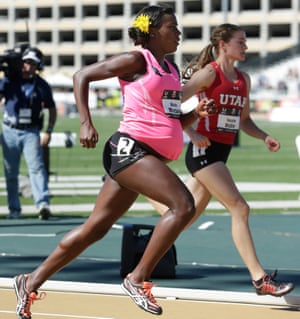
Alysia Montaño, left, who at 34 weeks pregnant, competes in the 800m


‘Who can forget the picture of Alysia Montaño running the 800m while 34 weeks pregnant?’ Photograph: Rich Pedroncelli/AP

But as GP Dr Matt Piccaver told me: “In general, physical activity during any stage of life, including pregnancy, is a good idea. Serena Williams is an elite athlete, and has overcome a number of significant health challenges in her career. The human body is an amazing thing, and Serena proves that we are more robust than we think.”


Should she return to the tour and go on to win a grand slam, she will follow in the footsteps of Kim Clijsters, who won the US Open 18 months after giving birth to her daughter.


Jessica Ennis-Hill, Paula Radcliffe, Katie Chapman and Victoria Azarenka have all returned to compete at the top level in their respective sports after having children. And who can forget the picture of Alysia Montaño running the 800m while 34 weeks pregnant with her daughter?


Obviously every pregnancy is different, as is every woman’s relationship with fertility; but don’t the revelations of the last 24 hours remind you to consider what your body can do?


Like Serena Williams said: “You just have to prove to yourself that you can go out there and be the best that you can be and not prove anything to anyone.”


Maybe we should listen to her and just embrace our strength, our fabulousness and our beauty a bit more, as well as each other’s.


Serena Williams’s pregnant victory reminds us how amazing women’s bodies are | Natasha Henry

19 Kasım 2016 Cumartesi

The cryonics dilemma: will deep-frozen bodies be fit for new life?

“My primary strategy for living through the 21st century and beyond is not to die,” Ray Kurzweil, the futurologist and Google engineer has said. But in the event that plan A doesn’t work out, he has opted to have his body cryogenically preserved at the world’s largest facility, the Alcor Life Extension Foundation in Scottsdale, Arizona.


Cryonics was first proposed in the 1960s by a Michigan professor, Robert Ettinger, in a book called The Prospect of Immortality, which argued that death could, in fact, be a reversible process. Ettinger, who died in 2011, went on to found the Cryonics Institute in Michigan where he, his mother and his first and second wives all now reside in metal flasks kept at −196 °C.


While the concept has never become mainstream, the number of people choosing to sign up is steadily increasing year on year. There are now nearly 300 cryogenically frozen individuals in the US, another 50 in Russia, and a few thousand prospective candidates signed up.


The central idea is simple: preserve the body in a pristine condition until such times as medicine has developed a cure for whatever brought about death in the first place – at which point the corpse is thawed and reanimated.


“Calling someone ‘dead’ is merely medicine’s way of excusing itself from resuscitation problems it cannot fix today,” Alcor’s website states.


The real question, though, is not whether medicine will advance – clearly it will – but whether the frozen bodies will be in a fit state to bring back to life.


The world’s three major facilities – two in the US and KrioRus, a Russian centre on the outskirts of Moscow, differ slightly in price and ethos. Alcor has a reputation for celebrity clients, while KrioRus offers budget service, probably due to its communal approach to storage, with bodies sharing tanks with a menagerie of 20 or so pets (cats, dogs, birds) that owners have paid to preserve.


“We have big cryostats, each about 3 cubic metres. About seven bodies fit in,” says Danilo Medvedev, the company’s CEO. “They’re placed in sleeping bags. There’s no point in having separate metal containers. It would only make it more complicated.”


About half of KrioRus’s 50 clients opted for entire body freezing, with the rest choosing to just preserve their heads. The bodies are placed vertically, with their heads at the bottom of the tank, where it is coldest, so the feet would thaw first in the case of a technical glitch.


The companies all use the same basic technology. First, the body is obtained as soon as possible after death, packed in ice and transported to the facility. Here the blood is drained and replaced with a mixture of anti-freeze and organ-preserving chemicals. This transforms the corpse into a glassy vitrified state, ready to be lowered into liquid nitrogen, at a temperature of -196C.


Alcor acknowledges that the process is tricky and that sometimes the brittle corpses, or patients as it refers to them, can fracture on immersion. Medvedev says “issues with hospitals and relatives” means that the freezing process is not begun in an optimal timeframe.


“The overall theory is extremely sound,” Medvedev says. “It’s not correct to say there haven’t been experiments.” His own team, he says, have shown that rats can be cooled to zero degrees and kept in suspended animation for several hours before being re-awoken. He cites another case, in which a rabbit brain was vitrified and then thawed, appearing structurally intact – although the brain was first set in a formaldehyde-like substance, that would rule out it ever functioning as a living organ in the future.


These examples, and clinical advances in storing sperm and egg cells, bear little relation to the technical challenge of trying to perfuse the entire human circulatory system, and, crucially, the brain, with anti-freeze without causing any damage.


This is where the science of cryonics really falls apart, according to Clive Coen, a professor of neuroscience at King’s College London. “The main problem is that [the brain] is a massively dense piece of tissue. The idea that you can infiltrate it with some kind of anti-freeze and it will protect the tissue is ridiculous.”


Since the brain is so densely organised and so well shielded by the blood-brain barrier and the fatty myelin coating around neurons, the cocktail of cryonic chemicals would need to be vigorously pumped in to ensure every nook and cranny was infiltrated. “You’re dealing with an organ that is deliberately protecting itself from things coming in,” says Coen.


This means that achieving full vitrification is likely to lead to the exact kind of damage – membranes being ruptured, neuronal connections being lost – that the technique is designed to avoid.


Coen argues that by the time the cryogenic support team arrives at the side of the patient’s hospital bed it may already be too late. “Within a few minutes of anoxia, your hippocampal neurons are dead. Gone,” he says, adding that global brain damage would be inevitable.


“Would you really want to wake up in 100 years’ time and be basically a cognitive vegetable and have your cancer fixed?” he asks. “These vulnerable people don’t realise they’re paying for something to be stored that is massively damaged.”


KrioRus charges $ 36,000 (£29,000) for whole body storage or $ 18,000 (£15,000) for just the head, and Medvedev says that after the running of the facility and its expansion is paid for, he’s not making much profit. By contrast, Alcor charges $ 200,000 (£162,000) for the full body and $ 80,000 (£65,000) for head-only preservation, and also offers the option of clients taking out a life insurance that will pay out to the company.


Anders Sandberg, of Oxford University’s Future of Humanity Institute, has such a life insurance policy that, for £15 each month, will pay for his head to be frozen in the hope that the brain’s contents might be “downloaded” into a robotic agent in the future. He gives the freezing, thawing and reanimation process “maybe a 5% chance” of working. “That’s actually worth quite a lot, though,” he says.


“The funny thing about cryonics is that they’re selling immortality, but very few people buy it,” he adds. Is this because people don’t actually want to live for ever, or because people think it’s nonsense? “I think it’s partially the nonsense part,” he says.


The cryonics dilemma: will deep-frozen bodies be fit for new life?

20 Ağustos 2015 Perşembe

Males are considerably more stressed about their bodies than 5 many years in the past


British males truly feel underneath escalating stress to enhance their bodies, according to a new survey.


Study conducted on behalf of Alpha Man magazine located that with 82 per cent of men “come to feel much more stressed about not possessing an remarkable physique than they did 5 years in the past”.


The survey of more than 1200 guys identified that 69 per cent of respondents would give up alcohol permanently in return for a perfect physique, and 30 per cent mentioned they would even sacrifice a 12 months of their lives if it meant having their dream physique.


When asked which portion of their body they are most unhappy with, 50 per cent of respondents said their beer bellies, 14 per cent said their chest and 10 per cent said they hate their legs.


Fat man  Photograph: Alamy Fifty per cent of guys say they are unhappy with their bellies


Only 4 per cent of the guys surveyed mentioned they are really happy with their bodies.


“It’s clear that much more guys than ever feel below intense strain to have a much better entire body,” explained Joe Warner, Alpha Man magazine’s editorial director.


“Our survey uncovered that practically 85 per cent of males have been on a diet regime and numerous have even resorted to skipping meals in a bid to trim down, or worn compression underwear since they truly feel so self-aware.”


Males are considerably more stressed about their bodies than 5 many years in the past

14 Temmuz 2014 Pazartesi

Sufferers denied vital operations by NHS bodies, surgeons report

Patients denied vital operations by NHS bodies, surgeons report

Shadow well being secretary Andy Burnham. Photograph: Stefan Rousseau/PA


Sufferers are getting denied accessibility to crucial surgery by NHS bodies, which are ignoring suggestions and choosing to ration some operations, according to an investigation by the Royal College of Surgeons.


The surgeon’s report mentioned that 73% of Clinical Commissioning Groups (CCGs) –the GP-led organisations concerned in the delivery of a variety of NHS solutions – do not adhere to guidelines set down by the National Institute for Wellness and Care Excellence and clinical advice on referral for hip replacements, or have no policy in place for this procedure.


It also located that much more than a third of CCGs (44%) need individuals to be in a variety of degrees of pain and immobility – with no consistency applied across the nation – or to get rid of bodyweight before surgery.


Clare Marx, president of the Royal College of Surgeons, said: “This report looks to demonstrate that local commissioners are imposing arbitrary rules governing access to some routine surgical procedure.


“The inspiration might not be monetary but it is clear that some CCGs do not commission providers making use of clinically accepted evidence-primarily based guidance.”


The report, Is Access to Surgical treatment A Postcode Lottery?, analysed details obtained under the Freedom of Data Act and looked at tonsillectomy, hip substitute, inguinal hernia restore and surgical remedy for glue ear (Otitis media with effusion). Only 27% of CCGs reviewed have been discovered to have had policies that complied with Nice or surgical guidance on inguinal hernia fix, whilst 58% have no policy at all. As a lot of as 15% essential evidence of a hernia escalating in size or a history of reoccurring problems, even if a patient is in debilitating pain.


Responding to the report, the physique representing CCGs explained that they were clinically led organisations that make clinically led selections centred on the needs of their individuals and local populations.


“To insinuate that their determination is purely economic is wrong,” mentioned Dr Steve Kell, co-chair of NHS Clinical Commissioners (NHSCC). “There have to be a stability between neighborhood determination generating and nationwide recommendations and NHSCC will be functioning with Great and other people to make sure that occurs. In my CCG, for example, we have developed greatest practice guides with the neighborhood consultants to improve primary and secondary care management which replaced the old method in which individuals essential prior authorisation. This type of locally designed perform is going on correct across the country.”


Dr Amanda Doyle, co-chair of NHSCC, extra “Making sure sufferers get the ideal possible care against a backdrop of increasingly squeezed finances is one particular of the biggest problems CCGs face, but we know that clinical commissioners are currently operating challenging to improve neighborhood providers by producing responsible, clinically led selections in partnership with GPs, individuals and companies.”


“Asking sufferers to shed weight just before having hip operations is about decreasing the clinical threat to the patient and bettering the possibility of a effective operations, it is not about money. Tonsillectomy, despite the fact that 1 of the most common procedures still carries risks to the patient – the observe and wait strategy indicates clinicians can assess the severity and frequency of attacks to guarantee the benefit of having an operation outweighs the risks to the patient.”


The report was seized on by the Labour get together, which sought to link its findings to the government’s NHS reorganisation.


Andy Burnham MP, Labour’s Shadow Wellness Secretary, mentioned: “Labour often warned that David Cameron’s re-organisation would be an assault on the ‘N’ in ‘NHS’ and lead to a postcode lottery operating riot. This is precisely what has occurred.”


“Sufferers should not be waiting in soreness and discomfort for operations that are freely offered elsewhere. Ministers promised to rule out arbitrary rationing and they can’t run from this guarantee any longer.”


The Royal College of Surgeons suggested that the Government and NHS England need to have to evaluation what even more action is essential to ensure the NHS is delivering equitable entry to substantial top quality surgical care.


Sufferers denied vital operations by NHS bodies, surgeons report

19 Haziran 2014 Perşembe

How mapping the human proteome reveals new insights into our bodies

Researchers recently announced that they had designed an inventory of all the proteins in the human entire body – proteins that are encoded by the genome. We inquire skilled Professor Kathryn Lilley from the Cambridge Centre for Proteonics to shed light on this “human proteome”.


What precisely is the human proteome?


All the proteins that can be current in the human body at any provided time and place.


What details does it give us?


Proteins are the workhorses of the cell, carrying out a lot of jobs. They are extremely dynamic so, depending on the time of day, no matter whether the tissue is healthy or not, the sort of tissue it is, the age of the individual, even what they had for dinner the night prior to, the proteome will [alter to] reflect that.


What are the rewards?


[These maps have] created a quite wonderful framework on which other studies can build. Also [they show] some thing about the distinct amounts of protein in tissues and what could be classed as a “baseline” volume. So if you start off seeing modifications that are associated to disease then this is going to assist us recognize maybe the mechanisms of the ailment and also potentially search for markers of drug resistance and drug sensitivity.


How are our proteins linked to our genome?


The genome is continuous and is composed of DNA, found in our chromosomes. Of the total amount of DNA, only about 2% carries the blueprint for proteins. The bits of the DNA sequence that code for proteins are very first transcribed into RNA and that is then translated into protein.


How has this protein map been established?


The major method utilized has been mass spectrometry. Mass spectrometers can be regarded as as sophisticated scales – they will inform you the mass of anything that they analyse. There are thousands of diverse proteins in a cell and we can not analyse them all simultaneously. [One technique is to] take your proteins and digest them with a protease, an enzyme that will reduce proteins into tiny chunks [called peptides]. [We then] separate and string out these peptides utilizing a process referred to as chromatography so that the mass spectrometer is ready to procedure only a few at a time. It gives you both the mass and the sequence of the peptide. We [then] go back to the genome designs [and] see regardless of whether your peptide sequences match what has been deduced from the genome sequence.


Are there any downsides?


You will not get complete coverage. The place the whole gene, when it is translated into a protein sequence, possibly will code for proteins from which hundreds of peptides can be created, you [may well] only see 1 of them. Also, mass spectrometry is notorious for below-sampling so we can recognize only the most abundant proteins.


How complete are the proteome maps?


The two papers from the US and India say that they have evidence for amongst 84% and 92% of the proteome – what they in fact have is smaller sized pieces of evidence for this number of genes that we believe need to be transcribed and translated into protein. What they have not acquired is 84%-92% of the complete coverage. To get that is going to demand a vast quantity of operate. Also proteins exist in several varieties – so the likely proteome is tremendous.


How mapping the human proteome reveals new insights into our bodies

3 Nisan 2014 Perşembe

GP-led local NHS bodies forced to place health solutions out to tender

NHS sign

Providers set to be place out to tender for competition integrated contracts for out-of-hrs GP care and ultrasound. Photograph: Graeme Robertson/Getty Photographs


Numerous GP-led local NHS bodies are being forced to place health solutions out to tender despite government assurances that that would not occur.


New analysis by Wellness Services Journal displays that 29.1% of the leaders of 93 clinical commissioning groups (CCG) which responded to a survey explained had opened up, or have been opening up, services to competition which they would not have carried out if they have been not concerned about the influence of new guidelines contained in the controversial Health and Social Care Act.


They incorporated contracts for out-of-hours GP care, older people’s services, audiology, ultrasound and podiatry.


In 2012, the wellness secretary Andrew Lansley wrote to all the 211 CCGs pledging unequivocally that they individually would be ready to choose, rather than ministers or the NHS regulator, Monitor, when to put contracts out to tender.


But HSJ identified that twenty% of CCGs had encountered a challenge under the new competitors guidelines to a choice they had taken about the commissioning of solutions, even though 57% had knowledgeable “informal challenge or questioning”.


In addition, 65% of the 103 bosses of the 93 CCGs mentioned that they had incurred further charges associated to commissioning as a result of the regulations, although 36% explained they had hampered programs for local hospitals to merge or grow to be foundation trusts.


Peter Melton, the co-chair of the NHS Commissioning Assembly, said that the competitors rules needed to be simplified to make tendering choices less complicated for CCGs.


Sir David Nicholson, who stepped down last week as NHS England’s chief executive, warned MPs final 12 months that the NHS was “obtaining bogged down in a morass of competitors law.”


GP-led local NHS bodies forced to place health solutions out to tender

22 Ocak 2014 Çarşamba

Jeremy Hunt: Doctors should quit thinking of individuals as "bed blockers and bodies"

Mr Hunt wants hospitals to move away from the “rigid shift patterns” imposed as a result of the European Operating Time Directive to guarantee that medical professionals have the “flexibility” to care for their patients.


In a speech at St Guy’s and St Thomas’s hospital in London, Mr Hunt will relate some of the letters of complaint he receives every day from individuals.


He will to say: “A single letter I received last March was from a lady whose husband sadly passed away right after what can only be described as two many years of chaotic care.


“Her husband was passed all around the program from clinician to clinician, with no a single appearing to know anything at all of his demands or historical past.


“One more letter I got this month came from a man diagnosed with cancer of the throat, but also a suspected secondary cancer of the kidney. His consultant referred to him inside of earshot not by his title but as ‘head and neck …#157′.”


Mr Hunt will contact for a significant alter in the culture of the NHS. He will say: “Every patient is a person. A man or woman with a title. A man or woman with a household. Not just a physique harbouring a pathology not a diagnostic puzzle not a four-hour target or an 18 week difficulty not a value pressure – and most surely not ‘bed-blocker … #157″.


He praised Dr Granger’s Twitter campaign to motivate doctors to be far more courteous when speaking to their patients. He will say: “Dr Kate Granger has highlighted the importance of treating patients as men and women.


“She has started out the campaign #hellomynameis, which has turn out to be increasingly properly-identified based mostly on the basic but essential courtesy of introducing oneself when meeting sufferers for the very first time. We can all learn from that strategy.”


Last year, Mr Hunt announced that sufferers will be offered a named medical professional and nurse who will be listed above their bed and be accountable for their care for the duration of every single shift.


He now wants to go additional and introduce “entire remain” doctors, who are responsible for a patient’s properly-becoming throughout their keep in hospital.


From right now, the Care Good quality Commission will make “continuity of care” a single of its essential “indicators” when carrying out assessments.


Mr Hunt will say: “This technique has confirmed extremely profitable in nations the place it is adopted. Lengthy stays and costs can be reduced. With wise flexibilities, the concept have to certainly be to ingrain continuity of care as one of our crucial priorities for each and each NHS patient. I want each hospital in the nation to adopt keep-at-residence physicians.”


Jeremy Hunt: Doctors should quit thinking of individuals as "bed blockers and bodies"