Robinson etiketine sahip kayıtlar gösteriliyor. Tüm kayıtları göster

11 Mayıs 2017 Perşembe

Healthcare bodies want to scrap the term ‘patients’. As a GP, I have a better idea | Ann Robinson

Many healthcare organisations want to dump the term “patients”, according to participants at a major event in London yesterday called the Future of People Powered Health. “Patient” is widely disliked – with its connotations of having to wait patiently, quietly and uncomplainingly to be the passive recipient of a doctor’s largesse. “Customer” isn’t much better; “client” or “service user” have some takers, and “partner” may be the best of a bad lot. But do we need a term at all?


Halima Khan, executive director of Nesta Health Lab who organised the event in partnership with Guy’s and St Thomas’ Charity , says the debate about whether to ditch the term “patients” has been bubbling up for some time. Many feel that the word, derived from the Latin “patiens” (one who suffers) is now obsolete. There’s support from patient and professional groups to consider changing the language in the hope that some entrenched attitudes will change too. “The Royal College of General Practitioners, for instance is teaching trainee GPs to talk to and about patients in a different way.”


But mental health campaigner Gillian Lamb (not her real name), who has been treated for serious mental health problems, sectioned and admitted to psychiatric units, says she couldn’t care less what she’s called so long as she’s treated with dignity and respect. “I’ve never minded being called a patient because I don’t feel inadequate, secretive or ashamed of having a mental illness. But I know others who are very sensitive about the medicalisation of their condition, and they do object to the term.”


Opponents of ditching the word “patient” say the original meaning of the word doesn’t matter, there’s no suitable alternative, it doesn’t carry connotations of passivity any more, attitudinal change can occur without ditching the name, and changing the name may not lead to meaningful change.


One suggestion is to borrow the language of intentional and therapeutic communities, set up like house-shares in which people are called members and are all expected to muck in and have equal status even if they have different roles. Lamb says that on her ward, “patient meetings” were called “community meetings” – or a “coalition of the unwilling” as an off-message staff member called it.


But the language that organisations use can reflect their philosophy and intended style of delivery. So an upmarket care home wanting to sell itself as being like a hotel may call residents “guests”. The term “service users” has become popular in the NHS though it’s (unintentionally) ironic given that accessing services is often a key problem for people suffering from chronic conditions – “service hopefuls” might be more accurate. “Stakeholders” crops up a lot; I have no idea what it means; don’t we all have a stake in our health and social care?


As a GP and occasional “patient”, I don’t see the need for any term at all. We have 4500 people registered at our surgery. Every person who comes into see me is, just that, a person. When I was in hospital recently for an operation, I didn’t morph into a patient when I entered the ward. I was the same person that I am in the street, but requiring a particular service. After a particularly dehumanising experience with a night nurse, I felt like screaming “I am not a patient, I am a free person”, in a parody of the The Prisoner. Needless to say, I didn’t do that but instead behaved nice and patiently. I say, let’s ditch the term patient altogether and replace it with … person.


Healthcare bodies want to scrap the term ‘patients’. As a GP, I have a better idea | Ann Robinson

10 Nisan 2017 Pazartesi

Let’s put our NHS worries in perspective – and celebrate what we have | Ann Robinson

The latest GP story to scare us witless says that a “record number of GP practices closed last year, forcing thousands of patients to find a new surgery”. Pulse, the GP website, highlighted NHS England data that shows nearly 100 practices closed in 2016 – a 114% increase on 2014 – and that more than a quarter of a million people have had to change practice. Cue claims that GPs aren’t coping with increased demand, the NHS needs more cash and staff – and that the whole system is teetering on the brink of collapse.


But what’s the true picture? Are you likely to find yourself without a GP any time soon? Is the service contracting? And is the closure of a GP practice always a bad thing?


People get understandably upset when a much loved, familiar, local service shuts down. It doesn’t matter if it’s a GP surgery, library, community centre or takeaway. I’ve been registered at the same GP practice for 30 years; I never go, but I was quite discombobulated when I got a letter saying that one of the long-serving doctors was retiring. If I had memory impairment and long-term health problems, I’d be upset and anxious if the whole practice closed down and I had to move somewhere unfamiliar.


But let’s keep this story in perspective; there are 7,674 GP practices in England, so the closure of 92 practices means that 98.8% remain open. Primary healthcare services are not necessarily contracting; in 2014 there were 5,729 more GPs and 1,688 more practice nurses employed by GPs than 10 years earlier. Admittedly, a lot of those GPs and nurses work part time, and there’s also more work done in primary care now. So no one’s saying that there’s not a case for more money, training and efficiencies. It’s just that it’s not fair to paint an apocalyptic vision of sick people roaming the streets of England, looking in vain for a doctor to treat them.


Every person with an NHS number has the right to be registered with a GP and get primary care services, and access to hospital-based services if needed. If you assault your GP and are removed from the practice, the local clinical commissioning group (CCG) will refer you to a specialist GP who takes on the role of caring for the violent, abusive or just unmanageable. If you kill someone and go to prison, you have access to a doctor. There is literally nothing you can do in the UK that means you forfeit the right to see a GP. If all your local GP practices are full, the CCG has an obligation to find you one. Asylum seekers and refugees are also entitled to NHS care while waiting for their application to be processed and are encouraged to register with a local GP surgery.


The overwhelming majority of us who live in the UK will be registered with a GP from the day we’re born to the day we die. And in an era where Obamacare is under attack in the US, it’s worth celebrating what we’ve got in this country. Sure, the system’s not perfect, but there’s no evidence that any one system works better across all parameters; and no one can argue with the fact that our system is equitable.


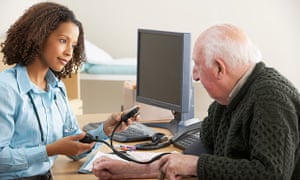
GP treating an elderly patient


‘GPs are more inspected, regulated and scrutinised than ever before – and quite right too.’ Photograph: Alamy

There is a problem with the huge variation in quality between different GP practices. But inspections by the Care Quality Commission and the publication of its findings are helping to enforce high standards across the board. The CQC can demand an action plan when practices are found to be inadequate and shut down surgeries on the spot if they’re found to be unsafe. Every British GP has to undergo an annual appraisal, providing evidence that they meet professional standards. Any GP that fails to play ball can be denied the right to continue working. This is a completely different landscape to when I started working as a GP nearly 30 years ago. We are more inspected, regulated and scrutinised than ever – and quite right too.


But some GPs can’t hack it. There’s more work, more scrutiny and higher expectations now. Practices have to adapt, and many single-handed GPs find that hard. The climate nowadays favours larger group practices; there are economies of scale, a mix of skills among a range of GPs, less risk of professional isolation, and more chance of resisting the creeping penetration by large global healthcare organisations. Virgin Care already runs more then 400 NHS and social care services. Single-handed practices can’t fight the Goliaths who are sniffing round primary care.


So some GPs are taking early retirement, and fewer young medics are opting for general practice. And 1.2% of GP practices closed last year. Some of those practices will be a loss, some won’t. Many patients will be upset that they’ve had to move but no one will be left without a GP. And that’s the real story.


Let’s put our NHS worries in perspective – and celebrate what we have | Ann Robinson

26 Ocak 2017 Perşembe

We are rightly proud that our NHS is free. Let’s keep it that way | Ann Robinson

Imagine you have a big, greasy, warty growth on your back. It’s embarrassing, catches on your clothes and means you avoid swimming or exposing your back on holiday. Your GP confirms that it’s not cancer and says it’s a seborrhoeic wart. That’s great, but you’d like it removed. Your GP says you can’t be referred for removal on the NHS because it’s a cosmetic problem.


So what should you do next? Live with it? Pay a private skin specialist to remove it (likely to be over £120 to have it scraped or frozen off)? Or have a stand-up fight with your GP?


There’s another option being proposed by a group of GPs; let your GP do it, and pay a fee. At the moment, NHS GPs aren’t allowed to charge their registered patients for standard NHS care. But charging for non-NHS extras, like sick certificates for insurance companies, reports for health clubs that you’re fit to exercise, diving certificates and other optional extras, is allowed.


The British Medical Association (BMA) explains that GPs sometimes charge fees because “they are self-employed and they have to cover their costs – staff, buildings, heating, lighting, etc – in the same way as any small business. The NHS covers these costs for NHS work, but for non-NHS work, the fees charged by GPs contribute towards their costs.”


But until now, the permission to charge for non-NHS work has been limited to certificates and administrative tasks. The idea of allowing GPs to charge for clinical work that isn’t available on the NHS is much more challenging. After all, we are rightly proud of the fact that we don’t need to take a credit card or cheque book when we go to the GP. It’s anathema to many that this situation may change.


The controversial proposal has been spelled out by Dr Prit Buttar, chair of Oxfordshire’s local medical committee (LMC), who told Pulse magazine there had been discussions about rolling out the system nationally by the end of 2017. Under the proposed plans, GPs would be able to provide private services to their own patients by working through a third party company, which would take payment from patients and pay GPs for their time.


The plan is to extend the scope of non-NHS services that GPs can offer to patients for a fee. So if you want to see your GP outside of NHS-contracted hours (generally 8am-8pm), you could pay to see him/her privately instead of relying on the out-of-hours services that GPs employ to provide cover from 8pm-8am. At the moment, that wouldn’t be allowed. If you want to see a GP for a routine appointment at 9pm, you can’t. If it’s urgent, there are walk-in centres and NHS 111. If you’re mortally ill or wounded, there’s A&E.


As a GP who starts seeing patients at 7.30am, I can’t imagine why a GP would want to see private patients at 9pm. Or have the strength to work a 12-hour day and then keep going into the night. But, more importantly, I think it will taint the precious patient-doctor relationship that relies on trust that the GP is acting in your best interests, free at the point of delivery and unsullied by any profit motive.


You can see where Dr Buttar and co are coming from; people want choice and convenience in all areas, including healthcare. That includes the freedom to have an ugly wart removed or to see your own doctor late in the evening by mutual consent. GPs want to respond to people’s needs and wishes but are only contracted and paid by the NHS to provide a limited range of services. The NHS can’t fund a limitless range of interventions, because taxpayers don’t want to pay huge taxes so that you can get your wart removed.


So where does this leave us? The NHS restrictions are not sacrosanct and can be challenged; for instance, it’s hard to get varicose veins treated on the NHS – but guidelines from the National Institute for Health and Care Excellence (Nice) state that if you have symptoms like pain and aching, you should be referred for assessment and treatment. Your GP is your advocate within the system; helping you to navigate referral pathways and fighting your corner when needed.


What faith can you have that your GP is doing their best for you if they stand to personally gain by offering you a private alternative? It’s a slippery slope all right; the wrong solution to a pressing problem.


We are rightly proud that our NHS is free. Let’s keep it that way | Ann Robinson

19 Aralık 2016 Pazartesi

AA Gill’s death doesn’t mean the NHS is broken – or that private healthcare is superior | Ann Robinson

The sad death of journalist AA Gill from lung cancer has led to a barrage of criticism of the NHS. In his last piece for the Sunday Times, Gill described how his cancer had spread, despite conventional treatment, and how he was then unable to get a pioneering treatment called immunotherapy on the NHS.


Gill described asking his oncologist, Dr Conrad Lewanski, why the UK is “such a bad place to get cancer”. Lewanski replied: “It’s the nature of the health service. The key to cancer outcomes is the speed of diagnosis and treatment.” In response to the piece there have been letters and articles supporting the perception that you will be doomed if you rely on the NHS. It cannot be acceptable, writes oncologist Dr Mark Saunders, “that in a 21st-century NHS, patients must have to pay privately for a drug that can extend life”.


Gill paid for the drug Nivolumab privately; unfortunately, it wrought no miracles. Nivolumab, marketed as Opdivo, is a so-called checkpoint inhibitor, helping the body’s immune system to attack cancer cells by boosting the impact of our own T-cells. National Institute for Health and Care Excellence (Nice) has approved the use of this drug in advanced melanoma, but ruled that it’s not cost-effective to offer it to all patients who have the specific kind of lung cancer Gill had. Instead, Nice recommends that these patients are tested for a certain biomarker, which predicts whether they are more likely to respond to Nivolumab. Funding could come from the Cancer Drugs Fund for these patients, who make up a third of those with this type of lung cancer.


Reaction to Gill’s death has included a wave of letters and comment along the lines of: “God help me if I get cancer and have to rely on the NHS.” Many issues and arguments have been thrown into the pot along the way, including lack of funding for advanced cancer drugs, late diagnosis and poor cancer survival rates in the UK compared to some other countries. Gill himself thought delays in getting a GP appointment, rushed consultations, delayed referral and slow investigations might all play a part, although he visited a private doctor until he started treatment, so wasn’t able to present personal evidence for his view.


But he may well have been right and there is no doubt that we could do better. The five-year relative survival rate for breast cancer in England in women diagnosed up to 2007 was 79.1%, compared to 86% in Sweden. And the corresponding figures for bowel cancer were 51.3% in England compared to 62.2% in Germany.


AA Gill, journalist and restaurant critic, dies aged 62

So for those of us who live in the UK and rely on NHS care, just how bad is it to get seriously ill here? The Organisation for Economic Co-operation and Development (OECD) produced a pithy summary of the state of UK healthcare last year. It said access to care is good, while quality of care is “uneven” and “continues to lag behind that in many other OECD countries”. We’re good at keeping people with diabetes out of hospital, but less good when it comes to asthma and respiratory diseases. UK health spending per person is slightly below the OECD average. And the main factor the summary highlights is the fact that we smoke, drink and overeat more than the OECD average. “To reduce premature mortality, more attention to tackling health risk factors – smoking, alcohol consumption and obesity” are needed, according to the report. Public Health bodies are trying, but the alcohol, sugar and tobacco lobbies are powerful brakes on change.


And what about if you get cancer? Should you board a plane as soon as you’re diagnosed? In truth, survival following diagnosis for cancer has improved in the UK over the past 10 years but we are still in the bottom third of OECD countries in five-year relative survival for colorectal, breast and cervical cancer. On the plus side, writes the OECD, “survival rates are improving at least as fast as the OECD average”.


Perhaps the solution lies in taking out private health insurance? But buyer beware: read the small print. Insurance companies pay for some treatments, not others. Say you find you have a genetic mutation that gives you at least a one in two chance of getting breast or ovarian cancer. You may want to opt for risk-reducing surgery as Angelina Jolie and Sharon Osbourne did. But you may be surprised to learn that most health insurance policies won’t cover you for any form of preventive treatment; you have to wait until you get the cancer to be treated. If you want it done, you will be able to get it on the NHS if eligible.


But why have any system at all? Why not just stow away some cash and use it to buy whatever healthcare you need directly? That would work if you have unlimited wealth, never get sick and are determined not to access modern medicine even if one of your kids gets seriously ill.


Most would agree that we do need some sort of system in place for our healthcare. And there is no system on Earth that offers the full range of treatment options as soon as they come to market. Each system in operation has pros and cons; it is tempting but daft to attribute headline figures about cancer survival rates in different countries entirely to the way they deliver healthcare.


The NHS is not the monolithic, static system some would have us believe; there is scope to deliver the evolutionary changes that we certainly need. This means adapting to the new opportunities offered by science and technology; expect to see rapid innovations in coming years in the field of genomics and artificial intelligence. And there will be more emphasis on promoting wellbeing and preventing ill-health rather than just treating disease. This can only happen if the NHS engages better with patients, carers and citizens. That’s the vision, and we’re all a part of it.


AA Gill’s death doesn’t mean the NHS is broken – or that private healthcare is superior | Ann Robinson

21 Ağustos 2015 Cuma

Be wary of research that website link mental unwell overall health with creativity or a substantial IQ | Dr Oliver Joe Robinson

The thought that extremely imaginative or intelligent folks are specifically vulnerable to psychological unwell well being has been around for a long time. “No great genius has ever existed with no some touch of madness” is attributed to Aristotle in 350BC, and more current examples of inventive types describing their afflictions with fantastic clarity are not challenging to uncover.


Sylvia Plath’s The Bell Jar and David Foster Wallace’s Infinite Jest are each achingly vivid portrayals of psychological unwell health and both make uncomfortable reading through in light of their author’s untimely deaths.


Related: New examine claims to find genetic link among creativity and mental illness


Bipolar disorder, previously referred to as manic depression, is a psychiatric disorder in which people oscillate among periods of mania and depression. It is 1 of the rarer psychiatric problems, affecting less than 1% of the population (assess that with key depressive disorder, which influences closer to 20% of us).


In common culture, the manic phase of bipolar disorder is often portrayed as currently being characterised by elevated mood and creativity. As the psychologist Kay Redfield Jamison puts it in her autobiography about her own experiences of bipolar disorder, An Unquiet Mind: “When you are substantial it is great. The ideas and feelings are quickly and regular like shooting stars, and you comply with them until you find far better and brighter ones.”


A paper published this week in the British Journal of Psychiatry reports that in a sample of 1,881 men and women, these who show the best 10% of “manic features” (measured at age 22-23 by a questionnaire acknowledged as the HCL-32) had IQ scores (measured when they had been eight years outdated) practically 10 points higher than these in the bottom ten% of manic traits. In other words, if you have a increased IQ when young, you may report higher manic traits as an grownup.


It is as a result seductive to speculate, as the write-up does, that “in evolutionary terms … there could be some selective benefit associated with propensity to significant recurrent ailments of mood such as bipolar disorder”. Without a doubt, 1 of the authors is quoted as saying: “One likelihood is that severe issues of mood – such as bipolar disorder – are the cost that human beings have had to pay out for far more adaptive traits such as intelligence, creativity and verbal proficiency.”


While this might hold for some sufferers, some of the time, we must also wonder how beneficial this trope is for the majority of individuals who endure from these problems.


In reality sufferers are as various as the society in which they dwell. That is to say, there are several who suffer from significant mood issues who are not especially creative or pushing the upper reaches of IQ. And even if they were, as a current evaluation in the British Journal of Psychiatry puts it: “By my reckoning if it was possible to remove all bipolar disorder in the population, creativity would only be decreased by .23%.”


We must also be specifically careful extrapolating a comparatively standardised metric this kind of as IQ on to one thing as flighty and ill defined as “creativity”. IQ does not map easily on to better lifestyle outcomes and is topic to cultural distinctions.


Perhaps much more importantly, nevertheless, mania is just as readily connected with disordered considering, irritability, and even psychotic experiences as it is with euphoric highs. As Kay Redfield Jamison puts it, “Somewhere, this changes. The rapidly suggestions are far as well quickly, and there are far also several mind-boggling confusion replaces clarity”, and in the end “you are irritable, angry, frightened, uncontrollable”.


As with all problems of the mind, the reality is never ever genuinely black and white.  It must also be noted that there is a gulf among “manic traits” in wholesome people and a full-blown manic disorder (the paper does not report if any of these people actually meet criteria for a disorder) and, as the authors of the existing study are rapid to level out, high IQ in and of itself does not confer a direct chance for manic traits, but probably in blend with other factors “such as publicity to maternal influenza in the womb or childhood sexual abuse”.


Psychiatric disorders are massively, intimidatingly, complex


Psychiatric issues are massively, intimidatingly complicated. As Tom Insel, head of the US National Institute of Mental Well being says: “Mental disorders are amid the most complex issues in medicine, with challenges at each degree from neurons to neighbourhoods. But, we know so small about mechanisms at each and every degree.”


Presently, a diagnosis of most psychiatric issues is based on self-reported signs (related to the questionnaire utilised in this review) but it is turning into more and more recognised that the exact same set of signs may possibly be brought on by myriad underlying mechanisms, all of which could call for fundamentally different treatment options.


Unlike practitioners in most branches of medicine, mental wellness pros have no genuinely aim tools with which to diagnose psychiatric problems. This is maybe unsurprising, given the complex interplay amongst setting, society and underlying biology in provoking psychological unwell overall health.


In the United kingdom, £9.75 is invested in investigation per particular person affected by psychological sickness – more than


100 occasions much less than the quantity spent on cancer study per patient (£1,571), however an urgent want to improve remedy and diagnosis stays. “The sooner we can intervene in bipolar the much better the end result,” the authors of the existing review say. There is minor to disagree with right here. But we are nevertheless a extended way off.


Be wary of research that website link mental unwell overall health with creativity or a substantial IQ | Dr Oliver Joe Robinson

18 Ağustos 2015 Salı

We need to discover what two,000 calories a day seems to be like to avert diabetes | Ann Robinson

Diabetes is threatening to bankrupt the NHS after a 60% rise in cases in the past 10 years, according to Diabetes UK . But what’s behind that headline? Is it true? And can anything be done to stem the undeniable rise in diagnosis and cost of treatment?


Related: Sugary drinks may cause type 2 diabetes regardless of size, research says


It does appear to be true. NHS data confirms that an additional 1.2 million adults are living with diabetes in England and Wales now compared to figures in 2005. Most of this is type 2 diabetes which usually develops later in life, doesn’t necessarily require insulin and is often related to obesity, especially in those with an inherited tendency.


Diabetes UK predicts that if current trends continue, 5 million people will have diabetes by 2025. And care is suboptimal in 40% of diabetics who don’t receive all eight care processes that the National Institute for Health and Care Excellence recommends. Of the 100 amputations a week, 80% are thought to be preventable with optimal care.


Diabetes is a killer and a major cause of significant health problems: kidney failure, stroke, heart attacks and blindness. And it’s expensive. Diabetes treatment accounts for 10% of the annual NHS budget (about £10bn a year).


And the devil is that it is often – though not always – a preventable disease. The single biggest preventable factor is obesity. But of current trends continue, one in three of us will be obese by 2034 and one in 10 of us will be diabetic.


The NHS Diabetes Prevention Programme is aiming to introduce an evidence-based behavioural programme to fight this trend. It’s being developed and rolled out across the country.


Diabetes UK is also calling for more NHS resources to provide better care, avoid complications like amputations and give more “flexible education options” for people with diabetes.


Healthcare professionals are encouraged to identify individuals at particularly high risk of developing diabetes because they’re obese or have an inherited tendency, and offer specific intervention.


It’s the way we have become a nation of grazers. Schools need to teach pupils what 2,000 calories looks and feels like


And there is growing awareness of the need to identify and intervene when young people are becoming obese and at risk of type 2 diabetes. There’s particular interest in trying to make sugary drinks more expensive, less attractive or less available, especially to young people.


But the only way that the tide will be turned is in a massive change in the way we lead our lives. Sport has to come back into schools, playing fields reclaimed and repurchased, cycling made safe and walking to school become the norm.


And we’re going to have to stop eating all the time. It’s not just what we eat (although clearly sugary drinks and calorie laden muffins are not helpful). It’s the way we have become a nation of constant grazers. Schools need to teach pupils what 2,000 calories a day looks and feels like. It means a breakfast of toast or cereal, a sandwich and zero calorie drink (like water) at lunch and a supper of protein, veg and a portion of carbohydrate like some boiled potatoes. Some fruit and a yoghurt, and you’re basically done for the day. Who eats like that nowadays?


The messages need to be clear and unambiguous. Public health policies and political intervention are all very well. But individuals need to know how to say no to the constant offers of food and sugary drinks that surround us. The temptations will always be there. We need the tools to resist.


We need to discover what two,000 calories a day seems to be like to avert diabetes | Ann Robinson

We want to learn what two,000 calories a day seems like to avoid diabetes | Ann Robinson

Diabetes is threatening to bankrupt the NHS after a 60% rise in cases in the past 10 years, according to Diabetes UK . But what’s behind that headline? Is it true? And can anything be done to stem the undeniable rise in diagnosis and cost of treatment?


Related: Sugary drinks may cause type 2 diabetes regardless of size, research says


It does appear to be true. NHS data confirms that an additional 1.2 million adults are living with diabetes in England and Wales now compared to figures in 2005. Most of this is type 2 diabetes which usually develops later in life, doesn’t necessarily require insulin and is often related to obesity, especially in those with an inherited tendency.


Diabetes UK predicts that if current trends continue, 5 million people will have diabetes by 2025. And care is suboptimal in 40% of diabetics who don’t receive all eight care processes that the National Institute for Health and Care Excellence recommends. Of the 100 amputations a week, 80% are thought to be preventable with optimal care.


Diabetes is a killer and a major cause of significant health problems: kidney failure, stroke, heart attacks and blindness. And it’s expensive. Diabetes treatment accounts for 10% of the annual NHS budget (about £10bn a year).


And the devil is that it is often – though not always – a preventable disease. The single biggest preventable factor is obesity. But of current trends continue, one in three of us will be obese by 2034 and one in 10 of us will be diabetic.


The NHS Diabetes Prevention Programme is aiming to introduce an evidence-based behavioural programme to fight this trend. It’s being developed and rolled out across the country.


Diabetes UK is also calling for more NHS resources to provide better care, avoid complications like amputations and give more “flexible education options” for people with diabetes.


Healthcare professionals are encouraged to identify individuals at particularly high risk of developing diabetes because they’re obese or have an inherited tendency, and offer specific intervention.


It’s the way we have become a nation of grazers. Schools need to teach pupils what 2,000 calories looks and feels like


And there is growing awareness of the need to identify and intervene when young people are becoming obese and at risk of type 2 diabetes. There’s particular interest in trying to make sugary drinks more expensive, less attractive or less available, especially to young people.


But the only way that the tide will be turned is in a massive change in the way we lead our lives. Sport has to come back into schools, playing fields reclaimed and repurchased, cycling made safe and walking to school become the norm.


And we’re going to have to stop eating all the time. It’s not just what we eat (although clearly sugary drinks and calorie laden muffins are not helpful). It’s the way we have become a nation of constant grazers. Schools need to teach pupils what 2,000 calories a day looks and feels like. It means a breakfast of toast or cereal, a sandwich and zero calorie drink (like water) at lunch and a supper of protein, veg and a portion of carbohydrate like some boiled potatoes. Some fruit and a yoghurt, and you’re basically done for the day. Who eats like that nowadays?


The messages need to be clear and unambiguous. Public health policies and political intervention are all very well. But individuals need to know how to say no to the constant offers of food and sugary drinks that surround us. The temptations will always be there. We need the tools to resist.


We want to learn what two,000 calories a day seems like to avoid diabetes | Ann Robinson

30 Haziran 2014 Pazartesi

The NHS is possibly the best program in the world, despite getting given a kicking | Ann Robinson

An A&ampE department

‘A&ampE departments are overflowing since of a complex combine of causes.’ Photograph: Christopher Thomond for the Guardian


The NHS may be “palpably fraying at the edges” according to Dr Mark Porter, chairman of the British Healthcare Association, but as a jobbing GP, I would say it is not unravelled but.


Undoubtedly, as well many individuals pitch up at A&ampE. And when asked to account for their actions, a quarter say it’s since they can’t get entry to their GP. Typically that’s true. Often it truly is not. Unpublished information from a nearby research of A&ampE attendances that I worked on 3 years in the past showed no correlation in between GP opening times, variety of appointments (booked as opposed to stroll-in surgeries), and size of practice. Access to GPs is a dilemma in some areas but some patients never even attempt to get an appointment.


People from nations that do not have GPs are used to obtaining direct access to professionals or going to A&ampE. I have individuals from the US who think it really odd that I can do a smear check, see their child with a sore throat and treat their diabetes. It will take a even though to show my competence and earn their believe in. NHS principal care is an unfamiliar model to many whereas A&ampE is universally recognised as a location you can go to get aid.


And individuals get baffled by the assortment of options now obtainable. There are extended opening hours at GP surgeries, stroll-in centres, and out-of-hours care for when surgeries are shut. Many individuals dial 111 for non-urgent wellness guidance but call-handlers are not medically trained, and comply with cautious pathways that usually outcome in tips to seek health care help when straightforward reassurance would suffice.


Of course it can make sense to wait and see your own GP but some folks like to phone at 3am. I have just looked at the out-of-hrs calls manufactured by our patients this weekend. Almost all could have waited right up until Monday morning but they chose not to. And there is no situation about obtaining an appointment here we operate a stroll-in surgery every morning for any individual who wants to display up.


So A&ampE departments are overflowing simply because of a complex mix of causes. But it fits the government to blame GPs and it suits the BMA to highlight the need to have for better resourcing. And while the government’s received the boot in, why not throw in a random concept that when cancer diagnosis is delayed, the GP should be “named and shamed”?


But let us contrast this gloomy and scary image with some other aim details. Earlier this month, the Commonwealth Fund judged United kingdom healthcare to be the greatest out of eleven countries studied. And in the most current national GP survey, these had been some important findings: 75% sufferers identified it is simple to get by way of to someone at their GP surgery on the cellphone 86% of patients were capable to get an appointment to see or communicate to someone 83% of sufferers come to feel their GP was excellent at treating with care and concern and 87% of patients have had a excellent total knowledge of their GP surgical treatment.


Honestly, the NHS is not excellent. It needs far more cash and there is no spot for complacency. Good knowledge must be celebrated and shared. Undesirable experiences should be used to enhance the services by operating with the provider and patient advocacy groups. But politicians, doctors’ representatives and patients who rubbish the system in a nihilistic way should temper their remarks. It truly is most likely the best method in the globe. Where’s the proof that other nations do it better?


The NHS is possibly the best program in the world, despite getting given a kicking | Ann Robinson

2 Haziran 2014 Pazartesi

This bickering more than e-cigarettes could choke the message | Ann Robinson

E-cigarettes regulation

A group of scientists has written to the Planet Health Organisation urging it to resist ‘controlling and supressing’ e-cigarettes. Photograph: Tim Ireland/PA


E-cigarettes supply a nicotine hit in vapour type. Supporters say they are safer than standard cigarettes and shouldn’t encounter the very same regulations and advertising restrictions. The UK’s Faculty of Public Health says it isn’t going to know nevertheless regardless of whether e-cigarettes do far more good than harm. And the World Health Organisation is due to give advice to governments later this yr.


Now, a group of 53 scientists has published an open letter calling on the WHO to “resist the urge to control and suppress e-cigarettes”. So, who is proper? Ought to e-cigarettes be classed as tobacco goods and face the identical restrictions as cigarettes? Or ought to they be welcomed as powerful aids to providing up smoking, and be prescribed free on the NHS?


They do seem to be to perform. E-cigarettes heat liquid nicotine to a vapour, which is inhaled. Reasonable touches like a light in the tip and water vapour “smoke” make them appear and come to feel like a normal cigarette. They deliver the nicotine rush that smokers are addicted to, without having the tar and chemicals that can lead to cancer and illness.


A large survey of smokers in England carried out by University University London (UCL) identified that one in 5 of these who are making an attempt to quit control to do so whilst using e-cigarettes. Of program, that suggests that 4 out of five will not handle to quit. But nicotine is a hugely addictive drug and giving it up is notoriously tough. This quit rate is still 60% greater than if men and women consider to quit without any professional input, even if they buy nicotine goods more than the counter. Smokers who go it alone hardly ever manage to quit. And proponents say that as the units get much more sophisticated, with various strengths and flavours of nicotine, much more individuals could switch from regular cigarettes.


So e-cigarettes can aid smokers to give up, but they are not as very good as pitching up at an NHS stop-smoking support, according to Professor Robert West, director of tobacco research at UCL, lead writer of the study and a signatory to the open letter. He says these solutions “virtually triple a smoker’s odds of effectively quitting in contrast to going it alone or relying on more than-the-counter products”.


Professor West has mentioned that banning the sale of e-cigarettes to below-18s is a wise precaution to avoid adolescents starting with e-cigarettes and then going on to tobacco. And the BMA has also expressed concern about youngsters taking up smoking soon after becoming introduced to e-cigarettes .


There is nothing to stop you puffing on an e-cigarette in a restaurant or public area. The nicotine vapour is odourless and it would be tough for fellow diners to complain. In actuality, you may possibly really feel a bit of a prat as non-smokers appear on disapprovingly and “true” smokers acknowledge their pariah standing by going outdoors.


Critics of e-cigarettes say they might be less risky than regular cigarettes, but we can not say that they are harmless. The units can be unreliable and of variable good quality. Their growing recognition is undoing decades of difficult work trying to persuade folks that smoking is not cool and can kill you. Children and non-smokers could be tempted to take up smoking as a outcome of constructive media images.


But experts this kind of as the 53 signatories of the open letter feel that e-cigarettes are a useful way to minimize the terrible burden of smoking-connected condition. It is real that prices of smoking have fallen from 40% in the 1970s to twenty% now. But which is nevertheless 10 million smokers in the United kingdom, of whom half will die of a smoking-relevant illness an common of ten many years younger than non-smokers.


And the be concerned about children or non-smokers taking up smoking following making an attempt an e-cigarette looks misplaced at the second. 99% of individuals who use e-cigarettes in the United kingdom are ex or existing smokers and really number of are children. Smokers who are trying to quit prefer e-cigarettes to other nicotine-replacement therapies, even however they are not licensed and can not be prescribed.


E-cigarettes might support some, but realistically after you are a smoker the odds are against you ever quitting. The holy grail is to quit men and women from beginning to smoke. Smoking have to be portrayed as deeply uncool smokers need to continue to be huddled in doorways and not let back inside and public wellness messages should be clear and unambiguous. The professionals’ bickering about e-cigarettes will confuse the public and muddy the waters. Time for them to smoke the peace pipe.


This bickering more than e-cigarettes could choke the message | Ann Robinson