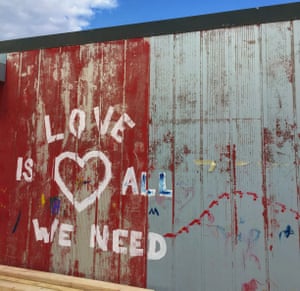
kindness etiketine sahip kayıtlar gösteriliyor. Tüm kayıtları göster

2 Kasım 2016 Çarşamba

Without the power of kindness, our society will fall apart | George Monbiot

If there is an irrepressible human trait it’s the determination, against all odds, to reconnect. Though governments seek to atomise and rule, we will keep finding ways to come together. Our social brains forbid any other outcome. They urge us to reach out, even when the world seems hostile.


This is the conclusion I draw from touring England over the past few weeks, talking about loneliness and mental health. Everywhere I have been so far, I’ve come across the same, double-sided story: stark failures of government offset in part by the extraordinary force of human kindness.


First the bad news: reminders of the shocking state of our mental health services. I met people who had waited a year for treatment, only to be given the wrong therapy. I heard how the thresholds for treatment are repeatedly being raised, to ration services. I met one practitioner who had been told, as a result of the cuts, to recommend computerised cognitive behaviour therapy to her patients. In other words, instead of working with a therapist, people must sit at a screen, using a programme to try to address disorders likely to have been caused or exacerbated by social isolation. Why not just write these patients a prescription instructing them to bog off and die?At least then they wouldn’t have to wait a year to be told to consult their laptops. I heard of children profoundly damaged by abuse and neglect being sent to secure accommodation – imprisoned in other words – not for their own safety, or other people’s, but because there is nowhere else for them to go.


These are not isolated cases. It is a systemic problem. There has been no child and adolescent mental health survey in this country since 2004 (though one is now planned). Snapshot studies suggest something is going badly wrong: figures published last week, for example, suggest a near quadrupling in the past 10 years of girls admitted to hospital after cutting themselves. But there are no comprehensive figures. Imagine the outcry if the government had published no national figures on childhood cancer for 12 years, and was unable to tell you whether it was rising or falling.


Of children referred for treatment for mental health disorders, 60% do not receive it. The Guardian recently published a mother’s account of how her child had been treated. Despite a severe mental health disorder, it was only after the child attempted suicide that she received the care she needed. The treatment consisted of sending her to the other end of the country: the only available bed was 300 miles from home. You don’t need to be a psychotherapist to imagine what that might do to a distressed and vulnerable child. But when the beds don’t exist, the health service has no choice. Embarrassed into a semblance of action, the coalition government promised another £250m a year for children’s mental health. It will scarcely touch the sides.


But amid the rubble of a collapsing state, I kept stumbling into something wonderful. Performing with the musician Ewan McLennan, using music and the spoken word to explore these subjects, has brought me into contact with groups that restore my faith in the human spirit.


In Leeds we ate in a cafe run by the Real Junk Food Project, whose meals are made from waste or donated food. Seeing people of all ages, from all stations of life, who had never come together before, yakking away over dinner like old friends, I realised that the project is addressing not only the waste of food but also the waste of social opportunity. Breaking bread together: this is still the best and simplest way of reconnecting.


In Sheffield I met a man creating safe spaces for people experiencing manic or psychotic episodes: using woods, allotments and – if his project gets planning permission – cobb houses like hobbit holes to create a place of comfort for those whose minds are reeling. In Durham I saw how people whose poor mental health and isolation exclude them from work are being gently introduced to the social skills and creativity that might allow them to re-engage. In Bristol I met someone from the Happy City initiative, which is finding ways to measure wellbeing and discovering the best means of enhancing it.


Across the country, groups such as the Campaign to End Loneliness, Age UK, Independent Age, Community Network, Young Minds, the Transition Network, the Network of Wellbeing and the forthcoming Jo Cox Commisssion on Loneliness are trying to provide a coherent response to the troubled times that lead to troubled minds. Everywhere I look, I see the kind of enterprise and innovation with which business is credited, but which seems to be found most often in the voluntary sector.


But what has struck me with greatest force is this. At the end of every gig, we ask people in the audience to turn to someone they don’t know and say hello. I tell them they needn’t do any more than that, but they can keep talking if they wish. On the first night I made the mistake of mentioning the idea before we had wrapped up the show. That was all it took – the conversation flared up immediately, and it was a long time before I could direct people’s attention back to the stage. After every concert the talking has continued long into the night, in the venue’s bar or the nearest pub. It’s as if people have simply been waiting for permission to speak to the strangers who surround them.


Britain, according to government figures, is the loneliness capital of Europe, but even – or perhaps especially – here, the urge to connect is overwhelming. This reattachment, I believe, holds the key to both our psychological and political transformation. Connected, engaged and happy people do not allow themselves to be trampled into the dirt. It is when we are estranged both from each other and from our political environment that we are easiest to manipulate, as the rise of demagoguery in Europe and the US seems to attest.


Neither state provision nor community action is a substitute for the other: we need both. But the more effective community groups and voluntary initiatives become, the harder it is for governments to disregard their duties. By talking together, we find our voice.


You can comment on this article and others on our Your Opinionsthread, which opens every Wednesday at 10am


Without the power of kindness, our society will fall apart | George Monbiot

10 Ekim 2016 Pazartesi

My ‘insane’ Uncle Ed tried to kill Queen Victoria – he was treated with kindness | Penny Pepper

A young Queen Victoria rides out of the palace with her dashing husband. It’s June, and she is happy as the open carriage moves down Constitution Hill. Waiting on a grassy verge is a young man. Scarcely that – he’s a boy, just 18, with dark eyes and a baby face, short of stature and wearing a high top hat, as was fashionable in 1840. As the Queen draws closer he raises two pistols, determined to fire on the pregnant Victoria.


The young man is Edward Oxford, and he’s about to fulfil his dream of becoming notorious. Edward: my great, great, great uncle, who I fondly call Uncle Ed.


As ITV’s Victoria came to the season finale, I was relieved his story played out relatively true to what is known. Edward is described as “one of Cumberland’s creature’s”, part of the supposed Hanoverian plot against Victoria. But it is quickly revealed he is as a “half-witted pot boy from south of the river”, and that “the would-be assassin is completely insane”. Victoria wanted to hang him high, naturally.


Since unearthing this skeleton in my family closet, I feel a deep protectiveness – and relief that Edward’s attempted regicide came at a time when “lunatics” and the “criminally insane” were beginning to be treated more humanely.


Indicted for treason, he stood trial at the Old Bailey on 6 July 1840. If found guilty, he would hang, and his defence rested heavily on the ideas of being “innocent by reason of insanity”. The Old Bailey records of the trial are as full of intrigue and early Victorian melodrama as one could wish for, including the reading out of his notebooks, which exposed Uncle Ed’s pseudo-military fantasy society, Young England.


Reading through the statements and the endless legal ramblings, I find nuggets that allow me to unravel a sense of young Uncle Ed’s wayward personality. I follow a repeating echo, as I realise the case for his defence depends on making sure that he is insane. The records swiftly become a sensational feast of detail, especially where Edward’s father and grandfather are concerned. Both were known alcoholics. His grandad, John Oxford, described in one press report as a “black sailor of obscure origin”, died in Greenwich Naval hospital. At various times he believed he was the pope and other times St Peter.


Part of the Bedlam Exhibition held at the Wellcome Collection 2016.


Part of the Bedlam Exhibition held at the Wellcome Collection 2016. Photograph: Thomas SG Farnetti/Wellcome/Courtesy The Vacuum Cleaner and Hannah Hull

Edward’s father, George Oxford, is described as a “mulatto” and “the Tawny Beau” in press coverage. A keen indulger in laudanum, he was given to odd and violent outbursts, most often inflicted on his long-suffering wife, Edward’s mother, Hannah. There was also the time he brought the horse into the parlour for dinner …


It’s hard to know now if Edward shared this family “madness”, assuming you share the still-controversial belief in inherited mental ill-health. Endless witnesses reported his strange behaviour and mood swings. But Edward’s family and friends would have known that any exaggeration could only strengthen his claim to innocence.


Uncle Ed was found “innocent by reason of insanity”, suffering “a lesion of the will”. He was sentenced to be detained indefinitely at Bethlem Royal hospital – better known as Bedlam – in its latest home in Southwark. This was a time when pressure was growing for the proper care for the mentally ill, with supporters committed to the genuine idea of asylum and a removal of those individuals from prisons and the workhouse. This began with the County Asylums Act 1808.


Those with mental health issues are demonised, despised and disbelieved. They are too expensive for the welfare state


Edward flourished in this environment, and responded to regimes aiming for genuine care of the patient – “patient” at last replacing the earlier terms “lunatic”, “imbecile” and plain “inmate” – through the Lunacy Act of 1845. Edward’s frustrated intellect grasped all opportunities – he became a model patient, learning several languages fluently, finding skills as a painter, and becoming an unbeatable chess player. He thrived in that environment, when – as Mike Jay, co-curator of the Wellcome exhibition, Bedlam: The Asylum and Beyond – says in his recent Guardian piece: “The asylum became an emblem of social progress: a therapeutic community in which patients were to be treated with kindness.”


It’s tragic that there is very little sense of true asylum, of sanctuary, within today’s mental healthcare system. In the 20th century, care in the community made much of individuals’ rights to be looked after in their own homes (which, conveniently in the Thatcher era, was likely to be cheaper). Yet many within the mental health system – myself included – feel that the baby might have been thrown out with the bathwater. These days, those with mental health issues are demonised, despised and disbelieved. They are too expensive for the welfare state.


John O’Donoghue, author of the award-winning memoir Sectioned, is a veteran patient of the remnants of those old hospitals. As he says: “The closure of the old Victorian asylums has yielded mixed results … Yes, they could be places of neglect and abuse, patients left to rot … but they also afforded sanctuary, the kind of open-ended humane treatment modern practice seems to have great difficulty in providing.”


Since my own teenage years I’ve experienced ongoing mental distress, uneasily wearing many labels given and changed. Clinical depression. Anxiety disorder. Manic depression. Emotionally unstable disorder. When I read the details of Uncle Ed in all the literature, I wonder what his label would be now. Would it help him any more than “lesion of the will”? That he was troubled, unhappy and in emotional pain is clear, and yes, I sat tight-lipped ready in his defence as this final episode of Victoria unfolded. But this is a royal soap opera. Edward is the pot boy working-class “lunatic”.


One day I’ll tell his story. Bring him fully to life, track our shared heritage from the mysterious black sailor and take him wholly back into the family embrace – and celebrate his happy ending in Australia.


My ‘insane’ Uncle Ed tried to kill Queen Victoria – he was treated with kindness | Penny Pepper

5 Ekim 2016 Çarşamba

Mother of teenager who killed himself appeals for kindness online

A mother whose teenage son took his own life after being the victim of bullying that began over a computer game has said everyone has a collective responsibility to prevent other young lives being lost.


In an open letter, Lucy Alexander said her son Felix, 17, was so damaged by the abuse, isolation and unkindness he had experienced before his death that he did not realise anyone at his school cared about him.


The sixth-form student, from Worcester, was pronounced dead after being hit by a train near the city on 27 April.


An inquest heard the “kind and caring” teenager with a bright future had moved to Pershore high school after experiencing difficulties at a previous school. Three weeks after his death, hundreds attended his funeral and there was standing room only because the church was so full.


In her letter published in the Worcester News, Alexander, who also has a daughter Charlotte, 22, and a son Ben, 21, said she was not writing for sympathy but for the other children like Felix who were also being bullied.


The bullying had begun, she told the Sun, when her son was just 10 and classmates at the fee-paying King’s school where he had previously been a pupil teased him because he was not allowed to play the video game Call of Duty: Modern Warfare 2. It spiralled from there and he later became the victim of online abuse.


She said of her son in her letter: “His confidence and self-esteem had been eroded over a long period of time by the bullying behaviour he experienced in secondary education.


“It began with unkindness and social isolation and over the years, with the advent of social media, it became cruel and overwhelming. People who had never even met Felix were abusing him over social media and he found that he was unable to make and keep friends as it was difficult to befriend the most ‘hated’ boy in the school.


Felix Alexander


Felix’s family have been fundraising for Place2Be, a children’s mental health charity which provides in-school support and training for emotional wellbeing. Photograph: Family handout/PA

“He did make friends at his new school and the teaching staff found him to be bright, kind and caring. He was however so badly damaged by the abuse, isolation and unkindness he had experienced, that he was unable to see just how many people truly cared for him.”


The letter urged children to be kind always and to report bullying if they saw it. It said: “Be that one person prepared to stand up to unkindness. You will never regret being a good friend. I have been told that ‘everyone says things they don’t mean on social media’. Unkindness is dismissed as ‘banter’ and because they cannot see the effect of their words they do not believe there is one.”


She also said that teachers should be looking out for the signs of children struggling, especially if they were always sitting alone during lunch. Her final appeal was to parents. She said: “Please take an interest in what your children do online. We don’t like to think that our children could be responsible for being cruel to another child, but I have been shocked by the ‘nice’ kids who were responsible in part for Felix’s anguish. Even if they only say something horrible once, that will not be the only person who will have said something that week.”


Parents should encourage their children to self-edit and to use social media for kindness, she said. “On several occasions we removed all form of social media from Felix as it was causing so much distress, but that just isolated him further,” she said.


“Our lives have been irrevocably damaged by the loss of our wonderful son; please don’t let it happen to any other family.”


The family have been fundraising for Place2Be, a children’s mental health charity which provides in-school support and training for emotional wellbeing.


The charity’s director of communications, Jennie Meadows, said: “We are inspired by Lucy Alexander’s commitment to bringing about positive change from such a tragic and heartbreaking situation.”


She said the money raised following the death of Felix would help the charity reach more young people. She said: “The support that we have received as an organisation in memory of Felix is both overwhelming and unprecedented.”


  • In the UK, the Samaritans can be contacted on 116 123. In the US, the National Suicide Prevention Hotline is 1-800-273-8255. In Australia, the crisis support service Lifeline is on 13 11 14. Hotlines in other countries can be found here


Mother of teenager who killed himself appeals for kindness online

9 Eylül 2016 Cuma

Small acts of kindness ... but it"s not enough for women in refugee camps

In a refugee camp near the Greek city of Thessaloniki, I treated a Kurdish woman in her early twenties for a throat infection. Before she left, the translator asked her if there was anything else we could help her with. She broke down in tears. She had four children who she was struggling to look after and keep clean. She showed us a photograph of her children, just one year ago, well dressed and smiling. This woman was not only tired and desperate, she was ashamed of her living conditions. The food was bad, toilets revolting and she could not properly look after her family.


This refugee crisis is the worst in living memory. The UNHCR currently estimates that there are 65.3 million people displaced from their homes by conflict and persecution globally. Many are women and 41% are children.


Women were deliberately not drinking water so they could avoid a trip to the revolting portable toilets


In times of crisis women bear the brunt. All refugees are marginalised, but the women are particularly vulnerable to exploitation and physical and sexual harm. Many are victims of unimaginable atrocities as they flee their home countries. Pregnant women and those with small children are uniquely vulnerable on the dangerous journey to Europe. Throughout these camps there are widespread reports of gender-based violence.


In the camps women are under extraordinary pressure. Many have young families to provide for. Living in small tents they need to look after their children, feed their families, keep them clean and try to retain some normality with dignity.


Women are hit hardest by poor access to sanitation and water. Washing clothes for large families in a refugee camp becomes an impossible task. Summertime Greece is hot, in the camp where I worked women felt they could not keep clean and were deliberately not drinking water so they could avoid a trip to the revolting portable toilets; just six for a camp housing 600. They were risking dehydration and kidney and urine infections. One woman cried as she described the shame she felt about having to urinate in a bucket inside a tent that she shared with her large family.


Graffiti at the camp


Small acts of kindness do not solve the problems but they do give some comfort and dignity. Photograph: Hannah Mitchell

Asides from the issue of sanitation, the toilet area was poorly lit and women felt afraid and unsafe going there at night, with reports of intimidation and fights.


In the rush to respond to the large numbers of refugees arriving, many of the camps have sprung up in previously abandoned warehouses. They were not designed for human habitation. However, provision of clean, well-lit sanitation facilities, which a large number of people can use is not a difficult task and something that could be easily addressed in the camps.


Another recurring theme was that women did not want to be intimate with their partners. Many felt pressured into having sexual relations and there were newly pregnant women in the camps. Women have distinct health needs that can easily be overlooked in the response to acute medical needs. Provision of good maternity care and being pragmatic about access to family planning should be prioritised.


Many of the women had previously assumed the role of carer in their family, and many were deeply upset by their inability to carry out that role in the camps. The UNHCR emphasises that women must be involved specifically with the management and distribution of resources. There was little evidence of this on the ground in the camps. Unfamiliar and unpalatable food was given out. Many of the women complained that by the time it arrived it was hardly edible.


We need to empower women in the camps


Central to the humanitarian response should be empowering these women who have lost everything. Many of the women felt they weren’t being listened to. Here simple, pragmatic things can make a huge difference; volunteers in one of the camps organised distribution of fresh fruit and vegetables, which were needed to cook traditional meals from back home. Another gave out cooking utensils. Many of the women were delighted by this. Another volunteer gave pillows to each of the tents. These small acts of kindness do not solve the problems but they do give some comfort and dignity.


These women see no solution to their problems … They wait with their children for their lives to start again


However, the painful reality is that these women see no solution to their problems within reach. They wait with their children for their lives to start again. They are terrified for their children’s future as they have no access to formal education. One said that a prison sentence would be better than being in the camps, because at least then they would know when they would get to leave.


The responses of local people in the towns hosting the refugees was mainly one of kindness and compassion. The volunteer response, though at times chaotic, shows some of the large amount of goodwill towards refugees in Europe. The response of some of the European countries to the refugees is shameful, especially the failure of the UK to provide a safe haven for the many unaccompanied child refugees.


The world has been slow in its response to the refugee crisis, but this is an issue that will affect us all for many generations. These women have faced the most appalling conditions with the utmost of resilience and dignity. As the refugee crisis slips down the news agenda and out of the public’s mind, these families are going nowhere. If Lebanon, a country with a population of under 5 million can host 1.5 million refugees, then surely the rest of the world can play its part too.


Translation by Nada Sarsour, Amer Sawaf, Mohamad Abou Ras, Mariam Saleh and Mohamad Namo.


Join our community of development professionals and humanitarians. Follow @GuardianGDP on Twitter. Join the conversation with the hashtag #SheMatters.


Small acts of kindness ... but it"s not enough for women in refugee camps