moments etiketine sahip kayıtlar gösteriliyor. Tüm kayıtları göster

20 Mart 2017 Pazartesi

My vegan experiment: ‘Even in my maddest moments I never saw myself doing this’

The first thing I want to say is that this is the last thing I ever expected to write. Over the years, I have contemplated joining the police, moving to Canada, and taking up darts, but even in my maddest moments I never saw myself doing this. The need I feel to make this disclaimer crystal-clear, however, is something I’ve been puzzling over. The only purpose it can serve is my own vanity – which, I have been surprised to discover, is my single biggest worry about becoming a vegan.


It has only been six weeks, so it’s still early days, and I could be wrong about this. But I don’t think the worst thing about going vegan is saying goodbye to all the lovely things I used to eat. I really like roast lamb and scrambled eggs and ice-cream, but the truth is that you can get used to anything. My problem with veganism isn’t the diet, but the identity.
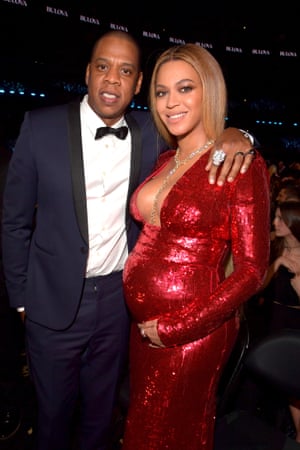


‘These days it’s the height of fashion and – if you’re a celebrity – practically compulsory.’ Jay Z and Beyoncé.


‘These days it’s the height of fashion and – if you’re a celebrity – practically compulsory.’ Jay Z and Beyoncé. Photograph: Lester Cohen/Getty Images for NARAS

Veganism used to be so niche that I was in my 20s before I first met a vegan, but these days it’s the height of fashion and – if you’re a celebrity – practically compulsory. Famous vegans are ten a penny – Beyoncé, Jay Z, Jennifer Lopez, Brad Pitt. Unlike most celebrity lifestyle choices, any idiot with a Deliciously Ella cookbook can access the glamour of giving up animal products, which may explain why the number of vegans in Britain has almost quadrupled in the past decade to more than half a million. Living in London, one can’t fail to notice that even vegan fashion has assumed a newly confident air; the old passive-aggressive T-shirt slogans (“Vegan. Because My Body is Not a Graveyard”) have made way for knowing hipster humour (“All Hail the Kale”). On a street in Hackney where, last time I looked, crowds on the pavement meant a pub fight had spilled on to the kerb, hordes now queue patiently in the rain, like old Soviet Union shoppers, outside “the world’s first-ever” vegan fried chicken shop, the Temple of Seitan.


So I don’t worry about looking weird. I worry about becoming that person who thinks what they put in their mouth is important enough to merit a significant share of their time and energy every day. Who wants to be sourcing vegan mozzarella on holiday, forever scanning labels, making a nuisance of themselves at dinner parties? To me, it has always felt fundamentally precious, if not borderline narcissistic, to care that much about the purity of one’s digestive system.


That middle-age would force a reappraisal never even occurred to me. In my 20s, it was just about plausible to pass off a diet of Dime bars and Diet Coke as evidence of a life too fabulously busy for trivial distractions such as actual meals. By 45, however, it looks like self-abuse. After I was diagnosed with breast cancer 18 months ago, it altogether ceased to be an option and, for the first time in my life, I paid serious attention to the novelty of taking care of myself – not least because when surgeons, oncologists and nurses have done everything they can to save your life, there is a certain sense of obligation to do one’s bit, too. When nutrition is no longer a lifestyle choice but a medical necessity, eating food that might really kill you becomes patently idiotic – which is why I spent most of last year trying to adopt a healthier diet.


When nutrition isn’t a lifestyle choice but a medical necessity, eating food that might kill you is patently idiotic


The problem, as anyone who has ever tried knows, is that it’s impossible to know if you are doing it right. There is quite possibly greater global consensus on how to solve the Israel/Palestine conflict than on what we should eat, and the more you learn, the less you feel you know. Is a low-carb paleo diet the answer? Is meat OK as long as it is organic? Will five a day do the job? Or is anything less radical than a strict raw-food regime a waste of time? Willpower is hard enough to sustain, even when you know it’s worth it. The possibility that it might, in fact, be pointless was enough to derail every diet I tried.


In the end, I could find only one way to make sure everything you put in your mouth is a good idea. The simplicity of the solution was irresistible. The problem, of course, is that nothing else about going vegan is remotely simple. Was I really going to find time to start shopping in specialist wholefood stores and soaking mung beans? The vegans I knew all promised that after a month I would start to feel so fantastic that the palaver would seem a small price to pay. This may be true, but I worried that faffing about with legumes would defeat me long before the fabled herbivore high kicked in.


Was there, I wondered, an easier way to do it? Of course there was. I found a company in London called Detox Fit, a one-stop shop for lazy vegans, that offers a weekly delivery of gourmet meals. A sort of vegan ready meals on wheels, if you like. Run by a preposterously good-looking vegan couple, the company also provides an AA sponsor-style helpline to call should I find myself outside a kebab shop, having a wobble. If out and about on the high street and hungry, all I need to do is call and they will guide me to vegan options in the vicinity.


Unable to think of a reason not to, I signed up, and embarked on a three-month experiment with veganism. A finite commitment felt much more doable than a lifelong promise, but the very modesty of the challenge also made me anxious. With no excuse for falling off the wagon, what if I still did?


There are so many reasons to be vegan that it is hard to know which one would work best in a crisis of willpower. Health is mine, and the obvious one – but, in a reckless mood, I might decide not to care. Would thoughts of carbon emissions from cattle fortify me? Maybe the trick is to keep a mental archive of factory-farming photos, ready to deploy when necessary. Then again, what if world famine turns out to be the most compelling option? It might be an idea to memorise some eye-opening statistics about how many acres of grazing it takes to make a Big Mac, and how many people the same fields could feed if we planted crops instead. Adopting a belt-and-braces approach, I watched the appropriate documentary material online: Cowspiracy, Forks Over Knives and Earthlings.


Rather to my surprise, at the end of month one, I’ve had no need for either the Detox Fit hotline or my fortifying mental devices. Whatever had I been worrying about? The whole thing has been startlingly easy.


And then I was invited to a dinner party …


My vegan experiment: ‘Even in my maddest moments I never saw myself doing this’

14 Kasım 2016 Pazartesi

The secret life of an oncologist: witnessing the most painful and intimate moments of life | Anonymous

People assume that oncology is all doom, gloom and death. To be honest it can be, but thankfully not all of the time, or else nobody could cope with doing it.


Cancer can be a disease of dreadful retrospectives – that lump that was looked at but not biopsied; that mole that was judged to be OK. These patients and their families are justifiably angry. Others have refused to see what was plainly staring them in the face.


For most of our patients the actual diagnosis of cancer has been given to them in another ward, and when they come to us they are pleased there are still options that can prolong their lives even if we cannot cure their illness. Surgery is usually restricted to relieving obstructions or draining fluids that cause discomfort. What is most commonly used is chemotherapy in different forms, and radiation. The treatment that is chosen is the result of many tests and a lot of accumulated experience. Oncology is very much a team effort, with everybody working together.


Most people have little idea about the kind of discomfort that chemotherapy entails.Vomiting, endless nausea and a totally washed-out feeling associated with a really bad stomach bug is usually experienced during most chemotherapies. Depending on the type, it can also knock your immune system badly leading to life-threatening infections if you are unlucky.If there is hope for recovery at the end of treatment, it is easy to support the decision to go through with it. But it might only be possible to prolong life for a few months and if that entails such sickness and other side-effects the choice of what is the right thing to do is not so clear.


A big part of life on the oncology ward is pain relief. Sometimes people are admitted almost howling in pain. They have stayed at home, without much more than paracetamol, and at some point it becomes too much for both them and their family to handle. To be able to help them get control of their pain and regain their dignity is a very satisfying part of the job. People are worried about opioids and dependency, but what we usually see is that people take too little and too seldom.


Talking to patients and their relatives when there is bad news is definitely the worst part of the job


Alternative therapies come and go: last year’s noni juice is replaced by this year’s crystal water. Usually these therapies are expensive and harmless, but sometimes people make choices that make you wonder. There was one patient on the ward who surrounded herself in crystals and was advised not to take painkillers as apparently they would be harmful for her. Naturally, as the disease progressed she was in agony, but she did not want to show she had no faith in the crystals her family spent huge sums of money to purchase. Her last few weeks were hell for both herself, the staff and those close to her.


I really despair whenever people come in to the ward and say: “I’ve done some research on this and this and this medication seems to be the best.” They have no idea of the amount of effort and hours involved in keeping up with what is the most cutting edge and promising treatment. People would not dream of showing YouTube videos to the garage when they take their car in for repairs, but have no qualms about presenting their doctor with articles printed off the internet. It can take a very long time to try to explain that something that worked on one person and two sets of mice might not help their loved one. It would be good if people could trust the people who have devoted their lives to knowing what might work best.


At the end of life we lose our sense of hunger and thirst, and this usually sends visiting relatives into a total frenzy. They see the patient getting thinner and thinner, and believe they are starving to death. To try to explain that it is the cancer that is eating away at them and force feeding is not helpful can be very hard. This is especially trying when relatives have not been part of the process but come in at a late stage. Sometimes I believe that all of the stubbornness from childhood returns as they brazenly declare what mother would and would not like to do. It does not matter if all natural functions have shut down, as long as there is a bag of saline they feel that something is being done.


Despite all the negative aspects of the job, some people come in at death’s door and walk out with the possibility of living to 100. The advances in treatments have given more years to many, but to some there is possibility of life where there would be no hope just a few years ago. This is what creates optimism on the ward, the balance that is necessary to keep on working here.


Patient having chemotherapy.


‘The best part of the job is when things go well and the treatment is working.’ Photograph: Alamy

Sometime miracles happen. I remember one guy who came in, full of cancer and with metastasis everywhere, and we assumed he’d be dead in a week or two. Then one of the doctors started wondering about the pattern in which the diseases had spread. It did not seem to fit entirely with the diagnosis given, and he ordered a second opinion of the histology. The pathology department were asked to reconsider, and they changed the diagnosis to a testicular cancer. The patient’s chemotherapy was changed, and in four weeks he was a healthy man again. It gives me faith, that the lab workers were not so stubborn that they let their pride stop them from rethinking given the input from an experienced clinician.


I try not to take the job home with me, but sometimes it can be hard not to. Especially at times when we have had many deaths, and the local paper is filled with notices naming people I spoke to only recently. Talking to patients and their relatives when there is bad news is definitely the worst part of the job. You cannot comfort people like you would a friend, and it can be really hard to know what to say.


That said, talking about death has become more acceptable over the years, and I think it helps to put what everybody is feeling into words. Some patients share their worries about the actual process of dying: nobody wants to be in unbearable pain. We try to reassure people that usually things are quiet and peaceful, and that we’ll do everything possible to relieve any discomfort.


The best part of the job is when things go well and the treatment is working. To see a tumour shrink away, and disappear, then meet a patient five years later who is healthy, and getting on with their life is a wonderful feeling. We follow people through some of the most painful and intimate moments of their lives. The losses casts a shadow on our days, but the wins give the entire ward a sense of pride and joy.


• Are you a prison warden, a decorator or a librarian? We want to hear your candid accounts of what work is really like. Find full details on submitting your story anonymously here


The secret life of an oncologist: witnessing the most painful and intimate moments of life | Anonymous

4 Ağustos 2016 Perşembe

Improve Mental Clarity During Anxious Moments Without The Need For Medication

Anxiety can be good or bad depending on how you deal with it. You can even benefit from it if you improve mental clarity.


Recall a recent panic attack. What were you thinking at that time? Pay attention to the way you reacted and the sensations you felt. Is what happened a real catastrophe, or is it just about being frightened?


Did you feel any of the following?


  • Racing heart

  • Breathlessness

  • Dizziness

  • Confusion

These sensations can be scary in themselves and make you think that your health or sanity is threatened, but were you really in danger?


Evaluate the Threat


It’s likely that you felt uncomfortable sensations because you were anxious and not because your health was in peril. It’s also possible that you have been worrying about something that was harmless or non-existent all along.


Whenever you experience these again, tell yourself that these are normal and will soon pass.


Learn more about the things that trigger your panic. What were the thoughts, sensations, or circumstances involved? Why did they make you feel that way? Take another look at it and ask if your panic was justified. Try to react differently the next time you encounter them.


It helps to catch the panic early before your fears have escalated. Keep your reactions under your control so they do not escalate the problem. To give yourself peace of mind, keep a phone with emergency numbers in it so you can call for help when you really need to.


Calm Yourself Down


Control your breathing – your breath affects what you feel, so if you breathe slower, you will feel calmer. Do this with the intention of becoming more serene. You can also imagine or recall peaceful scenes.


Distract Yourself


Turn your attention to something else instead of focusing on the things you fear or what is happening to you. Be busy, talk with others, move about, or think of another thing. The conscious mind has a limited capacity. If you occupy it with your chosen target, it will be unable to churn up worrying ideas.


Take Action


If there really is a problem and it’s not just you worrying too much, ask yourself first: is there anything you can do about it? Work out what you could do. Perform the action immediately if you can. If you can’t do something right now, plan what to do and when to do it.


If you can’t do something about it right now or ever, stop worrying about it and distract yourself. Worry is an emotion that is designed for action. It’s useful even if it’s uncomfortable because it motivates you to solve a problem or evade a threat. But, if it just makes you ill, drop it.


Reduce Stress


Reduce your stress and overall level of anxiety. Perform relaxation techniques such as deep breathing, visualization, and mild exercises. Avoid stressors that you don’t need to deal with. Learn to say no to toxic people and situations. The longer you are stressed, the more prone you are to developing anxiety, so minimize your stress levels when you can.


Always remember that your emotions are a result of what you think about. Strive to improve mental clarity during anxiety. Be more aware of your thoughts and how they make you react. Change them when you can so that they are more realistic and helpful. When your anxiety is justified, turn it into a motivating force instead of a debilitating burden.


Source: Managing Your Mind: The Mental Fitness Guide by Gillian Butler, Ph.D. and Tony Hope, M.D.


Looking for a way to detox your body after one too many holiday indulgences? Click here to access a 10-day whole food fruit and veggie detox course that won’t leave you hungry or short in nutrients.


Don’t forget to download my FREE Book “Amy’s Home Kitchen”, for healthy, clean and delicious recipes. Or connect with me on Facebook or Google+. 


Improve Mental Clarity During Anxious Moments Without The Need For Medication

23 Nisan 2014 Çarşamba

Terminally sick teenager Stephen Sutton"s bucket record video moments


On Wednesday the teenager was rushed to hospital and posted a ‘final thumbs up’ message to his followers saying lifestyle had been very very good, a message which saw his fundraising efforts tip £1 million.


Mr Sutton, from Burntwood, Staffordshire, was diagnosed with bowel cancer at the age of 15 but this spread to other components of his physique.


He created a bucket-listing of 46 items he desired to do prior to he died, setting up a charity fundraising internet site and a blog on Facebook in January last 12 months to hold men and women up to date with his progress.


Some of his ‘bucket list’ actions have been filmed and posted on his Facebook webpage, such as a sky-dive and crowd-surfing in excess of a gig in an inflatable dingy.


To make a donation check out Justgiving.com/Stephen-sutton-TCT.


Terminally sick teenager Stephen Sutton"s bucket record video moments