'deep etiketine sahip kayıtlar gösteriliyor. Tüm kayıtları göster

3 Mart 2017 Cuma

The Report from Iron Mountain Leads Back to the Mother of All Deep Underground Bases

Looking into the context of history can be instructive to realize the importance of locations and legends from the past. Only to learn what the future may hold. Sometimes these artifacts of history come in the form of myths routed in reality and steeped in mystery with no definitive point of origin. Often these stories live on long after they have been marginalized as is the case with the Report from Iron Mountain. An urban legend crops up in the public consciousness that persists only because of it’s relevance and accuracy. A publication as controversial as the Report from Iron Mountain, an admitted satire by it’s author Leonard Lewin, could evoke such mystery. A statement of the research put out by cold war think tanks? A prototype Agenda21 white paper?


Originally setting out to profile the document itself only to find the real story behind the legend. There has been so much written about this document it could easily fill ten books. This publication’s origin may be in doubt. It’s namesake certainly isn’t.


Iron Mountain. What is not in doubt is secretive nature of the original locations that bear it’s name. Few articles detail their significance and never painting a full picture. Today the company is the one of the largest physical item and data storage corporations in the world. Now with hundreds of locations. Underground and above ground. The largest and most well known being in Boyers, P.A. tunneled 220 feet underground. Where Sony and Orbis corporations store music records and film. Among many other data storage clients. Another well known underground bunker is in Greenfield, Rhode Island. It can withstand a direct hit by a 5-megaton nuclear bomb. These were acquired by Iron Mountain years after the Report from Iron Mountain surfaced.


Supplying the storage needs for 90% of the Fortune 1000 corporations in physical records and data storage. As well as records disposal in both paper and electronic data form. Performing a valuable and needed service for business and government. In no way is this article implying any nefarious purpose to any of these locations. Only to inform the reader of this fascinating history in relation to the Report from Iron Mountain and it’s context to today. It is no secret that Iron Mountain stores almost anything for the largest clients.


Including their top people in time of nuclear war or natural disaster. This is an attempt to geolocate the only two facilities in operation by Iron Mountain around the time the document was produced. In doing so this reveals a story that is perhaps more interesting and mysterious than the Report from Iron Mountain itself.


[embedded content]


The two original Iron Mountain facilities in operation around the time the Report from Iron Mountain was produced are obscured in legend and by time. This possible origin of the document is lost to history. Even if the document is real or not. More fascinating and verifiable than the Report from Iron Mountain is the geolocation of the place that spawned a legend. Iron Mountain.


In news articles about these facilities when asked locals would often say “Iron Mountain? Never heard of it.” A response a reporter from the Hartford Courant got from locals in 1999. Most are unaware they even exist. Both are on quiet country roads in upstate N.Y. and made to look like nothing out of the ordinary.


The first one is just outside of Germantown N.Y. on the east side of the Hudson River and the second one is at Rosendale N.Y.  30 miles south on the west side of the Hudson River. Hunkered under the Catskill Mountains of New York State half way between New York City and Albany. Next to the Hudson River they are accessible by car, boat or helicopter from New York City. Both deep underground bases are for the elite and their records as well as valuable property. Well away from any nuclear blast zone or resulting radiation. The I.M.A.R ( Iron Mountain at Rosendale) facility has a multi acre heliport on it’s roof that is disguised as a regular field. Where some of the eastern establishment would hide in the event of nuclear war or disaster of any kind.


ORIGINAL IRON MOUNTAIN  42° 9’50.70″N  73°49’48.12″W


424 County Road 10


Germantown N.Y. 12526


This was the original Iron Mountain. An old iron mine purchased in 1936 by Herman Knaust a German-American entrepreneur. Originally using the old mine to grow mushrooms and store records. Helping relocate Jewish immigrants who had lost their identities after WW2. Knaust officially founded Iron Mountain in 1951 as Iron Mountain Atomic Storage, Inc to store valuables and records for Manhattan Banks and elite clients. Knaust eventually sold the company and it became the huge corporation of today. This bunker contains fallout shelters, built by Iron Mountain for executives from Exxon, Shell, and other large corporations. Just one of the facilities having a sixty-five room hotel, each with a private bath, and a large dining room with chandelier and a commercial kitchen. Your average size Holliday Inn is around 70 rooms and that’s a pretty big building. Imagine several of them underground. That’s just the bunker section. A piece in the New Yorker magazine called The Many Lives of Iron Mountain in 2013 quotes Bill Mesick who manages the two underground facilities.


In the sixties and early seventies, Mesick said, people sometimes slept in the mine: it contained fallout shelters, built and maintained by Iron Mountain for executives from Exxon, Shell, and other big companies. One especially elaborate shelter, he said, had sixty-five hotel rooms, each with a private bath, and a large cafeteria with a commercial kitchen; in the mid-century-modern bedrooms, curtains obscured the concrete. According to Mesick, in the event of nuclear war, some executives, along with their families, would have been evacuated by helicopter from New York City. “They’d hired local folks to tend to them, to cook for them, to clean for them,” Mesick told me. “Their idea was to wait out the storm while the debris and radioactivity were going on overhead—then they were going to come out and sell oil to everyone who was left.” Every now and then, Mesick recalled, the executives would run a “live exercise”—essentially, they’d come and hang out for the weekend


The original 95 acre Iron Mountain is seven levels deep and has 220 sections between 200 and 40,000 square feet in size. Exxon Mobil leased a 3 level 200,000 square foot bunker for 16 years here. Having live exercises every couple of months for decades under this sleepy upstate village. All in relative secrecy. The last corporate client supposedly left in 1999 . Leaving behind what manager Bill Mesick would only say was a “large utility”. Why would the elite be consistently having these live exercises 10 years after the cold war supposedly ended? Do they know something we don’t? 


Sounds like a great place to come up with dystopian plans for the future of mankind on a weekend retreat. Mabey this was part of Leonard Lewin‘s satire to use such a place as the setting for his book. Possibly leading readers to this location and it’s part in history. If the Report from Iron Mountain was real it would be hard to imagine a better place to produce it.


It is stories such as these that have led to the legend of secret underground bases where the elite would hide in case of Armageddon. Spawning characters such as Dr. Stangelove believing in the survivability of nuclear war. Rand Corporation analyst Herman Kahn of the Hudson Institute, down the Hudson River, was one of the people the character was based on.  The famous Rockefeller Estate Kykuit is just 50 miles away in Sleepy Hollow, NY down the Hudson River. A short helicopter ride. They were the major executives of Exxon. Would they have gone to Iron Mountain if things got bad enough? This should give some indication of the serious nature of the elite’s obsession with protecting themselves and their valuables. Planning for the worst case scenario is just another form of insurance to the rich. If the poorer classes prepare as best they can for such events they are labeled as crazy. The Hudson Valley is full with the estates of the rich and famous. Some of them would head to these facilities in times of crisis. Also note you will not find the Original Germantown facility listed on Google Earth or Google maps. Use a Bing search an it comes right up. Even the YellowPages has it but not Google.


The original facility is supposedly only used for storage now. Do you really think the bunker section is now closed at the original location? A defunct cold war relic as portrayed by the Iron Mountain corporation. A place where Thirstan Howle the 3rd would have rode out the apocalypse in the 60s or 70s but no more. Think again. Whether the original bunkers are closed or not.


Most of the action has moved 30 miles south across the Hudson River to the I.M.A.R  (Iron Mountain at Rosendale). A state of the art deep underground base the size of a small city. The I.M.A.R ( Iron Mountain at Rosendale) bunker facilities are still very operational.


IRON MOUNTAIN   IMAR  41°51’3.02″N  74° 5’17.76″W


694 Binnewater Road


Kingston N.Y. 12401


The I.M.A.R. Deep Underground Base has been operational since the early 60s. This as well could have been the fabled origin of Report from Iron Mountain.  Iron Mountain at Rosendale is a state of the art underground base measuring one mile from north and south entrance and over a half mile wide. How many levels deep the facility goes is not clear. Originally a natural limestone cement mine. It has been turned into something the size of a small city underground . Most locals are unaware of the importance of this location. On the more official side of things. White non descript vans with blacked out windows bearing the classic blue pyramid logo of Iron Mountain come and go. Carrying almost any imaginable physical record or item in need of storage or disposal. When asked most think it is an abandoned cement mine adjacent to a nature preserve.


The retaining walls of the old cement kiln serve as the basis for structures burrowed into the mountain. Slightly newer walls made of the same limestone are visible at the south entrance a mile away. South entrance is a multi door entry. The bunker is complete with roads an 18 wheeler can drive through and actual street signs so deliveries don’t get lost. A huge grass heliport sits atop the compound, nicely manicured to look like a regular field. With a road from the top of the bunker to the south entrance. Awaiting it’s human cargo by helicopter in case of disaster. 24 hours a day, 7 days a week, 365 days a year. Power lines obviously feed into the complex and there is an access road from the helicopter pad to the south entrance. A high fence surrounds the place. Unmarked Security patrols the base in white non descript cars. Posted signs and cameras are at every turn. A dozen fresh water semi trucks periodically deliver at the south entrance. Google Earth aerial view does not show the trucks but street view does. Meaning the trucks come and go and are not just parked there for storage. All indications that more than data and old musty records are being stored down there.


An article in 2016 by Business Insider featured photos of the inside of the Iron Mountain at the Rosendale I.M.A.R. location from the 2013 New Yorker piece. Needless to say it is a large facility. The client list and associated infrastructure are closely guarded and security is tight. Exactly what they have down there is a secret. This was the only time the I.M.A.R. facility has ever been photographed from the inside. Judging by some of the pictures it confirms there are large accommodations for the elite in case of disaster. Underground hotels in this location as well. Once again several of your average sized Holliday Inns bunkered underground. Who knows how many or what resources are down there? Stored along side the more mundane objects that are the official story. One wonders if the first Iron Mountain bunkers were abandoned at all? No one knows what to believe because it is all secret.


Because there is no local advertising, not many Germantown residents know that the facility exists. Asked by a visitor where Iron Mountain was, a local gas station attendant said, “Iron Mountain? Never heard of it.”


“We like it that way — it’s part of the security,” Mesick said


Hiding in plain site as a dual use facility is the best way to hide large projects. As is the case with most Deep Underground Bases. Perhaps this why Leonard Lewin used one of these two locations as the backdrop for the Report from Iron Mountain. Leading the reader to this enigmatic place.


Visit RaptormanReports for news, science, and history


Sources:


http://www.theforbiddenknowledge.com/hardtruth/iron_mountain_full.htm


http://www.ironmountain.com/About-Us/History.aspx


http://www.newyorker.com/business/currency/the-many-lives-of-iron-mountain


https://www.yellowpages.com/listings/512787432/directions


http://www.businessinsider.com/inside-iron-mountains-storage-facility-2016-1/#today-a-majority-of-the-items-stored-are-in-the-form-of-paper-documents-or-tapes-in-the-70s-and-80s-however-the-space-hosted-more-interesting-valuables-including-musical-instruments-antiques-and-celebrity-memorabilia-an-art-collector-even-stored-many-of-her-paintings-here-at-the-same-time-executives-from-some-major-companies–exxon-and-shell-for-example–built-sometimes-elaborate-fallout-shelters-in-the-mine-where-they-would-stay-in-the-event-a-nuclear-war-broke-out-1


http://articles.courant.com/1999-02-22/news/9902220101_1_vaults-secrets-of-iron-mountain-facility-s-managers


The Report from Iron Mountain Leads Back to the Mother of All Deep Underground Bases

8 Şubat 2017 Çarşamba

Deep Underground Base Technology Used in SpaceX HyperLoop Supersonic Tunnel Transit System?

Some technologies are not meant for public view or accreditation until the time is right. When these amazing scientific advances are brought forth it is done slowly and presented as cool and convenient. As with computers, cell phones and the internet among many other modern technologies. Always set in boring terms so the general public doesn’t notice. One rule applies. The military gets it first. Then some civilian corporation with close ties and funding from the U.S. government just happens to “pick up” the research. Military research and development that is many years old has a second market in the public sector. This may be the case with Deep Underground Base and Tunneling technology that has been rumored to exist for decades. These documented subjects are dismissed as theory until they are no longer theory. Now the idea of underground supersonic tunnel transit connecting cities is publicized in the form of Elon Musk’s HyperLoop concept. Being originally tested above ground. Is SpaceX is thinking about taking the idea subterranean?


Elon Musk may actually be serious about tunneling under L.A.


“Traffic is driving me nuts. Am going to build a tunnel boring machine and just start digging,” he tweeted at the time, adding, “it shall be called ‘The Boring Company.’”   USA Today


Just going to slap together a tunneling machine and a supersonic train in a month?  Such a boring endeavor being undertaken. It is true he is the only one in the world that can say something like that and actually mean it. Having somehow gotten the keys to the kingdom to many technologies that used to be the sole domain of national governments it would be hard to discount the statement. What is this technology based on and what will it look like in its final version?


Exciting progress on the tunnel front. Plan to start digging in a month or so. Elon Musk ‏@elonmusk Jan 25


One Tweet states he intends to bore a tunnel under the L.A. to save time on traffic. Could there be a pilot project planned for the HyperLoop system? A prototype is currently being tested  at Space X Headquarters. Musk himself leaving much room for speculation with nebulous Tweets about underground tunnels. Possibly even pitching it as an infrastructure project to the new U.S. Administration.


Hyperloop pod race happening this weekend at SpaceX HQ (near LAX). We built a ~mile long vacuum tube on our campus big enough to fit people. Elon Musk ‏@elonmusk Jan 27


It has been speculated that this very same system has been functional for years. The HyperLoop and V.H.S.T. (Very High Speed Transit System) first proposed in 1972 are basically the same idea. Almost identical in concept. An aerodynamic train like pod configuration in a specially pressurized or vacuum sealed tunnel gliding on magnetic levitation or a bed of high speed air. Overcoming air friction. Able to carry both passengers and cargo at supersonic speeds. Crossing the entire U.S. in an hour. Almost every science fiction fan has come across ideas of a supersonic transit system underground connecting major Deep Underground Bases.


Here it is. It couldn’t possibly have existed before but now the same exact design is being tested in the form of the HyperLoop. Teams from around the world are competing for the best civilian version prototype in a SpaceX  sponsored competition.


Many designs have been put forth and all based on the work of Robert M. Salter a lead scientist with the Rand Corporation that wrote the Very High Speed Transit System about the V.H.S.T. in 1972. Another followed in 1978 titled “Trans Planetary Subway Systems: A Burgeoning Capability . These documents form the basis for theories that this technology already exists and has been in use for quite sometime by the government. Salter was interviewed in a June 11 1972 article by L.A. Times science writer George Getz as reported by Intellihub. This along with the documents and patents filed around the same time fueled a lot of questions.


A Rand corporation physicist has devised a rapid transit system to get you from Los Angeles to NY in half an hour for a $ 50 fair. He said existing technology made such a system feasible and so does a cost analysis. The essence of the idea is to dig a tunnel more or less along the present routes of U.S. highways 66 and thirty. The tunnel would contain several large tubes for East West travel of trains that float on magnetic fields, moving at top speeds of 10,000 mph. Passengers would faced forwarded during acceleration, backward during deceleration. According to R. M. Salter Jr. head of the physical sciences department at Rand, the idea of high-speed train travel using electromagnetic suspension was first put forward in 1905 and actually patented in 1912. The trains he suggested now would be single cars rather than actual trains, and would be big enough to carry both passengers and freight, including large containers and automobiles.         LA Times June 11 1972


This article has led many to speculate that Deep Underground Bases and  the Tunnel systems that connect them have been in use for many years. Precious little hard proof has come up that this system actually exists in the capacity described here. Although some of this evidence is very compelling.  The SpaceX concept is very similar to Salter’s design.


The tubes would be emptied of air, almost to the point of vacuum, so the trains would not need much power to overcome air resistance. They would not even have to be streamlined. In addition to an electromagnetic roadbeds, the opposing electromagnetic loops of wires in the floors of the gondolas would be super cooled with liquid Helium to further eliminate electrical resistance.      LA Times June 11 1972


No doubt underground bases such as N.O.R.A.D.,  Weather Mountain and many others have been popularized and tunneling projects are going on all around the world. Some more intriguing than others. Still tantalizing connections come too light from time to time reinforcing the narrative that the public is not being told the whole story.


What may be more telling could be the method of tunneling that may be used if a larger version of SpaceX’s HyperLoop were too be built. Many researchers have pointed to advanced tunneling methods and boring equipment possibly used by the Defense Department. Boring machines first patented by the Atomic Energy Commission and US Energy. These could be used to construct Deep Underground Bases. As depicted in the patents the boring machines melt the surrounding rock leaving a perfectly smooth surface behind. If such boring machines were built, they could make circular patterns at different levels connected by vertical corridors. Forming a multilevel turn key sealed Underground or even Underwater base.


Perfect for a vacuum or semi pressurized tunnel the HyperLoop system needs. Time will tell if these patents get pulled into use for a scaled up project.


Method and apparatus for tunneling by melting US 3693731 A


Apparatus and method for large tunnel excavation in hard rock US 3885832 A


Apparatus and method for large tunnel excavation in soft and incompetent rock or ground US 3881777 A


Salter said many tunnels are dug nowadays almost as they would have been in the dark ages. Drilling holes in tunnel faces, and using machines with rotary bits are methods of tunneling that can be improved, according to him. He said the tunnel could be worked on from a great many “faces,” for instance. Salter suggested, too, that electronic beams or even water be used to drill holes for blasting. The high-powered electrons would drill blasting holes almost instantaneously.     LA Times June 11 1972


Indeed the HyperLoop concept is almost identical to Salter’s work in form and function with a few minor tweaks. The SpaceX design paper gives credit to Rand and Salter’s work.  Even the justifications for such a project are mirrored almost exactly.


Is there truly a new mode of transport – a fifth mode after planes, trains, cars and boats – that meets those criteria and is practical to implement?  Many ideas for a system with most of those properties have been proposed and should be acknowledged, reaching as far back as Robert Goddard’s to proposals in recent decades by the Rand Corporation and ET3.     HyperLoop  Design Concept p 2


What form this project will take in it’s final version is unclear. If it is built to full scale at all. What is clear is that this line of research and development is based off an idea long ridiculed in the main stream. Is this another advanced technology to be mainlined to the public now that it’s time?


And we start digging the tunnel tonight Elon Musk ‏@elonmusk Jan 27


Visit RaptormanReports for news, science, and history


Sources:


http://www.spacex.com/sites/spacex/files/hyperloop_alpha-20130812.pdf


http://www.usatoday.com/story/money/2017/01/25/elon-musk-the-boring-company-tunnels/97030778/


https://twitter.com/


http://www.rand.org/pubs/papers/P4874.html


http://www.rand.org/pubs/papers/P6092.html


https://www.intellihub.com


https://www.google.com/patents/


Deep Underground Base Technology Used in SpaceX HyperLoop Supersonic Tunnel Transit System?

24 Ağustos 2016 Çarşamba

Rethink Your Water: Deep Ocean Water Rehydrates Better, Faster

The ocean. Probably not where your mind goes when thinking of an infinitely renewable drinking water source. The ocean contains salt water, which isn’t suitable for drinking, right?


As it turns out, there’s a unique kind of ocean water that is ideal for drinking: deep ocean water. Desalinated deep ocean mineral water is naturally pure, and a robust source of naturally occurring minerals and electrolytes, which are essential for our bodies’ everyday functions, especially when it comes to hydration.


You may already know there is a direct correlation between hydration status and exercise performance. As you become more dehydrated, your performance declines, including decreased endurance, and muscle tightening and cramping. Now imagine adding heat stress into your exercise routine. Heat stress, coupled with exercise-induced dehydration, aggravates performance decline.


A recent human hydration study conducted at the University of Arizona, in which my colleagues and I evaluated the impact of post-exercise hydration on student athletes, revealed that desalinated deep ocean mineral water not only rehydrated participants twice as fast compared to a carbohydrate-based sports drink or mountain spring water, but also significantly improved recovery of lower body muscle performance. Even though the carbohydrate-based drink contains a larger amount of minerals and electrolytes, we attribute deep ocean water’s greater impact on rehydration and muscle recovery to its unique blend of these materials, not their quantity.


To measure the impact of each liquid’s rehydrating properties, we asked well-hydrated student athletes to exercise on a stationary bike surrounded by heat lamps until they lost 3% of their starting body weight due to dehydration (that’s a 3-5 lb. water weight loss for a 150 lb. person). This typically took about an hour for men, and slightly longer for women, to achieve. The participants then received desalinated deep ocean water, mountain spring water or a carbohydrate-based sports drink for rehydration. We tested their salivary osmolality, a biomarker measuring the rate of rehydration through saliva, as well as the performance of their lower body muscles.


Although many studies have tested the ability of sports drinks to help exercise performance and recovery, our study was the first to compare deep ocean water’s  potential for rehydration after exercise against other fluids. We felt it was critical put participants into a controlled environment, and empirically measure hydration status and exercise performance.


The deep ocean water used in our study comes from the Global Conveyor Belt, a deep ocean current comprised of melted glacial water that travels the depths of the world’s ocean, collecting a natural balance, and specific blend, of minerals and electrolytes not found in any other hydrating beverage. This particular blend is unique because of where the water is sourced, 3,000 feet below the ocean’s surface off the coast of Kona, HI.


More studies are on the horizon to explore deep ocean water and its properties on rehydration, mental capacity and beyond.


This study was supported by an Independent Science Award from the National Institutes of Health (NIH) to Dr. John P. Konhilas. The deep ocean water used in the study was Kona Deep, the first of the new category of deep ocean water now available for consumption in the continental US.


Sources: http://jissn.biomedcentral.com/articles/10.1186/s12970-016-0129-8


Author: Dr. John P. Konhilas, PhD., Associate Professor of Physiology at the University of Arizona.


This study was published in the Journal of the International Society of Sports Nutrition.


Rethink Your Water: Deep Ocean Water Rehydrates Better, Faster

29 Temmuz 2016 Cuma

Heart disease, depression and blindness – the hazards of deep space travel

Upon his return last March from a record-breaking 340-day stay aboard the International Space Station (ISS), Nasa astronaut Scott Kelly was most excited about plunging into the swimming pool in his Houston, Texas backyard.


Kelly, who has spent more cumulative time in space than any other American, spent hours harnessed to a treadmill each day to try to keep his muscles and bones from atrophying. He also endured radiation exposure, nausea and vision problems while living on the ISS for nearly a year.


He has served as a guinea pig of sorts for scientists who are investigating the long term effects of zero-gravity environments on the human body. With Nasa planning a manned mission to Mars in the 2030s – and private outfits like Mars One advertising a colony on the planet in the next two decades – researchers want to know how to best offset the health hazards of a journey that will take two-and-a-half years. These dangers include everything from depression to loss of sight and heart disease.


American astronaut Scott Kelly returned to Earth on 3 March, 2016, after completing 522 days living in space over four missions.


American astronaut Scott Kelly returned to Earth on 3 March, 2016, after completing 522 days living in space over four missions. Photograph: NASA

“The biggest barrier to missions like that are biomedical,” says Leroy Chiao, a retired astronaut who has logged four space flights, including a six-month stint aboard the ISS as commander of Nasa’s Expedition 10. “It’s, how are you going to keep astronauts healthy in that long period of time?”


The biggest barrier to missions like that are biomedical.


Even on a short shuttle mission lasting a few weeks, microgravity causes big physiological changes. “You notice them immediately once you get into space,” Chiao says. While they adapt to the weightless environment, astronauts’ sensorimotor skills and balance are immediately thrown off. The inner ear senses that the body is moving, the eyes see that it isn’t, and the brain is confused by these contradictory signals.


“To me, it feels like you just did a forward roll,” says Chiao of the resulting dizziness and nausea, which can last for days.


Not only that, but the bodily fluids that gravity normally pushes down into the lower extremities will float up to the neck and head, causing headaches and uncomfortable pressure, potentially leading to vision problems due to swelling of the optic nerve.


Upon further study, scientists have discovered that the extended pressure inside the skull has flattened the backs of some astronauts’ eyeballs, making them more farsighted, an effect that is exacerbated by lengthy trips in space. This could have further serious implications for space travelers’ sight.


Related: Can Mars One colonise the red planet?


“Nobody’s gone two years with exposure to this, and the concern is that we’d have loss of vision,” says Dohit Donoviel, director of the Biomedical Innovation Laboratory at the National Space Biomedical Research Institute (NSBRI), which partners with Nasa and Baylor College of Medicine to study human health in space. “That is catastrophic for an astronaut.”


No astronaut has ever gone blind from space travel, and while about 70% of them do experience vision changes while in flight – more often men than women – astronauts typically bring glasses on their space flights to help them do their jobs.


Still, the current remedy for redistributing fluids – a pair of suction pants made by the Russians called the Chibis suit, which essentially vacuums the fluids back down into the lower body – is “incredibly uncomfortable”, according to Donoviel , and can only be worn for an hour or two.


If I die on Mars: meet the people on a mission to be first on the red planet … and stay there.

The NSBRI is testing a number of solutions, including a garment under development with Under Armour that astronauts would wear while they sleep.


Another big concern about prolonged space travel is its effect on the heart. Much like the muscles and bones that are depleted because they no longer need to work to fight gravity, the heart gets used to exerting a far lighter effort to keep blood pumping throughout the body.


Astronauts traveling to Mars, which has about one-third the gravity of Earth, will have to keep up extensive cardiovascular exercise every day in order for their hearts to be able to handle the planet.


No human has been exposed to the level of radiation that it would take to make that trip to Mars.


“It’s kind of like you’re lying still in bed,” says Chiao of the effect of weightlessness on the body and the circulatory system. That’s why Nasa performs bed rest studies in order to see how the body is affected long term.


When paired with radiation exposure, the prognosis doesn’t look good. A recent study of the 24 astronauts who left Earth’s low orbit on Nasa’s Apollo missions in the 60s and 70s showed that they were five times more likely to die of heart disease than the astronauts who didn’t enter deep space – a result scientists think may have been caused by excessive radiation exposure.


Astronauts on missions at the ISS are shielded from too much radiation by Earth’s atmosphere and magnetic field. But on a trip to Mars, humans would be exposed to radiation from the sun and from high-energy particles called galactic cosmic rays, which degrade DNA and drastically increase cancer risk. Nasa studies show that a round trip to Mars would expose astronauts to radiation levels reaching two-thirds of the agency’s lifetime limit.


Related: Apollo deep space astronauts five times more likely to die from heart disease


“We have no ability to block them,” says Dovotiel of the particles. “In essence, they affect every organ. No human has been exposed to the level of radiation that it would take to make that trip [to Mars].”


Beyond the many physical difficulties astronauts will have to withstand during long journeys, veterans say the psychological aspects of hurtling through deep space shouldn’t be discounted.


Astronauts stay extremely busy during missions, whether they’re conducting research, keeping tabs on equipment or churning out the requisite two hours of daily exercise. Aboard the ISS , that means they can always maintain a visual connection with home. But on a six-month trip to Mars, that comforting view of the Blue Planet will be gone.


“Watching the Earth disappear and turn into a star – that’s going to be different. You are going to feel alone,” says Chiao. “As we go on these longer missions, the psychosocial part is going to become more and more important.”


Heart disease, depression and blindness – the hazards of deep space travel

18 Temmuz 2014 Cuma

Andrew Lloyd Webber: "I went by way of a second of deep depression - I in fact got the kinds for Dignitas"

The fulfilment of Jean Lloyd Webber’s fiercest want, that her kids should attain all the good results of which they had been capable, is reflected in her older son’s domain. We meet in his London house, a palatial residence in which a modern day elevator whisks guests between floors of huge rooms adorned with very good furnishings and fine art.


Lord Lloyd-Webber (he acquired a hyphen with his peerage) owns a London theatre empire, a cellar of vintage Burgundy, a nation mansion and a assortment of Victorian art so magnificent that he strategies to endow a gallery to house it right after his death. And but, at 66, he combines an unaffected method with the insatiable appetite for work instilled in him by his mother. Jean Lloyd Webber, far from searching for luxury, lived a daily life of Spartan thrift. Until her last days, she would cycle or stroll to give her music lessons and furnished her flat with the barest necessities, refusing all offers to support from her older son.


“When I very first manufactured some income out of Jesus Christ Superstar, I inspected her fridge and stated: ‘Mum, this issue ought to be condemned. I’d like to purchase you a new a single.’ She wouldn’t even accept that.” Careless of material comforts, she had “an enormous work ethic. She at first wished me to be a performer like my brother, but anyone who heard my French horn practice realised that was not to be my destiny.”


When Andrew expressed an curiosity in history and architecture instead, she supported him to the extent of decreeing – to the dismay of her husband William, director of the London School of Music – that household trips have to be geared to her older son’s new passion. “We spent one vacation staying by a steelworks due to the fact I had explained I wanted to pay a visit to [the nearby] Margam Abbey.”


The close Lloyd Webber household was shaken when Andrew’s father died, unexpectedly, at 67. Soon afterwards, Jean Lloyd Webber, grief-stricken by her reduction, developed breast cancer. “My mom was a fighter, but she did not feel in traditional medication. She became far more and more ill, refusing any remedy, at a time when I essential her a lot.” Her decline coincided with the breakdown of his marriage to the singer, Sarah Brightman, and the start off of his relationship with his wife, Madeleine.


At first Jean was resistant to her future daughter-in-law, an completed horsewoman, believing her, mistakenly, to be in favour of the bloodsports she abhorred. “On one particular event she turned up for lunch with close friends carrying anti-hunting placards. But she came to adore and adore Madeleine, and she was a wonderful assistance to both of us.


“Still she stored saying that she couldn’t carry on any much more due to the fact she was a burden on us. We advised her she was anything at all but she was the rock from which we could go forward. Then she said she did not want to be a burden on Julian who, like John Lill [the concert pianist, whom she taken care of as an adopted family members member], lived in the exact same block of flats as she did.


“I was away, doing work round the world. I couldn’t be with her all the time. And frankly, in the state she was in, I fear that a couple of medical professionals would have concluded that, if she wished to destroy herself, they would agree.”


Her conviction that she would be a roadblock to her sons’ fantastic talents, ebbed only following she – a stranger to the planet of musicals – began to understand how she was a helpmate, not a hindrance, in a collaborative business. And so, in the final phase of her life, she grew closer to her older child than they had ever been. When death ultimately came, Andrew was operating in Los Angeles. She, the selfless promoter of her children’s successes, would have wished it no other way.


Long right after her tiny funeral was over, mortality continued to stalk her son’s existence. The themes of adore and death, which run like a fugue through the functions of Andrew Lloyd Webber, were soon to turn out to be individual. After a schedule blood check, he discovered that he had prostate cancer. “It was the most virulent kind, but I was quite fortunate. I didn’t consider I was going to die – just that I should have the wretched [cancer] removed so that I could get on with my occupation.”


Close to two years in the past, with his cancer cured, he began to suffer from a ache in one leg. A method to ease his discomfort and a subsequent back operation led to a sequence of interventions in which he had 14 procedures below general anaesthetic. By last summertime, Andrew Lloyd Webber – who had so a lot in common with his mom – identified that he also shared her wish to die.


“There have been days when I believed that I would do something to get out of this. I adore my perform, and I imagined that if I could not do that, then I had nothing more. I went through a moment of deep depression – that awful moment when you consider that you must find a way out. I truly got the forms for Dignitas. With hindsight, it was stupid and ridiculous, but I couldn’t feel what to do.


“I received through the demonstrate I was doing work on, but it was murder. I was on every type of painkiller there is… I couldn’t think what to do. In the finish, I threw away the kinds.” His journey back from despair was assisted by a chiropractor who alleviated his signs and symptoms. Nevertheless he says that his back condition indicates that “a sword of Damocles hangs more than me… and I can understand what serious pain means”.


Possessing watched his mom navigate the divide in between fulfilment and a daily life that has become intolerable, Lord Lloyd-Webber walked that lonely pathway for himself. These experiences have rendered him one particular of the most thoughtful critics of Lord Falconer’s Bill, the initial try to legalise assisted dying for the terminally ill given that 2006.


He will not communicate in today’s debate, but he will listen to the arguments innovative with respect and some humility. Unlike the strident advocates on each sides, Lord Lloyd-Webber – who has stared at death a lot more closely than most – nevertheless wrestles with a single of the best questions of the age.


“If individuals get to a point where their lives are so impossible, I would agree with the Bill. What concerns me, and I suspect many other individuals, is what floodgates would [this measure] open? Does it generate a culture in which older people are a burden? In 20 years’ time, signing off on the deaths of outdated folks may well not be taken as seriously as it is now. I am entirely uncertain.”


That admission must not recommend any weakness. The doubt that he is trustworthy adequate to countenance is mirrored in the health-related occupation, the place views differ, and in a Church riven by schism. Even though Justin Welby, the Archbishop of Canterbury has come out towards the measure, his predecessor Lord Carey supports the Bill, persuaded by “the actuality of needless suffering”.


Meanwhile Archbishop Desmond Tutu, 1 of the biggest churchmen in the globe, has asserted that he sees no sanctity in struggling. Lord Lloyd-Webber, who has watched a youthful acquaintance dying of motor-neurone ailment, does not dissent from the argument that it could be a lot more compassionate to allow some individuals to die. “I wonder if the principle of the Bill is not a excellent a single but that it requirements an amendment [to target on whether or not] people are on mechanical daily life assistance or in such intense discomfort that absolutely nothing can be accomplished.”


For many reasons, Lord Lloyd-Webber has studied the issues of daily life and death with forensic precision – not just because of the struggling he has witnessed and endured but because a wealthy man’s legacy demands considerably forethought.


His fortune will not go to his 5 children for, like his mother, he expects the next generation to make their personal way. Instead the beneficiary will be his Arts Foundation, whose operate consists of teaching music to state college youngsters who may possibly otherwise miss the chance to fulfil their dreams. Individuals plans in area, he has no intention of lessening his personal workload. With his musical Cats due back in London and a present to open on Broadway subsequent year, his life seems as settled as it has ever been.


Today, however, he will focus on the lives and on the deaths of others. A pragmatist, he is grateful to Lord Falconer for bringing a Bill which will allow a significantly-needed debate. As he says regularly, if the arguments in favour prove sufficiently compelling, then he reserves the right to modify his thoughts.


This kind of a alter of heart does not seem to be probably. As he says: “The danger for me lies in a situation like my mother’s.” When the claims and counter-claims are aired right now, one memory will lodge in his mind. The picture he can not shift is that of an elderly instructor particular that she is dying, but established to impart the present of music that will live on prolonged following she is gone.


Andrew Lloyd Webber: "I went by way of a second of deep depression - I in fact got the kinds for Dignitas"

12 Mart 2014 Çarşamba

Hazards of deep cuts in mental health funds | @guardianletters

The recent determination by NHS England and the wellness regulator Check to suggest cutting funding for mental wellness providers by 20% a lot more than that for acute hospitals completely contravenes the government’s guarantee to put mental and physical healthcare on an equal footing and will place lives at chance.


Following Mid Staffs, all NHS services have been obliged to comply with the Francis report to increase care and security for patients. NHS England funded the additional costs of implementing these recommendations, nevertheless it withheld this from psychological well being services – generating a considerable budget shortfall. Not only does this send out a disturbing and deeply disappointing message, it is likely to have far-reaching consequences for men and women with mental sickness.


Psychological overall health is chronically underfunded. It accounts for 28% of the illness burden, but will get just 13% of the NHS budget. Psychological health solutions are straining at the seams and these new cuts will suggest support is slashed in response to instructions from NHS England. This determination will cost a lot far more in the long term as it will drive up admissions to A&ampE and the quantity of folks reaching crisis and needing high-priced hospital care.


Mid Staffs was 1 of the most significant tragedies the NHS has ever faced. People died since these in charge failed to react to repeated warnings that things have been going wrong. Let’s not make the same error twice. Time is running out we urge NHS England and Check to do the proper thing and resolve this issue swiftly.


Sean Duggan Chief executive, Centre for Psychological Well being, Jenny Edwards CEO, Mental Health Basis, Stephen Dalton Chief executive, Mental Health Network, Paul Farmer CEO, Thoughts, Mark Winstanley CEO, Rethink Psychological Sickness, Professor Sue Bailey President of the Royal School of Psychiatrists


Hazards of deep cuts in mental health funds | @guardianletters

24 Ocak 2014 Cuma

Consider a deep breath: the stethoscope is dying

Nurse Jackie

Edie Falco as Nurse Jackie in the US comedy-drama. Photograph: CBS/BBC


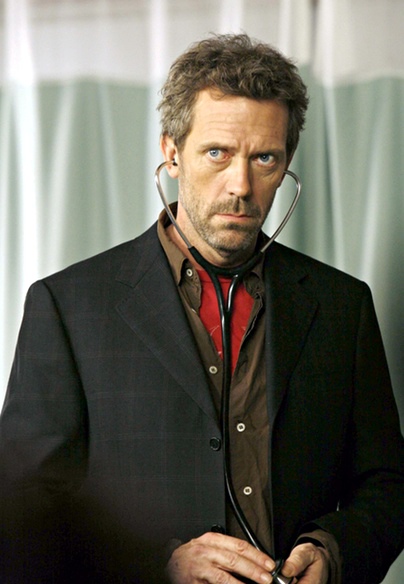
If you Google “Hugh Laurie” and “stethoscope”, you will come up with a clutch of stories from February 2012 about how everybody’s favourite pill-popping misanthropic physician is “hanging up his stethoscope” after eight seasons on the hit present Property.


This underlines a much more basic reality: medical doctors do not retire, they hang up their stethoscopes. Is there any occupation so proverbially connected to one device of their trade? Will individuals feel you are a medical professional if you will not dress in one particular?


These concerns become topical since the stethoscope is reportedly turning into obsolete, nearly 200 years after it was invented. Is it anything at all to do with the finding that a third of US stethoscopes utilized in emergencies have been contaminated with methicillin-resistant Staphylococcus aureus (MRSA) bacteria? No, but it possibly did not aid.


Rather, in accordance to this month’s edition of the Globe Heart Federation’s journal, International Heart, the stethoscope is currently being replaced by far more exact and less costly hand-held ultrasound gadgets.


Hugh Laurie Hugh Laurie, who hung up his stethoscope when he left the lengthy-working hit show Home. Photograph: 20thC Fox/Everett/Rex Attributes


Upsetting information – at least for well-liked culture. What is each and every Tv medic – from Kenneth Williams’s Dr Tinkle in Carry On Medical doctor to Edie Falco’s Nurse Jackie – with out a stethoscope? And if, as the Global Heart report suggests, the handheld ultrasound units that doctors of the future will be utilizing look just like smartphones, how will we be in a position to inform the medics from the civilians in Casualty or Holby City?


But there is great news. If the stethoscope does become obsolete, it will also spell the finish for a single excrescence: a T-shirt targeted at medical college students saying “Hold calm and carry a stethoscope.”


The guy who invented the stethoscope almost 200 many years in the past was shy. French physician René-Théophile-Hyacinthe Laënnec dreaded placing his ear on the patient’s chest, specifically when the patient was a woman. No offence to Laënnec, but his patients probably did not care for it either, particularly if he had cold and/or especially hairy ears.


Shyness is the unsung mother of invention. It really is why Finns at Nokia invented texting (they could not bear encounter-to-face rejection when proposing dates) and why in 1816 Dr Laënnec came up with his auscultatory prosthesis (at first, a tube).


Only later, as Television history tells us, did stethoscopes grow to be much more sophisticated. In the 60s, Richard Chamberlain’s Dr Kildare wore a stethoscope from a brand called Thumpy, whose earpieces clipped close to the neck. By the time ER came along in the mid-90s, Tv medics have been wearing them with the tube close to the neck like rubberised stoles. “The problem with that,” says a GP acquaintance, “is they seem cool but hold falling off.” Only a doctor could use “amazing” and “stethoscope” in the identical sentence.


How lucky for Laënnec that he died just before he could see the sexist utilizes to which well-liked culture would put his invention. In the 1957 movie Doctor at Large, Dirk Bogarde’s Dr Simon Sparrow employs a stethoscope during an examination of a girl who’s been getting chest problems. “Big breaths, Eva.” “Yeth, and I am only 16.” Oh Lord: if which is what the stethoscope is going to be utilised for, it is just as properly it is becoming obsolete.


But is it? If we have realized absolutely nothing else from Star Trek, it truly is that, in the future, physicians – some of them aliens, admittedly – will be employing stethoscopes. Who can forget that scene in which Phlox, the Denobulan chief health care officer aboard the Enterprise, taken care of the Klingon Klaang whilst wearing a (funky, space-agey) stethoscope? Not me. Rumours of the death of the stethoscope could be exaggerated.


Consider a deep breath: the stethoscope is dying

20 Ocak 2014 Pazartesi

Health chiefs express "deep regret" more than death of man soon after ambulance delay

An ambulance

The Welsh ambulance service chief mentioned a amount of improvements had been because March 2013, when Pring died. Photograph: Christopher Thomond


Overall health chiefs have expressed “deep regret” that an elderly guy died much more than forty minutes right after his wife first dialled 999 and asked for an ambulance to come to his aid.


Fred Pring’s wife, Joyce, rang for support 3 far more times as her husband cried out in ache but in the course of her fourth contact informed the operator: “It is as well late now, he is gone, he was 74. There is nothing at all you can do for him now. You are as well late, I am sorry.”


At the end of his inquest in Ruthin, north-east Wales coroner John Gittins stated modifications must be created to aid reduce the chance of potential deaths.


He said even though it could not be established with certainty that Pring, who had heart and pulmonary disease, would have lived if the ambulance had reached him sooner, it was “probable” that he would have at least got to hospital alive if the ambulance had met its target response time of eight minutes.


In a joint statement, Elwyn Price-Morris, chief executive at the Welsh ambulance service, and Professor Matt Makin, healthcare director of Betsi Cadwaladr University health board, mentioned: “It is with deep regret that on this occasion there was no ambulance offered to send to Mr Pring in a timely manner.


“It is our responsibility to guarantee we have a safe, powerful and higher-good quality urgent care program, and with each other we are operating tough to minimize any delays in transferring patients to hospital. We have presently produced a quantity of enhancements considering that March 2013 [when Pring died].


“We are strengthening the coaching for on-call managers and making sure that handover and choice-generating procedures are clear for all employees across our organisations. We are also revising operating practices to make sure that we have proper staffing amounts for the duration of intervals of large demand.


“The urgent healthcare method across Wales is facing unparalleled strain, with high demands on the two the ambulance services and on hospital emergency departments. We are taking a variety of actions to guarantee that our active ambulances and emergency departments are offered for people who want them most urgently.”


The efficiency of the ambulance services has lengthy been higher on the political agenda in Wales. In November it emerged that a patient had waited in an ambulance for much more than 6 hrs before currently being admitted to a Welsh accident and emergency department.


After the inquest Joyce Pring, who is from Flintshire in north-east Wales, explained: “I sincerely hope that my husband’s death will lead to enhancements in the way the Welsh ambulance trust and the hospitals manage their providers.”


Health chiefs express "deep regret" more than death of man soon after ambulance delay