Allan etiketine sahip kayıtlar gösteriliyor. Tüm kayıtları göster

14 Mart 2017 Salı

If we hide our mental health issues, we make it easier for society to ignore us | Clare Allan

People with mental health issues are being expected to “prove it” as never before. Whether, as individuals, being assessed for disability benefits or, collectively, campaigning for services and adequate welfare provision, the pressure to demonstrate genuine need, to prove that one is “really disabled”, to quote the Tory MP George Freeman, is greater than ever.


The invisible nature of mental health problems, the fact that they do not show up on an x-ray, that no blood test can diagnose depression, underlies much of the discrimination people with mental health issues face. Humans are strongly predisposed to believe in what they can see. For many people, it is hard to accept that severe anxiety, for example, might incapacitate someone from leaving their house as genuinely as if they were suffering from a physical paralysis. The fact that the problem cannot be seen makes it easier to dismiss. They could, if they really wanted to; they’re just not trying hard enough; everyone gets stressed sometimes, and so on. Of course, the help a person with anxiety needs to enable them to leave the house will be different from that of a person with a physical disability, but that doesn’t make the need any less real.


In the year since my dog, Meg, lost her leg I have often had cause to reflect on the different challenges presented by visible and invisible health problems. For it doesn’t get much more visible than a missing leg, you would think – though I have twice been stopped by people wishing to inform me, in somewhat accusatory tones, that my dog is “limping”. “Well yes,” I reply. “She’s only got three legs.”


The most obvious difference is that Meg has no option of going incognito. Her missing leg is a constant focus of comment and attention. As a dog, she enjoys the extra fuss but, as a human, I imagine it could rapidly become wearing. And there is the danger that one’s difference becomes the thing by which one is defined. Even with Meg, at the time of her amputation, I remember feeling – alongside concern as to how she would manage (remarkably well) – I didn’t want her to be the dog with three legs: I wanted Meg to be Meg.


Then there is the nature of the response, the feeling sorry for her (which I hate), the marginally better admiration (though what choice does she have other than to be “remarkably resilient”?), the need for an explanation: “What happened?”. In Meg’s case, the answer is far too long to fit comfortably into passing chat and, besides, it’s the fifth time I’ve been asked in a 30-minute walk. My favourite response, by far, is to ignore the missing leg altogether. There was a man I met on Hampstead Heath in London, coming in through the Kenwood gate, as Meg and I were leaving. “Wow!” he said, kneeling to embrace her. “What a beautiful, beautiful dog!” I could have hugged him.


It is these same concerns that lead many with mental health problems to choose not to disclose them. And to this I must myself plead guilty. For, though I’ve tried to be open about my own mental health, I confess I haven’t always been honest. I have occasionally cried off with a migraine, rather than admit I simply cannot face going out, or that I don’t trust myself to get through the evening without bursting into tears.


But while there are clearly advantages to having this option in some situations, it seems to me there are profound disadvantages, too. For the more we hide our difficulties, the more invisible they, and we, become. And the easier for those with an agenda – of cutting benefits, for example – to deny they exist at all.


If we hide our mental health issues, we make it easier for society to ignore us | Clare Allan

18 Ocak 2017 Çarşamba

Young people’s mental health services need cash not empty promises | Clare Allan

It’s good to talk, and at the moment there’s a lot of talk about mental health and, in particular, about the mental health of young people.


I’m thinking, of course, of Theresa May’s recent speech, in which she announced a government green paper on children and young people’s mental health services, mental health first aid training for schools and a few other measures – to be funded apparently out of thin air – because mental health has been “a hidden injustice in this country” for far too long. From whom this injustice has been hidden was not specified.


BBC Radio 1, 1Xtra and Asian Network on Wednesday launched a year-long campaign “to encourage young people to explore issues surrounding their mental health”. My Mind and Me aims “to get young people talking about mental health, to reduce stigma around mental illness, and to raise awareness and understanding of mental health issues that affect young people”.


To assist them in this, they have partnered with the National Citizen Service (NCS) to create a group of “social action champions”, a group of young people from across the UK, who will work with the stations to help shape the campaign, sharing their own experience and leading discussions on “the key issues around mental health”.


Giving young people a platform to discuss these issues is certainly important. There is nothing more powerful than hearing directly from people about their experience, especially from people who are far too often stereotyped or simply ignored altogether. To hear an individual talk on their own terms and in their own words allows for a human-to-human connection that cuts through cliches and stereotypes. The result can be transforming. And as Ben Cooper, controller at Radio 1, 1Xtra and Asian Network, put it:“From prime ministers to our young listeners, we all recognise the need to change attitudes to mental health.”


It’s good to talk, but I cannot help feeling there is something of an elephant in the room. I confess that I listened to Theresa May’s speech, and much of the discussion that followed it, with my jaw hanging apishly open.


This government and the previous one have presided over the decimation of mental health services – “a car crash”, according to Prof Dame Sue Bailey, former president of the Royal College of Psychiatrists, speaking in 2014. She was just one of a chorus of voices, from patient groups to professional bodies, carers and mental health charities, all shouting the loudest, most urgent of warnings – it certainly wasn’t hidden from the government.


And between 2010 and 2015 funding for Child and Adolescent Mental Health Services (Camhs) was slashed by £50m, despite massively increasing demand.


Even setting aside both of those things, consider how, as a society, we are failing our young people.


However inconvenient the fact may be, mental health is not some discrete entity. The mental wellbeing of young people cannot be considered in isolation from the issues that affect their lives: the education system, benefits, housing, employment practices. In all these areas, the needs of young people have been trampled on over and over again by the boots of political expediency. And now they are supposed to believe we care about their mental wellbeing.


It may be that My Mind and Me is going to address these issues and I very much hope it does.


In 2016, winners of Radio 1’s Teen Awards, which included a mental health category, were invited to meet the Duke and Duchess of Cambridge, who praised their “inspirational work”. All fine, except that mental health problems have repeatedly been shown to be most prevalent in those countries with the highest levels of financial and social inequality.


And I know it seems churlish to point that out, but it would really be the bitterest of ironies if raising awareness of mental health issues became a means of avoiding confronting the factors that contribute to them.


Young people’s mental health services need cash not empty promises | Clare Allan

1 Temmuz 2014 Salı

Give us a garden and we can cultivate our own hope and wellbeing | Clare Allan

Gardening and wellbeing

The therapeutic rewards of gardening have been recognised by charities such as Freedom from Torture, which use it to support rehabilitate victims. Photograph: Alexey Stiop/Alamy


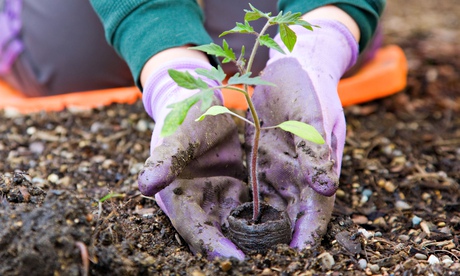
This is the season of abundance, when the garden is at its fullest. Flowers are in bloom and the grass is pushing through so quick that half an hour right after mowing it you seem to be back the place you started out.


This 12 months, for the first time, I am trying to develop my own veg. An try that has so far proved wildly effective, which is to say that the beds have gone wild with an virtually indecent profusion of lettuce and kale and spinach and some red leafed issue – I can’t now remember what it was, nor regardless of whether you’re meant to cook it.


I am a complete horticultural novice but you can not plant so much as a plug of curly leaved parsley without feeling a connection not only to the earth but to the a great number of generations who have worked the land ahead of you. To plant and to tend and to harvest what you expand is to feel an elemental sense of belonging that is deeply therapeutic.


My friend and gardening mentor agrees. Originally from Malaysia, Tash has lived in the United kingdom for much more than 25 many years because he initial arrived, aged 16. His ancestors had been also immigrants, travelling from the rice fields of south-eastern China to settle in what was then Malaya. “It is very practically about placing down roots,” he tells me. “It truly is no coincidence that so numerous individuals who have allotments in London originally come from somewhere else, from Turkey for instance, or Bangladesh.”


The charity Freedom From Torture (formerly the Health-related Basis for the Care of the Victims of Torture) has been using gardening as a form of therapy and rehabilitation for a lot more than 20 many years. Mary Raphaely, co ordinator of its Natural Growth Project says that customers can locate “an preliminary spark of hope” in nature.


A venture consumer, Suleyman, agrees, “To get started with I attempted antidepressants. But nothing at all seemed to hold the recollections away. Almost everything was darkness – and I hated the city, the place I felt confined and unable to communicate or do anything at all. Then I came here and every little thing seemed acquainted. I am always at 1 with the earth. If the garden seems very good, I feel excellent. When the soil sleeps, I sleep. Apart from these things you have, these snails and slugs which have been new to me, there is no evil in the backyard”.


The mental overall health charity Mind is also trying to harness the therapeutic electrical power of nature with its EcoMinds programme. Between 2009 and 2013, EcoMinds funded 130 projects across England with routines which includes gardening, meals expanding and environmental conservation. Over 12,000 folks participated and a lot more than seven out of ten reported a “important increase” in mental wellbeing. Last October, it launched Ecotherapy Performs, a national campaign focusing on well being and wellbeing boards with proof of the effectiveness of ecotherapy.


I consider this kind of schemes have incredible possible for strengthening the psychological and physical wellbeing of participants. When I feel of the 18 months I spent sitting in the common space of an inner-city day hospital, with a dead plant in the corner, smoking and drinking tea and envision rather paying them outdoors, not shut off from the planet but an active portion of it, feeling the rhythms of the earth, at one particular with the seasons, hands covered in soil, it does seem to be to me a more promising environment in which to seek to recover. An environment that can wordlessly provide exercise, community, a sense of goal, hope.


Due to the fact if gardening backlinks us into the past, to those who have dug the earth prior to, inevitably it factors to the future too. Once again and yet again, in that straightforward act of planting, I express my belief in the promise of tomorrow.


Give us a garden and we can cultivate our own hope and wellbeing | Clare Allan

26 Şubat 2014 Çarşamba

20 questions with Allan Lamb

And now you’re about to cycle 109km (67.7 miles) in the Cape Argus charity cycle race. Why?


I have constantly followed the Tour de France closely and in the latter portion of my cricket profession, I commenced cycling as a great way to preserve fit and function my calf and hamstring muscles when they started taking part in up. I have also had numerous close friends with prostate cancer, so I am attempting to raise £500,000 forProstate Cancer Study.


Telegraph writer Joe Shute is racing towards you. How do you rate your chances?


I’m going to make sure he sets the speed but I’ll keep correct behind him for most of the way. He’ll be below stress – I’m not going to enable him to shoot away from me. Then just as we come up to the end I’m going to make sure he’s exhausted and I’ll fly previous him. I’m a established guy and I want to come in at underneath 4 hours. It is going to be stiff, but I’m education really hard at the minute and after I put my head down I’ll make positive I full my target.


When did you very first expand a moustache?


When I was 18.


What have been the perks of currently being a young cricket player for England in the ‘80s?


Enjoying cricket for a residing is superb. There weren’t a lot of perks when I was younger simply because there wasn’t a lot of funds in people days, nothing at all like there is now. The massive bonus was getting to see all the different nations – I wasn’t one to sit within viewing Television all day when we weren’t in matches. In New Zealand and Australia we employed to really like going out and exploring the wine farms.


Cricketing and consuming goes hand in hand, doesn’t it?


We played it challenging on the area, and we loved the game afterwards. We most likely did not have as much strain from journalists as cricketers do these days. We constantly employed to have cricket reporters coming on tour with us and we had a great rapport with them and would all go out for drinks together, but that stopped simply because editors started out to want stories about what took place off the field as nicely as on it. So it all changed – a bit sad that, genuinely.


What’s the craziest story you’ve read through about yourself?


When I was captain of the England staff throughout the 1990-1991 Ashes tour I was out in Australia with [fellow cricketers] Tony Greig and David Gower. I was not-out overnight, and even though I had to bat early following morning someone asked whether we wished to come and meet Kerry Packer [the Australia media baron]. Kerry invited us for a meal down on the Gold Coast, which was about a 45-minute drive away, and though I informed him it wasn’t actually for me, I received persuaded to go.


Our wives were with us and we ended up going for the meal but leaving very early to go to a casino simply because Kerry hadn’t been content with the support in the restaurant. At the casino, Kerry gave the ladies $ 1,000 (£540) and explained that they had to go and wander elsewhere even though we played. We had been properly up by about midnight and were going to split the winnings, but I said, “Seem boys, I’ve acquired to go, I’m batting and I’m England captain.” They all needed to preserve enjoying although, and inside half an hour we’d misplaced all the winnings – I’m talking shut to half a million dollars (£271,280). It was all Kerry’s income that we’d been going to share, but we lost the good deal.


Anyway I acquired back to my hotel with my wife at about one.15am, and the following day I received out and we lost the test match. However, the headlines in the paper had been, ‘‘Allan Lamb observed leaving a casino with a female at 6 in the morning.’’ Of program, it became the front web page of every paper and it wasn’t accurate. But then again, I probably shouldn’t have been out late that evening with Kerry Packer.


What have been your initial impressions of your friend and fellow cricketer Ian Botham?


I played towards Ian in 1979 in some county cricket matches, but it was only when I joined the England crew that we struck up our huge friendship. He was an outstanding guy to have all around simply because he had so a lot self-assurance: he didn’t feel in failure. He usually felt that he was greater than anybody else.


Any Beefy-on-tour pranks you’d like to share?


He was a shocker with the pranks. If he’d had an early night the night ahead of and was bored, he’d go into your dressing room, draw a big circle on your back and compose, “Please aim here.” Or he’d get hold of your cricket whites and tie a knot at the bottom so you couldn’t get them on.


Worst stage of your career?


The hardest moments were touring in the West Indies, when we just stored obtaining beaten. Because of the apartheid regime in South Africa, the West Indies said we weren’t allowed to perform in their main grounds so that made touring really difficult. We were struggling to get the amenities to practice in and then we had been receiving a bloody very good hammering on the discipline.


And the very best?


Beating the West Indies in the early ’90s in Jamaica after taking part in about 25 check matches against them. That was the only victory I ever had against the West Indies in check matches. Winning matches in Australia in 1986 and ’87 was also fantastic. We had been branded the worst England group to leave the British shores and the headlines study: ”They cannot bat, they can’t bowl, and they can’t field”, so winning was a excellent motivator.


What do you see as your private legacy to cricket?


I utilized to say to the guys, “If you are not satisfied and you are not enjoying what you do, you might as well pack up.’’ I feel that was my important thing: get out there and take pleasure in it and if you fail, you have acquired another chance. Some of the gamers now have a concern of failure – I believe that’s a bit of an English trait. When you’re scared of failure you are not going to succeed.


Why is English cricket currently in this kind of a dark place?


We need to have had a wake-up contact last summertime. Ok, we beat the Australians 3:, but it could have been a great deal closer. I really don’t consider we have been mentally hard adequate to face the Australians, who’d completed a lot of homework on us. We produced a handful of mistakes with choices also. Their strike bowler, Mitchell Johnson, was a large issue as well – he’s a yard faster than something they’ve placed just before. The rest of the globe hasn’t witnessed the like of Johnson since the West Indies were close to.


Must Kevin Pietersen ever play for England once again?


Effectively, he’s gone now. What Pietersen need to have done is stored his head down and scored runs for England and forgotten about what was happening behind the scenes. England is to blame as effectively for not managing him correctly – I feel they must have received him far more concerned in the staff and that might have assisted.


You’ve been married to your wife Lindsay for 35 years. What’s the secret to a content marriage?


You’ve acquired to continue to be quite great buddies and you’ve received to have enjoyable, that’s a large thing. You have to try out and enjoy what the other man or woman enjoys – I’ve not too long ago received Lindsay into fishing, though I was extremely angry when I took her up on the River Spey last 12 months to practise because she entirely out-fished me. It’s the pheromones or one thing from a female that the bloody salmon get attracted to.


Can you cook?


I adore cooking but I make a hell of a mess. I’ve done Prepared Steady Cook against Ian Botham but he managed to cheat. I consider Heston Blumenthal’s design of cooking has altered everything, and I enjoy viewing foods programmes on telly and all that. I’m a massive foodie, put it that way.


Favourite meal?


Truffles with pasta is just fantastic. Coming from Africa I also love a excellent previous steak on the barbecue.


What irritates you?


When I’m strolling down the streets in London and individuals quit or stroll and get in your way.


Who’s the funniest individual on Twitter?


Outdated Darren Gough [@DGoughie]– some of his stuff is extremely good. He will take the mickey all the time.


And ultimately, if you had been an animal, what would you be?


I would adore to be a cheetah since I’d be the quickest – no 1 could catch me and I could catch anything.


Allan is cycling the Cape Argus Cycle Tour on March 9 to raise funds for the Prostate Cancer Analysis Centre. He welcomes any donations at www.justgiving.com/Allan-Lamb1


20 questions with Allan Lamb