issues etiketine sahip kayıtlar gösteriliyor. Tüm kayıtları göster

14 Mart 2017 Salı

If we hide our mental health issues, we make it easier for society to ignore us | Clare Allan

People with mental health issues are being expected to “prove it” as never before. Whether, as individuals, being assessed for disability benefits or, collectively, campaigning for services and adequate welfare provision, the pressure to demonstrate genuine need, to prove that one is “really disabled”, to quote the Tory MP George Freeman, is greater than ever.


The invisible nature of mental health problems, the fact that they do not show up on an x-ray, that no blood test can diagnose depression, underlies much of the discrimination people with mental health issues face. Humans are strongly predisposed to believe in what they can see. For many people, it is hard to accept that severe anxiety, for example, might incapacitate someone from leaving their house as genuinely as if they were suffering from a physical paralysis. The fact that the problem cannot be seen makes it easier to dismiss. They could, if they really wanted to; they’re just not trying hard enough; everyone gets stressed sometimes, and so on. Of course, the help a person with anxiety needs to enable them to leave the house will be different from that of a person with a physical disability, but that doesn’t make the need any less real.


In the year since my dog, Meg, lost her leg I have often had cause to reflect on the different challenges presented by visible and invisible health problems. For it doesn’t get much more visible than a missing leg, you would think – though I have twice been stopped by people wishing to inform me, in somewhat accusatory tones, that my dog is “limping”. “Well yes,” I reply. “She’s only got three legs.”


The most obvious difference is that Meg has no option of going incognito. Her missing leg is a constant focus of comment and attention. As a dog, she enjoys the extra fuss but, as a human, I imagine it could rapidly become wearing. And there is the danger that one’s difference becomes the thing by which one is defined. Even with Meg, at the time of her amputation, I remember feeling – alongside concern as to how she would manage (remarkably well) – I didn’t want her to be the dog with three legs: I wanted Meg to be Meg.


Then there is the nature of the response, the feeling sorry for her (which I hate), the marginally better admiration (though what choice does she have other than to be “remarkably resilient”?), the need for an explanation: “What happened?”. In Meg’s case, the answer is far too long to fit comfortably into passing chat and, besides, it’s the fifth time I’ve been asked in a 30-minute walk. My favourite response, by far, is to ignore the missing leg altogether. There was a man I met on Hampstead Heath in London, coming in through the Kenwood gate, as Meg and I were leaving. “Wow!” he said, kneeling to embrace her. “What a beautiful, beautiful dog!” I could have hugged him.


It is these same concerns that lead many with mental health problems to choose not to disclose them. And to this I must myself plead guilty. For, though I’ve tried to be open about my own mental health, I confess I haven’t always been honest. I have occasionally cried off with a migraine, rather than admit I simply cannot face going out, or that I don’t trust myself to get through the evening without bursting into tears.


But while there are clearly advantages to having this option in some situations, it seems to me there are profound disadvantages, too. For the more we hide our difficulties, the more invisible they, and we, become. And the easier for those with an agenda – of cutting benefits, for example – to deny they exist at all.


If we hide our mental health issues, we make it easier for society to ignore us | Clare Allan

17 Şubat 2017 Cuma

"Eating disorders are black women’s issues too" – video

In the second of our three-part Speak your Mind series, we meet Georgia, 22, who suffered from eating disorders through her teenage years. Thinspiration Tumblrs inspired her to lose weight but that spiralled to starvation and bulimia. Now recovered, she wonders why black women are rarely identified as having eating disorders


"Eating disorders are black women’s issues too" – video

6 Şubat 2017 Pazartesi

Rise in calls to Childline for mental health issues prompts call for action

Charities are calling for improved mental health provision in schools as new figures reveal more than 50,000 children and young people contacted Childline last year seeking help for serious mental health problems.


The helpline has seen a 36% rise over four years in youngsters needing help for depression and other disorders, while there was also a rise in the number of youngsters feeling suicidal.


Figures from the National Society for the Prevention of Cruelty to Children (NSPCC) reveal 50,819 children and young people in 2015/16 received counselling for a serious mental health issue – a rise of 8% over four years.


Those aged 12 to 15 made up a third of the sessions, with girls almost seven times more likely to seek help than boys.


Peter Wanless, chief executive of the NSPCC, said the figures, released at the start of Children’s Mental Health Week, were deeply concerning.


He said: “To ensure the next generation aren’t left to deal with a mental health epidemic, there has to be a much more comprehensive network of professional support and treatment in place that is easily accessible for young people who are desperate for help to get their lives back on track.”


Sam Royston, director of policy and research at the Children’s Society, said it was desperately worrying that so many young people were experiencing problems.


She said: “Whilst such issues may affect any child, in our own research, we have found there is a widening gap between the wellbeing of adolescent girls and boys.


“Many factors may contribute to this – for example we have found that adolescent girls are particularly likely to experience emotional bullying such as name-calling.”


She added: “Failing to address mental health problems early on can severely damage the lives of young people. As a first step all children should be able to access mental health and wellbeing support such as counselling in schools so they get support early to prevent a problem becoming a crisis.”


Childline said early signs of a serious mental health problem in children and young people include becoming withdrawn from friends and family, being tearful or irritable, sudden outbursts, and problems eating or sleeping.


One 16-year-old girl told Childline: “I want to know what’s wrong with me. I have been seeing a counsellor about my mental health issues recently but they just told me to eat and sleep better and forget about the past, which didn’t help me at all.


She added: “I wish I could speak to someone who actually cared about me and I felt comfortable talking to.”


Another young person said: “I’m struggling to cope with bipolar. One minute, I feel so low, like I’m trapped, and all I want to do is disappear. Then suddenly, I feel the complete opposite, and I’m really happy and I start thinking about everything in a really positive light. I feel like I push away everyone that tries to help, I tell them I hate them and blame them for everything. I just feel like I’ve turned into a monster.”


Childline founder Dame Esther Rantzen said: “It’s striking how many more children seem to be suffering serious mental health problems today than when we launched Childline 30 years ago.


“So many desperately unhappy children seem to be suffering suicidal thoughts, self-harming, becoming anxious and depressed, with many of them turning to Childline because no other support is available.”


Rantzen said children’s mental health services are already “terribly overstretched” with young people unable to access the professional help they need.


She said: “We believe there needs to be far more emphasis on providing help for these children as they struggle to deal with what are very serious illnesses.”


Sarah Brennan, chief executive at the charity YoungMinds, agreed more support for young people was vital, especially from schools.


She said: “Young people face a huge range of pressures including stress at school, college, university, body image issues, bullying on and offline, around-the-clock social media and uncertain job prospects.


“Difficult experiences in childhood including bereavement, domestic violence or neglect can also have a serious impact on mental health.”


Brennan added: “As a society we need to do far more to prevent mental health problems from developing in the first place. To start with, we urgently need to rebalance our education system, so that schools are encouraged to prioritise well-being and not just exam results.”


Rise in calls to Childline for mental health issues prompts call for action

4 Şubat 2017 Cumartesi

Can tech make banking better for those with mental health issues?

A recent report from the Money and Mental Health Policy Institute has revealed what many people with mental health problems already knew – mental illess can have a significant, and often terrifying, impact on your finances.


Anxious? Good luck tackling the bank statements piling up, unopened. Having a manic episode? Time to spend thousands of pounds on things you’ll never use! Depressed? … What was my pin again?


Banks, the report argued, are simply not doing enough to protect people in this position. Many of the options available to other vulnerable people are simply not offered to those with mental health issues. People with visual or hearing impairments, for example, have a wider range of communication options – these could also benefit those with anxiety. Adults with conditions like Down’s syndrome are sometimes offered “third party mandate” accounts, and even corporate or high net worth accounts have options to set spending limits or delegate permissions to named individuals – functionalities that could be advantageous to many others.


The British Bankers’ Association has agreed that the financial industry should “raise its standards” with regards to mental health. But until then, what can people do to protect themselves financially?


Zander Brade, designer at banking start-up Monzo, thinks tech might be the answer.


In a blog posted last week, Brade detailed how his team has been working on making Monzo a “powerful and helpful financial service for people suffering from mental health problems”. And to do so, they’ve made a seemingly counterintuitive move: increasing friction in their app.


Brade describes the decision as “tough for a product person”, but hopes that providing “safety barriers” will protect vulnerable users and prevent them from experiencing serious distress around spending and debt.


“It makes sense that every tech product aims to be as fluid in its user experience as possible – minimising friction tends to help maximise profits,” he told me. But he explained: “In Monzo’s case, because money and the shape of one’s bank account is so closely attached to each customer’s state of mind, adding in layers of functionality to help protect them from potential spending crises will hopefully be anything but counterproductive.”


Polly Mackenzie, director of the Money and Mental Health Policy Institute, agrees that preventing people getting into financial difficulties could be key. “Over the past 10 years or so, the processes for helping people with mental health problems who are in serious debt have improved,” she told me. “What’s missing is work to try and help people with mental health problems from getting into financial difficulty in the first place: making sure people get the support they need with day to day financial management, that they don’t take on debts they can’t afford, and can get help from friends and family to stay on top of things.”


A Monzo beta card in wallet


Monzo is currently working on a series of workshops with groups of people suffering from a range of different mental health conditions. Photograph: Alex Hern for the Guardian

Mackenzie also highlights the benefit of “more friction” options – she mentions Monzo’s plans alongside work by fintech company Squirrel, who “make you wait a day before you can access your savings”.


“We desperately need tools like this to come into the market right now, because the overwhelming trend is towards less friction in transactions,” she said. She points towards plans by Facebook Messenger to allow in-app purchases and Amazon’s ‘instant credit’ on large purchases.


“There’s growing evidence that people think about contactless transactions less that they would if paying in cash or with their pin,” she says. “Unless we see banks and fintech companies develop ‘more friction’ options to go alongside this trend, we risk entering a slippery world where we all make a lot more financial mistakes, particularly if we have mental health problems.” Additional friction here can also be beneficial for those who aren’t experiencing poor mental health, who simply want to manage their budgets or better grasp what they’re spending.


Monzo is currently working on a series of workshops with groups of people suffering from a range of different mental health conditions so its development teams can “understand what they would need and like to see to make the product as useful and reassuring for them as can be”.


One example Brade uses is overspending in people with bipolar disorder, which often occurs late at night during a manic episode. Implementing “a method of double checking with the user the next day” could provide a safety net for people regretting their purchases in the morning. He also highlights “instant notifications on your spending, a real time view of your balance and transactions and in-app budgeting” as potentially supportive features.


He also hopes that opt-in features can be designed for “more specific use cases for particular conditions”.


“For the example of bipolar sufferers who have trouble with spending in manic episodes, the goal is to add a layer of confirmation and protection. It’s a powerful feature but a more unique functionality. That might not be required by every single user, and it would make more sense to be an option.”


Both Mackenzie and Brade are optimistic about the potential that technological solutions could have on people suffering from mental health problems.


“Designing Monzo with our most vulnerable customers at the forefront of our minds is a crucial part of the product development process,” Brade said. “Just by the very virtue of our world becoming more and more digital – I think that tech will become more crucial in providing solutions for vulnerable customers.”


Mackenzie is slightly more cautious. “It will never be the only answer,” she says. “But so long as we don’t deceive ourselves into thinking that it’s the answer to every problem, technology offers huge opportunities to transform our mental health and financial wellbeing.”


Can tech make banking better for those with mental health issues?

1 Şubat 2017 Çarşamba

Home Remedies for 3 Common Skin Issues

Some people are born with good skin, while others suffer through annoying bouts with unsightly skin problems. But the good news is that human skin is able to heal and replenish remarkably well. So, if you’ve got skin tags, sebaceous cysts, or wrinkles, things aren’t as bad as they may seem.


Natural Skincare is Best


“It turns out beauty is more than skin deep: The average person slathers, lathers, rubs and sprays, 10 different skin care products on his or her body every day – and since our skin acts more like a sponge than a barrier, we absorb the nearly 130 chemicals we regularly expose ourselves to,” Treehugger points out.


While cosmetic companies say these chemicals are safe and FDA approved, have you ever considered that the various products you’re using to fight skin issues could be part of the problem? By taking a natural approach, you’re much more likely to see positive long-term effects. With that being said, let’s check out three common skin issues that can be fixed using natural home remedies.


 1. Skin Tags


Skin tags – those unattractive brown tabs that usually grow in the neck and shoulder region – can be annoying. They also have a way of making people feel subconscious about their appearance. Once thought to have been caused by skin irritation and friction, it’s now believed that they’re connected to obesity and/or genetics.


While the tags themselves aren’t dangerous, most people want them gone. But instead of having a doctor burn, cut, or freeze them off, it’s best to take a natural approach that’s less invasive. The number one choice is apple cider vinegar, which is anti-bacterial and anti-inflammatory. Start by washing the area around the tag, apply some vinegar to the bump with a cotton ball, and hold the cotton ball in place for 10 or 15 minutes. Repeat three times daily until the tag falls off.


 2. Sebaceous Cysts


A sebaceous cyst is a bump that develops under the skin as a result of blockage to the sebaceous gland by a protein called keratin. While these cysts – also known as keratin or epidermoid cysts – tend to develop and go away by themselves, they aren’t a lot of fun. They also contain a pungent yellowish-clear liquid, and you’ll know you have one when the skin is red, sore, and warm. The cyst – which will likely smell foul – could be anywhere from a quarter of an inch to two inches in diameter.


Want to know how to pop a sebaceous cyst? Well, the best method is not to pop it at all. Popping the cyst increases the chances of infection and will likely be quite painful. The better method is to apply some tea tree oil, which has anti-inflammatory and anti-bacterial properties, directly to the cyst.


 3. Wrinkles


Nobody wants wrinkles, yet we all get them as we start to age. Some people get more than others, but it’s nearly impossible to prevent them altogether. While preventative methods work best, you can reduce the appearance of existing wrinkles by taking a natural approach.


One of the top solutions is to boil water and then pour the water into a bowl. Next, bend over the bowl and drape a towel over your head. This will create a “steam tent.” After 15 minutes, massage some olive oil onto your skin in a circular motion. Rinse your face and repeat daily.


Take Care of Your Skin


At the end of the day, the best way to prevent skin issues is by living a healthy lifestyle and avoiding unnecessary risk factors. Protect your skin from harmful chemicals, avoid unnecessary sun exposure, and keep skin moisturized. If you can do these three things, you’ll find that most of your issues will disappear.


But when you do have issues, remember that natural home remedies are better than the chemicals they market on supermarket shelves.


Home Remedies for 3 Common Skin Issues

1 Aralık 2016 Perşembe

London mayor issues pollution warnings at bus stops and tube stations

Air quality alerts have been issued at bus stops, tube stations and roadsides across London because of high pollution levels, said a spokeswoman for the mayor of London, Sadiq Khan.


The alerts will notify Londoners on Thursday evening during their commute home from work.


People in London who suffer from lung or heart problems have been warned to avoid strenuous exercise. The risks from heightened levels of air pollution enveloping the city have been exacerbated by settled and cold conditions, which have prevented pollutants from being dispersed.


Individuals at risk have been warned to particularly avoid outdoor exercise, while those with asthma may need to use their inhaler more often, according to the London Air Quality Network, based at King’s College University.


Anyone from the wider population who experiences sore eyes, a cough or sore throat should also consider reducing their physical activity, particularly outdoors, the pollution monitoring service said.


Air pollution campaigners called on the government and city authorities to restrict traffic during smog episodes.


“When pollution episodes are high, the mayor should introduce emergency traffic restrictions to bring pollution levels down quickly,” said a spokeswoman for Friends of the Earth.


“The solutions proposed for dealing with the latest smog have things backwards: the first step should be restricting traffic not people.


“It’s outrageous that those with vulnerable lungs, including children and the elderly, are told to stay at home when the air is bad. Everyone should be able to go about their business, without being afraid of the air they breathe.”


According to the London Air Quality Network, winter smogs are formed when pollutants from traffic and industry are trapped at ground level because of a temperature inversion.


The pollution is a mix of ultra-fine particulates of unburned carbon, known as PM2.5s, and the toxic gas nitrogen dioxide (NO2) which is largely created by diesel cars, lorries and buses.


Thursday’s pollution episode took place on the same day as Nice, the government’s independent health advisers, proposed that councils in England should be given powers to set up clean-air zones. This would allow them to restrict certain vehicles entering some areas.


About 9,500 people die early each year in London due to long-term exposure to air pollution, more than twice as many as previously thought, according to new research. Air pollution is now Britain’s most lethal environmental risk, killing about 40,000 people prematurely each year.


Air pollution monitors showed high or very high pollution along all major London roads, with extremely high pollution recorded in the city centre. On Thursday, a Defra pollution monitor on Marylebone Road also registered very high levels.


Khan made tackling London’s air pollution a priority issue in his election campaign. This summer he announced his intention to issue alerts for high pollution. However, there have been no incidents of particularly high pollution until now.


Khan said: “Londoners need to know when the city is suffering from high pollution levels so they can take any necessary appropriate measures to protect themselves from poor air quality. This is particularly crucial for Londoners who are vulnerable, such as asthma sufferers.”


London mayor issues pollution warnings at bus stops and tube stations

6 Kasım 2016 Pazar

Health secretary says NHS issues aren"t just about money but also standards

Jeremy Hunt sought to play down a row about the amount of new funding available for the NHS, saying the health service’s challenges are not “just about money”.


The health secretary was challenged by the BBC’s Andrew Marr over the gulf between the government’s claim that the NHS has been awarded an additional £10bn of funding, and estimates by independent organisations that have put the “true” figure at about £4.5bn.


Last month, MPs on the health select committee threw their weight behind the lower figure, with Tory parliamentarian Dr Sarah Wollaston warning the government’s £10bn figure “is not only incorrect but risks giving a false impression that the NHS is awash with cash”.


Last week, Nigel Edwards, the Nuffield Trust’s chief executive, warned: “The NHS is going into its toughest winter yet with the odds stacked against it. Demand for healthcare is on the rise, funding for both health and social care is being squeezed and A&E departments are missing their targets.”


Hunt dismissed a suggestion from Marr that the NHS’s performance was suffering because of a lack of funding: “We do tend to get in the run-up to the autumn statement a coalition of people who will say that the answer to all the NHS’s problems is more money from government.”


He said: “The big question is, does the NHS have enough money, and the answer to that is that we do need more resources – we are looking after a million more people aged over 75 than five years ago, that’s why we are putting in £4bn more.”


But he added: “It isn’t just about money – it’s also about standards.”


Ensuring that lessons were learned from medical accidents could help save the NHS on legal bills, Hunt said. “There’s lots of things we can do in terms of helping to ensure we are better at learning from mistakes, so that we don’t have this huge legislation bill of £1.5bn because of some of the mistakes we have made – that all helps on the money front.”


He added: “There are, of course, financial pressures, but I think it’s a mistake to say this is only about money. It’s also about getting the culture right.”


Winter is “extremely tough” for the health service, Hunt said: “I can say I think we are better prepared this year than we’ve ever been.”


But he added: “There’s always the unpredictable, the cold spells, the flu outbreaks and so on … I think it would be wrong for any health secretary in the run-up to winter to say everything’s tickety-boo.”


Health secretary says NHS issues aren"t just about money but also standards

22 Eylül 2016 Perşembe

May more trusted than Corbyn on Britain"s key issues, poll finds

Theresa May is more trusted than Jeremy Corbyn to tackle the most urgent problems in post-Brexit Britain, including safeguarding the NHS, according to a new poll seen exclusively by the Guardian.


Asked what politicians’ priorities should be, the top three choices in the Britain Thinks poll were safeguarding the health service, significantly reducing immigration and striking new trade deals as Britain leaves the European Union.


Theresa May was more trusted on all three issues, outpacing Corbyn on protecting the NHS by 38% to 30%. On reducing immigration, 46% of voters trusted May; just 12% said Corbyn.


Deborah Mattinson, the director of Britain Thinks, said: “When we look at the policies that are people’s highest priorities – the economy post-Brexit, immigration – Theresa May is more trusted than Jeremy Corbyn to deliver. She is even more trusted in Labour’s traditional heartland area: the NHS.


“Jeremy Corbyn has failed to engage with ordinary voters. Half of the people in our focus groups did not recognise him when shown a photograph – the lowest level of recognition I have ever seen for the leader of a mainstream political party.”


Corbyn’s low standing on immigration may be understandable, as he has made clear his support for continued freedom of movement within the EU, although he would like the government to take action to mitigate the impact on low-paid workers.


But it will chime with the fears of centrist Labour backbenchers, including Rachel Reeves and Stephen Kinnock, who have argued that Labour should be ready to push for curbs on immigration in the wake of the Brexit vote.


Theresa May


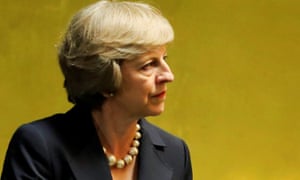
Theresa May was trusted more on the NHS, but less with supporting struggling families. Photograph: Eduardo Munoz/Reuters

Corbyn is more trusted by voters to implement a series of other policies, including opposing grammar schools, abolishing university tuition fees and providing “better support for struggling working families” (by 41% to May’s 28%), according to the poll.


That may suggest voters do not believe the rhetoric of the prime minister’s first speech in Downing Street, when she promised to tackle social injustice and govern on behalf of the “just managing”, instead of the “privileged few”.


Corbyn’s critics have repeatedly highlighted Labour’s low polling during this summer’s bruising leadership campaign – though he insists that large attendances at rallies up and down the country show he has a groundswell of support that will eventually be felt at the ballot box.


A separate analysis of recent polling by elections expert John Curtice, published in the journal of the IPPR thinktank on Friday, suggests Corbyn is a polarising political figure. “Mr Corbyn is more accurately described as a divisive opposition leader than as an unpopular one,” Curtice says. “More voters have had an opinion of him, either for good or ill, during his first year as opposition leader than have had a view about any of his predecessors during their initial 12 months in the post, Tony Blair included.”


He adds: “There is evidently a section of the British public, to be found particularly among younger voters, for whom the Labour leader does have an appeal; it just does not look like a section that is big enough, on its own at least, to enable Labour to win a general election.”


The Britain Thinks poll was backed up by focus group interviews in Harlow, Essex, and Leamington Spa, Warwickshire, which revealed a deeply divided Britain. “Our research tells the story of a fractured nation, with people dividing themselves into two groups – the haves and the have nots,” Mattinson said. “While the first group feel at ease with themselves and their lives, the second, larger group faces a daily struggle, and feels a deep sense of injustice.”


She added that while immigration did not emerge as voters’ primary concern, a number of other issues – including pressures on public services and the NHS – were viewed through the prism of immigration.


The polling found that delivering a well-funded and efficient NHS was the most popular choice when people were asked for their top priorities for Britain, selected by just under a third of people. Next came a significant reduction in immigration, with notably less support for negotiating strong post-Brexit trade deals, supporting struggling families or building new homes.


May more trusted than Corbyn on Britain"s key issues, poll finds

28 Temmuz 2016 Perşembe

FDA issues warnings about Cipro side effects and other antibiotics

The FDA warns about Cipro side effects.  The FDA has issued a warning about the use of the common antibiotics Cipro and other in the class of antibiotics called fluoroquinolones. Drugs on the current FDA-approved list that are not newly labeled include: levofloxacin (Levaquin), ciprofloxacin (Cipro), ciprofloxacin extended-release tablets, moxifloxacin (Avelox), ofloxacin and gemifloxacin (Factive). The FDA safety review revealed that both oral and the injected fluoroquinolones could cause, “disabling and potentially permanent, serious side effects that can occur together,” involving nerves, the nervous system, muscles, joints, and tendons. They recommend that the use of fluoroquinolones be reserved for those who have no other treatment options.


Boxed Warnings issued on fluoroquinolones


On Tuesday, July 26, 2016, the U.S. Food and Drug Administration (FDA) issued strong warnings about use of these fluoroquinolones antibiotics, including what is called a “Boxed Warning.” These warnings are revisions on the label including in the drug’s packaging, and lists Warnings and Precautions. This Medication Guide is required to be given to any patients who have been prescribed the medications.


Cipro Side Effects – and other fluoroquinolones


The side effects from cipro, and others in this class of antibiotics, can occur within hours, or take weeks to show up and could become permanent. Edward Cox, M.D., director of the Office of Antimicrobial Products in the FDA’s Center for Drug Evaluation and Research, commented, “Fluoroquinolones have risks and benefits that should be considered very carefully.”


The FDA states, “serious side effects associated with fluoroquinolones generally outweigh the benefits for patients with acute bacterial sinusitis (ABS), acute bacterial exacerbation of chronic bronchitis (ABECB) and uncomplicated urinary tract infections (UTIs) who have other treatment options.”


Past warnings for fluoroquinolones


The first time a Boxed Warning was added to the fluoroquinolones antibiotics label was in July 2008, when the FDA noted an increase in risk for both tendinitis and tendon rupture. In 2011, the FDA added myasthenia gravis as a risk factor, and in 2013, irreversible peripheral neuropathy was added, leading to the 2016 warning of permanent damage to nerves and the nervous system.


Natural antibiotic alternatives


Research has shown that many natural substances act as antibiotics. Natural antibiotics include garlic, turmeric, colloidal silver, and even chicken soup. Ask your health care provider to recommend a safer natural antibiotic.


Sources include:


http://www.fda.gov/Drugs/DrugSafety/InformationbyDrugClass/ucm500325.htm


http://www.fda.gov/NewsEvents/Newsroom/PressAnnouncements/ucm513183.htm


http://www.newsnet5.com/news/local-news/investigations/fda-issues-updated-label-warnings-for-levaquin-cipro-antibiotics


http://www.naturalnews.com/029600_neti_pot_sinus_infections.html


FDA issues warnings about Cipro side effects and other antibiotics

19 Ocak 2016 Salı

Struggling With Cancer, Thyroid Condition, Persistent Fatigue, Cysts, or Weight Issues? Consider Iodine Deficiency!

It’s nearly impossible to throw a rock and not hit somebody that has dealt with or knows an individual dealing with cancer, thyroid difficulties, persistent fatigue, and weight problems. With the way the recent foods technique is set up and the lack of schooling and determination on the part of the buyer, these types of well being troubles are inevitably going to pop up.


But what if a good deal of these problems have been simply a symptom of a key mineral deficiency? And what if it could be straightforward to test by yourself, and even treatment? Have I got your attention now? If so, study on.


The many roles of iodine


Iodine is a essential mineral that is definitely imperative to have suitable amounts of in the physique. It is mainly identified for its position in thyroid hormones, but is also essential for regulating blood stress, moods, blood sugar, cardiac rhythms, and avoiding cancer in the breasts, ovaries, uterus, prostate, and thyroid gland.


Not only that but iodine is amazingly antibacterial, antiviral, anti-fungal, and anti-parasitic, which helps make it an exceptional preventative and treatment to a multitude of conditions brought on by rogue bacteria, viruses, fungus, and parasites.


Even although the thyroid gland does include the body’s highest concentration of iodine, the salivary glands, brain, cerebrospinal fluid, gastric mucosa, breasts, ovaries, and portion of the eye also concentrate iodine. So if you are to be turn into deficient, any one of these places could become diseased and generate all sorts of signs.


The indications of iodine deficiency


According to Dr. Brownstein, revered professional and author of the book Iodine: Why You Need It, Why You Can not Dwell Without It, 94.7% of 500 individuals he tested have been deficient in inorganic iodine. This amount alone need to put iodine deficiency on the map for you, but if that wasn’t ample, take into account the following indications of iodine deficiency and see if any of them resonate with you:


  • Thyroid issues (hypothyroid and hyperthyroid)

  • Breast condition

  • Continual fatigue

  • Extra mucous production

  • Lowered metabolic process (issues shedding weight)

  • Cancers of the breast, ovaries, thyroid, and prostate

  • Infertility

  • Anxiousness, depression, or irritability

  • Headaches and migraines

  • Fibrocystic breasts, ovarian cysts, and sebaceous cysts

  • Hemorrhoids

  • Cognitive impairments

  • Stunted development

  • Hair reduction

If you have had a reasonable to critical issues with any of these indicators, you may possibly want to contemplate consuming iodine wealthy meals, such as:


  • Seaweed (kelp)

  • Oysters

  • Eggs

  • Cranberries (or pure cranberry juice)

  • Yogurt

  • Navy beans

  • Strawberries

  • Fish (sardines, salmon, cod, tuna)

  • Turkey breast

  • Baked potato

  • Salt (pink salt, not iodized salt)

Of program, clean versions of all these food items is really important. Preserve in thoughts that in some hyperthyroid patient situations, a sensitivity to iodine may preclude you from consuming iodine rich meals. Seek advice from a qualified well being skilled if this is you.


If you want to do an simple at residence test and discover supplemental dosages of inorganic iodine so you can possibly rectify an iodine deficiency, read through Dealing With Nervousness, Infertility, Hair Reduction, Fatigue, and Stubborn Bodyweight? You Could Be Iodine Deficient!


Sources for this article incorporate:


http://drsircus.com/medication/iodine/iodine-dosages
http://www.westonaprice.org/holistic-healthcare/thyroid-and-homeopathic-iodine/ 


http://healingthebody.ca/dealing-with-nervousness-infertility-hair-reduction-fatigue-and-stubborn-fat-you-might-be-iodine-deficient/
About the writer:


Derek Henry took a deadly well being challenge that typical medicine couldn’t fix and self-directed a one particular-in-a-million overall health journey that discovered him happier and healthier than he had been in his total life. As a outcome of this rewarding journey, he designed Healing the Entire body and became a nicely revered holistic well being coach who now spends his time creating, coaching, and educating 1000′s of people every single month who want to get pleasure from similar results.


His Wellness Transformation E-Manual and THRIVE On the internet Well being Program are two crucial assets for any individual who wishes to have the intelligence and answers to become genuinely properly.


Struggling With Cancer, Thyroid Condition, Persistent Fatigue, Cysts, or Weight Issues? Consider Iodine Deficiency!

4 Kasım 2015 Çarşamba

eight Issues You Want to Know Just before Eating GMO Meals

GMOs have raised quite the concern given that they have been launched into the marketplace about 25 years ago this concern has risen exponentially for about the last 10 years. With this heightened concern individuals want to know what exactly a GMO is, what GMOs are possibly hazardous, and how to entirely stay away from them (should you so pick). Let’s commence at the beginning and understand where GMOs came from and why the meals market thinks we want them.


  1. What specifically is a GMO? This term is employed to describe a scientific approach in which traits from 1 organism are used to modify traits in one more. Speaking in layman’s terms, if a producer needs a greater tomato he/she may try to engineer the tomato with genes from a pumpkin in buy to acquire a greater crop. Now, I have no notion if that is even scientifically attainable, but that is the major principle of GMO foods.


  1. GMO genes aren’t just taken from other plants. At times these genes stem from bacteria and viruses or even insects and humans. When this procedure happens, scientists are modifying foods to turn into a new strain of meals that would by no means naturally occur outside of a laboratory. The cause that GMOs are typically produced is to make certain that crops can stand up to chemical remedies or repel pests.


  1. GMOs were developed to stand up to the components and insects. For many years, chemically laden meals was the only option when picking through fresh make. Consumers lay in the dark about critically damaging chemicals that are currently being sprayed on an array of crops. One this kind of chemical, methyl bromide, is a widespread pesticide that is utilized on fruits and veggies. Bromide is also a chemical that is utilised to disinfect pools and spas and even pool builders are changing chemical compounds with safer disinfectants like ozone and salt water, just to give you a frame of reference. This is only a single instance of thousands of chemical substances that are continuing to poison foods. Thankfully natural meals have begun to erase unnatural pesticides from the meals provide. Nonetheless, genetically modified foods are considerably far more accessible to the public than organic foods and GMOs have specifically been engineered to handle pesticides and insects the place natural foods are not able to. Simply because these chemicals are not needed to be listed as currently being employed on our foods there is no way to know what we are consuming.


  1. GMOs are unpredictable. When GMOs are created, the engineer has created an fully new foods solution. There is no way to tell, without having testing, that this new meals merchandise is going to react well with our bodies or if it could mutate and form other defense mechanisms that could distort the food totally – nature has a way of defending itself. Even if the original merchandise looks secure coming out of the lab, the food might react in a way that can definitely not be predicted as soon as it is grown commercially.


  1. Most nations don’t permit GMOs. In accordance to the non GMO task, “Most designed nations do not think about GMOs to be risk-free. In much more than 60 countries close to the world, like Australia, Japan, and all of the nations in the European Union, there are significant restrictions or outright bans on the manufacturing and sale of GMOs”. They go on to go over data concerning the US and GMO items. The US has not banned GMOs and sellers are not needed to place a label on GMO foods.


  1. GMOs are harmful to our bodies. The American Academy of Environmental Medication states the following about GMOs, “several animal scientific studies indicate significant overall health hazards connected with GM foods consumption such as infertility, immune dysregulation, accelerated aging, dysregulation of genes linked with cholesterol synthesis, insulin regulation, cell signaling, and protein formation, and alterations in the liver, kidney, spleen and gastrointestinal system”. They even go on to combat claims that GMOs have only shown slight side effects, “There is more than a casual association amongst GM food items and adverse health results. There is causation as defined by Hill’s Criteria in the regions of strength of association, consistency, and specificity, biological gradient and biological plausibility. The strength of association and consistency between GM foods and disease is confirmed in numerous animal studies.”


  1. GMOs are hurting the food industry. In addition to the effects GMOs might have on our bodies, these items could also get a toll on farmers and other agricultural employees. The window for farmers to decide on which types of seeds they select to increase seems to be closing by the day. Individuals who have chosen to expand fully GMO-free of charge luckily have the selection to support the sale of organically produced seeds. Nevertheless, farmers that sustain their livelihood on commercially sold food items need to purchase seeds as sanctioned by huge firms and distributors. So, their only alternative is to both increase seeds provided to them by these huge corporations or probably lose their organizations. Some sources even say that these GMO food items might not even be ready to create proper seeds to support the subsequent 12 months of development, which many farmers depend on.


  1. You’re almost certainly eating GMOs and you really don’t know it. In accordance to the USDA, a staggering 92% of all corn, 94% of all cotton, and 94% of all soy planted in the US for industrial use was genetically engineered. Corn oil and soy oil are two of the most frequently utilised products in meals production. Not only are they utilised in an intense amount of commercially produced food items, but they also show up in common family things and cosmetics.


Thankfully, with the realization of the effects of GMO food items on our bodies companies have begun to stand up towards the productions of these meals. If you have the indicates, make positive that the meals you are getting is supporting a non-GMO increasing operation. There are tons of labels on meals to tell you that what you are acquiring is a good quality product. Non-GMO, no animal testing, organic, and honest trade are all widespread labels that are so critical to keep in mind when purchasing for eco-friendly meals goods.


eight Issues You Want to Know Just before Eating GMO Meals

30 Haziran 2014 Pazartesi

Fertility troubles linked to children"s psychological wellness issues, investigation claims

Three pregnant women

Researchers believe children born to women with fertility issues have a larger chance of building psychological well being troubles. Photograph: i really like pictures/Alamy


Youngsters born to females with fertility troubles are a lot more very likely to produce psychiatric ailments than individuals with healthier mothers, research suggests.


Doctors discovered increased costs of mental problems – from anxiety and schizophrenia to autism – in young children whose mothers had concerns receiving pregnant.


The scientists could not explain the findings but said genetic faults or other biological issues with the mom had been much more likely to blame than any fertility treatment method they had.


“The precise mechanisms behind the observed improve in threat are even now unknown but it is normally believed that underlying infertility has a more crucial position in adverse effects in offspring than the treatment procedures,” said Allan Jensen, an epidemiologist at the University of Copenhagen in Denmark.


One possibility is that faulty genes that raise the threat of psychiatric conditions are much more widespread in girls with fertility troubles. “If transferred to their offspring, this might at least partly make clear the enhanced threat of psychiatric illnesses,” Jensen mentioned.


The Danish group utilised a database that back links patient information, enabling them to examine the health-related histories of mother and father and their youngsters. They very first searched for all young children born in Denmark between 1969 and 2006. From a total of far more than two.4 million, they separated out 124,000 (five%) born to ladies with registered fertility problems, and two.3 million (95%) whose mothers had no such difficulties.


The researchers followed the children’s health care histories, generally for twenty many years, right up until 2009. For the duration of that time, children born to females with fertility issues had a 33% increased threat of psychiatric problems. The kids had a 27% greater danger of schizophrenia and psychoses, a 37% higher risk of anxiousness and neurotic issues, an 28% higher chance of finding out issues, and a 22% higher threat of psychological improvement issues, including autism spectrum issues, the scientists found.


More analyses of youngsters aged 19 and below, and 20 and over found that the dangers continued into adulthood.


Primarily based on the figures, Jensen calculated that in Denmark, about 1.9% of all diagnosed psychiatric issues are connected with the mother’s infertility. “This figure supports our interpretation of the results, that the improved chance is actual but modest,” said Jensen, who will describe the operate at the European Society of Human Reproduction and Embryology meeting in Munich on Monday. The investigation has not been published in a peer-reviewed journal.


Yacoub Khalaf, medical director of the assisted conception unit at Guy’s Hospital in London, was sceptical of the figures. “As a clinical observation, if they suggest the risk of psychological retardation is increased by 28%, certainly above the many years we would have seen an epidemic of psychological retardation as a result of fertility treatment, which has in no way been observed. The figures are staggering and at odds with anything at all that is been reported so far.”


Allan Pacey, chair of the British Fertility Society, mentioned the benefits were intriguing. “I suspect we are seeing an impact of biology going on to influence these young children or maybe it truly is the social surroundings in which these younger youngsters have been brought up.”


Previous analysis on youngsters born following fertility remedy suggests that certain procedures, this kind of as intracytoplasmic sperm injection (ICSI), may possibly increase the danger of birth defects, although the website link is not definite.


But typical fertility remedies do not seem to be to increase the threat of mental problems. A main examine published in the British Health care Journal last 12 months by another Danish crew identified that youngsters born right after IVF and ICSI had been no much more likely to have mental ailments than youngsters conceived naturally. The researchers did see a tiny improve of psychological problems in young children born after their mothers had ovarian stimulation followed by intrauterine sperm injection.


Fertility troubles linked to children"s psychological wellness issues, investigation claims

25 Haziran 2014 Çarşamba

Rare genetic issues diagnosed "by smartphone"


The software looks for facial structures that are linked to various circumstances like Down’s syndrome, Angelman syndrome and Progeria and presents an aim likelihood that a patient is suffering from each. It immediately recognises faces in ordinary, every day pictures, corrects for variations in lighting, background, pose and facial expressions. It then builds a description of the facial structure by identifying the corners of the eyes, nose, mouth and other functions, and compares this against a database of pictures of identified sufferers of each ailment.


The researchers have published their findings in the journal eLife this month.


“A diagnosis of a unusual genetic disorder can be a very critical phase. It can supply parents with some certainty and aid with genetic counselling on dangers for other young children or how most likely a problem is to be passed on,” mentioned lead researcher Dr Christoffer Nellåker of the MRC Practical Genomics Unit at the University of Oxford.


“A diagnosis can also boost estimates of how the ailment might progress, or display which signs and symptoms are brought on by the genetic disorder and which are induced by other clinical concerns that can be treated.”


The software program uses a database of images of acknowledged sufferers


The group of researchers at the University of Oxford incorporated first author Quentin Ferry, a DPhil research pupil, and Professor Andrew Zisserman of the Division of Engineering Science, who brought experience in computer vision and machine understanding.


“A doctor ought to in long term, anywhere in the planet, be able to get a smartphone image of a patient and run the pc examination to speedily locate out which genetic disorder the individual may well have,” says Dr Nellåker.


“This aim approach could support narrow the feasible diagnoses, make comparisons less complicated and permit medical doctors to come to a conclusion with a lot more certainty.”


Rare genetic issues diagnosed "by smartphone"

23 Haziran 2014 Pazartesi

NHS income issues will get worse subsequent yr, finance chiefs feel

Pressure on A&E units

Pressure on A&E units and the need to hire more nurses are driving up costs for NHS care providers, the Healthcare Financial Management Association found. Photograph: Bethany Clarke/Getty Images


The NHS’s financial problems are set to worsen next year, with more hospitals ending up in the red, the health services’s finance managers have warned.


Growing demand for care, pressure on A&E units and the need to hire more nurses to ensure high standards of treatment are driving up costs for NHS care providers, the Healthcare Financial Management Association found.


Its survey of 188 finance directors of NHS organisations found that just 12% of 129 hospital finance directors believe their trust will achieve its financial targets in 2015-16, while 44% do not.


Similarly, just one in four finance directors in GP-led clinical commissisoning groups, who commission and pay for care, said they would meet their targets.


Professor John Appleby, chief economist at the King’s Fund thinktank, said: “This report echoes our own surveys and highlights a truth now widely acknowledged within the NHS – that it is heading towards a financial crisis in 2015-16, if not before.” The HFMA’s report is published amid speculation that ministers are being lobbied by senior Liberal Democrats to give the service a £2bn bailout this autumn in order to keep it running smoothly.


A mere 2% of hospital finance chiefs and 11% of their clinical commissioning group counterparts think the Better Care Fund – the government’s flagship policy to reduce demand for NHS care by looking after more people at home by taking £2bn away from hospitals – will help improve the services they provide when it starts next April, the HFMA found.


Julia Manning, chief executive of 20/20 Health, another thinktank, said the NHS could save billions by reducing fraud and waste and urged politicians to have an honest debate about what the NHS can be expected to deliver.


More positively, 92% of NHS finance bosses expect the quality of care to improve or stay the same over the next few years, despite the expectation of increasingly widespread financial distress.


The Department of Health said it expected the NHS to live within its means. “We’ve taken tough decisions to protect the NHS budget and the system is on track to make £20bn savings this parliament to reinvest into frontline care. We are confident that the NHS will continue to make the savings necessary to meet rising demand”, said a spokesman.


“Trust chief executives need to have a tight financial grip to keep delivering high quality services whilst making the savings necessary to meet rising demand.”


Dr Mark Porter, leader of the British Medical Association, accused the coalition of cutting investment in the NHS, fragmenting care and prioritising the tendering of services to private firms. As an example of the “bizarre market culture” that has emerged, he said that in Bedfordshire and Milton Keynes, the management consultant firm McKinsey, carrying out a £3m review of services, has written to 500 providers, including dissolved UK trusts and one in the US offering “faith-based” healthcare, for expressions of interest in running local services.


NHS income issues will get worse subsequent yr, finance chiefs feel

The reality about obesity: 10 shocking issues you need to know

1. Almost two-thirds of the United kingdom population is both obese or obese


Fat, not thin, is today’s norm. But research present that we never notice since it has occurred steadily and we have received utilized to seeing folks who are obese. Children in pictures taken on the seashore in the 1950s, with ribs displaying, search famished to modern eyes. They are of normal excess weight. A quarter of us are in fact obese, defined as a physique mass index (excess weight in kg divided by the square of your height in metres) of 30 or over. BMI is not a brilliant tool for every personal – biceps packed with muscle weigh as considerably as flab – but it is satisfactory at a population level.


Males are fatter than girls (67% of males and 57% of girls are obese or obese in the United kingdom, according to the Worldwide Burden of Illness research from the Institute of Wellness Metrics and Evaluation in Seattle). Socio-economically deprived regions tend to have higher charges of folks who are overweight, but no earnings group is immune. There is a local community result: you are more likely to be overweight if your close friends and neighbours are and you see it as the norm.


Skinny? No, normal. Boys running on the beach in the 1950s. Skinny? No, normal. Boys operating on the seashore in the 1950s. Photograph: Orlando


two. Weight problems is shortening our lives


Moderate weight problems (BMI 30-35) cuts lifestyle expectancy by two to 4 years and serious obesity (BMI forty-45) by an entire decade, in accordance to a main examine in the Lancet in 2009. This is most very likely to impact today’s kids much more than a fifth of 5-yr-olds and a third of 11-year-olds are overweight or obese. “Weight problems is this kind of that this generation of youngsters could be the very first in the historical past of the United States to live less healthful and shorter lives than their mother and father,” said Dr David S Ludwig, director of the weight problems programme at the Children’s Hospital Boston and 1 of the authors of a paper that, in 2005, came to comparable conclusions in the New England Journal of Medicine . The proportion of obese young children in the US and the United kingdom is comparable.


3. Obesity could bankrupt the NHS


The NHS spends £5bn a yr on conditions this kind of as strokes and diabetes that are linked to weight problems. Inside of a few decades, that is predicted to climb to £15bn. Kind two diabetes is a huge problem: 10% of the NHS price range already goes on that alone. Becoming obese is the chief result in and the numbers are soaring, from 1.four million in 1996 to a lot more than three million nowadays, with a predicted rise to five million by 2025.


A review this month unveiled that one-third of the population is on the verge of variety 2 diabetes, obtaining high blood glucose amounts classified as prediabetes. “If this boost in prediabetes and diabetes is not tackled now, it will destroy the health support,” stated Barbara Younger, chief executive of Diabetes United kingdom. “A lot of of the problems the secretary of state is trying to tackle, this kind of as as well several people coming in as emergencies to hospitals, are about the one in 6 men and women in any hospital at any time who’ve received diabetes. So it’s a substantial affect on the NHS and it’s going to get even bigger.”


Kind 2 diabetes is costly in each sense – apart from issues such as blindness and amputation, it can make you 5 occasions more very likely to have a heart attack or stroke.


The food industry encourages us to buy fattening foods. The food sector encourages us to buy fattening meals. Photograph: 64/Ocean/Corbis


four. It is an unfair battle


The government spends £14m a 12 months on its anti-weight problems social advertising programme Change4Life. The meals market spends a lot more than £1bn a yr on advertising and marketing in the Uk. Guess who has the subtler operation?


Huge Foods is watching you. Technologies has permitted its scientists to track shoppers’ eye movements, logging exactly which supermarket shelves we glance at – and which maintain our consideration. It really is not just the in-your-encounter vibrant packaging with content slogans, but which aisle the solution is in. Food companies spend a premium to have their merchandise on end-displays, which account for 30% of supermarket sales. We are not as in manage of our purchasing as we like to believe. We go in with great intentions – we come out with big bottles of fizzy drinks and packets of biscuits.


5. Weight problems took off in the have-it-all 80s


But it was unregistered by the government in power. McDonald’s moved its headquarters into Margaret Thatcher’s Finchley constituency in 1982, three many years right after she grew to become prime minister. She opened the creating in 1983 and visited yet again in 1989, on the 10th anniversary of her prime ministership, when she congratulated the organization on the jobs it had produced and its economic good results.
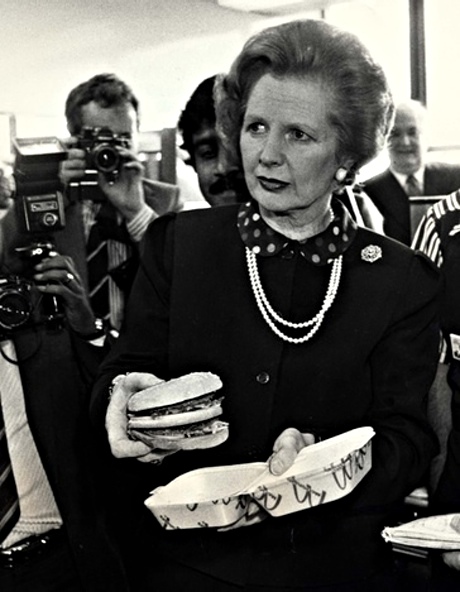

The then prime minister Margaret Thatcher prepares to tuck into a BIg Mac, 1983. Margaret Thatcher at McDonald’s HQ, 1983. Is she genuinely going to eat that Huge Mac? Photograph: Neville Marriner/Connected /REX


6. Snacking is “a newly produced behaviour”


It was practically unknown before the 2nd world war, in accordance to Barry Popkin, professor of nutrition at the University of North Carolina at Chapel Hill School of Public Overall health. It is now a big lead to of obesity and deemed a main growth sector for the food and drink sector. Popkin published a examine showing US kids had been consuming practically constantly, with 3 snacks a day as nicely as their ordinary meals. “Our youngsters are moving in direction of continual eating,” he mentioned.


seven. The meals industry is behaving as the tobacco market did


Critics say it pays professionals, funds scientific papers that assistance its case, rubbishes the evidence that goes against it and declares, as component of its participation in the government’s Accountability Deal, that it is producing its items much more healthy.


Massive Food and the politicians who support the industry say there is no such thing as undesirable meals. There is an element of truth in that. A single Mars bar (when marketed as a healthier, vitality-providing snack with the slogan: “A Mars a day aids you work, rest and perform”) won’t in itself do you any harm. Day-to-day sweet snacks, washed down with sugary drinks and supplemented with crisps, prior to a cheeseburger with chips, are highly most likely to contribute to heart illness, nonetheless.


Big numbers of scientists advise the meals industry and get funding for investigation because they are focused on the micro, not the macro picture. The “sustaining members” of the British Nutrition Basis incorporate Coca- Cola, Kellogg’s, Mondelez (proprietor of Cadbury), Nestlé, PepsiCo, Tate &amp Lyle, Related British Foods and Unilever. The chair of the government’s dietary advisory committee investigating carbohydrates, like sugar, is Professor Ian Macdonald from Nottingham University, who has been an adviser to Coca-Cola and Mars.


eight. Your brain, not your stomach, tells you when to stop consuming


Hunger is in the mind. Dr Suzanne Higgs at Birmingham University carried out a exceptional experiment to show it. Her group gave a group of amnesiacs a lunch of sandwiches and cakes. When everybody had completed eating, they cleared away and brought in a fresh lunch ten minutes later. A manage group of folks with no memory troubles groaned and refused any more meals. The amnesiac group tucked in and ate the same again.


When we consume in front of the television or whilst seeking at our pc display at work, we are not offering lunch or dinner our total focus. Our brain is not registering how much we have eaten and we might well really feel we have not had ample. Higgs is functioning on a telephone app so that individuals can consider images of their meals and snacks as a reminder that they’ve in fact had enough.


9. By the age of five, it is virtually also late to intervene


An overweight child. Much more and far more quite youthful young children are putting on bodyweight they will locate hard to shed. Photograph: Najlah Feanny/Corbis


The EarlyBird diabetes study of 300 youngsters in Devon showed that they had previously gained 70–90% of their excess weight prior to main college. It is far tougher to get rid of bodyweight than to put it on, even as a kid. Some authorities feel that if we want to prevent weight problems, we’re going to have to discover methods to assist mothers and fathers from, or even just before, the birth of their little one.


We think weight problems is about grownups consuming fried chicken and chips. But most babies in the United kingdom are overfed – 75% of people aged 4 to 18 months in the government-commissioned Diet plan and Nutrition Survey of Infants and Youthful Kids, published in 2013, have been obtaining more calories than they essential from formula milk and strong food items. Breastfed babies, who can appear skinny compared with their bottle-fed friends, are in truth generally the correct weight. Massive, bouncing infants, contrary to the outdated wisdom, are not more healthy babies. Slow development is ideal. Low birthweight babies, in distinct, need to not be overfed in a bid to assist them catch up.


Individuals who consider young children are receiving fat due to the fact they sit in front of the tv as well much might also be wrong. Yet another discovering from EarlyBird was that inactivity does not lead to weight problems – obesity prospects to inactivity. Obese youngsters come to feel less like working about. Shockingly, out of 300 youngsters monitored from the age of 5 for twelve many years, three had created diabetes by the end and fifty five had large blood glucose levels that suggested they had been on the verge of it as well.


10. Obese kids are more and more getting taken into care
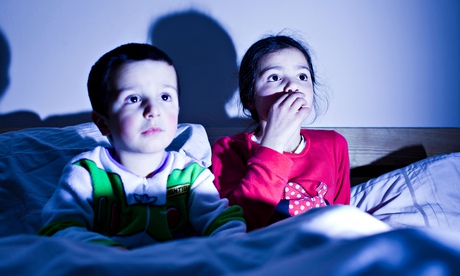

Watching too much TV doesn Watching also considerably Television doesn’t result in weight problems – it is obesity that helps make little ones turn into couch potatoes. Photograph: RayArt Graphics/Alamy


At least 74 in the previous five years, in accordance to a Freedom of Information request from the Daily Mirror, which received usable responses from only 128 out of 206 regional authorities in England, Scotland and Wales, suggesting that the numbers are even larger. Their request followed the revelation that a five-12 months-outdated girl weighing 10st 5lb had been taken away from her loved ones in Newport, south Wales, in August 2012. Earlier this month it was unveiled that mothers and fathers in King’s Lynn, Norfolk, had been arrested on suspicion of neglect and kid cruelty due to the fact their 11-year-outdated son weighed 15 stone.


Doctors and social workers have a dilemma, nevertheless. Obese young children may have caring (probably also obese) dad and mom who could not realize success in getting their child’s (or their very own) excess weight down. “As obesity remains really hard for pros to treat, it is untenable to criticise mother and father for failing to deal with it efficiently if they engage adequately with treatment,” explained Dr Russell Viner of the Institute of Child Overall health, who along with colleagues proposed a framework for action in the British Health care Journal in 2010.


The reality about obesity: 10 shocking issues you need to know

Want much more mindful pursuits? Five issues to try out

Pressure reduction


Want to integrate a bit of mindfulness into your lifestyle but not confident how to get started? Currently being Mindful have numerous places around London and offer you eight-week courses (two hours every single week) devoted to assisting you deal with the each day stresses in your every day lifestyle.


Eating


Do you see chopping your greens as an opportunity for a bit of reflection? How about waiting for the kettle to boil? If the answer’s no but you want to adjust this, there are now courses in how to enjoy and savour these mini moments of calm. Sophie Roberts is a registered dietician primarily based in Oxford and one of just a handful of mindul eating coaches in Europe.


Relationships


Anger, irritation and people niggling emotions that your companion is not truly “existing” some of the time are all common problems in relationships that can drive a couple apart. That’s in which mindfulness coaching can assist. As an alternative of snapping or saying the factor you’ll later regret, those in mindful relationships make an effort to dwell with their feelings, accept them and examine them without acting on them, which sounds easier said than carried out! Get in touch with David Gracey at The House Partnership.


Adventures


Whether or not you fancy a guided stroll, mindful camping or a sea kayaking experience, Wilderness Minds aim to support us recognise peacefulness in daily exercise. Their breaks assortment from one day to longer residential breaks.


Spas


Invest a day at Way of Nature’s Wilderness Spa in Epping Forest silently walking, undertaking Qi Gong and revelling in the wonders of nature on this one-day retreat that guarantees to reinvigorate body and soul and reconnect us with the wonders of nature identified upon our doortsteps. The day ends with a session about studying to value and recognise the wilderness in our everyday lives. Epping Forest Wilderness Spa days are on 13 September and 4 October 2014.


Interested in locating out more about how you can live greater? Get a search at this month’s Dwell Far better challenge right here.


The Reside Greater Challenge is funded by Unilever its emphasis is sustainable living. All content material is editorially independent except for pieces labelled advertisement function. Locate out far more right here.


Want much more mindful pursuits? Five issues to try out

3 Haziran 2014 Salı

The NHS: funds issues | Editorial

Like Harriet with the matches, it has turn into so commonplace to shout “Fire!” about the state of the NHS that it is difficult to know whether or not flames truly are licking all around the public’s most highly valued institution. Effectively, this time they are. On almost any measure – the personal finances of NHS foundation believe in hospitals, the effect of the £2bn set aside for the joined-up wellness undertaking, the Better Care Fund, or the overspend in expert care budgets – above the parliament, money in has lagged nicely behind money out. The scale of the crisis is underlined by the letter we have published from far more than 60 chief executives of NHS trusts in England, difficult politicians to clarify how they will maintain the NHS sustainable. This is the agenda that will dominate the tenure of NHS England’s new chief executive, Simon Stevens, who makes his initial major speech right now. It is also the situation the politicians need to not duck in the election campaign that is launched with the Queen’s speech.


The coalition earns credit score for keeping its pledge to ringfence the NHS budget in an era of austerity: Labour would most likely not have spent far more. But in any system of healthcare, sustaining investing in true terms is by no means ample. The acquainted pressures – medical innovation, an ageing population with multiple chronic circumstances, the rise in weight problems-connected condition and the result of poverty – indicate wellness inflation invariably outstrips the customer value index. Add in the hugely wasteful and unnecessary reorganisation of the Lansley Wellness and Social Care Act – pre-written but shamefully kept quiet for the duration of the final election – as well as the price pressures of much more beds and nurses in the wake of the Mid Staffordshire crisis, and the talk of an existential crisis repeated most recently by the veteran Labour backbencher Frank Field no longer appears alarmist.


The potential of the NHS is in the balance. As the august King’s Fund is demanding, the events should confront the big, challenging choices ahead. Voters are substantially more concerned than they have been in 2010, when investing was even now higher. They are also a lot more willing to trust Labour, a reflection of worries over reorganisation, privatisation – and a fall in satisfaction with the NHS which has matched the freeze in real-terms paying. But internally, Labour is divided more than the merit of increasing nationwide insurance contributions to pay for larger investing towards the chance of becoming portrayed as the tax-and-devote get together. Final week’s Ipsos Mori poll for the Overall health Services Journal exhibiting two-thirds of voters inclined to improve investing on the NHS must reassure them: England now spends much less per capita on well being than any other EU country except Italy. Cash matters.


The NHS is so critical to so numerous voters that the events rarely resist exaggerating their variations. But it is attainable to get various approaches without “big adequate to see from space” reforms like the misguided Tory agenda. The driving force of nearly all modify for the last thirty years has been about how to get much more for the income, how to uncover structures that supply significantly less waste, much more value and ever improving solutions. Also typically, it has been assumed that enterprise has the answer. Yet outsourcing and privatisation have a hugely uneven record, as patients dependent on the Healthcare at Home drug delivery service are obtaining in the most recent private sector failure. But nor is it invariably a catastrophe. The private sector can introduce modern versions, as its supporters are claiming for Hinchingbrooke, the hospital formerly acknowledged as a basket case which was taken in excess of in 2011 by the Circle partnership, an opaquely structured business in which hospital employees hold shares – and which last month won a national award for the top quality of its care although minimizing its deficit.


Simon Stevens, an ex-Labour adviser appointed by a Tory wellness secretary, comes to this challenge with a hefty burden of expectation that has only been fanned by his early speak of reinventing elements of the well being support. He ought to get his chance, and the money he needs to do the task effectively.


The NHS: funds issues | Editorial

21 Mayıs 2014 Çarşamba

Babies born in personal hospitals more likely to have well being issues

Babies born to healthy mothers in private hospitals are more likely to suffer health problems and be readmitted to hospital in the weeks after birth than those delivered in the public system, a University of Western Sydney study shows.


Looking at nearly 700,000 “low-risk” births in New South Wales, researchers found that 5% of babies born in private hospitals suffered birth trauma such as damaged scalps, jaundice or broken bones, and were readmitted to hospital within 28 days. In public hospitals it was 3.6% of newborns.


Resuscitation at birth, feeding difficulties, sleep issues and behavioural disorders were also higher in babies born in private hospitals, the report, published on Tuesday in the British Medical Journal, said.


Higher rates of medical intervention in private hospital births were the likely culprit, according to the study’s lead author, UWS midwifery professor Hannah Dahlen.


An earlier study found that delivery interventions such as the use of forceps or vacuums, induced or caesarian births and epidurals occurred 20% more often in the private system.


“It is this intervention that’s causing that morbidity,” Dahlen said. “The more times, for example, you put implements or a suction cap on a baby’s head, the more likely you are to cause some trauma.”


Expectant mothers in private care delivered their babies earlier, with 43% of births occurring in the first 40 weeks of pregnancy compared with 39.7% in public hospitals. Early term delivery may also be associated with infant morbidity, the report said.


Dahlen said the study had broader implications for “the current federal and state governments’ agenda around privatising of health”.


“The bottom line is, if you’re paying more for health in Australia, it doesn’t necessarily guarantee a better outcome for low-risk babies and women.”


She said a “surgical bias” in private care led to medical procedures that were not needed, particularly as private patients tended to be “the healthiest, well-off women”.


“Giving birth at home, or giving birth in a midwife-led unit that’s not even connected to a hospital, you have better outcomes,” she said.


Babies born in personal hospitals more likely to have well being issues

16 Mayıs 2014 Cuma

ten issues we discovered this week

Britain faces scrutiny at international criminal court


When Tony Blair grew to become prime minister in 1997, Britain transformed tack and grew to become a sturdy backer for the establishment of the global criminal court (ICC), the first everlasting court to deal with global transgressions ranging from genocide to war crimes and crimes against humanity. So there is some irony in the ICC’s determination to hold a preliminary investigation into 60 alleged situations of unlawful killing and claims that more than 170 Iraqis had been mistreated while in British military custody throughout the Iraq war. Nevertheless, it is unlikely that the ICC will move to the following stage as the Uk has the capacity to investigate the allegations itself. The US congress refused to ratify the Rome statute, the founding treaty behind the ICC, on the grounds that its soldiers may possibly be the topic of politically motivated or frivolous prosecutions. Some Uk defence officials almost certainly now have a sneaking sympathy for the US stance.


To take or not to consider statins


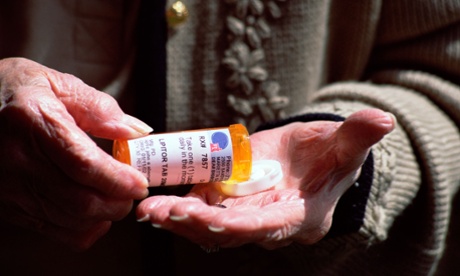
Elderly woman opening a bottle of Lipitor cholesterol medication.
Elderly lady opening a bottle of Lipitor, a member of the drug group identified as statins. Photograph: Arni Katz/Alamy

The saga over statins, the cholesterol-minimizing medicines, has taken a new twist. The authors of two papers published by the British Health-related Journal have publicly retracted statements they made about the frequency of side effects skilled by people taking statins. This followed a charge by an Oxford professor that the info was wrong and could endanger lives. Prof Sir Rory Collins informed the Guardian that a paper and a subsequent report in the BMJ have been inaccurate and misleading. They had claimed that 18%-twenty% of individuals on the medication suffered adverse effects. Collins referred to as on the BMJ to withdraw them and complained that the authors were generating unease and uncertainty in British patients. In an editorial published in the BMJ, editor-in-chief Dr Fiona Godlee said the error was due to a misreading of the information from the review and was not picked up by the peer review method. “Corrections have been published withdrawing these statements,” she wrote.


Mine catastrophe brings problems for Erdoğan


A miner surrounded by relatives and medics after being rescued from a mine in Soma.
A miner surrounded by family members and medics soon after being rescued from a mine in Soma. Photograph: IHLAS/Reuters

The mining disaster that has left at least 282 dead in Soma, western Turkey, has quickly turned into a massive political headache for prime minister Recep Tayyip Erdoğan. He was confronted by angry individuals at the scene who mobbed and kicked his car, calling him “murderer” and “thief”. There are accusations that crony capitalism contributed to the catastrophe, which follows scandals implicating the ruling get together and Erdoğan’s family more than the past 6 months, as well as nationwide protests against his authoritarian type of rule. There have been also allegations that local authorities had failed to enforce safety regulations and make certain good operating problems. Unions held a national strike on Thursday in response. Erdoğan did himself no favours by drawing parallels with coalmining accidents in 19th-century Britain. Surely his advisers ought to have told him that this is the 21st century.


Beavers are breeding like rabbits – type of


A Eurasian beaver.
A Eurasian beaver. Photograph: Alamy

The reintroduction of beavers to the wild in Scotland for the initial time in 400 many years has been an outstanding success, in accordance to the team of ecologists that brought them back. The four pairs of beavers reintroduced in Knapdale 5 many years in the past have created 14 young, engineered 18-metre-prolonged dams and lodges the size of double garages, and significantly boosted tourism. The trial, conducted by the Royal Zoological Society of Scotland, the Scottish Wildlife Trust and Forestry Commission Scotland, launched sixteen Eurasian beavers (Castor fiber) in four loved ones groups in between Might 2009 and September 2010 into 3 lochs in the Knapdale forest, west of Lochgilphead, in Argyll. After a hard commence, the initial youthful animal recognized as a kit was born in 2010. The most current count displays there are now 13 animals residing close to lochs Coille Bharr, Buic, Creagh Mhor and Linne.


The Bulgarians and Romanians did not come


People waiting to go through passport control at the UK border in Stansted airport.
Men and women waiting to go via passport manage at the United kingdom border in Stansted airport. Photograph: Alex Segre/Rex

Scaremongering that Romanians and Bulgarians would flood into Britain hunting for work when border controls have been lifted in January proved to be unfounded. One particular ex-Ukip MEP had even claimed one.5 million would come hunting for operate. Figures from the Workplace for Nationwide Statistics (ONS), showed that there were 122,000 Romanian and Bulgarian nationals functioning in Britain in March this 12 months – a fall from 125,000 in December, just before the last of the seven-12 months transitional controls were lifted on the new EU members on one January. Ukip ignored the fall in Romanians and Bulgarians in the United kingdom workforce. Nigel Farage tweeted: “Massive boost of 292,000 foreign workers in previous yr demonstrates that the coalition immigration policy has been an abject failure.”


The Pfizer/AstraZeneca deal will price jobs


An employee at a Pfizer research lab in Cambridge, UK.
An worker at a Pfizer research lab in Cambridge, United kingdom. Photograph: Bloomberg by means of Getty Pictures

US drug firm Pfizer, the maker of Viagra, admitted that its proposed £63bn takeover of Uk rival AstraZeneca would lead to occupation cuts and a massive reduction in the combined companies’ research and advancement investing. Pfizer’s chief executive, Ian Study, who faced hostile questioning from MPs about the planned takeover, mentioned that there will be some task cuts despite repeated assurances that the takeover would be “win-win” for the United kingdom. Read through conceded the combined R&ampD spending budget of the two firms would be reduced. Pfizer also said that moving to the United kingdom would give it “substantial tax benefits” at the cost of US taxpayers – a reality that has gone down like a lead balloon with some US senators, who want to near this loophole. The firm will save hundreds of thousands by paying its £40bn money pile it has created up overseas on buying AstraZeneca rather than bringing the cash back to the US.


Nigeria is ready to negotiate with Boko Haram


Boko Haram video of kidnapped girls
Boko Haram’s video claims to present far more than 100 ladies at an undisclosed spot. Photograph: guardian.co.uk

Soon after weeks of dithering, The Nigerian government has confirmed that a military operation has been launched with international backing to find and rescue far more than 200 ladies, who have been held captive for a month. The government signalled its readiness to negotiate with Boko Haram, the Islamist militant group that snatched the ladies from a college in Chibok, in the north-east of the nation, though it appeared to rule out any prisoner exchange. Canada became the most recent nation to disclose that it has sent specific forces to Nigeria, joining teams from the US, Uk, France and Israel. The US has begun manned surveillance flights even though the United kingdom has presented surveillance aircraft and a military crew to embed with the Nigerian army. But some commentators warn that inflating Boko Haram into a global threat is providing the oxygen of publicity for an in essence homegrown force exploiting many years of neglect and corruption in the north, predominantly a Muslim location.


Jill Abramson falls off ‘glass cliff’


Jill Abramson, former editor of the New York Times.
Jill Abramson, former editor of the New York Occasions. Photograph: Brad Barket/Getty Images for Wired

The end came brutally for Jill Abramson, was was appointed editor of the New York Instances less than 3 many years ago. She left with out addressing the newsroom and was taken off the paper’s masthead within a few minutes of workers currently being informed of the modify. When she took the occupation in September 2011, Abramson, 60, stated it was “meaningful” that a woman had been appointed to run the newsroom of this kind of an influential organisation. Her removal may effectively be perceived as an instance of the “glass cliff” dealing with females in high journalistic workplace. Income was one cause cited for Abramson’s abrupt exit. A number of weeks in the past, it was reported that she had confronted the “top brass” following she discovered that she was paid considerably less than her predecessor, Bill Keller. There was also mentioned to be tension between her and senior colleagues, including ex-BBC man Mark Thompson and Dean Baquet, who will replace her. She also had sturdy supporters, however, who could level to eight Pulitzer awards during her tenure.


Breaking Bad in Tehran


Women at a crystal meth rehab centre on the western outskirts of Tehran.
Ladies at a crystal meth rehab centre on the western outskirts of Tehran. Photograph: Maryam Rahmanian

Crystal meth is all the rage in the Iranian capital. It has overtaken heroin to turn out to be the Iran’s 2nd most well-liked drug. (Opium even now tops the record.) Meth manufacturing in the country has been expanding at an astonishing price. In accordance to a 2013 study by the UN Workplace on Medicines and Crime, the Iranian government very first reported manufacture of the drug just six many years in the past, when four manufacturing services were seized. By 2012, however, Iran was the world’s fourth highest importer of pseudoephedrine, the primary precursor chemical utilized in the manufacturing of crystal meth. Investigation carried out by the State Welfare Organisation demonstrates that in excess of half a million Tehranis in between the ages of 15 and 45 have utilised it at least when. Iran has a single of the highest rates of addiction in the planet and the interior minister, Abdolreza Rahmani Fazli, announced lately that some 6 million Iranians are impacted by troubles connected to drug addiction.


Bearded lady returns to Vienna in triumph


Conchita Wurst of Austria performs after winning Eurovision 2014.
Conchita Wurst of Austria performs after winning Eurovision 2014. Photograph: Ragnar Singsaas/Getty Photographs

Vienna has an image for stuffiness, but it gave a jubilant welcome for bearded drag act Conchita Wurst, who secured Austria’s very first Eurovision win in 48 many years. The singer, whose true name is Tom Neuwirth, was greeted at the airport by much more than one,000 followers, some sporting painted beards and singing the winning anthem, Rise Like a Phoenix. Wurst mentioned her win was a victory for these who believe in respect and tolerance, and had a dig at Vladimir Putin, the Russian president, who signed a law last year banning “gay propaganda”. The win, she stated, “was naturally meant for specified politicians whom we all know”. Asked if that included Putin, she replied: “Among others.” Russia’s entry – The Tolmachevy Sisters – received boos from the audience in the course of the benefits. Russia ended the night in seventh place just behind Ukraine. The UK’s Molly Smitten-Downes came 17th with 40 factors for her song Youngsters of the Universe.


ten issues we discovered this week