Facebook etiketine sahip kayıtlar gösteriliyor. Tüm kayıtları göster

11 Mayıs 2017 Perşembe

Facebook censors group that helps women obtain abortion pills

Facebook has censored the page of an organization that helps women obtain abortion pills, citing its policy against the “promotion or encouragement of drug use”.


Women on Web, which is based in Amsterdam, helps connect women with doctors who can provide abortion pills if they live in countries where abortion access is restricted. It is a sister organization to Women on Waves, which provides abortions and other reproductive health services on a ship in international waters.


Women on Waves announced that the page had been “unpublished” on its own Facebook account, writing: “Women on Web provides life-saving information to thousands of women worldwide. Its Facebook page publishes news, scientific information and the protocols of the World Health Organization and Women on Web has answered over half a million emails with women who needed scientific, accurate information essential for their health and life.


“We expect Facebook will [undo] this action soon enough, as access to information is a human right.”


This is the second censorship row between Facebook and Women on Web. In January 2012, Facebook deleted the profile photograph of the group’s founder and director, Dr Rebecca Gomperts. The image contained instructions for inducing an abortion using Misoprostol. Gomperts was locked out of her account for two days after re-posting the image, but Facebook subsequently apologized and reinstated both the image and her account.


We expect Facebook will [undo] this action soon enough, as access to information is a human right


Facebook did not immediately respond to a request for comment.


With nearly 2bn users, the social media site plays a crucial role in disseminating news and information around the world. But Facebook has struggled to meet competing demands to allow for the free flow of information while cracking down on graphic material (such as the livestreamed murder of a baby in Thailand in April).


In 2016, the company faced international condemnation over its decision to censor the iconic Vietnam War photograph of a naked girl fleeing a Napalm attack. Facebook subsequently altered its policy to allow for editorial judgments about newsworthiness.


On 3 May, amid criticism over its handling of graphic videos, Facebook announced that it would hire 3,000 more content reviewers. Such content reviewers are tasked with applying the company’s “community standards”, often with uneven results.


Facebook’s has faced particular difficulty enforcing its rules for “regulated goods” – prescription drugs, marijuana, firearms, and ammunition. The company bars “attempts by private individuals to purchase, sell, or trade” such items, but has struggled to halt gun sales.


The company has cracked down aggressively on pages related to legal medical marijuana, however. In 2015, the site temporarily banned business publication Crain’s for promoting a cover story about medical marijuana.


Facebook censors group that helps women obtain abortion pills

11 Ocak 2017 Çarşamba

Sharing suicide videos is dangerous. Facebook has failed us by allowing it | Kyle MacDonald

Late last year an American child, not yet a teenager, killed herself. A video has surfaced online which purportedly shows the girl recording herself via life stream video doing it.


I came across the video via Facebook. Someone alerted me to it less than a week after her death. I did what any reasonable person would do: I followed Facebook’s own advice and reported it for showing graphic details of self-harm or suicide.


Less than two hours later I received a reply. It wasn’t what I expected:


We’ve reviewed the share you reported for showing someone injuring themselves and found that it doesn’t violate our Community Standards.


In subsequent communications, Facebook also claimed that because it is not hosting the video, it is not responsible. This is despite the fact that due to its inaction the links were widely available on Facebook for anyone to see long after I reported the problem. It has not been verified that the video is authentic but whether it is or it isn’t, the content of the video shows a child committing the most serious act of self harm and is not appropriate for public viewing.


After nearly 20 years working with suicidal people I have a particular view on whether this is something that people should be watching:we should not. What community would find this acceptable?


Before social media, we used to have a term for videos like this: snuff films.


In New Zealand, we have very clear laws around the reporting of suicide. You can’t even report that a death is a suicide without permission from the chief coroner. And even then, talking about how the person did it, or what happened is out. There’s a good reason for this.


Research shows that when suicides are reported in detail, including how the person did it, there is a sharp rise in “copycat” suicides. Vulnerable people are triggered and influenced by the gratuitous details of suicide stories. In fact, if you feel suicidal it’s not uncommon to feel compelled to watch such a video. And in doing so, drive yourself even closer to the edge.


Despite what many might think, suicidal people are not going to be “talked out of” their situation by the reality of how painful, or messy the death they choose for themselves might be. You don’t shock people out of such state; you care them out of it.


Facebook has recently made a big deal of being sensitive to, and aware of, mental health issues and the impact of graphic videos about self-harm and suicide. They even have a “Compassion Team”.


But is it compassionate to allow the sharing of a snuff video of a child’s death? If a distressed child stumbles across the video on Facebook and takes their own life, is Facebook liable?


Facebook claims to have taken the video down but it still appears on other pages. Whatever systems Facebook has in place aren’t working. They claim people need to report each and every instance of the video being shared in order for it to be taken down – but couldn’t it use its extensive resources more effectively than that? That’s why I have set up a petition with suicide prevention ambassador Mike King to call on Facebook to make the required changes urgently.


Perhaps the last word should go to her family, the people who loved her and have watched this unfold. They posted their own request, on Facebook of course, begging people to share their tribute rather than the video:


I get the fact that people want to spread awareness about depression and I stand up for that 100% because I know how real it is, but spreading a video showing a … girl do the absolute unthinkable is not the way to do it. Please remember that we (her family) already have to live with it and having that video pop up every time we turn around is NOT what we need right now.


For those who have showed our family nothing but compassion, I would like to say THANK YOU. It is a very difficult time for us all and your support is greatly appreciated.


May you finally rest in peace.


I assume they’re not thanking Facebook for their compassion.


So it’s up to all of us. If you think you’re helping by sharing this video, you’re not. So please if you have shared it, delete your post. And if you see a link to this video in your feed report it to Facebook.


Facebook has failed us. But we don’t have to fail each other.


  • In Australia, the crisis support service Lifeline is on 13 11 14. In the UK, the Samaritans can be contacted on 116 123. In the US, the National Suicide Prevention Hotline is 1-800-273-8255. In New Zealand, you can contact Lifeline on 0800 543 354.

Kyle MacDonald is a New Zealand based psychotherapist.


Sharing suicide videos is dangerous. Facebook has failed us by allowing it | Kyle MacDonald

22 Aralık 2016 Perşembe

Facebook break can boost wellbeing, study suggests

Taking a break from Facebook can boost emotional wellbeing and life satisfaction, with the effects particularly pronounced among people who “lurk” on the social network without actively engaging with others, a study suggests.


The research, by the University of Copenhagen, showed the effects of quitting for a week were also strong among heavy users and those who envied their Facebook friends, suggesting people who pore irritably over the posts of others may benefit the most.


Report author Morten Tromholt, from the university’s sociology department, said the findings suggested that changes in behaviour – for example, heavy users reducing their time spent on Facebook, or lurkers actively engaging – could yield positive results.


But he indicated that people could find it difficult to change their behaviour – 13% of the study’s participants who were supposed to be taking a break admitted to using the social network – and so quitting may be necessary.


The study, published in the journal Cyberpsychology, Behavior, and Social Networking, involved 1,095 people, 86% of whom were women. They were randomly assigned to two groups: one which continued using Facebook as normal and one which stopped using the social network for a week.


On average, the participants were aged 34, had 350 Facebook friends and spent just over an hour a day on the social network, which had 1.79 billion monthly active users in the third quarter of this year.


Questionnaires conducted at the beginning and end of the week indicated that taking a break from the site increased life satisfaction and positive emotions. The effects of quitting were found to be greater among heavy users, passive users and those who envied others on the social network. There was no positive effect of taking a break for light users.


Tromholt wrote: “To make things clear, if one is a heavy Facebook user, one should use Facebook less to increase one’s well-being. And if one tends to feel envy when on Facebook, one should avoid browsing the sections (or specific friends) on Facebook causing this envy. And if one uses Facebook passively, one should reduce this kind of behaviour.


“Due to habits, practicalities … it may be difficult to change one’s way of using Facebook. If this is the case, one should consider quitting Facebook for good.”


Previous studies have had mixed results on the link between Facebook use and wellbeing. Some have garnered similar findings, but others have found no link and some have even found that time spent on the social network can boost wellbeing.


Brenda Wiederhold, editor-in-chief of Cyberpsychology, Behavior, and Social Networking, said: “This study found that ‘lurking’ on Facebook may cause negative emotions. However, on the bright side … previous studies have shown actively connecting with close friends, whether in real life or on Facebook, may actually increase one’s sense of wellbeing.”


Tromholt suggested future studies should investigate the effect of quitting Facebook for a greater length of time and look at other social networks, including Instagram, Snapchat and Twitter.


Facebook break can boost wellbeing, study suggests

12 Aralık 2016 Pazartesi

Crowdfunding medicine via Facebook is a lifesaver for sick children in Sudan

A tea stall under a tree on one of Khartoum’s busiest roads doesn’t look like much to pin your hopes on when seeking to cure a sick child. But dozens of anxious parents and unrelated strangers rush to places like this across Sudan every day – the former to press prescriptions and the latter cash into the hands of volunteers managing a crowdfunding operation that saves children’s lives.


The operation, set up in 2012, received donations of some $ 220,000 (£176,000) for medicines in 2014, and also collected $ 533,000 to open children’s intensive care units in two hospitals in the capital.


“If these guys weren’t here I’d start to sell things from my home, like my bed, chairs and cooking utensils,” says Arafa Moussa, who has come from the Jaffar Ibn Ouf children’s hospital across the road to get help to pay for her son’s medicines. Since her husband had a heart attack and lost his job last November, they have not managed to pay the monthly 2,000 Sudanese pounds (£248) to manage their eight-year-old’s rare condition of aplastic anaemia.


“If he didn’t get the medicine, he would bleed from his nose, eyes, ears and whole body,” says Moussa, wiping her tears as she talks about trying to sell the family home to pay for the bone marrow transplant he can only get abroad.


It was seeing children with cancer in pain that led around 15 young Sudanese volunteers to establish the crowdfunding initiative, called Sharia’ al-Hawadith. It was named after a street lined with medical facilities, and which roughly translates as Accident Lane. It is now home to a small army of young volunteers who sit under a tree sipping endless cups of tea between racing off to get prescriptions for parents who turn up or call from hospital.


Decades of conflict and the resulting sanctions against the regime of President Omar al-Bashir have crippled investment and development. International NGOs have struggled to operate in a climate of government suspicion and restrictions, which includes limiting the medical work of Médecins Sans Frontières‎ and the Red Cross.


“Our government doesn’t want [NGOs] here … there were so many, but they were driven out,” says Hathim Ahmed, one of many pharmacists working with Sharia’ al-Hawadith to provide medicines that most insurance won’t cover. None of the volunteers are paid.


The initiative does some preliminary means-testing by speaking to parents, and asks them to contribute between 10% and 50% for expensive medicines or to buy the cheap ones themselves. For those who can’t contribute, Sharia’ al-Hawadith bears the total cost.


“About 25% of the people I see can’t afford to pay for treatment or medicines,” says junior doctor Leben Khair, who has volunteered for Sharia’ al-Hawadith since discovering that most insurance policies only pay for up to 10% of medicines and that “even private insurance doesn’t cover the expensive ones”.


In Sudan, while NGOs have floundered, such online crowdsourcing models have prospered, allowing people to donate for medicines, books, blankets or food without going through an organisation that could be considered a political threat.


“We publish the daily needs in the Facebook page … and we write the medicines or the cheques we need to do today,” says Ibrahim Alsir Alsafi, a journalist, who – like most other volunteers – spends a day or an evening a week sitting at the tea stall the street.


Ayman Saeed, one of Sharia’ al-Hawadith founders, says not being an NGO has its advantages. “It gave us more room to move freely and expand as much as we can, and our [decentralised] management system … was a good strategy.” He says it gives people the chance to approach the concept in their own way.


More than 100,000 people follow the Facebook page where the prescription requests and the whereabouts of sick children are posted. With volunteers working in all of Sudan’s 18 states, and most children’s hospitals, people can give money personally or send it through people they know living locally. “Sudanese people – most of them from outside Sudan – help us by transferring lots of money. We don’t have a bank account but they transfer it to their relatives here and they come to give it to us by hand,” says Alsafi.


The initiative requires a level of trust between pharmacists and volunteers, who all keep accounts of what has been bought or given on credit per shift. Some people who donate, especially for chronic cases or for first-time donors and who want to see where their money’s going, meet the patients, and sometimes, like the volunteers, get to know their families quite well.


Some pharmacists in Khartoum say that per shift they can give away anything from 200 to 2,000 Sudanese pounds’ worth of medicine, but that they trust the initiative and know they will be paid.


“Sometimes people go to the pharmacy and they just pay our debts for the whole month,” he says.


The largest donation received was from a wealthy Khartoum woman who didn’t have cash so turned up with her gold jewellery. When the dealer found out the money was going to charity, he paid double for it.


People living abroad also respond to the regular calls for drugs that are not available in Sudan, or are extremely expensive imports, by sending them over. “Antibiotics, especially injectables, are very expensive, and cancer drugs per injectable dose can cost 900,000 Sudanese pounds. A course of 28 tablets can cost 1.5m,” says Ahmed.


Since running his own pharmacy in the hospital district, Ahmed, like many other pharmacists, has worked with different charitable funds and given away drugs to needy customers for years. He now extends credit to Sharia’ al-Hawadith to reach increasing numbers of poor people who have been hit by inflation and a falling currency, which puts medicines imported from Europe or the US even further out of reach.


“People are really getting poorer and poorer every day; things are getting worse, so we are trying to help,” he says.


Crowdfunding medicine via Facebook is a lifesaver for sick children in Sudan

1 Kasım 2016 Salı

What could Facebook target next? Our mental health data | Emily Reynolds

It used to be that the eyes were considered the window to the soul. In 2016, you might have better luck checking someone’s social media. The tiny details we share about our lives have blurred the lines between “online” and “real life” – our Facebook accounts even get “memorialised” when we die.


According to a study published this week in Lancet Psychiatry, these seemingly innocuous tidbits can actually lead to quite a comprehensive picture of who we are, at least in terms of our mental health. Researchers from the University of Cambridge and Stanford Business School argue that data from Facebook – the photos we upload, the statuses we share, the frequency and content of the messages we send to friends – is “more reliable” than offline self-reported information, which is often considered to be inadequate or incomplete when it comes to understanding how mental illness is affecting someone.


Status updates in particular, they say, can provide a “wealth of information” about users’ mental health. A language analysis algorithm can pick up symptoms of mental illness, and could even flag early warning signs for conditions such as depression or schizophrenia. Yet more algorithms, these analysing pictures for “emotional facial expressions” could provide insights into offline behaviours. The next question is: what can we – and what can Facebook – do with that data?


Of course, a lot of the information the company has on us all is superficial at best – sure, it might be slightly uncanny to have advertisements served to us that perfectly reflect our taste in music or the TV shows we’ve discussed online, but it doesn’t really say anything very essential about who we are as people. Data about mental or physical health, however, cannot be treated so flippantly, either by those of us who are thoughtlessly supplying it or by the people collecting it. Discrimination against those with mental health problems is still rife; a recent NatCen British Social Attitudes survey, for example, found that 44% of people would be “uncomfortable” working with someone who’d experienced symptoms of psychosis. In legislative terms, this isn’t supposed to impact chance of employment or employment rights. In reality, there is a persistent and pervasive culture of distrust around those with mental health problems.


What if an algorithmic branding of ‘ill’ was shared with the world without our knowledge or consent?


Understandably, many people choose not to share the status of their mental health with colleagues or friends. But such privacy may be a luxury when “emotional facial expressions” can be neatly scanned and categorised by an algorithm, or when our heartfelt statuses are simply part of an input-output exchange. What if employers were able to use the same technology to scan our private posts, monitoring what we say and how we say it to avoid taking a risk on someone they may see as a “liability”? What if the data wasn’t secure, and an algorithmic branding of “ill” was shared with the world without our knowledge or consent?


As the study suggests, the internet can be a vital tool in how people express themselves about their mental illness, from the grandiose horrors of a serious breakdown to the minutiae of living day-to-day with a chronic illness. We can also foster genuine connections with others who might be experiencing the same things. And the potential benefits of the findings are clear – not least in the way we could be able to reach people such as refugees, the homeless or the elderly who are often shut out of traditional mental health services. We may even be able to find new therapeutic routes or platforms with which to help people.


What we can’t do, however, is continue to proceed the way that we are. The ethics of this particular study aren’t questionable; everybody involved in the study consented to their data being used, after all. But if it were to be used more broadly? The team suggests that detection of poor mental health could be a way for social networks to provide on-site support for users – in which case we may have a problem. For one thing, on a practical level, vulnerable users may not fully understand what their participation in such a scheme would mean, nor know the impact it could have on them. We need strict legislation about the ethics of gathering such sensitive data, and even stricter punishments should it be inadvertently or purposefully shared.


And, as we must never forget, Facebook makes money from our data. Slotting us into neat little boxes may be OK when it comes to things such as gender or age – what does that say about us, really? – but the idea of being neatly categorised as “mentally ill” or “mentally well” simply because of the things we choose to share online is both unethical and potentially dangerous. At best, of course, we could receive help that is currently unavailable to us. At worst? It doesn’t bear thinking about.


What could Facebook target next? Our mental health data | Emily Reynolds

20 Ekim 2016 Perşembe

Facebook bans Swedish breast cancer awareness video for being offensive

Facebook has removed a video on breast cancer awareness posted in Sweden because it deemed the images “offensive”, the Swedish Cancer Society said on Thursday.


The video, displaying animated figures of women with circle-shaped breasts, was aimed at explaining to women how to check for suspicious lumps.


Sweden’s Cancerfonden said it has tried to contact Facebook without any response and has decided to appeal the decision to remove the video.


Facebook was not immediately available for comment.


“We find it incomprehensible and strange how one can perceive medical information as offensive,” Cancerfonden communications director Lena Biornstad told AFP.


“This is information that saves lives, which is important for us,” she said. “This prevents us from doing so.”


Facebook faced outrage in September for repeatedly deleting a historic Vietnam war photo included in a post by Norway’s prime minister, Erna Solberg.


It said the iconic photo of a naked Vietnamese girl fleeing a napalm bombing violated its rules but later backtracked on the decision.


Facebook bans Swedish breast cancer awareness video for being offensive

30 Haziran 2014 Pazartesi

You Ought to Quit Facebook

I quit Facebook in 2006. It is attainable to dwell, really like and thrive without it.


Here’s the deal, if you haven’t observed it. Facebook published a review in the Proceedings of the National Academy of Sciences about manipulating users’ emotional states. I’ll talk about the examine very first, and then make my situation for why you need to quit Facebook as well.


The examine is extremely limited, as far as it goes. If you consider a excellent look at the methodology, you discover that the measure for emotional states was counting good versus unfavorable phrases, by way of software program. The most apparent objection to this methodology is real language use: if you are even sometimes sarcastic (“Oh, good, a auto ran over my foot” — “Oh boy, I confident do love it when I’m hit by a automobile and really do not have health insurance”), you know that the words can be positive and the that means damaging. So let’s not in excess of-generalize: this is not really about emotional states, because we’re utilizing this kind of a shoddy device for measuring them.


But okay, we’ll proceed within the limitations. I really like limitations! What it seems to be like is an algorithm tweak — meant to keep you a lot more engaged with Facebook.


Some individuals are upset about experimenting on Facebook end users it seems to violate the thought of “informed consent.” Now, Facebook’s reply is that all of these factors are covered in the user agreement. As far as I know, this is correct — like you, I haven’t read through the terms of service. That is why they’re written in this kind of horrible legal jargon — you aren’t meant to read them. Only lawyers, ideally Facebook’s, are meant to read through them. Believe of all the productive hrs of your existence, and how much they would be shortened if you read through all the TOS for all the platforms you use.


This violates at least the spirit of informed consent. Here’s a checklist from the Division of Wellness and Human Solutions for informed consent. I will go ahead and record the violations:


  • no statement on the research

  • no explanation of the purpose of the study

  • no explanation of the duration of the subject’s participation

  • no description of the procedures to be followed

  • no identification of the experimental procedures

  • no description of foreseeable dangers


Actually, I’m going to end, simply because people are just the initial six things on the checklist, and it’s way longer. But I want to speak about the risks. For the second, let’s go ahead and presume the word lists do correlate to emotional states. I’ve acquired a foreseeable chance: showing a depressed individual a sadder feed, potentially tipping them into a worse state.


There are waivers for informed consent, which an institutional evaluation board may decide on, if appropriate (this is specifically essential for emergency medication you do not want your individuals to bleed out whilst you’re telling them the risks to the new procedure that might save their lives). Here’s the hitch: the Cornell IRB says the review didn’t go by them. Another author is from UCSF, so possibly their overview board was involved.


What’s weird is that this isn’t the initial time Facebook tinkered with user data in the identify of analysis. A “go vote” message could have influenced 340,000 people to go do so. This review, taken with Facebook’s total lack of comprehending of privacy, suggests they’re going to preserve at it — perhaps not in the key scientific journals anymore if there’s also a lot press blowback. But Facebook’s task is to promote advertisements more efficiently. Do you imagine your data won’t be utilised in that endeavor?


Which is why, if this bothers you, you ought to really quit Facebook. I know, everyone’s on it. But I promise that the individuals who in fact care about you will go out of their way to remain in touch. The other folks? Properly, no matter what, I guess you’ll deprive them of some gossip. Oh, your prospective dates will not be able to check out up on you 1st? Harsh lifestyle, where they’ll just have to Google like plebs. Absolutely everyone has images on Facebook? Properly, not absolutely everyone (I really do not!), but also: if you quit, you give Facebook users an incentive to post their pictures elsewhere, turning out to be less dependent on Facebook for dissemination.


And a bit of private guidance from my non-Facebook encounter: folks are a lot more very likely to tell you the genuinely crucial items offline, encounter-to-encounter. If you actually are interested in catching up with your close friends, catch up with your friends. You really do not need Facebook to do it. Because it’s not like they are going to quit altering their algorithms to make you much more engaged with the site any time quickly their company model depends on it. If you believe Facebook is not threatened by you, a lone user, quitting their service, well — appear at how challenging they make it to quit.


You Ought to Quit Facebook

21 Mart 2014 Cuma

No-makeup selfies on Facebook won"t beat cancer alone | Sali Hughes

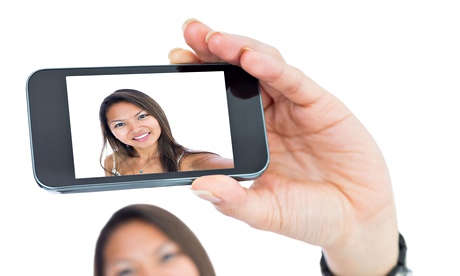
Smiling Asian woman taking a selfie

‘The unique campaign also took a universal, gender non-distinct problem and turned it into a “women’s problem”.’ Photograph: Wavebreak Media Ltd/Alamy


About 48 hours ago, a number of self-portraits appeared on my Facebook feed. Each was of a lady ostensibly sporting no makeup, with the hashtag #beatcancer (not breast cancer, not ovarian or prostate or bone or lymph – just “cancer”). Nothing at all else. Merely a selfie, a slogan and a call to arms, imploring other girls to do the same.


I was perplexed as to how a seemingly incongruous gesture could influence the fight towards cancer in any way. I checked the Cancer Analysis Uk web site, and the charity was apparently uninvolved and at that stage seemingly unaware of however another hollow Facebook meme with as considerably relevance as “like this publish if you think youngster abuse / animal cruelty / rape is a poor thing”. As the morning wore on hundreds a lot more makeup-totally free selfies appeared. One instance of this kind of a post: “Here’s my no makeup selfie for cancer! It is a uncommon factor to see me without makeup but so essential for so many individuals! #beatcancer.”


As social media feeds filled up with these posts, I grew to become more and more irritated, but a swift search showed I was far from alone. Females (and males) had begun posting screengrabs of their donations to Cancer Study, minus the pictures that had kickstarted the viral fundraising, typically with disparaging remarks about the preliminary drive. Cancer Research United kingdom, realising that something massive was taking location, hijacked the meme and began posting details on how to really do some thing to assist.


Right now the charity announced it has had donations of much more than £2m in 48 hrs and the “makeup-free of charge selfie” brigade have claimed a enormous victory in the fight towards cancer. Even though it arguably is – a fortune has been raised that may not otherwise have been – did the outcome justify the signifies?


Like a lot of other folks, I had many problems with the natural campaign. First of all, as with a great deal of social networking campaigns, it asked for no helpful contribution, no meaningful action, just a kind of lazy, armchair reaction that tends to make us really feel good about ourselves. It implied that the most useful way a female (there was no suggestion that males must do anything at all at all) could contribute to the solving of a large difficulty, was to consider off their makeup and have their look scrutinised en masse, as even though this was some exceptionally meaningful sacrifice. The very same was asked of women in the course of Youngsters In Need’s BearFaced campaign.


Most women I know, myself integrated, are noticed without makeup an awful whole lot. To imply mascara and lipstick are like oxygen to ladies, as although anybody who wears makeup has no sense of point of view nor awareness as to what else may be going on in the planet, nor any capability for charity, is reductive, patronising and just plain stupid.


The unique campaign also took a universal, gender non-distinct concern and turned it into a “women’s situation” by generating it all about surface, vanity and emotion rather than about useful, useful action. No require to bake cakes for Macmillan, no use getting into a marathon or simply setting up a direct debit (and yes, like many women, I have accomplished all 3) – just present your close friends how excellent your skin looks without foundation. Only when these who disagreed with it showed their dissent by donating income, did it have any good final result.


There is, of course, one more question about the vanity of people taking portion. It was hours ahead of the selfie mob questioned what they had truly taken component in past a mass physical exercise in narcissism greeted by adoring comments saying “you even now seem scorching hun”. Whilst I’m in no place to understand the genuine motives of 1000′s of ladies (Facebook memes do have a habit of indirectly bullying people into appearing worthy), but the impact of this kind of mass and glib support was not greeted with enthusiasm by all people a lot more immediately affected by cancer. 1 buddy, in recovery from bone cancer, posted sarcastically: “Wow, you guys appear just as sh*t as I did when I had cancer! It really is the Same! #sobrave”. Yet another pointed out that makeup and the ability to make herself “search effectively” was hugely important to her even though she was undergoing chemotherapy.


I am glad that some thing great came out of this, but disappointed that this kind of meaningless social networking campaigns have been vindicated in the method. Certainly the floodgates are now broad open for a lot more reductive, sexist, self-congratulatory campaigns for ominous gain.


No-makeup selfies on Facebook won"t beat cancer alone | Sali Hughes

18 Şubat 2014 Salı

Schoolboy, 11, tells of determination to refuse cancer therapy in Facebook status

He broke the latest news in a posting, final Thursday, entitled “The Beginning of the End”, creating: “As you know soon after the most current scan benefits I was sent house to rest and believe over the 2 attainable options …


“I could opt for another trial, but this would suggest travelling a great deal to the hospital and coping with the side effects, but could also hopefully lengthen my life, or …


“I could basically do practically nothing, remain at home and allow nature get its program which would lead to me loosing my existence slightly earlier than if I’d had far more remedy.”


He then stated he was taking the second option. His mom, Kay Puddington, who assists him to publish his website, stated: “The complete family members was in agreement, it would be unfair on him to continue trying to treat him.


“I had to know when ample was ample. Reece has been so great, he in no way moans really. Reece is exhausted. He favored currently being home and just got exhausted of the entire regime. So the rest of the family members took on board how he felt and we made the decision to finish his treatment.


“He would have gone onto new medicines, but they all are created of something related. The side influences are usually sickness, fatigue and nausea. He didn’t want to maintain performing it, he was fed up.”


She additional: “The choice has been a breath of fresh air for Reece, not to have to go to the hospital implies a good deal to him.”


Following his diagnosis in Could 2008, Reece underwent chemotherapy remedy at the Royal Marsden Hospital, in Sutton, Surrey. After remedy, the cancer, which had started out in a gland over his kidney, went into remission.


Nonetheless, he fell unwell yet again in August 2012 and his family were told that this time the condition would be terminal. Tests uncovered it had spread to his bone marrow, chest, the left side of his pelvis and his proper thigh bone.


Considering that then, Reece had drawn up a “bucket list”, of items he needed to do before he died. This integrated seeing his mother learn to drive so they could go out on day journeys, and also go out for a breakfast at a Wetherspoons.


Mrs Puddington, forty – who is her son’s full time carer – passed her check when she was 17, but forgot how to drive when she could not afford a auto. It meant that she and Reece were housebound in the course of the day when her husband Paul, 48, was at operate as a income assistant for Sainsbury’s.


She has now learned to drive after far more. “I’m so glad I learned to drive in that time. We haven’t been capable to go on any journeys just yet, as Reece has had a rough number of days. But we’re hoping to go on a drive along the coast,” she added.


The only excellent objects on Reece’s record are: a bedroom of his personal, to see the film, The Hobbit: The Desolation of Smaug, a vacation to Sun City, South Africa, and to meet the actor Johnny Depp, dressed as the character Captain Jack Sparrow, from the Pirates of the Caribbean.


Mrs Puddington additional: “Unfortunately Reece will not be in a position to control the holiday. He has been so extremely brave and I’m so proud of him.”


Reece mentioned: “I’ve been overwhelmed by all the help. It’s genuinely made a difference to me. All the letters and small presents folks have sent have truly assisted me by means of every little thing. I’m quite grateful.”


Right here is Reece’s “Bucket List” in total:


An Alienware Laptop …(as I can no longer get out of bed)


A bedroom of my very own.


An Xbox one particular (I am gaming mad)


To see the Hobbit – Desolation of Smaug film.


To acquire £1000 in £20 notes (I’ve presently acquired to £540!)


A cash clip to hold all the cash


A vacation to Sun City in South Africa (I have usually wanted to go given that seeing the destination on Worlds Strongest Man)


Meet Johnny Depp dressed in character as Captain Jack Sparrow (my favourite films)


A Whetherspoons(sic) breakfast with my favourite individuals


A Wikipad gaming pad (just lead to they appear very awesome)


To have a Hobbit House in my back backyard (how cool is that )


I’d enjoy to see my mum understand to drive (it is been too extended)


A black beats pill.


A blue PS4 controller.


To go to Reece’s Facebook website, click here


Schoolboy, 11, tells of determination to refuse cancer therapy in Facebook status

Schoolboy, eleven, tells of determination to refuse cancer treatement in Facebook status

He broke the latest news in a posting, final Thursday, entitled “The Beginning of the End”, writing: “As you know following the latest scan final results I was sent property to rest and consider in excess of the 2 possible alternatives …


“I could opt for an additional trial, but this would suggest travelling a whole lot to the hospital and coping with the side results, but could also hopefully extend my daily life, or …


“I could merely do absolutely nothing, keep at property and allow nature get its program which would lead to me loosing my existence somewhat earlier than if I’d had a lot more treatment.”


He then mentioned he was taking the second choice. His mom, Kay Puddington, who assists him to write his website, explained: “The total family was in agreement, it would be unfair on him to proceed striving to treat him.


“I had to know when adequate was adequate. Reece has been so very good, he never ever moans actually. Reece is exhausted. He preferred becoming residence and just received exhausted of the complete regime. So the rest of the loved ones took on board how he felt and we produced the determination to finish his treatment.


“He would have gone onto new drugs, but they all are created of one thing related. The side has an effect on are always sickness, fatigue and nausea. He didn’t want to preserve undertaking it, he was fed up.”


She added: “The determination has been a breath of fresh air for Reece, not to have to go to the hospital implies a great deal to him.”


Following his diagnosis in May 2008, Reece underwent chemotherapy remedy at the Royal Marsden Hospital, in Sutton, Surrey. Soon after treatment method, the cancer, which had commenced in a gland over his kidney, went into remission.


Nevertheless, he fell unwell once more in August 2012 and his loved ones were told that this time the issue would be terminal. Exams unveiled it had spread to his bone marrow, chest, the left side of his pelvis and his correct thigh bone.


Since then, Reece had drawn up a “bucket list”, of things he wanted to do just before he died. This included seeing his mom learn to drive so they could go out on day journeys, and also go out for a breakfast at a Wetherspoons.


Mrs Puddington, 40 – who is her son’s full time carer – passed her test when she was 17, but forgot how to drive when she could not afford a vehicle. It meant that she and Reece have been housebound during the day when her husband Paul, 48, was at function as a sales assistant for Sainsbury’s.


She has now learned to drive as soon as far more. “I’m so glad I realized to drive in that time. We haven’t been capable to go on any journeys just nevertheless, as Reece has had a rough handful of days. But we’re hoping to go on a drive along the coast,” she extra.


The only exceptional objects on Reece’s checklist are: a bedroom of his own, to see the movie, The Hobbit: The Desolation of Smaug, a vacation to Sun City, South Africa, and to meet the actor Johnny Depp, dressed as the character Captain Jack Sparrow, from the Pirates of the Caribbean.


Mrs Puddington added: “Unfortunately Reece won’t be able to control the vacation. He has been so incredibly brave and I’m so proud of him.”


Reece explained: “I’ve been overwhelmed by all the assistance. It is really produced a distinction to me. All the letters and tiny gifts folks have sent have truly aided me through every little thing. I’m really grateful.”


Right here is Reece’s “Bucket List” in full:


An Alienware Laptop …(as I can no longer get out of bed)


A bedroom of my own.


An Xbox one particular (I’m gaming mad)


To see the Hobbit – Desolation of Smaug film.


To acquire £1000 in £20 notes (I’ve already received to £540!)


A funds clip to hold all the cash


A holiday to Sun City in South Africa (I have usually desired to go considering that seeing the location on Worlds Strongest Guy)


Meet Johnny Depp dressed in character as Captain Jack Sparrow (my favourite movies)


A Whetherspoons(sic) breakfast with my favourite folks


A Wikipad gaming pad (just lead to they search really cool)


To have a Hobbit House in my back backyard (how amazing is that )


I’d enjoy to see my mum understand to drive (it is been as well lengthy)


A black beats pill.


A blue PS4 controller.


To check out Reece’s Facebook website, click here


Schoolboy, eleven, tells of determination to refuse cancer treatement in Facebook status

14 Şubat 2014 Cuma

One particular Million Facebook “Likes” for Natural News is Just the Starting: A Closer Seem at The Stories

Organic Information is constantly bringing overall health and wellness info to the forefront, no matter whether we/they/I/me are/am shedding light on the 70-yr previous who eats raw food items and looks half her age to the surprising information straight from the NN labs that Wheaties cereal is filled with metal fragments.


It’s no shock then, that the readership continues to expand and I couldn’t be happier simply because that means there is a whole lot of like-minded folks out there who are vehemently focused to overall health, wellness and the truth.


The Numbers Communicate for Themselves: In excess of 1 Million Natural Information Facebook “Likes”


In truth, NN Facebook web page “likes” have just lately reached the 1 million mark, and that doesn’t get into consideration the folks who read through the stories and assistance the goals but have not but hit the “like” button.


It’s thrilling and inspiring to see such ranges of commitment from All-natural News fans, and especially at such quickly-developing prices. For instance, on February 8, 2014 the quantity of Facebook “likes” at 8:30 am EST was over 974,000. Just four hrs later, there were an additional one,000. The subsequent day, it leaped to an additional 7,000 ahead of noon EST placing the numbers at a small in excess of 981,000. And here we are today, with in excess of 1 million. So thank you, every person. I’m past thrilled that so a lot of men and women are on board with NN in the mission to set people, and the planet, on track through awareness of healthier choices and breaking information.


As most of us know, it is all about staying informed and currently being in tune to injustices, not just shaking our heads in agreement like Huge Market bobble head dolls just due to the fact the mainstream planet said to. As a result, we’ve broken stories like that of Greg Caton, the guy minding his personal business marketing cancer-curing plant-primarily based topical herbs in Ecuador till U.S. officials arrested him foremost to his jail time and (get this) Interpol listing. We’ve shared our story about the remarkable healing positive aspects of cannabis oil and how it’s been proven to be a hugely efficient normal remedy for a variety of wellness circumstances.


Of program the record goes on.


A Closer Appear at Other Natural News Subjects


  • Normal Information was the initial global news web site to support blow the lid off the fake acai berry scam that concerned all types of deceptive ads and fake information pages.
    Read through all about it: http://www.naturalnews.com/031280_acai_berries_scam.html

  • NN played an crucial role in exposing Merck’s false vaccine science in which virologists ended up going public about their fraudulence.

  • Natural News wrote about the everyday family objects that can lead to anything from birth defects to worsening a person’s asthma symptoms.

  • Organic Information was the 1st internet internet site to break the Adya Clarity detox scam where customers were urged to take pleasure in shots of what was established to be 1200 ppm aluminum dissolved in sulfuric acid, imported into the United States as battery acid.

  • On the autism front, we’ve written about Jenny McCarthy and her battle against autism, plus the dietary modifications she feels helps to alleviate her son’s signs and symptoms.

  • NN is constantly covering the advantages of specific fruits, veggies and spices which may contain enhanced vision, fat reduction and blood strain reduction to title just a number of. From figs to fennel, everything from flatulence handle to more powerful bones might be recognized.


Again, a huge thank you to each one of you for your ongoing interest in awareness of these concerns. Regardless of whether you’re interested in learning about exposure of Large Pharma ills or the wellness benefits of specific essential oils and almost everything in amongst, Organic News I’m particular, will constantly be there for you.


Did you take pleasure in this story? Let other folks know! Share it, like it or comment (or all, if you’re so inclined). Remember, awareness is essential.


Subscribe to get much more stories by me personally.


One particular Million Facebook “Likes” for Natural News is Just the Starting: A Closer Seem at The Stories