Rachel etiketine sahip kayıtlar gösteriliyor. Tüm kayıtları göster

12 Mayıs 2017 Cuma

Doctors owe it to patients to tell the truth: the NHS is in terminal decline | Rachel Clarke

Like church and state, medicine and politics are traditionally seen as a queasy mix. The last thing you want in your flimsy hospital gown is some zealot with a stethoscope trying to sway your vote. Doctors, at the bedside, should clearly stick to doctoring. But – in a world of ever more outlandishly spun health statistics – where, outside of clinical encounters, do the limits of doctors’ duty to act in our patients’ best interests lie?


I made the sobering discovery, in my first few weeks as a doctor, that serving patients in the modern NHS was at least as much to do with advocacy as medicine. It has to be, in a system that’s stretched beyond breaking point. With resources so scarce, speaking out counts.


Once, I actually stalked a professor, in sheer desperation to provide an inpatient with decent care. He did a double take at the steely-eyed junior doctor, sat perched outside his clinic, fired up to plead her patient’s case. With everyone run ragged, overwhelmed by patients, no one had believed me or cared enough to act when I’d insisted my patient was suffering from a rare diagnosis, adult-onset Stills disease, that had left her heart swamped in fluid, her temperature soaring, her circulation so fragile it might need intensive care. “Please,” I begged. “Just see her for yourself.” As the pre-eminent professor of rheumatology in my hospital, he was the one man I knew who might act. And he did. He confirmed the diagnosis and whisked my patient off to his specialist care, possibly saving her life.


When almost every statistic about today’s NHS depicts a system quietly imploding around us, advocacy writ large has never mattered more. Doctors, like nurses, bear daily witness to the facts behind the spin. Our testimony is a vital corrective to a government hell-bent on airbrushing away the truth about today’s underfunded NHS. We look the patients in the eye as they languish on trolleys in hospital corridors. We apologise, shamefaced, to the families whose loved ones are stranded in hospital, because no social care exists to support their safe discharge home. We turn away the elderly who sob in A&E because the pain in their hip is beyond endurance, yet who haven’t even made it on to a waiting list for surgery. If we turned a blind eye and kept our heads down, would Hippocrates nod his assent?


Having to break bad news to a patient is never easy. But unflinching conversations are a cornerstone of good medicine


The state of the NHS in 2017 demands that doctors speak out about the human cost of underfunding since it clear our political leaders will not. Only this week, Theresa May made an election manifesto commitment of 10,000 more staff in mental health. Unfunded, needless to say, but also – more audaciously – a promise made on the back of the 6,700 mental health staff already culled since the Conservatives came to power in 2010. It’s this kind of political doublespeak that compels doctors to challenge loudly the government line that – despite the most brutal funding squeeze in NHS history – everything is going swimmingly.


In microcosm, we already know what happens when cost-cutting is prioritised above patient care. The scandal of Mid Staffs – a stain upon the history of the NHS, in which patients in their thousands were subjected to inhumane care – arose when one hospital trust strove to slash costs by millions. Yet currently, the government is enforcing £22bn of “efficiency savings” across the NHS, while insisting excellence of care can somehow continue.


Doctors should call out this claptrap for what it is. We are, after all – perhaps more than anyone – trusted to tell unpalatable truths. In this case, the hard medicine is more taxes. A world-class health service requires world-class funding. Either we provide the budget to fit the health care we want, or we cut the NHS to fit the amount we’re willing to spend on health. With a government too cowardly to confront this simple truth out loud, doctors should force an honest debate.


Yet – with a few notable exceptions (Taj Hassan and Neena Modi, for example, the presidents of the Royal Colleges of Emergency Medicine and of Paediatrics and Child Health respectively), the medical establishment is loath to rock the boat. Where is the joint statement from the Royal Colleges, for instance, urging increased taxation to bring our NHS and social care spend to at least the levels of Germany and France? Where are the hospital medical directors brave enough to speak out in public against the ever more fanciful diktats from on high to keep on delivering as their funding dries up?


Having to break bad news to a patient is never easy. But unflinching conversations are a cornerstone of good medicine. Nationally, doctors should be telling it like it is: without more money, our NHS is in relentless, terminal, and wholly avoidable decline.


Doctors owe it to patients to tell the truth: the NHS is in terminal decline | Rachel Clarke

1 Nisan 2017 Cumartesi

Talking about mental illness is no substitute for offering real help | Rachel Kelly

Last week, the Duke and Duchess of Cambridge and Prince Harry joined other notable names, including the rapper Professor Green and the former Labour spin doctor Alastair Campbell, to record short films about modern approaches to mental illness. They all stressed that it was good to talk, or, in the terminology beloved of the mental health world, to “start the conversation”.


I agree – and salute their efforts. Talking and being listened to are therapeutic and are known to be what doctors call a “protective factor” when it comes to good mental health. They make us better able to deal with stress; talking also helps reduce stigma, which otherwise leads to discrimination and social isolation.


I know from first-hand experience the power of stigma. When I had my first major depressive episode nearly 20 years ago, I was a reporter at the Times. I was briefly hospitalised and ill for six months. But when I went back to work, I told no one in the newsroom that I had suffered depression. I didn’t just fear what my colleagues would think – I didn’t want to acknowledge the illness to myself.


Several years later, I suffered a second serious episode. Depression is experienced in different ways, but my illness was born of being an anxious striver who became overwhelmed by the stress of trying to do too much. Chronic insomnia, nausea, a palpitating heart and a terrifying sense that I was falling and had to hold on to something all featured as symptoms. I felt suicidal, not because I didn’t like my life but because of the physical pain of the illness.


It was only after this second episode, which lasted for 18 months or so, that I decided to talk openly about being unwell. I also resolved to discover the evidence-based strategies that would make a third episode less likely.


Fast forward 20 years, and, while we may have “started the conversation”, in many professional worlds stigma is still thriving. In workshops I run – alongside mental health charities – I often start by asking the audience to stand up. Invited to stay standing if they or their family have suffered any kind of mental illness, most stay standing. But when they are invited to stay standing if they’ve been able to talk openly about their experience of mental illness, most sit down.


This is common when I talk to groups at professional service firms: lawyers, accountants and bankers. Despite valiant initiatives such as the City Mental Health Alliance and the Bank of England’s mental health network, many workers feel it may damage their careers to admit mental ill health. They stay stumm, however much royals tell them it’s good to talk.


Part of the reason, I think, is to do with our assumption that a privileged life must entail privileged health. Depression, however, has no respect for background or profession.


For all the great work of celebrities, there’s also a sense in the room that the life of a famous person does not reflect the life of someone working long hours in an office. It’s almost as if the gods of screen or sport are expected to be a bit mentally unstable, given the vicissitudes of their professional life, even if such thinking is misguided. But someone with a steady, well-paid job? Why should they be depressed? Equally, we may think it more likely for those suffering from real social deprivation to experience mental illness. But someone who has his own business? Or a successful doctor or plumber?


So what’s to be done to destigmatise mental health issues?


First, employers need to do more to make it acceptable to be mentally unwell in the workplace. When the royals released the largest ever survey of attitudes towards mental illness last week, just 2% of the 5,000 surveyed said they had spoken to human resources at work. And all this despite almost 12m working days being lost to work-related stress, anxiety and depression in 2015-16.


Probably the most powerful change will be when more senior staff take the initiative and talk about their own struggles. A junior employee is never going to admit to problems if they feel their boss wouldn’t do the same. Meanwhile, employees need safe, non-judgmental platforms to discuss their feelings on a regular basis. Often, people with mental health problems find it harder to stay in work and progress in their career.


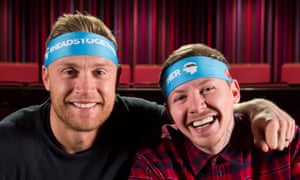
Freddie Flintoff (left) and Stephen Manderson (aka Professor Green)


Freddie Flintoff (left) and Stephen Manderson (aka Professor Green) are among the stars talking about their mental health battles in the Heads Together films. Photograph: Heads Together/PA

The second key change must be in the NHS. Last Friday, its chief executive, Simon Stevens, said that mental health will now be a priority. Talking therapies for anxiety and depression will be given to 200,000 more patients each year by 2020, and NHS England is committing £1.4bn in funding to expand treatment.


Welcome news, though we’ve heard promising announcements before. But we have decades of neglect and underinvestment to rectify. Last November, an analysis by the King’s Fund thinktank showed that 40% of mental health trusts had a fall in income in 2015-16. This was despite the government’s commitment to parity of esteem for mental health now enshrined in the NHS constitution, and despite assurances from NHS England that almost 90% of plans submitted by clinical commissioning groups last year included mental health funding increases.


I routinely talk to people who have had to wait months for cognitive behavioural therapy, the therapy of choice in the NHS, or an appointment with a psychiatrist. And Professor Sir Simon Wessely, president of the Royal College of Psychiatrists, warned last week that a lack of specialists means that mental health patients are not being treated by people trained to deal with their condition.


Another problem is representation. There are still precious few mental health experts on the boards that run the health service, including the boards of NHS England and Monitor (the health service regulator), or the Wellcome Trust.


I would also love to see the NHS adopt a more holistic approach to good mental health. My own experience is that we all need a toolbox of strategies, nutrition being one of them. Yet NHS doctors have almost no nutritional training.


As the royals said, simple conversations can change the direction of an entire life. But even more important is having access to proper services and getting proper care. And many don’t. So let us see the extent to which words translate into action.


Given the scale of change we need, I worry that too much talk may be seen as an excuse for not enough action. In fact, in a strange way, it will only be when the prime minister and the heir to the throne no longer need to publicise the problem that we will have defeated the stigma.


Rachel Kelly’s books include Black Rainbow, her account of her struggle with clinical depression. She is an ambassador for Sane and Rethink Mental Illness


Comments will be turned on later


Talking about mental illness is no substitute for offering real help | Rachel Kelly

29 Mart 2017 Çarşamba

‘Communities provide the best solutions to their own problems’ | Rachel Pugh

Rachel Pugh


A year since Greater Manchester became the first region in England to take control of its £6bn health and social care budget, Jon Rouse is pleased at the progress already made, pointing to figures showing that 62-day cancer waits for Greater Manchester were among the best in the country, referrals to treatment targets are better than the England average and access to mental health services exceeds that of the north and of England as a whole. “I am proud,” he says. “In our first year, we have set up more than 20 programmes – and we are performing better overall in these areas than other parts of the country. It is quite an achievement. The key is to make sure the programmes deliver what we intend.”


As chief officer of the Greater Manchester Health and Social Care Partnership, Rouse is responsible for all the region’s health and social care that previously came under Greater Manchester’s 10 local authorities, 15 NHS trusts and foundation trusts, and 12 clinical commissioning groups. The 37 organisations are pooling their budgets to jointly organise, buy and provide health, care and support services for 2.8 million people across the region.


“Technically what we have in Greater Manchester is delegation,” says Rouse. “But what really matters is what we do. Devolution allows more flexibility on how the budget is allocated.”


Rouse has big ambitions for 2017. He wants to see further reductions in the number of unnecessary hospital admissions, GPs providing quality care to those who really need it through a new focused care programme aimed at the most deprived populations – and he wants to beat national standards on mental health.


But improving the basics are also vital, he says. “Devolution does not, however, mean that poor performance will be tolerated.” Greater Manchester has not met the 95% target for patients to be seen within four hours in A&E over the past 17 months, despite rigorous planning, including reducing hospital occupancies in the run-up to Christmas. The average in England is 85.1%, but Greater Manchester’s worst performing area, Stockport, only reached 70.5% and none of the others even reached the England average, except for Central Manchester (88.9%).


Rouse believes proposals announced this week to reform how urgent care is delivered will change all that. “We need to improve the routine GP service and out-of-hours care, but in return we need the public not to turn up to A&E when they do not need to,” he says. “For that to happen, we need to make it as easy as possible for them to know what the alternatives are. In the past we have not done that.” The plans include an app to inform the public which services are open and how busy they are – and a centralised operational hub in south Manchester, which will coordinate how hospitals respond to demand for urgent care across the region. “We are not downgrading any of our A&Es,” says Rouse. “However, we have designated four of our A&Es as higher acuity hubs.” These, which would treat the sickest patients, are Royal Oldham, Central Manchester, Stockport and Salford Royal.


An acute clinical services strategy is also under way, which aims to standardise and consolidate clinical services. Rouse says all hospitals will continue to provide general services, but would also have specialist roles for particular services. “We want to make sure that each hospital has a distinctive role, playing to its strengths. For example, at present Wigan is renowned for orthopaedics and south Manchester for coronary care,” he says.


Rouse points to the Greater Manchester cancer plan as one of devolution’s top achievements. With the exception of the Christie and Central Manchester University NHS foundation trusts, all the hospitals in Greater Manchester exceeded the 85% standard for patients to receive their first treatment within 62 days.


He admits that delayed discharges from hospital are more problematic, with 312 patients across Greater Manchester clocking up 6,729 days for January 2017 alone. “At the moment we are scrambling and it is not sustainable,” says Rouse. “Every day of every week we are being as creative as possible to find more community capacity.”


With the cumulative social care funding gap in the region predicted to reach £2bn by 2021, what can Rouse do practically to reduce this? He speaks with passion about the region’s new social care plan, launched in February, which aims to provide more support for carers, improve care home standards and encourage more people into social care through a new apprentice scheme. At least 70,000 people across the region are carers for more than 50 hours a week. If even 5% withdrew their support, it would leave an additional 3,500 people suddenly in need of the provision of full-time care from the state.


But in the end it is down to money, he says. “Integration is not the panacea. We need a new settlement in return for the way that social care is administered.” Whether Greater Manchester’s share of the £2bn extra funding announced this month is enough remains to be seen.


What about those who say “Devo Manc” is undemocratic and centralising? Rouse agrees that there was no referendum to introduce it, but he insists that there are benefits: “When something goes wrong in one part of the system, it is owned collectively. We treat it as one NHS and social care.


“Our strongest assets are our communities,” he continues. “Communities have the strength and provide the best solutions to their own problems. You have to facilitate that. I want an end to paternalism and talking shops, and to see the release of the power of the community.” It all sounds a bit Pollyannaish. What does he worry about? “There is the danger that the plans and discussions become disconnected and do not translate into changes at ground level,” Rouse admits. “My measure of success will be what people’s experience of healthcare is and whether it has improved. Devolution is not magic dust.”


Additional reporting by Anna Bawden and Pamela Duncan


CV


Age: 48.


Lives: Altrincham.


Family: Married, two daughters.


Education: Latimer Comprehensive school, Kettering; University of Manchester: law degree; London Metropolitan University: MA urban policy; University of Nottingham: MBA.


Career: 2016 to present: chief officer, Greater Manchester Health and Social Care Partnership; 2013-2016: director general, social care, local government and care partnerships, Department of Health; 2007-2013: chief executive, London Borough of Croydon; 2004-2007: chief executive, the Housing Corporation; 2000-2004: chief executive, Commission for Architecture and the Built Environment; 1998–99: secretary, the government’s Urban Task Force; 1995–98: policy and communications manager, English Partnerships; 1994–95: private secretary to housing minister; 1993–94: policy analyst, Energy Saving Trust;


1992–93: principal policy officer, Ealing borough council.


Interests: Playing clarinet, watching Queens Park Rangers FC away and Altrincham FC at home, family life and planning great holidays.


‘Communities provide the best solutions to their own problems’ | Rachel Pugh

22 Kasım 2016 Salı

I’m a doctor, not a gatekeeper turning ‘health tourists’ away | Rachel Clarke

What better way of diverting attention from the government’s failure to address NHS underfunding ahead of the autumn statement than to turn up the heat on immigrants? You know, those hordes of NHS-clogging health tourists who come over here, steal all the GP appointments and make you wait half the night in A&E. Makes you sick, doesn’t it? No wonder our poor NHS is struggling.


Except, as Chris Wormald – the Department of Health mandarin whose comments have dominated front pages – knows better than anyone, the cost of so-called health tourism is a drop in the ocean of NHS spending. An estimated £200m a year is spent treating people who have travelled to the UK with the deliberate intent of obtaining free healthcare to which they are not entitled. That’s a mere 0.3% of the overall NHS budget.


Wormald, addressing parliament’s public accounts committee, revealed government proposals to clamp down on “health tourism” by requiring all NHS patients to prove their identity with two forms of identification, including a passport, before being allowed to receive hospital treatment. It is difficult to believe that the department’s most senior civil servant made his remarks – on the eve of Philip Hammond’s first autumn statement – in all innocence of their likely media impact, and without the blessing of his political masters. He even told MPs: “It is quite a controversial thing to do, to say to the entire population: you’ve got to prove your identity.”


This is not starry-eyed naivety. I know better than most what a ‘health tourist’ looks like


I’ll say. The UK has a long and grubby history of politicians and newspaper editors exploiting Britons’ love of the NHS to indulge in migrant-bashing; and it is something I, as an NHS doctor, am heartily sick of. I am a clinician, not an immigration officer. My job is to care for my patients irrespective of their race, religion, sexuality or nationality.


This is not starry-eyed naivety. I know better than most what a “health tourist” looks like because they are, on occasion, my patients. One, a young woman, was brought by her parents to my hospital from a country in sub-Saharan Africa where her rare auto-immune disease had gone undiagnosed and untreated. She arrived paralysed, mute and covered in sores. She left healed, whole and independent.


Yes, she cost the NHS tens of thousands of pounds. Indeed, you might claim her parents “took the NHS for a ride”. But, in a cradle-to-grave health service founded on tolerance, humanity and inclusivity, I will continue to treat my patients according to need not insinuation.


It’s not that I object to the policy per se, but to its exploitation for political ends. The truth is, the timing of this announcement is straight out of the Trump school of media management – using migrants as collateral damage to cover for the real reasons why the NHS is in crisis. If fiscal responsibility was really the issue here, why is the government not flexing its muscles with forgetful pensioners? After all, the NHS loses more money on missed GP appointments than it does on health tourism. Similarly, the NHS spends £200m a year more on stationery than it does on health tourism – but waging war against feckless pencils just doesn’t quite have the same resonance with the Ukip contingent.


Exploiting anti-immigrant feeling to distract the public from the catastrophic impact on the NHS of this government’s year-on-year underfunding is as irresponsible as it is cynical, potentially fuelling a narrative that stokes anger and hostility towards non-British nationals. Only this week the Daily Mail blamed dangerously long ambulance waits on the unprecedented demands from “migration, the ageing population and patients dialling 999 as they cannot reach their GP”, claiming: “Some paramedics have also reported pressure from migrants who either do not register with a surgery or do not know where to find a walk-in centre.”


In fact, as anyone who works on the NHS frontline is bitterly aware, it isn’t “health tourists” but the government’s £22bn of cuts during this parliament that is decimating our ability to deliver safe, quality care. Our wards are missing doctors and nurses: we’ve never known such a dangerous mismatch between our numbers and those of our patients. This year, whole emergency, paediatric and obstetric departments have closed because of a lack of medics. Now entire hospitals are slated for closure up and down the country.


In this context, it is disingenuous for Wormald to intimate that, alongside migrants, NHS staff like me might be part of the funding problem, with our lackadaisical attitudes towards squandering taxpayers’ money on treating any old Tom, Dick and Harry: “We are not here to criticise NHS frontline staff,” he said, “but what we want is a culture of everybody who works in it to understand financial rigour. We need a culture where we are more careful with the tax pound.”


Perhaps. But from my frontline staff perspective, what patients need more than anything is a culture of candour from the NHS’s political custodians. The longer they deny – or distract from – their dangerous and draconian cost-cutting, the more fearful for our patients my colleagues and I become.


I’m a doctor, not a gatekeeper turning ‘health tourists’ away | Rachel Clarke

22 Ağustos 2016 Pazartesi

These leaks show Jeremy Hunt’s deception over the seven-day NHS | Rachel Clarke

It’s 4am. When your heart arrests and the emergency call goes out, what you really don’t want is a doctor whose first response to your crisis is a silent stream of expletives. You don’t want the person racing to your bedside to be so exhausted they can barely think straight. And you definitely don’t want them to be pumping your chest while wondering what to do with the patient pile-up threatening to overrun the unit from where they’ve just sprinted.


I don’t want those things either – but I’ve been that doctor and I’ve been that callous. I don’t know a single one of us who hasn’t. There’s an ugly truth about the NHS frontline right now that health secretary Jeremy Hunt would dearly love to airbrush away. We, the doctors and nurses at the sharp end, increasingly feel we are bearing witness to its slow, relentless disintegration. Daily, we are fighting against a breaking system and though for us that may be soul-destroying, for our patients – in so many different ways – it is potentially life-threatening.


The government would have you believe that not only is the NHS flourishing, but that it is being safely steered on its way to becoming the world’s first “truly seven-day” health service – an all-singing, all-dancing bonanza of unprecedented weekend care. Without any new doctors for these new weekend services. Or extra nurses. Or extra resources, in fact, of any kind.


But in private, as incendiary documents leaked to the Guardian and Channel 4 News now reveal, Hunt’s own department admits the lack of funds and staff for a seven-day NHS may derail the glib promises of last year’s general election manifesto. In its unpublished risk assessment of the seven-day policy, the Department of Health’s own working group admits that workforce overload means it may simply not be possible to find sufficient “skilled/trained staff” to safely deliver the new service. Worse, says the secret “7 Day Services Governance Group”, the objectives of this centrepiece of health policy, “are not fully agreed upon, but delivery has started”.


Imagine committing millions of pounds of precious NHS cash to a new service you know you lack the staff to run safely, and whose point – extraordinarily – you haven’t quite decided upon. Imagine the extra child mental health beds or groundbreaking new cancer drugs upon which you could be spending that money, had you not already committed to something so sketchy.


No one who actually works in the health service is remotely surprised the staff aren’t there: we can barely keep patients safe over five days, let alone seven. But for a doctor such as me, who could be hauled before the General Medical Council were I not to practise evidence-based medicine, this admission by the department that it doesn’t even know what it’s aiming for with the seven-day charade destroys Hunt’s efforts to portray himself as a patient safety champion.


My world is one of junior doctors squabbling to grab the last remaining space in which to see new patients, essentially a store cupboard with a couch squeezed inside; of trolleys deployed in corridors as de facto beds, flanked by foldaway screens that barely protect the patient’s dignity; of ambulances sitting idle outside the hospital, unable to deliver their blue-lighted occupants because A&E is crammed to bursting point.


On becoming a doctor, I was fully prepared for the blood, the gore, the death, the slog, but not – it turns out – for the shame of it. Increasingly, my eyes cannot meet those of the patients and relatives marooned under strip-lights, waiting and waiting to be seen. And it’s not just embarrassment. Head down, cheeks burning, I’m trying to avoid becoming the arbitrary target of an enraged family member who needs someone, anyone, upon whom to vent their spleen.


When Robert Francis published his report detailing the horrors patients endured in the now-defunct Mid-Staffordshire NHS Trust, the then prime minister, David Cameron, told a stunned parliament that the report was a “cry from the heart” for “quality, vocation, compassion” in our health service. Three years on, I can tell you that those values are being purged from the NHS by a government that has chosen, year on year, to shrink the share of GDP it spends on our health service. Overstretched doctors and nurses are as demoralised and exhausted as it is possible for a workforce to be. And what many of us now fear is Mid-Staffs writ large – this time on a national scale.


Only a politician who’s singularly out of touch – or driven by an ulterior motive – could possibly pretend the NHS is healthy. This year’s “winter” crisis has started in August. Doctor shortages are forcing A&Es to close. Whole populations in some parts of the country are being denied all but emergency care. My friends are quitting the profession they love in droves. Nurses on my ward are often in tears.


What many of us now fear is another mid-Staffs disaster writ large – this time on a national scale


As a junior doctor, the public exposure of the fatal vacuity of Hunt’s seven-day soundbite ought to make me feel vindicated. Instead, I feel sickened. For over a year, Hunt spun the line that our resistance to his new junior doctor contract was about nothing but grubby self-interest and our grasping obsession with Saturday “overtime”. The truth is, what prevents more doctors from working at weekends isn’t contractual limitations, it’s that there simply aren’t enough of us, and we’re already spread too thinly. We’d all love a seven-day NHS.


Hunt has refused to come clean on the multiple flaws and limitations of the policy he so fervently championed. Perhaps he thought Francis’s duty of candour didn’t apply to health secretaries.


To be perfectly candid, the NHS frontline these days is threadbare, scrappy, perilously understaffed and barely held together by legions of nurses, doctors and allied health professionals. I’m afraid there is no question of any of us being able to do more. I long for the government to choose honesty, not empty rhetoric – actions, not words – and inject the funding so desperately needed to give our health service a fighting chance of survival.


These leaks show Jeremy Hunt’s deception over the seven-day NHS | Rachel Clarke

11 Ağustos 2016 Perşembe

Rachel Parris review – laughing in the face of depression

You can tell something’s in the air at this year’s fringe when you see a comic hitherto associated with jolly parody songs and even she is reciting her recent correspondence with the Samaritans. Lots of comedians have mental-health shows at Edinburgh but if we’re drowning in the tears of clowns then Rachel Parris throws in tears of laughter too. Her Samaritans emails feel tweaked for comic effect, her conclusion a mite too easily engineered for uplift – but this remains a compelling hour, as Parris fronts up about feelings on which women are usually obliged to put a brave face.


Best Laid Plans is about the grown-up Parris expected to be when she was six – house, car, husband, kids – and how real life has refused to play ball. “I’m not married, but on the plus side I do get to go to a lot of weddings,” she says, through gritted teeth. There’s forthright material on the female orgasm, culminating in Parris’s answer to the faux-sexy Flight of the Conchords song Business Time. Another number eschews lyrical invention in favour of gloating “I went to the gym” against a soaring melodic backdrop.


At the show’s tender heart, though, is an account of Parris’s recent breakup, which pitched her for the first time into depression. She’s endearingly frank and funny about the experience, even if the sometime jauntiness of her Samaritans correspondence sits uneasily with the air of emotional candour. But it’s all beautifully crafted and performed.


Rachel Parris review – laughing in the face of depression

22 Haziran 2014 Pazar

Rachel Kelly: "I attempted to be best. Then I dropped all the plates"

Kelly’s husband, Sebastian Grigg, stands up coming to David Cameron in that notorious Bullingdon Club photograph of charmed young Oxford chaps preening in white tie: he’s the 1 who looks like Hugh Grant. The Griggs are shut to the existing ruling elite and their Christmas celebration guestlist is a roll call of movers and shakers. Sebastian stood unsuccessfully as a Tory candidate in the May 1997 election, which was soon following Rachel had her second baby and just before her very first depressive episode.


“One day, I fell unwell,” she starts, as if at the start off of a fairy tale in which something very poor is about to come about to the princess. And so it was. Rachel had just bathed her boys, Edward, aged two, and 3-month-previous George. She remembers blowing raspberries on their tummies. George was far more or less sleeping by way of the night and Rachel was beginning to consider about returning to her task as a reporter.


“I did not consider there was anything at all incorrect with me but, in retrospect, the warning indications had been there,” she says. “I was worried about my transition back to operate. I concerned about missing the task I loved if I stayed at residence. I concerned about missing the children if I went back to operate. I anxious that in my existing state, I wouldn’t be ready to fulfil any function at all.” Nothing at all unusual there: just the standard, guilt-edged package deal that comes as a cost-free gift with working motherhood.


As she place the boys to bed, Rachel’s pulse started racing. She had a weird, disembodied sensation. “I felt as if there were two of me and my ideas had been diverted to someone else’s head.” Soon, it was as if she had been strapped in a plummeting plane. “I’m going to crash!” she screamed, more than and in excess of.


Depression is this kind of a mild word, a small dip in the landscape. What Kelly had knowledgeable was savage in its intensity: her thoughts was shipwrecked and she was left clinging to the stays of her sanity. Depression – a even more cruelty, this – drains you of the potential to care about anybody but oneself. Luckily, the Griggs had a nanny, Julie, who looked following the two small boys. Rachel became “a ghost in my own house”. Her mom and her husband took it in turns to hold vigil by the bed.


Given that childhood, Kelly and her mom had loved reading poetry with each other. In grownup daily life, if a buddy was going via divorce or bereavement, she would send them a poem that had assisted her. “The joke was that Rachel ran a poetry pharmacy,” she smiles. Now, it was she who was sick and necessary consolation from words. Unable to concentrate for much more than a couple of minutes, she identified poetry’s brevity a blessing. She responded particularly to prayers and to quasi-religious operates by George Herbert which reconnected her with humanity. “I wasn’t alone,” she says. “Others had suffered and made anything of their struggling. They had reordered the seemingly random cruelty of the sickness into some sort of sense.”


Within 6 months, Kelly was “back on the horse”, desperate to see what had occurred as “a temporary blip”. Even although she’d been so unwell, she did not talk about it. I’m astonished to discover that she did not see a therapist.


“I know, but I was frightened. I needed to get back the daily life I’d had. I just didn’t want to know that I had this issue referred to as depression,” she admits. She thinks it was partly to do with her Pull By yourself Together upbringing. “I have to acknowledge that I had fairly a sturdy prejudice against psychological sickness – it was one thing that occurred to the homeless or the poor.” When a medical professional recommended she see a therapist, and that the illness could return, she swatted away his concern: “I thought treatment was complaining about your good deal, and I was so fortunate I had no appropriate to complain.”


The superb hostess was capable to place on a excellent front, even to herself. 1 day, the prolonged-suffering Julie turned on her employer and said: ‘I don’t believe in depression… Some individuals have nothing to be depressed about. It is just all produced up. If I lay in bed all day I’d really feel depressed, too.” Only just lately back from hell, Rachel identified it less difficult to agree that she, as well, wasn’t certain she believed in depression.


Kelly resumed work as a reporter, but took time off to have Katherine, her third child. A self-diagnosed anxious striver, she located daily life as a stay-at-house mom hard. She says she is dismayed at the Coalition’s emphasis on acquiring mothers back to perform. “There is completely no question that keep-at-residence mothers are undervalued. You’re even now not afforded the same respect and status as those who function, nevertheless complete-time mothers may have done their best to reduce the social security price range and the mental well being spending budget simply because they’ve raised happy, well‑adjusted kids.”


None the less, I sense how challenging it was for her to leave the rat race, how acutely conscious she was of how nicely her dazzling contemporaries had been doing. Weirdly, she can even now recall how numerous bylines she received in The Occasions on a specific day. The lady who at St Paul’s was described as “enthusiastic” has never felt very good ample. At the Griggs’s events, she was a generous introducer of men and women to other folks who may be useful or fascinating, but I suspect that this social enabler felt she lagged behind, so she pushed herself more difficult and more difficult. Currently being nicely brought up, and with a hugely desirable and successful husband, Rachel by no means felt she could complain, even though she did at times feel overwhelmed. She had only just provided birth to George, but nevertheless created it to the count when Sebastian fought the seat in Manchester.


It was a kind of madness, juggling it all, but it’s a craziness with which a lot of couples will be wearily familiar at the start of the 21st century. Kelly’s brittle, moneyed milieu only created it worse all the wives are beautiful and thin and you are no 1 except if you have got a movie on the go or a work in Cabinet. These days, she tells me eagerly the position of Black Rainbow on the bestseller lists. The pride is understandable – God understands, she deserves it – but there is even now some thing gnawing and pathological about the concern with status and achievement.


It was in 2003 that Kelly’s diabolical visitor came back with a vengeance, and no wonder. First, with no consulting Sebastian, she fell pregnant with a fourth child, which turned out to be twins. There was no conclusive proof that her initial breakdown was linked to post-natal depression nevertheless, it was a chance.


“Possibly it was fairly reckless,” she concedes. “I did come to feel I’d missed out on the other children’s babyhoods, partly by way of working so difficult and partly via currently being sick. I did not know it would be twins and I didn’t know I’d be sick yet again.”


Arthur and Charlotte were born in the October, but Kelly went ahead with the Griggs’s yearly Christmas shindig. At a time when most mothers of twins haven’t climbed out of their PJs, allow alone into their Jimmy Choos, she hosted a high-stakes, glittering party. Truly, Rachel, really?


“Yes, that was very silly of me,” she says. “I believe that tells you a great deal about my nature and character. I had the party, I had the twins, I went to Paris with Sebastian. I desired to be the good wife, the great mother, the great pal, and I dropped all the plates.”


The collapse this time was even a lot more brutal. With the clatter and chatter of guests in the drawing room as soundtrack, Rachel went to the kitchen, sat down, “and the other Rachel who had been temporarily invisible took her possibility in the minute of stillness and proceeded to vent her fury at having been forgotten”. Rachel kicked off her lying celebration footwear, fled to her parents’ house nearby and curled up on the battered yellow sofa in the space the place she used to play as a kid.


It would be many years before she was correctly properly once more. Even nowadays, on this wonderful sunny morning, like anyone who has been seriously depressed, she acknowledges that, as soon as broken, you might never be actually mended. “I would rather I’d in no way got ill in the very first area,” she sighs. “I want I’d recognised the signs.”


She and Sebastian are bringing up their young children to be resilient and mindful about psychological overall health. Kelly laments the pressures on today’s in excess of-examined youngsters. “They really do not get a second off. The triggers for youngsters are precisely the very same as for us. Their operate-existence balance is as undesirable as ours. It’s practically like the tidal wave of anxiety has washed all the way down and it begins at 11. There’s practically no this kind of factor as childhood they’ve gone straight into grownup anxieties.”


I feel about one particular of the standard attendees at the Griggs’s Christmas celebration, who describes it as “almost created to make one particular truly feel inadequate. One particular could effortlessly flip at Rachel’s Christmas get together. It’s a lion’s den of terrifying folks.” Yet another says: “It’s a Hunting In excess of One’s Shoulder Get together, to see if there is anyone greater you could be speaking to. Numerous dislike it, but number of can resist the possibility to be noticed as one particular of the chosen.”


Sounds rather demanding. Has Kelly cured herself of the pursuit of validation that afflicts so numerous of us anxious strivers? I’m not positive she still would seem fragile. She has several coping strategies to hold that bloody black canine on a tight leash, not least taking poetry into prisons. She would seem genuinely thrilled that one inmate stayed up all evening with the poetry anthology she did for Canongate. Helping other individuals, she has located, is the best antidepressant.


Black Rainbow will undoubtedly do that. Like her hero, George Herbert, Rachel Kelly has manufactured one thing of her suffering. By reordering the seemingly random cruelty of the illness into some sort of sense, she has carried out a very good flip to all who have manufactured that fearful journey, and these but to embark on it. Truth is attractiveness, and what she writes is correct.


‘Black Rainbow: How Phrases Healed Me’ is published by Hodder &amp Stoughton at £16.99. All proceeds will go to the charities SANE and United Response


Rachel Kelly: "I attempted to be best. Then I dropped all the plates"

12 Mayıs 2014 Pazartesi

Rachel Kelly: How poetry helped me recover from depression

When I was awake in the dark hours of the evening, and suffering from that sense of full isolation that is at the heart of feeling depressed, I would repeat these snatched lines to myself, prayer-like. I wasn’t alone right after all.


Assessment: Sane New Globe: Ruby Wax on beating depression


It was only when the antidepressants started to work that I could focus on entire poems – and only short ones. I turned to Gerard Manley Hopkins’s poems which celebrate the healing power of nature, poems this kind of as Pied Beauty. Nature was reaching out and grabbing me by the collar as I recovered, my mood completely summed up by Hopkins’s celebration of even the smallest miracles of creation. The language performed for me, rekindling my enthusiasm for phrases and refreshing my own stale vocabulary.


Glory be to God for dappled factors –


For skies of couple-colour as a brinded cow


For rose-moles all in stipple upon trout that swim


Fresh-firecoal chestnut-falls finches’ wings


A poem can also give a various narrative from the adverse story in our heads. This was how I felt when I read through George Herbert’sLove (III) for the duration of my 1st breakdown. During the very first verse I felt a bolt of electrical power pierce via me. All the hairs on my arm stood on end. It was the 1st time that had happened in a even though.


Really like bade me welcome,


But my soul drew back,


Guilty of dust and sin,


But sweet-eyed love, observing me expand slack,


Did welcome me in.


Yes: my soul had been drawing back. Yes: I required enjoy to bid me welcome. The thought that my soul was “guilty of dust and sin” appeared the most perfect description of the depressive sickness. The poem pinpointed a sense of guilt that I should be depressed whilst blessed with a loving residence and husband, one thing I had not previously acknowledged. Herbert’s words had been bursting through the clouds of my mind. It appeared we had been to the very same location and spoke the same language, albeit that his go to was centuries in the past. I had identified a companion on my journey.


I’m not the initial to derive comfort from poetry. Apollo was the god of poetry as effectively of medicine. In 1751 Benjamin Franklin founded the very first American hospital, the Pennsylvania Hospital, in which studying and inventive writing were between the remedies prescribed for psychological illness. Freud, Adler, Jung and other people recognised the healing energy of phrases, and this led to the 1969 founding of the Association of Poetry Therapy.


Read: GPs to prescribe library books to fight nervousness, depression and romantic relationship issues


These days, figures in the literary and philosophical worlds advocate their own brands of healing phrases. Alain de Botton‘sThe School of Existence has lately begun programs in mindfulness and poetry. William Sieghart, the founder of the Forward Poetry Prize, invites audience members at literary festivals to request “Poetry Prescriptions” to suit their certain emotional and psychological demands. As Boris the bard, endorsing the importance of poetry, humorously suggests, “There is no acknowledged disaster, That poetry can’t master.”


There’s even some scientific proof that poetry adjustments the way we think. The arrangement of poetry, even the clearest, has distinct conventions to constant prose. This presents enough of a challenge to get our brains working differently. Research by Philip Davis and the neuroscience department of Liverpool University discovered that readers of Shakespeare, when they came across an uncommon but entirely comprehensible grammatical development, would show a spike in neural activity. Even even though the readers understood what was being stated, their brains have been shocked into activity. The requirement to concentrate in the second helped me quit regretting the past and fearing the long term in the adverse mental spiral characteristic of depression.


In this way, poetry can work in a similar way to mindfulness, forcing us into the current. Robert Frost, demonstrating my level properly, put it far greater when he said a poem can be a ‘momentary remain towards confusion.


Black Rainbow, my memoir about how poetry helped me recover from depression, started existence as a series of poetry recommendations to buddies. They knew what I had been through and asked for poems I thought could aid them in instances of need to have. With the book’s publication, readers have been sending me the poems and prose that have assisted them. Quickly probably I won’t need to have to clarify that poems can be as good as tablets in assisting you recover.


Rachel Kelly’s memoir about how poetry helped her recover from depression, Black Rainbow: How Phrases Healed Me – my journey via depression’ is published by Yellow Kite Books, a subsidiary of Hodder &amp Stoughton, £16.99. All author proceeds are going to the charities SANE and United Response.


Read through: How writing aided Edward St Aubyn exorcise his demons


Rachel Kelly: How poetry helped me recover from depression

21 Ocak 2014 Salı

Football fans get FFIT through Scottish premiership scheme tackling weight problems | Rachel Pugh

Alastair Christie

Prison officer Alastair Christie at the summit of the Carn a’Gheoid munro in Scotland, soon after dropping 9 stone through the FFIT scheme. Photograph: Fraser Band


If 26-stone St Johnstone football fan Alastair Christie had been advised 4 many years ago that his passion for his Scottish Premiership team would electrical power him to shed nine stone and to conquer 37 of Scotland’s highest mountains, he would have responded with a option expression from the terraces.


But a scheme run by 13 clubs in the Scottish Specialist Football League has aided Christie and hundreds more overweight, middle-aged, football followers to get in form in accordance to study published this week in health care journal, the Lancet and BMC Public Overall health.


The analysis by Glasgow University on 747 men who went by means of the Football Fans in Training (FFIT) programme found that they lost nine instances as a lot weight as these not on it.


The randomised 12-month examine from June 2011 of a well being programme delivered in a football club setting (perhaps a world first) identified that as properly as losing bodyweight on the twelve-week programme, almost forty% of guys in the examine maintained a excess weight reduction of at least five% of their authentic physique fat a yr later on.


In accordance to the 2011 Scottish overall health survey, just below two-thirds (64.three%) of adults, aged sixteen and above, had been classed as obese or obese. With weight problems linked to heart disease, diabetes, stroke, cancer and other wellness issues, these benefits couldn’t come swiftly adequate for individuals operating in public well being. Guys are notoriously hard to engage in wellness programmes but one particular of the excellent successes of FFIT, in accordance to the analysis, was that it attracted guys from across the socio-economic spectrum.


The formula is basic – organise male-only sessions in Scottish premiership clubs and run it “just like going to the pub but with no the beer”, capitalising on the men’s devotion to their club.


“From what I was – a fantastic, big, heavy, strongman – to currently being able to climb mountains, and play football with my son Blair, is like evening and day,” says Christie, 43, a prison officer, who utilised to gasp climbing the stairs in Perth prison. He heard about the programme from a fellow fan. Club-primarily based recruitment was by way of web sites, in-stadium marketing, and FFIT recruitment staff approaching possibly eligible men on match days. Above the weeks, the 15-robust group at the Perth-primarily based St Johnstone FC turned up in their football shirts to discover about a very good diet plan and how to get fitter, with the help of a coach.


Powerful relationships have been formed that turned into walking groups, 5-a-side teams and Munro-bagging parties.


“For me, it was the banter in between everyone and the coaches that produced it feasible,” says Christie. “It produced coming to FFIT entertaining and not a chore. Performing the programme at McDiarmid Park most absolutely spurred me on to change to a more healthy way of life which I have continued.”


Professor Sally Wyke, a single of the two principal investigators from the University of Glasgow says: “We now have ‘gold standard’ evidence that the FFIT programme can assist men drop weight and preserve it off.” Study will now focus on the 60% who did not keep the bodyweight reduction at the 12-month adhere to-up.


Her team has secured a €6m (£5m) EU grant to produce a equivalent programme in Portugal, the Netherlands and clubs in the English Premier League.


Fellow researcher Cindy Gray is doing work with Sale Sharks, an English expert rugby union club, to see if FFIT can function in a rugby context. She is also exploring an equivalent for females.


The FFIT notion has gone into two Scottish prisons – Perth and Castle Huntly, close to Dundee – as a consequence of Christie’s good results. A PE instructor colleague spotted that the guy known as “Large Al” was approaching half his authentic size and he decided that Al’s secret might do some of the prisoners very good.


Kevin Fenton, national director of health and wellbeing at Public Well being England, is interested in FFIT’s achievement. A quarter of adults in England are obese. “There is expanding proof that physical exercise has a essential role in preventing cancer, coronary heart ailment, variety-2 diabetes and high blood stress as a result obtaining much more men physically lively is essential to enhancing the overall health of the population.”


A note of caution is sounded by professor Jason Holford, chairman elect of the Uk Association for the Study of Obesity, who says: “The football sector itself – and other sports like rugby – need to consider it a stage further and wean themselves off alcohol and junk meals sponsorship, as they did with smoking.”


Football fans get FFIT through Scottish premiership scheme tackling weight problems | Rachel Pugh

1 Ocak 2014 Çarşamba

Why "super honey" is the bees knees for wounds and infections | Rachel Masker

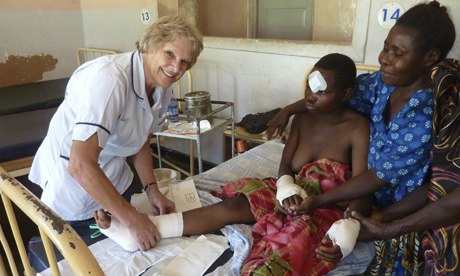
MDG : British volunteer nurse Jill Brooks with a patient in a rural hospital in Uganda

Surgihoney is utilized by British volunteer nurse Jill Brooks to a wounded patient in rural Uganda. Photograph: Surgihoney


The healing powers of honey have been identified about for 1000′s of years. But Surgihoney, whose normal antibacterial properties have been boosted, is proving hugely efficient at treating contaminated wounds and superbugs.


The honey is believed to perform by killing the bugs, removing dead tissue and pus, and then delivering a moisture barrier as effectively as nearby nutrition.


Honey contains vitamins, minerals, enzymes and sugars – all of which assist in the healing of wounds. Manuka is typically regarded as the most potent honey, but it relies upon nectar from a specific tree in New Zealand, limiting its supply.


That’s precisely the issue which has been solved by the developers of Surgihoney. They have designed a merchandise that can be produced from natural honey from any floral supply. They hope it will in the end turn into a worldwide wound-care merchandise that will boost lives in poorer nations.


Lead researcher Dr Matthew Dryden, an NHS consultant microbiologist, is optimistic that the sterile, health care honey can revolutionise wound care all around the world, lessen the use of antibiotics and provide an different to harsh chemical antiseptics.


Surgihoney speeds the healing of tough-to-deal with leg and foot ulcers, stress sores, trauma injuries and contaminated surgical wounds, in accordance to the analysis. Potential benefits include significantly less soreness and fewer amputations.


Dryden says: “Surgihoney is active against all the bacteria we locate in soft tissue wounds. The essential further is that it kills the bugs but doesn’t harm the tissue. Honey is a wonderful organic medication.”


Surgihoney can even tackle wounds infected with strains of bacteria resistant to antibiotics, he says, such as MRSA, E coli and pseudomonas. He describes honey as “turbo-boosted”.


Surgihoney, stored in 10g sachets, is merely squeezed on to wounds and dressed with gauze. Pilot trials (pdf) have been carried out in Hampshire in the Uk, Yei civil hospital in South Sudan, and Vailola hospital in Tonga.


Dryden was lead writer in a research that concludes: “As a wound remedy in the tropics, [Surgihoney] is an excellent, minimal-technological innovation answer which is easily stored, applied and ought to be cost-efficient.” And unlike a lot more sophisticated medicines, it does not need to have to be refrigerated.


Just before the pilot trials, Dryden’s research staff at Winchester’s Royal Hampshire county hospital carried out laboratory experiments on bacteria gathered from contaminated wounds.


The outcomes, explained in detail to the Federation of Infection Societies in November, propose that Surgihoney is far better at beating bugs than other honeys examined, such as Manuka and a medical-grade honey named Medihoney, although equal to antiseptics, silver and iodine, which can be toxic to healing tissue.


A British nurse and wound care skilled, Jill Brooks, has pioneered the use of Surgihoney in Sodo hospital in south-west Ethopia and Kisubu hospital in Uganda, in which she volunteers many instances a year.


“All the outcomes I have observed have been good some have been extremely positive with quick healing of wounds,” says the former lead tissue viability nurse for the NHS in Oxfordshire.


The normal nearby therapy of washing wounds in a weak remedy of bleach has a big disadvantage, she says. “It is quite excellent at killing bugs but is a very harsh point to use as it destroys the very good tissue and can delay healing.”


The achievement of the pilot exams paves the way for a bigger, randomised manage trial.


Surgihoney is currently being produced by businessman Ian Staples, former managing director of Halfords, the motor add-ons chain. He owned a farm in Chile with beehives that made honey from the Ulmo tree. Soon after a negative harvest, he and his son, Stuart, commissioned scientists to create Surgihoney.


The honey has been accredited for use in the United kingdom as a wound-care dressing.


Why "super honey" is the bees knees for wounds and infections | Rachel Masker