Hannah etiketine sahip kayıtlar gösteriliyor. Tüm kayıtları göster

23 Kasım 2016 Çarşamba

Awakenings: Hannah Peel on how she harnessed music"s power to cut through dementia

‘Whenever I went to see my grandma,” says Hannah Peel, “we always had the same conversation. She would ask me who I was and what I did, and I would say that I was a musician, that I played the violin – that she’d actually given me her younger brother’s violin. I would tell her how she and my grandad used to sing together. And she would always just smile, nod, and say, ‘Mmm, oh, I love you.’ She had no idea at all what I was talking about.”


Peel, a musician known for her work with the Magnetic North and a variety of ambitious solo projects, had been watching her grandmother slowly slip into dementia for years. From the early befuddlement of lost objects, items she thought stolen, to the run of confusions and contradictions that led to her eventual diagnosis, it was a deeply distressing experience for the family.


Then one Christmas, having read about the positive effect music can have on people with dementia, Peel wondered if she could connect with her gran through some of her most familiar songs. “I said to my dad: ‘Why don’t we sing to her and see what happens?’ And from a place of not knowing us at all – from giving her Christmas gifts and her saying, ‘Oh thank you, what’s this for?’ – she completely woke up and started singing the lyrics. She was aware of what was going on around her. As we left she said: ‘Happy Christmas!’”


[embedded content]

Tenderly by Hannah Peel on YouTube

Peel found the effect so overwhelming she began to write a song about her gran. That one song led to her new album, Awake But Almost Dreaming – in part an exploration of dementia, but also a celebration of her gran’s life and of the wonders of the human body. As well as referencing Italo Calvino’s novel Invisible Cities, it features contributions from producer Liam Howe and Hayden Thorpe of Wild Beasts, a cover of Cars in the Garden by the Blue Nile’s Paul Buchanan, and recordings of those circuitous conversations she had with her gran.


“All the tracks lead us into her world and wondering where she is,” says Peel. “And so that became the record, starting with the youthfulness and slipping into that world and the rabbit hole of dementia.”


There are 850,000 people with dementia in the UK. By 2025, this number is expected to pass one million. It is now the leading cause of death among British women. While a cure has yet to be found, much has been discovered about the effect that music can have on sufferers, even when the disease is at its most advanced stage. As the neurologist Oliver Sacks said: “Music evokes emotion, and with it memory. It brings back the feeling of life when nothing else can.”


Several viral videos have captured this feeling of life: the sheer delight music can bring. Recently, there was the joyous footage of Ted McDermott, a 79-year-old former Butlins Redcoat who was diagnosed with Alzheimer’s three years ago, being driven around by his son as he sang along to Quando Quando Quando. There has also been a raft of projects – from English Touring Opera’s Turtle Song, a songwriting programme for sufferers and their companions, to Arts4Dementia and Music for Life, a long-running scheme at London’s Wigmore Hall that brings together musicians, dementia patients and carers.


[embedded content]

Cars in the Garden by Hannah Peel featuring Hayden Thorpe on YouTube

Because music requires little mental processing, relying instead upon the motor centre of the brain, pairing it with everyday activities can enable patients to develop a rhythm that helps recall the memory of that activity, and improve cognitive ability. Researchers have found that playing music from someone’s young adult years, from around 18 to 25, is likely to provoke the strongest response. As patients enter late-stage dementia, music from their childhood may prove more powerful.


Peel found this to be the case with her gran. “She used to sing around the house when she was younger,” she says. “Apparently, she would sing WB Yeats’s poem The Lake Isle of Innisfree. My father couldn’t remember the melody, but he used to recite the words and say, ‘Mum, can you remember them?’ and she would just recite them. Later, she wouldn’t get that far – but if it was Christmas carols, she would sing along.”


The theory is that the auditory system is the first part of the brain to fully function, meaning that from 16 weeks old you are receptive to music. “So anything you hear early on is soaked into that part,” says Peel, “and that’s the last part of the brain to be affected by dementia. They think, because it’s right deep down in the centre, it’s the last thing to be touched.”
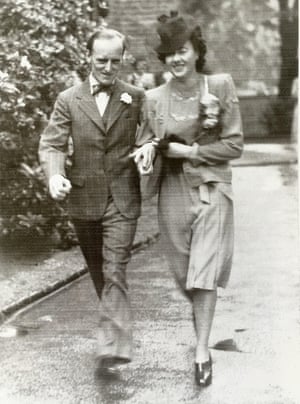


Hannah Peel’s grandparents, Robert and Joyce, on their wedding day.


Hannah Peel’s grandparents, Robert and Joyce, on their wedding day.

Peel wanted to understand the science behind the disease, and turned to Selina Wray, a fellow Barnsley native who works at the Institute of Neurology at University College London, researching dementia for Alzheimer’s Research UK. “I grow cells in the laboratory from patients who have dementia and those who don’t – and look at what it is that leads them to die,” says Wray. “We’re trying to understand the very earliest things that go wrong, with the idea that if we can discover what those things are, we can stop them happening.”


For Peel, visiting Wray’s laboratory and seeing dementia cells up close was a chance to find unexpected beauty in the disease. “They take on these complex structures,” says Wray. “And because every cell is made up of thousands of proteins and quite often we’re interested in one or two, we use colours to label them. They look a little like fireworks.” Peel recalls: “As soon as I saw them I thought, ‘It’s like the stars! It’s like astronomy!’ It felt like an awakening – how it all connected, in a scientific and artistic and musical way.”


Peel is about to perform Awake But Always Dreaming at a special event at St Leonard’s Church in Shoreditch, east London. “It feels really fitting,” she says, “because it’s not the perfect church – it’s got flaking walls and the pews are a bit rocky. It just feels as if it encompasses everything the mind is.” The evening has been put together with Alzheimer’s Research UK, and there will be readings by the actor Christopher Ecclestone, film and poetry from Lavinia Greenlaw, and new work from the director and choreographer Shelly Love, all tackling dementia. The idea is to show “there is hope and it can be beautiful, because you can still find connections with people through music and poetry”.


This Christmas, Peel’s music also appears as part of Alzheimer’s Research UK’s charity appeal, animated by Aardman and narrated by Stephen Fry. She has also launched Memory Tapes, a project inviting participants to make playlists of their lives. “I think of it like a time capsule,” she says, “so that, if ever I fall into dementia, there would be a mixtape of the songs that connect for my children and grandchildren.”


[embedded content]

All That Matters by Hannah Peel on YouTube

Peel’s gran died earlier this year, at the age of 98, seven years after her diagnosis. “We had to stay with her for nearly two weeks, essentially just watching her breathe. And then she faded away.” Best to remember her as Joyce Peel, the “beautiful soprano” who moved to County Armagh to marry an organist, who loved music and her family and singing in the choir her husband conducted.


The experience has changed Peel’s relationship with the people she loves. She calls home more often, does not take her parents’ presence for granted. Do they, I wonder, discuss the music that binds them? “My mum doesn’t like my music and never has quite got it,” she says frankly. “She’s very direct. I’d do a gig and after she’d say: ‘It’s not my cup of tea.’”


Peel gave her the new album with some trepidation – not even telling her that it had been inspired by her gran. “She rang after about three weeks and said, ‘I’ve been listening to your record every single day.’ And I thought, ‘Oh my god, what’s she going to say?’ But she said, ‘I cannot stop listening to it – it’s the most beautiful thing you have ever done. Every day I discover something more in it.’ She’d never said anything like that before. That’s a kind of breakthrough.”


Awake But Always Dreaming is out now on My Own Pleasure. Hannah Peel plays St Leonard’s Church, London, on 24 November, in conjunction with Alzheimer’s Research UK and The Vine Collective.


Awakenings: Hannah Peel on how she harnessed music"s power to cut through dementia

24 Ekim 2016 Pazartesi

So child mental health services are failing. Why’s that then, Jeremy? | Hannah Jane Parkinson

Actions speak louder than words is perhaps the maxim that governments should live by; that governments should have as their desktop screensavers or written on Post-its on ministerial fridges. It came to mind when Theresa May made her Milibandesque inaugural speech as prime minister, and it came to mind again last week when Jeremy Hunt told us that the NHS is failing Britain’s young people on mental health. “Too many tragedies” occur because of weaknesses in the children and adolescent mental health services (Camhs), Hunt said.


It’s a popular opinion. So popular in fact, that people who work in Camhs have been saying it for years. Ditto the individuals who use the service, or would use the service if they were not languishing on waiting lists. Or those who are put off even trying to enter the system, or don’t know what help is available. Not to mention the parents and guardians of these young people.


Hunt says services need to intervene earlier. He is absolutely right. Will he tell us next that people need air to breathe and plants need water to thrive? And why then, has the government he is a member of, and the previous one, overseen the decimation of mental health services, and in particular, those dedicated to helping young people?


Earlier this month the Guardian revealed that 235,000 young people in the UK are receiving mental health care, and that’s a figure based on responses from 60% of trusts, so the real number will be higher. Figures released by NHS Digital show a shocking rise in young people self harming, including an increase of 42% over the past decade in the number of girls treated as inpatients after self poisoning. Almost two-thirds of headteachers are concerned about depression in pupils. One in 10 five to 16-year-olds are thought to have a mental illness. Time and again we are warned that young people’s mental health is an area that needs huge investment to prevent a generation of unwell adults. Prof Dame Sue Bailey, former head of the Royal College of Psychiatrists, has called the situation a “car crash waiting to happen”.


And yet freedom of information requests find that one in five local authorities have either frozen or cut their Camhs budgets every single year since 2010. From the same year to 2015, £50m was cut from Camhs across the board. Funding promises do not make it to the frontline. The NSPCC found that a fifth of young people are turned away from Camhs services for not meeting the threshold for help. Years and years of the falling axe; years and years of avoidable deaths and futures derailed.


Now Hunt has the gall to tell us that mental health services are failing children and adolescents. They are. But it’s not, for the most part, the fault of the psychiatrists, psychologists, therapists, community psychiatric nurses and all of the support and admin staff who make up the mental health services; they often work after hours and take on additional duties for no extra pay. Services are failing thanks to budgets being cut, departments merged or closed and a lack of staff, all courtesy of a government that seems to think the public will forget it has been in charge for this duration.


Teenage girls talk about anxiety: ‘It’s always linked to failure’

It is not uncommon for unwell youngsters to spend nights in police cells because of a lack of available beds. It is even more typical for young people to be offered inpatient beds many miles away from their homes, or on adult wards, or to turn 18 and slip through the gap between Camhs and the adult system.


Hunt’s rhetoric towards junior doctors will not help the dire take-up of psychiatry posts. And now Brexit will deter the overseas staff that large parts of the mental health services rely on.


Of course, episodes of mental illness are horrific at any point in a person’s life. Depression in older people has reached crisis levels too, but what is especially devastating about children and teenagers becoming ill is that it can knock them off course for life.


This happened to me, and is the sole reason I did not sit A-levels or earn a degree. Because I became ill at 16, and did not manage to access proper treatment until years later. I am, despite this, lucky. The kindness of people and their willingness to understand and appreciate the different road I have taken (unwillingly), and to spot potential, has meant that I, eventually, got to where I wanted to go – but it often didn’t look as though things would turn out this way and the effects are life-lasting.


So I agree with Hunt. He is entirely correct: Camhs is weak. But when you starve something, neglect it, take away everything that makes something strong, it will inevitably become weak. The truth is the UK could afford to give more money to the NHS, which spends less than many other countries on its health system. As Simon Stevens, head of NHS England, has said, even if the £1.25bn that has been “pledged” to young people’s mental health services is delivered, Camhs would still only be in a position to help one in three youngsters in mental health need.


After the leave campaign stood in front of its lie-on-wheels promising £350m per week to the NHS, to hear Theresa May point blank refuse the NHS the money it needs is enough to turn the stomach. Hunt may be a wealthy man, but to hear him cast aspersions on a service that the Tories have stripped of all resources and funding since it came to power? That’s rich.


So child mental health services are failing. Why’s that then, Jeremy? | Hannah Jane Parkinson

28 Temmuz 2016 Perşembe

Can the NHS really not afford second transplants for cancer patients like me? | Hannah Partos

If I had not been given a stem cell transplant, I would be dead by now. At 22, I was diagnosed with acute lymphoblastic leukaemia, an aggressive form of blood cancer. Doctors told me a transplant of healthy stem cells from an unrelated donor was my only hope. Last month, I was thrilled to celebrate three years in remission. I hope the cancer never returns, but if it does, my only chance of survival will be another transplant. Except this time around, I might not be given that chance.


Two weeks ago, NHS England announced it would stop routinely funding second stem cell transplants for patients who have relapsed more than a year after their first transplant. NHS England, the body which oversees the budget for commissioning NHS services, has ruled that the treatment is “not currently affordable”, even though it was widely available in England before 2013, and is routinely given to patients in Europe and the US.


At a time of critical illness, the process is lengthy, bureaucratic, and extremely stressful


In a letter to The Times Anthony Nolan, the blood cancer charity and stem cell registry that coordinates all donors for UK transplants, joined forces with leading haematologists to condemn the decision, stating that “NHS England is ignoring the advice of the clinical community, thereby effectively handing [most of these] patients a death sentence”. The charity delivered an open letter with 18,000 signatures to Jeremy Hunt last Thursday, calling on him to urge NHS England to reconsider their decision.


The announcement has left me reeling. However healthy I might be right now, I know that my bone marrow is only one misstep away from needing a transplant again. If I relapse tomorrow, I won’t be able to afford private treatment, which can be between £50,000 and £120,000. My only option would be to submit an individual funding request to NHS England, arguing that my case is exceptional and that I have a high likelihood of survival, which justifies the treatment’s price tag.


— Anthony Nolan (@AnthonyNolan) July 27, 2016

Write to your MP.


Tell them that second transplants save lives – they need to be funded.https://t.co/DqtArcku2n pic.twitter.com/IxjSoRm6jk


At a time of critical illness, the process is lengthy, bureaucratic, and extremely stressful. Then comes months of waiting for a panel of expert clinicians to make a decision while their condition deteriorates. Blood cancers are fast-moving and kill quickly, so there would be gruelling cycles of chemotherapy – at great cost to the NHS – simply to keep the cancer at bay.


NHS England’s decision has been in the making for three years, and patients have had to make funding requests since 2013. But until now, with no clear consensus in place, doctors have had greater scope to argue in favour of a patient’s individual circumstances. Now that there is an official policy that the NHS does not fund second transplants, my application would most likely be rejected. I would then be offered palliative care instead – if I didn’t die during the waiting period.


Emma Paine, 29, from Peterborough had to wait four months for funding approval for a second stem cell transplant after she relapsed with myelodysplastic syndrome (bone marrow failure) last year. As a result, her recovery is not going as well as she had hoped. “There’s no doubt in my mind that my health would be better if we’d been able to start the treatment sooner,” she says. “During the waiting period I contracted four serious infections and lost all my muscle mass. I had difficulty sleeping and felt stressed about the decision. Why put a patient through all of that when they’re already ill?”


Related: A moment that changed me: the chance to use new life-saving cancer drugs


NHS England has to make decisions on a cost-per-benefit basis. I understand they believe that patients have a lower chance of survival after relapsing once – they think there is insufficient evidence to support funding this treatment. But Paine, a statistician herself, argues: “This is total guesswork. They’re rejecting people on the grounds of low success rates, but they haven’t got the data to do that, because the numbers of people who have second stem cell transplants are small.” Only about six patients this year in England who have relapsed over a year since their first transplant will have a second one, although this number would be about 16 if they were routinely funded.


Paine points out that the NHS can only gather significant data by funding second transplants for all patients. A recent study conducted in the US, where second transplants are routine, suggested that one in three patients will reach the five-year survival milestone after given this chance.


The NHS England analysis suggests that funding second stem cell transplants could be cost-neutral. If patients do not receive transplants, they are given alternative treatments – further chemotherapy or palliative care – the costs of which are difficult to quantify as they are highly variable and depend on the patient’s circumstances. However, the policy working group of clinicians, commissioners, patients and stakeholder organisations, including Anthony Nolan, which advised NHS England on the decision, looked at examples of two patients who didn’t receive a second transplant. These patients were estimated to have incurred costs of about £130,000 over a one-year period.


A stem cell transplant is a brutal form of treatment – a last resort with side-effects similar to those experienced by nuclear warfare survivors. Waiting to find a matching donor on the register is agonising. In one of the richest countries in the world, no one should have to endure the added trauma of being denied funding for a treatment that could save their life.


Can the NHS really not afford second transplants for cancer patients like me? | Hannah Partos

17 Temmuz 2014 Perşembe

Advising females with depression about possessing children isn"t babying them | Hannah Jane Parkinson

If there is a single point that men and women with encounter of depression concern most in lifestyle, it truly is depression coming back. The thought of being dragged once again into a moribund swamp of emptiness, ennui and self-hatred is terrifying. Depression typically returns, so it is useful to find out how to fend off the black canine prior to you find oneself staring at the back of its open throat and currently being knocked to the ground. It can take a hell of a extended time to get up.


To this finish, the National Institute of Clinical Excellence (Good) has issued new suggestions to GPs treating girls with depression. It suggests doctors request female patients whether or not or not they want kids as a prelude to discussing the problems which can arise when ladies with depression – or history of it – become pregnant.


The tips, nonetheless, have been deemed a violation of privacy an NSA-design eavesdropping-through-the-bellybutton on likely daily life. 1 in three ladies are affected by mental well being problems, in accordance to the Globe Wellness Organisation (WHO). We know that a sturdy hyperlink exists among females with prior mental health problems and both antenatal and postnatal depression (although postnatal is the more publicised) and the risk of mental wellness relapse in pregnancy is substantial. For that reason I do not agree with Roger Goss of Patient Concern that GPs need to “mind their very own business”. Their company is our overall health.


Dr. Shoshana Bennett talks about prenatal depression

Indeed, something that helps broaden women’s understanding of the risks of pregnancy relative to their psychological wellness is optimistic. One of the initial items a psychiatrist mentioned to me when explaining my diagnosis of bipolar disorder, was that I would have to assess elements of my life style and reasonable them to best deal with the lifelong illness. He reeled off a checklist of items that would have to be looked at in order to live a steady existence: “Alcohol consumption, caffeine consumption, the selection of whether or not to have young children or not …”.


“What do you suggest about the alcohol intake?” I asked, wide-eyed and panicked, having to pay no consideration to the bit about children. “I can nonetheless drink, appropriate?” (Reader, I was 20). The truth is, residing with depression, bipolar disorder or any other psychological health condition is hard. And pregnancy is the most significant change a woman’s physique will undergo. The probability of the two collectively is not anything to be ignored, and it would be remiss of psychological overall health specialists and care suppliers to not raise this.


Suicide is a foremost lead to of death to ladies close to childbirth in the Uk, India and China, and most other developed nations. In the 2008 BBC documentary The Secret Daily life of the Manic Depressive, the late Gaynor Thomas, a bipolar and puerperal psychosis campaigner, was filmed in conversation with professional Dr Ian Jones, who explained the serious risks of relapse during pregnancy. Gaynor was proven choosing against having a 2nd youngster.


Gaynor Thomas, puerperal psychosis campaigner, talks to Dr Ian Jones (excerpt from the documentary Stephen Fry – The Secret daily life of the Manic Depressive).

There is also the issue of specific medicines affecting pregnancy and fertility. Females in their 20s are not suggested to take the anticonvulsant mood stabiliser sodium valproate, for instance, as it is acknowledged to reduce fertility (I was not prescribed it for this purpose). Antidepressants are usually not advised in the course of pregnancy, due to backlinks with miscarriage and foetal heart circumstances, particularly with older tricyclic medication which preceded SSRIs. There is evidence which suggests a mother’s depression although pregnant may possibly impact the brain framework of her youngster, in certain development of the amygdala, accountable for emotional control. And as we know, mental well being problems have traceable genetic causation (in distinct bipolar disorder and depression).


These guidelines are not about warning girls off having youngsters, or about getting nosey, patronising or scaremongering. They are about “spotting what is not normal for each and every person female and making certain she receives the treatment that is proper for her”, as Prof Mark Baker, director of the Centre for Clinical Practice, put it.


Ought to I ever want to start off a family members, I know that there would be a good deal of things I would have to take into account. Coming off my medicine would be a large deal for me relapse would be a grave concern. I would also fear about passing on the situation. I would come to feel guilty: who wants to hand down hell? I would also be anxious about not currently being able to search after my kid in times of my personal sick-health. These are all factors that girls with mental overall health troubles should be encouraged to go over, in order to make an informed determination. I for one feel it is wonderful that Great are carrying out just that. More than great, in truth. It will save lives.


Advising females with depression about possessing children isn"t babying them | Hannah Jane Parkinson

Advising girls with depression about having kids isn"t babying them | Hannah Jane Parkinson

If there is one thing that men and women with knowledge of depression worry most in existence, it’s depression coming back. The imagined of becoming dragged again into a moribund swamp of emptiness, ennui and self-hatred is terrifying. Depression frequently returns, so it’s handy to learn how to fend off the black puppy ahead of you find by yourself staring at the back of its open throat and becoming knocked to the ground. It can get a hell of a lengthy time to get up.


To this finish, the Nationwide Institute of Clinical Excellence (Nice) has issued new recommendations to GPs treating women with depression. It suggests medical doctors inquire female sufferers whether or not or not they want youngsters as a prelude to discussing the complications which can come up when women with depression – or history of it – turn out to be pregnant.


The tips, even so, have been deemed a violation of privacy an NSA-design eavesdropping-via-the-bellybutton on likely daily life. A single in 3 ladies are affected by mental health difficulties, according to the Planet Wellness Organisation (WHO). We know that a powerful hyperlink exists amongst ladies with prior mental well being problems and both antenatal and postnatal depression (even though postnatal is the much more publicised) and the risk of psychological well being relapse in pregnancy is substantial. Consequently I do not agree with Roger Goss of Patient Concern that GPs should “thoughts their personal organization”. Their organization is our wellness.


Dr. Shoshana Bennett talks about prenatal depression

Indeed, anything that helps broaden women’s understanding of the dangers of pregnancy relative to their mental well being is constructive. One of the 1st things a psychiatrist mentioned to me when explaining my diagnosis of bipolar disorder, was that I would have to assess aspects of my way of life and moderate them to best deal with the lifelong illness. He reeled off a listing of things that would have to be looked at in order to live a steady daily life: “Alcohol consumption, caffeine consumption, the selection of regardless of whether to have youngsters or not …”.


“What do you indicate about the alcohol intake?” I asked, broad-eyed and panicked, having to pay no focus to the bit about little ones. “I can even now drink, right?” (Reader, I was 20). The truth is, living with depression, bipolar disorder or any other psychological overall health condition is tough. And pregnancy is the most significant modify a woman’s entire body will undergo. The chance of the two collectively is not one thing to be ignored, and it would be remiss of psychological well being pros and care providers to not increase this.


Suicide is a top result in of death to ladies all around childbirth in the United kingdom, India and China, and most other created countries. In the 2008 BBC documentary The Secret Life of the Manic Depressive, the late Gaynor Thomas, a bipolar and puerperal psychosis campaigner, was filmed in conversation with expert Dr Ian Jones, who explained the serious hazards of relapse for the duration of pregnancy. Gaynor was shown deciding towards obtaining a 2nd youngster.


Gaynor Thomas, puerperal psychosis campaigner, talks to Dr Ian Jones (excerpt from the documentary Stephen Fry – The Secret daily life of the Manic Depressive).

There is also the problem of specific medications affecting pregnancy and fertility. Women in their 20s are not recommended to take the anticonvulsant mood stabiliser sodium valproate, for instance, as it is known to reduce fertility (I was not prescribed it for this explanation). Antidepressants are generally not recommended in the course of pregnancy, due to hyperlinks with miscarriage and foetal heart situations, specifically with older tricyclic medicines which preceded SSRIs. There is evidence which suggests a mother’s depression whilst pregnant may well influence the brain structure of her youngster, in distinct advancement of the amygdala, responsible for emotional management. And as we know, mental overall health conditions have traceable genetic causation (in distinct bipolar disorder and depression).


These tips aren’t about warning girls off possessing children, or about currently being nosey, patronising or scaremongering. They are about “spotting what is not standard for each individual girl and guaranteeing she receives the therapy that is appropriate for her”, as Prof Mark Baker, director of the Centre for Clinical Practice, put it.


Ought to I ever want to start a household, I know that there would be a whole lot of factors I would have to think about. Coming off my medicine would be a large deal for me relapse would be a grave concern. I would also worry about passing on the situation. I would come to feel guilty: who needs to hand down hell? I would also be anxious about not currently being capable to look following my little one in instances of my very own ill-health. These are all things that women with mental wellness issues ought to be encouraged to go over, in purchase to make an informed decision. I for one consider it is good that Good are undertaking just that. Far more than great, in reality. It will conserve lives.


Advising girls with depression about having kids isn"t babying them | Hannah Jane Parkinson

Advising girls with depression about getting young children isn"t babying them | Hannah Jane Parkinson

If there’s a single factor that individuals with encounter of depression worry most in lifestyle, it’s depression coming back. The believed of currently being dragged once again into a moribund swamp of emptiness, ennui and self-hatred is terrifying. Depression typically returns, so it’s useful to learn how to fend off the black puppy prior to you find your self staring at the back of its open throat and becoming knocked to the ground. It can consider a hell of a prolonged time to get up.


To this end, the National Institute of Clinical Excellence (Good) has issued new suggestions to GPs treating ladies with depression. It suggests medical doctors ask female sufferers regardless of whether or not they want youngsters as a prelude to discussing the issues which can arise when girls with depression – or history of it – become pregnant.


The recommendations, even so, have been deemed a violation of privacy an NSA-style eavesdropping-via-the-bellybutton on potential daily life. One in three girls are impacted by psychological well being problems, in accordance to the World Well being Organisation (WHO). We know that a powerful link exists among women with prior psychological well being circumstances and the two antenatal and postnatal depression (although postnatal is the more publicised) and the threat of mental wellness relapse in pregnancy is substantial. Therefore I will not agree with Roger Goss of Patient Concern that GPs need to “thoughts their personal company”. Their business is our well being.


Dr. Shoshana Bennett talks about prenatal depression

Indeed, anything at all that aids broaden women’s comprehending of the hazards of pregnancy relative to their psychological overall health is good. One particular of the first items a psychiatrist mentioned to me when explaining my diagnosis of bipolar disorder, was that I would have to assess facets of my life style and reasonable them to ideal deal with the lifelong sickness. He reeled off a listing of things that would have to be looked at in purchase to dwell a secure daily life: “Alcohol intake, caffeine consumption, the decision of whether to have children or not …”.


“What do you suggest about the alcohol consumption?” I asked, wide-eyed and panicked, paying no attention to the bit about youngsters. “I can nonetheless drink, appropriate?” (Reader, I was 20). The truth is, residing with depression, bipolar disorder or any other mental health condition is tough. And pregnancy is the largest change a woman’s body will undergo. The possibility of the two collectively is not one thing to be ignored, and it would be remiss of psychological well being professionals and care companies to not increase this.


Suicide is a leading cause of death to women around childbirth in the United kingdom, India and China, and most other developed nations. In the 2008 BBC documentary The Secret Life of the Manic Depressive, the late Gaynor Thomas, a bipolar and puerperal psychosis campaigner, was filmed in conversation with professional Dr Ian Jones, who explained the serious risks of relapse throughout pregnancy. Gaynor was shown deciding towards possessing a 2nd youngster.


Gaynor Thomas, puerperal psychosis campaigner, talks to Dr Ian Jones (excerpt from the documentary Stephen Fry – The Secret life of the Manic Depressive).

There is also the concern of particular drugs affecting pregnancy and fertility. Ladies in their 20s are not advised to get the anticonvulsant mood stabiliser sodium valproate, for instance, as it is known to decrease fertility (I was not prescribed it for this reason). Antidepressants are typically not suggested for the duration of pregnancy, due to backlinks with miscarriage and foetal heart circumstances, particularly with older tricyclic drugs which preceded SSRIs. There is evidence which suggests a mother’s depression whilst pregnant may influence the brain construction of her child, in particular advancement of the amygdala, responsible for emotional management. And as we know, mental health circumstances have traceable genetic causation (in specific bipolar disorder and depression).


These suggestions aren’t about warning ladies off getting kids, or about becoming nosey, patronising or scaremongering. They are about “spotting what is not normal for each individual woman and ensuring she receives the treatment method that is proper for her”, as Prof Mark Baker, director of the Centre for Clinical Practice, place it.


Ought to I ever want to start off a family, I know that there would be a good deal of issues I would have to take into account. Coming off my medication would be a enormous deal for me relapse would be a grave concern. I would also worry about passing on the issue. I would feel guilty: who would like to hand down hell? I would also be anxious about not getting in a position to search right after my kid in instances of my very own ill-well being. These are all factors that ladies with mental wellness problems ought to be encouraged to talk about, in buy to make an informed decision. I for 1 consider it’s great that Nice are carrying out just that. Far more than nice, in truth. It will conserve lives.


Advising girls with depression about getting young children isn"t babying them | Hannah Jane Parkinson