Physical etiketine sahip kayıtlar gösteriliyor. Tüm kayıtları göster

2 Mart 2017 Perşembe

Physical restraint in mental health units is traumatising women all over again| Katharine Sacks-Jones

When a woman or girl is admitted to a mental health unit, her expectation should be of a caring, supportive environment where she can get the treatment she needs to get better. Unfortunately, we now know from Agenda’s latest research on restraint that many are instead in an environment where physical force has become shockingly routine.


Agenda is an alliance of more than 70 organisations campaigning on behalf of women and girls at risk. We decided to ask for data about the use of restraint because previous research we carried out on mental health trusts’ strategies and policies – as part of our Women in Mind campaign – showed that most were failing to take into account women’s specific needs.


If this was the case with strategy and policy, what was the reality in service delivery? We submitted a freedom of information request to all mental health trusts in England to find out.


Our research showed that one in five women and girls were physically restrained in mental health settings and that the use of face-down restraint continues to be widespread, with women and girls treated this way on thousands of occasions.


Such frequent use of restraint is particularly concerning because of the potential it has to re-traumatise the many women and girls who have experienced abuse and violence. In some trusts, restraint against women and girls was commonplace, with three-quarters being physically restrained, and up to a third restrained face-down.


There were nearly 2,300 incidents of face-down restraint against girls, compared with fewer than 300 against boys. There were also 4,000 incidents of face-down restraint against women, which was more than that of men – despite women being a smaller proportion of patients.


Being physically held down and having your clothes pulled out of place can be an extremely humiliating experience


One woman who had experienced restraint repeatedly over a number of years told me about the fear it provoked. Not only was there the physical discomfort; it also brought back memories of the abuse and trauma she had suffered as a child.


More than half of women who have mental health problems have experienced abuse – and the links are particularly pronounced for those with more severe illnesses.


Being physically held down and having your clothes pulled out of place, often in front of others, can be an extremely humiliating, as well as frightening, experience. Not only that, but restraint is often carried out by male nurses, another factor that compounds the fear and trauma of those women and girls who have histories of abuse and violence at the hands of men.


One trainee nurse told me how shocked she had been when she witnessed several nurses pin down a woman in a busy area of the unit she worked in – just for refusing to take her medicine. The woman was then left on the floor in full view of other patients and staff. Such sights are detrimental to all who witness them. We know that staff as well as patients feel more positive in environments with lower rates of restraint.


Mental health nurses undoubtedly have an extremely difficult job to do in challenging circumstances, with increasing pressures on time and staffing. However, that should not mean that restraint is routine practice. It also does not account for why girls are so much more likely to be restrained than boys, including face-down, and why face-down restraint is more likely to be used repeatedly on women and girls.


One explanation is that women and girls may be seen as physically easier to restrain. Another is their higher rates of self-harm – with restraint being used to prevent or control that behaviour. But when a female is feeling vulnerable and ill, is the best solution really to hold her face-down on the floor, unable to move? It is an extreme step. As a leading restraint expert told us, in some circumstances what might be more helpful is simply a hug. Of course there may be circumstances in which restraint is necessary to prevent harm to a patient or those around them. But such circumstances should be exceptional, not routine.


The fact that some trusts appear to have almost eliminated physical restraint and to have stopped using face-down restraint altogether shows that change is possible, and alternative de-escalation techniques can and do work. Those trusts with high rates of restraint need to follow their lead – and government guidelines – and end the use of face-down restraint, using other forms of physical restraint only as a last resort.


Recognising women and girls’ specific needs is vital to helping them get better. This needs to happen in national mental health policy and strategy as well as at local level. In particular, women and girls’ histories of trauma need to be taken into account in mental health services, and support given to tackle the underlying issues they face. This must include staff receiving training to understand that women’s mental health, trauma and abuse are often closely linked.


These changes are needed if mental health units are to be the compassionate, therapeutic environments they should be.


Katharine Sacks-Jones is the director of Agenda, the alliance for women and girls at risk. Agenda brings together more than 70 organisations that want to see change for the most marginalised women and girls. Prior to joining Agenda, Katharine led the policy and campaigns team at Crisis. She has 15 years’ experience working in policy, public affairs and parliament


Physical restraint in mental health units is traumatising women all over again| Katharine Sacks-Jones

6 Şubat 2017 Pazartesi

5 Organic Remedies You Can Use to Treat Minor Physical Injuries

Treating physical injuries does not need to be expensive. There are safe and organic ways to heal scrapes, cuts, and bruises.


Exercise and training keep your body fit and prepares it for a coming competition. However, exerting more effort than the body can handle could lead to injuries. If the injury is too serious, you must ask for professional help. If not, you can treat them in your home using organic treatments. Just be sure not to randomly pick herbs to use as medicine as you might cause more damage to your body.


Here is a list of organic remedies that would do the trick of healing minor cuts and bruises.


GARLIC


Garlic contains allicin which proves to be almost as effective as a 1% penicillin solution. In other words, it has antibacterial and antifungal attributes. You can use it to heal wounds especially skin damages.


Apply garlic to the affected area for 20-25 minutes. Make sure that it does not stay on your skin for more than the allotted time. For better results, you can mix the crushed garlic with wine and let it set for 2-3 hours. Apply the mixture to the affected area once or twice a day.


TURMERIC AND BROMELAIN


Turmeric has an antibiotic element that helps prevent any bacterial infection and relieve inflammation. Its analgesic action can also relieve pain. Bromelain, on the other hand, is known for reducing tissue and muscle swelling. Both can help speed up the healing process by forming new skin cells and closing wounds.


Combine turmeric and bromelain and apply them to the area that’s swelling. You can also take them internally.


POTATO


Surprisingly, potatoes are often used to heal cuts and they can do so effectively. They have properties that draw out infection from any wound, thus reducing the inflammation.


To prepare your potato poultice, shred the potato using a grater and spread it on a sanitized cloth. Apply the cloth to your cut and wrap it up. Change it after every four hours. However, you can also put it at night and remove it when you wake up the next morning. Just make sure to thoroughly clean the affected area afterward.


CASTOR OIL


Castor oil is known for being an antifungal, antimicrobial, and antibacterial agent. It alleviates pain and heals injuries by targeting the cause of the skin damage. It also lessens the appearance of scars.


Warm castor oil by putting a small amount on your hands and rubbing them together. Then, massage the affected area. Cover it with a clean cloth and put a warm water bottle on top of it. Leave the bottle for 20-30 minutes to allow the skin to absorb the oil.


Note: Some people are sensitive to castor oil, so make sure you do a patch test before you apply it to the wound.


FINAL THOUGHTS


It’s great to be able to heal any wound with the use of organic products. However, nothing can still beat the healing hands of a professional. Make sure to ask the doctor’s advice for more serious injuries.


Author Bio


Author bio: The article on organic remedies used to treat minor physical injuries has been written by Ignacio D. Pena who is a very active blogger and loves to write in the Health niche.


5 Organic Remedies You Can Use to Treat Minor Physical Injuries

8 Kasım 2016 Salı

7 Mental and Physical Benefits of Hiking

Hiking offers many benefits beyond just getting you out of the house for a change of scenery. It provides both mental and physical benefits, some of which you get just from being out in nature, but others are specific to hiking itself. If you’ve been looking for good excuses to hit a local trail, below are seven mental and physical benefits of this outdoor activity. Just remember to take proper safety precautions on your hike so that you don’t get injured or lost.


1. It Increases Fitness Levels


It’s a well-known fact that hiking can increase one’s fitness. Ideally, you should hike for at least an hour because you’ll quickly burn over 500 calories. If you walk on a high level of incline, then you could lose weight, but you will need to hike regularly to experience weight loss. If possible, try to hike 1-3 times per week and do it for over an hour.


2. It Improves Muscle Tone


Hiking regularly can improve your muscle tone. Your entire body receives a workout when you use trekking poles to go over rough terrain and when you walk uphill, your lower body receives an amazing workout. If you’re carrying a backpack, then your entire upper body will be worked out too. If you hike regularly, eventually your quads, hamstrings, and glutes will become much more defined.


3. It Increases Creativity


There is research that shows spending time outdoors includes creative problem-solving skills and attention spans. In fact, it increases as much as 50 percent. This has a little something to do with unplugging from technology. If you want to increase your creativity, then get out and hike as often as you can.


4. It Lowers Blood Pressure


Hiking regularly reduces blood pressure, as well as cholesterol. As a result, your risk of getting heart disease goes down. Not only that but your risk of diabetes and stroke also goes down. One of the best ways to remove blood sugars and improve your tolerance to glucose is by hiking downhill. The next time you go hiking, try to hike uphill and downhill, so you get the best of both worlds.


5. It Controls And Prevents Diabetes


Hiking regularly can help you control diabetes, and it can help you prevent it if you don’t have it. As previously mentioned, hiking downhill, and hiking in general can lower your blood sugar levels. Working out transports glucose from your bloodstream and then uses it for energy, and hiking is a form of working out. This is why it can prevent and control diabetes.


6. It Curbs Depression And Increases Happiness


This makes our list because there is research that shows hiking can help those who suffer from severe happiness. In fact, there is research that shows people who are depressed feel less hopeless and depressed when they hike. Depressed people tend to have a sedentary lifestyle, so by hiking, they may be inspired to live a more active lifestyle. If you suffer from depression and you want to feel better and increase your happiness, as well as increase the chances of you becoming more active, then give hiking a try.


7. It Can Heal


Some research has suggested that hiking may go as far as helping those with cancer. The International Journal of Sports Medicine published a study in the past, and the study measured oxidative stress rates of men with prostate cancer and women who had breast cancer before hiking and after hiking. The study revealed that long hiking trips might improve one’s anti-oxidative capacity, which helps fight off illness. Another study showed that women who survived breast cancer and who exercised regularly (many who did hiking) believed the physical activity played an important role in their recovery.


Hiking boosts creativity improves muscle tone and increases fitness levels. It also reduces blood pressure, cholesterol and it can prevent diabetes. Hiking can curb depression, improves one’s mood, and it may help you heal. This is why you should start hiking on a regular basis.


Sources:


7 Mental and Physical Benefits of Hiking

25 Ekim 2016 Salı

7 Tips for Opening Your Own Physical Therapy Clinic

Maybe you have decided that you want to open your own physical therapy clinic to help others. This is something that on one hand is relatively easy to do, but like any other business, there are downsides. You can’t just open a clinic and expect it to be filled with people and the money to just be rolling in. You really do have to work at it just like any other business if you truly want it to succeed. If you have decided that this is something you want to do, here are some tips to help get you on your way.


1. Start Out Slowly


If you have just completed your physical therapist training program, it is a good idea to work in the industry for a little while before opening your own clinic. Grow your experience at other clinics, and grow a following. Then, when you are ready to start your own clinic, you will have people lining up.


2. Learn how to be Confrontational


This probably goes against everything you learned during your training program. But, in order to be successful in business, you can’t be the type who lets others walk all over you. You need to learn how to be a leader, and how to say “no” when you have to. Learn how to deal with constructive criticism, but also know when you need to give it.


3. Treat Your Studio Like a Business


Your clinic will be a legitimate business, and you want it to make money for you. So, you need to treat it like a real business. Yes, you probably have a passion for physical therapy and want to share, but remember, if you offer too much for free aren’t going to make any money, and you are going to devalue your service.


4. Create Your Brand


Your brand, or your corporate identity, is important. It is the combination of what people see and the reputation that you earn as a business person. Your brand should combine your clinic name, the location of your clinic, logos and colors, and of course, the high quality of the service you are offering.


5. Don’t Expect Instant Riches


Most business do not make much money in the first year of operation, and this can particularly be said of physical therapy clinic. This is not a way to get rich quick. You will have to invest a lot of money to get started, for such things as space, equipment, instructors, etc. You won’t show an instant profit, but with hard work and dedication, you will succeed.


6. Learn how to be a People Person


You will need to learn more skills for dealing with people, because you are the face of your business, and people will want to talk to you about it.


7. Learn Financial Responsibility


It can be difficult to go overboard when starting a business, and you end up spending so much money that you can never dig the business out of a hole to show a profit. Don’t go out and hire a huge staff right away, or rent the largest clinic space. Do what you can afford to do now, and build from there. Over time, you will achieve the success you really desire.


Resources:


7 Tips for Opening Your Own Physical Therapy Clinic

21 Mayıs 2014 Çarşamba

Wild mice in fact appreciate working on physical exercise wheels | @GrrlScientist

According to a newly published examine, wild mice usually and voluntarily run on an workout wheel if offered access to them in nature, even in the absence of a meals reward. More, the length of running bouts by wild mice matched those of captive mice. These findings dispel the idea that wheel working is an artefact of captivity, indicative both of neurosis or a mindless repetitive behaviour (stereotypy) that might be connected with poor welfare or shut confinement.


Exercise wheels come in a assortment of sizes and types, but their basic objective is to provide confined animals with the opportunity to physical exercise, as you see these adorable dwarf hamsters carrying out here:


Studying on a mobile device? Here is the video link.


That’s an amusing video, and the hamsters seem to be enjoying themselves, but are they actually? And how may possibly you figure this out?


I ran across an exciting tiny study paper that addresses a fundamental — and controversial — question in exercising physiology: is running in an exercising wheel an artefact of captivity as exhibited by small pets, like hamsters, mice and rats? Why do they do it? Is it intended to alleviate pressure or neurosis triggered by near confinement, is it a repetitive and invariant behaviour that is devoid of any clear goal or function (stereotypy), this kind of as cage-pacing seen in some zoo animals, or may possibly it signify some thing else?


“When it comes to stereotyped behaviour, there are competing theories. 1 situation, as an instance, is no matter whether stereotyped behaviour is a symptom of bad welfare that must be prevented, or whether or not it is a coping technique that in fact increases welfare”, explained the study’s co-writer, Yuri Robbers, in e-mail.


Mr Robbers, who works as a grammar school biology teacher, has a master’s degree in animal behaviour and is at the moment researching animal behaviour, theoretical biology and ecology as he performs towards his PhD below the mentorship of neurophysiologist Johanna H. Meijer, a professor in the Department of Physiology at the Leiden University Medical Center in The Netherlands.


The controversy swirling about operating on an exercise wheel anxious the Dutch researchers so a lot that they developed many experiments to clarify the basis of this behaviour. Especially, they wished to test regardless of whether wheel running fulfills the criteria for a stereotypy: (one) it occurs only in captive animals, (2) it is repetitive, invariant and devoid of obvious goal or perform, (3) if it consists of all-natural behavioural factors, these factors happen at higher rates and for longer durations than located in nature, and (four) it is partially or not at all dependent on external stimuli.


Will wild mice use a working wheel if a single is presented in nature?


Well-known animal behaviourist Konrad Lorenz after remarked that rodents that had either escaped or been launched will enter and run on exercising wheels if a single is accessible to them (as cited right here: doi:10.1126/science.155.3770.1623). Intrigued, Professor Meijer and Mr Robbers made the decision to follow up on this observation by going one particular phase additional: they asked whether or not cost-free-living animals that had never just before witnessed an activity wheel would voluntarily use 1 if it was accessible to them.


They made a cage that particularly excluded large animals (so they wouldn’t knock more than the exercising wheel set up). Inside this cage, which could be freely accessed by small animals, they positioned a operating wheel along with some meals intended to attract mice. These exclosures have been set up in nature at two various discipline internet sites a green urban region (Professor Meijer’s back backyard) and a dune location that was inaccessible to the public (see under):


Setting up the gear in the dunes field site. (Left to appropriate: Eva Koster, Yuri Robbers, Doortje Krijbolder, Joke Meijer.)
Image: Jan Janse, with permission.


Every check out to the experimental set-up was recorded by a night-vision camera, employing passive infrared motion detection. At night, the camera relied upon infrared light (infrared light is invisible to mice), which did not interfere with motion detection.


Wheel working and movement detection kit.
Picture: Johanna H. Meijer and Yuri Robbers, with permission.


Information have been collected for a lot more than three many years making use of this experimental set-up (green urban area information have been collected from October 2009 to February 2013, and dune region data have been collected from June 2011 to January 2013 figure two):


Figure two. Different animals use working wheels, though mice are by far the most common. Breakdown by species in (a). Note that the vertical axis has been broken to accommodate mice, which accounted for 88% of wheel running. Also note that birds visited the recording products occasionally, but never ran in wheels. Species identified making use of video recordings. Stills taken from these recordings display examples of a mouse (b), a frog (c) and a slug (d) utilizing the wheel.


The working wheels proved common with a range of free of charge-residing animal species. Above time period of above three many years, Professor Meijer and Mr Robbers created more than 200,000 recordings of animal site visitors and analysed much more than twelve,000 video fragments in which wheel motion was detected.


In the initial 24 months, the urban green location resulted in 1011 animal visits (of which 734 had been mice). The 1st 20 months in the dunes resulted in 254 animal visits (of which 232 had been mice). Although the cage was baited with food particularly meant to entice mice, other animals — shrews, rats, snails, slugs, and frogs — also stopped in to do some running (or sliming?). Interestingly (to this ornithologist), even little birds popped in sometimes, although they were never ever recorded operating on the wheel.


“Our information signifies that wheel working takes place in nature, currently being carried out by totally free-living wild animals”, mentioned Mr Robbers. Thus, “captivity, extended or otherwise, can not possibly be the lead to of wheel operating”. Because all the experts agree that stereotypical behaviours only happen in captivity, wheel running does not fit well into the criteria.


In view of the broad assortment of diet plans preferred by these other species of animal visitors, it would seem they had been not coming solely for the meals. So of course, Professor Meijer and Mr Robbers then asked what would occur if they stopped offering any meals at all — may well these animals even now pop in for a run on the workout wheel?


Will free of charge-living animals use a running wheel with out a foods reward?


Even though Professor Meijer and Mr Robbers stopped delivering food in the urban spot enclosures for more than a 12 months (October 2011–February 2013), animal visits continued. Professor Meijer and Mr Robbers observed 78 wheel operating visits (62 mouse visits — 36 of which have been really modest mice, indicating they have been as well young to know the cages had previously been baited with meals).


The information uncovered that the number of visits to the exercise wheel dropped substantially as quickly as the foods was removed, but visits that incorporated wheel running actually elevated by 42 percent, indicating that the animals (wild mice, primarily) were visiting the cage specifically to run on the exercise wheel, that exercise is rewarding in itself. The experimental gadget acts as a sort of neighbourhood mouse gym, it would seem.


Were action bouts comparable in between wild and lab mice?


Another check of whether or not wheel running fulfills a behavioural stereotypy was to assess wheel operating exercise between wild and lab mice. To get a clearer image of the animals’ action patterns, Professor Meijer and Mr Robbers compared wheel-working data from their wild mice to wheel-working information from laboratory mice that had been collected previously by another researcher (doi:ten.1126/science.155.3770.1623, see figure 3):


Figure three. Distribution of operating wheel bout lengths in one min bins. Urban region (a), juvenile laboratory mice (b), 200 day outdated lab mice (c) 400 day previous lab mice. Note: juvenile lab mice have increased median bout lengths than wild mice but this variation disappears in older mice. 200 day old lab mice run as considerably as wild mice, whilst older mice run much less. Information panels (b–d) based on [doi:10.1126/science.155.3770.1623].


The data reveal that most of the wheel operating mice were juveniles, and 20 % of them had bouts that lasted longer than one minute, with the highest bout lasting 18 minutes. This is related to action bouts was reported for 200-day outdated lab mice that had been closely confined.


The wild mice had been actually doing work challenging, as well: despite the fact that the regular speed of running was slightly much less than for lab mice (1.3 versus
two.3 km/h), the optimum running speed observed for wild mice was increased
than the maximum for lab mice (five.7 versus 5.1 km/h).


Why do wild mice voluntarily run on workout wheels?


This research shows that wheel working is voluntary in wild mice, is not dependent on a meals reward, and takes place in bouts that are comparable to people recorded for captive mice, so it does not satisfy the established criteria for a stereotypical behaviour, as some scientists have argued. Of program, this raises the query: why do they do it?


“We’re considering play behaviour as a viable explanation, and have began follow-up experiments to test that hypothesis”, said Mr Robbers.


Wheel operating appears rather boring (suggestive of my least favourite piece of gym equipment, the treadmill), but possibly these animals view an exercise wheel similarly to humans when offered the option to climb musical stairs as an alternative of riding an escalator, as we see in this video?


Studying on a mobile gadget? Here’s the video link.


Why do we care about mice and their physical exercise wheels?


As any individual who reads the newspapers or listens to the radio is aware of, we are everyday advised to get far more exercise. Essentially, daily bodily exercise slows ageing, reduces the incidence of numerous cancers, assists maintain a reasonable body weight, lowers the incidence of diabetes, heart attack and stroke, and improves brain perform — and which is just to title a number of advantages that I’ve read about this week. Investigation into the human well being rewards of physical exercise depend upon the use of running wheels utilised by lab animals. If this wheel working is a stereotypy, this could be problematic.


“Some scientists … have had a tendency to dismiss analysis findings primarily based on the use of working wheels outright,” explained Mr Robbers in email. “This is rather far more challenging, now that our information is there to suggest that wheel working can occur in free residing animals.”


Reading on a mobile gadget? Here is the video hyperlink.


Sources:


Meijer J.H. &amp Robbers Y. (2014). Wheel running in the wild, Proceedings of the Royal Society B: Biological Sciences, 281 (1786) 20140210-20140210. DOI: ten.1098/rspb.2014.0210


Yuri Robbers [emails 17, 18, 20 &amp 21 May 2014]


Many thanks of course to my twitter followers who kindly sent at lightning velocity the PDF I requested @GOrizaola, @ConservResearch, @Rob0Sullivan, and @_inundata.


Also cited:


Sherwin C.M. (1998). Voluntary wheel running: a assessment and novel interpretation, Animal Behaviour, 56 (one) eleven-27. doi:ten.1006/anbe.1998.0836


Science&amprft.artnum=http%3A%2F%2Fwww.sciencemag.org%2Fcgi%2Fdoi%2F10.1126%2Fscience.155.3770.1623&amprft.volume=155&amprft.issue=3770&amprft.issn=0036-8075&amprft.spage=1623&amprft.epage=1639&amprft.date=1967&amprfr_id=info%3Asid%2Fscienceseeker.org&amprft.au=Kavanau+J.+L.&amprft.aulast=Kavanau&amprft.aufirst=J.+L.&amprfs_dat=ss.incorporated=one&amprfe_dat=bpr3.included=1bpr3.tags=Biology%2CPsychology”&gtKavanau J.L. (1967). Conduct of Captive White-Footed Mice, Science, 155 (3770) 1623-1639. doi:ten.1126/science.155.3770.1623 [Open entry]


.. .. .. .. .. .. .. .. .. .. ..


When she’s not doing work out in the gymnasium or operating up the stairs to her flat (situated on the 13th floor), GrrlScientist can also be located here: Maniraptora. She’s quite lively on twitter @GrrlScientist and at times lurks on social media: facebook, G+, LinkedIn, and Pinterest.


Wild mice in fact appreciate working on physical exercise wheels | @GrrlScientist

Wild mice in fact appreciate running on physical exercise wheels | @GrrlScientist

In accordance to a newly published study, wild mice often and voluntarily run on an exercise wheel if presented entry to them in nature, even in the absence of a food reward. Further, the length of operating bouts by wild mice matched people of captive mice. These findings dispel the concept that wheel running is an artefact of captivity, indicative either of neurosis or a mindless repetitive behaviour (stereotypy) that may possibly be connected with poor welfare or close confinement.


Action wheels come in a range of sizes and styles, but their simple objective is to supply confined animals with the possibility to workout, as you see these adorable dwarf hamsters doing here:


Reading through on a mobile device? Here is the video hyperlink.


Which is an amusing video, and the hamsters seem to be enjoying themselves, but are they genuinely? And how may possibly you figure this out?


I ran across an fascinating minor research paper that addresses a basic — and controversial — question in exercising physiology: is operating in an exercising wheel an artefact of captivity as exhibited by small pets, like hamsters, mice and rats? Why do they do it? Is it intended to alleviate stress or neurosis brought on by near confinement, is it a repetitive and invariant behaviour that is devoid of any apparent goal or function (stereotypy), this kind of as cage-pacing observed in some zoo animals, or may possibly it signify some thing else?


“When it comes to stereotyped behaviour, there are competing theories. One problem, as an example, is no matter whether stereotyped behaviour is a symptom of negative welfare that must be prevented, or whether or not it is a coping technique that in fact increases welfare”, explained the study’s co-author, Yuri Robbers, in email.


Mr Robbers, who works as a grammar college biology teacher, has a master’s degree in animal behaviour and is presently researching animal behaviour, theoretical biology and ecology as he performs towards his PhD underneath the mentorship of neurophysiologist Johanna H. Meijer, a professor in the Department of Physiology at the Leiden University Healthcare Center in The Netherlands.


The controversy swirling close to running on an exercise wheel worried the Dutch researchers so much that they developed numerous experiments to clarify the basis of this behaviour. Particularly, they desired to check whether or not wheel operating fulfills the criteria for a stereotypy: (one) it happens only in captive animals, (two) it is repetitive, invariant and devoid of obvious objective or function, (three) if it consists of all-natural behavioural elements, these factors take place at larger rates and for longer durations than located in nature, and (four) it is partially or not at all dependent on external stimuli.


Will wild mice use a operating wheel if a single is supplied in nature?


Popular animal behaviourist Konrad Lorenz once remarked that rodents that had either escaped or been launched will enter and run on physical exercise wheels if one particular is accessible to them (as cited here: doi:10.1126/science.155.3770.1623). Intrigued, Professor Meijer and Mr Robbers decided to comply with up on this observation by going one stage even more: they asked whether cost-free-residing animals that had in no way prior to observed an activity wheel would voluntarily use a single if it was accessible to them.


They made a cage that exclusively excluded large animals (so they would not knock more than the workout wheel set up). Within this cage, which could be freely accessed by little animals, they placed a operating wheel along with some foods intended to appeal to mice. These exclosures had been set up in nature at two various discipline sites a green urban location (Professor Meijer’s back garden) and a dune region that was inaccessible to the public (see below):
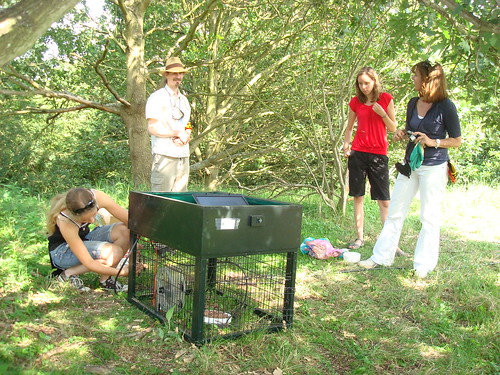

Setting up the products in the dunes area website. (Left to proper: Eva Koster, Yuri Robbers, Doortje Krijbolder, Joke Meijer.)
Picture: Jan Janse, with permission.


Every single pay a visit to to the experimental set-up was recorded by a evening-vision camera, employing passive infrared movement detection. At evening, the camera relied upon infrared light (infrared light is invisible to mice), which did not interfere with movement detection.


Wheel working and motion detection kit.
Image: Johanna H. Meijer and Yuri Robbers, with permission.


Data have been collected for far more than 3 years utilizing this experimental set-up (green urban location information had been collected from October 2009 to February 2013, and dune area information had been collected from June 2011 to January 2013 figure two):


Figure 2. Various animals use running wheels, even though mice are by far the most widespread. Breakdown by species in (a). Note that the vertical axis has been broken to accommodate mice, which accounted for 88% of wheel working. Also note that birds visited the recording gear occasionally, but by no means ran in wheels. Species recognized employing video recordings. Stills taken from these recordings present examples of a mouse (b), a frog (c) and a slug (d) using the wheel.


The operating wheels proved well-known with a range of cost-free-residing animal species. More than time period of above three years, Professor Meijer and Mr Robbers manufactured much more than 200,000 recordings of animal guests and analysed far more than 12,000 video fragments in which wheel movement was detected.


In the 1st 24 months, the urban green location resulted in 1011 animal visits (of which 734 were mice). The very first 20 months in the dunes resulted in 254 animal visits (of which 232 were mice). Even though the cage was baited with foods exclusively intended to appeal to mice, other animals — shrews, rats, snails, slugs, and frogs — also stopped in to do some running (or sliming?). Interestingly (to this ornithologist), even small birds popped in occasionally, although they were in no way recorded operating on the wheel.


“Our information signifies that wheel operating takes place in nature, getting performed by free-living wild animals”, said Mr Robbers. Hence, “captivity, extended or otherwise, can not probably be the cause of wheel operating”. Considering that all the professionals agree that stereotypical behaviours only occur in captivity, wheel operating does not match properly into the criteria.


In view of the broad variety of diet programs favored by these other species of animal guests, it would appear they had been not coming solely for the foods. So of course, Professor Meijer and Mr Robbers then asked what would occur if they stopped delivering any meals at all — might these animals still pop in for a run on the exercise wheel?


Will free of charge-residing animals use a running wheel with no a foods reward?


Though Professor Meijer and Mr Robbers stopped offering food in the urban area enclosures for far more than a year (October 2011–February 2013), animal visits continued. Professor Meijer and Mr Robbers observed 78 wheel working visits (62 mouse visits — 36 of which had been very little mice, indicating they had been as well youthful to know the cages had previously been baited with food).


The information exposed that the quantity of visits to the exercise wheel dropped drastically as quickly as the food was removed, but visits that incorporated wheel running really enhanced by 42 %, indicating that the animals (wild mice, mostly) were visiting the cage particularly to run on the action wheel, that workout is rewarding in itself. The experimental device acts as a type of neighbourhood mouse fitness center, it would seem.


Were action bouts comparable in between wild and lab mice?


Yet another test of regardless of whether wheel running fulfills a behavioural stereotypy was to examine wheel operating exercise among wild and lab mice. To get a clearer image of the animals’ exercise patterns, Professor Meijer and Mr Robbers in contrast wheel-working information from their wild mice to wheel-running data from laboratory mice that had been collected previously by another researcher (doi:10.1126/science.155.3770.1623, see figure 3):


Figure 3. Distribution of operating wheel bout lengths in 1 min bins. Urban spot (a), juvenile laboratory mice (b), 200 day previous lab mice (c) 400 day old lab mice. Note: juvenile lab mice have increased median bout lengths than wild mice but this big difference disappears in older mice. 200 day old lab mice run as considerably as wild mice, whilst older mice run much less. Information panels (b–d) based on [doi:10.1126/science.155.3770.1623].


The data reveal that most of the wheel working mice had been juveniles, and 20 % of them had bouts that lasted longer than one minute, with the highest bout lasting 18 minutes. This is comparable to activity bouts was reported for 200-day old lab mice that were closely confined.


The wild mice have been truly functioning tough, also: despite the fact that the common speed of running was slightly much less than for lab mice (one.3 versus
two.three km/h), the highest running velocity observed for wild mice was higher
than the highest for lab mice (five.7 versus five.1 km/h).


Why do wild mice voluntarily run on workout wheels?


This study displays that wheel working is voluntary in wild mice, is not dependent on a food reward, and takes place in bouts that are comparable to those recorded for captive mice, so it does not satisfy the established criteria for a stereotypical behaviour, as some scientists have argued. Of course, this raises the query: why do they do it?


“We’re considering perform behaviour as a viable explanation, and have started follow-up experiments to test that hypothesis”, said Mr Robbers.


Wheel operating looks rather uninteresting (suggestive of my least favourite piece of health club equipment, the treadmill), but probably these animals see an exercise wheel similarly to humans when given the choice to climb musical stairs as an alternative of riding an escalator, as we see in this video?


Reading on a mobile device? Here is the video hyperlink.


Why do we care about mice and their exercise wheels?


As anybody who reads the newspapers or listens to the radio knows, we are daily told to get much more workout. Fundamentally, everyday physical exercise slows ageing, reduces the incidence of many cancers, assists maintain a affordable physique weight, reduces the incidence of diabetes, heart assault and stroke, and improves brain function — and that is just to name a couple of benefits that I have read about this week. Investigation into the human wellness advantages of bodily activity depend upon the use of running wheels employed by lab animals. If this wheel running is a stereotypy, this could be problematic.


“Some scientists … have had a tendency to dismiss study findings based mostly on the use of operating wheels outright,” explained Mr Robbers in electronic mail. “This is rather much more challenging, now that our information is there to propose that wheel running can take place in totally free residing animals.”


Reading through on a mobile device? Here’s the video hyperlink.


Sources:


Meijer J.H. &amp Robbers Y. (2014). Wheel operating in the wild, Proceedings of the Royal Society B: Biological Sciences, 281 (1786) 20140210-20140210. DOI: 10.1098/rspb.2014.0210


Yuri Robbers [emails 17, 18, twenty &amp 21 May possibly 2014]


A lot of thanks of course to my twitter followers who kindly sent at lightning pace the PDF I requested @GOrizaola, @ConservResearch, @Rob0Sullivan, and @_inundata.


Also cited:


Sherwin C.M. (1998). Voluntary wheel running: a review and novel interpretation, Animal Behaviour, 56 (1) eleven-27. doi:10.1006/anbe.1998.0836


Science&amprft.artnum=http%3A%2F%2Fwww.sciencemag.org%2Fcgi%2Fdoi%2F10.1126%2Fscience.155.3770.1623&amprft.volume=155&amprft.situation=3770&amprft.issn=0036-8075&amprft.spage=1623&amprft.epage=1639&amprft.date=1967&amprfr_id=information%3Asid%2Fscienceseeker.org&amprft.au=Kavanau+J.+L.&amprft.aulast=Kavanau&amprft.aufirst=J.+L.&amprfs_dat=ss.incorporated=1&amprfe_dat=bpr3.integrated=1bpr3.tags=Biology%2CPsychology”&gtKavanau J.L. (1967). Habits of Captive White-Footed Mice, Science, 155 (3770) 1623-1639. doi:10.1126/science.155.3770.1623 [Open access]


.. .. .. .. .. .. .. .. .. .. ..


When she’s not doing work out in the fitness center or running up the stairs to her flat (located on the 13th floor), GrrlScientist can also be found here: Maniraptora. She’s very lively on twitter @GrrlScientist and occasionally lurks on social media: facebook, G+, LinkedIn, and Pinterest.


Wild mice in fact appreciate running on physical exercise wheels | @GrrlScientist

23 Nisan 2014 Çarşamba

Fitness For Duty: Physical exercise Can Make You A Greater Leader

Okay. Even with a number of late snows, spring is officially right here. Birds are chirping. Trees and flowers are blossoming, The weather’s warming up. We’re operating out of excuses for not beginning some kind of regimen to trim off these added lbs we gained above the holidays.


Is receiving into form actually something we need to dread? Is it an workout (pun intended) in futility?


Shay de Silva says no. She’s a certified personal trainer and fitness nutrition specialist who understands the actual world effects of countless meetings, jet lag, travel food, and all the rest that creates fatigue and bulge.


In my forty many years of work with leaders in multiple industries, I’ve noticed that most of the greatest ones tend to preserve very good physical fitness. It’s certainly not that they have a lot more time than other men and women. They just seem to make fitness a priority. Then they reap the positive aspects.


Here’s what Shay de Silva has to say about the linkages between fitness and effectiveness. (Learn far more at Quick Fitness to Go.)


Rodger Dean Duncan: Why should leaders consider time out of their currently occupied schedule to exercising?


Shay de Silva: Adding physical exercise to an previously packed day may well seem out of the question. Nevertheless, setting aside just 20 to thirty minutes a handful of days each and every week can produce key payoffs. According to a latest report in Psychology These days, bodily action is the best way to increase cognitive function. Given that the bulk of the workday demands problem solving, choice creating, and target, leaders who make exercise a priority undoubtedly have a leg up more than people who do not.


Duncan: What sorts of exercising can an individual do to get the most out of a swift work out?


de Silva: The good news is, exercise doesn’t require to consider hrs out of your day. People often tell me they basically really do not have time to perform out. When we dig deeper, I learn that it requires them thirty minutes to get to the health club, they feel like they require to operate out for at least an hour, and then they need to drive one more thirty minutes residence. No wonder they do not have time! I would agree that two hrs is too a lot for most individuals to commit to on a typical basis. So let’s make it effortless.


According to the Physical Exercise Tips for Americans (from the U.S. Department of Health and Human Services), grownups ought to aim for 150 minutes of reasonable aerobic exercising and two strength education sessions per week, or 75 minutes of vigorous aerobic physical exercise and two strength instruction sessions per week. Higher-intensity interval training is a wonderful way to get your strength sessions and aerobic physical exercise at the very same time. This will take just three or four 25-minute workout routines every single week. I enjoy this sort of workout simply because it can be adjusted to any level of fitness, does not get a lot time, and can be carried out anywhere. Even far better, in accordance to a Canadian study, “after 4 months of higher-intensity interval instruction, heart sufferers had markedly improved cognitive functions: the potential to believe, recall, and make rapid choices.”


Try this:


  1. 30 seconds jumping jacks (beginners march in area)

  2. 30 seconds push-ups (newcomers do push-ups on knees or towards a wall)

  3. thirty seconds squats (beginners really do not bend knees as considerably)

  4. 30 seconds bicycle crunches

  5. 30 seconds jogging in area (beginners march in location)

  6. 30 seconds arm raises (attain your arms up so they type a V above your head and then pull your elbows in in direction of the side of your physique)

  7. thirty seconds a single-leg deadlifts (stand on 1 leg and attain in direction of the floor as your lifted leg extends behind you until you come to feel a stretch in the back of your standing leg, then stand back up newbies hold both feet on the floor)

  8. thirty seconds plank (newbies can put one particular knee on the ground or do this against a wall or chair) Click right here for a video demonstration.

  9. 1 minute rest


**Repeat sequence 5 instances.


Duncan: How can workout give you a aggressive benefit?


de Silva: You may possibly think you really do not need to have physical exercise for an extra edge, but investigation by the Center for Imaginative Leadership determined that overweight leaders are usually viewed as possessing less effective interpersonal relationships, poorer leadership capabilities, and lower general task performance. Whilst these stereotypes may not be legitimate, obtaining a slimmer physique can enhance others’ perceptions of you as a leader.


Duncan: Can doing work out assist you earn more money?


de Silva: The evidence would seem to indicate that earning energy is indeed related with bodily fitness. A research published in the June 2012 issue of the Journal of Labor and Investigation showed that men and women who exercising routinely earn about 9% a lot more than these who really do not.


Duncan: If you genuinely detest doing work out, how can you get in the habit of doing it routinely?


Fitness For Duty: Physical exercise Can Make You A Greater Leader

27 Ocak 2014 Pazartesi

Large information will get physical

Smartphone app visualises two similar running routes Smartphone app visualises two comparable operating routes


I am obsessed with my running app. Final week obsession became disappointment verging on throw-the-cellphone-on-the-floor anger. Wednesday’s lunchtime 5km run was fairly great, nearly back up to pre-Christmas speed. On Friday, I considered I had smashed it. The very first 2km have been very near to my perennial 5 min/km barrier. And I was pretty certain I had kept up the tempo. But the app disagreed.


As I ate my 347 calorie salad – simultaneously musing on how French dressing could make up 144 of them – I switched furiously among the two working route analyses. This was just preposterous the GPS signal need to have been baffled I must have been held up overtaking that tourist group for longer than I realised or maybe the app is just useless and all prior improvements in speed have been bogus.


My want to count stuff is easy to poke fun at. It is most likely pretty unhealthy as well. But it is only going to be encouraged above the next handful of years. Wearable technologies is here to keep. Sensible cellphone cameras are also heart charge monitors. Make contact with lenses can measures blood sugar. And teddy bears take your temperature. A 2011 market evaluation, estimated that there will be 80m sports, fitness and “wellness” wearable gadgets by 2016.


At the moment, it truly is difficult to retrieve the information these techniques collect. Nike only enable computer software developers accessibility to data created by folks like me so they can create new features for their apps. I cannot go back and interrogate my own information.


Harbouring user information for product advancement is an extension of component of the search engine or mobile provider enterprise model. When you log in to Gmail although searching the internet, you give Google data about your person search behaviour in exchange for much more personalised final results. Much less certainly, when you use the browser on your telephone, mobile companies collect (and promote) beneficial information about what you are looking for and where you are. The most recent iteration of this model is Weve, offering accessibility to information about EE, O2 and Vodafone clients in the United kingdom.


Right after Friday lunchtime’s outburst, I accepted that I would in no way discover the cause of my wayward run and rapidly received absorbed back into the working day.


But I shouldn’t have.


We speak about the financial and social worth of opening up government data about crime numbers or hospital waiting instances. But what about the data we’re collecting about our every day lives? This is not just a resource for operating geeks to obsess more than, it gives otherwise unrecorded details of our daily lives. Sharing information about wellness has the possible to be an act of generosity and contribution to the public very good.


For some areas of healthcare, particularly for sort two diabetics or individuals with complex cardiovascular circumstances, way of life info could make a large variation to how we recognize and treat sufferers. It could offer the kind of evidence badly required to make headway in locations where clinical trials are not adequate.


But it truly is not but effortless to make something of this broader worth produced by fitness apps or soft toys with sensors in them. One person’s information is saved in diverse ways through different providers – creating for a messy, distributed dataset.


There is also no clear way to incorporate this into the current healthcare system. Some organizations have produced strides in that path. Proteus Digital Overall health provides a program for monitoring a patient’s medication and physical activity using an iPad app and ingestible pills. This requires some considerably essential actions towards comprehending how people comply with their prescription. At the second, only 50% of sufferers struggling from continual conditions adhere to their recommended therapy. If Proteus begins to promote details back to the well being services, it will take digital health into mainstream healthcare. Nonetheless,it has not reached that stage but. And it is nevertheless a rare instance of a firm with the regulatory approval to do so. For example, Neurosky’s moveable EEG machines, which measure brain activity, make exceptional toys. But the firm has no intention of certifying its merchandise as health care equipment, given the time and expense it needs.


But does that matter? Neurosky’s wizard-training game Focus Pocus improves a player’s cognitive skills such as memory recall, impulse handle, and the ability to concentrate. Some US health care practitioners are now prescribing Emphasis Pocus. This can make biofeedback treatment to ADHD patients offered at residence, changing two to 3 hospital visits a week. This is going on anyway – outdoors the mainstream healthcare method.


Some see this as an chance to mobilise a peer-to-peer wellness knowledge commons outside the healthcare program that is filtered by means of government, hospitals and GPs’ surgeries. This new healthcare method would exist out between the public. Pioneered by Tedmed’s clinical editor, Wellthcare tries to pinpoint the new variety of value that this people-powered healthcare technique would develop. “Wellth” is closer to the concept of wellbeing or wellness than health it is about supporting “what individuals want to do, supported by their nano-networks”. There is the potential for a potential in which we move from producers of information that is sucked up by companies into producers of data who consciously share it with one particular an additional, discover to interpret it and make judgments from it ourselves.


The current healthcare method might evolve to support this sort of change. In the Uk, Academic Well being Science Networks and Clinical Commissioning Groups provide new structures within the NHS that have the possible to support disruptive innovations. But so far these have led to tiny, incremental alterations. A healthcare system that employs data we acquire about ourselves would require these new bodies to make a lot bigger options about how NHS trusts procure items and services.


Going back to the ever expanding market for wearable engineering – with a likely patient group of 80m, there need to be a great deal more going on to flip our physiological data in the treasure trove it could be. Overlook supermarket reward points and internet site hits, the truly huge information only just arrived.


Large information will get physical

17 Ocak 2014 Cuma

Mental and Physical Positive aspects of Music

You may well have noticed that music can improve your mood or help you concentrate on the process at hand at times. It may have also assisted you run that extra mile you considered you have been as well tired for, or fall asleep more rapidly when your thoughts was restless. You may possibly have not known, nevertheless, that these and other helpful qualities of music on your physique and mind have really been established by numerous research.


Physical Rewards


Ache Relief


Quite a few research have proven that music can alleviate discomfort in patients with various health care circumstances, partially since of its capacity to act as a distraction. A examine by the University of Utah Discomfort Investigation Center, in specific, identified that using music to divert the sufferers resulted in profitable ache manage. The findings were published in The Journal of Pain in 2012.


Much better Rest Top quality


A 2008 study in the Journal of Superior Nursing showed that music leads to far better rest quality amongst college students. Participants with prior rest complaints listened to soothing classical music. When compared to people who listened audiobooks or didn’t pay attention to anything at all before bed, they have been in a position to obtain far better muscle rest, reduced respiratory and heart price, and decreased anxiousness, amid other positive outcomes.


Larger Endurance


Researchers also proved that listening to upbeat tracks although operating, biking or performing other kinds of workout prospects to elevated endurance. A review by the Brunel University in London found that music can increase endurance by as a lot as 15%, and enhance energy efficiency by one% to 3%.


Other documented physical benefits of music contain the capability to decrease blood stress and heart price, and faster recovery charges for stroke sufferers. Listening to satisfied music was even shown to dilate blood vessels, which can outcome in much better heart well being. Music can lead to faster publish-physical exercise recovery as well and slower tracks will slow down your eating pace, making you more mindful of satiation and eventually helping you eat much less.


Mental Benefits


Stress Relief


A psychology dissertation from the University of Gothenburg showed that listening to music on a daily basis leads to a decrease in pressure hormone cortisol. The participants in the investigation showed the most optimistic results when they listened to the sorts of music they loved.


Enhanced Concentration


Many people uncover it less complicated to concentrate on operate or studying when they pay attention to quiet music in the background. An older study conducted by the Middlesex University in England identified that background music led to far better cognitive efficiency, helping college students score greater on their cognitive exams.


Reduce Anxiety Levels


A research published in the journal Depression and Nervousness discovered that 10 one particular-hour massage sessions had the identical extended-phrase effect on decreasing anxiety as lying down and listening to music for the same amounts of time.


Amid other psychological positive aspects, music was also proven to unwind sufferers ahead of and for the duration of surgical procedure, assist folks perform much better when underneath strain, and lead to dopamine release in the brain – the come to feel-good chemical responsible for elevated mood.


Movies: Great Listening


Sources for this post contain:


Mental and Physical Positive aspects of Music