Turns etiketine sahip kayıtlar gösteriliyor. Tüm kayıtları göster

20 Nisan 2017 Perşembe

Health push in Uganda after mystery disease turns out to be "mossy foot"

A public health campaign has been launched in western Uganda after scientists unexpectedly found the region was afflicted by a tropical disease that causes disfigurement and swelling.


The discovery came to light after experts were dispatched to Kamwenge district to investigate an outbreak of lymphatic filariasis, more commonly known as elephantiasis. A team of specialists from the Ugandan ministry of health, the World Health Organization and the Centers for Disease Control and Prevention was surprised to find that the condition causing limbs to swell was in fact podoconiosis, also known as non-filarial elephantiasis. The disease was previously unknown in the region.


Unlike lymphatic elephantiasis, which is contracted when a parasitic worm is transmitted to humans by mosquitoes, podoconiosis – also known as “mossy foot” because it causes moss-like warts called hyperkeratotic papilloma – is contracted by walking barefoot on irritant volcanic soils. Blood samples taken by scientists from 52 people tested for lymphatic filariasis found no worms present.


Philip Rosenthal, professor of medicine at the University of California, San Francisco, and editor of the American Journal of Tropical Medicine and Hygiene, which published the findings this month, said: “The study was pioneering in discovering that this syndrome was causing serious morbidity in a part of the world where previously we had no idea that podoconiosis existed. The real key is preventing this in future generations.”


Podoconiosis, a progressive, non-infectious disease with symptoms that include itching, foot pain and swelling, can lay undetected for decades, but is treatable.


Dr Christine Kihembo, a senior field epidemiologist with the Ugandan health ministry and the study’s lead author, said many patients had probably been “suffering silently without help for more than 30 years”.


Kihembo said Kamwenge district was forested until the 1960s, when migrants looking for farmland began tilling the soil. Early symptoms of the disease went undetected because it was never documented in western Uganda.


She said patients may not have associated initial symptoms with soil contact, and that “there was a tendency among those affected to stay at home with their disability and not go to a health facility”.


Gail Davey, professor of global health epidemiology at Brighton and Sussex Medical School and founder of the NGO Footwork, said it was unsurprising the disease had gone unnoticed for decades because it is the very poorest areas that are affected.


Podoconiosis affects an estimated 4 million people globally and is found in the highland areas of Africa, Latin America and south-east Asia.


It is caused by an inflammatory reaction to minerals in volcanic soils. On contact, the minerals penetrate the skin, causing severe itching and pain. They are taken up by white blood cells, triggering inflammation that produces a thickening of scar tissue, causing swelling and ulcerated sores in the lower limbs. Typically, both lower limbs are affected. Unlike parasitic elephantiasis, it rarely affects the genitals.


Many people avoid sufferers because they believe the disease to be infectious. Davey said the disease is “highly stigmatised, probably more so than leprosy”, with sufferers often hidden away in communities, where it is seen as a curse.


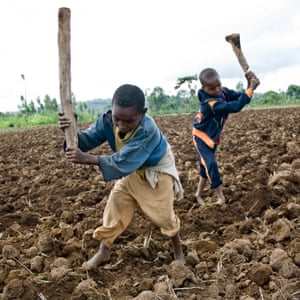
Boys work barefoot on a subsistence farm field in Sodo Wolaita, Ethiopia


Boys work barefoot on a subsistence farm field in Sodo Wolaita, Ethiopia, where podoconiosis has also been found. Photograph: Jake Lyell/Alamy Stock Photo

Sufferers’ inability to work leads to a reduced income, which has a detrimental effect on mental health. Many victims experience depression.


The discovery of podoconiosis in the region has prompted a public health education campaign to highlight the importance of foot hygiene, and Footwork has trained local health workers to treat the condition.


Davey recalls a man she met at a clinic whose marriage ended because the disease left him unable to look after his farm: “He no longer saw his children because they thought it brought shame to the household. For him, just to hear that the condition can be treated was a bit of a light-bulb moment”.


“It is reversible – even the late stages can be improved enormously with careful hygiene and bandaging, and shoes and socks to protect.”


Podoconiosis will be among the neglected tropical diseases discussed at a summit in Geneva this week. Attendees will discuss the development of a global atlas of podoconiosis, which will map the global geography of the disease and inform efforts to eradicate it.


“We believe we can eliminate podoconiosis in our lifetime,” said Wendy Santis, Footwork’s executive director. “We know the cause and how to treat it. Now our most urgent need is for funding so that we can target our efforts to have the greatest impact.”


Health push in Uganda after mystery disease turns out to be "mossy foot"

25 Temmuz 2014 Cuma

Bull Industry Turns Three: Winners


1 Mayıs 2014 Perşembe

Research turns skin tissue from infertile males into early-stage sperm cells

Live sperm seen through a microscope.

Live sperm by means of a microscope. The research suggests infertile men may possibly have misplaced the stem cells in their testes that typically produce into sperm. Photo: Mads Nissen/Panos


Scientists have turned skin tissue from infertile males into early-stage sperm cells in a groundbreaking study that raises hopes for new therapies for the situation.


The unexpected achievement of the method has stunned some scientists, because it was believed to be not possible for the men to make any sperm.


The men who took part in the study had significant genetic defects on their Y sex chromosomes, which meant they could not create healthy adult sperm on their own.


About one% of males cannot make any sperm, a problem acknowledged as azoospermia, while a fifth of men have reduced sperm counts. Male fertility is a concern for approximately half of couples who seek IVF therapy.


In the most current study, researchers took skin cells from three infertile men and converted them into stem cells, which can expand into practically any tissue in the entire body. When these cells have been transplanted into the testes of mice, they designed into early-stage human sperm cells.


“What we located was that cells from guys who did not possess sperm at the time of clinical observation were capable to generate the precursors for sperm,” said Cyril Ramathal, of Stanford University.


Skin cells from infertile males grew into fewer early-stage sperm cells than cells taken from usually fertile men, the research found.


The investigation is at an early stage, but scientists suspect that the converted skin cells might have grown into mature sperm cells if they had been transplanted into the infertile men’s testes.


If additional operate confirms the suspicion, it may be possible to restore male fertility by taking men’s skin cells, turning them into stem cells, and injecting these into their testes. The identical might be accomplished for men who are left infertile soon after getting chemotherapy for cancer.


“Currently being able to efficiently convert skin cells into sperm would let this group to become biologic fathers,” explained Michael Eisenberg, director of male reproduction and surgical procedure at Stanford, who was not involved in the study. “Infertility is one particular of the most widespread and devastating problems of cancer treatment options, specially for young boys and males.”


The examine, published in the journal Cell Reports, suggests that rather than becoming unable to make healthier sperm, the men may just have misplaced the population of stem cells in their testes that typically increase into sperm.


The scientists took skin cells from the guys and produced batches of one.5m induced pluripotent stem (iPS) cells to transplant into the mice. Every single batch was injected into the seminiferous tubules in mouse testes, in which sperm usually develop. The cells that lodged in the tubules created into early-stage sperm cells, but others turned into little tumours. The danger of leading to cancer in the guys is one of the major hazards that scientists need to overcome.


“It is remarkable that you can make iPS cells flip into early sperm cells in males with these genetic deletions,” explained Allan Pacey, senior lecturer in andrology at Sheffield University. “By the time we see them in clinic, they are not creating sperm and don’t have any stem cells to make them from, but that isn’t going to imply they did not have them when.


“This function suggests these infertile guys might have had testicular stem cells at some stage, and the issue is that they are not able to sustain them. So if you can make iPS cells and put them back into the guy, you may possibly be ready to keep ample in the testes for them to create some sperm. You are going to in no way restore them back to normal, but they may have a number of months or many years of producing sperm which is adequate to give them fertility back,” Pacey mentioned.


In the United kingdom, the use of artificially produced sperm to make babies is banned. But sperm created via this strategy – in which converted skin cells are grown into sperm in the men’s testes – may be legal to use as they are produced within the body.


Research turns skin tissue from infertile males into early-stage sperm cells

11 Mart 2014 Salı

Duchess of Cornwall turns into patron of pioneering charity which employs canines to help diagnose cancer

“I was expecting a clinical trial. It brought a lump to my throat and a tear to my eye, how numerous lives this could save.”


Dr Claire Guest, chief executive of Health care Detection Dogs, explained it was only fairly not too long ago that the scientific planet had pursued the potential of dogs to sniff out illnesses.


The work of the charity is now endorsed by big cancer charities this kind of as Cancer Investigation Uk.


She advised the guests invited to the demonstration: “How we missed for so numerous centuries that canines could detect illnesses in this way is maybe impressive, but maybe we weren’t watching our canines cautiously sufficient.”


Her interest in the topic sprang from a buddy who in the early 1980s went to see her GP to have a mole on her calf examined only after her dog persistently sniffed the difficulty region which was diagnosed as skin cancer.


Prince Charles, (R) and Camilla, Duchess of Cornwall, are pictured in the course of a demonstration by Healthcare Detection Dogs (MDD) (Chris Jackson/ Getty)


Dr Guest’s very own dog Daisy, one particular of the Labradors utilised in the demonstration, alerted her to a lump in her breast which proved to be cancer.


Her charity not only trains lab primarily based canines to analyse samples from sufferers suspected of getting the early stages of bladder or prostate cancer but also has all around 50 health-related support dogs, with the vast majority assisting their owners to manage their diabetes by warning them if their blood-sugar levels are also large or lower.


She stated: “The ability of canines to help with folks who are suffering from existence threatening problems is incredible.


“These canines are not only transforming people’s lives but maintaining them safe, retaining them out of the hospital and dare I say it, saving the NHS a lot of income.


“The dogs are skilled to detect the odour change, this biochemical adjust, that happens in our bodies with any condition or condition and the dogs are taught when you smell this on your proprietor warn them rapidly.”


Charles and Camilla met six-12 months-outdated Cerys Davies and her mother, Debbie, from Baldock in Hertfordshire, who have Wendy, a black Labrador who helps the youngster deal with her aggressive Variety 1 diabetes.


Mrs Davies mentioned she and her husband would mount vigils during the night, performing blood tests to make confident their daughter did not slip into a coma.


But now the dog will wake them if there is a dilemma and carry over Cerys’s healthcare kit.


Mrs Davies stated: “We have had Wendy four months and the adjust has been extraordinary. She wouldn’t depart my side prior to but now Cerys is happier and more healthy.


“Wendy alerts us about 5 to eight occasions a day and she did it the 1st night we had her, which we in no way expected.”


Duchess of Cornwall turns into patron of pioneering charity which employs canines to help diagnose cancer

31 Ocak 2014 Cuma

So It Turns Out That The Senate Republican Program To Exchange Obamacare Raises Taxes -- And That is A Great Issue

When Republican senators Tom Coburn (Okla.), Richard Burr (N.C.), and Orrin Hatch (Utah) proposed on Monday a plan to repeal and replace Obamacare, I known as it “the most credible prepare yet” devised to attain that objective. On Thursday, a new think tank known as the Center for Overall health and Economic system presented a fiscal score of the strategy. The very good news? In excess of ten many years, the Center located that the strategy would lessen the deficit by $ 1.five trillion. There’s only one particular difficulty: $ one.1 trillion of that deficit reduction comes from curtailing the tax exclusion for employer-sponsored overall health insurance. But this fact doesn’t signal the death of the GOP Senate approach—but rather its prospective.


GOP strategy covers more individuals at significantly less price


On Tuesday, at President Obama’s 2014 State of the Union handle, he threw this challenge down to his Republican close friends. “So once more,” he mentioned, “if you have particular plans to cut costs, cover much more folks, and boost choice—tell America what you’d do differently. Let’s see if the numbers include up.” In accordance to the Center for Wellness and Economy score, the numbers do include up—and then some.


According to the Center for Overall health and Economy—H&ampE for short—the Coburn-Burr-Hatch plan will in fact cover slightly more people than Obamacare. “By 2023,” H&ampE writes, “the number of insured beneath the proposal is estimated to be one % higher than beneath recent law.” That is despite the reality that the GOP strategy doesn’t have an personal mandate or an employer mandate, and in spite of (or simply because) it repeals most of the other regulatory impositions of Obamacare.


In addition, the prepare would decrease the deficit more than 10 years by a total of $ one,473 billion. As I mentioned, the greatest chunk of the deficit reduction comes from modifying the tax therapy of employer-sponsored overall health insurance coverage. Right now, if you get well being coverage from your employer, you shell out no taxes on the worth of that plan—federal, state, local, Social Protection, Medicare. Economists of all strips see this as a profoundly inefficient tax exclusion, since it provides employers an incentive to pile much more compensation into well being coverage instead of actual funds wages. The CBH program narrows the employer tax exclusion, resulting in a gusher of additional tax revenue.


The essential numbers are in the table under:


Patient CARE Act CH-E scoreThe H&ampE score leaves Senate Republicans with lots of choices


This feature of the proposal has been lambasted by my colleague Matt Herper as a “big tax hike.” And it is, if the proposal stays as it is. But what’s notable about the table above is that you really don’t require to make any modifications to the employer tax exclusion for the prepare to save income. If Coburn-Burr-Hatch was revenue-neutral on the tax side, it would even now lower the deficit by $ 416 billion over 10 many years. That is not chump alter.


Even greater, they could retain their changes to the employer tax exclusion, and use the $ 1,057 billion in increased revenue to fund broader tax reform. For instance, the authors could decrease person earnings tax charges, and streamline the corporate tax code. They could move individuals and companies to a territorial tax technique, bringing far more jobs back to the U.S. They have, literally, a trillion dollars’ well worth of alternatives.


H&ampE is a major stage forward in policy wonkery


H&ampE is a new believe tank, but it is not your run-of-the-mill startup. It’s led by Douglas Holtz-Eakin, a former director of the Congressional Price range Workplace, and its board includes some of the most prominent well being economists in the country, which includes Uwe Reinhardt of Princeton, Stephen Parente of the University of Minnesota, and Mark Pauly of the University of Pennsylvania.


H&ampE has designed what’s referred to as a microsimulation model that can be utilised to estimate the fiscal results of proposed modifications to the wellness care technique. The Congressional Spending budget Workplace, Washington’s official referee on such issues, makes use of its very own microsimulator to accomplish the identical goal. Microsims, like all pc designs, are far from omniscient, but they are the greatest instruments we have for acquiring a ballpark sense of how different reforms may operate.


For many years, we’ve depended upon the CBO to score bills launched in Congress. But the problem is that there are lots of proposals that never get scored by the CBO.  Say you’re an enterprising young representative who does not sit on one particular of the important fiscal committees in Congress. Your plan has no shot of becoming scored, except if it will get taken up by an individual else. Let’s say you are at a feel-tank or a university, and you feel you have a fantastic reform notion. CBO has no time for you.


H&ampE can fill in this major policy void, by delivering an different route to getting wellness reforms fiscally scored.  In addition, it can hold CBO accountable by providing an outside option to CBO’s estimates of the fiscal affect of expenses prior to Congress.


The Republican change plan is even more cost-effective than we imagined


So It Turns Out That The Senate Republican Program To Exchange Obamacare Raises Taxes -- And That is A Great Issue

5 Ocak 2014 Pazar

The Politics of Bees Turns Science on its Head -- Europe Bans Neonics Although Regional Beekeepers, Scientists Say Action is Precipitous

As Jon Entine of the Genetic Literacy Task reviews, in a move it says will protect bees, the European Commission announced on Monday that it would impose a two-12 months ban on neonicotinoid insecticides, even though a sharp divide stays whether or not politics or science is driving this policy change.


Despite the fact that a vote by the 27 member states of the European Union to suspend use of the insecticides failed to reach a qualified majority—voting in the EU is weighted, and Britain, Italy and numerous other nations stay steadfastly opposed—EU guidelines now give last discretion to the commissioners. They have announced that the ban will most likely grow to be powerful at the end of the 12 months even even though the scientific inquiries as to what has induced the bee deaths remain largely unanswered.


Farmers in Europe and elsewhere are practically universally opposed to even a short-term ban absent definitive true globe study, calling it reckless. As they note, simply because bans exist on far more toxic organophosphates—the chemical compounds that neonics replaced simply because of their far more benign security profile—there are no genuine options.


Farmers scoff at activist claims that comprehensive spraying plans could all of a sudden be replaced by crop rotations or the use of all-natural pest predators—the tools of organic farmers who create only a fraction of the volume needed by industrial farms to feed expanding populations. It is estimated that with out neonics or a suitable substitute, farmers could encounter losses estimated by one market research as $ 5.78 billion per year in Europe alone—and numerous multiples of that if a ban is instituted in the United States and other main agricultural economies, with the costs passed on to customers.


The EU legislators had been pressed tough to vote for the ban by anti-chemical campaigners, who have maintained that periodic mass bee deaths above the previous eight many years can be linked to improved use of neonicotinoids. Neonics, as they are usually known as, are a new class of systemic pesticide well-liked in the US, Australia, Europe and elsewhere to help corn, soy, cotton, canola and citrus farmers. They had been adopted in excess of the previous twenty years as a less toxic replacement of organophosphate pesticides, which are recognized to kill bees and wildlife, and have been linked to well being problems in workers.


Neonics replaced a lot more toxic choices


Neonicotinoids are really powerful. Applied to the soil, sprayed on the crop or employed as a seed treatment, they are taken up in the plant, discouraging pests from wrecking havoc on crops. The seed treatment method lowers the sum of pesticide utilised 10 to twenty fold, reducing the require for open spraying of the plant, a real sustainability advantage. But the environmentalist local community has coalesced close to the belief that neonics, even though leading to no or limited harm in Australia, the canola fields in Canada, and elsewhere, is accountable for scattered colony collapses in Europe and the United States.


Though the EC announcement was not unexpected—a political choice by a legislative physique guided by precautionary politics on science troubles, from chemical compounds to natural gas to nuclear vitality to biotechnology—it left unaddressed the question of the spate of bee deaths that have cropped up in some areas in current years.


Neonics were phased in without having incident in the 1990s. Only in 2004 — coincidentally with the spread of deadly varroa mites and their escalating resistance to the pesticides beekeepers use to hold them beneath management — did activists start looking for substitute explanations. They 1st blamed GMOs. “There are numerous reasons given to the decline in Bees, but one argument that matters most is the use of Genetically Modified Organisms (GMO)…,” argued the anti-globalization group Global Analysis. But as GMOs have acquired favor with the science community, the target of activist groups shifted and a new culprit was settled upon: neonicotinoids.


More than the previous 12 months, advocacy groups drastically intensified their campaigns, targeting legislative bodies in Europe, which, below the precautionary principle of ‘better safe than sorry,’ frequently pass restrictive legislation even in the absence of persuasive empirical proof. That is what’s unfolding now.


The research on bee colony deaths is dicey—and frequently political. Final year, one particular study showed that bumblebees exposed to higher doses of the neonic imidacloprid in the lab, then launched to forage in the discipline, had sharply diminished colony growth rates and produced 85 percent fewer queens to found new colonies. A later research savaged those findings, demonstrating that the scientist had failed to adequately account for the birth of new bees, a main oversight, rendering the conclusions dubious at ideal. In an additional review, much more than thirty percent of free of charge-ranging honeybees whose brains have been doused with the neonic thiamethoxam—which is not the way bees encounter the chemical in the actual world— got baffled, failing to return to the hive. The issue took a sharp flip in January when the European Food Safety Authority issued three scientific studies raising inquiries about the likely function of neonics in this newest wave of bee deaths. The research did not website link the pesticides to the collapse of whole bee colonies, but were still relied upon by EFSA for its recommendation of a precautionary ban.


Real globe expertise points to mites, colony management as a lot more most likely culprits


Standing opposed to these lab final results are provocative true planet situation studies in Canada, the United kingdom and Australia. Canola is grown commercially mostly on the prairies in Canada, the biggest single producer of canola in the planet with a lot more than 50,000 producers and sixteen million acres. It’s a nutritionally rich crop for bees. Approximately 300,000 colonies harvest open pollinated canola. Even though neonicotinoids are widely employed to defend canola from pests, Canadian bee populations have been largely unaffected and create around 50 million pounds of canola honey. An Ontario field examine funded by Bayer seems to back up the real daily life proof demanding the activist doomsday scenario. It located no big difference in colony health in between hives exposed to neonics and people that weren’t, in real existence problems.


“The doses the bees are exposed to [in lab studies] are far above what a reasonable discipline dose exposure would be,” says Dr. Cynthia Scott-Dupree, head of the Ontario examine. Canadian canola farmers say they have had 10 many years of huge-scale use of neonics on canola with no observed sick impact.


Britain’s rapeseed crop, which is comparable to canola but has a high acid content material and is normally produced for animal feed, has not seasoned serious bee losses either—which is 1 of the causes the government opposed the ban. The UK’s Division for Setting, Foods and Rural Affairs (DEFRA) reevaluated the existing investigation earlier this yr, concluding, “The risk to bee populations from neonics, as they are at the moment used, is reduced.” The DEFRA study noted that oilseed rape (OSR) “requires insect pollinators to support its productivity. The fact that OSR treated with neonicotinoids has been a productive crop for more than a decade in the Uk is itself proof that pollinator populations, which includes bees, are not being decreased by the presence of neonicotinoids.” The EC ignored the DEFRA report.


Several British beekeepers also oppose the ban. “Whilst the [British Bee Keepers Association] is concerned about the achievable damage that these substances might be inflicting on pollinators, it notes that unequivocal field based scientific studies have not been performed and the proof is incomplete. … [T]he authors of the report nevertheless appear to be unable to show deleterious results of neonicotinoids on honey bees managed by beekeepers in the United kingdom and we renew our phone for additional investigations to reassure us that these items can be used safely with regard to honey bees.”


Bee experts—as opposed to anti-chemical campaigners that see banning neonics as a essential piece of their total advocacy strategy—are increasingly wary of this myopic concentrate on neonics. Hannah Nordhaus, author of the Beekeeper’s Lament, and extensively regarded as a sober voice in this debate, weighed in after a prior post I had written for Forbes raising comparable concerns:


Excellent piece, Jon. CCD, as a diagnosis was very first recognized in 2006, but there have been mysterious disappearances of bees periodically given that the nineteenth century (and properly before…. Some occurrences did sound equivalent to CCD, although CCD is such a vague and hard diagnosis (each time a bee dies these days somebody calls it CCD) that it’s not possible to know. Nonetheless, it is real that there have been mass disappearances well ahead of neonics ever appeared on the scene. Bees die from all kinds of items, and especially from varroa mites.


As for the Harvard examine [the so-known as ‘silver bullet’ study cited by anti-neonic activists]… it is, of all the scientific studies on neonics and bee deaths that have come out, arguably the worst–”embarrassing” was the word I heard from scientists I interviewed about it. Peer reviewed, I suppose, but in a journal no a single in the entomology planet had ever heard of when it came out. … It makes sense to me that neonics, as persistent and systemic as they are, could extremely nicely harm bees and other pollinators at sub-lethal levels, but the science just isn’t convincing but, to me anyway, and as Jon points out, there are places in which they use neonics in which the bees are carrying out fine (even though I have gotten some feedback from individuals about the Australian circumstance — they claim beekeepers there are losing bees but just are not reporting it, and that most beekeepers there are in the bush, not situated near farm crops that could be treated with neonics).


Nordhaus’ skepticism is matched by Randy Oliver, who runs the common scientificbeekeeping.com website, also manages a 500 colony migratory operation in California—which is ground zero for the anti neonics motion. He writes frequently for the American Bee Journal and other publications, and believes, like most bee specialists and smaller sized beekeepers, that there has been a rush to judgment in solely focusing on neonics.


Scientific Beekeeping’s Randy Oliver weighs in


Oliver has posted a thorough analysis of what he believes is behind this past winter and spring’s upsurge in bee deaths. He lays the blame squarely on weather and bee management practices, which correlate far more closely with bee survival rates than does the use of neonics. In a part titled “The Lynch Mob,” Oliver discusses the media and activists penchant to look for basic remedies regardless of the details. “Despite the truth that a wide assortment of bee-toxic insecticides are getting utilized (typically in the course of bloom) to corn, soy, sunflowers, alfalfa, cotton and other significant crops, if you Google anything at all about insecticide use, you will swiftly find that the blogosphere focuses only on the putative hyperlink between single class of insecticides—the neonicotinoids—and the decline of pollinators.”


The Politics of Bees Turns Science on its Head -- Europe Bans Neonics Although Regional Beekeepers, Scientists Say Action is Precipitous