devices etiketine sahip kayıtlar gösteriliyor. Tüm kayıtları göster

5 Nisan 2017 Çarşamba

Dementia sufferers to receive devices to block nuisance calls

The UK government is to fund high-tech call-blocking devices to protect dementia sufferers and vulnerable people from nuisance phone calls, although only around 1,500 people will be given the gadgets under the initial funding.


The £500,000 project will install trueCall devices in the homes of elderly and vulnerable people identified by doctors. The machines block all recorded messages, silent calls and calls from numbers not pre-identified by the homeowner, which the government says will offer particular protection for dementia sufferers.


Around £300,000 of the budget will be spent on the devices themselves, with the remaining funds allocated to management of the service and raising public awareness of scam calls.


Ministers have been pressed by health and consumer campaigners to do more about nuisance calls. One firm alone has been fined £350,000 for making more than 46m automated calls.


Announcing the fund, prime minister Theresa May said: “We want to create a fairer society by cracking down on unscrupulous practices which target the most vulnerable. This new, targeted scheme is the latest step in the government’s fight against nuisance calls, protecting those who are most at risk, including those with dementia.


“We have seen people tricked out of thousands of pounds by scam callers and this government is determined to clamp down on their activities once and for all.”


A trial of the devices last year by the National Trading Standards scams team resulted in 93% of participants feeling safer in their homes, the government said, including one person who had previously paid £150,000 to a scam caller.


Hilda Hayo, chief executive of Dementia UK, said the funding was a step in the right direction. “These calls can not only have a negative financial impact but can also lead to psychological affects such as anxiety, depression and a loss of self-esteem,” she said.


“We frequently receive calls to our national helpline from family members who are concerned that their relative with dementia has fallen prey to rogue traders.”


Further plans are being drawn up to combat the wider problem of nuisance calls, the government said, including a plan to issue fines of up to £1m if companies are found to be in breach of privacy and electronic communications regulations.


Dementia sufferers to receive devices to block nuisance calls

21 Ağustos 2016 Pazar

Five of the best health monitoring devices

You can record your heart rate manually by holding your wrist and counting your pulse, but this hasn’t stopped technology companies producing devices to do the job with electronics. Most of these devices collect heart data all day long and record it on a smartphone app which builds up a richer set of data than you might get with a stopwatch and pencil. One of the most useful metrics they collect is your RHR (resting heart rate) a reading taken when you are relaxed, most typically first thing in the morning. In most cases a low RHR indicates a strong, healthy heart which has to beat fewer times to circulate blood around the body. However in older people a low RHR might indicate diseased heart muscle or overmedication. Some day-to-day variation in your RHR (or indeed in many of the metrics these devices measure) isn’t something to be worried about, explains Dr Satpal Arri of the British Heart Foundation Centre of Research Excellence, King’s College London, “A certain amount of variability is normal, healthy in fact – as you get older variability tends to decrease.” So by all means listen to your heart, but don’t become obsessed.


Measures: RHR, HR, recovery time, V02 max, movement, sleep; £359


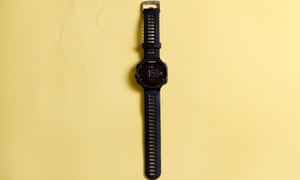
Garmin Forerunner 735XT


All photos by Linda Nylind for the Guardian.


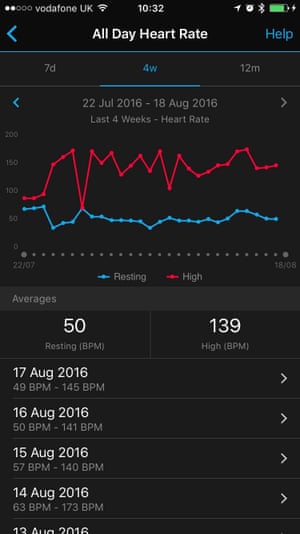
Garmin heart rate app


Data from the Garmin Forerunner.

Garmin’s latest exercise tracking watch records your runs, rides, steps and swims using GPS or an accelerator. The rear of the watch features an optical sensor that uses a light to measure blood flow, which is processed by an algorithm to create HR data. The watch displays HR and RHR but these are better displayed on Garmin’s Connect smartphone app where you can see historical data. The watch also had a recovery adviser feature, which advises you how many hours you should wait before exercising again – for running the times seemed consistent but for cycling I found them to be a little haphazard – the software company says that power meter data is required for an accurate result. When running, the watch will also produce a V02 max (the maximum value of oxygen you can use) score, which they claim is 95% accurate when compared to lab tests. You’ll need to purchase a power meter to generate a cycling V02 max figure.


Accuracy: You need to wear the watch day and night to get an accurate RHR reading. Wearing it on and off, or only using it when exercising, will affect the averages the software calculates. For example, my RHR for one month when I only wore the watch on a couple of occasions was 10bpm, whereas days when I only wore it while running or cycling would push the average into the 60s. It’s surprising that the algorithm can’t recognise and remove these biases.


Verdict: This is a powerful tool for tracking and improving your sporting performance – probably the best sports watch on the market – but for simple monitoring of your RHR you might be better off using a smartphone app such as Instant Heart Rate.


Measures: RHR, HR, movement, sleep; £199


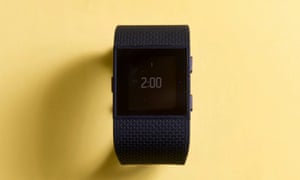
FitBit Surge


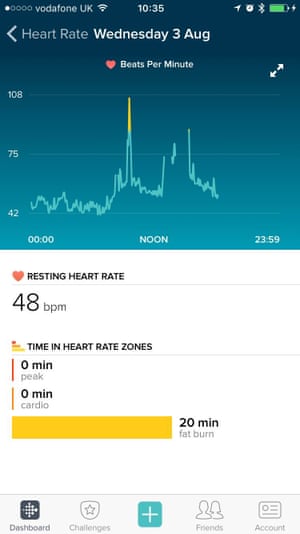
FitBit heart rate App


The FitBit Surge app.

Much like the Garmin, this unit will track exercise and steps, and collects HR data using an optical sensor. The interface is a little confusing, requiring a mix of buttons, presses and touchscreen swipes to operate it. The rubber wristband tended to cut into my wrist and felt sweaty.


Accuracy: Worn side by side, the FitBit and the Garmin record the same HR. However, the Surge’s software does more to remove outliers when calculating a RHR – mine rarely varied by more than a BPM each day. That said, if you don’t wear the watch the app will tell you that your RHR is the same as the last time you were wearing it – a big assumption. The app itself is easy to navigate and visualises your data clearly.


Verdict: If you’re mainly interested in monitoring your general health, ie your RHR, sleep and a bit of exercise, this is a good choice.


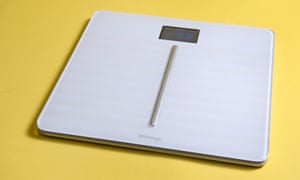
Measures: HR, pulse rate velocity, weight, fat mass, bone mass, muscle mass, water; £149


Withings Body Cardio Scale


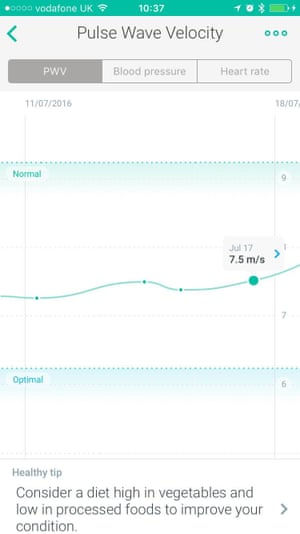
Withings pulse wave velocity heart rate App


Data from the Withings Body Cardio Scale.

This wireless-connected scale generates a slew of data to pore over. Integrating it into your morning routine is pretty simple – just stand on it for few seconds. The scale sends a small electrical current through the body, measures impedance and then, using sophisticated algorithms, generates body fat percentage, muscle mass and so on. The measurements are displayed briefly on the scale itself and then turned into graphs and the like on Withings Health Mate app.


Accuracy: It’s moot how useful the HR data collected by the scale is. A reading taken while standing isn’t a RHR; anything you do between your bed and the scale, such as a bathroom visit, taking a shower, walking up stairs or even talking, will influence your HR. However, the scale’s USP is that it takes a reading of your pulse wave velocity – a measure of how quickly blood is travelling along your arteries, and therefore how stiff or supple they are. A reading over 10 is associated with an increased risk of cardiovascular events.


“PWV is a research tool, but not normally something we would measure in routine practice. However, it is a validated measure of risk,” says Arri.


Verdict: If you’re looking for a device to monitor your cardiovascular health, you’re probably better using this in combination with a blood pressure monitor or a device that measures your RHR.


Read an in-depth of the Body Cardio here.


Measures: blood pressure, HR; £109


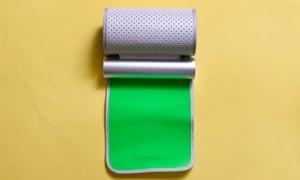
Withings Blood Pressure Monitor


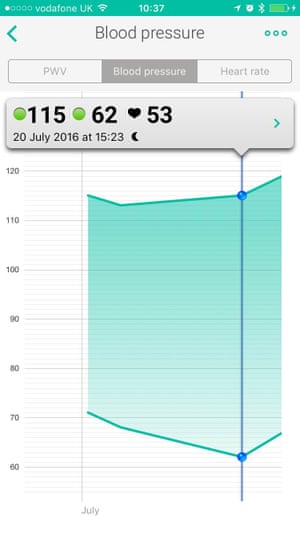
Withings Blood Pressure heart rate app


The Withings Blood Pressure Monitor app.

Easily the coolest looking blood pressure monitor you can own. Unlike most, there are no cables; it communicates with your smartphone via Bluetooth. Once charged, the sleeve inflates around your arm to take a reading – you can also set it up to take three readings in one session, from which it takes an average. The results are displayed on Withings Health Mate app, so you can track the readings over time.


Accuracy: Produced consistent results over a couple of months. It also records your heart rate, which is a good indicator of how “rested” you were when the reading was taken.


Verdict: A great piece of design, simple to use, and if you’re concerned about your blood pressure, it produces useful data. “Having a blood pressure monitor at home is a good idea, because high blood pressure doesn’t have any symptoms – the patient will feel fine. If well people who are worried can pick it up early with one of these devices, we can treat them early,” says Arri.


Measures: HR, ECG data, blood oxygen, respiration rate, skin temperature; £99


Kito+

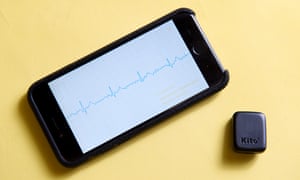
This consists of a credit-card sized device that slips into one of two specially designed iPhone cases (for the 6 and 6S) and a small black connector for charging up the card-shaped bit. To take a reading, you fire up the Kito app and place your fingers on the sensors at the rear of the card. You can then see a graph of electrical activity created by your heart beating on your iPhone screen, which is pretty incredible.


Accuracy: A hospital ECG would be able to detect whether a patient had a heart attack recently – this device isn’t sensitive enough to do that, but it can help patients monitor an abnormal heart rhythm. “Typically we give patients who report palpitations, blackouts or light-headedness monitors that they can use for 24 hours or a week but if they don’t have an episode during that period, we don’t capture any data. With something like this a patient can check for themselves when they feel something happening,” says Arri.


For such patients a device that captures ECG data is more useful than those with an optical sensor. “When you’re in an irregular rhythm, your peripheral heart rate becomes unreliable. Because an ECG monitors electrical activity, it will pick up those extra beats that aren’t translated into a peripheral pulse.”


Verdict: A useful device if you have an irregular heart rhythm.


Five of the best health monitoring devices

5 Temmuz 2014 Cumartesi

A wholesome appetite for medical devices

“If you are hiding your monitor due to the fact it doesn’t appear appealing, you’re far more most likely to forget to get a studying,” a spokeswoman says. “If it seems like a cool gadget but offers you dependable health-related information, that’s best.”


Blood strain monitors aren’t the only medical machines becoming turned into entirely-connected devices.


Danish company GN ReSound has designed a hearing help compatible with the iPhone, iPad and iPod Touch, by means of which wearers can stream stereo audio immediately into their ears.


Light-weight and nigh-on invisible as soon as fitted, the LiNX’s mini receiver is designed to be worn comfortably behind the ear and held in place by a delicate tube which wraps into the ear. Wearers can change volume, treble and bass settings via their cellphone or tablet,without having drawing consideration to the truth they’re wearing a hearing support.


By way of GPS, walking into a distinct pre-set spot will set off a opportunity in settings, this kind of as rising the volume when entering a restaurant. The identical place function can be utilized to aid find a missing LiNX must it come loose from its owner’s ear.


Charlie Parker Bonnett was born with a hearing impairment, and has worn hearing aids given that he was one-and-a-half-many years previous. Now 28, he has a career in the creative industries, and optimising his hearing is is a far more of a priority than ever prior to.


“My mum is also deaf, and I’ve worn a range of distinct hearing aids all through my existence,” he says. Mr Parker Bonnett’s girlfriend bought the LiNX for him two months in the past, and he’s been making use of it ever considering that.


“It’s much more discreet than ones I’ve worn in the past, and being able to adjust sound ranges making use of my phone if I’m sitting up coming to a noisy particular person in a restaurant implies it’s not quickly clear what I’m doing,” he says. “If something, it looks to have provided me a hearing benefit as I can frequently select up on items individuals who aren’t wearing hearing aids can not.”


While the techniques in which we care for our bodies are undoubtedly altering, it is the quiet revolution within the products we’ve previously overlooked that may well just shock us the most.


A wholesome appetite for medical devices

6 Mayıs 2014 Salı

Do Touch Screen Devices Have An Adverse Effect On Cognitive Improvement In Toddlers?

With the widespread use of touch display devices such as smartphones in our every day lives, the issue has been raised no matter whether introducing these devices to infants and toddlers at a youthful age will lead to any early measurable educational advantage, and can they enhance studying or language capability.


Pediatricians from Cohen Children’s Healthcare Center of New York, element of the NSLIJ network, evaluated infants and toddlers -three many years outdated supplied with touch-screen devices to greater comprehend if there may possibly be any educational advantage. Final results of the investigation demonstrated that young children who played non-educational video games employing touch-screen products really had lower verbal scores on testing.


Although there was no statistical distinction in developmental scores in young children who played educational video games versus non-educational games,the vast majority of parents interviewed for the review felt that their children would derive educational advantages by employing wise phones, computer tablets, and e-readers.


English: Front of black iPad 2. English: Front of black iPad 2. (Photograph credit score: Wikipedia)


“We have observed in our neonatal clinic that the number 1 ‘toy’ mother and father are providing their toddlers are sensible phones,” described Dr. Ruth Milanaik, lead author of the study and an attending developmental and behavioral physician at the Cohen Children’s Health care Center of New York in New Hyde Park.  “It was striking to see that mothers and fathers were substituting books and general little one toys for smart phones.  Several parents did not look to deliver any other distraction for their young children except the touch display units.”


It turns out that the 2011 American Academy of Pediatrics (AAP) policy relating to use of electronic media was place with each other prior to widespread use and adoption of sensible phones and tablets and actually advisable against the use of electronic media in toddlers beneath two years of age, warning towards achievable unfavorable results on cognitive growth, due to  absence of proof to promote educational growth.


Meanwhile, the new 2013 AAP guideline, although describing optimistic educational and socially integrative benefits of media use, does not handle young children -three. In accordance to Dr. Milanaik, the results of touch-display units on cognitive growth of these young children had by no means been evaluated.


97 %, or 63 of 65 households evaluated in this examine, owned a touch screen device.  11 months was the common age of a child to begin use of a touch-screen device, based mostly on the examine information. The regular use was about 36 minutes a day.


According to the review, examples of touch screen gadget utilization included viewing children’s “educational shows” (thirty percent), playing educational applications (26 percent),  randomly pressing buttons on a display (28 %), and enjoying non-educational video games (14 %).


Although 60 percent of mothers and fathers described “educational benefits” of their child employing a touch screen device, the research overall demonstrated that there was no significant distinction in testing scores in between kids who utilized touch-screen gadgets compared with young children who did not use these units.


In accordance to the review, young children who played non-educational games (ie. Angry Birds, Fruit Ninja, and so forth.) had a decrease verbal score on developmental tests. This was reflected in lower receptive &amp expressive language scores in contrast to children who engaged in other sorts of touch display gadget video games.


Human interaction is crucial for the duration of early childhood growth and aids to generate robust emotional and social bonds in between dad and mom and kids. Whilst technology might aid to reinforce ideas and suggestions to market understanding, it is essential to keep in mind that human interaction is sacred as kids grow and build.


“Technology can never replace a parent’s interaction with their kid.  Just talking to your child is the very best way to motivate understanding,” added Milanaik.


Do Touch Screen Devices Have An Adverse Effect On Cognitive Improvement In Toddlers?

28 Mart 2014 Cuma

New Atrial Fibrillation Guideline Supports New Drugs And Devices

A new guideline for atrial fibrillation (AF) was released on Friday by the American Heart Association, the American College of Cardiology, and the Heart Rhythm Society. Amid other functions, the 2014 Guideline for the Management of Individuals With Atrial Fibrillation incorporates important new details about the new oral anticoagulants and catheter ablation for the therapy of AF signs.


Perhaps the largest change since the earlier 2006 guideline has been the introduction of new oral anticoagulants, which can be utilized in some sufferers as an alternative of warfarin for stroke prevention. The new guideline includes recommendations for the use of dabigatran (Pradaxa, Boehringer Ingelheim), rivaroxaban (Xarelto, Johnson and Johnson), and apixaban (Eliquis, Pfizer and BristolMyers Squibb). Warfarin continues to be indicated for the therapy of AF in patients who have mechanical heart valves. The new agents are strongly recommended for use in individuals with nonvalvular AF who are unable to preserve a therapeutic INR level with warfarin.


Catheter ablation also will get a powerful recommendation when a rhythm control strategy is wanted in sufferers with symptomatic AF refractory to at least one antiarrhythmic drug. ”As knowledge with RF ablation grows, there has been an enhanced recognition that it can be utilised efficiently as an atrial fibrillation remedy,” explained  Craig T. January, the writing committee’s chair, in a press release.


January also highlighted as substantial the guideline’s recommendation to use a more thorough thromboembolic danger calculator, the CHA2DS2-VASc calculator, to estimate stroke risk. “Most preceding suggestions used a simpler chance calculator,” January explained. “We advocate a much more detailed threat calculator that gives much more data.”


Yet another important distinction from the earlier guideline is the diminished function of aspirin, which was previously utilised for stroke prevention in lower-danger sufferers.”But information showing that aspirin decreases stroke chance is weak,” mentioned January.


The Guideline for the Management of Individuals With Atrial Fibrillation will be published in the Journal of the American School of Cardiology (www.cardiosource.org), Circulation (www.americanheart.org), and Heart Rhythm (www.hrsonline.org).


New Atrial Fibrillation Guideline Supports New Drugs And Devices

18 Mart 2014 Salı

Wearable Devices: Selfies For Health-Nuts?

There is big pleasure about wearable, digital self-measurement products, gathered below the rubric: “Quantified Self”. Estimated revenues from these gadgets had been $ 290 million final 12 months, forecast to double in 2014 (1). Pundits are gearing up: the New York Times published a special report final week (two) and boutique consultancies are publishing reports (3). How considerably fire is below this smoke?


As traders, when presented with a new enterprise proposal, we request ourselves: “Why this, why now?” For quantified self, the solutions to these queries are encouraging.


Why now? We’re in the midst of the smartphone revolution, and smartphones are enabling Quantified Self by supplying a strong, ubiquitous, and reasonably priced technology platform. Smartphones have created three-axis inertial positioning sensors, which enable exercise monitoring, cheap and obtainable by making a billion-unit industry. In the 1960s only 747s and nuclear submarines could afford this capability.


Plus, the intelligent telephone is a networked computer in your pocket that can record, analyze, and display data from wearable sensors, and it offers frequent suggestions, social characteristics, and gamification that contributes to success.


Data via Endeavor Partners, LLC, September 2013.

Data by means of Endeavor Partners, LLC, September 2013.


“Why this?” goes to demand for the solution/services: who needs this, how massive and urgent a need (the “pain”), and do they have the energy to purchase? Predicting demand, and specifically how quickly it will take place, is the massive chance level in early stage investing.


There is a great deal of soreness right here, mostly from the persistent condition epidemic that is sweeping the U.S. I’ll reiterate a few scary headline details:


  • 35% of U.S. grownups are obese.

  • Sedentary lifestyle promotes weight problems.

  • Obesity and sedentary lifestyle are major drivers of chronic ailment: Sort II Diabetes, Cardio-vascular ailment, etc.

  • In addition to its other disadvantages, continual sickness is pricey. Diabetes alone drives about 10% of U.S. healthcare expenditure.


Furthermore, wearable units are inexpensive. In simplest type they are free of charge computer software in a smartphone, like the S-Overall health software program that is free of charge with Samsung smartphones and counts actions well sufficient. The mainstream stand-alone devices value $ 100-$ 200, well inside the mass industry price tag band.


The tough query is, do wearable gadgets perform? Do they create beneficial data? Does this details adjust user behavior? And, does it remain modified? If wearable devices do not work, they will be in bottom drawers when the up coming gadget fad hits.


Answers are just starting up to come in right here. The early outcomes are usually encouraging.


•  Wearable gadget penetration is substantial: 1/6th of U.S. adults own one particular. Ownership is highest amid ages 25-34 (at 25%) but it remains powerful via age 65. The marketplace falls into two segments with distinct motivation patters: “fitness” which appeals to younger grownups, and “wellness” which appeals to older grownups.


•  Many customers make the tracker component of their life. Survey data indicates that about 50% of owners nonetheless use their device 12 months after buy, and the trend appears to degree off at about 40% long-term use (see graph over), which you could see as a glass about half-empty, or half-total (three).


•  Individuals pay out interest to wearables. Study by Dr. Kamal Jethwani discovered that about 10% of end users are “Quantified Selfers” who keep track of their information and consider determination from it. One more twenty%-thirty% can alter conduct with some encouragement in addition to the data tracker (2).


•  There is far more early proof that suggestions prospects to adjust in conduct. Dr. Rajani Larocca, a main care doctor at Massachusetts Common Hospital, conducted a modest research providing trackers to diabetes sufferers aged 50 to 70. He discovered that every single single man or woman improved activity, and about 50% were even now making use of the tracker six months later (two).


•  The accuracy and scope of data created by wearable sensors in bettering quickly. Present wearables mostly record methods and exercise at evening. Some include skin temperature, resting heart price, and a tension measure derived from skin conductivity. But this can go much additional: Google Google is establishing get in touch with lenses that measure blood glucose levels, and wearables previewed at CES this 12 months give most of the data presented by a hospital patient keep track of.


Scientific studies are starting that examine the data from wearables, which is a lot far more granular data about human activity than scientists have been able to entry previously. This will solution queries like: how considerably of an boost in action, of what type (reasonable or cardio-challenging) prospects to what degree of health benefit?


And of program there are safety and privacy issues to be worked by way of. Many commenters on the New York Times report raised this situation.


Wearable Devices: Selfies For Health-Nuts?

5 Mart 2014 Çarşamba

Silk screws could substitute metal devices in repairing broken bones

In total, 28 silk-based screws were inserted into 6 rats in which they functioned efficiently for eight weeks.


In accordance to the researchers, the outcome of the trial suggests that employing silk screws could spare patients the issues of getting rid of metal devices due to the fact they could dissolve in the body.


The screws are also not witnessed on X-rays, which means that it would be less complicated for medical doctors to observe how a fracture is progressing soon after an operation.


Scientists say that the original aim is to use silk-based screws to deal with facial injuries, but that the gadgets have the likely for the treatment of a assortment of diverse kinds of bone fractures.


Co-writer of the examine Dr Samuel Lin, from Harvard Health-related School, explained, “Not like metal, the composition of silk protein could be related to bone composition.


“Silk resources are extremely robust. They sustain structural stability beneath quite large temperatures and stand up to other intense conditions, and they can be readily sterilised.”


Dr David Kaplan, from Tufts University, additional: “A single of the other huge advantages of silk is that it can stabilise and supply bioactive parts, so that plates and screws manufactured of silk could in fact deliver antibiotics to avert infection, pharmaceuticals to improve bone regrowth and other therapeutics to assistance healing.”


Silk screws could substitute metal devices in repairing broken bones

3 Ocak 2014 Cuma

The unhealthy side of wearable fitness devices | Arwa Mahdawi

Nike fuelband

The Nike Fuelband. ‘Society is more and more embracing a trend that rewrites compulsive behaviour as healthier.’ Photograph: Hugh Threlfall / Alamy


Probably the worst chat-up line I have ever had the misfortunate of overhearing was when a guy in a Brooklyn bar sidled up to a girl and complimented her on her Jawbone. “I’ve commenced to put on a Basis as well as a Jawbone,” he sniffed, extending his wrist for inspection. “The Jawbone is elegant, confident, but the Basis is a much more critical piece of hardware. I genuinely like how its galvanic skin response sensor tracks my perspiration levels.” The lady made a polite little noise then swiftly eliminated herself to the other end of the space.


There are a couple of things to be realized from this unhappy story. The 1st is that enthusing about how you like to quantify your sweat statistics is not a great way to get laid. Even in Brooklyn. The 2nd is that the proliferation of wearable fitness products this kind of as Nike’s Fuelband, Jawbone Up, and the Basis band, coupled with the rising recognition of well being and fitness apps, has pushed self-monitoring from niche geek action and into the mainstream.


A recent examine by the Long term Laboratory and Confused.com identified that about 60% of 18- to 34-12 months-olds in the Uk have employed a self-quantifying app or support to keep track of their fitness amounts, mental well being and sleep patterns. These figures are mirrored across the pond. In accordance to a Pew report, 60% of US adults say they track their excess weight, diet or physical exercise regimen. And these numbers are increasing. Certainly, it is extremely probable that you or somebody you know will be have obtained or offered some kind of wearable fitness solution this Christmas season.


Evangelists of self-monitoring technological innovation proclaim that by way of information lies enlightenment. Measuring ourselves, they say, will aid us comprehend ourselves. We will all end up a number of percentage factors more healthy and happier. Nonetheless, I’m not positive this is appropriate. Even though it is accurate that self-monitoring can support push individuals into generating constructive lifestyles changes, it could also be argued that the growing popularity of this kind of technology is normalising neurotic behaviour.


When I was a teenager I went through a brief phase of compulsive self-quantification. It was known as anorexia. I counted every calorie, weighed myself obsessively and exercised fanatically. For about a 12 months my daily life was a running tally of power-in and power-out and I would diligently feed all these numbers into a type of anorexia algorithm regularly adjusting different variables in purchase to maximise excess weight-reduction efficiencies. The end result was that I weighed six stone and my hair fell out in clumps. I looked grim, but I did get a very good grounding in data analytics.


This was all a long time in the past and I am now totally recovered. This is in no tiny element due to the reality that I actively steer clear of weighing myself and attempt not to count calories. It took me a long time to quit seeing foods as a spreadsheet of numbers and commence thinking about it as nutrition. It would have taken me even longer if the type of self-tracking engineering that is ubiquitous these days was offered when I was unwell. Dr Kimberly Dennis, a psychiatrist who specialises in eating disorder therapy, estimates that about 75% of her younger-adult sufferers use their phones in a way that enables their consuming disorders. Apps that facilitate calorie-counting and food-logging are an anorexic’s best friend and worst enemy. With society more and more embracing a sort of “techorexia” that rewrites compulsive behaviour as healthy, it is getting to be simpler for people with serious eating problems to pretend there is nothing wrong.


All of this is not to say that strapping on a Jawbone or monitoring your foods consumption and workout with some type of mobile app is inherently harmful. Indeed, for some folks, this kind of self-tracking can be amazingly helpful. I just fret that as our lives turn out to be far more data-driven, we are becoming overly fixated on the worth of the variables that we can measure. In our developing obsession with counting every thing and anything at all, it is attainable that we are losing track of what truly counts.


The unhealthy side of wearable fitness devices | Arwa Mahdawi