didn't etiketine sahip kayıtlar gösteriliyor. Tüm kayıtları göster

24 Nisan 2017 Pazartesi

Drugs didn’t work for my brother. Electroconvulsive therapy did | Andrew Mayers

The death certificate said heart attack. But anyone familiar with what my brother had been through over the last decade of his life knew the real cause of death: depression. A self-depleting torment that knew no rock bottom; a psychological tumour that consumed his personality.


Now, looking back after several months on an end that Stephen had said was all he prayed for, I think there was something missing on the certificate: not a cause of death, but a “cause of hope”. That cause was a procedure once derided as the Frankenstein treatment: ECT, or electroconvulsive therapy. Last week it was reported that ECT is on the rise again, with more than 22,000 individual treatments carried out in England in 2015-16.


For some people, this new research will have reawoken old fears of the therapy, and it has certainly brought forth a welter of images of Randle McMurphy, Jack Nicholson’s character in One Flew Over the Cuckoo’s Nest, who was laid impossibly low by the treatment. It’s a context in which my brother’s story needs to be heard.


My brother’s case of depression may well have been “severe”, or “psychotic” or “neurochemical”, or any of the labels used in the struggle to understand his condition. But for me the definitive label was “treatment-resistant”.


Antidepressants, tranqs, sleepers, hypnotics, anxiety meds, CBT, visualisation strategies, talking therapies – my brother, bless him, tried every regime, and stuck to them doggedly even as his symptoms escalated. The efforts of the NHS doctors to find the magic formula, the right balance of millilitres and microgrammes, could not be faulted.
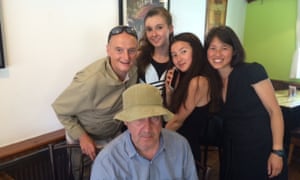


Stephen Mayers, front, a month before he died, with brother Andrew, niece Lola, daughter Sienna and wife Yasmin.


Stephen Mayers, front, a month before he died, with brother Andrew, niece Lola, daughter Sienna and wife Yasmin. Photograph: Andrew Mayers

With every regimen change there would be new flickerings of hope. Patience, the psychiatrists always cautioned – there is never a quick fix. If these drugs do work, it might be weeks, months, before the first inkling. But the lesson of the passing years was that the drugs didn’t work. The darkness engulfing Stephen became a tomb. And it engulfed us all – his wife, his daughters, his brothers, his parents.


So it seemed little short of a miracle when a “last resort” treatment penetrated that malign murk – indeed, blew it away. According to data collected by the Guardian, about 2,000 patients were given ECT in 2011. Thank God Stephen was one of them. A life that had been little more than an extended stupor, enlivened only by the gobbling of stodge, was transformed. The principled, generous, engaged soul re-emerged, as if from hibernation.


The addiction to discomfort eating, which brought only self-hatred, was ousted by a renewed passion for cycling. The old Stephen was reborn. As the writer and professor of clinical psychology Andrew Solomon has sagely noted, the opposite of depression is not happiness, but vitality.


My brother ended up getting four amazing, unexpected years of vitality: not a bad result from a seizure lasting less than a minute, triggered by an electrical current applied for up to eight seconds. All under general anaesthetic. No thrashing, no writhing. Perhaps a little toe-curling.


So if there is anything “crude and controversial” about ECT it’s the reaction, from some corners, to the revelation that these treatments are on the rise again. The portrayals that put this procedure on a par with lobotomy belong to a wholly different mental health era. We all know what happened to McMurphy at the hands of Nurse Ratched, but that was a fictional depiction, decades ago. When the Ramones sang Gimme Gimme Shock Treatment they made it sound like something only the truly twisted would consider. The experiences of Sylvia Plath – who described ECT as “a great jolt [that] drubbed me till I thought my bones would break and the sap fly out of me like a split plant” – or Janet Frame, the New Zealand poet incarcerated in asylums and subjected to 200 treatments by sadistic nurses, are brutal. But if anything they demonstrate how far mental healthcare has come.


steve mayers


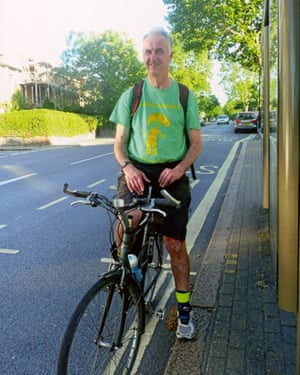
‘At his funeral one of his fellow cyclists gave an oration. ‘Steve Mayers, what a guy. Steve Mayers, what a guy. Steve Mayers what a guy.’’ Photograph: Yasmin Mayers

Last week the mental health charity Mind warned that the side-effects of ECT could include memory loss, difficulty concentrating and dizziness. In my brother’s case, these were the side-effects of not having ECT. But I still suspect that the ultimate side-effect of not having the procedure was his death last October.


The procedure had given him four precious years of vitality. In the middle of a cycle ride from Land’s End to John O’Groats – to raise money for the Maudsley hospital, in south London, where his treatment was carried out – his illness returned. The doctors knew – we all knew – that his best chance, perhaps his only chance, was another ECT course. But good medical practice meant that first they had to go through the rigmarole of drug regimes they knew would probably fail.


ECT time came agonisingly closer. His depression raged out of control – worse he said, than ever. And on top of this, even grimmer news: a persistent tremor was incipient Parkinson’s. The catastrophic thinking that was the hallmark of his depression now played a terminal role: the ECT miracle, those four years of vitality? A fluke, a trick, a story. Go under general anaesthetic? What happens if it leaves me conscious but paralysed? And anyway, what’s the point in being liberated from depression into a life ravaged by Parkinson’s?


The years of vitality were not to be repeated. But without ECT they would not have happened. At his funeral one of his fellow cyclists gave an oration. “Steve Mayers, what a guy. Steve Mayers, what a guy. Steve Mayers what a guy,” he intoned in broad Wolverhampton.


At the same time pictures flashed up on a big screen of Stephen on a bike. Forget Jack Nicholson, I thought. My big brother’s the positive face of ECT.


Drugs didn’t work for my brother. Electroconvulsive therapy did | Andrew Mayers

6 Nisan 2017 Perşembe

Gareth Parry: ‘I knew a lot about mental health but I didn’t recognise it’

Gareth Parry has spent almost three decades supporting people with disabilities and mental health issues find work, but a recent mental health crisis of his own has given him a personal insight into the remit of the organisation he leads.


Parry has only ever worked for Remploy, starting as a trainee administrator and becoming chief executive a year ago. Problems in his personal life two years ago triggered depression. At the time, he was overseeing a government contract for workplace mental health support. “I knew a lot [professionally] about mental ill health, but I didn’t recognise it,” he says. “Suddenly I was on the other side. It reinforced the importance of organisations like Remploy; work gave me routine, structure, focus, when everything else in my life was in chaos.”


Parry became chief executive in May 2016, several months after disclosing his condition (“all credit to the board”), which he manages with antidepressants, cognitive behaviour therapy-style self-help and maintaining a reasonable work-life balance. Living with depression, he says, “has made me a better person to run an organisation like Remploy”.


Remploy is a big provider of welfare-to-work services, running £50m worth of contracts for national and local government, and for a range of employers from retailers and supermarkets to construction firms and facilities management companies in Great Britain. About 95% of its contracts are with government or other public bodies and agencies, such as the Care Quality Commission, the BBC and GCHQ, and for local authorities. Its government contracts include providing mental health support to employees and people in work who are referred to Remploy or who self-refer through the access to work programme; disability employment support through the work choice scheme; and running part of the much-criticised work programme for the long-term unemployed. It helps disadvantaged people to start, keep or return to employment, supporting 130,000 people into work over the past decade.


These 130,000 are just a proportion of the total who have accessed Remploy in some way. Some are helped to keep jobs when going through mental health issues, or supported in less direct ways, through internships, walk-in advice in high street branches, applications for work or training, online access for help with CVs or letters, and phone support.


For the workplace mental health support scheme, of 7,000 people helped by Remploy over the past five years, 92% still had their jobs six months later. In addition, supported internships have helped people with learning disabilities. “For a good supported internship scheme, let’s say a cohort of 10 people, it’s reasonable that six of the 10 will end up in work,” Parry says. He adds: “There is a challenge around what happens about the four who did not get work, but the point is you’ve got six into work.”


According to government figures, in mid-2016 in the UK, 49% of disabled people aged 16–64 were in work, compared with 81% of non-disabled people. The disability employment gap – the difference between the employment rates of disabled and non-disabled people – therefore stood at 32 percentage points.


Of Remploy’s own staff of 750, just under one-third are disabled. So how can you get more disabled people into work when government policy and cuts seem to undermine that end? Parry fudges the question somewhat. “Regime and government administrations change and evolve and have different types of impact,” he says. “Our role is regardless of that to get disabled people who want to work, into work.”


What does he make of a damning report published by the Equality and Human Rights Commission on Monday, showing that progress towards real equality for disabled people over the past 20 years is insufficient and “littered with missed opportunities and failures”, including a lack of equal opportunities in education and employment?


“I realise that we still have a long way to go to achieve true equality of opportunity for disabled people in our communities,” he says.


“Achieving real social inclusion has to be the goal and while having structures and regulation in place to support and protect people with disabilities and health conditions is important, societal change is vital. We must recognise, harness and nurture people’s abilities rather than see only a disability. I am heartened by the attitude of employers large and small that we work with and among whom this recognition is evident and increasing. Genuinely putting ability first not only makes sense in working towards a more equal society, but it makes good business sense, which in turn will increase employment opportunities for disabled people.”


Remploy has changed a lot in its 72 years of existence. Launched by the postwar government in 1945 to employ disabled second world war veterans in sheltered factories producing everything from furniture to shoes, the last factories closed in 2013, as the government and many campaigners regarded mainstream employment as preferable to segregated or sheltered employment. While some welcomed the move, others felt the closures abandoned disadvantaged people.


In April 2015, Remploy was outsourced to a joint venture between US-born international outsourcing giant Maximus – which has come under fire as the provider of the Department for Work and Pensions’ controversial “fit for work” tests – and Remploy’s employees, who have a 30% stake in the business.


But Parry denies that being owned by Maximus undermines Remploy’s status as a champion of disabled people. “I can understand why people would see it that way, but we have a strong social conscience, the employee ownership keeps us focused on that, the profits don’t go overseas to America, they go back into the [Remploy] business.


“We have to be commercially successful and sustainable – so we want to make a profit because that will ensure we continue to exist for another 70 years and impact positively on the lives of disabled people,” he says.


While Remploy is financially secure – it declared £2m profits in 2015 – it is having to seek more business outside the public sector. “The business will reshape because our core market – welfare to work – is resizing and reshaping,” says Parry. This autumn sees the government’s work programme and work choice scheme replaced by a single work and health programme – Remploy may get the contract in Wales – but there are fears that such reforms decimate the welfare to work sector. Austerity, says Parry, “speeds up the need to diversify”. Hence Remploy does more “commercial work” like supported employment schemes with big retailers, although 95% of its business is still with the public sector.


Parry wants more supported internships for learning disabled people (the employment rate for learning disabled people is 5.8%). No longer state-owned, he says Remploy is not apolitical, but “constructively critical”: “We think government could do a lot more for supported internships for people with learning disabilities.” He wants young people with an education care and health plan (for additional support to those with special educational needs) to get “automatic entitlement” to supported internships.


For now, Parry wants to challenge the negative language used to describe people with higher support needs as “unemployable” or “hardest to help”. “The welfare-to-work market needs to develop a much more aspirational language … it’s not about lecturing people to get a job.” Raising aspirations, he says, is the responsibility of business leaders. Parry’s own experience of depression underlined to him the importance of senior staff advocating for and demystifying mental ill-health. “You get sports stars and personalities talking about it, but not many business leaders. There’s still a taboo we need to break.”


CV


Age: 50.


Lives: Leamington Spa, Warwickshire.


Family: Separated, three children (14, 12 and 10).


Education: Mosslands comprehensive, Wirral, Merseyside; University of Hertfordshire: social sciences degree.


Career: May 2016-present: chief executive, Remploy; 2013-May 2016: director of strategy, Remploy; 1988-2013: various roles at Remploy, including factory manager, HR manager, head of learning; 1988-90: administrator, Remploy


Public life: 2015-present: board member of Remploy’s employee ownership association.


Interests: Cycling, music and spending time with the children.


We must recognise, harness and nurture people’s abilities rather than see only a disability


Gareth Parry


Gareth Parry: ‘I knew a lot about mental health but I didn’t recognise it’

15 Aralık 2016 Perşembe

I treated Sam for minor complaints. I didn"t see the domestic violence victim

Sam* started attending my GP practice at the same time I joined. She had no extensive list of medical conditions yet she had frequent doctors’ appointments for minor complaints – in summer she would come with a cold, in winter with hay fever and all year round with tiredness.


She startled easily if someone spoke too loudly or the telephone rang. When she once arrived five minutes late for an appointment, she had volunteered that there were no clocks in her flat, since they were a reminder of time spent away from loved ones.


Sometimes Sam would roll her fingertips on the old scars that spanned her wrists. I asked about those scars (and traced their criss-crossed pattern with my eyes) but Sam would shake her head and hide her arms.


We went on in this fashion for some years. I was no longer the new doctor. I stopped looking for things that probably did not exist. Then one year a medical student came to us on a placement. He was in first year and this was his initial encounter with patients. He was given the task of researching and writing about a patient’s journey. He spent the day with me: we saw people with heart disease, diabetes, headaches, depression and dementia. Somewhere between these 10-minute appointments, there had also been Sam, who had come in with “not a particularly memorable” sore throat. To my surprise the student chose Sam.


Sam was taken aback that the young student doctor wanted to write about her but bit by bit she told him her story and with her permission he wrote it down. A while later Sam and I read it together.


Samia was brought up in a small village in the Indian subcontinent. Her life was busy yet carefree. She wished that time could stop there – she was happy. But her parents felt she had crossed a marriageable age and were worried – perhaps even more so because they had other children and dowries to provide for.


By a quirk of fate, in the nearby village a man had come from the UK in search of a bride. Samia’s parents hoped their daughter might be considered because she was beautiful and they belonged to the same caste as this man.


Samia was chosen and the date was fixed for the marriage – a few days before the groom was to fly back. Forms for her passport and visa were secured to start the process of her leaving for Britain. The procession came and the marriage ceremony was performed, with Samia’s father spending a substantial part of his savings on the wedding.


The groom returned to Britain and Samia to her parents. She was happy because she would travel by plane for the first time. She dreamt of a beautiful place where lambs grazed on lush green hills. Her only sadness was that she would move so far away from her family, friends and even her animals.


Her husband did not ring her, but Samia and her parents assumed he was busy in his job. Eventually, she got a plane ticket and all of the family arranged a van to go to the airport to see her off.


Her husband’s parents received Samia when she arrived in the UK – he was not there. Her father-in-law told her that he was at work. The days passed, with her seeing her husband rarely. It was a big family. Eventually she learned he was living with someone else.


She was soon introduced to the work she was to do, which included cooking and cleaning. Her life back home was tough, but here it was hundred times worse. When she complained it was decided that she should be sent back but Samia could not go back. She would not be the cause of pain and disgrace to her beloved family, no matter how much she needed them in her despair.


Her refusal made the situation worse. The hatred became visible. Her husband hit her sporadically. On one or two occasions other family members slapped her too. She was humiliated repeatedly with bitter remarks. Samia’s father-in-law had incurred business losses since her arrival and she was blamed for that too. In the end when there seemed to be no way out, Samia attempted suicide.


Someone took her to the local hospital. From there she had gone to a women’s refuge, and then moved from city to city, refuge to refuge until she had come to us.


Samia tried to put her life back together. She got a divorce, found a job, a place to live and even made a few friends. But home was still several thousand miles away. She longed to be with her family but lacked the courage to turn up alone, divorced and with nothing to show for her parents’ efforts.


Samia and I both finished reading. That is how the story would have ended – except that it didn’t.


Our student left but Samia had started talking and healing. She told me about her scars, her childhood, her siblings, her parents and even her pet goat. She told me of her aspirations for a better life when she had come here and her disappointment when her hopes had come to nothing. But after despair had come fortitude and courage. Then I did not see Samia for a while – she had gone to see her family. That had been her happy ending.


Samia had needed space and time to open up and heal. At the beginning I had asked the questions but she had been too traumatised to talk. I then focused on her medical problems and fixing only what was apparent. Samia’s story made me realise that sometimes we all need a fresh perspective on the same problem, perhaps even more so when some time has passed. It can occasionally lead us to question our initial diagnoses.


*Sam is a composite of this GP’s experiences of patient care


  • In the UK, the Samaritans can be contacted on 116 123. In the US, the National Suicide Prevention Hotline is 1-800-273-8255. In Australia, the crisis support service Lifeline is on 13 11 14. Hotlines in other countries can be found here

If you would like to contribute to our Blood, sweat and tears series which is about memorable moments in a healthcare career, please read our guidelines and get in touch by emailing sarah.johnson@theguardian.com.


Join the Healthcare Professionals Network to read more about issues like this. And follow us on Twitter (@GdnHealthcare) to keep up with the latest healthcare news and views.


I treated Sam for minor complaints. I didn"t see the domestic violence victim

30 Ağustos 2016 Salı

5 Habits You Probably Didn’t Know Are Bad For Your Eyes

Whether you realize it or not, some of your regular habits and best-loved pastimes could be wreaking havoc on your eyes. Don’t hurt your eyesight with bad habits day in and day out. Eliminate five behaviors to keep your vision healthy.


Looking at Your Smartphone All Day


Do your eyes hurt by the end of the day? It could be because you’ve spent hours reading teeny tiny text on your smartphone. You may also notice that your vision is blurry, your eyes are dry and you’re both dizzy and nauseous. Aim to break from your phone at least every 20 minutes. If you read on your phone a lot, adjust the font so that it’s bigger.


Forgetting Your Sunglasses at Home


Not only do sunglasses give you extra style points, but they also provide much-needed protection for your eyes. The harmful UV and HEV rays from the sun can damage your eyes and eyelids (not to mention give you crow’s feet). Prevent issues like cataracts by grabbing your favorite pair of shades before leaving the house. Keep an extra pair in your car if you regularly forget them.


Working in Low Light


Do you love to read or write in your journal at bedtime? Don’t turn down the lights just yet. Even though low lighting will help you relax, doing any type of work in poor lighting can strain your eyes. Make sure you have enough light so that you don’t have to squint or strain to read or write.


Forgoing Your Annual Checkup


Whether you go to the same doctor you’ve had for years or you’re trying out a new place like All About Eyes, don’t skip your yearly eye checkup. You may not even realize that your eye sight has changed. Wearing the same prescription for years can cause unnecessary eye strain and damage. Also, even if your eyesight is exactly the same as it’s always been, your eye doctor checks for diseases that you wouldn’t know about otherwise.


You’re Not Getting Enough Zzzz’s


Your brain isn’t the only thing that needs a break at the end of the day. Your eyes need rest, too. Sleep deprivation can cause eye spasms, redness or irritation. If you notice that your eyes are often red, it’s because they’re not getting the R&R they truly need.


Everyone has bad habits. Knowing the true cost of yours may make breaking them easier. Care for your eyes so that you can enjoy healthy vision even as you age.


5 Habits You Probably Didn’t Know Are Bad For Your Eyes

1 Ağustos 2016 Pazartesi

My life collapsed when my daughter died. That didn"t stop the debt collectors | Priscilla Blossom

Related: Tell us about your life in the red: how do you survive with debt?


Debt: $ 80,000+


Source: College


Estimated years until debt free: Uncertain


I was young, pregnant, married and happy. I had just moved into a beautiful apartment in a tranquil neighborhood. My husband had landed a well-paying job. Then one day, I started to bleed. Days later I learned that my baby, at only five months’ gestation, would not make it.


It was only recently that folks began to recognize a phenomenon known as birth-related post-traumatic stress disorder, but I’ve lived with it every day since I lost my daughter Margaret in 2012. It wasn’t her death that initially brought debt into my life. I had already accumulated debt from student loans and credit cards to help me pay my way through school. Though I made timely payments for a while, I was forced to stop paying when I was faced with two options: pay for food in my stomach, or pay my bills and starve. I chose the former.


Before my daughter’s death, my intention was to begin freelancing and use my supplemental income to pay my debts. But everything happened so fast. We’d only been in that new apartment for a month when she died, many of our belongings still in boxes. Losing our daughter left us broken; and now we had to figure out how much it would cost to cremate our baby, decide if we wanted to spring for the more expensive urn. I could barely stop crying long enough to take a Xanax let alone figure out all these financial logistics. This is how it all went wrong.


We lost Maggie in late September and on 1 December, my husband (who was only given one week to grieve) was let go from his job. I attempted to keep us afloat by taking the first gig I could find, but the money wasn’t enough and we lost our apartment. This meant breaking our lease and subsequently being charged thousands for the rent we would have paid had we kept our old lease. That is, of course, on top of the old card and loan debt I still owed. With every passing day, our debts grew into sizeable monsters lurking inside credit reports, waiting for the moment we might want to do something important like buy a car or find a home.


Related: I spent my life in debt. Now I know childhood trauma was to blame | Jody Allard


More debts accumulated any time we had a lapse in health insurance, a side-effect of lacking stable employment, which is hard to come by when your mental health is suffering. Funny thing is that you need insurance coverage in order to help battle issues like PTSD. How’s that for a catch-22?


Calls from collectors became commonplace, filling me with constant anxiety. My mailbox was full of bills or letters congratulating me on the birth of my child from companies who didn’t realize she was now a pile of ashes in a box inside my closet. I changed my phone number, moved into my parent’s house, ignored the world for a while. When your kid dies, you really can’t care much about what you still owe Sallie Mae. And that joke about being so in debt they’ll want your firstborn? It’s not funny any more.


Life has improved somewhat since my daughter’s death. I’ve started writing freelance on a regular basis and my husband has finally landed a job that will hopefully prove to be stable in the long run. We also now have a two-year old son who, though having spent two months in the Neonatal Intensive Care Unit, is now a happy, healthy toddler. But I still live with PTSD, from the birth and death of my daughter, and the complicated birth of my son.


Related: Will my boyfriend reject me if he finds out about my debt? | Anonymous


Some days it’s hard to make deadlines and juggle clients, hard to be a good mom, hard to breathe. I’m lining my ducks in a row to start repaying my loans and rebuilding my credit. I’m hoping this is the year we can finally move into our own place, and more importantly, the year we can finally get regular, uninterrupted care for our mental health.


My life collapsed when my daughter died. That didn"t stop the debt collectors | Priscilla Blossom

4 Mart 2014 Salı

"She didn"t know me. That was the finish of my life"

Robert, aged 92, contacted me two years ago, when, as a widow, I was living alone for the initial time in my life and creating about my personal loneliness. “My wife died three months ago of Alzheimer’s illness right after 65 years of marriage, but more to the level, 72 years since we initial kissed,” he explained. “She waited all through the war for me and I for her. Loneliness, inform me about it!”


Today, reading through about the loyalty and love Timothy West feels for his wife of 50 many years, Prunella Scales, who is in the early stages of “a sort of’’ Alzheimer’s, I remembered Robert’s story. Theirs is a burden he understands nicely, for he carried it for the last six many years of his wife’s lifestyle.


Robert informed me he had met his beloved Kathleen in 1937, when he was sixteen and she was 14. “We met in the park where we lived, that is the place the younger men and women used to hang about. And from the moment I saw her I admired her. I knew I wished her to be my girlfriend. She could skate, we went dancing collectively at the nearby hop, and when it came to the last waltz and I explained, ‘Who’s taking you home?’, she explained, ‘You are.’


“Now I cry whenever I hear any individual enjoying Auld Lang Syne. I bear in mind all individuals many years, holding hands, and kissing her on New Year’s Eve. I’m just an emotional previous fool.”


Robert was referred to as up to serve in the British Army in Africa in 1942, and, as soon as he had parted from Kath, realised how deeply he loved her. “So I wrote and asked her to marry me, and we acquired engaged. I couldn’t do anything about the ring, so she went out and purchased it herself. I’ve nevertheless acquired it. It’s received tiny square diamond chips in it. We had nothing. We married in 1946, and borrowed funds from our mothers and fathers to find the £100 deposit on a small property. No furniture, it was all rationed. But from then on we had been pleased, right up until the day I misplaced her.”


Robert and Kathleen on their wedding day in 1946


A double reduction, initial as her personality slowly withdrew, then when she died. Robert looked soon after her up to the end. Right after all, he pointed out, Kath had looked after him all their married existence with each other. “She was sweet, she was cuddly, she was sturdy-willed, definitely. A brilliant cook, she could make her personal outfits, she passed her driving check initial time. Then her memory started to go, so she couldn’t carry on cooking. Six many years just before she died, we were viewing the Proms collectively on tv and she turned to me and said, ‘How are we going to get house?’ And I mentioned, ‘Don’t fret, darling, I’ve got the automobile.’ But I was shattered.


“Then one horrible, horrible, terrible evening we were sitting with each other and she turned to me and said, ‘Where’s Robert?’ And that was the end of my lifestyle. Soon after all our years together she didn’t even know me.” Robert’s voice broke as he remembered that second.


As the sickness took its toll on them each, although by now he, too, was in his eighties, Robert was established to search following her and refused to let her go into a care home. “I informed the medical doctor, ‘If she goes, I go with her.’” So Kathleen remained in their loved ones house.


I asked how lonely he felt, caring for her himself. “It is lonely,” he replied, “but when you are caring, you’re so busy, getting foods, cooking it, dressing her, washing her, making an attempt to do the ironing. You’re so active striving to hold it all together. Even right after she’s gone, you don’t fully consider it in at very first, comprehend what you’ve misplaced. And the loved ones are close to you, supporting you. But they have to get on with their lives, and when they depart, that’s when it hits you. Some musicians see sounds in colour. I see loneliness as a great large mass of grey, there about you all the time.


“I keep asking myself more than and in excess of once more, did I do enough to make her lifestyle content? Was I good ample? The children say yes, I was. But by the finish I couldn’t request her. The medical doctor gave her some medication when she acquired worse, but it could have been aspirin for all the good it did her.”


Robert still has all Kath’s medical records, tracing the regular deterioration produced by her sickness, from slight memory reduction in 2006 appropriate up to the finish, six years later on, when she no longer knew him or could communicate with any individual. He has stored her dresses, coats and footwear. “I can not give them away or destroy them.”


But mercifully the recollections that come to him now in the even now of the night are not of Kath as she grew to become, her thoughts destroyed by the illness that killed her. They are of the Kath when they met and fell in love, the teenager he admired so much, and who adored him, the wonderful lady with the auburn hair that by no means turned grey, the consistent giggle, the blue-grey eyes that shone with entertaining.


Now in his nineties, he has written a poem describing his loneliness. “The rooms are empty, there’s not a sound, Sometimes I’m lost and wander all around.” But Kath is even now a presence in his existence and he expects one particular day to join her, “because beside me in her chair, she quietly waits our time to share.”


I asked him to choose his favourite recollections of her which were the happiest days they spent with each other? He couldn’t select a single. As an alternative he told me, “We had 21,500 happiest days. Each day of our married lifestyle.”


And that brings its personal message of hope to Timothy West and Prunella Scales. Whatever lies ahead of them, and the 1000′s of other individuals going through the identical tragic knowledge, even Alzheimer’s in the end cannot conquer love, or ruin loving recollections.


It’s a heavy burden. It can imply many years of challenging work, or loneliness, and a living death, as the illness takes hold and you slowly get rid of the particular person who meant the most to you. But that, too, is an illusion and it will pass.


Robert and Kath shared a deep abiding happiness, and these memories, that knowledge, that reality is nevertheless alive in his heart.


Contact The Silver Line on 0800 470 8090 or at thesilverline.org


"She didn"t know me. That was the finish of my life"